
Reviewed · KYOTO TOURS
Tea Ceremony in 150 Years Old Townhouse with Tables and Chairs
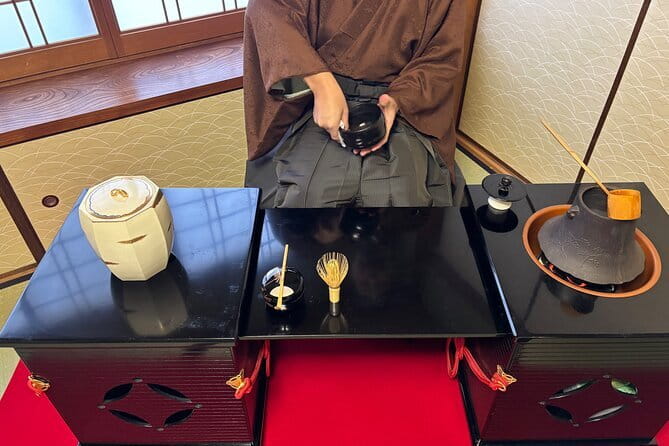
The best part of this 50-minute tea ceremony is that you do not simply watch a ritual from the sidelines. In a 150-year-old townhouse near Ninenzaka, you learn why matcha matters, how the utensils are used, and how to whisk your own cup.
I like the hands-on format, especially if you have always wanted to make matcha but never knew where to begin. I also like the setting: a small-group session with a tea master, an assistant, and an English explanation of each step.
The main consideration is that this is a group experience, not a private one-to-one ceremony. The maximum is 15 people, and the pace can depend on everyone arriving promptly and treating the room respectfully.
Key Details Before You Book
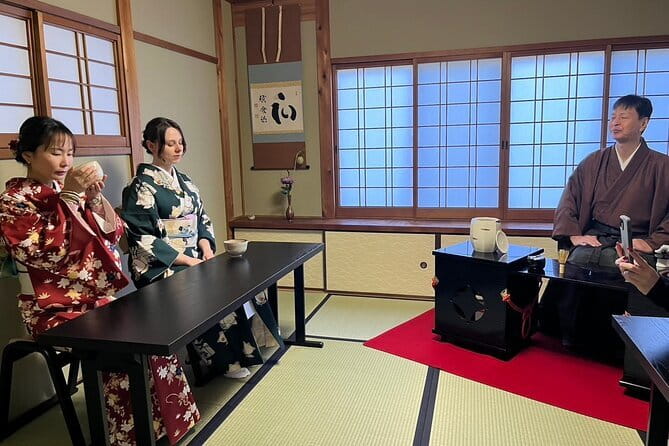
- Whisk your own Uji matcha: You use the traditional tools and prepare your own cup under close guidance.
- Two seasonal Japanese sweets: The sweets are handcrafted and selected to pair with the tea.
- A 150-year-old townhouse: The ceremony takes place in the Ninenzaka area, one of Kyoto’s most atmospheric historic districts.
- English instruction every day: The tea master explains the ceremony, while an English-speaking assistant helps make the process clear.
- A short, focused visit: The activity lasts about 50 minutes, making it easy to fit around sightseeing in eastern Kyoto.
- Simple dress rules matter: Wear socks, avoid strong perfume, and choose clothing that does not expose too much skin.
Arriving in Ninenzaka for the Tea Ceremony
The meeting point is Tea Ceremony and Cultural Experience Kangetsu Kyoto, at 349-19 Masuyacho in Kyoto’s Higashiyama Ward. It is in the Sannenzaka and Ninenzaka area, a good place to combine with a walk around eastern Kyoto.
This part of Kyoto is known for sloping lanes, wooden buildings, and busy sightseeing paths leading toward Kiyomizu-dera. The ceremony offers a useful change of pace. Outside, the district can feel crowded and energetic. Inside, the focus shifts to quiet gestures, careful movements, and the sound of tea being whisked.
Arrive promptly. One session has been delayed by a late group, which is more than a small annoyance in a ceremony built around courtesy and timing. Showing up early also gives you a moment to find the townhouse without rushing into the room.
The location is near public transportation, and the staff sends directions by text. The meeting point and ending point are the same, so you do not need to plan a separate pickup or find your way across town after the ceremony.
More Tea Ceremonies in Kyoto
- Kyoto: Tea Ceremony in a Traditional Tea House in Kiyomizu
★ 4.9 · 3,519 reviews - Kyoto: Tea Ceremony Ju-An at Jotokuji Temple
★ 4.9 · 3,207 reviews - Kyoto: 45-Minute Tea Ceremony Lesson Experience
★ 4.3 · 2,378 reviews
What the Tea Master Explains First
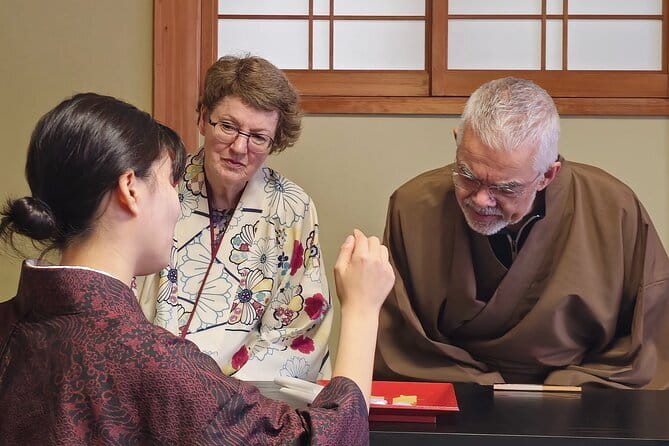
The session begins with an introduction to Japanese tea culture and the basic meaning of the ceremony. You learn that the experience is not simply about making a green drink. The bowl, scoop, whisk, tea, sweets, and movements all have a place in the ritual.
The tea master explains the utensils and demonstrates how they are handled. This matters because the ceremony can seem mysterious if you only see the finished performance. Once you understand the purpose of the tools and the order of the actions, the ceremony becomes easier to follow.
You also receive guidance on tea etiquette. The point is not to memorize a long list of rules. It is to understand how attention and respect are shown through small actions, such as handling the bowl carefully and observing the host’s movements.
The English-speaking assistant helps translate the demonstration and answers questions. This is especially useful because the tea master may be showing a gesture while explaining its meaning. The combination of demonstration and interpretation keeps the experience accessible if you know little about matcha before arriving.
The session has a relaxed teaching style rather than a severe, formal tone. You are expected to be respectful, but you are also invited to ask questions. The final question-and-answer period gives you a chance to clear up anything that seemed unclear during the ceremony.
Making Your Own Matcha With Traditional Tools
The hands-on portion is the reason I would choose this experience over a ceremony that only asks you to sit and observe. You get to use the tools yourself and prepare your own cup of matcha.
The tea master gives step-by-step instructions. You learn how the powder and hot water are combined, then use a bamboo whisk to create the tea. It is a simple action to describe, but the result depends on technique. Your first cup may not look exactly like the tea master’s, and that is part of the fun.
This format works well for beginners. You do not need prior knowledge of tea etiquette or Japanese tea culture. The instructions are clear, and the demonstration gives you a model to copy.
You receive two cups of high-quality matcha from Uji, Kyoto. Uji is closely associated with fine Japanese tea, so the tea itself is not an afterthought. For many people, this will be their first chance to compare a carefully prepared bowl with the matcha drinks commonly sold in cafes.
Matcha has a distinctive flavor. It can be grassy, bitter, savory, or slightly sweet depending on the preparation. The tea ceremony helps you pay attention to those qualities rather than treating matcha as just another flavored beverage.
The activity also gives you a better sense of the effort involved. Whisking tea looks easy when an experienced tea master does it. Once the whisk is in your hand, you begin to notice the rhythm and control required.
Seasonal Sweets and the Order of the Ceremony
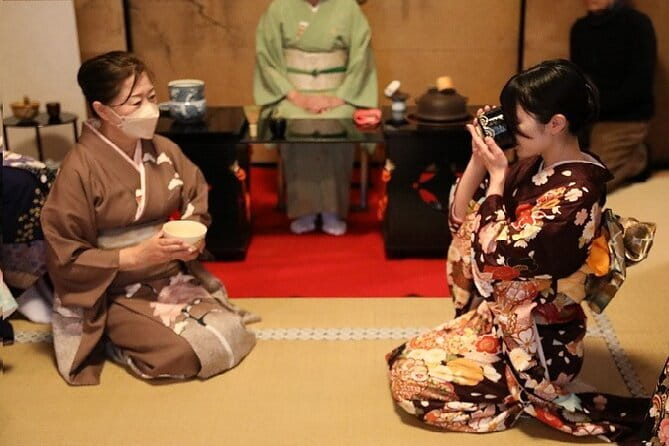
The tea is served with two different types of traditional Japanese sweets. These are beautiful seasonal sweets, made to complement the tea rather than compete with it.
The pairing is important. Matcha can have a strong, slightly bitter taste, and the sweetness gives your palate a contrast. The sweets also help explain why they appear in the ceremony at a particular point.
You are not just handed a snack between demonstrations. The sweets form part of the etiquette and sequence of the experience. The tea master explains the significant details as the ceremony unfolds, so you understand what you are doing and why.
The sweets are also one of the more memorable details for visitors who are curious about Japanese food. Their seasonal character reflects a wider Japanese interest in time of year, presentation, and balance. You may find the sweets delicate in flavor, but their appearance and role make them more than a standard dessert.
Coffee, tea, and alcoholic drinks are not included as separate refreshments. The included drinks are the two cups of Uji matcha, along with the two types of seasonal sweets. Bottled water and soda are also not included, so plan accordingly before or after the session.
Same base, a completely different sort of day:
- PERFECT KYOTO 1-Day Bus Tour
★ 5.0 · 13,518 reviews - Kyoto: Fushimi Inari, Kinkakuji, Bamboo Grove 1 Day Bus Tour
★ 4.8 · 4,316 reviews - Kyoto Geisha Walking Tour: Gion District & Hidden Gems
★ 4.7 · 3,273 reviews - Kyoto: Gion Magical Night Walking Tour with Geisha Trivia
★ 4.9 · 2,393 reviews
The 150-Year-Old Townhouse Setting
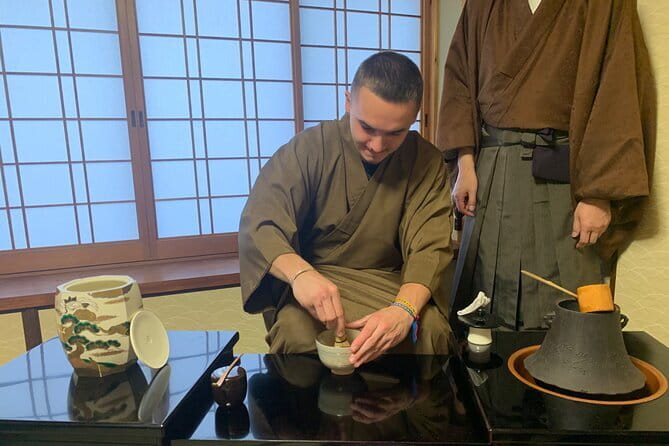
The townhouse gives the activity a sense of place that a modern event room would not provide. You are learning about tea in a building that connects the ceremony to Kyoto’s older streets and domestic architecture.
The setting is beautiful without needing a long sightseeing program around it. The room encourages you to notice details: the tea utensils, the arrangement of the space, the host’s movements, and the quiet rhythm of preparation.
The atmosphere is intimate, but keep the group limit in mind. Up to 15 people may attend. That is still small enough for a shared demonstration and questions, though it will not feel like a private lesson for two.
A previous session was affected by participants who were disruptive or inconsiderate. That is worth noting because the mood depends partly on the people in the room. Come ready to listen, follow instructions, silence your phone, and give the ceremony your attention.
Only smartphones are allowed in the tea room. You may take photographs where permitted, but video recording during the tea master’s demonstration is prohibited. This rule protects the rhythm of the session and keeps the focus on the ceremony rather than on filming it.
Clothing, Socks, and Perfume Rules
Wear socks. If you arrive without them, you will need to purchase a pair. This is a practical rule, not a minor suggestion, so check your feet before leaving your hotel.
Choose clothing that does not expose too much skin. The setting is traditional, and you may be seated or moving in ways that make very short skirts, low necklines, or revealing tops uncomfortable.
Perfume is strictly prohibited. Strong fragrance can interfere with the smell of the incense and tea, both of which are part of the ceremony. If you normally wear perfume, skip it for this activity. You will have a better experience, and so will the people sitting near you.
A kimono is not included. You can add a simple two-piece kimono for 1,000 yen per person. This may appeal to you if photographs are important or if you want your clothing to match the setting, but the tea ceremony itself does not require a kimono.
The attire option is best understood as an extra, not as part of the standard booking. Check the arrangement when you reserve so you know what is included in your price.
Is $28.90 a Fair Price?
At $28.90 per person, the experience is reasonably priced for a guided cultural activity in central Kyoto. The fee includes all taxes and fees, use of the tea-making tools, two cups of Uji matcha, and two traditional seasonal sweets.
The value comes from the instruction and setting as much as from the refreshments. You are paying for access to a tea master, an English-supported explanation, a traditional townhouse, and the chance to prepare tea yourself.
It is not the right choice if you want a long ceremony, a private host, or a full kimono package. The session lasts only about 50 minutes, and the standard price does not include clothing, bottled water, soda, or alcohol.
For a first introduction to matcha, the shorter length is useful. You can fit it between visits to nearby sights without giving up half a day. I would especially consider it if you are already planning to visit Ninenzaka, Sannenzaka, or the Kiyomizu-dera area.
The price also compares favorably with experiences that charge more for similar instruction, though the exact value depends on whether you prefer a group or private format. Read the booking details carefully if privacy or kimono rental is important to you.
Who Will Enjoy This Most?
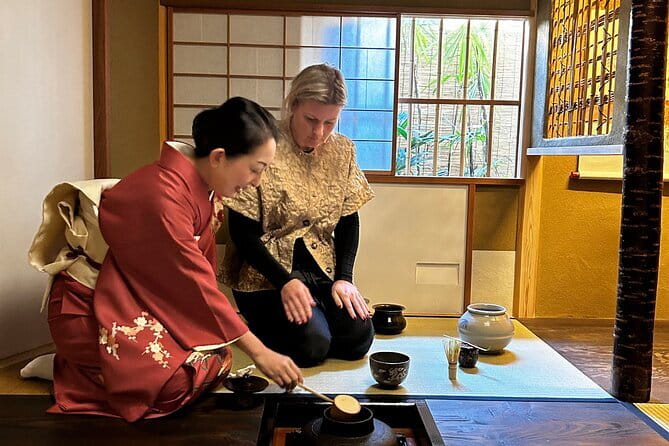
This is a good match for first-time visitors to Kyoto who want cultural context, not just a photo opportunity. The tea master explains the background, etiquette, and tools in a way that makes the ceremony approachable.
Families can also enjoy it. Children under seven are not allowed, but older children have taken part successfully. Young people who like hands-on activities may respond better here than they would to a long museum talk.
Tea drinkers will appreciate the chance to learn how matcha is prepared and taste tea from Uji. You can also buy high-quality matcha at the shop after the session if you want to continue the experience at home.
I would also recommend it to anyone who wants a calm activity during a busy Kyoto day. The ceremony is educational but not stiff, and the small-group format gives you room to participate.
You may want to skip it if you strongly dislike green tea, cannot follow the clothing and fragrance rules, or expect a private ceremony with traditional attire included. It is also not ideal if you want to record the entire demonstration.
How This Fits Into an Eastern Kyoto Day
Because the activity begins and ends at the same townhouse, it is easy to place within a sightseeing route in Higashiyama. Schedule it near your time in Ninenzaka and Sannenzaka rather than crossing the city solely for a 50-minute appointment.
Allow extra time to reach the address. The streets around Ninenzaka are popular, and arriving at the last minute can make the experience feel hurried. A prompt arrival is also a matter of courtesy to the tea master and the rest of the group.
After the ceremony, you can continue exploring the surrounding district or stop for a meal. Staff may also offer local restaurant recommendations, a useful extra if you are deciding where to eat nearby.
Since the activity ends at the meeting point, you remain responsible for your next stop. That is convenient if you are sightseeing in Higashiyama, but less convenient if you have booked a tightly timed attraction across Kyoto immediately afterward.
Practical Booking Notes
Confirmation is provided at booking. The experience runs in English every day, and the group can include up to 15 people.
If you have allergies, tell the provider in advance. The sweets are part of the experience, so this is important to arrange before you arrive rather than during the ceremony.
Free cancellation is available up to 24 hours before the local start time. Cancellations or changes made less than 24 hours before the start are not accepted for a refund. If poor weather causes the activity to be canceled, you are offered another date or a full refund.
The weather policy is worth checking when planning, even though much of the activity takes place indoors. Keep your confirmation and the directions sent by text close at hand on the day.
Should You Book This Kyoto Tea Ceremony?
I would book this if you want an affordable, well-explained introduction to matcha in a traditional setting. The strongest reasons are the hands-on preparation, the two Uji matcha servings, the seasonal sweets, and the chance to ask questions instead of simply watching.
The experience is also a good choice for families with children aged seven and older, couples, and curious first-time visitors. The English support makes the ceremony easier to understand, while the townhouse and Ninenzaka location give it a clear Kyoto connection.
I would choose something else if your priority is complete privacy, extended meditation, or a kimono-inclusive package. For everyone else, this is a focused and practical way to spend 50 minutes learning a Japanese tradition without committing to a full-day cultural program.
FAQ
How long does the tea ceremony last?
The experience lasts approximately 50 minutes.
Where does the activity take place?
It takes place at Tea Ceremony and Cultural Experience Kangetsu Kyoto, 349-19 Masuyacho, Higashiyama Ward, Kyoto, 605-0826, Japan, in the Sannenzaka and Ninenzaka area.
Where does the activity end?
The ceremony ends back at the meeting point.
Is the experience offered in English?
Yes. English experiences are provided every day, with an English-speaking assistant helping explain the tea master’s demonstration and answer questions.
Can I make my own matcha?
Yes. You use the provided tea-making tools and prepare your own cup of matcha with guidance from the tea master.
How much matcha is included?
The experience includes two cups of high-quality matcha from Uji in Kyoto.
Are Japanese sweets included?
Yes. You receive two different types of beautiful seasonal Japanese sweets.
Is a kimono included?
No. A kimono is not included in the standard experience. A two-piece kimono can be rented for an additional 1,000 yen per person.
What should I wear?
You must wear socks and clothing that does not expose too much skin. Perfume is strictly prohibited because it can interfere with the smell of incense and tea.
Can children participate?
Children under seven years old are not allowed to participate. Older children may join the group experience.
Can I record the ceremony?
Only smartphones are allowed in the tea room. Video recording during the instructor’s demonstration is prohibited.
How many people can join the group?
The activity has a maximum of 15 participants.
Can I cancel for a refund?
You can cancel up to 24 hours before the experience start time for a full refund. Cancellations and changes made less than 24 hours before the start are not accepted for a refund.
Just added around Kyoto
- Kyoto: Zen Meditation at a Private Temple with a Monk★ 5.0 · 25 reviews
- Kyoto: Gion Geisha District & Sake-in-Hand Walking Tour★ 5.0 · 37 reviews
- Private Pewter Sake Cup Experience with a Kyoto Artisan★ 5.0 · 31 reviews
- Your Private Vacation Photography Session In Kyoto★ 5.0 · 110 reviews
- Private Guided Traditional Buddhist Cooking in Japan★ 5.0 · 16 reviews
- Kyoto Wagashi(Japanese sweets) Cooking Class near Fushimiinari★ 5.0 · 60 reviews
- Traditional Japanese Music show & Experience Tour in Kyoto★ 5.0 · 57 reviews
- Kyoto:Family-Friendly Kimono & Yukata Experience at WARGO★ 5.0 · 147 reviews
Kyoto Tours, compared.


Fushimi Inari, Kinkakuji, Bamboo Grove 1 Day Bus Tour
Read our review →
Tea Ceremony in a Traditional Tea House in Kiyomizu
Read our review →
Kyoto Geisha Walking Tour: Gion District & Hidden Gems
Read our review →

Gion Magical Night Walking Tour with Geisha Trivia
Read our review →

Gion Geisha District Walking Tour – Stories of Geisha
Read our review →Browse the lists this tour appears in