
Reviewed · TOKYO TOURS
Explore Kichijoji: Walk Through One of Tokyo’s Beloved Districts
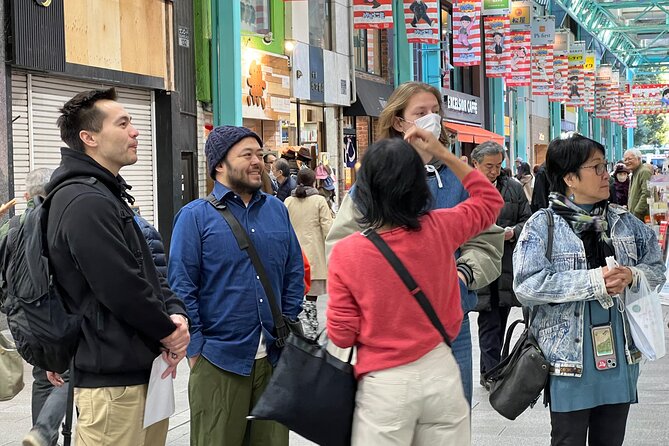
Kichijoji’s best feature is how much Tokyo life fits into a small area: covered shopping streets, old temples, independent shops, cafés, and a narrow drinking alley with postwar roots. This two-hour walk helps you see the neighborhood as a place where people live, not just a stop on a sightseeing list.
I like the small maximum of eight people, which gives guides such as Kate and Michi room to explain local details. I also like the final stop at Harmonica Yokocho, where the tour includes one drink and two yakitori skewers. The main drawback is time. Two hours gives you a useful introduction, but not enough for a leisurely shop visit or a full meal.
Key points at a glance
- Sunroad’s 300-meter arcade: Browse a busy local shopping street with around 150 shops.
- Gesso-ji Temple: Learn why Kichijoji was founded and see a quieter side of the district.
- Nakamichi-dori’s mix: Find long-running stores beside newer cafés, sweet shops, and boutiques.
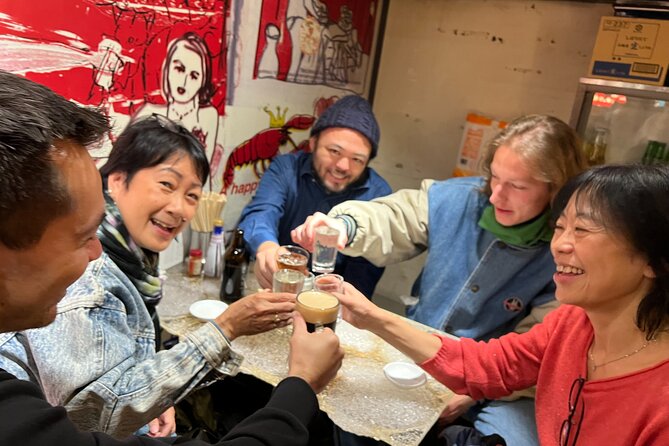
- Harmonica Yokocho tasting: End with one drink and two skewers of yakitori in a postwar alley.
- Small-group format: The tour accepts no more than eight people, making conversation with the guide easier.
- Useful afternoon timing: The 3 p.m. start works well after a morning visit to the Ghibli Museum.
Why Kichijoji makes a good Tokyo side trip
Kichijoji sits in Musashino, west of central Tokyo. From Shibuya or Shinjuku, the train ride takes about 15 minutes, so you can leave the city center without giving up much of your day.
The district is known as one of Japan’s desirable places to live. That matters because Kichijoji feels less like a display built for sightseeing and more like a functioning town. You get daily shopping, local food, small businesses, religious sites, and evening drinking spots in one walk.
I find this kind of neighborhood tour useful after you have seen Tokyo’s giant stations and major attractions. Kichijoji offers a smaller scale. The streets are easier to read, and the guide can explain why certain shops, alleys, and temples matter.
The tour starts at 3 p.m., a practical time for an afternoon outing. It also fits especially well with a visit to the Ghibli Museum, which is located near Kichijoji. You should check the timing of your museum admission carefully, since the walking tour has a fixed start and does not appear designed for late arrivals.
More walking tours in Tokyo:
- Tokyo Tsukiji Fish Market Food and Culture Walking Tour
★ 5.0 · 3,184 reviews - Tokyo: Imperial Palace and Shogun Historical Walking Tour
★ 5.0 · 2,251 reviews - Tokyo: Shinjuku Local Bar and Izakaya Guided Walking Tour
★ 4.9 · 1,794 reviews
Starting at Sunroad’s 300-meter shopping street
The walk begins at Sunroad, Kichijoji’s covered shopping street. It stretches for about 300 meters and contains roughly 150 shops, so it gives you an immediate sense of the district’s everyday rhythm.
A shopping arcade is not a dramatic monument, but that is exactly its value. You can see the kinds of stores local residents use, rather than only the international chains found in central Tokyo. The route gives the guide a natural way to explain how Kichijoji works as a town.
Sunroad was voted Tokyo residents’ second-favorite shopping street in 2022, after Ameyoko. That distinction does not mean every shop will interest you, but it shows the street’s local appeal. You can expect a mix of food, retail, and small businesses rather than a single theme.
The stop is scheduled for 15 minutes. Treat it as an introduction, not a dedicated shopping session. You may spot a store you want to revisit later, but you will not have much time to browse carefully during the guided walk.
That short visit is useful if you are new to Kichijoji. The guide can point out details you would likely pass without noticing, then help you decide which streets deserve more of your own time.
Gesso-ji Temple and the story behind Kichijoji
The next stop is Gesso-ji Temple, a Zen Buddhist temple surrounded by greenery. It is described as the heart of Kichijoji’s history because the town was formed around its story and importance.
This is one of the tour’s most valuable parts. Kichijoji is not only a fashionable shopping district. Its name and development are tied to a major earthquake about 350 years ago, an event that helped trigger the creation of the town. A guide can connect that older story to the streets you have just walked.
The temple also changes the pace. After the movement of Sunroad, you get a quieter setting and a chance to consider the district beyond shops and restaurants. It remains a gathering place for local people, so the stop gives you a look at a living religious site rather than a remote historical display.
The planned visit lasts 15 minutes. That is enough for an introduction and some context, but not a long temple visit. If you are hoping for extended time to sit, photograph, or study every feature, you may find the schedule quick.
Still, I like the balance. The temple prevents the tour from becoming a simple food-and-shopping walk. It gives the rest of the route a sense of place.
One hour through Nakamichi-dori and nearby streets
The longest section takes place around Kichijoji Nakamichidori Shopping Arcade and nearby streets. At about one hour, this is where the tour spends most of its time.
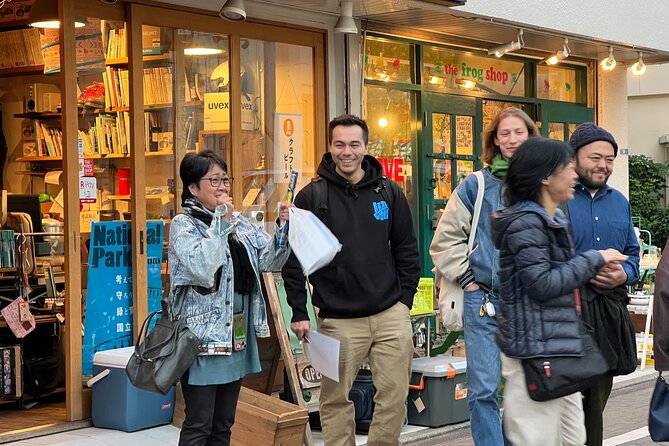
Here, old and new Kichijoji meet. Shops that have served the area for more than half a century sit near stylish cafés, sweets shops, newer boutiques, antique stores, and artisan businesses. The contrast is more interesting than a street filled with only one kind of retail.
This section also seems to be where the guide’s personal knowledge matters most. Kate is described as showing visitors local artisan stores and streets, while Michi focuses on stories about old and new Kichijoji. Both names are associated with the experience, though the guide assigned to your date may vary.
You may see antique shops with pottery gathered from different parts of Japan. That detail gives the walk a cultural edge. You are not simply looking at souvenirs made for tourists. You might find objects that reflect regional craft traditions, though the tour does not include a purchase or a dedicated pottery demonstration.
The route can also bring small seasonal customs into view. One account describes learning about the Tanabata star festival at a small temple and writing a wish on a tanzaku, a strip of paper hung as part of the celebration. Seasonal activities will depend on when you visit, so you should not book the tour solely for that possibility. Still, it shows the kind of local detail that can make a short walk feel personal.
The hour is generous compared with the other stops, but it is not unlimited. If you stop to inspect every shop, you may fall behind. I would note the names or locations of anything you want to return to, then come back after the tour if time allows.
A few more Tokyo half-days to weigh up
- Mt Fuji and Hakone 1-Day Bus Tour Return by Bullet Train
★ 5.0 · 26,383 reviews - 1-Day Tokyo Bus Tour
★ 5.0 · 14,250 reviews - Tokyo: TOKYO SKYTREE® Admission ticket
★ 4.5 · 11,192 reviews - Tokyo: teamLab Planets TOKYO Digital Art Museum Entry Ticket
★ 4.6 · 9,779 reviews
Finishing with yakitori at Harmonica Yokocho

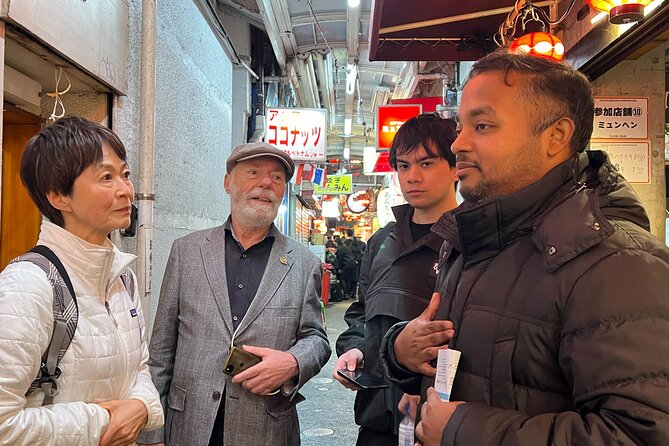
The tour ends at Harmonica Yokocho, a narrow maze of small bars and eateries near the north exit of Kichijoji Station. Its name comes from the tight alleyways, which resemble the reeds of a harmonica.
The alley began as a postwar black market. That origin gives it a different feel from a modern food hall or polished restaurant complex. Red lanterns, compact storefronts, and closely packed dining spaces create the atmosphere, though the exact mood will depend on the time and the businesses open that day.
Your tour includes one drink and two skewers of yakitori. This is a modest tasting, not dinner. If you are hungry, plan to order more food afterward or choose another restaurant nearby.
I like this ending because it turns local history into something you can experience with your senses. The guide can explain how the alley developed, then you can sit with a drink and sample a familiar Japanese street-food style. It also gives you a useful starting point for an evening in Kichijoji.
The stop is scheduled for 15 minutes, so do not expect a long social meal. The tour finishes at Harmonica Yokocho, a short walk from Kichijoji Station’s north exit. That makes it easy to continue exploring or catch a train back toward Shinjuku or Shibuya.
What the two-hour schedule really gives you
The stated duration is about two hours. The listed stops account for 15 minutes at Sunroad, 15 minutes at Gesso-ji Temple, one hour around Nakamichi-dori, and 15 minutes at Harmonica Yokocho. The remaining time allows for walking between areas, explanations, and the tasting.
This is enough time to understand Kichijoji’s basic shape. You will see its shopping core, religious roots, independent retail, and evening food culture. You will not see every important street, spend long periods inside shops, or explore the district at a slow photographic pace.
That distinction matters when you decide how to use the tour. If you want a guided orientation, the timing is sensible. If you want an unhurried shopping afternoon, the group schedule may feel restrictive.
I would keep the rest of your day flexible. The walk ends in a useful location, so you can continue on your own rather than rushing to another distant attraction. The mobile ticket also keeps the booking simple, with confirmation sent within 48 hours, subject to availability.
A small group makes the local stories easier to follow
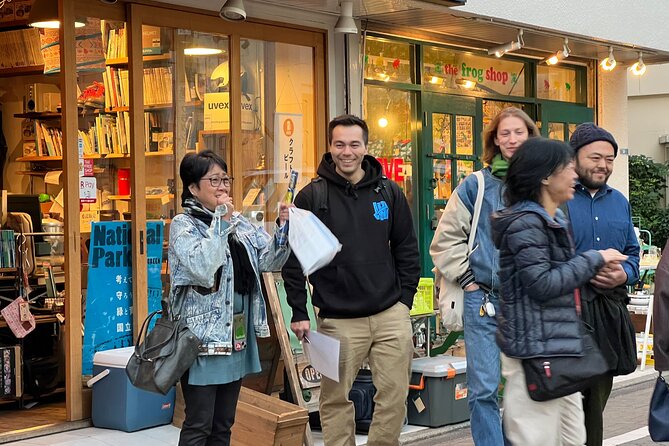
The group maximum is eight people. For a neighborhood walk, that is a strong feature. You can hear the guide more easily in busy streets, ask questions without holding up a large crowd, and keep the pace more personal.
The guide is central to the experience. Kichijoji’s shops and lanes do not need a guide in order to exist, but the stories help you understand why the neighborhood feels the way it does. Kate is described as friendly and informative, with a strong grasp of the area. Michi is also named as a guide who explains the district’s past and present in detail.
The assignment may not guarantee one specific guide, so consider the names useful context rather than a promise. The provider is Musashino city urban tourism corp, which fits the tour’s local focus.
The format suits first-time visitors to Kichijoji especially well. Without a guide, you can certainly walk Sunroad and Harmonica Yokocho yourself. The harder part is connecting the earthquake story, temple, long-running stores, artisan shops, and current local trends within a limited visit.
Is $45.98 a fair price?
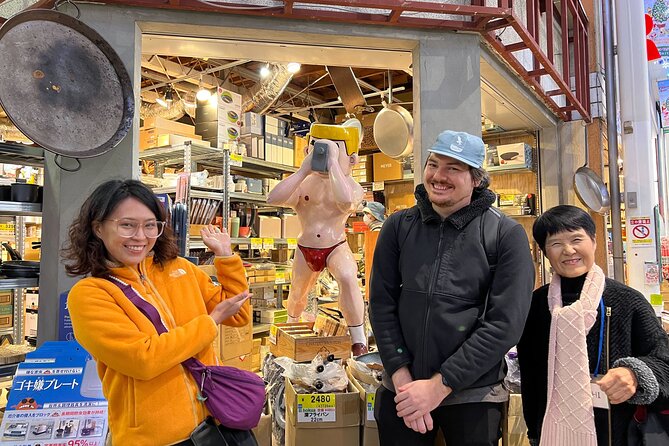
The cost is $45.98 per person. That is more than you would pay to walk these streets alone, but the comparison is not quite fair. You are paying for a guide, local interpretation, a small group, and one drink with two yakitori skewers.
The value depends on how much you want context. If you are happy to wander and use your own guidebook, the price may seem high for a two-hour walk with a small tasting. If you want to understand why Kichijoji developed and find places you might miss alone, the fee is easier to justify.
The included food and drink are a nice extra, but they should not be the main reason to book. Two yakitori skewers will not replace a meal. Think of them as a brief introduction to Harmonica Yokocho, followed by the option to stay for more food on your own.
The small group improves the value. A large walking group can make local lanes feel impersonal, while eight people or fewer allows more direct contact with the guide. I would consider the tour worthwhile for a first visit, especially if you have limited time in western Tokyo.
Who will get the most from this walk?

This experience suits you if you want to see a residential side of Tokyo, enjoy independent shops, and prefer local stories to a long list of famous landmarks.
It is also a good choice for first-time visitors to Kichijoji. The route gives you enough orientation to return later for shopping, cafés, pottery, or a longer meal in Harmonica Yokocho.
The tour may appeal to anyone interested in both traditional and modern Japanese culture. You get a temple and local festival context, then newer stores, cafés, boutiques, and a postwar food alley.
You should think twice if you dislike walking, have less than two hours available, or want a formal historical tour focused on major monuments. The experience is built around streets and small businesses, so its rewards are subtle rather than spectacular.
It may also be less suitable if you need a full meal. The yakitori tasting is limited, and the walk finishes at a place where you may want to continue dining.
Practical details before you book
The meeting point is at 1-chōme-1-24 Kichijōji Minamichō, Musashino, Tokyo 180-0003. The start time is 3 p.m., so allow enough time to find the exact location before the group sets off.
The end point is Harmonica Yokocho at 1-chōme-1 Kichijōji Honchō, Musashino, Tokyo 180-0004. It is a short walk from the north exit of Kichijoji Station, which makes the finish convenient.
Most people can take part, according to the supplied activity information. No special physical requirements are stated, but this is a walking tour through shopping streets and alleys, so comfortable shoes are sensible.
You receive a mobile ticket, and confirmation arrives within 48 hours of booking if space is available. The activity requires a minimum number of participants. If that number is not reached and the tour is canceled, you are offered another date or experience, or a full refund.
Free cancellation is available up to 24 hours before the start time. Canceling or changing the booking less than 24 hours before the local start time does not qualify for a refund.
Should you book Explore Kichijoji?
I would book this walk if you want a quick but meaningful introduction to a Tokyo district beyond the major central sights. The strongest parts are the small group, the clear route through old and new Kichijoji, and the final tasting in Harmonica Yokocho.
I would not book it expecting a full food tour, a long temple visit, or an afternoon of unrestricted shopping. Two hours moves at a useful pace, but you will need to return on your own for the stores and eateries that catch your eye.
For a first visit, the tour offers good orientation and local context at a convenient afternoon hour. Pair it with the Ghibli Museum or use it as the start of an evening around the station. If that sounds like your kind of Tokyo, the $45.98 fee is reasonable for the guidance and tasting included.
FAQ
Where does the Kichijoji walking tour start?
It starts at 1-chōme-1-24 Kichijōji Minamichō, Musashino, Tokyo 180-0003, Japan.
What time does the tour begin?
The tour starts at 3 p.m.
Where does the tour finish?
It finishes at Harmonica Yokocho, 1-chōme-1 Kichijōji Honchō, Musashino, Tokyo 180-0004, Japan.
Is the end point close to Kichijoji Station?
Yes. Harmonica Yokocho is a short walk from the north exit of Kichijoji Station.
How long does the experience last?
The walking tour lasts approximately two hours.
How many people can join the tour?
The maximum group size is eight people.
Is food or drink included?
Yes. The tour includes one drink and two skewers of yakitori at Harmonica Yokocho.
Does the tour include admission fees?
The listed stops have no admission ticket charge. The experience includes a mobile ticket.
Can I take part if I am not an experienced walker?
The activity information says most people can participate. It is a walking tour through shopping streets, temple grounds, and narrow alleys.
What is the cancellation policy?
You can cancel up to 24 hours before the start time for a full refund. Cancellations or changes made less than 24 hours before the experience are not accepted for a refund.
Just added around Tokyo
- Private Arrival Transfer : Narita International Airport to Central Tokyo City★ 4.5 · 12 reviews
- Narita Airport(NRT): Private Transfer to Tokyo/Yokohama 1-9pax★ 5.0 · 47 reviews
- Private Transfer from Narita Airport to Yokohama Port and City★ 4.5 · 17 reviews
- [Narita Airport Terminals 1, 2] 40-60km Sawara Itako Historic Bike Tour★ 5.0 · 13 reviews
- 3 Day Japan Highlights Tour: Tokyo, Mt.Fuji, Nara, Kyoto, Osaka★ 5.0 · 22 reviews
- The 10 Tastings of Tokyo With Locals: Private Street Food Tour★ 5.0 · 48 reviews
- Small Town in the Big City: Tasting Tokyo’s Kichijoji★ 5.0 · 195 reviews
- Small Town in the Big City: Tasting Tokyo’s Kichijoji★ 5.0 · 16 reviews
Tokyo Tours, compared.

Mt Fuji and Hakone 1-Day Bus Tour Return by Bullet Train
Read our review →

teamLab Planets TOKYO Digital Art Museum Entry Ticket
Read our review →
Mt Fuji & Hakone Cruise, Drum Show Bullet Train 1 Day from Tokyo
Read our review →
Sumo Show Experience with Chicken Hot Pot and a Photo
Read our review →
Shinjuku Food Tour (13 Dishes at 4 Local Eateries)
Read our review →
Tokyo Mt Fuji 5th St & Hakone Cruise Bus Tour w/Bullet Train
Read our review →
Flagship 2-Hours Official Street Go-Kart Tour – Tokyo Bay Shop
Read our review →Browse the lists this tour appears in