
Reviewed · TOKYO TOURS
the SUMO show
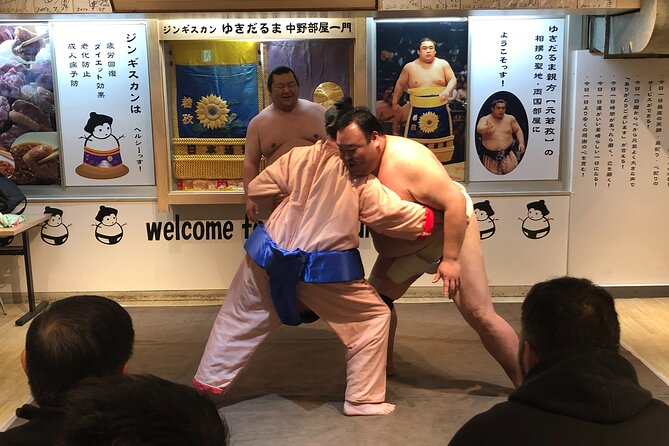
The best part of the SUMO show is that you do more than watch. Retired wrestlers explain the sport, demonstrate its moves, invite willing visitors into the ring, and pose for photos afterward. It turns a formal Japanese tradition into a lively, hands-on afternoon.
I like the small-group feel when seating allows it, and I like that the wrestlers are friendly enough to spend time with each table. The tonkatsu and chanko soup add real value, too. The main drawback is seating: with as many as 60 people, some tables sit far from the dohyo, so you may need to stand for a clear view.
Key points at a glance
- Meet retired wrestlers: Ask questions, watch their demonstrations, and see the human side of a sport often viewed from a distance.
- Step into the ring: You can challenge a wrestler in a playful bout, or simply watch if wrestling is not for you.
- Learn before the action: The 90-minute session covers sumo history, rules, training exercises, and basic techniques.
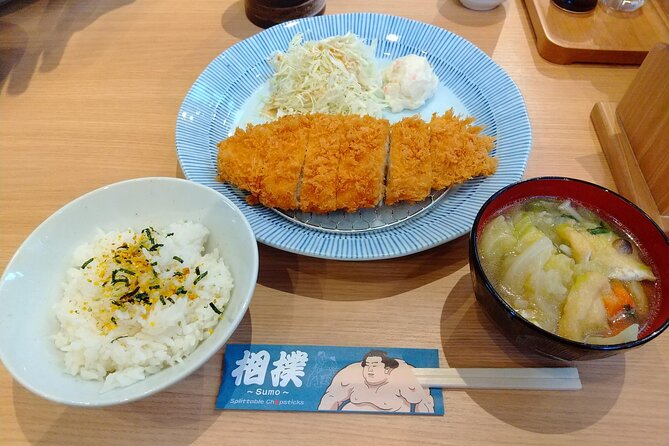
- Eat a wrestler’s meal: Tonkatsu and chanko soup are included, while drinks cost extra.
- Family-friendly participation: Children and adults can join in, and you can choose how active you want to be.
- Watch the seating plan: The venue can hold up to 60 people, and some seats have a better view than others.
What this Tokyo sumo experience really offers
Sumo can seem mysterious if you have never watched a full match. The costumes, rituals, ring customs, and short bursts of power are easy to admire, but harder to understand. This show gives you the basic framework before asking you to enjoy the sport.
The session takes place at Yokozuna Tonkatsu and Sumo Lunch, at 3-chōme-1-11 Tatekawa in Sumida City. You make your own way there, meet the host and retired wrestlers, and return to the same place at the end. The start time is 1:00 pm, and the full program lasts about an hour and a half.
That timing works well in a Tokyo plan. You can spend the morning sightseeing, arrive for lunch and the show, then continue your afternoon. The venue is near public transportation, though the address is in Sumida rather than central Tokyo, so allow enough time to reach it without rushing.
The name says lunch, but the experience is really a combined meal and performance. You are not simply sitting down for tonkatsu in a restaurant. The food becomes part of a cultural introduction, with the wrestlers preparing or presenting a meal associated with their daily world.
More Sumo Experiences in Tokyo
- Tokyo: Sumo Show Experience with Chicken Hot Pot and a Photo
★ 4.8 · 6,678 reviews - Tokyo: Sumo Show and Dining Experience
★ 4.8 · 2,742 reviews - Tokyo Shinjuku Sumo Show & Experience with Photo
★ 5.0 · 1,750 reviews
A friendly introduction to sumo rules and rituals
The program begins with an explanation of sumo’s background, rules, and training customs. You see demonstrations of several moves and techniques before the wrestlers show how a bout works.
This opening matters because sumo is not just two large athletes pushing each other. The rules are simple at first glance, but the rituals and techniques give the sport its character. A short explanation helps you understand why footwork, balance, timing, and pushing technique matter so much.
The presentation is designed for a general audience rather than serious sumo experts. If you already follow professional tournaments closely, you may find the historical introduction fairly brief. If you are new to the sport, though, the approach is just right: enough information to make the demonstrations meaningful without turning the afternoon into a lecture.
The hosts also keep the tone light. The wrestlers are presented as approachable people, not untouchable stars. That makes it easier to ask questions and laugh along when the demonstrations become playful.
One practical point: an audience member noted that the video audio could make the host harder to hear while she was speaking. If you want every detail, sit where you can hear the presenter clearly and do not hesitate to ask for a point to be repeated.
The dohyo demonstration is the heart of the show
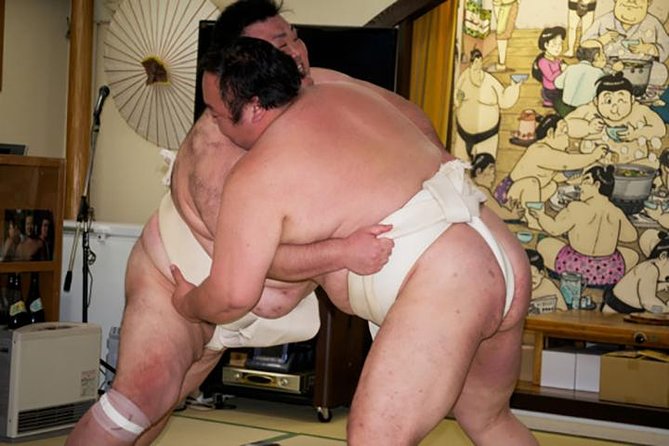
After the introduction, the wrestlers demonstrate sparring and show the force behind the sport. This is the moment when the lesson becomes physical. You see how quickly a match can change, and how much technique is involved in a contest that may last only a few seconds.
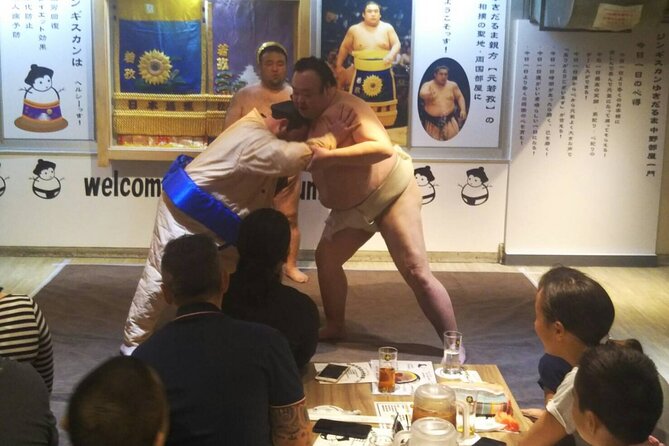
The show is made for close audience contact. The wrestlers interact with the tables, take photos, and keep the room involved. Several parts of the program invite participation, so you are not left watching a performance from a distant stage.
The room is not always arranged for a perfect view from every seat. Some tables are farther from the dohyo than others, and a few people may choose to stand during the action. That is a real consideration if you have mobility limits or strongly prefer a fixed, front-row view.
Seating is assigned according to the order reservations are received. Arriving early does not guarantee a better seat, so do not build your plans around getting there far ahead of time. If you are booking for a large party, you may also be split across tables, and you may share a table with another group.
These limits are worth knowing before you book. The show is intimate when your table is near the ring, but it can feel more like a group event when the room is full. The overall capacity is up to 60 people.
Trying sumo yourself, without pressure
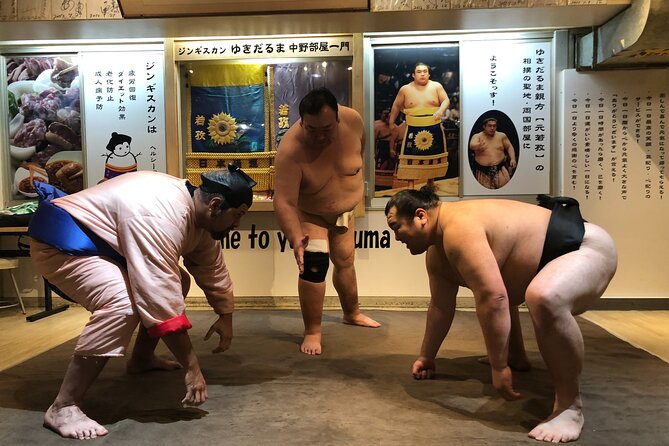
The most memorable part for many people will be the chance to enter the ring. You can challenge a retired wrestler in a friendly bout after watching the demonstrations.
The experience is clearly built around good humor rather than proving your strength. The wrestlers can show you how to use technique and timing, and the point is participation, not victory. You should not expect a serious athletic contest, but you can expect a funny photo and a story to take home.
You are not required to wrestle. That choice matters for families, older visitors, anyone with an injury, or anyone who would rather observe. You can still learn the moves, watch other participants, and take photos with the wrestlers.
For children, this hands-on part adds much more than a standard cultural talk. The activity has worked well for families with school-age children, and the performers make a point of keeping the atmosphere welcoming. At the same time, adults do not get pushed aside. The challenge is open to willing participants, and the crowd interaction keeps the program lively.
Use common sense. You must follow staff instructions, and the venue can ask anyone causing trouble to leave without a refund. The sensible approach is to treat the ring as a supervised cultural activity, not as a chance to test your fitness.
More sumo mornings and shows:
- Tokyo: Sumo Show and Experience in Shinjuku
★ 4.8 · 1,001 reviews - Tokyo: Sumo Tournament Tour with Chair Seat Tickets
★ 4.6 · 753 reviews - Tokyo:Luxury Sumo Show Experience & Japanese cuisine & Drink
★ 4.7 · 577 reviews - Tokyo: Sumo Morning Practice Viewing Tour
★ 4.8 · 570 reviews
Tonkatsu and chanko soup at the table
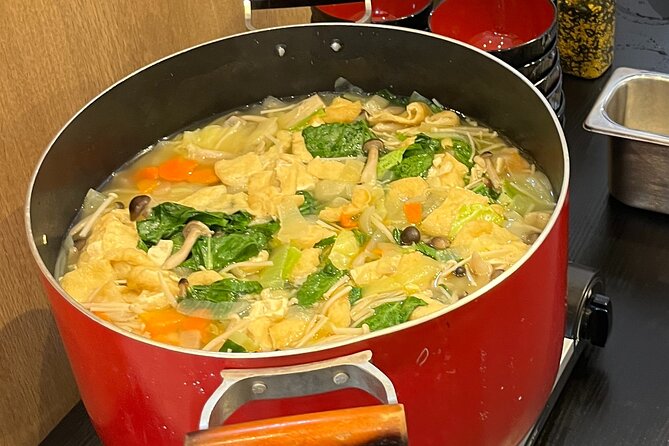
The meal includes tonkatsu and chanko soup. Tonkatsu is breaded pork cutlet, while chanko is the hearty hot pot associated with sumo wrestlers. The combination gives you two very different tastes of the meal tradition.
The food earns strong praise for flavor, especially the chanko soup. Several diners found the meal better than expected, and one person wished for a large extra bowl of soup instead of the tonkatsu because the broth was so good.
Portions may not satisfy every appetite. One diner felt the meal was a little light, and another expected more cabbage with the tonkatsu. If you arrive very hungry, keep your expectations at restaurant lunch rather than an enormous athlete’s banquet.
Drinks are not included, so budget separately for them. Vegetarian and other dietary accommodations are available if requested, but you must put allergies or restrictions in the reservation notes. Requests made less than five days before the date may not be handled, so this is something to arrange early, not at the door.
The food also helps justify part of the $89.54 price. You are paying for a meal, a hosted cultural session, retired wrestlers, demonstrations, participation, and photos in one package. That is not cheap compared with a simple Tokyo lunch, but it is more reasonable if you want an organized sumo encounter rather than just a meal near a tourist sight.
Photos, costumes, and the personal touch
There is time for photos with the wrestlers before the program ends. You can also take pictures of yourself in a traditional sumo costume, which gives families and friends an easy keepsake from the experience.
The photo opportunity is not a minor add-on. It helps break down the distance between audience and performer. You are not only learning about a sport; you are meeting people who once trained and competed within that world.
The wrestlers are described as friendly and willing to spend time with each table. That personal contact is one reason the show feels different from a staged cultural demonstration. The staff also help keep the schedule moving, which matters during a short 90-minute program.
You should still expect a group setting. The performers cannot give every person an unlimited private conversation, especially when the room is full. If you want more interaction, take part in the activities, ask questions, and volunteer for the demonstrations.
Who will get the most from the $89.54 price
I would consider this a good fit for a first visit to Tokyo, especially if sumo is on your must-see list but a professional tournament is not taking place during your trip. You get an accessible introduction without needing to understand Japanese or know the tournament schedule.
It also suits families. Children can see the action, learn a few rules, eat a familiar fried cutlet, and decide for themselves if they want to enter the ring. The program has a playful tone, but it still gives adults enough context to appreciate the sport.
Couples and small groups can enjoy it too, particularly if they like cultural activities with a meal attached. The experience is not a quiet museum visit. Expect laughter, crowd participation, movement, and a little friendly chaos.
I would be more cautious if you want an in-depth study of sumo, a private lesson, or a guaranteed front-row seat. The history and rules are introductory, not exhaustive. The event is also less attractive if you dislike audience participation or prefer to avoid fixed group meals.
The 98 percent recommendation rate and 4.9 rating from 1,960 ratings suggest a consistently strong experience, but the lower rating and specific complaints still matter. The price may feel high to someone focused only on the meal, and full seating can reduce the intimacy.
Getting there and planning the afternoon
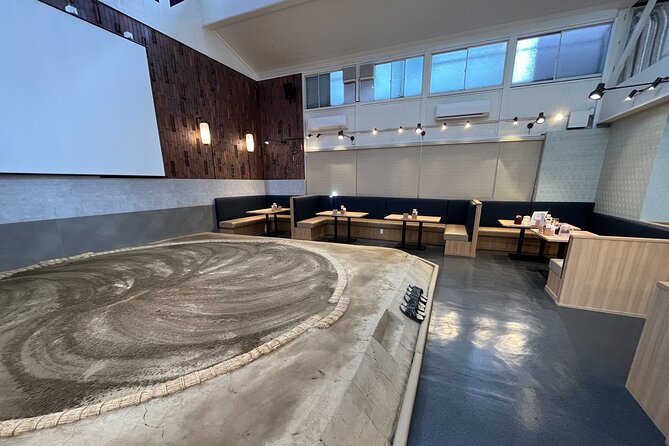
You meet at Yokozuna Tonkatsu and Sumo Lunch, 3-chōme-1-11 Tatekawa, Sumida City, Tokyo 130-0023. The activity ends at that same location, so you do not need to arrange a separate return transfer.
Because the exact tour location is provided after booking, check your confirmation carefully and save the address before setting out. Public transportation serves the area, but avoid assuming the venue is close to your morning stop simply because it is in Tokyo.
The 1:00 pm start gives you a useful half-day plan. Leave the morning open for another activity, arrive with time to find the building, and keep the rest of the afternoon flexible. Since the show lasts about 90 minutes, you can add another Sumida-area stop afterward without committing your entire day.
Confirmation is sent within 48 hours, subject to availability. That timing is important during a short trip, since you will want the booking confirmed before building your schedule around it.
Free cancellation is available up to 24 hours before the local start time for a full refund. Changes or cancellations inside that window are not accepted, and date changes are not allowed within three days of the experience. Flight delays, illness, or other late problems are treated as cancellations, so keep the policy in mind before booking.
My practical verdict on the SUMO show
Book this if you want sumo explained in plain language, a chance to meet retired wrestlers, and an easy cultural activity that combines food with fun. The best value comes when you participate, ask questions, and treat the bout as a shared experience rather than a formal stage show.
I would skip it if your main goal is a substantial meal, expert-level sumo analysis, or guaranteed close seating. The program is short, the meal may not fill every appetite, and a full room can mean standing to see the dohyo.
For most first-time visitors, though, the mix works. You learn the basics, see techniques up close, eat tonkatsu and chanko soup, and leave with photos that feel more personal than a souvenir. At $89.54, it is a special-event price, but it can earn its place in your Tokyo schedule if you want a friendly, participatory introduction to Japan’s national sport.
FAQ
Where does the SUMO show take place?
The experience begins and ends at Yokozuna Tonkatsu and Sumo Lunch, 3-chōme-1-11 Tatekawa, Sumida City, Tokyo 130-0023, Japan.
What time does the activity start?
The listed start time is 1:00 pm.
How long does the experience last?
The sumo demonstration and meal last approximately 1 hour and 30 minutes.
Are food and drinks included?
Tonkatsu and chanko soup are included. Drinks are not included.
Can I participate in a sumo bout?
Yes. If you feel comfortable, you can challenge a retired wrestler in a friendly bout. Participation is optional.
Can dietary restrictions or allergies be accommodated?
Vegetarian and dietary accommodations are available upon request. Add your restrictions or allergies to the reservation notes at least five days before the event date, since later requests may not be handled.
What is the cancellation policy?
You can cancel up to 24 hours before the local start time for a full refund. Cancellations or changes made less than 24 hours before the experience are not accepted.
More Shows in Tokyo
- Mt Fuji & Hakone Cruise, Drum Show Bullet Train 1 Day from Tokyo
★ 4.0 · 7,413 reviews - Tokyo: Samurai Restaurant Show Ticket with 2 Drinks
★ 4.5 · 1,307 reviews - Mt Fuji & Hakone Cruise, Drum Show Bus 1 Day from Tokyo
★ 4.0 · 1,287 reviews - Tokyo Bay Yakatabune Dinner/Day Cruise with Japan Show and Drinks
★ 4.5 · 473 reviews
Just added around Tokyo
- Private Arrival Transfer : Narita International Airport to Central Tokyo City★ 4.5 · 12 reviews
- Narita Airport(NRT): Private Transfer to Tokyo/Yokohama 1-9pax★ 5.0 · 47 reviews
- Private Transfer from Narita Airport to Yokohama Port and City★ 4.5 · 17 reviews
- [Narita Airport Terminals 1, 2] 40-60km Sawara Itako Historic Bike Tour★ 5.0 · 13 reviews
- 3 Day Japan Highlights Tour: Tokyo, Mt.Fuji, Nara, Kyoto, Osaka★ 5.0 · 22 reviews
- Small Town in the Big City: Tasting Tokyo’s Kichijoji★ 5.0 · 195 reviews
- Small Town in the Big City: Tasting Tokyo’s Kichijoji★ 5.0 · 16 reviews
- The 10 Tastings of Tokyo With Locals: Private Street Food Tour★ 5.0 · 48 reviews
Tokyo Tours, compared.

Mt Fuji and Hakone 1-Day Bus Tour Return by Bullet Train
Read our review →
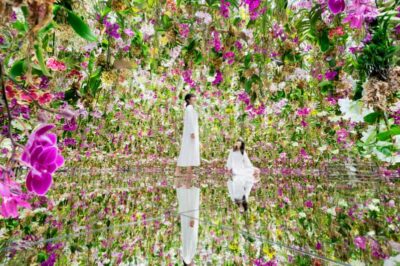
teamLab Planets TOKYO Digital Art Museum Entry Ticket
Read our review →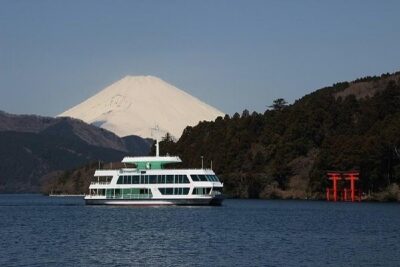
Mt Fuji & Hakone Cruise, Drum Show Bullet Train 1 Day from Tokyo
Read our review →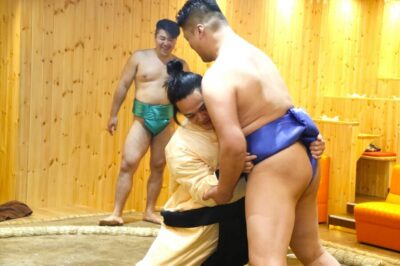
Sumo Show Experience with Chicken Hot Pot and a Photo
Read our review →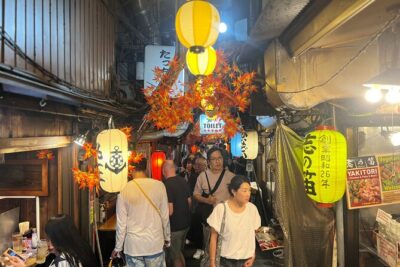
Shinjuku Food Tour (13 Dishes at 4 Local Eateries)
Read our review →
Tokyo Mt Fuji 5th St & Hakone Cruise Bus Tour w/Bullet Train
Read our review →
Flagship 2-Hours Official Street Go-Kart Tour – Tokyo Bay Shop
Read our review →Browse the lists this tour appears in