
Reviewed · TOKYO TOURS
Tokyo Chopstick Making Workshop with Artisan
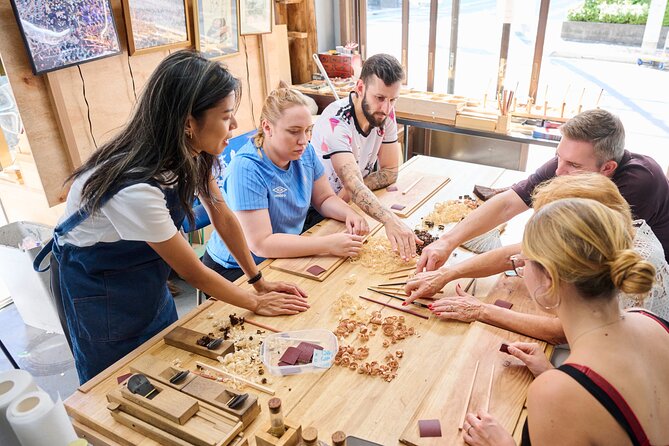
The best thing about this Tokyo workshop is that you do not just buy a souvenir, you make something useful. With a local artisan guiding you, you shape raw wood into a pair of chopsticks, smooth the surface, and leave with a finished item tied to your own time in Japan.
I like the small group size, capped at 10, since you can get help when the wood fights back. I also like the price: at $26.53 per person, the basic session gives you a hands-on activity and a practical keepsake, not another trinket destined for a drawer.
The main catch is that the work can be more physical than expected. Planing wood takes effort, and some visitors need closer to two hours rather than the advertised one, especially with harder wood. Premium timber and engraving also cost extra.
Key points to know before you book
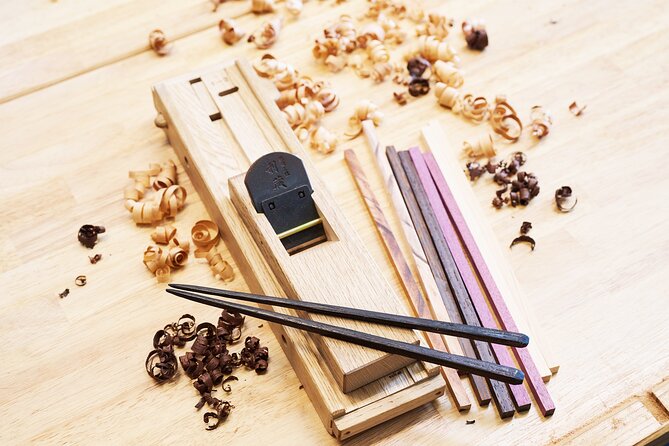
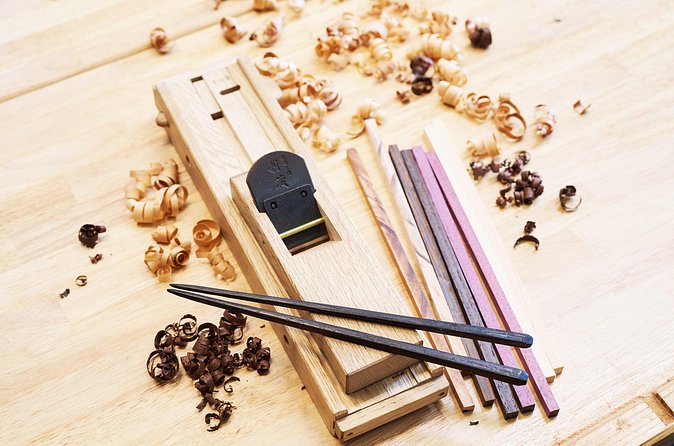
- You make the chopsticks yourself: Shape, plane, smooth, and finish the wood with traditional hand tools.
- The group is limited to 10 people: That keeps the session personal and makes it easier to ask for help.
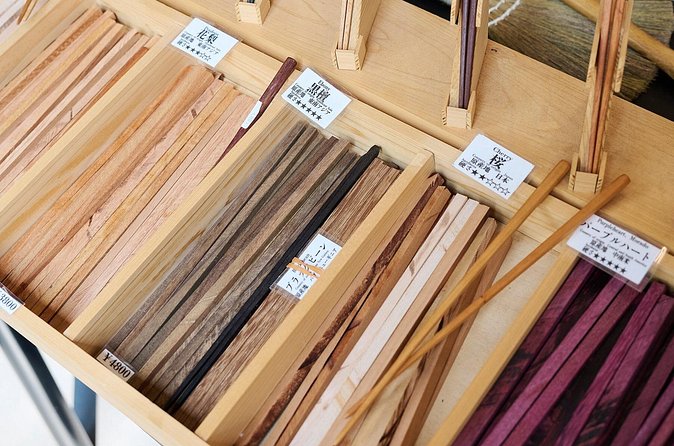
- Wood choice affects the price and effort: Nicer woods cost extra, and some are harder to plane.
- Engraving is available for an added fee: It turns a useful souvenir into a more personal gift.
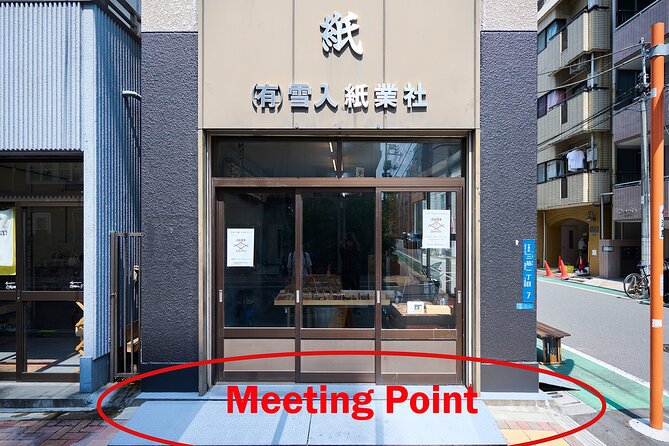
- The workshop is in Taito City: The meeting point is 1-chōme-7-1 Misuji, near public transportation and in a long-established craft area.
- The timing can run long: The activity is listed at about one hour, but allow up to two hours if you work slowly or choose a demanding wood.
Making a souvenir instead of buying one
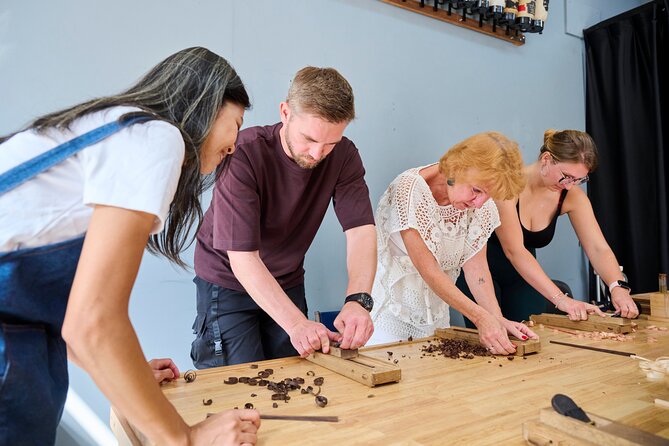
Tokyo gives you no shortage of souvenirs. You can pick up ceramics, sweets, stationery, fans, and chopsticks in countless shops. This workshop offers something better for many people: you spend part of your visit making the object yourself.
That difference matters. The finished chopsticks are not simply Japanese-themed merchandise. You have shaped them, smoothed them, and watched the plain wood become something you can use at home. They also pack easily, especially since the finished pair is wrapped for you.
The activity has a quiet, practical charm. You are not racing from one sight to the next, and you do not need prior craft experience. The artisan explains the process, demonstrates the tools, and helps you correct your technique. The atmosphere is designed for beginners, though the work still asks you to pay attention.
I would not book this expecting a formal lecture on Japanese woodworking. The cultural explanation about chopsticks adds useful context, but the main focus is doing the work. If you want a long lesson in craft history, this may feel light. If you want to use your hands and go home with something personal, it fits well.
More hands-on workshops in Tokyo:
- Sushi Making Tokyo Roll and Authentic Japanese Sushi Class
★ 5.0 · 3,971 reviews - Tokyo: Roll and Authentic Sushi Making Class in Asakusa
★ 4.9 · 1,957 reviews - Tokyo Shinjuku Chopsticks Making Class
★ 5.0 · 1,763 reviews
Entering Tokyo’s Taito craft neighborhood
The workshop meets at 1-chōme-7-1 Misuji, Taito City, a part of Tokyo associated with traditional craft work. The location gives the activity a better setting than a generic hotel meeting room. You are working in a neighborhood where making and selling practical goods has long been part of local life.
The meeting point is near public transportation, which helps when fitting the class into a busy Tokyo day. It also gives you a chance to pair the workshop with nearby stops. One participant found it walkable to the Ryogoku Kokugikan, so you may be able to combine the class with the sumo stadium area, depending on your schedule.
The location is not presented as a sightseeing stop with a long guided walk. You go there for the workshop itself. Still, the setting adds context: a handmade pair of chopsticks feels more meaningful when you make it in a working craft district rather than in a temporary tourist attraction.
Bring a little patience when you arrive. The workshop space is described as small, with room for about 10 people. That limits elbow room, but it also means the instructor can watch what you are doing. One of the strongest points of the experience is the personal help, especially when you are unsure how much wood to remove.
Choosing the wood and understanding the extra cost
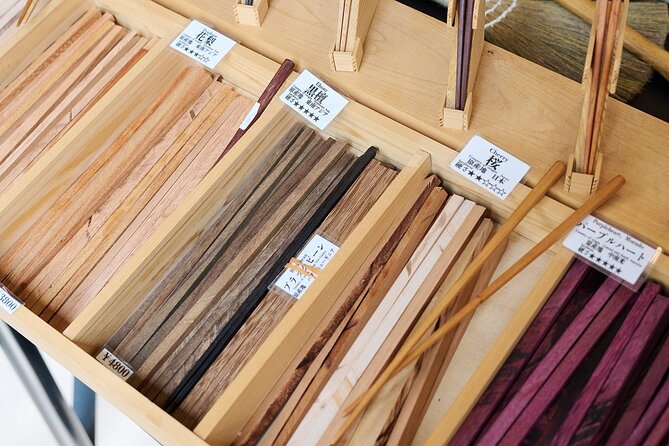
Your first major decision is the wood. You can choose from several types, but the price is not identical for every option. The basic booking price is $26.53, while more attractive or less common woods may carry an additional charge.
This is worth knowing before you start. The advertised price is a good entry point, but it does not necessarily cover every finish you might want. Ask about the cost of premium wood and engraving before committing so the final bill does not surprise you.
Wood choice also changes the physical challenge. Softer wood is generally more forgiving for someone who has never planed before, while harder wood can demand more pressure and patience. A first-time maker should not automatically choose the most expensive material. A simpler wood may produce a smoother experience and still result in a handsome pair.
I like that the choice is part of the process. You are not handed an identical kit and told to follow a fixed template. The material affects the feel of the work and gives you a small lesson in why woodworkers care so much about grain, hardness, and finish.
The tradeoff is that the menu of materials may tempt you to spend more than planned. The workshop remains a reasonable value at the base price, but premium selections and engraving can shift the total.
Shaping chopsticks with traditional hand tools
Once you choose the wood, the hands-on portion begins. You shape the chopsticks, plane the surface, and work toward an even, comfortable form. This is simple to understand but not effortless to perform.
That physical side is one of the useful surprises. Several people found the planing to be an arm workout. If you have never used a hand plane, the first few strokes may feel awkward. The instructor can show you how to hold the tool and how to work with the grain, but you still do the labor.
Think of the class as light craft work, not a demonstration where you watch an expert do everything. Your pair will show signs of your own effort. That is part of the appeal, though it also means the result may not be perfectly uniform.
The guides are there throughout the process. Angie, Sakura, Rasmus, and Kaana are among the instructors praised for being welcoming and helpful. The exact guide depends on the session, but you can expect direct support rather than a self-guided activity with only a printed sign.
One important tip: do not rush the shaping stage. Removing too much wood is hard to undo, and smoothing takes time. If you are making chopsticks with children, help them manage the tool safely and let them work at a steady pace. The activity has been a hit with children around 10 and 12, but younger participants may need more hands-on assistance from an adult.
A few more Tokyo half-days to weigh up
- Mt Fuji and Hakone 1-Day Bus Tour Return by Bullet Train
★ 5.0 · 26,383 reviews - 1-Day Tokyo Bus Tour
★ 5.0 · 14,250 reviews - Tokyo: TOKYO SKYTREE® Admission ticket
★ 4.5 · 11,192 reviews - Tokyo: teamLab Planets TOKYO Digital Art Museum Entry Ticket
★ 4.6 · 9,779 reviews
Smoothing, finishing, and optional engraving
After the main shaping, you smooth the surface and work toward the final finish. This is where the chopsticks begin to feel like a real household item rather than a rough piece of wood.
The finishing stage rewards care. Small uneven areas may become more noticeable as you handle the chopsticks, so it is worth asking the artisan to check your work. You are not expected to arrive with woodworking skills, and the point is not to produce a factory-perfect pair. The point is to understand the steps and leave with a usable result.
Engraving is an optional extra. It can add initials, a name, or another personal mark, depending on what the workshop offers at the time. The added cost is separate, but it may be worthwhile if you are making a gift or want a clear reminder of your Tokyo visit.
I would decide about engraving early rather than at the last second. It affects the final look and budget. If you are watching your spending, the plain finished chopsticks already make a strong souvenir. If you want something distinctly yours, engraving gives the pair an extra touch.
At the end, the chopsticks are wrapped beautifully and ready to take home. That practical packaging matters if you are still moving between hotels or have several days of sightseeing ahead.
How long the workshop really takes
The official duration is about one hour. That is a useful planning figure, but you should leave some extra time around it.
Some sessions finish near the expected length, especially when participants choose easier wood and work at a steady pace. Others take closer to two hours. The difference depends on the material, your experience with planing, and how much care you put into smoothing and finishing.
The good news is that you are not pushed out the door when the hour ends. One account described taking about two hours and never feeling rushed. That relaxed pace helps beginners, but it can create a scheduling problem if you have reserved a museum entry or train soon afterward.
I would avoid placing this immediately before an important timed booking. Allow at least an extra hour beyond the listed duration if your day is tight. If you finish in about an hour, you gain useful spare time. If the work takes longer, you will not be worrying about missing the next stop.
The compact format is still a strength. You can fit it into a half-day in Taito or use it as a rainy-day alternative to a longer excursion. One couple chose it after changing plans because the weather looked poor, then paired it with a sushi-making class. It works well as a flexible indoor activity.
Is $26.53 good value?
At $26.53 per person, the workshop is fairly priced for a short, guided craft activity in Tokyo. The value comes from three parts: instruction, materials, and the finished object you take home.
You are paying for more than a retail pair of chopsticks, but comparing it only with shop prices misses the point. A store-bought pair may cost less, especially at the basic end. This session gives you the process, the advice of an artisan, and a story connected to the object.
The value improves if you enjoy hands-on activities. If you prefer sightseeing with minimal effort, the cost may feel high for a small item and an hour of work. If you often buy crafts when you travel, making one yourself can be a smarter use of money than collecting another generic souvenir.
Budget for possible extras. Premium woods cost more, and engraving costs more. One of the most useful spending tips is to choose an easier, standard wood unless the special material matters to you. You can also skip engraving and still leave with personalized chopsticks because you made them yourself.
There is one point to check before booking through an outside platform. A participant found that walk-ins were accepted and cost less than the prepaid booking. That may not apply to every date or time, and booking gives you a confirmed place, but it is worth comparing the direct price if you are already nearby and your schedule is flexible.
Who will enjoy this most
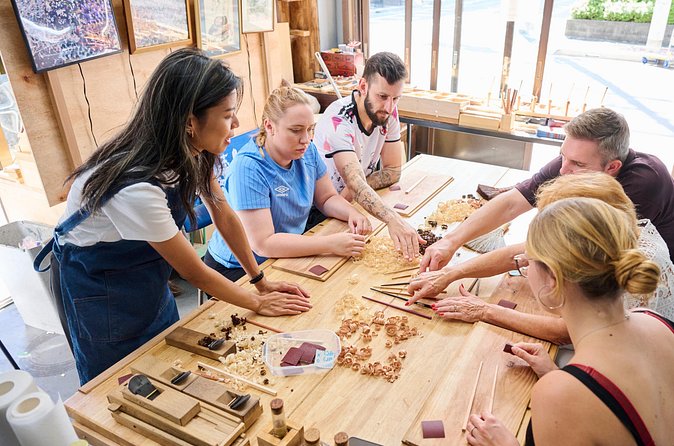
This is a strong choice for first-time craft makers, families, couples, and solo visitors who want a quieter activity between major Tokyo sights. The session is beginner-friendly, and the small group makes it easier to receive help.
Children can enjoy the clear goal: start with wood, finish with chopsticks. The workshop has worked well for children around 10 and 12, but adults should expect to supervise tool use and help with the more demanding parts.
It also suits people who care about useful souvenirs. You can eat with the chopsticks at home, give them as a gift, or keep them as a daily reminder of Japan. The wrapped finish makes them easy to carry.
I would think twice if you have limited arm strength, dislike repetitive hand work, or want a fully passive cultural activity. The planing can be tiring. The class is relaxing in pace, but it is still work.
The workshop is also a good option for a rainy day. It gives you a break from Tokyo’s streets without reducing your day to simply sitting in a café. The one-hour format keeps the commitment modest, though the actual session may take longer.
Practical planning tips for the meeting point
Use the full address when planning your route: 1-chōme-7-1 Misuji, Taito City, Tokyo 111-0055, Japan. The activity ends at the same meeting point, so you do not need to arrange a separate pickup or figure out where the final handoff occurs.
The experience accepts mobile tickets, and confirmation is provided when you book. It is near public transportation, but the information does not specify a particular station or line, so check your route before leaving rather than assuming the nearest stop.
The group limit is 10 people. That is small enough for individual help, but the room may feel snug if the session is full. Arrive with your booking details ready and allow time to find the address.
Most people can participate, though the physical work is worth considering. You will use your hands and arms, and the process may take longer if you need more breaks or choose a difficult wood.
Cancellation is flexible if your plans change early. You can receive a full refund when you cancel at least 24 hours before the local start time. Cancellations or changes made less than 24 hours ahead are not accepted for a refund.
Should you book the chopstick workshop?
Book this if you want a personal souvenir, a small-group class, and a real task rather than a quick photo stop. The artisan guidance, manageable price, and same-day finished product make it a good fit for a Tokyo itinerary with room for one calm, creative hour.
Choose the basic wood if you are new to planing, and allow up to two hours even though the listed duration is about one. Ask about the cost of premium wood and engraving before starting.
Skip it if your schedule is packed with timed reservations or if you want a detailed lecture on Japanese chopstick history. For most people who enjoy making things, though, this is a memorable way to spend part of a Tokyo day, and the final souvenir earns its place in your luggage.
FAQ
How long does the Tokyo chopstick workshop last?
The activity is listed as approximately one hour. Depending on the wood and your pace, it may take closer to two hours.
Where does the workshop start?
It starts at 1-chōme-7-1 Misuji, Taito City, Tokyo 111-0055, Japan.
Where does the activity end?
The workshop ends back at the meeting point.
How much does the workshop cost?
The listed price is $26.53 per person. Premium wood and engraving may require additional payment.
How many people can join the workshop?
The maximum group size is 10 participants.
Can beginners take part?
Yes. The workshop is designed for beginners, and most people can participate. The work does require some hand and arm effort.
Can I take my chopsticks home the same day?
Yes. You finish the chopsticks during the session and take them home wrapped for use or as a gift.
Can I cancel for a full refund?
Yes, if you cancel at least 24 hours before the experience start time. Cancellations or changes made less than 24 hours before the local start time are not accepted for a refund.
Just added around Tokyo
- Private Arrival Transfer : Narita International Airport to Central Tokyo City★ 4.5 · 12 reviews
- Narita Airport(NRT): Private Transfer to Tokyo/Yokohama 1-9pax★ 5.0 · 47 reviews
- Private Transfer from Narita Airport to Yokohama Port and City★ 4.5 · 17 reviews
- [Narita Airport Terminals 1, 2] 40-60km Sawara Itako Historic Bike Tour★ 5.0 · 13 reviews
- 3 Day Japan Highlights Tour: Tokyo, Mt.Fuji, Nara, Kyoto, Osaka★ 5.0 · 22 reviews
- Small Town in the Big City: Tasting Tokyo’s Kichijoji★ 5.0 · 195 reviews
- Small Town in the Big City: Tasting Tokyo’s Kichijoji★ 5.0 · 16 reviews
- The 10 Tastings of Tokyo With Locals: Private Street Food Tour★ 5.0 · 48 reviews
Tokyo Tours, compared.

Mt Fuji and Hakone 1-Day Bus Tour Return by Bullet Train
Read our review →

teamLab Planets TOKYO Digital Art Museum Entry Ticket
Read our review →
Mt Fuji & Hakone Cruise, Drum Show Bullet Train 1 Day from Tokyo
Read our review →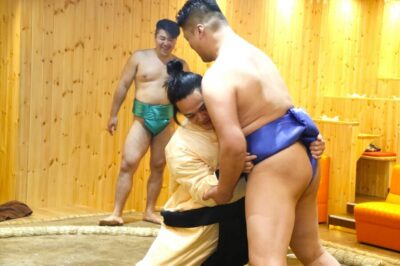
Sumo Show Experience with Chicken Hot Pot and a Photo
Read our review →
Shinjuku Food Tour (13 Dishes at 4 Local Eateries)
Read our review →
Tokyo Mt Fuji 5th St & Hakone Cruise Bus Tour w/Bullet Train
Read our review →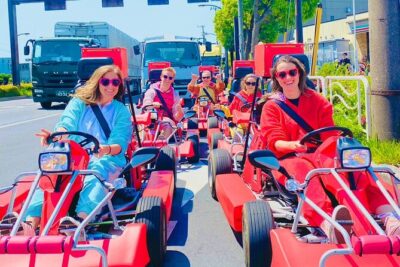
Flagship 2-Hours Official Street Go-Kart Tour – Tokyo Bay Shop
Read our review →Browse the lists this tour appears in