
Reviewed · KANAZAWA TOURS
Kanazawa: Samurai Swordsmanship Lesson at a rented temple
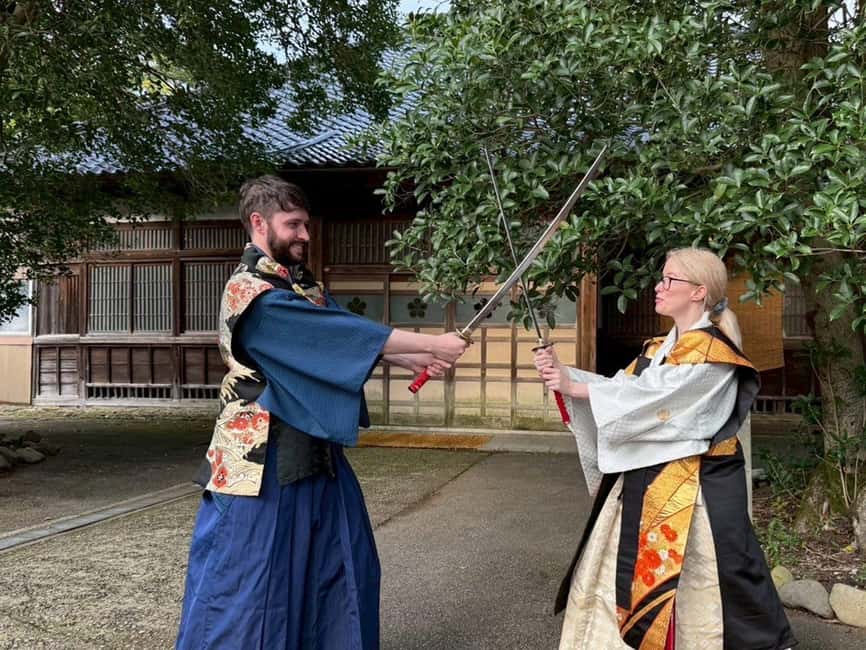
A sword lesson in a rented temple is a fine way to meet Kanazawa’s past without spending half a day in a museum. You change into a samurai kimono, learn basic katana movements with Shin, and train in a quiet temple setting used only for your private group.
I like the small, personal format and the fact that photos and video are included, not left to chance. I also like the mix of movement, history, and dress-up. The main consideration is communication: English is available, but the instruction uses clumsy English and a prepared script, so this is more about guided practice and atmosphere than a long, complex lecture.
Key points to know before booking
- Private temple setting: After meeting near FamilyMart Kanazawa Saiwai-cho, you walk or drive to a nearby rented temple.
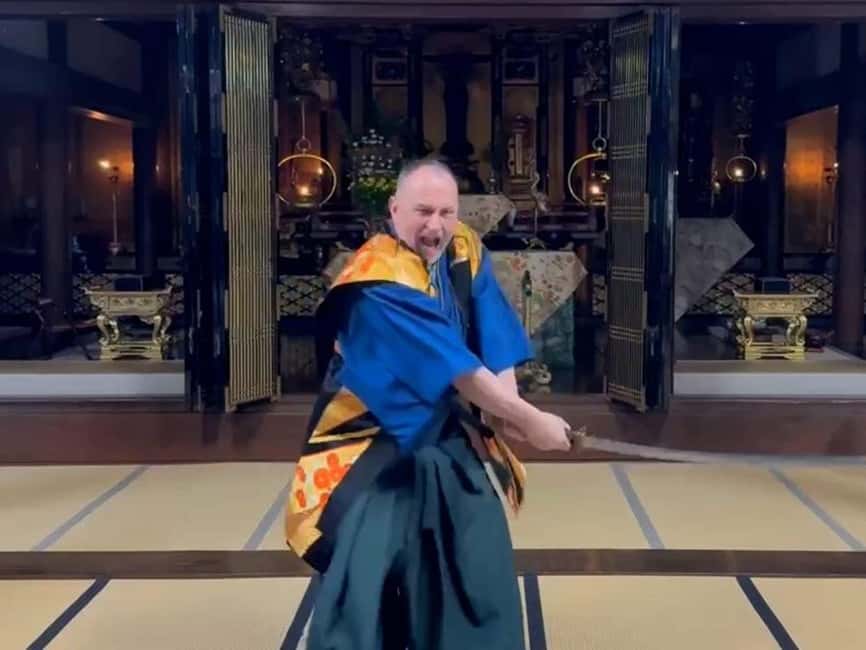
- Shin leads the lesson: He teaches basic sword movements and adds stories about samurai culture and the temple.
- Kimono included: Allow about 10 minutes to change into traditional samurai clothing.
- A compact one-hour plan: The schedule includes changing, an explanation, roughly 30 minutes of practice, and a final photo session.
- Photos and video are sent later: An assistant records the session, then the images and training video are emailed to you.
- Best for ages 12 and up: At least two participants are required, and an interpreter costs extra if you need one.
A samurai lesson in Kanazawa’s old temple quarter
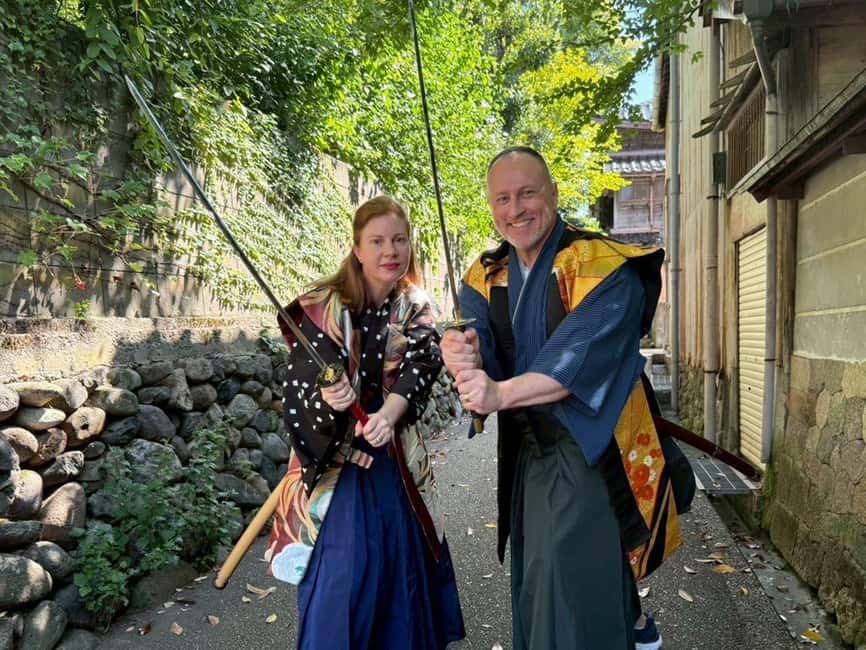
Kanazawa is a strong setting for this experience. The city’s samurai past stretches back about 400 years, and its old districts still give the place a sense of connection to Japan’s warrior class. You are not simply posing with a sword in a modern studio. You are changing clothes and practicing inside an old temple rented for the lesson.
That setting does much of the work. A temple brings quiet, space, and a sense of ceremony. It also gives your photographs more character than a plain activity room. You might notice the architecture and surroundings more clearly because the class is held in a private space, without a larger tour group moving through it.
The experience is not a full study of Japanese swordsmanship. In one hour, you learn selected movements and basic handling under Shin’s direction. Think of it as a cultural activity with real instruction, not a martial arts course that will make you a trained swordsman by lunchtime.
That distinction matters. If you want an intensive lesson in technique, this will be too short. If you want to understand the discipline and ritual of swordsmanship while enjoying a memorable Kanazawa afternoon, the format works well.
More Samurai and Ninja Experiences in Kanazawa
- Kanazawa: Samurai Residence Remains Nomura Family admission
★ 4.4 · 111 reviews - Kanazawa: Samurai, Matcha, Gardens and Geisha Full-Day Tour
★ 4.9 · 75 reviews - Full-Day Tour from Kanazawa: Samurai, Matcha, Gardens and Geisha
★ 5.0 · 68 reviews
Meeting Shin and reaching the temple
Your meeting point is the parking lot beside the FamilyMart Kanazawa Saiwai-cho store. Staff wait with a sign showing your name, which makes the first meeting fairly clear even if you do not speak Japanese.
From there, you walk or drive to a nearby temple. The exact transfer method depends on the arrangements for your group, so you should allow a little flexibility rather than planning another activity immediately at the one-hour mark. The temple is close, but the published schedule counts the full experience from the meeting and preparation through the final photographs.
Shin is the central personality here. He teaches in Japanese and English, and his style is friendly, patient, and playful. Families especially seem to benefit from his relaxed manner. One family found the lesson useful on a rainy Kanazawa day, and Shin even made sure family members had shelter at the temple during a storm.
That kind of care is worth noting. The lesson is not only a set of commands. Shin also explains samurai customs, katana history, and details about the temple. His humor helps when your first sword movements look less like a disciplined warrior and more like someone trying to remember a dance routine.
English communication is practical rather than polished. The information says the lesson uses clumsy English and an instructional script. You should be able to follow the movements, but do not book this expecting a long English-language seminar on Japanese history. If you need detailed interpretation, an interpreter can accompany you for an additional fee.
Ten minutes in a samurai kimono
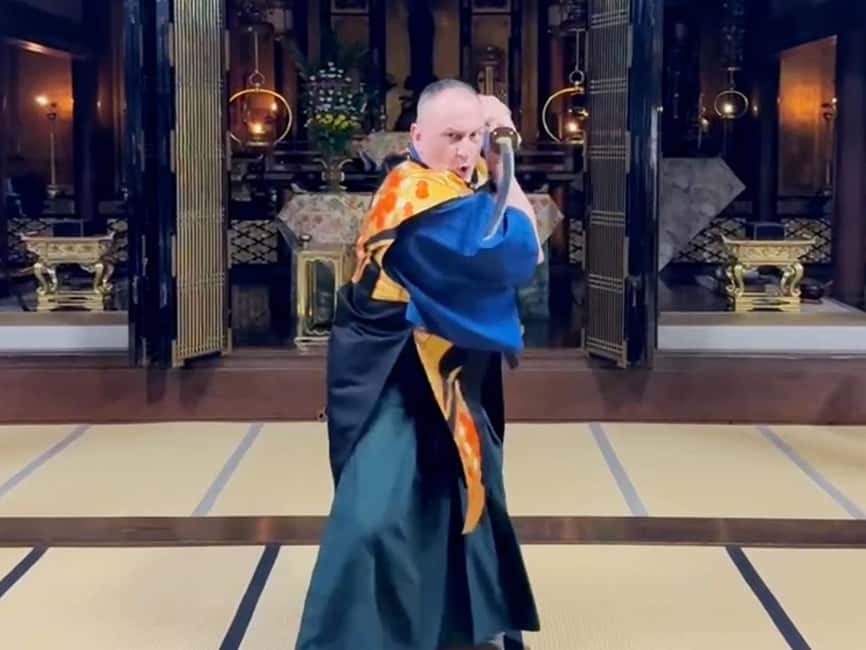
The first formal part of the session is changing into a traditional samurai kimono. This takes about 10 minutes and sets the tone for everything that follows.
The clothing is more than a costume for a photograph. It changes how you carry yourself. A kimono encourages slower movements, and wearing it while learning sword positions makes the activity feel more connected to the setting. You also get a better sense of how clothing, posture, and ceremony work together in traditional Japanese arts.
You should arrive in comfortable clothes. The information does not specify changing-room arrangements or footwear, so practical clothing is the safest choice. Avoid arriving in an outfit that makes changing awkward or takes a long time.
The clothing portion is also a good reason to allow the full hour. This is not 60 minutes of nonstop sword practice. You spend about 10 minutes dressing, 10 minutes hearing the explanation, 30 minutes in the main activity, and 10 minutes taking commemorative photographs.
That balance suits most people. Children under 12 cannot join, but older children and teenagers can enjoy the theatrical side of the clothing while still taking the instruction seriously. Adults who normally avoid costume activities may find the temple and the formal movements make this feel less like a novelty photo stop.
What you learn during the 30-minute practice
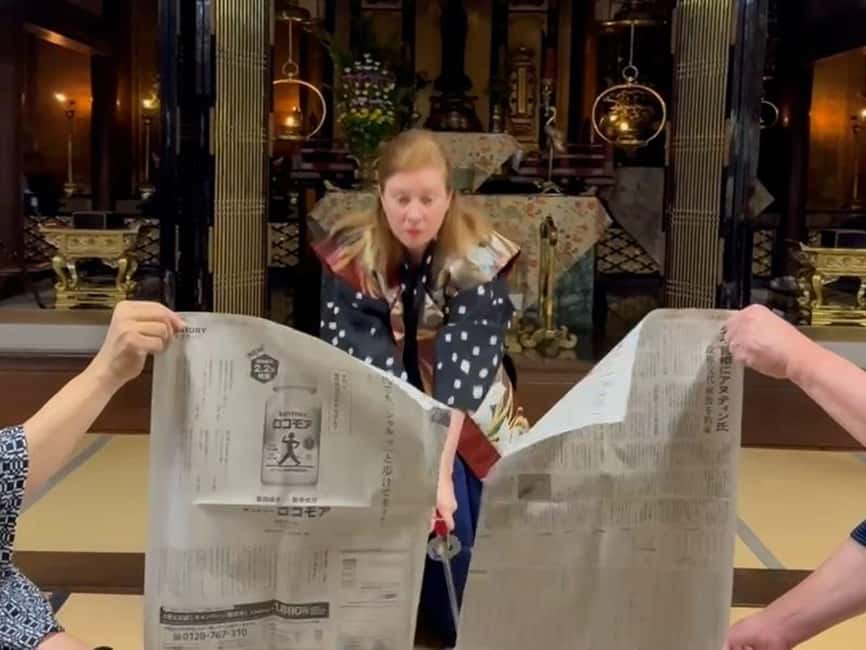
The lesson begins with an explanation before you handle the sword. Shin introduces the basic ideas behind swordsmanship and the samurai tradition, then shows you the movements step by step.
The exact sequence is not provided, so I would not promise specific forms or advanced techniques. You can expect a beginner-level introduction, with attention to posture, handling, and a short series of movements. The instructor demonstrates, you copy, and he corrects or encourages you as you go.
That method is useful for a one-hour activity. You do not need previous experience, and the lesson can stay accessible to a mixed group. The private format also means the pace can suit your party better than a large class. If one person needs extra explanation or another wants to repeat a movement for the camera, there is more room for that.
The sword itself is presented as a katana in the activity description, but details about the training weapon are not provided. You should follow Shin’s instructions closely and treat the equipment with care. This is an organized swordsmanship lesson, not an opportunity for unsupervised sword handling.
Several parts of the experience add value beyond the basic motions. Shin talks about the history of samurai and the temple, and he connects the physical movements with Japanese culture. That cultural explanation is important because it gives the activity a reason to exist. Without it, you would simply be learning a short choreography in costume.
The session is also meant to be fun. Shin has been praised for being encouraging, entertaining, and easy to enjoy. Expect laughter, especially when your movements need more practice. That is part of the appeal, not a sign that the class lacks seriousness.
More samurai and ninja sessions in Kanazawa:
- Try Mindful Calligraphy Near Kanazawa’s Ninja Temple
★ 5.0 · 50 reviews - Kanazawa Private Tour: Highlights of an Old Samurai Town
★ 5.0 · 46 reviews - Kanazawa Ninja Temple Half Day E-bike tour
★ 5.0 · 14 reviews - Tokyo: Samurai Restaurant Show Ticket with 2 Drinks
★ 4.5 · 1,307 reviews
A private group makes the lesson more comfortable
This is a private-group experience, which is one of its strongest features. You do not need to perform in front of strangers, and your party can take photographs without a crowd of other participants in the frame.
The private format is especially helpful for families and couples. One person can be more playful while another takes the technique seriously, and Shin can work with both styles. The lesson also feels more personal when you can ask questions about the samurai, the temple, or the clothing as they come up.
At least two people must book. That makes the activity a natural fit for a couple, family, or small group of friends, but not for a solo visitor unless you can join another booking or arrange otherwise. The supplied information does not confirm that solo participation is possible.
The group arrangement also affects value. At $80 per person, the price is not the cheapest short activity in Kanazawa. You are paying for a private setting, kimono rental, an instructor, an assistant for photographs and video, and a carefully staged cultural experience. If you only want to try on a costume, the cost may feel high. If you value personal instruction and a private temple backdrop, it is easier to justify.
Photos and video are part of the experience
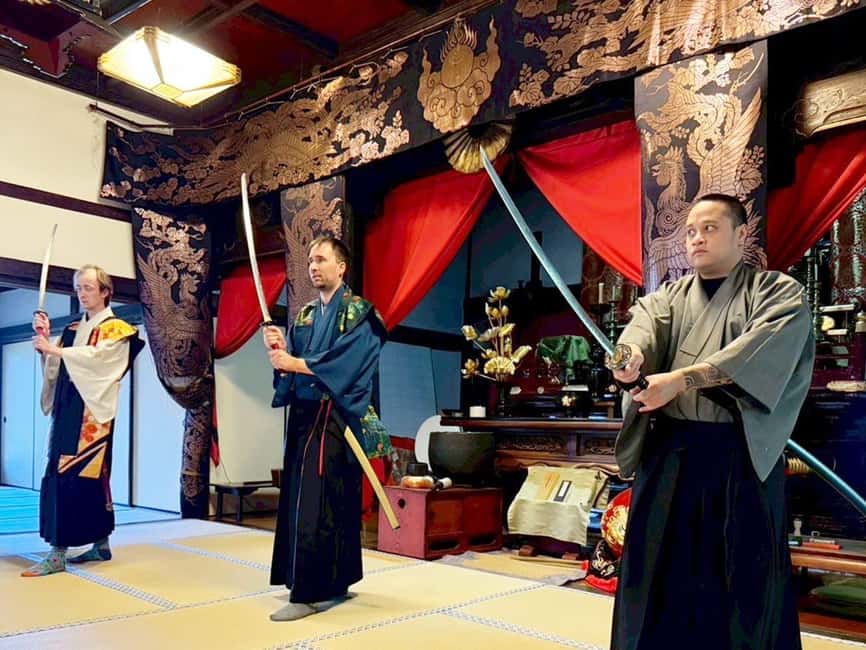
The final 10 minutes are set aside for commemorative photographs. This is not a rushed snapshot at the exit. You have time to pose in the temple while dressed in full samurai clothing, and an assistant records images and video during the lesson.
The photographs matter because sword movements are difficult to capture while you are busy concentrating. Having someone else handle the camera lets you stay involved. The video can also show the sequence of movements and give you a funny, useful record of how the lesson went.
The images and training video are emailed later. They are not necessarily handed over before you leave, so make sure the provider has a reliable email address. One booking party had not yet downloaded the files at the time of writing, so plan to check your inbox after returning home.
This is one of the better features for families. Parents can take part instead of standing behind a phone, and children get a record of the occasion beyond a few quick photographs. It also gives the $80 price more weight, since the keepsakes are included rather than sold as an extra package.
Rainy-day value and seasonal planning
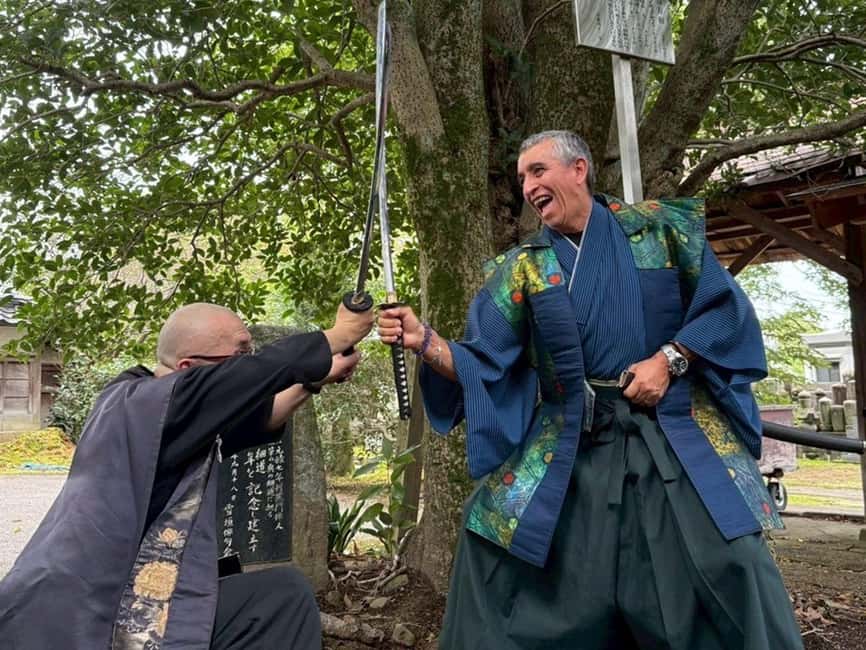
Kanazawa is known for wet weather, and this activity can help on a rainy day. Much of the lesson takes place inside the temple, so you have a cultural plan that does not depend on clear skies.
You should still dress for the walk or drive from the meeting point. The activity information does not promise that every part of the transfer is under cover. Comfortable clothes remain the main requirement, and sensible rain protection is wise if the forecast is poor.
A temple lesson can also feel especially atmospheric in unsettled weather. Rain outside gives the indoor training a calm, focused quality. It is one of the few activities where bad weather may add to the mood, though strong storms could affect the transfer or timing.
The schedule is only one hour, making it easy to fit beside Kanazawa sightseeing. Still, the meeting, changing, temple transfer, and email delivery of the photos mean you should not treat it as a precise 60-minute door-to-door appointment. Check the available starting times before booking and leave room around it.
Who will enjoy this most
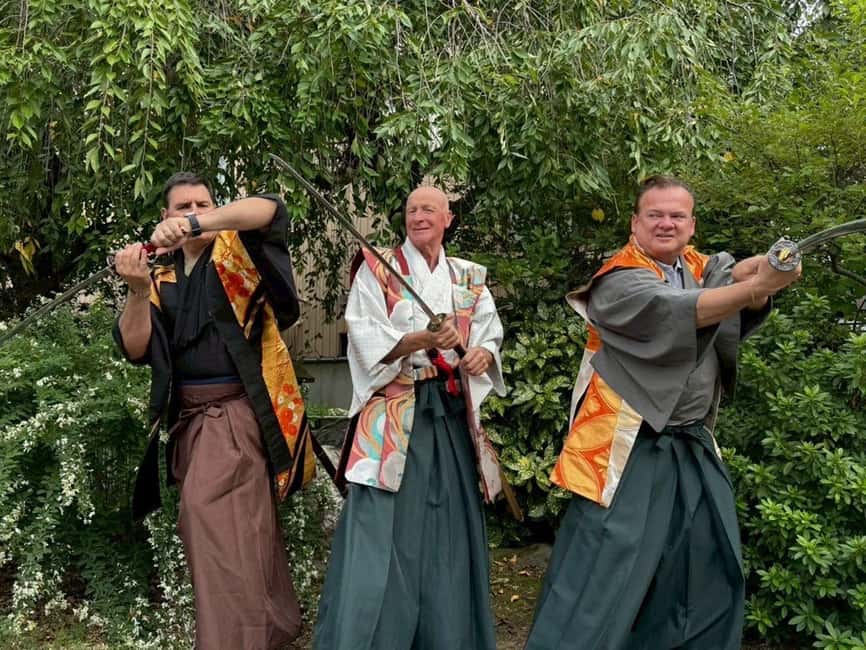
I would recommend this for couples, families with children 12 or older, and friends who want a hands-on cultural activity. It is also a good choice if you have already visited Kanazawa’s major sights and want something more personal than another viewing platform or museum room.
It suits people who like history with a playful edge. You hear about samurai culture, practice movements, dress in traditional clothing, and leave with photos. The lesson gives you something to do, not just something to look at.
It is less suitable for a solo visitor because the minimum booking is two people. It may also disappoint anyone seeking formal martial arts training, a long academic talk, or fluent, detailed English interpretation. The basic English and prepared script should be enough for the movements, but an interpreter costs extra if language is central to your experience.
The activity is also not appropriate for children under 12. The provider gives no further suitability details, so anyone with concerns about movement or handling a sword should ask before booking.
Is $80 per person a fair price?
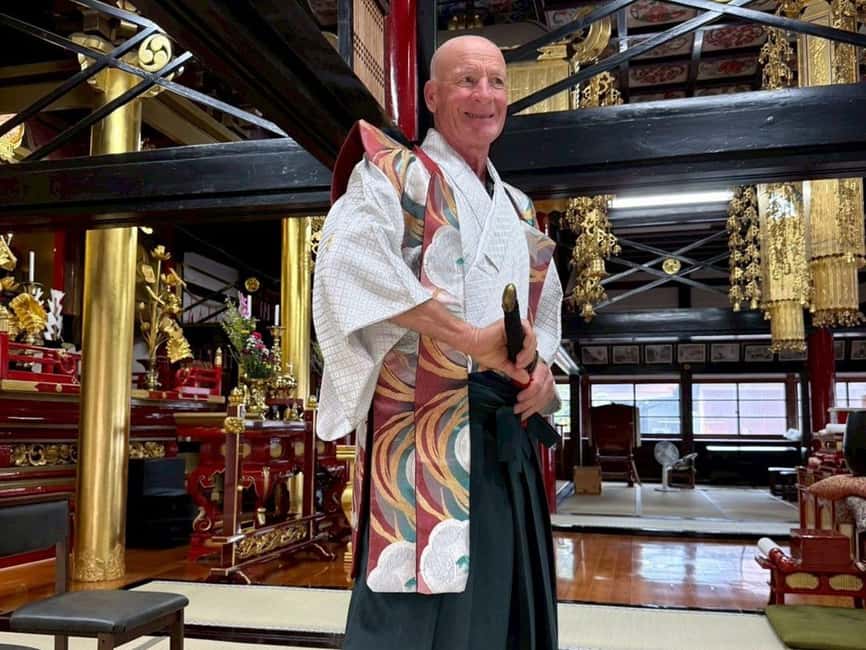
At $80 per person, I see this as a special-occasion activity rather than a bargain. The one-hour length is short, but the price covers more than the practice itself: kimono rental, private temple access, instruction from Shin, and photographs and video afterward.
The value depends on what you want from Kanazawa. If you are comparing it with a low-cost museum visit, it will look expensive. If you are comparing it with a private cultural lesson that includes a setting, clothing, teaching, and professional-looking memories, the price is more reasonable.
I especially like that the private group does not appear to be a paid upgrade. You get the temple and instructor for your own party, which makes the hour feel less like a standard class. The strongest value comes when two or more people participate together and everyone wants to be in the photographs.
Free cancellation up to 24 hours before the start gives you some protection, and you can reserve now and pay later. Those policies help if your Kanazawa schedule is still moving, though you should always check the exact starting time before committing your day.
Should you book the Kanazawa samurai lesson?
Book it if you want a short, personal cultural activity with a strong setting and a friendly instructor. Shin’s patient teaching, the old temple, and the included photos and video make this more memorable than a simple costume rental.
I would give it a pass if you are traveling alone, need advanced English interpretation, or want a serious multi-hour sword course. For most couples and families with participants aged 12 and up, though, this is an easy activity to fit into a Kanazawa visit, especially on a rainy day.
The best reason to book is the combination: you learn basic movements, hear about samurai culture, wear the clothing, and leave with a record of the experience. It is compact, good-natured, and rooted in Kanazawa’s samurai identity without asking you to pretend you have become a master swordsman in 30 minutes.
FAQ
How long does the samurai swordsmanship lesson last?
The full experience lasts one hour. About 10 minutes are used for changing into the kimono, 10 minutes for an explanation, 30 minutes for the main practice, and 10 minutes for commemorative photographs.
Where do I meet the instructor?
You meet staff in the parking lot of the FamilyMart Kanazawa Saiwai-cho store. They wait with a sign displaying the guest’s name, then walk or drive with you to a nearby temple.
Is the experience private?
Yes. It is offered for a private group, with a minimum of two participants.
Is a samurai kimono included?
Yes. Samurai kimono rental is included in the $80 per person price.
Are photos and videos included?
Yes. Training videos and images are included. They are emailed to you later rather than necessarily provided before you leave.
What language is used during the lesson?
The instructor can use Japanese and English. The English is described as clumsy English with an instructional script. An interpreter can accompany you if needed, but an interpretation fee is not included.
More Workshops in Kanazawa
- Kanazawa: Sushi & Japanese Cooking Class at a Historic School
★ 5.0 · 66 reviews - Sushi Making Tokyo Roll and Authentic Japanese Sushi Class
★ 5.0 · 3,971 reviews - Kyoto: 45-Minute Tea Ceremony Lesson Experience
★ 4.3 · 2,378 reviews - Tokyo: Roll and Authentic Sushi Making Class in Asakusa
★ 4.9 · 1,957 reviews
Just added around Kanazawa
- Kanazawa: Sushi & Japanese Cooking Class at a Historic School★ 5.0 · 66 reviews
- Taste of Kanazawa (Food tasting in Omicho Market & Higashi Chaya)★ 5.0 · 58 reviews
- Shirakawago & Kanazawa from Kanazawa★ 5.0 · 51 reviews
- Takayama and Shirakawago/Photoshoot by professional photographer★ 5.0 · 67 reviews
- Kanazawa private 1 day/Photoshoot by professional photographer★ 5.0 · 33 reviews
- Photoshoot session by professional photographer in Kanazawa★ 5.0 · 42 reviews
- Private Tour Kanazawa, Shirakawago, Hida Furukawa,Takayama★ 5.0 · 108 reviews
- Kanazawa private half day/Photoshoot by professional photographer★ 5.0 · 38 reviews
Kanazawa Tours, compared.
World Heritage Shirakawa-go and Experience Tours from Kanazawa
Read our review →
![[One-day bus tour departing from Kanazawa Station] Shirakawa-go and Gokayama – Two World Heritage Villages Enjoyable Bus Tour](https://media3.thejapanesetraveller.com/wp-content/uploads/one-day-bus-tour-departing-from-kanazawa-station-shirakawa-go-and-gokayama-two-world-heritage-villages-enjoyable-bus-tour-400x267.jpg)
[One-day bus tour departing from Kanazawa Station] Shirakawa-go and Gokayama – Two World Heritage Villages Enjoyable Bus Tour
Read our review →
World Heritage Shirakawa-go Perfect Guided Tour from Kanazawa
Read our review →
Browse the lists this tour appears in