
Reviewed · TOKYO TOURS
Tokyo Castle & Imperial PalaceーShogun Walking Tour
The most interesting part of this walk is that you are not simply looking at palace walls and tidy gardens. You are tracing the defensive plan of Edo Castle, Japan’s largest fortress, from its gates and guardhouses to the place where the main tower once rose. Samurai security becomes much easier to understand when you see the stone walls and narrow approaches in person.
I like the small-group format of up to 10 and the way the two-hour route mixes serious history with a peaceful garden. I also like the price: at $23.88, you are paying mainly for interpretation rather than admission, since the stops are free. The main drawback is that the tour covers open grounds, steep slopes, and stairs, so hot weather, rain, or tired feet can affect your enjoyment.
Key details that make this walk useful
- Edo Castle’s defense system: See original gates, stone walls, turrets, and guardhouses while learning how the shogun was protected.
- A clear introduction to Japan’s imperial past: The guide connects the 2,600-year imperial system with the rise and rule of the samurai.
- A peaceful finish: Ninomaru Garden brings koi, seasonal plants, and a pond into a tour otherwise centered on military power.
- Helpful visual aids: Guides including Keiko have used laminated images of former castle layouts, watchtowers, and the imperial family.
- English only: Japanese-language support is not provided, so you should be comfortable following a history-focused tour in English.
- Good value at $23.88: All listed stops have free admission, but a guide helps you understand what is easy to miss on your own.
Why Edo Castle is the real star of the tour
Tokyo’s Imperial Palace can feel elusive. The Emperor’s residence is closed to the public, and much of the palace compound is viewed from outside. That can leave you with a grand setting but little sense of what happened there.
This tour solves part of that problem by focusing on the former Edo Castle, the power center of Japan’s shoguns. The route shows you what remains of the fortress and explains how each gate, tower, and guard post fit into its defense. You are not touring the Emperor’s private home. You are walking through the older castle grounds and the East Gardens, where the past is visible in stone, earth, water, and surviving structures.
The guide’s role matters here. Without explanation, a guardhouse may look like a small old building and a stone wall may look like another photogenic corner of Tokyo. With context, you begin to see layers of rank, access, and control. The strongest guides on this route, including K, Keiko, Ai, Shin, Tomo, and others named by guests, have been praised for clear English, humor, patience, and a gift for answering questions.
More walking tours in Tokyo:
- Tokyo Tsukiji Fish Market Food and Culture Walking Tour
★ 5.0 · 3,184 reviews - Tokyo: Imperial Palace and Shogun Historical Walking Tour
★ 5.0 · 2,251 reviews - Tokyo: Shinjuku Local Bar and Izakaya Guided Walking Tour
★ 4.9 · 1,794 reviews
Meeting at Wadakura Fountain Park
The tour begins at Starbucks Coffee in Kokyo Gaien Wadakura Fountain Park, at 3-1 Kōkyogaien in Chiyoda City. This is a practical starting point near public transportation and close to the Imperial Palace grounds.
Give yourself enough time to find the meeting spot. A central Tokyo location can still take longer to reach than expected, especially if you are changing train lines or walking through a large station area. Your ticket is mobile, and confirmation is provided when you book.
The tour is advertised as a small group of up to 10, which is a useful size for asking questions and staying close to the guide. The additional information also lists a maximum of 60 participants for the activity, so group arrangements may vary by departure. If a small-group setting is especially important to you, check the current booking details before paying.
Sakurada Tatsumi Yagura and the first lesson in defense
The first listed stop is Sakurada Tatsumi Yagura, a surviving turret from the Edo period. You have about 20 minutes here, enough time for photographs and an introduction to the security systems that still protect the Imperial Palace.
This is a smart opening stop because it gives the castle a physical presence. You are looking at a surviving structure rather than trying to picture a vanished fortress from a paragraph of dates. The guide explains how turrets helped watch and defend the grounds, setting up the larger story of why Edo Castle was so difficult to breach.
The tour’s central claim about the castle being never breached is a memorable one, but the value is in learning how that protection worked. Pay attention to the relationship between the turret, walls, gates, and approach routes. The castle was defended by design, not by one impressive building alone.
Otemon Gate and the architecture of control
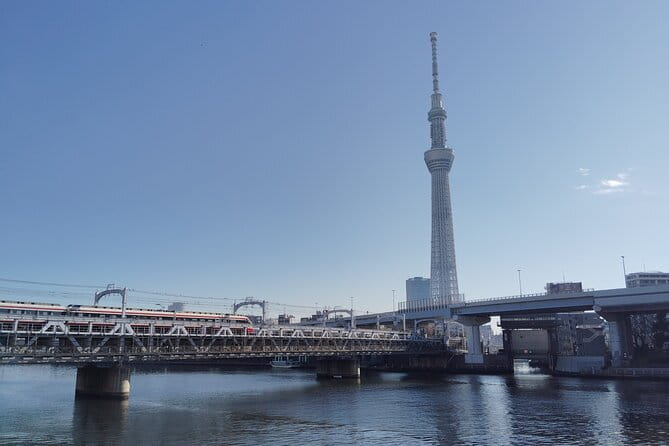
At Kokyo Otemon Gate, the route slows down for about 10 minutes. You see two massive gates and original stone walls, then learn how the entrance was arranged to protect the shogun.
This is where the tour moves from broad history to practical details. A gate is not merely an entrance. It controls who enters, how quickly they move, and how exposed they are while doing so. The stonework also helps you understand the scale of the former castle.
The stop is short, so you should not expect a long architectural lecture. That is part of the tour’s appeal for some people. You get a focused explanation, a chance to look closely, and then keep moving rather than spending the whole morning at one gate.
A few more Tokyo half-days to weigh up
- Mt Fuji and Hakone 1-Day Bus Tour Return by Bullet Train
★ 5.0 · 26,383 reviews - 1-Day Tokyo Bus Tour
★ 5.0 · 14,250 reviews - Tokyo: TOKYO SKYTREE® Admission ticket
★ 4.5 · 11,192 reviews - Tokyo: teamLab Planets TOKYO Digital Art Museum Entry Ticket
★ 4.6 · 9,779 reviews
Three guardhouses and the human side of the shogunate
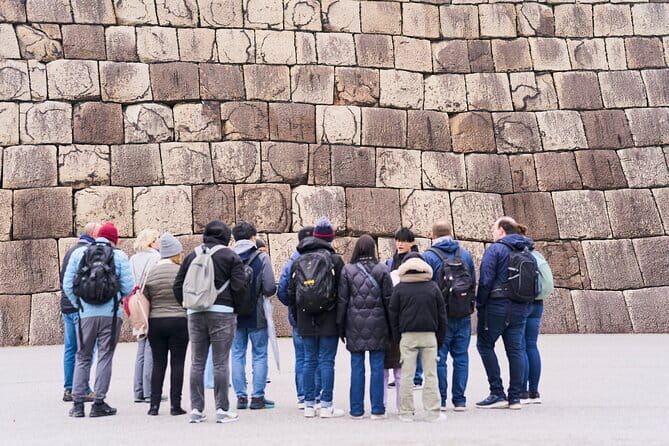
The Constable Guardhouse, Hyakunin Bansho Guardhouse, and Obansho Guardhouse each receive about 10 minutes. Together, these stops explain how castle security depended on people of different ranks.
The Constable Guardhouse was used by lower-ranking samurai. The guide explains who these men were and why their position mattered. At Hyakunin Bansho, a larger guardhouse, the emphasis shifts to the many samurai stationed there and their role in controlling access.
Obansho stood near the inner gate and was associated with higher-ranking samurai. This gives you a useful comparison. The castle’s security system was also a social system, with rank reflected in location and duty. You begin to see the shogun’s compound as a carefully managed chain of responsibility.
This sequence is one of the tour’s strongest teaching sections. The buildings themselves are not grand, but the contrast between them makes the organization of Edo Castle easier to grasp. If you already know Japanese history, you may find the explanations familiar. If the shogun and samurai are still blurry figures from school or popular culture, this is a practical introduction.
Fujimi-yagura and the vanished main tower
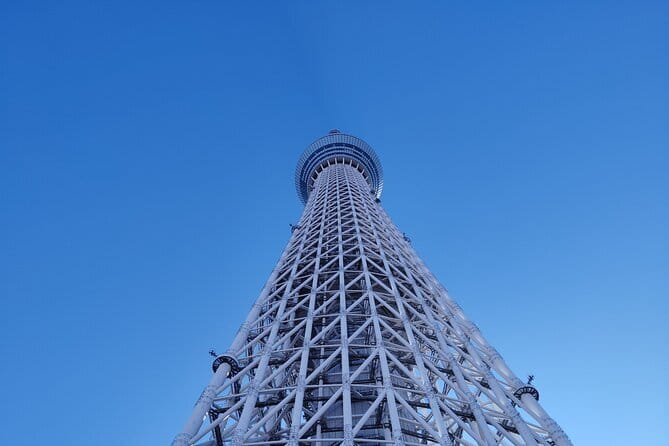
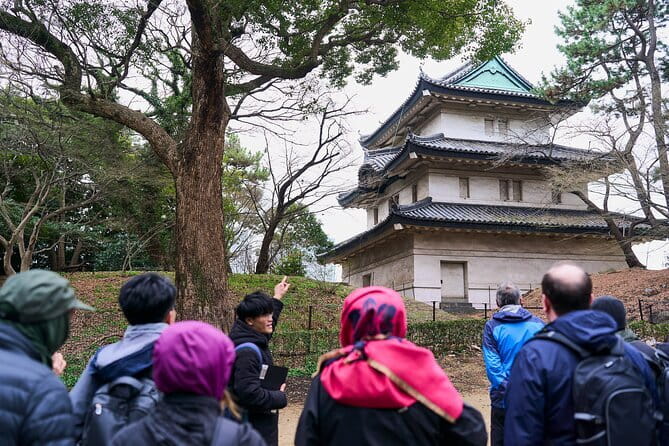
The route continues to Fujimi-yagura, an old watchtower overlooking the grounds. The guide explains its former purpose and what made it special.
A watchtower is an ideal place to discuss visibility and defense. You can consider what guards needed to observe and how a tower helped protect an inner area. The stop lasts about 10 minutes, so the emphasis is on interpretation rather than a long climb or an extended visit inside the structure.
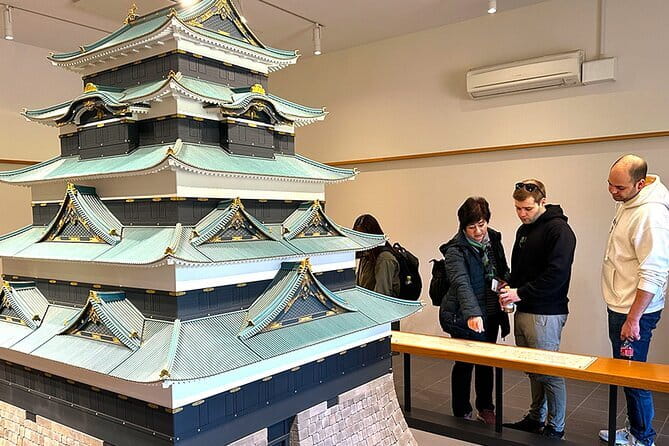
Next comes Kokyo Sannomaru Shozokan, where you can see a scale model of the former Edo Castle. There is also a souvenir shop with palace-related goods. The model is particularly useful because the present grounds do not show the entire castle as it once existed. A scale view helps connect the surviving pieces you have seen with the larger complex.
The East Gardens then bring you to the former site of Edo Castle’s main tower. About 15 minutes are set aside here. The guide explains why the tower no longer stands and what remains.
This is an important reality check. You are visiting a castle site, not a restored castle with furnished rooms and a tall central keep. If you need grand interiors or reconstructed towers, this walk may feel modest. If you enjoy reading a site through its foundations and remaining structures, the ruined tower site is one of the most meaningful stops.
Ninomaru Garden changes the mood

After the fortifications and guard posts, Ninomaru Garden offers a welcome shift. You see a traditional Japanese garden with seasonal plants and a pond containing koi. The planned time is about 15 minutes.
I like this contrast. The tour is not only about power, warfare, and restricted access. The garden shows a quieter side of the former castle grounds and gives you room to absorb the information. The pond and plants also provide some of the best photo opportunities on the route.
The garden is beautiful, but remember that this is still a walking tour with a schedule. You are not getting an unhurried garden meditation or a long period for independent wandering. The visit is designed to fit within a two-hour route, so enjoy the calm without expecting a full garden tour.
The guide can make or break the history lesson
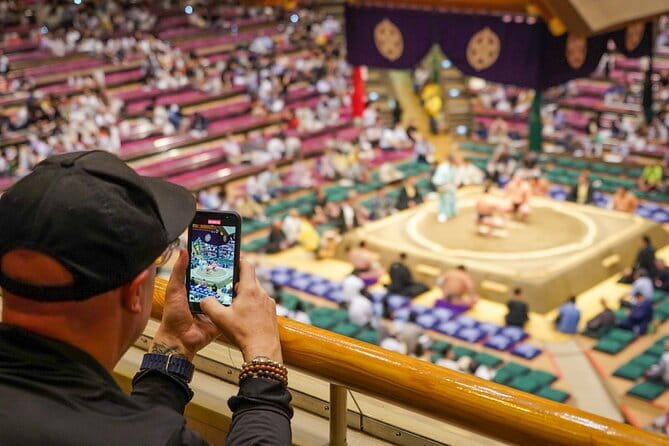
The most praised part of this activity is the guiding. K has been described as funny, passionate, and clear, with strong answers to questions. Keiko has used laminated pictures of old castle layouts, guard towers, and the imperial family to make the explanations more concrete. Ai, Shin, Tomo, Anju, Yuta, Yuuko, Nana, Mayuko, Mako, and Dai are also among the guides named positively in the feedback.
That range of names tells you the exact personality of your guide will depend on the departure. The common qualities to look for are enthusiasm, clear English, and a willingness to explain the connection between the Edo period, the shogun, the samurai, and the imperial system.
There is one important warning. One person left the tour after finding the guide’s English difficult to follow and feeling a guide was unnecessary for the gardens. That criticism points to the central choice here: you are paying for the story, not entry to exclusive palace rooms. If you prefer to wander silently and read signs, you may not need this activity. If you want the grounds interpreted, the guide is the reason to book.
Two hours, open ground, and practical comfort
The tour lasts about two hours and involves regular walking, steep slopes, and stairs. Most people can participate, but this is not a flat, indoor sightseeing stop. Wear comfortable footwear and bring water.
Much of the route is exposed to the sun. On a hot day, a hat or umbrella is useful, and sun protection will make the walk more pleasant. One guide reportedly handed out sweets and menthol napkins during an especially hot outing, but you should not treat that as a promised service. Bring what you need to stay comfortable.
A comfort break has been included during at least one tour, but this is not listed as a guaranteed formal stop. Plan sensibly before meeting the group. There is a security check to enter the Imperial Palace grounds, and knives and alcohol are not allowed.
The experience is conducted in English only. Japanese-language assistance is not available, so consider your listening comfort before booking. Since the tour deals with names, titles, dates, and changes in political power, clear comprehension matters more here than it would on a simple photo walk.
What the $23.88 price really buys
At $23.88 per person, this is inexpensive for a guided Tokyo walk. The listed attractions have free admission, so the fee is not paying for tickets to a tower, museum, or private palace interior. It pays for the guide’s time, route planning, explanations, and answers to questions.
That makes the value depend on your interests. A first-time visitor who wants to understand Tokyo beyond its modern streets can get a useful foundation in two hours. The tour links the shogun era to the palace grounds and gives you a way to read the surviving gates, towers, and guardhouses.
The value is lower if you already know Edo-period history or simply want to stroll through Ninomaru Garden. You can see the gardens without a guide, and the Emperor’s residence is not open to the public. The activity does not provide an interior palace visit.
The rating is 4.9 from 725 reviews, with 99 percent recommending it. Those figures suggest a dependable product, but they do not remove the main variables: your guide, the weather, the walking pace, and your interest in historical explanation.
Who should book this Imperial Palace walk
I would recommend it to first-time Tokyo visitors, families who want a manageable history lesson, and anyone who finds Japanese political history hard to place. The route is short enough to fit into a busy itinerary, while the garden and open grounds keep it from feeling like a lecture indoors.
It also suits people who want to begin a Tokyo trip with a clearer sense of the city’s past. One early tour can help you understand why Edo became Tokyo and how the shogun’s rule shaped the city.
You may want to skip it if your priority is entering the Emperor’s residence, seeing a complete reconstructed castle, or spending a long time photographing the gardens. You should also think twice if steep slopes, stairs, heat, or two hours of outdoor walking will be difficult.
The route reportedly concludes near the ginkgo-lined avenue leading toward Tokyo Station, while the supplied meeting details say the activity ends back at the meeting point. Confirm the exact end arrangement for your departure if you are scheduling a train or another timed attraction afterward.
My booking verdict
Book this tour if you want the Imperial Palace grounds to make sense, not just look pretty. At $23.88, it is a fair buy for a compact introduction to Edo Castle, samurai ranks, shogun-era security, and the imperial system.
Choose a departure when you can handle outdoor walking comfortably, bring water and sun protection, and arrive ready to follow an English explanation. The best reason to go is the combination of surviving castle defenses and a guide who can connect them into one story. The best reason to pass is simple: if you only want a garden stroll, you can do that without paying for interpretation.
Free cancellation is available until 24 hours before the local start time. Changes or cancellations made inside that window are not refunded.
FAQ
How long does the Tokyo Castle and Imperial Palace Shogun Walking Tour last?
The tour lasts approximately two hours.
What language is the tour conducted in?
The tour is conducted in English only. Japanese-language support is not available.
How many people are in the group?
The tour is described as a small-group activity for up to 10 people. The additional information also lists a maximum activity capacity of 60 travelers, so group arrangements can vary by departure.
Where does the tour meet?
The meeting point is Starbucks Coffee at Kokyo Gaien Wadakura Fountain Park, 3-1 Kōkyogaien, Chiyoda City, Tokyo 100-0002, Japan.
Does the tour include admission tickets?
All listed stops have free admission. The experience includes a mobile ticket, but it does not list paid admission to a palace interior or other ticketed attraction.
Can I visit the Emperor’s residence?
No. The Emperor’s residence is not open to the public as part of this activity.
Are there security restrictions?
Yes. You must pass a security check to enter the Imperial Palace grounds. Knives and alcohol are not permitted.
Is the tour suitable for most people?
Most people can participate, but you need to walk up steep slopes and stairs. Comfortable footwear is recommended, and outdoor conditions can be hot or sunny.
Can I cancel for a full refund?
Yes. You can cancel at least 24 hours before the experience start time for a full refund. Cancellations or changes made less than 24 hours before the start time are not accepted for a refund.
Just added around Tokyo
- Private Arrival Transfer : Narita International Airport to Central Tokyo City★ 4.5 · 12 reviews
- Narita Airport(NRT): Private Transfer to Tokyo/Yokohama 1-9pax★ 5.0 · 47 reviews
- Private Transfer from Narita Airport to Yokohama Port and City★ 4.5 · 17 reviews
- [Narita Airport Terminals 1, 2] 40-60km Sawara Itako Historic Bike Tour★ 5.0 · 13 reviews
- 3 Day Japan Highlights Tour: Tokyo, Mt.Fuji, Nara, Kyoto, Osaka★ 5.0 · 22 reviews
- Small Town in the Big City: Tasting Tokyo’s Kichijoji★ 5.0 · 195 reviews
- Small Town in the Big City: Tasting Tokyo’s Kichijoji★ 5.0 · 16 reviews
- The 10 Tastings of Tokyo With Locals: Private Street Food Tour★ 5.0 · 48 reviews
Tokyo Tours, compared.

Mt Fuji and Hakone 1-Day Bus Tour Return by Bullet Train
Read our review →

teamLab Planets TOKYO Digital Art Museum Entry Ticket
Read our review →
Mt Fuji & Hakone Cruise, Drum Show Bullet Train 1 Day from Tokyo
Read our review →
Sumo Show Experience with Chicken Hot Pot and a Photo
Read our review →
Shinjuku Food Tour (13 Dishes at 4 Local Eateries)
Read our review →
Tokyo Mt Fuji 5th St & Hakone Cruise Bus Tour w/Bullet Train
Read our review →
Flagship 2-Hours Official Street Go-Kart Tour – Tokyo Bay Shop
Read our review →Browse the lists this tour appears in