
Reviewed · KYOTO TOURS
Kioto: Gion Tour, recorrido a pie (Español/Castellano)
Gion is far more than a place to hope for a glimpse of a Geisha. This two-hour Spanish walking tour links three hanamachi, or traditional entertainment districts, with old bridges, shrines, alleyways, and preserved wooden Machiya homes. I especially like the chance to see Pontocho and Gion-Higashi, areas that are easy to miss if you only follow Kyoto’s best-known streets.
I also like the small group limit of six and the open question time. Guides José and Juan are praised for explaining small details, adjusting to questions, and even helping Spanish beginners when needed. The main drawback is that Hanamikoji-dori is not included, and a Maiko or Geiko sighting is never promised.
Key points at a glance
- Three hanamachi in two hours: Walk through Pontocho, Gion-Kobu, and Gion-Higashi rather than focusing on one famous street.
- Spanish explanations: Ask about Japanese history, Kyoto customs, Maiko and Geiko life, or anything else that catches your eye.
- Small group of six: The limited size gives you a better chance to hear the guide and ask personal questions.
- 3.3-kilometer route: Expect a steady city walk with bridges, narrow lanes, preserved neighborhoods, and shrine grounds.
- Yasaka Shrine connection: Learn why Gion took its name from the former Gion Shrine and hear about the Gion Festival if time allows.
- Cherry blossom adjustment: In late March and early April, the route changes slightly to include seasonal blossoms around Gion.
Why this Gion walk offers more than Geisha spotting
Gion is often reduced to one image: a Maiko hurrying along a lantern-lit lane. That image is part of the district, but it leaves out most of the story. This tour gives you a wider view, connecting old entertainment quarters with Kyoto’s religious history, bridges over the Kamo River, and the ordinary details of life in Japan.
The route visits three of Kyoto’s five hanamachi. Those districts were traditionally organized around teahouses, performances, and the training of Maiko and Geiko. You will hear about their routines, customs, work, and lifestyle, but the tour is not built around chasing a sighting. That is a good thing. You can pay attention to the neighborhood itself instead of treating people who work there as photo subjects.
The Spanish-language format is the heart of the experience. Guides such as José and Juan explain what you are seeing, then leave room for questions. If you want to ask about Japanese manners, food, shrines, public life, or something as simple as why a street looks the way it does, this is the kind of walk that can adapt. One guide, José, is also noted for explaining in English when a Spanish beginner needs help.
More geisha-district evenings:
- Kyoto Geisha Walking Tour: Gion District & Hidden Gems
★ 4.7 · 3,273 reviews - Kyoto: Gion Magical Night Walking Tour with Geisha Trivia
★ 4.9 · 2,393 reviews - Kyoto: Gion Geisha District Walking Tour – Stories of Geisha
★ 4.7 · 2,187 reviews
Starting beside Disney Store Kyoto
The meeting point is directly in front of the Disney Store at Kyoto Shijo-Kawaramachi. Kyoto has only one Disney Store, so the location should be easy to identify. Look for the guide seated outside, holding an iPad displaying the tour title in Spanish with the scheduled time.
This is a busy central area, so arrive with enough time to find the exact storefront and settle in. The tour is on foot from there, with no extra transport service included. You should wear comfortable shoes, bring water, and carry sun protection. An umbrella is also sensible, since the walk continues in light rain unless conditions lead to a change.
The group is limited to six people. That matters here because narrow lanes and quiet residential sections do not suit a large crowd. A small group also makes it easier to stop for a question without turning the tour into a formal lecture.
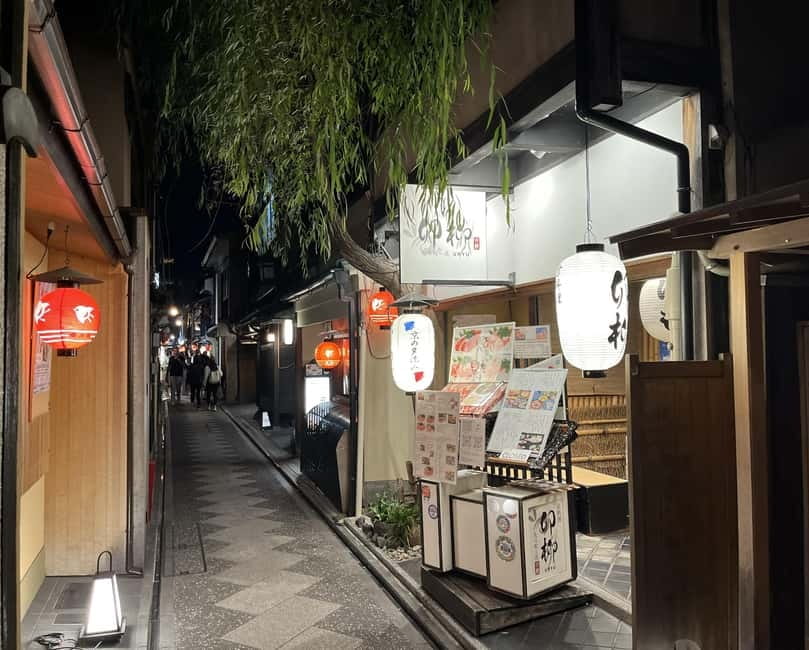
Pontocho Alley and the river bridges
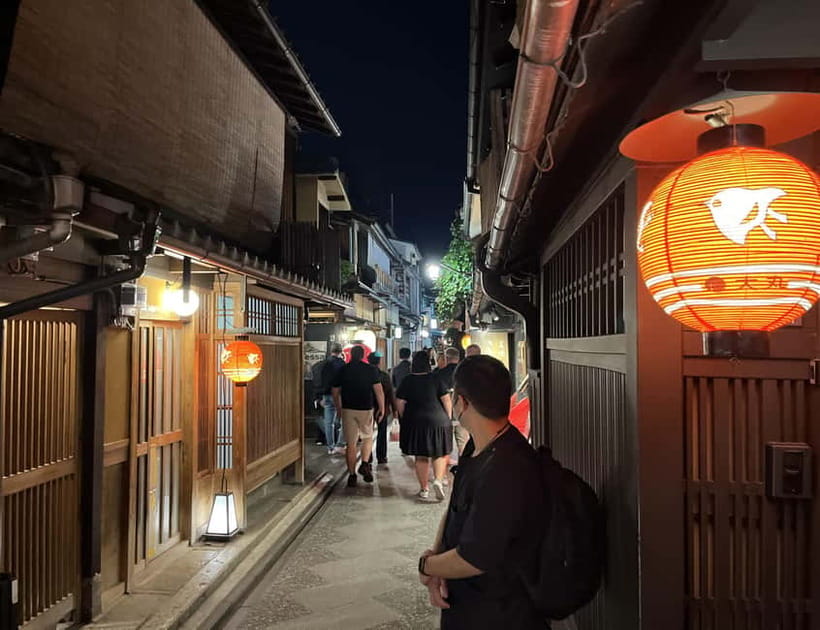
The walk begins with Pontocho Alley, one of Kyoto’s best-known traditional entertainment areas. Its narrow passage gives you an early sense of the contrast that defines central Kyoto: modern streets nearby, then a sudden turn into old wooden facades and discreet entrances.
You will also see Pontocho Kaburenjo, an important performance venue connected with the district’s traditional arts. The guide can place the building within the life of the hanamachi, helping you understand that these neighborhoods are working cultural areas, not outdoor museum sets.
The route then reaches the Kamo River and the statues of Yagi-san and Kita-san. These details may mean little if you pass them alone, but they provide the sort of local story that gives a walking tour its value. You also cross Sanjo Ohashi, one of Kyoto’s notable bridges, before continuing along Yamato-dori.
This part of the route is useful for getting your bearings. You are not simply being led from photo stop to photo stop. You are learning how Pontocho, the river, Sanjo, and Gion fit together in the center of Kyoto.
Gion-Kobu and the preserved Shirakawa area
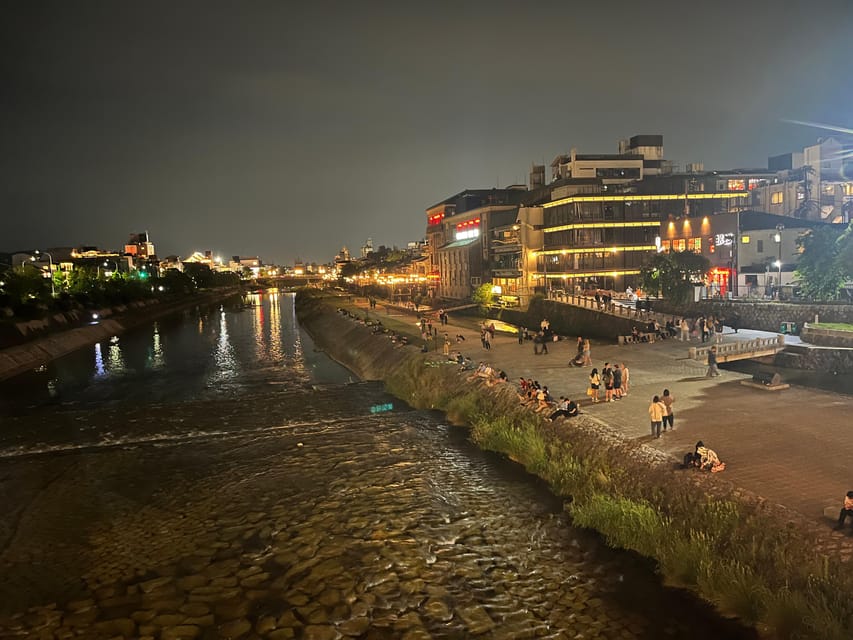
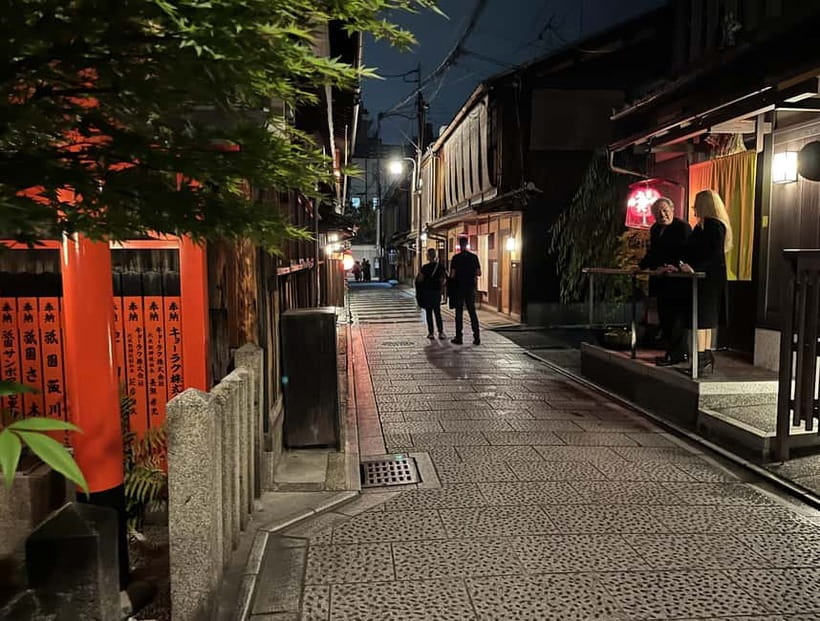
From Pontocho, the route moves toward Gion-Kobu, including Gion-Shinbashi-dori and Gion Shirakawa. This is one of the most atmospheric sections, with traditional Machiya houses and carefully preserved streets.
Machiya are narrow wooden townhouses that once combined a shop or work area with domestic space. Here, their proportions and facades help you picture an older Kyoto, though you should remember that this is still a living neighborhood. Keep your voice low, avoid blocking entrances, and follow any posted requests about photography.
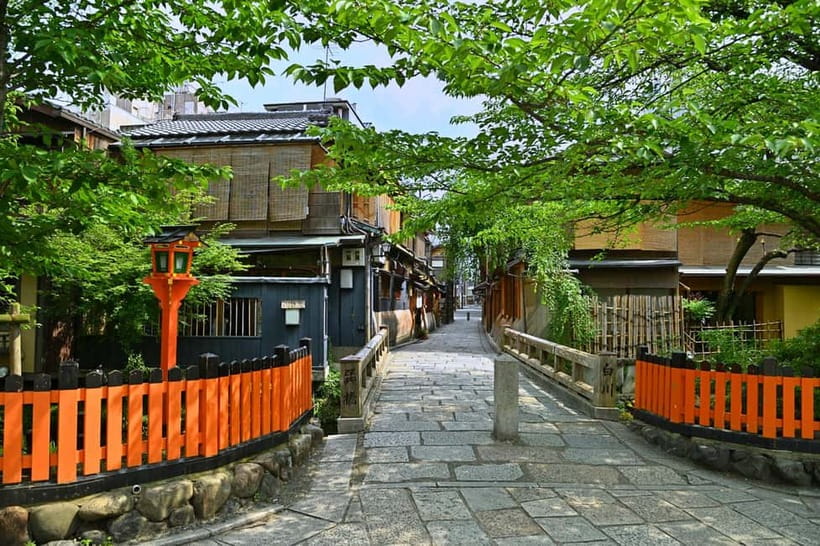
Gion Shirakawa is especially appealing for its waterway and traditional streetscape. The setting can look polished and cinematic, but the guide’s explanations add necessary context. You will learn how the hanamachi function, how Maiko and Geiko train and work, and why these districts developed in this part of the city.
Tatsumi Jinja and Tatsumi Bridge are also on the route. These smaller landmarks reward a guide who pays attention to detail. José is praised for pointing out features you could easily walk past, while Juan is described as especially good at revealing less obvious passages and local details. Since guide assignments can vary, book this as a Spanish-led walk with a strong focus on explanation, not as a guarantee of one particular person.
A few more Kyoto half-days to weigh up
- PERFECT KYOTO 1-Day Bus Tour
★ 5.0 · 13,518 reviews - Kyoto: Fushimi Inari, Kinkakuji, Bamboo Grove 1 Day Bus Tour
★ 4.8 · 4,316 reviews - Kyoto: Tea Ceremony in a Traditional Tea House in Kiyomizu
★ 4.9 · 3,519 reviews - Kyoto: Tea Ceremony Ju-An at Jotokuji Temple
★ 4.9 · 3,207 reviews
Gion-Higashi and the limits of the route
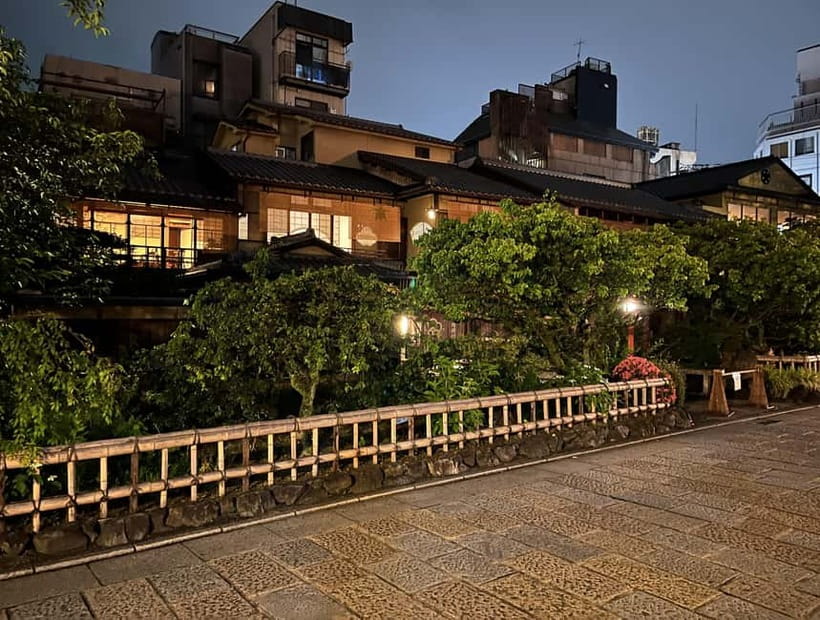
The final hanamachi is Gion-Higashi. Visiting it after Pontocho and Gion-Kobu gives you a useful comparison. The three districts share broad traditions, but each has its own streets, identity, and setting.
This variety is one of the tour’s strongest features. Many short Gion walks concentrate on the most famous lanes. This one spreads the two hours across several historic quarters, so you get a better sense of Kyoto’s traditional entertainment districts as a connected part of the city.
There is an important catch: Hanamikoji-dori is not included. If that street is at the top of your Kyoto list, you will need to visit it separately. The omission is not necessarily a flaw, since avoiding the most crowded route can make the walk calmer and more focused, but you should know what you are booking.
The route covers about 3.3 kilometers, or roughly two miles. That is manageable for most people who are comfortable walking, but it is not a standing-only tour. You will spend the full two hours moving through city streets, and there may be brief stops for explanations. Comfortable footwear is more important than stylish footwear here.
Yasaka Shrine and the origin of Gion

Yasaka Shrine is included if time allows. The shrine was formerly called Gion Shrine, and its connection explains where the district’s name comes from. This is a valuable addition because it links the entertainment quarter with the religious traditions that helped shape the area.
The Gion Festival also has roots reaching back more than 1,100 years. If the pace and timing allow, the guide explains the festival and its importance in Japanese cultural life. It is one of Japan’s three most famous and important festivals, so even a short explanation can help you understand why Kyoto’s calendar and neighborhoods are so closely tied to long-running ceremonies.
Do not treat Yasaka Shrine as a guaranteed extended visit. The wording allows for an explanation if time permits, which means the guide may need to keep the walk moving. If the shrine is your main goal, plan a separate visit. If you see it as part of a larger story about Gion, it fits the tour well.
What the Spanish guide adds
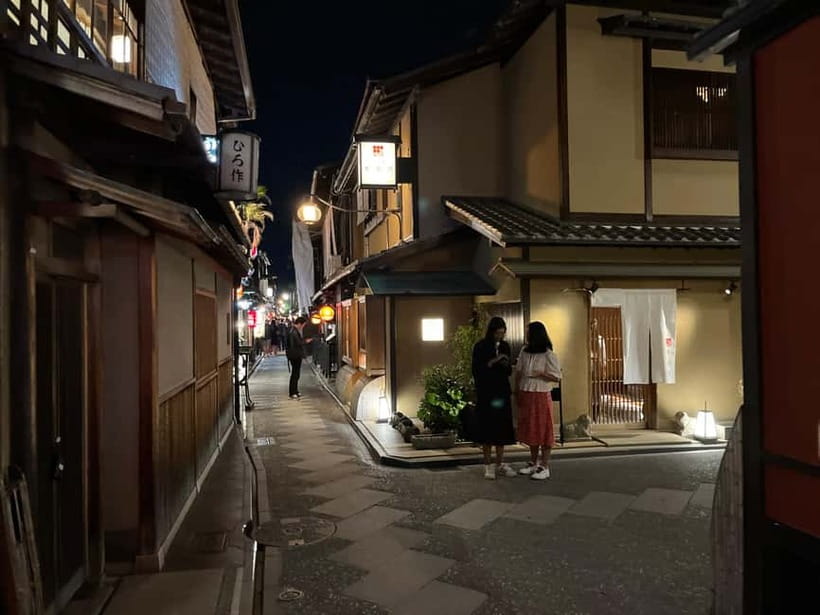
A local guide changes the experience most when you can ask questions freely. The tour is designed for that. You might ask about the difference between a Maiko and a Geiko, how long training takes, what daily work involves, or how Japanese customs affect ordinary life.
The strongest guide style here appears to be conversational rather than scripted. José is described as friendly, flexible with timing, and careful to check that explanations are clear. He also answers questions beyond the formal subject of Gion. Juan is praised for a high level of knowledge and for showing less obvious passages.
That personal approach is useful if you have never visited Japan before. You can ask about details that a standard history talk might skip, such as local etiquette, how to behave near private homes, or what you are actually looking at when you see a traditional building.
The tour is advertised in Spanish and is limited to six people. If your Spanish is basic, the guide may be able to clarify in English, but Spanish remains the main language. I would choose this experience when you want cultural context in Spanish, not when you need a fully bilingual tour guaranteed in every sentence.
Maiko and Geiko sightings: keep expectations realistic
A Maiko or Geiko sighting cannot be guaranteed. That is worth stating plainly, since many people arrive in Gion hoping to see one.
The better reason to book is the explanation of their work and lifestyle. You learn about practices, routines, training, and the role of the hanamachi without making a chance encounter the measure of success. If you do see someone, observe respectfully and follow local rules. Do not block a doorway or chase a person through the lane for a photograph.
This approach also protects the character of Gion. The district is not a stage built for sightseeing. It contains businesses, homes, shrines, and narrow streets used by people who live and work there. A guide can help you enjoy the setting while reminding you to behave like a considerate visitor.
Evening atmosphere and seasonal changes
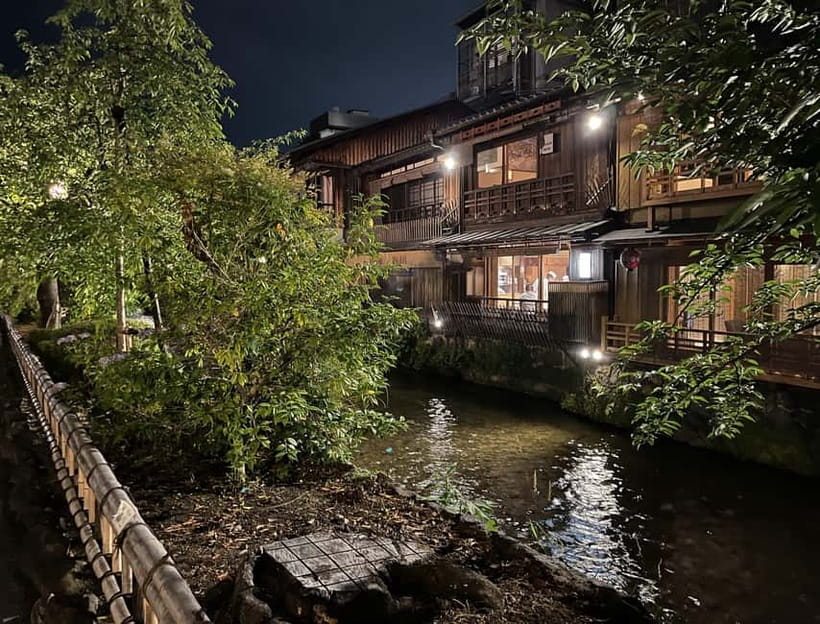
Some departures may take place in the evening, when Gion’s lanterns and wooden facades create a different mood. A nighttime walk can be especially appealing if you want to see the district after its daytime crowds have thinned, though the tour remains a walking experience rather than a promise of nightlife access.
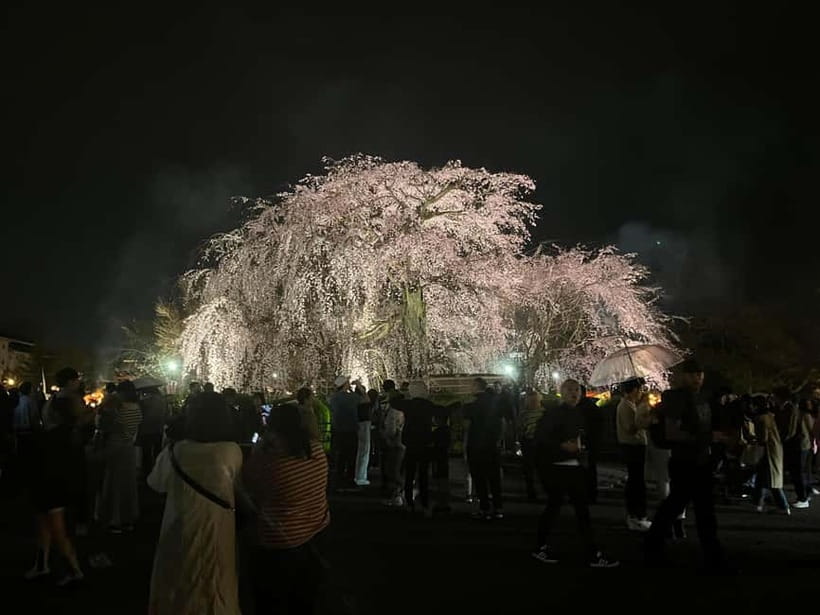
During cherry blossom season, usually from late March into early April, the route changes slightly to show blossoms around Gion. That is a thoughtful seasonal adjustment. It also means the exact sequence may differ from the standard route at that time of year.
The weather matters. Bring water, sunscreen, a hat, and an umbrella. Kyoto summers can feel hot, while spring and autumn conditions can shift during the day. The operator specifically recommends all of these items, so pack for an exposed urban walk rather than assuming every stop will be indoors.
The optional Gion Gallery extension
The 9:45 and 12:30 departures can include a free visit to the Gion Gallery if you want to extend the tour. This is optional, so ask the guide about it at the start rather than assuming it is part of every departure.
The gallery can be a useful extra for someone who wants more time with the cultural side of Gion. It is less useful if you have a tight schedule or mainly want outdoor streets and shrine grounds. Since the standard activity lasts two hours, this option may suit you if you prefer a slower pace and have room in your day.
Is $35 a fair price?
At $35 per person, this tour offers good value if you want a Spanish-speaking guide and more than a quick walk through one famous lane. The price covers two hours, a small group of no more than six, and a route of about two miles through three hanamachi.
You are not paying for entry tickets, transport, meals, or another added service. That keeps the price clear, but it also means the value rests almost entirely on the guide’s explanations and the route. If you are comfortable researching Gion and walking alone, you can see many of these streets without paying. You will not get the same context or the same chance to ask questions.
For a first visit to Kyoto, I think the price is justified, especially if Spanish is your preferred language. The tour gives you a framework for returning to Gion later on your own. It also helps you understand why some streets matter instead of simply collecting photographs.
Free cancellation up to 24 hours before the start and reserve-now, pay-later booking make it easier to fit into a changing Japan itinerary. Check the available start times before booking, since the exact departure options are not listed in the activity details.
Who should book this Gion walk?
I would recommend it to first-time Kyoto visitors who want cultural background without committing to a full-day tour. It is also a strong choice for Spanish-speaking couples, families with older children, and solo visitors who prefer a small group.
You will get the most from it if you enjoy asking questions. The guide can explain far more when you point to something that interests you, so do not be shy about interrupting politely.
I would think twice if your main goal is Hanamikoji-dori, a guaranteed Geisha encounter, or a long indoor museum visit. None of those is promised. The route is also not ideal if two miles of city walking is uncomfortable for you.
Should you book it?
Book this tour if you want to see how Pontocho, Gion-Kobu, and Gion-Higashi connect, and if you want the story in Spanish. The small group, question-friendly format, and attention to ordinary details give it more substance than a quick photo walk.
Skip it if you only want the most famous street or prefer exploring without a schedule. For everyone else, $35 buys a useful introduction to Gion, with enough local context to make your later walks through Kyoto more meaningful.
FAQ
Is the tour conducted in Spanish?
Yes. The live tour guide language is Spanish. A guide may explain something in English when a Spanish beginner needs help, but Spanish is the main language.
How long does the tour last?
The walking tour lasts two hours.
How far do you walk?
The route covers about 3.3 kilometers, or approximately two miles.
How many people can join?
The tour is limited to six participants, making it a small-group experience.
Which areas of Kyoto does the tour visit?
The route includes Pontocho, Gion-Kobu, and Gion-Higashi, three of Kyoto’s five hanamachi.
Is Hanamikoji-dori included?
No. Hanamikoji-dori is not part of the itinerary.
Will I definitely see a Maiko or Geiko?
No. A Maiko or Geiko sighting cannot be guaranteed.
Is Yasaka Shrine included?
Yasaka Shrine may be visited or explained if time allows. It was formerly known as Gion Shrine, which is connected to the district’s name.
Does the tour include the Gion Festival?
The guide may explain the Gion Festival if time allows. The festival has origins in the Gion district dating back more than 1,100 years.
Where is the meeting point?
Meet the guide in front of the Disney Store at Kyoto Shijo-Kawaramachi. Look for someone seated outside and holding an iPad showing the Spanish tour title and scheduled time.
What should I bring?
Wear comfortable shoes and bring water, sunscreen, a sun hat, and an umbrella.
Can I cancel for a full refund?
Yes. You can cancel up to 24 hours in advance for a full refund.
Can I reserve now and pay later?
Yes. The booking option allows you to reserve your place and pay later.
Is there anything extra at selected departure times?
The 9:45 and 12:30 departures can include a free visit to the Gion Gallery if you choose to extend the tour.
Just added around Kyoto
- Kyoto: Zen Meditation at a Private Temple with a Monk★ 5.0 · 25 reviews
- Kyoto: Gion Geisha District & Sake-in-Hand Walking Tour★ 5.0 · 37 reviews
- Private Pewter Sake Cup Experience with a Kyoto Artisan★ 5.0 · 31 reviews
- Your Private Vacation Photography Session In Kyoto★ 5.0 · 110 reviews
- Private Guided Traditional Buddhist Cooking in Japan★ 5.0 · 16 reviews
- Kyoto Wagashi(Japanese sweets) Cooking Class near Fushimiinari★ 5.0 · 60 reviews
- Kyoto:Family-Friendly Kimono & Yukata Experience at WARGO★ 5.0 · 147 reviews
- Private Cooking Class Udon in Kyoto Japan★ 5.0 · 23 reviews
Kyoto Tours, compared.


Fushimi Inari, Kinkakuji, Bamboo Grove 1 Day Bus Tour
Read our review →
Tea Ceremony in a Traditional Tea House in Kiyomizu
Read our review →
Kyoto Geisha Walking Tour: Gion District & Hidden Gems
Read our review →

Gion Magical Night Walking Tour with Geisha Trivia
Read our review →

Gion Geisha District Walking Tour – Stories of Geisha
Read our review →Browse the lists this tour appears in