
Reviewed · KYOTO TOURS
Kyoto: Nara & Traditional Matcha Experience Bus Tour
Nara’s deer may be the headline act, but the real treat is the range of experiences packed into one day: a giant Buddha, lantern-lined shrine paths, a famous temple in Uji, and hands-on matcha making. You get a broad look at two historic areas without wrestling with several train connections.
I like the comfortable coach and the guides’ practical style. Guides such as At-chan, Mai, Nanami, Yuta, and Tsubasa have been praised for clear history lessons, simple Japanese phrases, and thoughtful help. I also like the matcha session, which gives you something to do rather than simply admire another temple.
The trade-off is time. At 510 minutes, this is an efficient full day, not a slow exploration. You will walk on hills and stairs, and Nara Park, Todaiji, Kasuga Taisha, and Uji can feel briskly paced, especially in hot weather or heavy traffic.
Key points to know before booking
- A full Nara circuit in one morning: See Todaiji Temple, Nara Park, and Kasuga Taisha with entry fees included.
- The Great Buddha is the visual high point: Todaiji’s Daibutsuden Hall is one of the world’s largest wooden buildings.
- Deer are close, curious, and not entirely polite: Buy rice crackers carefully, and keep your hands clear once the food is gone.
- Uji adds a hands-on cultural stop: Make matcha from finely ground green tea leaves in the area famous for this tea.
- Guides add useful local color: Expect English commentary, basic Japanese lessons, and help finding shops during free time.
- The $122 price covers useful extras: Coach transport, guide, temple admissions, and matcha are included, while lunch depends on the option you choose.
A long but well-planned day from Kyoto Station
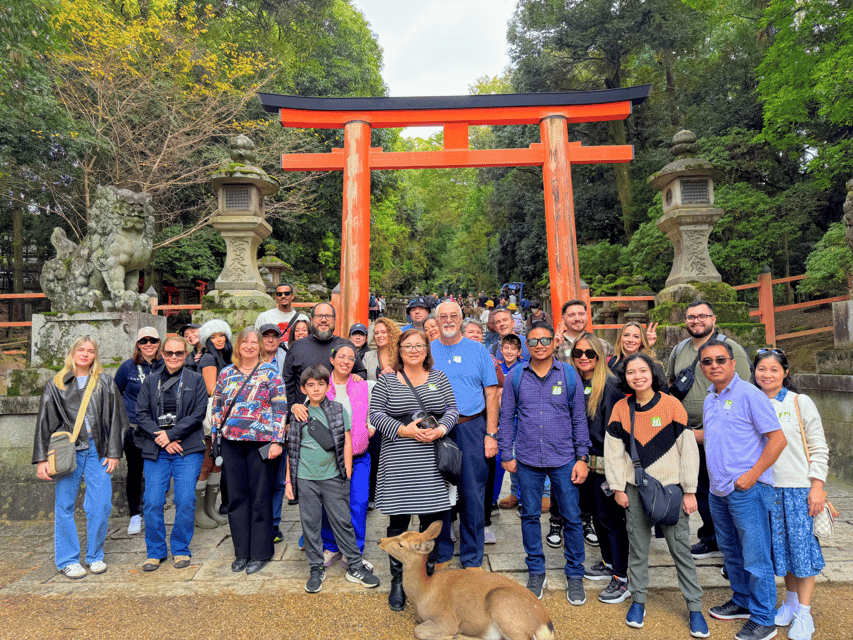
This tour begins at 7:50 AM in front of Tully’s Coffee at the Kyoto Avanti Store, with departure at 8:00 AM. The meeting point is at 31 Higashikujo Nishisannocho, near Kyoto Station, and you should look for the green and white Japan Panoramic Tours flag.
Give yourself extra time to find it. Kyoto Station is large, and reaching the correct side of the station can take longer than expected. The operator does not refund or change bookings for late arrivals and no-shows, so this is one morning when arriving early matters.
The coach ride to Nara takes about an hour. It gives you a useful break from navigation, especially if you are still getting used to Japan’s train stations. Along the way, the guide may point out Fushimi Castle and the former Heijokyo palace area. These are passing views rather than formal stops, but they help place Nara within the wider story of Japan’s old capitals.
The bus is air-conditioned, regularly ventilated, and fitted with free Wi-Fi. An antibacterial coating is also noted as part of the coach setup. Those details matter on a full day, since you will use the bus as your base between walking sections.
More Tea Ceremonies in Kyoto
- Kyoto: Tea Ceremony in a Traditional Tea House in Kiyomizu
★ 4.9 · 3,519 reviews - Kyoto: Tea Ceremony Ju-An at Jotokuji Temple
★ 4.9 · 3,207 reviews - Kyoto: 45-Minute Tea Ceremony Lesson Experience
★ 4.3 · 2,378 reviews
Todaiji and Nara Park: the morning’s biggest rewards
The Nara portion begins with three major sights: Kasuga Taisha Shrine, Nara Park, and Todaiji Temple. Traffic and operating needs can change the order, so do not worry if your group visits them in a slightly different sequence.
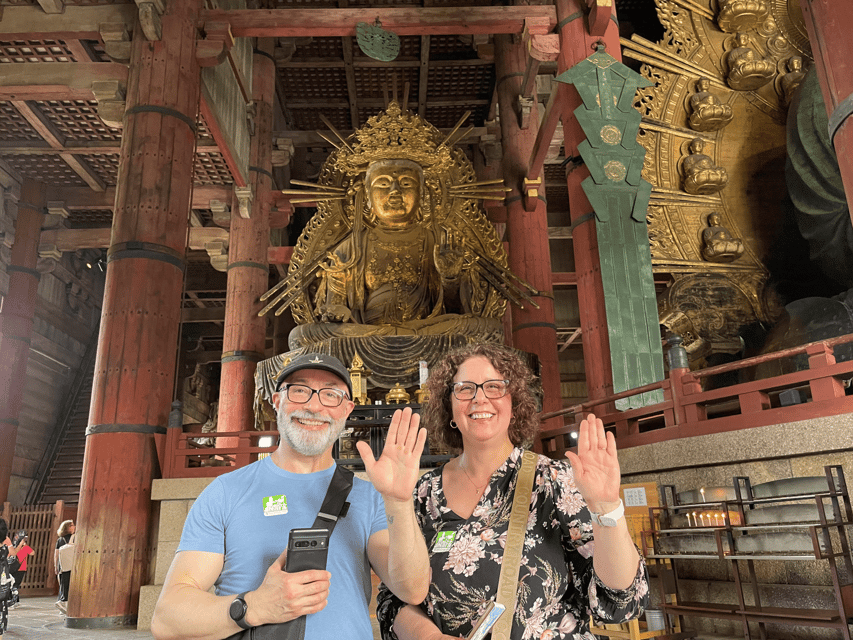
Todaiji is the essential stop. Its Daibutsuden Hall houses the Great Buddha of Nara, a vast bronze figure that has watched over the temple complex for centuries. The building itself is remarkable, too. It is one of the world’s largest wooden structures, and its scale becomes clear as you approach it.
Admission to Todaiji is included, which is helpful at this price. You are given about 50 minutes here, enough to enter the hall, see the Buddha, and take in the main approach without trying to cover every corner of the wider complex.
The visit is also a good example of this tour’s strengths and limits. Your guide can explain the religious and historical setting, then you have time to look around independently. You will not receive a long, unhurried temple study, but you will see the principal sight without spending half the day working out where to go.
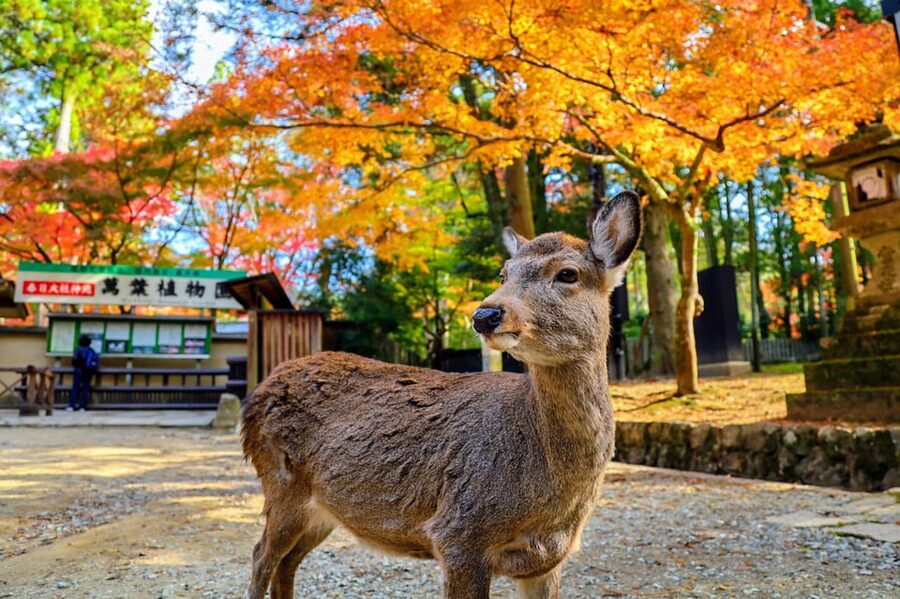
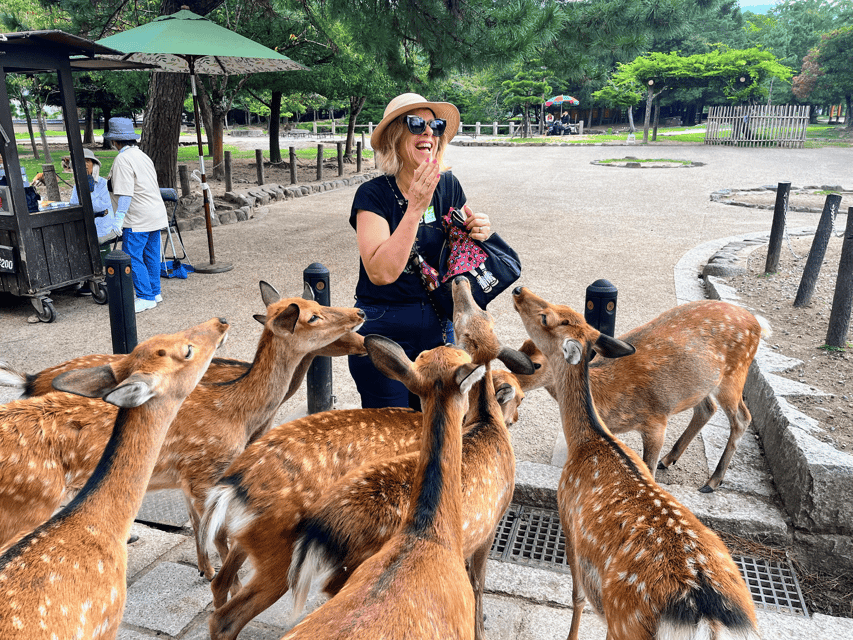
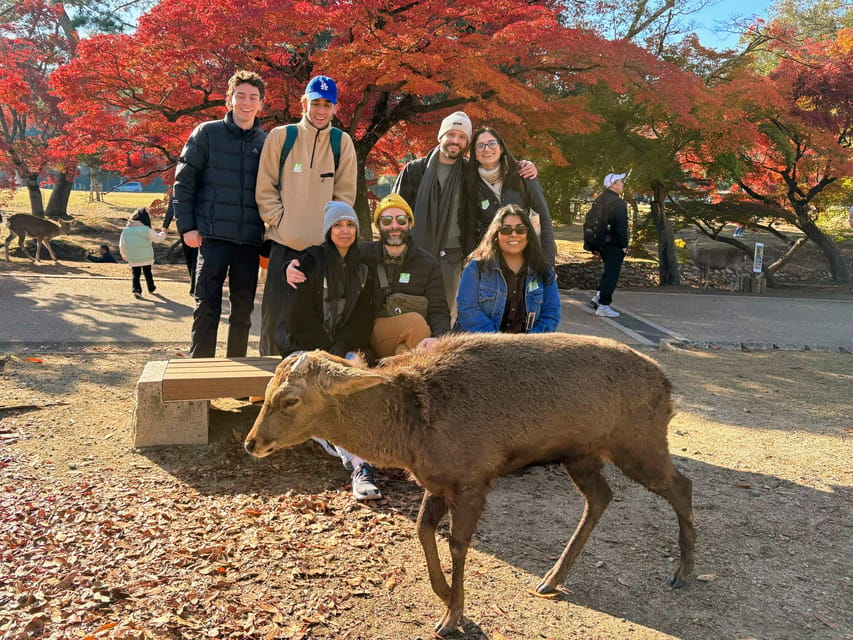
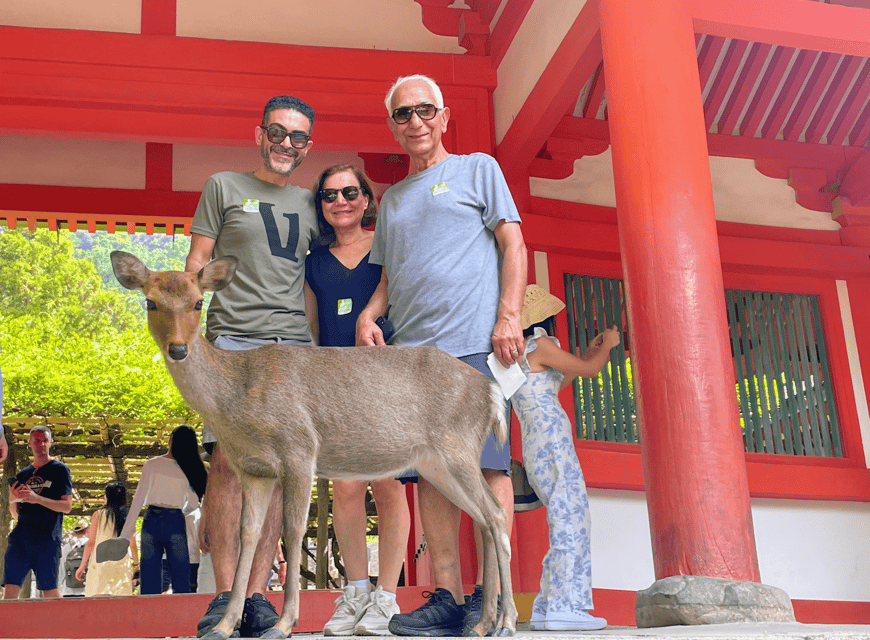
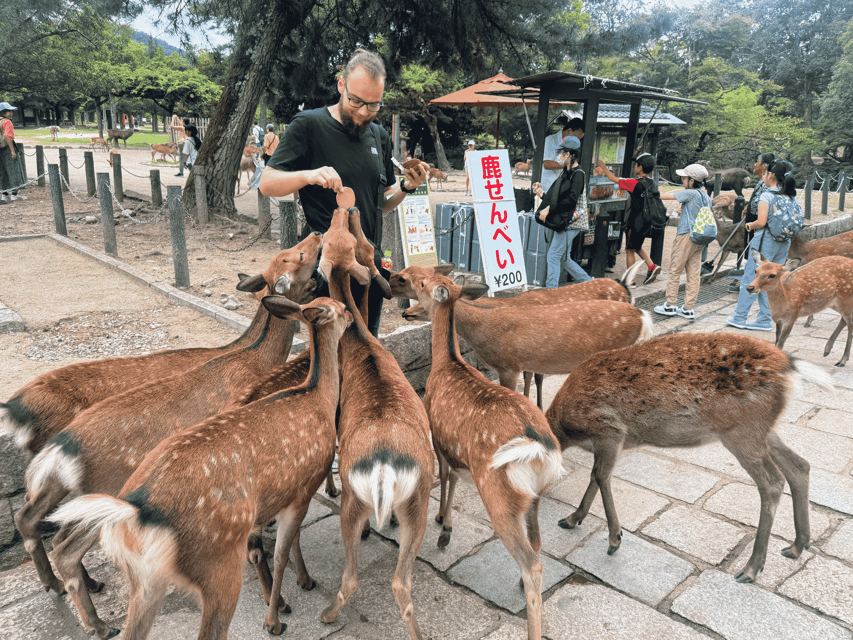
Nara Park sits beside Todaiji and gives the visit a very different mood. Wild deer move freely through the park, and you can approach them at close range. Rice crackers are sold at roadside stalls and near the paths leading toward the shrines. Some deer bow when asking for food, a charming behavior that has become one of Nara’s signature scenes.
Keep your feeding session controlled. The deer can be eager, and one of the useful warnings from this experience is that they may bite. Buy a small amount of crackers, offer them with an open hand, and put your hands away when the food is finished. Do not tease an animal with a cracker or hold food out while trying to take a photo.
You get about 30 minutes in Nara Park. That is enough for deer, photos, and a short walk, but not for a long ramble through the park. If you want a quiet, extended visit with the animals, an independent Nara day would give you more freedom. If you want a first look with transport and direction handled for you, the short visit works well.
Kasuga Taisha and its lantern-lined approach
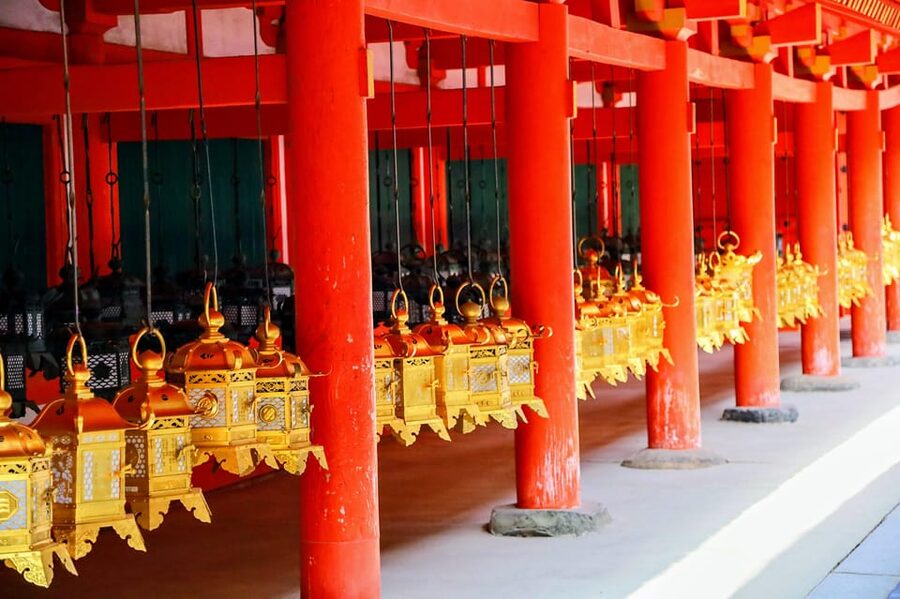
Kasuga Taisha is known for its thousands of stone lanterns, with the tour highlighting roughly 3,000 along the shrine grounds and approach. The setting feels more wooded and atmospheric than the open areas around Todaiji, and the lanterns give you plenty to notice as you walk.
The formal visit is about 30 minutes. That is enough to see the main route and understand why the shrine is important, but it is not enough for a slow inspection of every lantern or side path. Expect stairs and uneven ground, and wear shoes that are comfortable for walking.
The guide is especially useful here. Shinto shrines have customs that may not be obvious at first glance, and the tour’s English commentary can explain what you are seeing without turning the stop into a lecture. Several guides, including Mai, Nanami, At-chan, and Tsubasa, have been praised for adding simple Japanese phrases and cultural explanations during the day.
The order of the Nara stops may vary. One schedule lists Kasuga Taisha first, followed by Nara Park and Todaiji, while the main route description presents Todaiji before the shrine. Traffic, weather, and local operating conditions can affect the sequence.
Lunch in Uji, with an important booking choice
After Nara, the bus heads toward Uji, with about an hour on the road. Lunch is scheduled at a local restaurant for roughly 50 minutes. A Japanese lunch is available only if you select the lunch option when booking.
This distinction is worth checking before you pay. If you choose the meal package, you receive a traditional Japanese meal, which can simplify the day and give you a planned taste of local food. One reported meal was described as tasty, but the tour does not promise a particular menu in the supplied details.
If lunch is not included, you must pay for your own food and drinks. Cash is recommended, so carry some yen rather than relying entirely on cards. Vegetarian arrangements can be made up to two days before the tour date, while last-minute bookings receive the regular meal arrangement.
The 50-minute break is practical rather than leisurely. It gives you time to eat and regroup before the afternoon sights, but you should not expect a long restaurant experience. Families and first-time visitors may appreciate the structure, while independent food hunters may prefer to arrange their own lunch elsewhere.
Same base, a completely different sort of day:
- PERFECT KYOTO 1-Day Bus Tour
★ 5.0 · 13,518 reviews - Kyoto: Fushimi Inari, Kinkakuji, Bamboo Grove 1 Day Bus Tour
★ 4.8 · 4,316 reviews - Kyoto Geisha Walking Tour: Gion District & Hidden Gems
★ 4.7 · 3,273 reviews - Kyoto: Gion Magical Night Walking Tour with Geisha Trivia
★ 4.9 · 2,393 reviews
Byodoin Temple and the Phoenix Hall
Byodoin Temple is the major Uji sight and one of the most recognizable buildings on the route. Its Phoenix Hall appears on Japan’s 10 yen coin, so you may already know its outline before arriving.
The temple is part of the UNESCO-listed Historic Monuments of Ancient Kyoto. Admission is included, and the scheduled visit lasts about an hour. That allows time to see the temple grounds and focus on the Phoenix Hall, while the guide provides context about the site and its place in Japanese culture.
Byodoin offers a calmer contrast to Nara’s deer and crowds. You move from a large temple complex and lively park to a more composed setting built around water, architecture, and careful views. The tour description does not promise entry into every part of the Phoenix Hall, so treat the main value as seeing the famous exterior and temple grounds.
You will also have to manage your energy. Byodoin arrives after a busy morning, and the day still has a matcha activity ahead. The one-hour slot is generous enough for the principal sights, but not for a slow visit to every museum or corner of the grounds.
Making matcha in Uji, the home of green tea
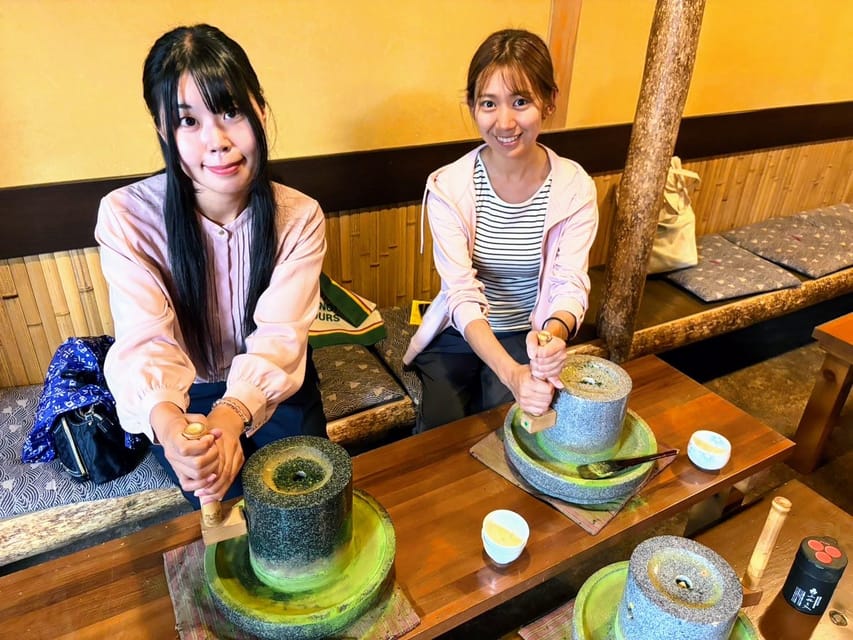
The matcha session is the tour’s most distinctive feature. Uji is known as a home of matcha, and here you make the tea yourself rather than simply drinking a prepared bowl.
Matcha is made from finely ground green tea leaves. In Japan, it is linked with tea ceremony practice but is also used in sweets and cooking. The activity gives you a basic sense of the work behind the powder and the preparation process, making it more memorable than a quick stop at a tea shop.
The experience and free time together take about 70 minutes. That is enough for the hands-on session, a look around the area, and some shopping. Small shops, restaurants, and other attractions are nearby, so you can buy tea and souvenirs after the activity.
The free time is particularly useful if you want to bring home matcha. At-Chan was praised for helping a participant locate the Tsuen tea shop during this shopping period. That kind of practical assistance can save time in Uji, where several stores may look appealing and you may not know which direction to take.
The matcha activity also breaks up the temple-heavy itinerary. You are not just collecting photographs. You take part in a small cultural lesson and leave with a better idea of how matcha fits into everyday food and drink as well as formal tea traditions.
The guides make the coach time count
The official language is English, with a live English-speaking guide. Audio headsets are available in French, German, Italian, Portuguese, Spanish, and Ukrainian. That is helpful for people who prefer extra language support, though the live guide is English-speaking.
The strongest part of the guiding style is the mix of facts and friendly instruction. At-Chan has taught basic Japanese words, numbers, and phrases during the bus rides. Mai has used handmade visual materials to explain the stops, while Nanami has been praised for clear explanations and careful organization. Yuta and Tsubasa have also been noted for cultural context and Japanese language tips.
These touches matter because the coach rides are long enough to feel wasted on a basic transfer-only excursion. Instead, the guide can use the journey to explain customs, answer questions, and prepare you for each stop.
The bus returns to the Tully’s Coffee meeting point after Uji, with the final ride scheduled at about 30 minutes. The exact return time can shift with traffic. A traffic jam caused delays on one outing, though the driver was described as patient and professional.
Is $122 a fair price?
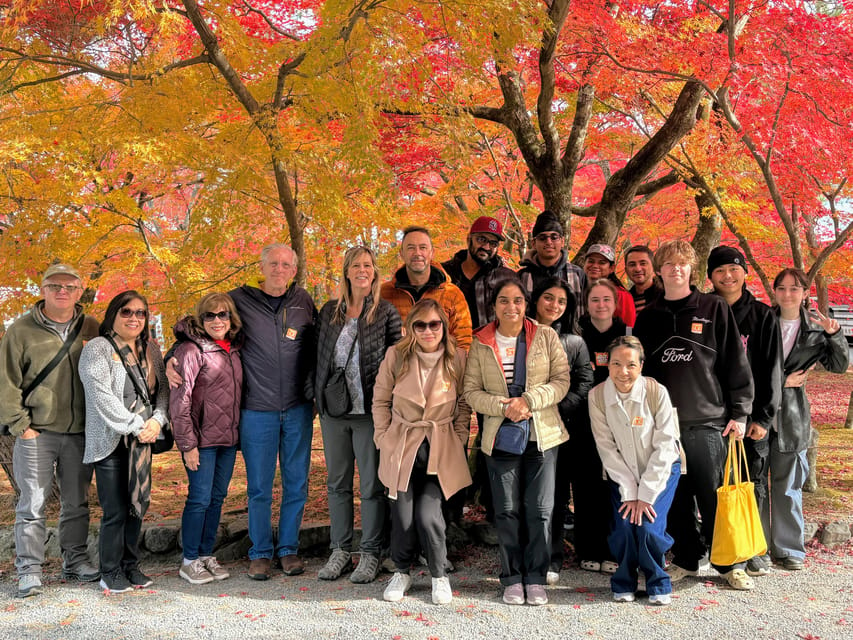
At $122 per person, this is not the cheapest way to reach Nara and Uji. Public transport can cost less, especially if you are comfortable planning trains and local buses yourself.
The price becomes more reasonable when you add up what is handled for you. It includes air-conditioned coach transport, an English-speaking guide, Todaiji admission, Byodoin admission, and the matcha experience. You also get one continuous route between Kyoto, Nara, and Uji instead of arranging several separate connections.
Lunch is the main extra choice. Select it if you value an organized Japanese meal and do not want to spend part of your limited Uji time deciding where to eat. Skip it if you want more control over food or need to manage dietary preferences closely.
I see this as a convenience and orientation fee. You are paying to cover three important sites, learn what you are looking at, and avoid losing time between destinations. Independent visitors can save money, but they must replace the guide, transport, admissions, and planning themselves.
Who should book this day tour?
I would recommend it to first-time visitors staying in Kyoto who want Nara’s main sights plus a taste of Uji without building a complicated day plan. It also suits families and older relatives who prefer a clear meeting point, reserved coach transport, and a guide who keeps the group moving.
The tour is especially good for people who want more than temples. Deer, shrine lanterns, the Great Buddha, the Phoenix Hall, lunch, shopping, and matcha making create a varied day. The repeated praise for guides helping people who lost their way or needed extra direction is also reassuring if Japan is your first visit.
I would hesitate if you dislike fixed schedules or want long stretches of quiet time. Thirty minutes at Nara Park and Kasuga Taisha is enough for highlights, not a full exploration. This is also unsuitable for wheelchair users and people with mobility impairments, since the route includes stairs and hills.
Bring comfortable shoes, water, and cash. Pets are not allowed. Free cancellation is available up to 24 hours before departure, and you can reserve now and pay later, which helps if your Kyoto plans are still shifting.
Should you book the Nara and Uji combination?
Book it if you want a smooth, information-filled day that joins Nara’s major sights with a genuinely hands-on Uji activity. The deer and Todaiji provide the big visual moments, while matcha making gives the afternoon its own character.
Skip it if you already know Nara well, dislike group timing, or want to spend a full day at one temple complex. For most first-time visitors, though, the combination offers strong value at $122, especially with admissions and transport included.
Arrive early at Kyoto Avanti, choose the lunch option only if it suits your plans, and listen to your guide’s deer-feeding advice. With those simple preparations, this is an efficient way to see three UNESCO-linked cultural sites and experience Uji beyond its famous tea shops.
FAQ
Where does the tour meet?
The meeting point is in front of Tully’s Coffee at the Kyoto Avanti Store, 31 Higashikujo Nishisannocho, Minami Ward, Kyoto, 601-8003, Japan. Check-in is at 7:50 AM and departure is at 8:00 AM. Look for the green and white Japan Panoramic Tours flag.
How long does the tour last?
The listed duration is 510 minutes, or about eight and a half hours. The return time can change because of traffic, weather, or other operating conditions.
Is lunch included?
Lunch is included only if you select the lunch option when booking. The meal is Japanese-style. If you do not select it, additional food and drinks are not included.
Can vegetarian meals be arranged?
Yes. Vegetarian meal arrangements can be made up to two days before the tour date. Last-minute bookings receive the regular meal arrangement.
Which admissions are included?
Admission to Todaiji Temple and Byodoin Temple is included. The fee for the matcha experience in Uji is also included.
Is the tour suitable for wheelchair users?
No. The experience is not suitable for wheelchair users or people with mobility impairments because the route includes stairs and hills.
What languages are available?
The live tour guide speaks English. Audio guides are available in French, German, Italian, Portuguese, Spanish, and Ukrainian.
What should I bring?
Bring comfortable shoes, water, and cash. Pets are not allowed on the tour.
Just added around Kyoto
- Kyoto: Zen Meditation at a Private Temple with a Monk★ 5.0 · 25 reviews
- Kyoto: Gion Geisha District & Sake-in-Hand Walking Tour★ 5.0 · 37 reviews
- Private Pewter Sake Cup Experience with a Kyoto Artisan★ 5.0 · 31 reviews
- Your Private Vacation Photography Session In Kyoto★ 5.0 · 110 reviews
- Private Guided Traditional Buddhist Cooking in Japan★ 5.0 · 16 reviews
- Kyoto Wagashi(Japanese sweets) Cooking Class near Fushimiinari★ 5.0 · 60 reviews
- Traditional Japanese Music show & Experience Tour in Kyoto★ 5.0 · 57 reviews
- Kyoto:Family-Friendly Kimono & Yukata Experience at WARGO★ 5.0 · 147 reviews
Kyoto Tours, compared.


Fushimi Inari, Kinkakuji, Bamboo Grove 1 Day Bus Tour
Read our review →
Tea Ceremony in a Traditional Tea House in Kiyomizu
Read our review →
Kyoto Geisha Walking Tour: Gion District & Hidden Gems
Read our review →

Gion Magical Night Walking Tour with Geisha Trivia
Read our review →

Gion Geisha District Walking Tour – Stories of Geisha
Read our review →Browse the lists this tour appears in