
Reviewed · KYOTO TOURS
KYOTO-NARA: Giant Buddha Deer Pagoda “Geisya” (Italian, full day)
The day’s big draw is the contrast: Nara’s giant Buddha and free-roaming deer in the morning, followed by Kyoto’s lanes, temples, and traditional entertainment quarters. You move between two former capitals without having to arrange trains, buses, temple tickets, or a second language on your own.
I like the small-group format, capped at 15 people, and the personal help built into the day. I also like the guide Omae, who speaks polished Italian, spent more than a decade in Italy, and has a reputation for mixing solid explanations with humor and local legends. The main drawback is the price: at $176 per person, this is not a cheap outing, and the timetable may feel tight if you want long, unhurried visits.
Key points to know before booking
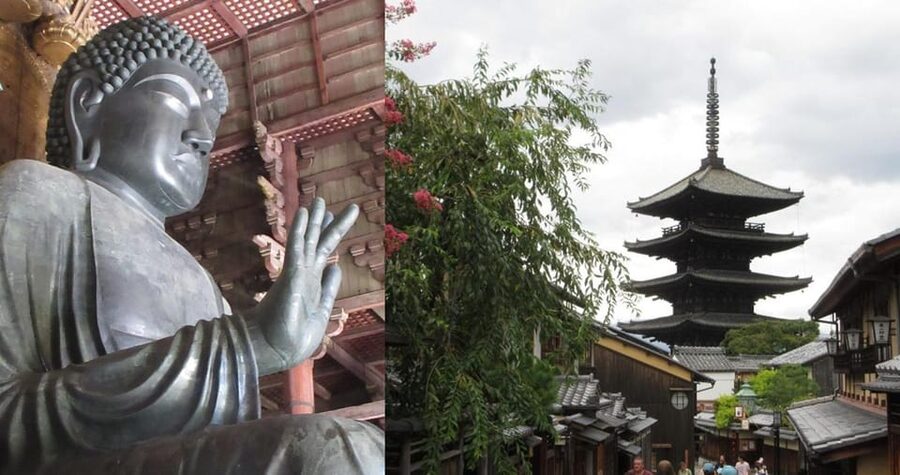
- Todai-ji’s giant Buddha: Spend about 90 minutes exploring one of Nara’s best-known Buddhist monuments, including its national treasures.
- Deer in Nara Park: Buy special deer cookies and feed the tame animals around the temple grounds.
- Omae’s Italian guidance: The named guide is Japanese, speaks excellent Italian, and has lived in Italy for more than 10 years.
- Two historic capitals in one day: Travel from Kyoto to ancient Nara in the morning, then return to Kyoto for Kiyomizu-dera and Gion.
- A flexible small group: The group is limited to 15 people, with schedule changes and assistance available when practical.
- A central finish: The tour ends on foot at Pontocho, useful if you want to continue your evening in central Kyoto.
Two historic Japanese capitals in one well-filled day
This experience links Nara, the imperial capital of the eighth century, with Kyoto, Japan’s thousand-year capital. That gives you a useful sense of how Japanese religious and political life shifted over time, rather than leaving you with two unrelated temple visits.
You begin at Kyoto Station and travel by train for about 45 minutes. A 15-minute bus ride then brings you toward Todai-ji. The included train and bus fares remove some of the small decisions that can slow down a first visit to the region, especially when you are working in Italian and want explanations as you go.
The day is full, not leisurely. The schedule includes public transport, several walks, a return to Kyoto, and a one-hour break at Kyoto Station before the afternoon visits. You should be comfortable walking between transit stops and sights, even though the activity is listed as wheelchair accessible.
A few more Kyoto half-days to weigh up
- 5 Top Highlights of Kyoto Full Day Bike Tour (E-bike option)
★ 5.0 · 511 reviews - Full Day Biking Tour Exploring the Best of Kyoto
★ 5.0 · 498 reviews - Full Day Guided Tour to Kyoto and Nara from Osaka by Van
★ 5.0 · 420 reviews
Meeting the giant Buddha at Todai-ji
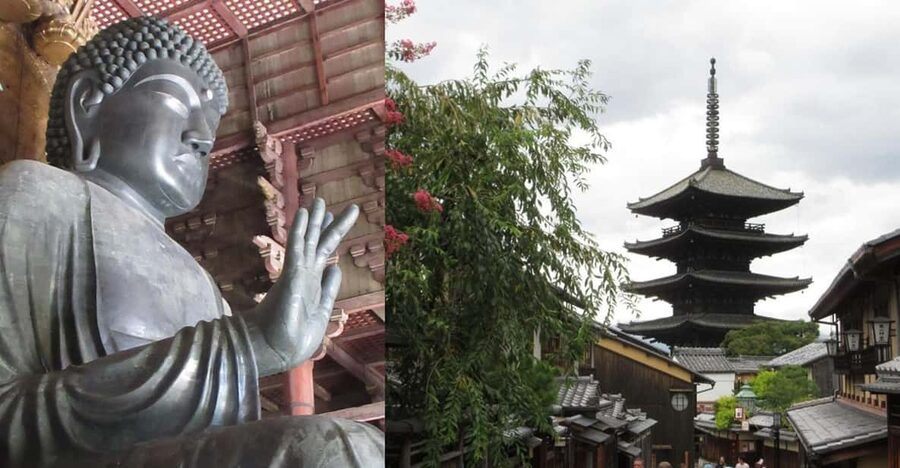
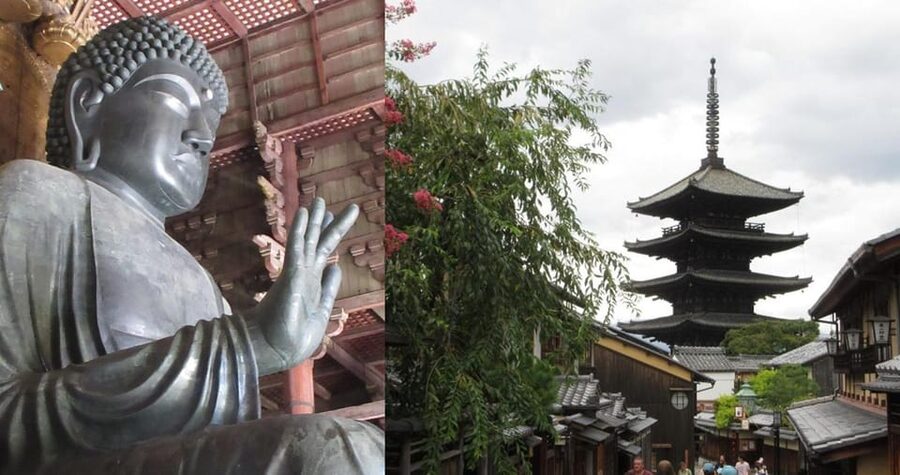
Todai-ji is the morning’s main event. The temple is famous for its enormous seated Buddha statue, one of the largest in Japan, housed in a vast wooden temple building. The visit lasts about an hour and a half, enough time for a guided look at the monument, the surrounding religious objects, and some free time for photographs and browsing.
The value of a guide here is not simply finding the statue. Todai-ji contains monuments and objects designated as national treasures, and a good explanation helps you understand why they matter. Omae is described as giving detailed accounts of the temple, Buddhist devotion, local legends, and the stories connected with the people who used these places.
That human angle is important. You can see a huge Buddha on your own, but you may miss the beliefs, customs, and tales that gave the building its purpose. The tour promises explanations of details that are not always included in standard guidebooks, which suits you if you want cultural context rather than a quick photograph and exit.
The visit also includes time for shopping. This is not a separate shopping tour, so do not expect a long retail stop. It is simply a chance to look around near the monument and pick up something if you find an item worth carrying home.
Feeding Nara’s famous deer
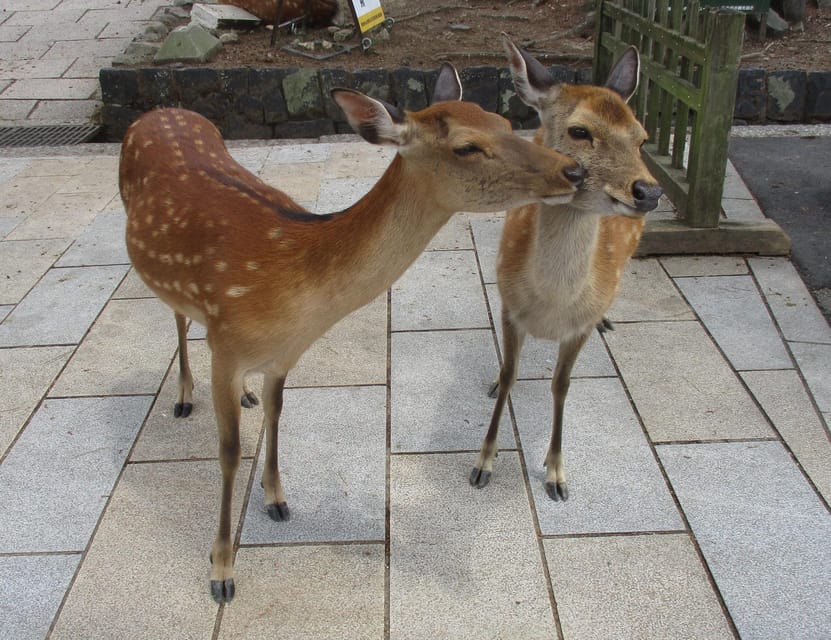
The park around Todai-ji is part of the morning’s appeal. Tame deer move freely among the trees, paths, temple buildings, and people. They have lived alongside local residents since ancient times, and their presence gives the visit a lighter, more playful side after the formal temple explanations.
You can buy special cookies at stalls and feed the deer. Keep your expectations sensible: these are accustomed to people and food, but they are still animals. The guide can help you understand how the encounter works, while you should keep an eye on your belongings and give yourself space to enjoy the moment.
The deer also change the pace of the morning. You are not moving from one enclosed monument to another. After seeing the Buddha, you walk for about five minutes to Ukimido, where you have a short visit and walk before another ten-minute walk and the train back toward Kyoto.
Ukimido receives only about 10 minutes in the schedule, so treat it as a brief scenic and cultural stop, not a second major attraction. The short timing keeps the overall day moving, but anyone who likes to linger with a camera may wish for more room.
The return to Kyoto and the midday pause
The journey back to Kyoto takes about 45 minutes by train. Once you arrive, the plan allows a one-hour break at Kyoto Station before the afternoon portion begins.
That pause is practical. You can eat, use the facilities, rest your feet, or collect yourself before the next temple and neighborhood walk. It also divides the day into two clear parts: Nara’s park and Buddha in the morning, Kyoto’s hillside temple and traditional quarters later.
The tradeoff is that the break is built into the schedule rather than left entirely open. If the morning runs late or you want a longer meal, the afternoon timetable may not feel as flexible as a private tour. The operator does offer itinerary and schedule adjustments upon request when reasonably possible, but you should not assume every change can be made.
Same base, a completely different sort of day:
- PERFECT KYOTO 1-Day Bus Tour
★ 5.0 · 13,518 reviews - Kyoto: Fushimi Inari, Kinkakuji, Bamboo Grove 1 Day Bus Tour
★ 4.8 · 4,316 reviews - Kyoto: Tea Ceremony in a Traditional Tea House in Kiyomizu
★ 4.9 · 3,519 reviews - Kyoto Geisha Walking Tour: Gion District & Hidden Gems
★ 4.7 · 3,273 reviews
Walking the old approach to Kiyomizu-dera
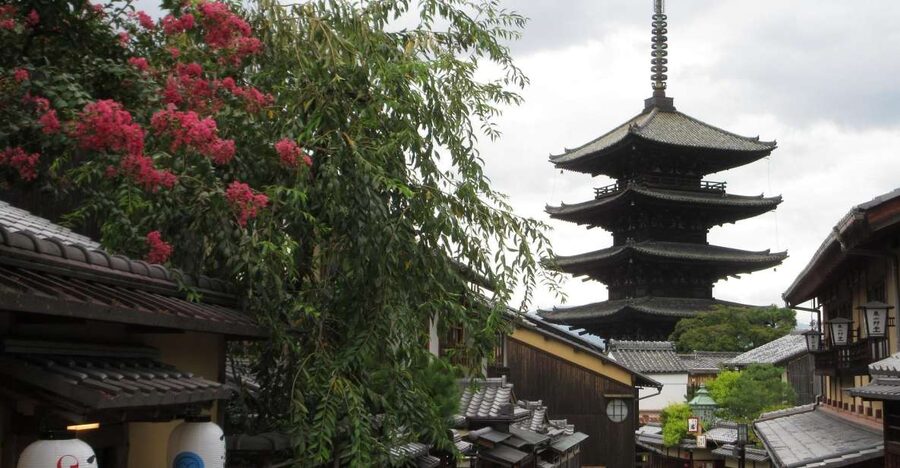
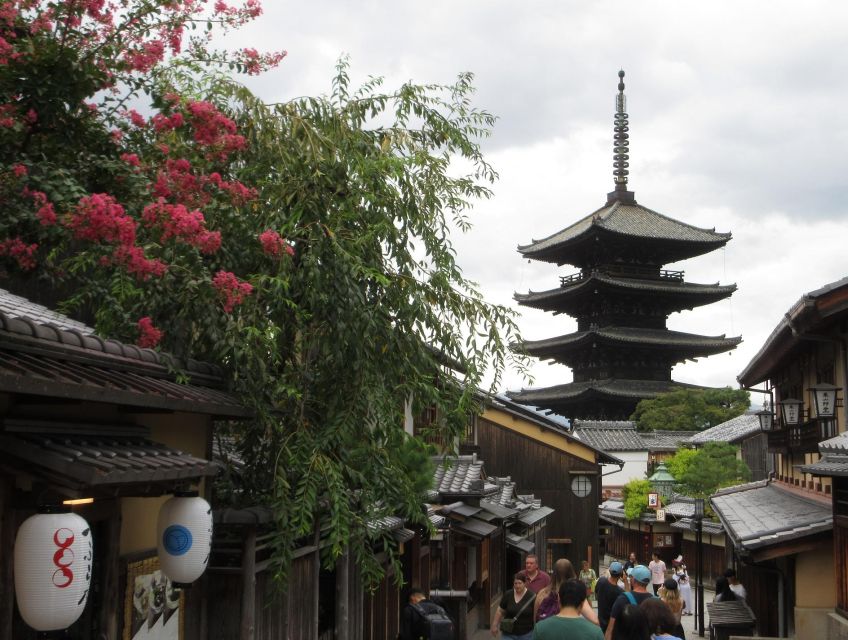
After the break, you take a bus for about 15 minutes, followed by a 15-minute walk to Kiyomizu-dera. The approach is part of the experience. Streets leading toward the Buddhist temple are lined with souvenir shops, sweet shops, bars, and other places aimed at people heading to one of Kyoto’s most visited religious sites.
This stretch gives you a look at how pilgrimage routes have developed into lively commercial streets. You get temple, food, shopping, and people-watching in one sequence. For a first visit to Kyoto, that mixture can be more useful than seeing Kiyomizu-dera in isolation.
It can also be crowded and commercial. If you prefer quiet temple grounds, the shop-lined approach may feel noisy or tourist-focused. The guide helps by pointing out cultural and religious details along the way, but the street itself is designed for a wide range of visitors, not only serious temple pilgrims.
At Kiyomizu-dera, the guided visit lasts about an hour. The tour focuses on the monument’s historical, cultural, and religious meaning, along with key sights that are easy to pass without context. The time is enough for a solid introduction, but not for an exhaustive exploration of every corner.
From Kiyomizu-dera to Gion-kobu
A 20-minute walk takes you from Kiyomizu-dera toward Gion. This makes the afternoon feel like a connected route rather than a series of bus rides. You see how the temple district leads into one of Kyoto’s best-known traditional entertainment areas.
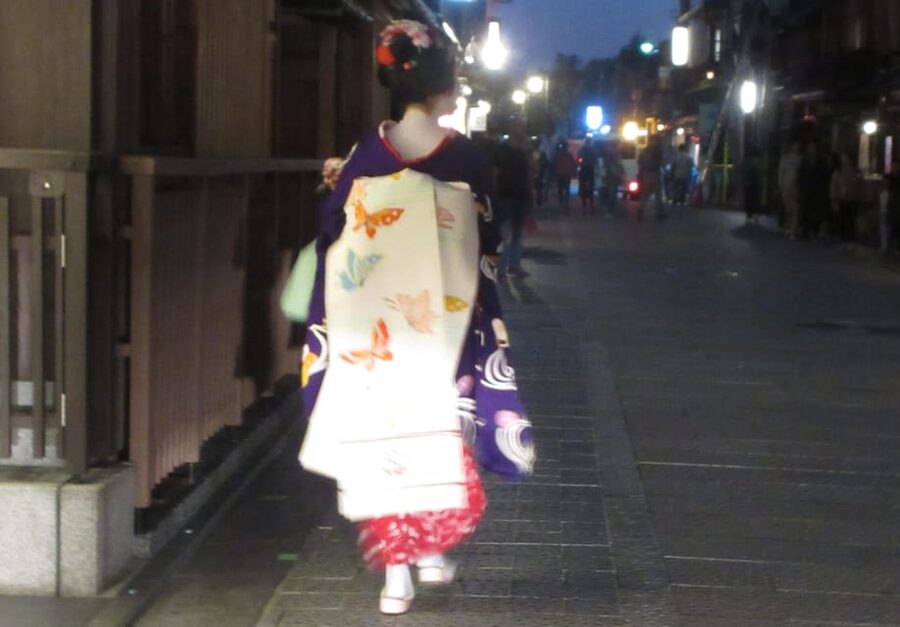
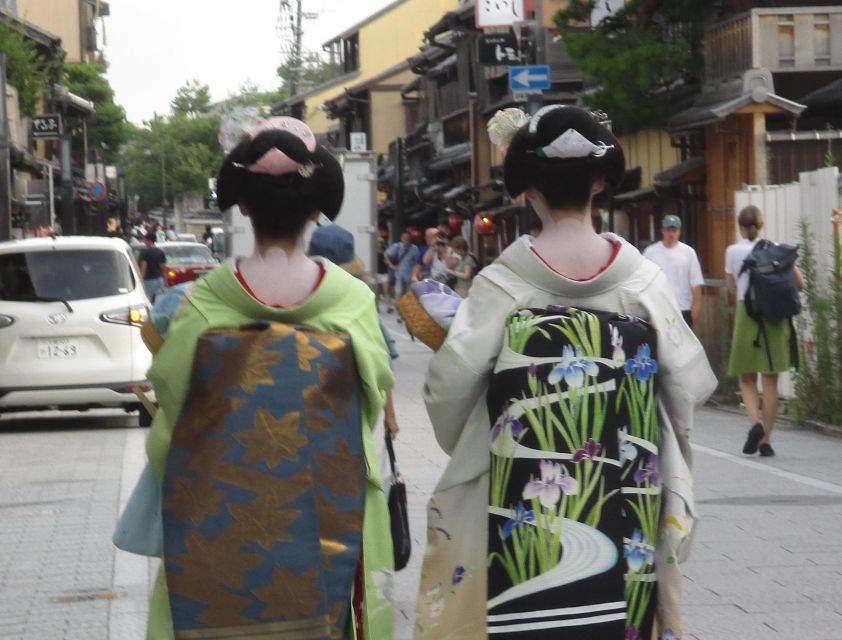
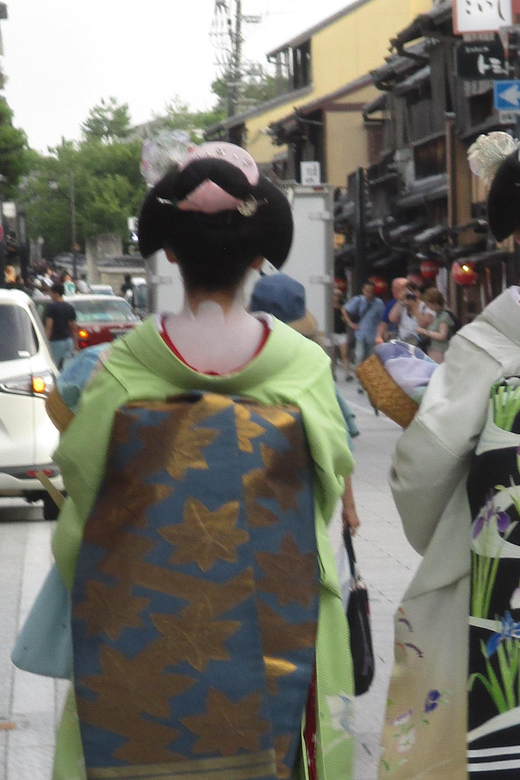
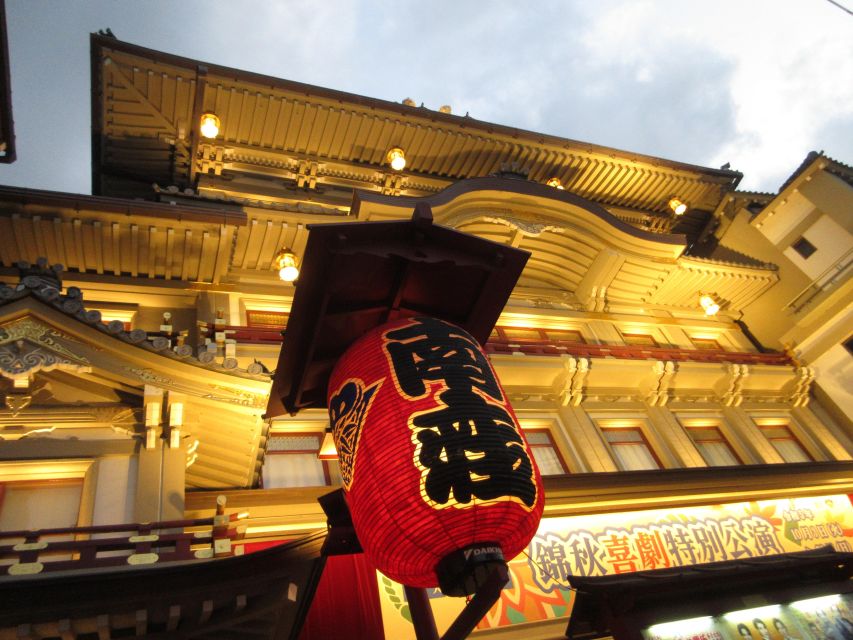
The Gion-kobu area is associated with professional Maiko and Geiko artists, sometimes called Geisya in the supplied description. These are trained performers connected with traditional arts and entertainment. The tour explains the area and its cultural role, but it does not promise a private meeting, performance, or guaranteed sighting of a Maiko or Geiko.
That distinction matters. You may see people working in the district, but the respectful approach is to treat the neighborhood as a living place, not a stage. Listen to the guide, follow local rules, and avoid assuming that every person in traditional dress is available for photographs or conversation.
The guided Gion visit lasts about 20 minutes. That is enough for an introduction and orientation, but it is a short stop compared with the temple visits. The walk then continues for about 10 minutes to Pontocho, where the activity ends.
Pontocho is a convenient finish for an evening in central Kyoto. The tour does not include dinner or a later Gion program, so you are free to make your own plans after the guide says goodbye.
What Omae adds to the experience
The strongest feature is the human guidance. Several bookings specifically praise Omae’s Italian, preparation, friendliness, humor, and willingness to answer questions. One especially useful detail is that Omae is Japanese and lived in Italy for more than a decade, giving the explanations a direct connection to both cultures.
The feedback also points to a good balance between instruction and freedom. The guide is described as explaining monuments and mythological legends clearly, while allowing time to explore and take photographs without constant commentary. That is exactly what you want at places as visually busy as Todai-ji and Kiyomizu-dera.
There is one caution. One assessment found the tour cordial and precise but not quite complete enough for the time and price. That criticism is fair. You visit several major places in one day, but the schedule gives only 90 minutes at Todai-ji, an hour at Kiyomizu-dera, and 20 minutes in Gion. This is an orientation tour with real substance, not a slow study of each district.
The listed live language is Italian. One part of the description also says the guide answers questions in English, so if language is central to your decision, confirm the exact guiding language when you book. The detailed language information identifies Italian as the tour language.
Is $176 per person good value?
At $176, the cost is best judged against what you would otherwise arrange yourself. The fee includes scheduled train and bus fares, entrance fees for the monuments in the program, Italian explanations, and practical help during the day. You are also paying for someone to manage the route between Kyoto and Nara and make the cultural connections meaningful.
The price makes less sense if you only want transportation or prefer to move at your own pace. Independent visitors can choose how long to spend with the deer, skip shopping streets, or linger at Kiyomizu-dera. This tour asks you to follow a set day and share it with a group of up to 15.
It becomes more worthwhile if you want Italian guidance, have limited time in Kyoto, or feel uncertain about combining two cities by public transport. The practical travel advice offered by the guide is also available free of charge upon request, which can add value if you have broader questions about getting around Japan.
The rating is 4.7 from 15 reviews, with repeated praise for Omae’s Italian, warmth, and knowledge of local stories. One lower score suggests the itinerary could feel a little light for the price, so I would book it for the guide and the convenience, not because it offers unusually long visits.
Who should choose this day trip?
I would recommend it to Italian-speaking visitors who want a strong first look at Nara and Kyoto without planning every connection. Families may like the deer, the giant Buddha, and the guide’s ability to adjust the pace within reason. The small group is also friendlier than a large coach outing.
It suits anyone who values explanations of Buddhism, legends, monuments, and local customs. It is particularly useful if you want to ask questions as they arise rather than read a label after the fact.
You may want another option if your priority is slow photography, quiet temple time, extensive shopping, or a long evening in Gion. The day covers a lot of ground. Good shoes, a sensible pace, and realistic expectations will make a difference.
The meeting point is in the space between the four escalators in front of the cab terminal, east of Kyoto Station’s north central entrance. Look toward Kyoto Tower: from the meeting space, it should appear at the top left, not the right. Confirmation and more detailed meeting instructions are sent the day before.
FAQ
Is the tour conducted in Italian?
Yes. The listed live tour language is Italian, and the activity information identifies Italian as the tour language. Another description refers to answering questions in English, so confirm the language details if this point is essential to you.
Where does the tour begin?
It begins at Kyoto Station, in the space between the four escalators in front of the cab terminal outside the north central entrance. Kyoto Tower should be visible toward the top left from this position.
Where does the tour end?
The tour ends at Pontocho after the walk from Gion.
Are train and bus fares included?
Yes. The scheduled train and bus fares used during the tour are included in the price.
Are entrance fees included?
Yes. Entrance fees for the monuments included in the program are covered.
How large is the group?
It is a small-group tour limited to 15 participants.
Can I cancel or pay later?
You can cancel up to 24 hours before the activity for a full refund. You can also reserve now and pay later, so no payment is required today.
Should you book it?
Book this tour if you want Italian explanations, practical support, and two major destinations in one day. The combination of Todai-ji, Nara’s deer, Kiyomizu-dera, and Gion gives you a broad introduction to the region, while Omae’s language skills and personal style appear to be the main reason the experience works so well.
Skip it if $176 feels high for a tightly timed group day or if you prefer to set your own pace. For the right reader, the value is not just the transport and tickets. It is having a local Japanese guide who can explain what you are seeing, answer questions in Italian, and help turn a busy route into a meaningful day.
Just added around Kyoto
- Kyoto: Zen Meditation at a Private Temple with a Monk★ 5.0 · 25 reviews
- Kyoto: Gion Geisha District & Sake-in-Hand Walking Tour★ 5.0 · 37 reviews
- Private Pewter Sake Cup Experience with a Kyoto Artisan★ 5.0 · 31 reviews
- Your Private Vacation Photography Session In Kyoto★ 5.0 · 110 reviews
- Private Guided Traditional Buddhist Cooking in Japan★ 5.0 · 16 reviews
- Kyoto Wagashi(Japanese sweets) Cooking Class near Fushimiinari★ 5.0 · 60 reviews
- Traditional Japanese Music show & Experience Tour in Kyoto★ 5.0 · 57 reviews
- Kyoto:Family-Friendly Kimono & Yukata Experience at WARGO★ 5.0 · 147 reviews
Kyoto Tours, compared.


Fushimi Inari, Kinkakuji, Bamboo Grove 1 Day Bus Tour
Read our review →
Tea Ceremony in a Traditional Tea House in Kiyomizu
Read our review →
Kyoto Geisha Walking Tour: Gion District & Hidden Gems
Read our review →

Gion Magical Night Walking Tour with Geisha Trivia
Read our review →
