
Reviewed · KYOTO TOURS
Let’s make only one original onigawara in the world!!
Making an onigawara by hand gives you a rare kind of Japanese souvenir: one with your fingerprints, small imperfections, and a job to do. These demon-faced roof tiles have guarded buildings from evil and rainwater for roughly 1,400 years. Here, a lump of soil slowly becomes your own little roof guardian under the steady guidance of Yuya.
I like two things right away. The method is built for beginners, so you do not need to sculpt well, and the small group, limited to five people, gives you room to ask questions. I also like the delayed payoff: your unfinished brown clay figure is fired at the workshop, changes to a traditional silver color, and arrives at your home after about one to two months.
The main consideration is practical. This is a hands-on clay class, so wear clothes that can get dirty, and remember that shipping is not included in the $90 price. You also need to find the workshop, since the Google Maps pin may place you about 40 meters too far west.
Key points to know before booking
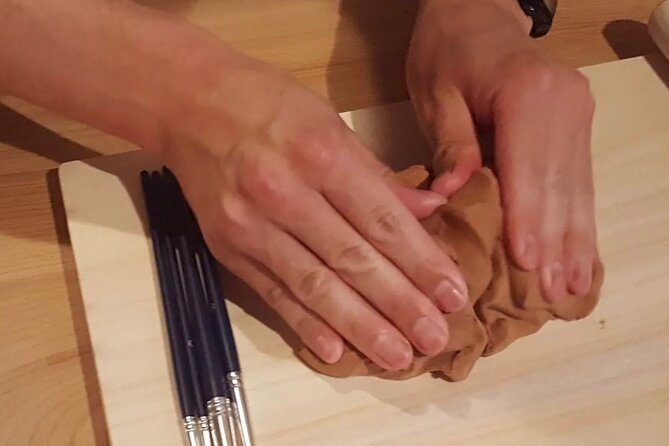
- Make a roof guardian from raw clay: You shape the face and assemble the parts yourself rather than buying a finished souvenir.
- Yuya teaches a beginner-friendly process: His procedure is designed so children and people with little sculpting experience can complete an onigawara.
- Your piece is fired after the class: The workshop handles kiln firing, then sends the finished tile to your home after one to two months.
- Small groups keep the class personal: The maximum is five participants, with English and Japanese support.
- The $90 price covers the workshop, not shipping: Pay the delivery fee separately on the day.
- Allow two hours, possibly a little more: The listed duration is two hours, but one participant described spending about three hours in a relaxed class.
Why an onigawara makes a better souvenir than a standard trinket
Kyoto is full of easy souvenirs. You can buy a fan, a sweet, a piece of pottery, or a small charm and be on your way. An onigawara asks more of you, but it also gives you a stronger connection to the place.
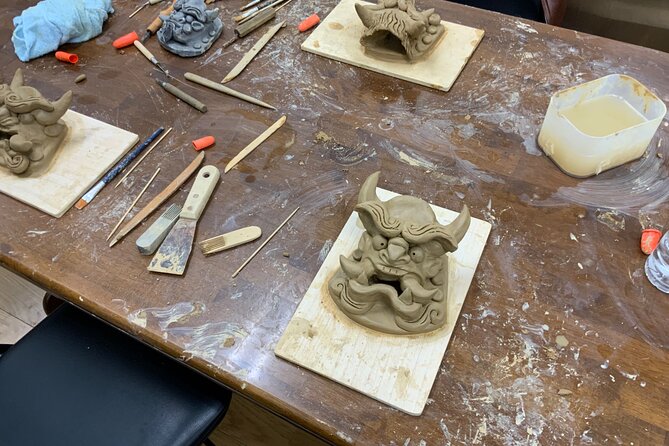
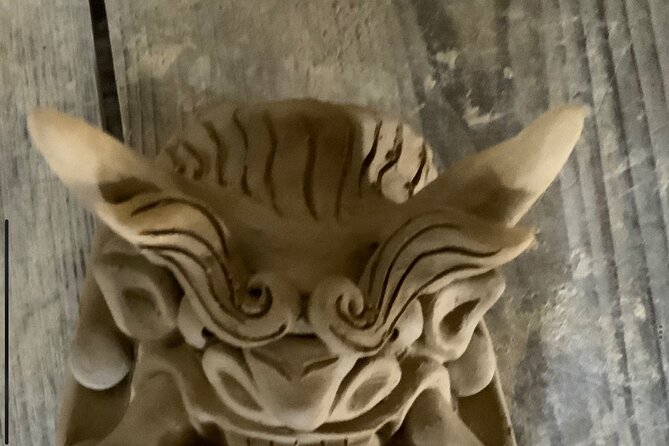
An onigawara is a roof tile decorated with a fierce demon or ogre face. It is traditionally fitted at the ends of a main roof ridge. The face is not just decoration. It has long been associated with protecting a building from bad luck, while the tile itself helps deal with rainwater around the roof.
That makes the object fun on two levels. You are making a small monster, which appeals to children and anyone who likes Japanese folklore. You are also taking part in an old craft linked to buildings, weather, protection, and family life.
I especially like that the finished object is not immediately available. You make it, leave it to dry and fire, and wait for the result. The delay turns a two-hour workshop into a small piece of your trip that continues after you return home.
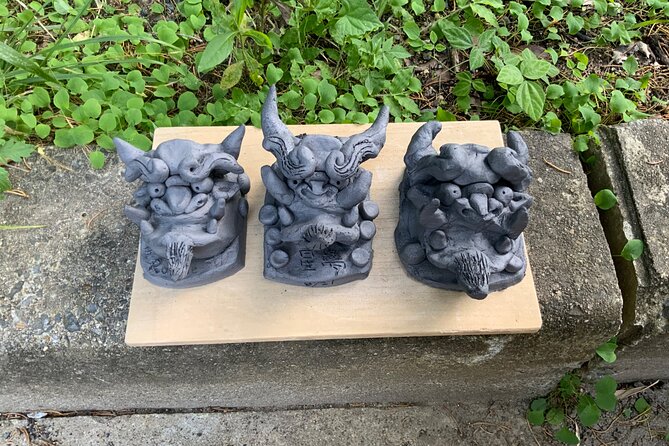
The silver finish is another reason this is more than a clay modeling class. The raw material begins as soil-colored clay. After kiln firing, it changes into the traditional silver color associated with finished roof tiles. The exact appearance of your piece will depend on the handmade surface, but that is part of the charm. This is not a factory-perfect object with no story behind it.
A few more Kyoto half-days to weigh up
- PERFECT KYOTO 1-Day Bus Tour
★ 5.0 · 13,518 reviews - Kyoto: Fushimi Inari, Kinkakuji, Bamboo Grove 1 Day Bus Tour
★ 4.8 · 4,316 reviews - Kyoto: Tea Ceremony in a Traditional Tea House in Kiyomizu
★ 4.9 · 3,519 reviews
Arriving at Kawarakoubouyouya
The meeting point is Kawarakoubouyouya, Yuya’s shop and workshop in Honshu, Japan. You are told to search for KAWARAKOUBOUYOUYA on Google Maps. Give yourself extra time, since one booking note reports that the GPS location was incorrect and that you should continue about 40 meters east.
That is a small issue, but it matters when you are trying to reach a workshop for a fixed start time. I would save the shop name before leaving your hotel and check the map pin carefully. If the marker looks slightly off, use the reported eastward adjustment rather than waiting at the first location you see.
The workshop itself is the setting for the activity. This is not a large tourist attraction with a busy schedule of dozens of people. The group limit is five, and some sessions may be much smaller. One class had only two participants, which allowed plenty of conversation and a calm pace.
English and Japanese are available. The teaching is not based on a long lecture. It is a practical class in which Yuya demonstrates and guides you through each stage. That makes the language arrangement useful even if you are not fluent in Japanese. You can learn by watching, listening, and copying the process.
The activity is listed as wheelchair accessible. If that matters for your booking, it is still sensible to contact the provider about your particular needs, since the available information does not describe the workshop layout or restroom details.
Turning a lump of clay into a demon face
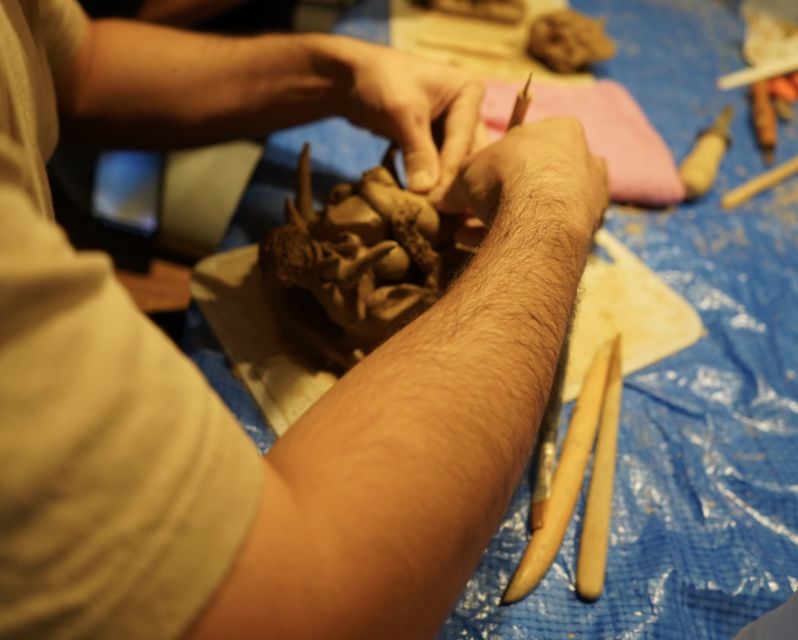
The class begins with clay prepared at your station. You work with the material directly, shaping it into the small onigawara piece rather than painting or decorating a ready-made tile.
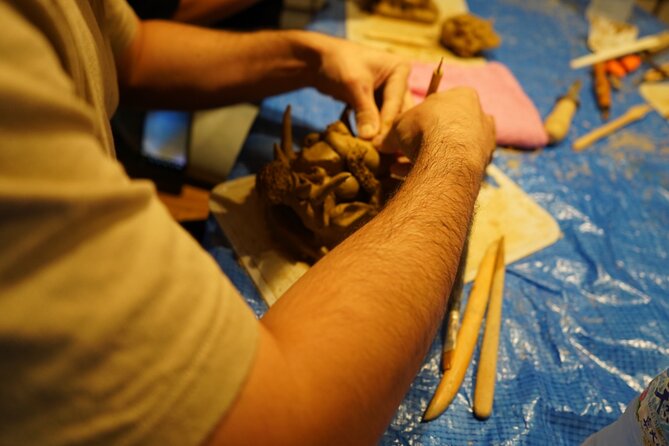
The process is broken into many steps. Yuya shows you how to handle the soil, form the separate elements, and put them together in the right order. This is important because a demon face looks complicated once finished, but it is easier when treated as a series of simple parts.
You might find that the most demanding part is not the basic shaping. It is getting the details to sit correctly when the pieces are assembled. Small features can change the expression, so Yuya’s close instruction helps you avoid rushing.
The goal is not to produce a perfect sculpture. The goal is to make an original onigawara that carries your decisions. You may make the face fiercer, funnier, or slightly uneven. Those marks show that you made it by hand.
I like the way the class handles beginners. The procedure was developed so people with clumsy hands and children can take part. That does not mean the activity is empty or overly simple. You still have to focus, manipulate the clay, and build the figure carefully. It simply removes the fear that you need formal art training.
One participant described the class as a sequence of many steps, with Yuya patiently advising how to manipulate each part. That is a good clue for your expectations. You will not be left alone with clay and told to invent a demon from scratch. You will receive structure and help as your figure takes shape.
A calm creative break in the middle of Japan
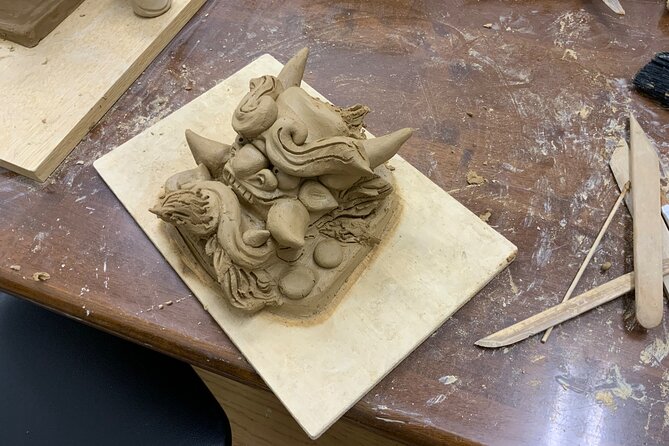
This workshop has a different rhythm from sightseeing. You are not moving from one landmark to another or trying to read signs while keeping up with a guide. You sit, concentrate, and work with your hands.
That slower pace is one of the best reasons to book it. A busy Japan itinerary can fill quickly with temples, stations, shops, and meals. Two hours spent shaping clay gives you a chance to stop thinking about the next train or attraction.
The small group helps here. With no more than five people, Yuya can watch how each person is progressing. If a piece is too thin, a feature needs adjusting, or you are unsure how to join parts, you can ask before moving on.
The class also works well for families. Children have a clear goal and can see the figure appear step by step. Adults get a creative activity that does not depend on being an artist. Several participants praised Yuya’s gentle, patient manner, and that matters when a child needs more time or an adult feels awkward with the material.
Still, you should be ready to concentrate. This is not a quick drop-in activity where you spend ten minutes pressing a design into clay. The careful assembly is the point. If you want something fast and polished, buy a finished tile instead. If you like making things, the time passes quickly.
One participant described the activity as taking three hours, even though the official duration is two. That may reflect the pace of a particular session, conversation, or extra time spent finishing. I would plan for the listed two hours but avoid scheduling a tightly timed activity immediately afterward.
Same base, a completely different sort of day:
- Kyoto Geisha Walking Tour: Gion District & Hidden Gems
★ 4.7 · 3,273 reviews - Kyoto: Tea Ceremony Ju-An at Jotokuji Temple
★ 4.9 · 3,207 reviews - Kyoto: Gion Magical Night Walking Tour with Geisha Trivia
★ 4.9 · 2,393 reviews - Kyoto: 45-Minute Tea Ceremony Lesson Experience
★ 4.3 · 2,378 reviews
From wet clay to traditional silver
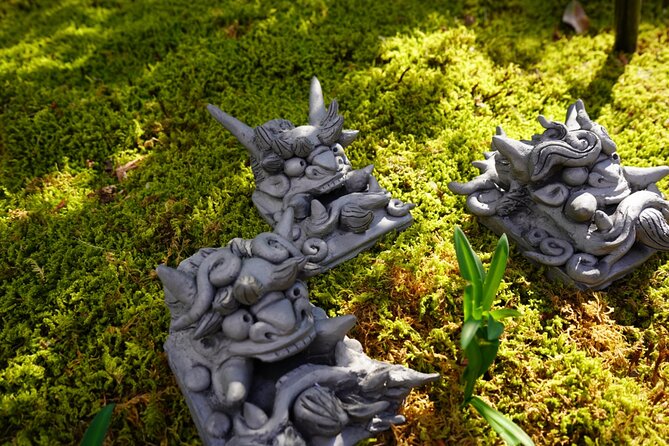
You do not take the finished onigawara home at the end of the class. The piece must dry and then be fired in a kiln at the factory. After firing, the workshop sends it to your home.
The expected wait is about one to two months. Shipping is arranged after the firing process, and the delivery fee is charged separately on the day. The $90 activity price therefore does not represent the full final cost.
This arrangement has both a benefit and a drawback. The benefit is that you do not have to carry a fragile clay figure through trains, luggage transfers, and airport security. The drawback is that you leave Japan without the finished object and need to wait for it.
You should also make sure your delivery details are correct before you leave. The supplied information does not specify shipping countries, delivery times beyond the one-to-two-month estimate, or the exact fee. Ask Yuya about those points during the workshop if the final delivery cost affects your budget.
The firing step gives the class a real craft connection. You are not simply making a souvenir that is finished in the room. Your work continues through a kiln process, and the material changes from soft clay to a durable roof-tile form. When it arrives, it carries both the traditional color and the evidence of your own hand.
Is $90 a fair price?
At $90 per person, this is not the cheapest creative activity in Japan. The value depends on what you want from a souvenir and how much you care about personal instruction.
The price includes the two-hour workshop, the clay work, Yuya’s guidance, and kiln firing. It also includes the handling needed to turn your wet piece into a finished object. Shipping is extra, so compare the total cost with that of a ready-made onigawara before booking.
I think the price is reasonable for someone who wants a small-group craft class with a lasting result. You receive more than a class token. You make the object yourself, learn why the demon face belongs on a roof, and later receive the fired piece at home.
The value is weaker if your main goal is to keep spending low or leave with a souvenir immediately. It is also not the right pick if you dislike messy work or have no interest in waiting for delivery.
There is a useful emotional value here, too. A shop-bought tile can show you what Japanese roof decoration looks like. Your own tile reminds you of the afternoon when you learned to build it, including any crooked detail that made the process yours.
Who will enjoy this workshop most
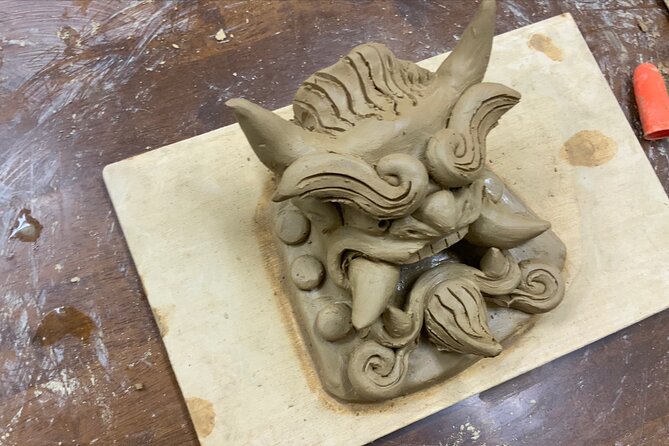
I would recommend it to families, couples, solo visitors, and small groups of friends who want a quiet activity with a clear cultural link. It suits people who like craft, folklore, architecture, and unusual souvenirs.
It is especially good for children because the monster face gives the project an immediate purpose. Parents should still expect clay on clothing and a process that requires patience. The class is suitable for all ages according to the activity details, but young children may need help with small parts.
You do not need to be a sculptor. Yuya’s step-by-step process is meant to make the work manageable for beginners. If you are nervous about your hands, focus on following each stage rather than trying to design an elaborate face.
The workshop also suits you if you have already seen plenty of temples and want to understand one small piece of the craft behind Japanese buildings. You will not get a full architectural course, but you will learn the role of onigawara while making one.
I would be more cautious if you have a packed schedule, need an instant souvenir, or cannot wear clothing that may get dirty. The shipping wait also makes this a poor choice if you are leaving home soon and need the finished item before a particular date.
Booking, cancellation, and practical details
The activity costs $90 per person and lasts two hours. Starting times depend on availability, so check the schedule before planning the rest of your day.
You can reserve now and pay later, which helps if your Japan plans are still moving around. Cancellation is free up to 24 hours before the activity for a full refund.
The group maximum is five people. English and Japanese are offered, and the class is listed as wheelchair accessible. Wear clothes that can handle soil, and allow some flexibility after the class in case your session runs longer than the official two-hour estimate.
The overall rating is 4.9 from 21 ratings, with praise focused on Yuya’s patience, kindness, clear instruction, and ability to make the activity work for different ages. The strongest pattern is not flashy presentation. It is the feeling of being calmly guided from raw clay to a completed face.
Should you book this onigawara experience?
Book it if you want to make something tied to Japanese building tradition rather than buy another small souvenir. Yuya’s patient, step-by-step teaching makes the activity approachable, and the five-person limit gives the class a personal feel.
The best match is a curious family, a couple, or a solo visitor who enjoys hands-on work and does not mind waiting one to two months for the finished silver tile. Just budget for separate shipping, wear washable clothes, and check the map carefully because of the reported GPS error.
Skip it if you need a short, clean, finished activity with no follow-up cost. For everyone else, this is a thoughtful way to carry home a small protector that you made yourself.
FAQ
Where does the onigawara workshop take place?
The workshop meets at Kawarakoubouyouya, the provider’s shop in Honshu, Japan. Search for KAWARAKOUBOUYOUYA on Google Maps before setting out.
How long does the activity last?
The listed duration is two hours. One participant described spending three hours, so leave some extra time if your schedule is tight.
How much does the workshop cost?
The price is $90 per person. Shipping for the finished onigawara is charged separately on the day.
Is shipping included in the activity price?
No. After firing, the onigawara is sent to your home, but the shipping fee is not included and must be paid separately.
When will the finished onigawara arrive?
The finished piece is expected to arrive after about one to two months. It is fired before being sent.
What color will the onigawara be after firing?
The clay changes to the traditional silver color after it is fired in the kiln.
Do I need sculpting experience?
No. The host uses a procedure designed for beginners, children, and people who consider themselves clumsy with their hands.
What languages are available?
The host or greeter can assist in English and Japanese.
Can I cancel the booking?
Yes. You can cancel up to 24 hours in advance for a full refund. You can also reserve now and pay later.
Just added around Kyoto
- Kyoto: Zen Meditation at a Private Temple with a Monk★ 5.0 · 25 reviews
- Kyoto: Gion Geisha District & Sake-in-Hand Walking Tour★ 5.0 · 37 reviews
- Private Pewter Sake Cup Experience with a Kyoto Artisan★ 5.0 · 31 reviews
- Your Private Vacation Photography Session In Kyoto★ 5.0 · 110 reviews
- Private Guided Traditional Buddhist Cooking in Japan★ 5.0 · 16 reviews
- Kyoto Wagashi(Japanese sweets) Cooking Class near Fushimiinari★ 5.0 · 60 reviews
- Traditional Japanese Music show & Experience Tour in Kyoto★ 5.0 · 57 reviews
- Kyoto:Family-Friendly Kimono & Yukata Experience at WARGO★ 5.0 · 147 reviews
Kyoto Tours, compared.


Fushimi Inari, Kinkakuji, Bamboo Grove 1 Day Bus Tour
Read our review →
Tea Ceremony in a Traditional Tea House in Kiyomizu
Read our review →
Kyoto Geisha Walking Tour: Gion District & Hidden Gems
Read our review →

Gion Magical Night Walking Tour with Geisha Trivia
Read our review →
