Reviewed · KYOTO TOURS
Authentic knife making experience at a blacksmith in Kyoto
A red-hot bar of steel, a heavy hammer, and a patient instructor: that is the heart of this Kyoto experience. You do not just watch a craft demonstration. Under Mao’s guidance, you help turn heated metal into a 13 to 15 cm handmade knife. I like the traditional blacksmith attire and the clear safety coaching, and I especially like that the finished knife is a useful souvenir rather than a trinket.
The work is physical, and the furnace makes the studio hot, especially in summer. You should also confirm the studio location before setting out, since the activity uses two spaces in Sakyo-ku and the meeting instructions may not always point to the same one.
Key points at a glance
- Forge your own blade: Hammer red-hot steel into shape with close help from Mao and the blacksmithing team.
- Wear traditional smith’s clothing: The costume adds a real craft-studio feel and keeps your regular clothes protected.
- Take home a practical souvenir: Your finished knife is boxed and bagged, ready to use or give as a gift.
- Expect real physical work: Hammering, holding tools near heat, sharpening, and polishing require effort.
- Reach the studio by train: The listed meeting point is at Studio Shinobi YASE, near the Yase-Hieizan Exit of the Eizan Electric Railway.
- Confirm the venue first: Sessions may take place at Studio NIN Yase or Studio NIN Kendo.
A rare chance to work at a Kyoto forge
Kyoto offers plenty of polished cultural activities, but very few let you handle the tools of a working blacksmith. This session gives you a short, focused introduction to Japanese knife making, with the useful result in your hands at the end.
The workshop lasts about three hours, though the knife-making process itself is described as a refined 2.5-hour format. That is enough time to experience the main stages without turning the activity into a full-day apprenticeship. You will not become a master smith in one afternoon, but you will gain a better sense of how much skill sits behind a simple kitchen knife.
The experience is run by Kendo Experience at two studios in Kyoto’s Sakyo-ku district. Mao is identified as a knife professional with more than 10 years of experience. Other sessions may include instructors such as Taka, Mits, Atsushi, Tom, or Daiki, depending on the day.
English and Japanese instruction are available. The teaching style is hands-on, with staff stepping in to correct technique or repair a mistake when needed. That matters here. Working with heated steel is not a task where you want vague directions or a guide standing across the room.
A few more Kyoto half-days to weigh up
- PERFECT KYOTO 1-Day Bus Tour
★ 5.0 · 13,518 reviews - Kyoto: Fushimi Inari, Kinkakuji, Bamboo Grove 1 Day Bus Tour
★ 4.8 · 4,316 reviews - Kyoto: Tea Ceremony in a Traditional Tea House in Kiyomizu
★ 4.9 · 3,519 reviews
Check-in, clothing, and the first safety lesson
When you arrive, you check in and meet the instructor. The first practical step is changing into the traditional uniform worn by Japanese smiths. This is more than a photo opportunity. It marks the shift from sightseeing to workshop mode, and it helps protect your clothing from dust, sparks, and metal filings.
You receive a towel and water, and the tools and materials are supplied. Wear socks, as requested by the studio. Comfortable clothing underneath the costume is sensible, since the work involves repeated movement and heat.
Before any hammering begins, the instructor explains the main tools. You learn how to hold and use the hammer, tongs, grinder, and sharpening equipment. The safety briefing is an important part of the session, not a quick formality. The steel may be heated to roughly 800 to 900 degrees Celsius, so you need to follow directions closely.
The staff also make the activity manageable for first-timers. You do not need blacksmithing experience, but you do need to stay alert. Keep alcohol and drugs out of the workshop, and take the warning about injury seriously.
Heating the steel and shaping the blade
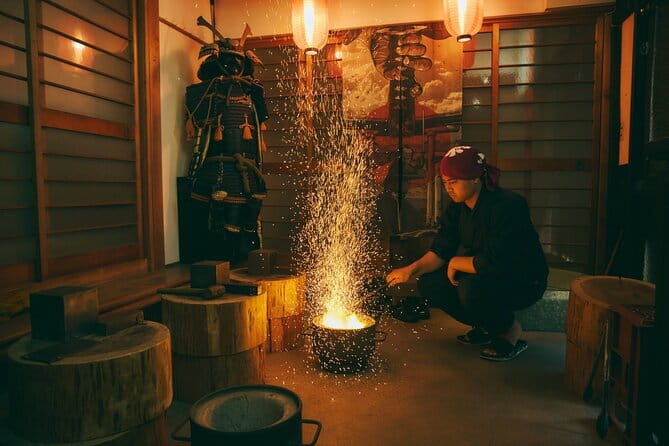
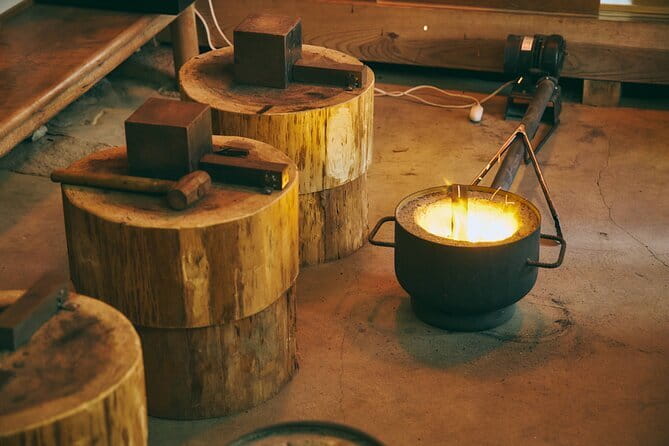
The most dramatic moment comes when the raw iron enters the furnace. As the metal heats, it begins to glow red. The color tells the smith when the steel is ready to work, and the instructor explains how heat changes the material.
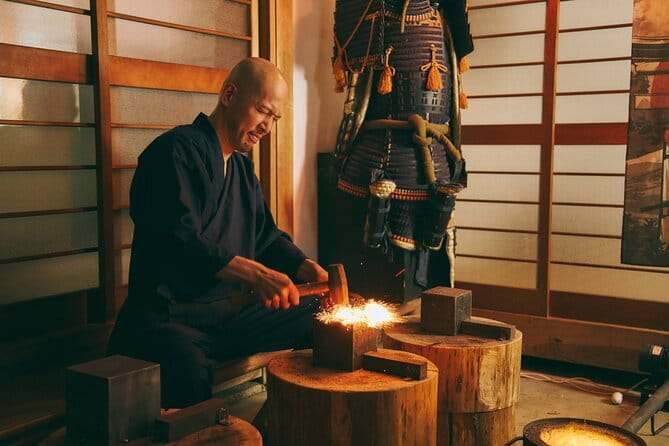
You then take part in the forging. With Mao or another instructor guiding you, you strike the hot metal repeatedly with a hammer. The aim is not simply to hit as hard as possible. The angle, rhythm, and placement of each blow affect the shape of the blade.
This is where the activity becomes more demanding than many craft classes. You are working with your arms, shoulders, and grip for a series of hammer strikes. One useful piece of advice is to stretch before the session. You may also find the work tiring sooner than expected, especially if you are not used to repetitive hammering.
The instructors remain close and can help correct the shape. That assistance does not erase your part in the process. You still make the blows, feel the resistance of the steel, and watch the blade change. At the same time, you should keep your expectations realistic. The knife may not come out perfectly straight or polished like a shop-bought blade. Small irregularities are part of its handmade character.
Cooling, checking, and refining the rough knife
Once the basic form is forged, the metal is cooled and checked. The instructor looks at the shape and helps you refine rough edges. This stage links the heavy work at the anvil with the finer work that follows.
The knife produced in this session has a rustic kurouchi finish. That means the blade keeps a dark, rawly forged surface rather than being made completely silver and shiny. The finish is part of the look of a traditionally forged knife, and it helps preserve the sense that you made something by hand.
You may be tempted to judge the knife only by its smoothness. That would miss the point. The charm lies in seeing the hammer marks and darker surface left by the forging process. It is a working knife with a personal finish, not a factory-perfect display piece.
Some participants choose a knife with a handle, while others make a blade without one. A handle may cost an additional 5,000 yen, payable locally by cash or card, including Apple Pay, according to the supplied activity details. Check the current options and price before you begin if the handle matters to you.
Same base, a completely different sort of day:
- Kyoto Geisha Walking Tour: Gion District & Hidden Gems
★ 4.7 · 3,273 reviews - Kyoto: Tea Ceremony Ju-An at Jotokuji Temple
★ 4.9 · 3,207 reviews - Kyoto: Gion Magical Night Walking Tour with Geisha Trivia
★ 4.9 · 2,393 reviews - Kyoto: 45-Minute Tea Ceremony Lesson Experience
★ 4.3 · 2,378 reviews
Sharpening brings the blade to life
After forging and cooling, the work shifts from force to control. You use sharpening stones and grinders under instruction, shaping the edge into a functional blade. Beginners can take part, but the instructor may need to guide your hand and correct the angle.
This part can be particularly satisfying because the rough piece of steel begins to look like a knife. You see the edge appear, then refine it through repeated passes. The process also teaches a useful lesson: sharpness comes from steady technique, not from simply pressing harder.
The grinder and sharpening tools require their own care. Keep your attention on the instructor’s directions, especially when positioning the blade. The staff can help rescue a poor angle or uneven edge, so do not panic if your first attempt is not neat.
The session then moves into polishing. This gives the knife a cleaner final appearance while leaving its forged character intact. You can expect a blade that feels personal and usable, but not a bespoke chef’s knife made entirely to professional culinary standards.
Photos, packing, and your finished souvenir
Photos and videos are allowed throughout the process. The team may also help capture key moments, including the hammering and final result. This is useful because your hands are busy during the most memorable parts.
At the end, your handmade knife is boxed and placed in a bag. The final blade is about 13 to 15 cm long. That size makes it easier to carry home than a large kitchen knife, and it works well as a gift or an everyday-use souvenir.
A larger knife requires more than five hours and costs over $400, so this shorter session uses a smaller format. That is an important value point. You get the central experience of forging and finishing without paying for a long professional course.
Do not expect the finished item to have the same precision as a high-end Japanese knife bought from a specialist shop. You are paying for the craft session, expert supervision, materials, tools, and the memory attached to the object. If you want a flawless kitchen tool, shop for one. If you want a knife that carries the marks of your own effort, this format makes more sense.
Getting to the studio in northern Kyoto
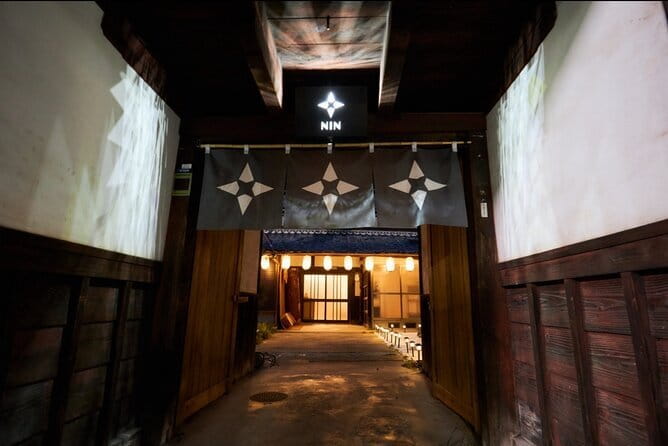
The listed meeting point is Studio Shinobi YASE, at 168-1 Yase-no-secho, Sakyo-ku, Kyoto City. It is described as a one-minute walk from the Yase-Hieizan Exit of the Eizan Electric Railway, and the activity recommends coming by train. Taxis are also available.
Allow extra time. The activity operates from Studio NIN Yase and Studio NIN Kendo, and the staff send the confirmed location before your visit. The published directions and the actual studio can occasionally cause confusion, so read the final message carefully rather than relying only on the original meeting point.
The setting outside central Kyoto is part of the appeal. You are not walking into a generic classroom near the main shopping streets. You are heading to a dedicated forging space in Sakyo-ku, where the quieter surroundings suit the workshop.
At the same time, this location takes planning. One piece of practical feedback puts the walk from the station at closer to 15 minutes, while the official meeting point describes a one-minute walk from the station exit. Treat the timing as uncertain and allow a cushion. Arriving late to a safety-focused class is not ideal.
Heat, effort, and group size
The physical side of this experience deserves honest attention. You will hammer metal, handle tools near a furnace, and work through sharpening and polishing. The activity is not extreme exercise, but it is more tiring than sitting through a demonstration.
The studio provides water and a towel. In hot weather, staff have also supplied frozen neck coolers, and some sessions have air conditioning. Even so, the furnace creates a warm work area. Wear light, comfortable clothing under the costume and stretch beforehand.
Small groups are available. Group size affects how much direct help you receive, although the precise number is not fixed in the supplied details. Some sessions may be especially small, giving you more time with the instructor. A larger group could mean more waiting between steps, so ask about the expected group size if personal guidance is a priority.
Children under 15 are not suitable for the activity, and anyone under 15 must not attend without a guardian according to the additional guidance. The experience is also listed as unsuitable for people over 95. Teenagers aged 15 and older have taken part, but every participant needs to judge their own comfort with heat, noise, and physical work.
How the $154 price holds up
At $154 per person, this is not a cheap add-on activity. The price makes sense when you count the instructor’s time, the materials, use of specialist tools, traditional clothing, safety supervision, packaging, and the knife itself.
You also receive something with a practical purpose. A handmade knife can serve as a gift for a cook, a keepsake from Japan, or an everyday tool, subject to the rules for carrying and transporting knives home. The value is strongest if you care about making the object, not just receiving it.
The session also fills a gap between a sightseeing tour and a serious craft course. You get enough instruction to understand the process and enough physical work to feel involved, but you do not commit five or more hours to a large blade. The larger format costs over $400, so this shorter knife is the more sensible choice for most holiday schedules.
Reserve now and pay later is available, and cancellation is free up to 24 hours before the activity for a full refund. Those terms help if your Kyoto plans are still shifting, though you should still confirm the studio location before the day.
Who will enjoy this most
I would choose this for someone who prefers making something to looking at another display case. It suits couples, families with older teenagers, solo participants, and anyone who wants a souvenir with a story attached to it.
It is also a good choice for a birthday gift. The finished knife feels more personal than a standard purchase because you helped forge, sharpen, and polish it. A family can work side by side, though each person should be ready for the noise and exertion.
You may not enjoy it if you dislike heat, repetitive work, or hands-on activities where the result can have small flaws. It is also a poor fit if your main goal is a detailed lecture on Japanese metalworking. The historical explanation is present, but the main focus is doing the work.
Some sessions may include extra entertainment while you wait, such as shuriken throwing, but this is not part of the stated knife-making sequence and should not be treated as guaranteed. Concentrate on the forging class itself when deciding if the price is right.
Should you book the Kyoto knife-making workshop?
Book it if you want a rare, physical craft experience and a useful handmade object to carry home. The strongest reasons are the close instruction, the chance to strike genuinely hot steel, and the fact that the final knife keeps a rustic forged finish instead of looking mass-produced.
Skip it if you want a relaxed activity or a flawless professional blade. Plan for heat, hammering, and a little sweat. Confirm whether you are going to Studio NIN Yase or Studio NIN Kendo, bring socks, stretch first, and leave extra time for the journey.
For the right person, this is one of Kyoto’s more memorable hands-on choices. You leave with more than a souvenir. You leave with a better feel for the skill hidden inside an ordinary knife.
FAQ
How long does the knife-making experience last?
The activity lasts three hours. The knife-making format itself is described as approximately 2.5 hours within that period.
How much does the experience cost?
The listed price is $154 per person. A knife with a handle may require an additional 5,000 yen, according to the supplied activity details.
What size knife will I make?
The finished knife is approximately 13 to 15 cm long.
Can I take the knife home?
Yes. The completed knife is provided in a box and bag so you can take it home.
Where does the workshop take place?
The activity uses two studios in Sakyo-ku, Kyoto: Studio NIN Yase and Studio NIN Kendo. The listed meeting point is Studio Shinobi YASE, at 168-1 Yase-no-secho, Sakyo-ku, Kyoto City. The staff will confirm the correct studio before your visit.
Is English instruction available?
Yes. The instructors offer the experience in English and Japanese.
What should I bring, and what is not allowed?
Bring socks. Alcohol and drugs are not allowed. You should also be prepared for heat, hammering, and work involving potentially dangerous tools and heated metal.
Just added around Kyoto
- Kyoto: Zen Meditation at a Private Temple with a Monk★ 5.0 · 25 reviews
- Kyoto: Gion Geisha District & Sake-in-Hand Walking Tour★ 5.0 · 37 reviews
- Private Pewter Sake Cup Experience with a Kyoto Artisan★ 5.0 · 31 reviews
- Your Private Vacation Photography Session In Kyoto★ 5.0 · 110 reviews
- Private Guided Traditional Buddhist Cooking in Japan★ 5.0 · 16 reviews
- Kyoto Wagashi(Japanese sweets) Cooking Class near Fushimiinari★ 5.0 · 60 reviews
- Traditional Japanese Music show & Experience Tour in Kyoto★ 5.0 · 57 reviews
- Kyoto:Family-Friendly Kimono & Yukata Experience at WARGO★ 5.0 · 147 reviews
Kyoto Tours, compared.
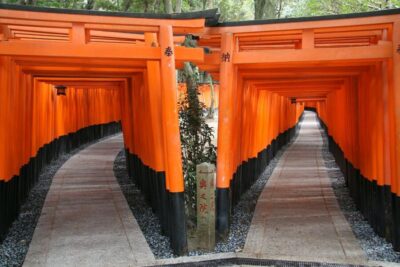
Fushimi Inari, Kinkakuji, Bamboo Grove 1 Day Bus Tour
Read our review →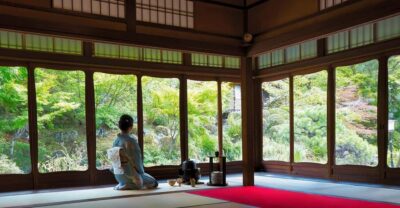
Tea Ceremony in a Traditional Tea House in Kiyomizu
Read our review →
Kyoto Geisha Walking Tour: Gion District & Hidden Gems
Read our review →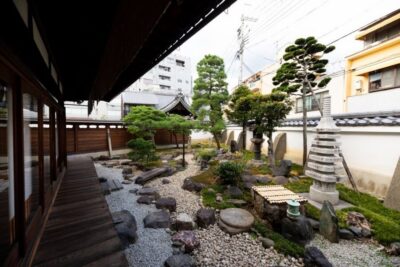

Gion Magical Night Walking Tour with Geisha Trivia
Read our review →