
Reviewed · KAMAKURA TOURS
Kamakura: A Journey Through Medieval Japan
Kamakura gives you something Tokyo cannot: a compact look at Japan’s samurai past, Zen Buddhism, shrine worship, and seaside life in one day. This tour connects those pieces through Engaku-ji, Tsurugaoka Hachimangu, and the Great Buddha, with guide John adding the political and personal stories that make old stones easier to understand. I especially like the mix of temple quiet and Enoshima’s lively island atmosphere. The main catch is simple: this is still a walking tour, and the full route can be a long day for anyone with mobility limits.
I like the flexible format. A four-hour visit can give you a solid Kamakura overview, while the private eight-hour option adds shojin-ryori and Enoshima. I also like that John knows how to use local trains and buses, helping you cover more ground without turning the day into a forced march. Plan for extra costs beyond the $35 guide fee, including admission, transport, and lunch.
Key points to know before you book
- Engaku-ji starts the day with Zen, politics, and art, not just a quick temple photo stop.
- John’s storytelling is a major part of the experience, with a strong grasp of Kamakura’s rulers, temples, shrines, and modern Japanese life.
- The four-hour option works well for a Tokyo day trip, especially if you want the main sights without committing to a full day.
- The eight-hour route reaches Enoshima, where ancient religious meaning meets seaside entertainment and broad coastal views.
- Shojin-ryori offers a distinctive vegetarian lunch, and vegetarian, vegan, gluten-free, and other dietary needs can be discussed in advance.
- Expect stairs, walking, and public transport, with the tour unsuitable for wheelchair users and people with mobility impairments.
Why Kamakura makes such a good day away from Tokyo
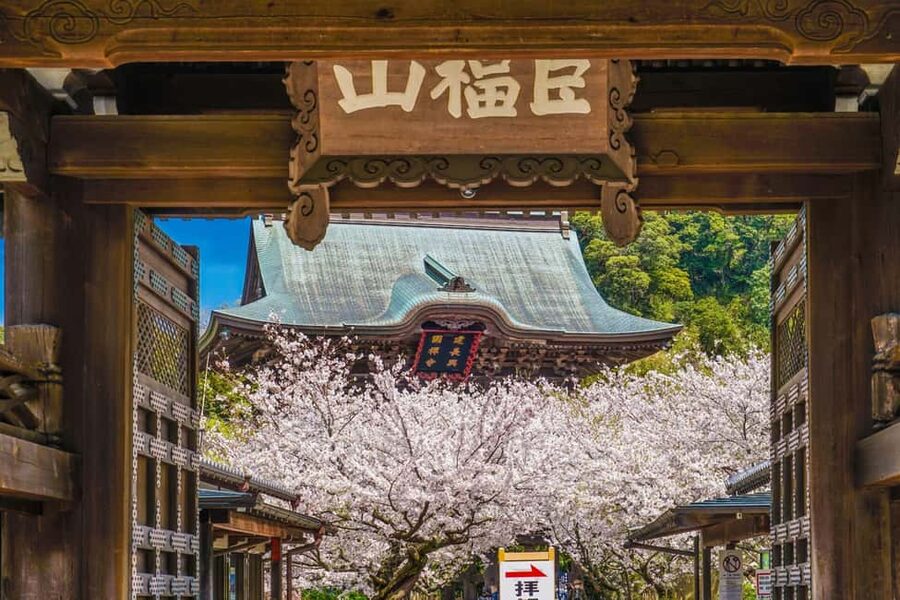
Kamakura was the base of Japan’s first warrior government around 900 years ago. That gives the town a different feel from the imperial traditions of Kyoto and the modern energy of Tokyo. Here, military power, Buddhist practice, shrine worship, and ordinary town life sit close together.
I find Kamakura especially useful as a first look at medieval Japan because the sights are not scattered across a huge city. You can begin at a Zen temple in the hills, walk through a former women’s pilgrimage site, visit the shrine at the center of Kamakura-period politics, and finish with a giant outdoor Buddha or a seaside island.
The guide helps tie those stops together. Without context, a temple can look like a collection of gates, roofs, gardens, and statues. With John, you can connect Zen to politics, art, daily religious practice, the Tokugawa shogunate, and the Imperial Family. That wider frame is one reason this tour has earned a 4.9 rating from 32 bookings.
A few more Kamakura half-days to weigh up
- Tokyo: Kamakura & Enoshima Day Trip including Temple Tickets
★ 4.5 · 1,375 reviews - From Tokyo: Kamakura & Enoshima 1-Day Bus Tour
★ 4.5 · 189 reviews - Kamakura Historical Walking Tour with the Great Buddha
★ 5.0 · 129 reviews
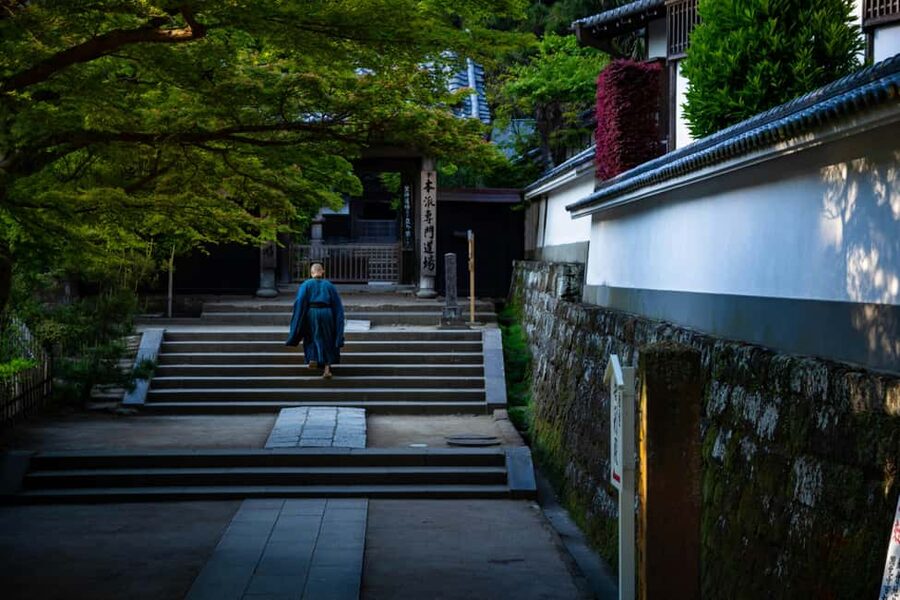
Starting at Kita-Kamakura Station and Engaku-ji
The meeting point is outside the East Exit of Kita-Kamakura Station. This is a practical starting place because the station is small and straightforward, unlike a major Tokyo interchange. From there, the route begins at Engaku-ji, one of Japan’s most important Zen temples.
The guided visit here lasts about an hour. That is enough time to look beyond the main entrance and understand why Zen mattered so much to Japanese politics, art, and religious life. The temple grounds provide a quiet opening to the day, and the setting helps you make the mental shift from Tokyo’s crowded streets to Kamakura’s older religious world.
I like starting with Engaku-ji because it gives the rest of the tour a useful foundation. You are not simply ticking off a shrine, a Buddha, and an island. You are learning how different forms of Buddhism shaped Japan, and how religious institutions were tied to powerful political families.
The temple visit does involve walking, and temple grounds can include uneven surfaces and steps. The pace can be adjusted on a private tour, but this is not an outing designed for wheelchairs or serious mobility limitations. Wear shoes that are comfortable for several hours and expect to stand or walk between stops.
Tokei-ji and the stories of women seeking refuge
The next stop is Tokei-ji, a former nunnery visited by women from across Japan as part of a pilgrimage tradition. The stop lasts about 15 minutes, so it is brief, but the subject adds an important counterpoint to the samurai stories usually associated with Kamakura.
Tokei-ji gives the tour a chance to look at women’s religious life and the role of temples beyond the powerful male institutions of the warrior government. I value this kind of stop because it widens the story. Kamakura was not only about shoguns, battles, and political authority.
Since the visit is short, do not expect a long independent exploration here. Its value comes mainly through John’s explanation and the way it fits into the larger route. If you have a particular interest in women’s history, tell him in advance so the private itinerary can give that theme more room.
Shojin-ryori, a vegetarian lunch with a religious connection
Lunch usually comes with the eight-hour tour and can be added to the four-hour version by request. The meal is shojin-ryori, the vegetarian food traditionally associated with Buddhist monks. It is one of the most distinctive parts of this experience because it connects what you eat with the religious ideas you have just been discussing.
Lunch costs about 1,000 yen per person, including the guide’s meal. Vegetarian and vegan diners are welcome, and you should share dietary restrictions before the tour. One useful example from the tour’s recent bookings is a gluten-free lunch arranged for a diner with celiac disease, so it is worth being specific rather than simply saying you have food preferences.
The meal is not included in the $35 price, but I consider it a fair extra if you want a more local and meaningful break than a quick convenience-store stop. Keep in mind that the four-hour tour may not include lunch unless you request it, and the available timing depends on the route you choose.
Same base, a completely different sort of day:
- Kamakura Private Tour: Temples, Nature, and the Great Buddha
★ 5.0 · 121 reviews - Kamakura Walking Tour – The City of Shogun
★ 5.0 · 100 reviews - Kamakura 4hr Private Trip with Government-Licensed Guide
★ 5.0 · 58 reviews - When Emperors Reigned and Shoguns Ruled
★ 5.0 · 43 reviews
Tsurugaoka Hachimangu, the political heart of Kamakura
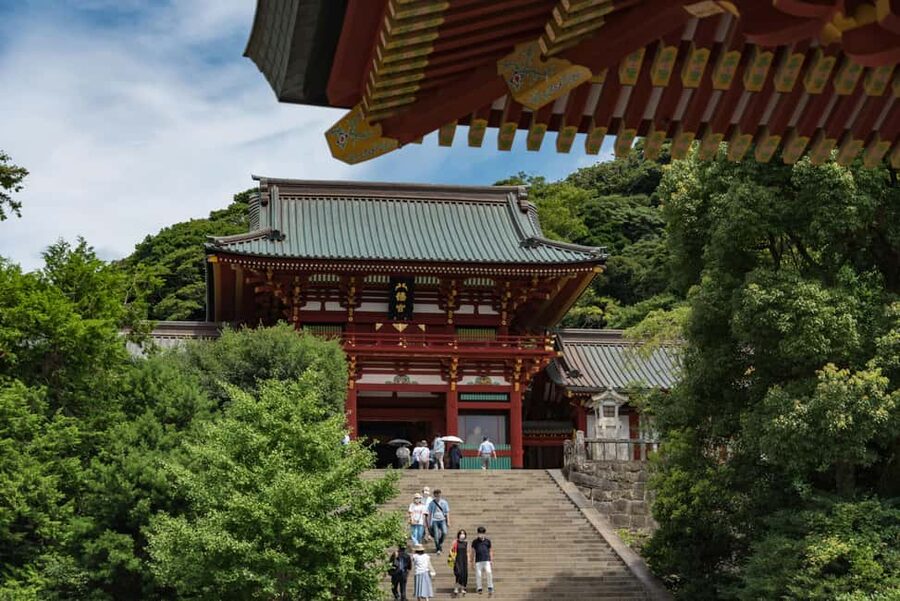
After lunch, the tour moves to Tsurugaoka Hachimangu, Kamakura’s large and popular shrine in the center of town. The guided portion lasts about 30 minutes, giving you a focused introduction rather than an extended visit.
This shrine is essential for understanding the Kamakura period. It was closely tied to the warrior government and remains one of the area’s most important religious sites. The visit shifts the focus from Zen temple culture to Shinto practice and political symbolism.
You will likely notice a change in atmosphere here. Engaku-ji offers a more subdued temple setting, while Tsurugaoka Hachimangu is a major public shrine with a stronger sense of movement and ceremony. That contrast is part of the tour’s appeal. You see how Buddhism and Shinto occupy different but overlapping places in Japanese life.
John’s explanations also reach beyond the Kamakura period. He has discussed the Tokugawa shogunate and the Imperial Family with past groups, which helps place the shrine in a longer story rather than treating it as an isolated monument.
Taking the bus to the Great Buddha
The route then uses a bus for about 20 minutes. Transportation costs around 400 yen per person, not including the guide’s fare. This small expense is worthwhile because it saves energy and lets you reach the next major site without walking the entire distance.
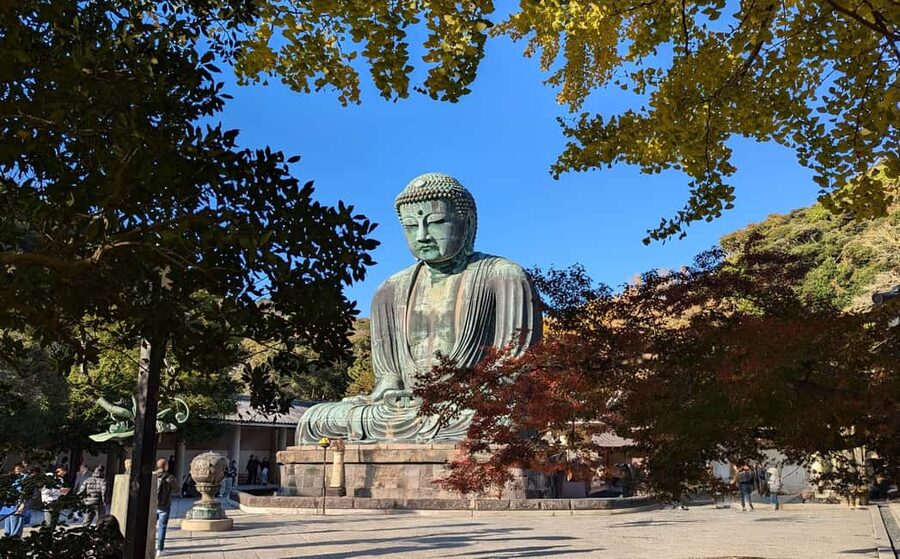
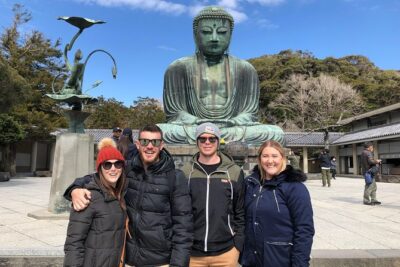
The Great Buddha is at Kotoku-in, where the guided visit lasts about 30 minutes. The statue is one of the largest in Japan and is the visual centerpiece of many Kamakura day trips. Its open-air setting gives it a different presence from a Buddha housed inside a temple hall.
A half-hour here is enough for an explanation, photos, and a good look at the statue. If you are hoping for a long, quiet meditation period or detailed independent study, you may want additional time after the guide portion. The short stop keeps the full route moving, but it also means the visit is more overview than extended exploration.
This is one place where a private tour helps. John can adjust the pace for your group, and he has been praised for finding good photo spots while keeping the day on schedule. He can also shape the four-hour version around the sites that matter most to you.
Enoshima adds a completely different final act
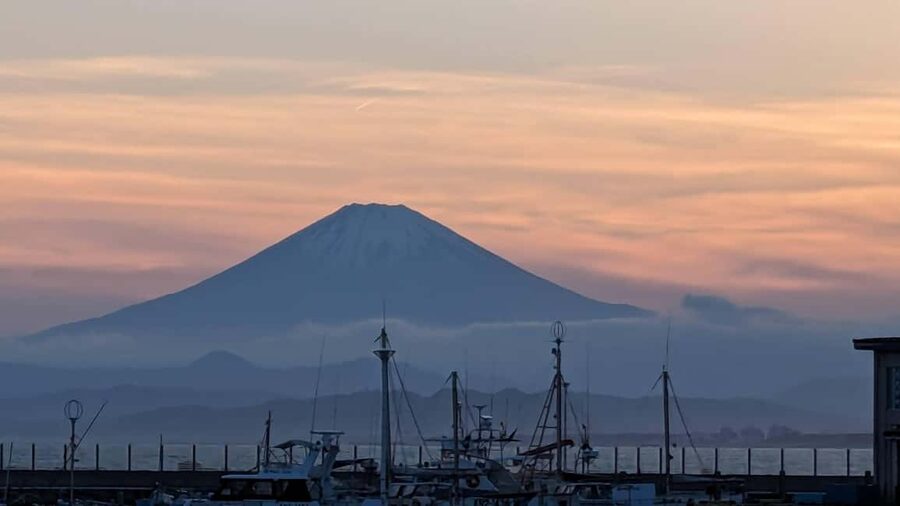
The full private eight-hour route continues by train for about 15 minutes to Enoshima. The island is a striking change from Kamakura’s temples and shrines. Its older identity was religious, while today it is also a popular seaside escape for couples and families.
The guided walk lasts about two hours. Enoshima brings together holiness, kitsch, shops, family outings, and natural scenery. That mix may sound odd on paper, but it is precisely what makes the island memorable. You can move from sacred spaces to tourist stalls and open coastal views within the same outing.
The island is also a good reason to choose the longer version if you have enough time. Kamakura alone gives you medieval temples and political history. Enoshima shows how Japanese religious places can also become leisure destinations without losing their old identity.
A past visit was timed to reach the most scenic setting around sunset. If you want that kind of light, mention it when arranging the private tour, since the starting time and sequence will affect what you see. The full day can run four to eight hours depending on your plan, so confirm how much time is available before booking.
How the four-hour and eight-hour options compare
The four-hour tour is the practical choice for a day trip from Tokyo. It can cover several major temples and shrines, including Engaku-ji, Tokei-ji, Tsurugaoka Hachimangu, and the Great Buddha, depending on your agreed route and pace.
I would choose four hours if you want a clear introduction to Kamakura, prefer a lighter day, or have other plans in the evening. One group covered the major sights in half a day while still keeping a comfortable pace. That makes this version a good fit for families and first-time visitors who do not want to spend an entire day away from Tokyo.
The eight-hour option makes sense if you want the food experience and Enoshima. It also gives John more time to adjust the route, answer questions, and connect the sites. The tradeoff is stamina. Even with buses and trains, you will spend much of the day moving between outdoor places.
Private tours are especially useful for groups with different interests. John has created a custom itinerary for an individual guest and adjusted the pace for a group of six. If one person wants more history, another wants photos, and someone else wants food advice, the private format gives you room to balance those needs.
What the $35 price really covers
The advertised price is $35 per person for the guide fee. It includes an English-speaking local guide and can be arranged for a private group or a small group. The price does not include temple and shrine admission, transport, or lunch.
Budget roughly 800 to 1,500 yen per person for entry fees, around 400 yen for transport, and about 1,000 yen for lunch if it is part of your plan. The entry estimate includes the guide and guests, so the final amount depends on the exact route.
That puts the real cost above the headline price, but the guide fee is still reasonable for a private or small-group day with public transport and a customized pace. You are paying for interpretation and local navigation, not just a ride between photo stops.
I would not book this tour if you want a cheap, self-guided walk with no added fees. I would consider it good value if you want to understand what you are seeing, avoid wasting time with local transport, and combine several types of Kamakura sights in one outing.
Who will get the most from this tour
This experience suits first-time visitors to Kamakura, travelers staying in Tokyo, families who want a manageable introduction, and anyone interested in the overlap between religion and government. It also works well for people who appreciate strong storytelling. John’s English is clear, and his approach includes practical advice about Japanese food and daily culture.
The tour is a particularly good match for travelers who want flexibility. You can ask for a shorter route, request shojin-ryori on the four-hour option, or shape the day around temples, political history, food, photography, or Enoshima.
It is not suitable for wheelchair users or people with mobility impairments. Even though the route uses public transport and includes places to sit, temple grounds, shrines, and Enoshima involve walking. Tell John about physical concerns before booking so he can explain what adjustments are possible.
Practical planning for a smoother day
Start with comfortable walking shoes and a small bag. The route includes trains, a bus, temple grounds, shrine approaches, and an island walk. Bring enough money for entry fees, transport, and lunch, since those costs are separate from the guide fee.
Meet outside the East Exit of Kita-Kamakura Station. The station is easy to identify, and the guide will be waiting there. The tour can finish at either Kita-Kamakura Station or Kamakura Station, depending on the route.
The guide speaks English. Vegetarian and vegan arrangements are available with advance notice, and you should disclose allergies, celiac disease, or other dietary restrictions early. Free cancellation is available up to 24 hours before the start, and you can reserve while paying later, which helps if your Tokyo plans are still shifting.
Should you book Kamakura: A Journey Through Medieval Japan?
Book it if you want Kamakura explained rather than merely photographed. John’s strongest asset is his storytelling, and his practical handling of trains and buses lets you see a lot without making every transfer your problem.
Choose the four-hour option for the essential temples, shrine, and Great Buddha. Choose eight hours if you want shojin-ryori, a slower pace, and Enoshima at the end. Just budget for extra admission, transport, and food costs, and be honest about your ability to walk.
For a first Kamakura visit from Tokyo, this is a well-rounded choice. It gives you medieval politics, Zen, Shinto, Buddhist food, a famous Buddha, and a seaside finale in one flexible day.
FAQ
Where does the Kamakura tour begin?
The tour begins outside the East Exit of Kita-Kamakura Station.
How long does the tour last?
The experience can last from four to eight hours. Starting times vary, so you need to check availability when booking.
Is the tour private?
Private and small-group options are available. The private version can be customized around your interests and needs.
Which languages does the guide speak?
The tour is conducted in English.
Is lunch included in the price?
No. Lunch costs about 1,000 yen per person and is generally part of the eight-hour tour. You can request lunch on the four-hour option.
What kind of food is served for lunch?
The meal is shojin-ryori, vegetarian Buddhist cuisine. Vegetarian and vegan arrangements are available if you notify the guide beforehand.
Are entrance fees included?
No. Temple and shrine admission costs about 800 to 1,500 yen per person. This estimate includes fees for the guide and guests.
Does the tour use public transport?
Yes. The route uses a bus for about 20 minutes and a train for about 15 minutes. Transport costs about 400 yen per person.
Is the tour suitable for wheelchair users?
No. The experience is not suitable for wheelchair users or people with mobility impairments.
Where can the tour finish?
The tour can finish at Kita-Kamakura Station or Kamakura Station, depending on the selected route.
Just added around Kamakura
- When Emperors Reigned and Shoguns Ruled★ 5.0 · 43 reviews
- First time in Kamakura? Enjoy a Tour of All Must-sees!★ 5.0 · 15 reviews
- Your Own HANKO Name Seal Activity in Kamakura.★ 5.0 · 24 reviews
- Kamakura Bamboo Forest and Great Buddha Private Tour★ 5.0 · 12 reviews
- Kamakura 4hr Private Trip with Government-Licensed Guide★ 5.0 · 58 reviews
- Kamakura Walking Tour – The City of Shogun★ 5.0 · 100 reviews
- Exciting Kamakura – One Day Tour from Tokyo★ 5.0 · 40 reviews
- Kamakura Tours Half Day or Full Day Tours with a local guide.★ 5.0 · 12 reviews
Kamakura Tours, compared.
Kamakura & Enoshima Day Trip including Temple Tickets
Read our review →
Kamakura Historical Walking Tour with the Great Buddha
Read our review →
Kamakura Private Tour: Temples, Nature, and the Great Buddha
Read our review →
Kamakura 4hr Private Trip with Government-Licensed Guide
Read our review →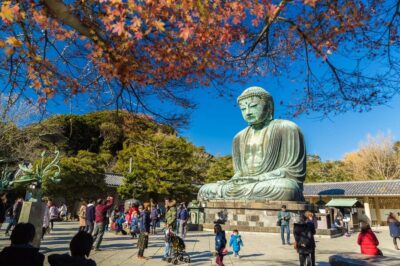
Kamakura Full Day Tour with a Local Expert Guide
Read our review →
Browse the lists this tour appears in