
Reviewed · KYOTO TOURS
Kyoto Afternoon Tour from Kyoto or Osaka
Kyoto packs centuries of worship into a few city blocks, and this afternoon tour gives you three very different glimpses of it: vermilion torii gates at Fushimi Inari, 1,001 Kannon statues at Sanjusangendo, and broad city views from Kiyomizu-dera. I like the efficient route and the fact that transportation and admission fees are included, so you can focus on the sights instead of sorting out buses and tickets. I also like the guides, who are often singled out for humor, care, and clear explanations. The trade-off is time: you may feel rushed, especially at Kiyomizu-dera, and late afternoon light can disappear before you reach the famous terrace.
- Three major Kyoto sights in one afternoon: Fushimi Inari Taisha, Sanjusangendo Temple, and Kiyomizu-dera.
- Sanjusangendo’s 1,001 Kannon statues: A powerful indoor visit that is very different from Kyoto’s open-air shrines.
- A short walk to Fushimi Inari: Allow about 15 minutes each way from the parking area.
- A guide-led introduction: Guides such as Yoshi, Momo, Donna-san, Jessie, and Amy have been praised for being friendly, funny, and helpful.
- A brisk, practical format: The tour lasts about 4 hours 40 minutes and suits a first day or a short stay.
- Crowds and hills are part of the deal: Kiyomizu-dera requires an uphill walk, while all three stops can be busy.
Three Kyoto icons before evening
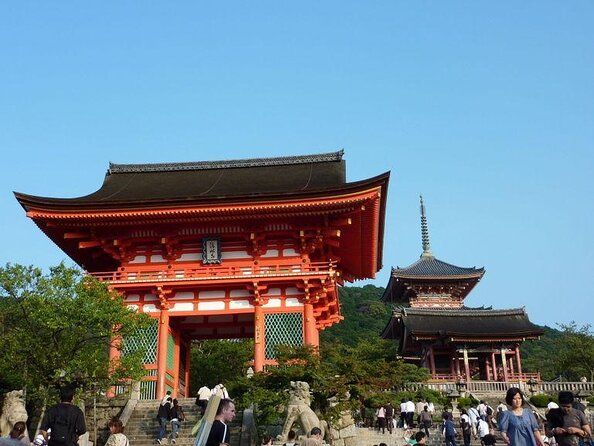
This tour is built for the classic Kyoto question: how can I see several important sights without losing half a day to transport? You meet your guide at the Avanti Tour Desk near Kyoto Station in the afternoon, board included transportation, and visit three major religious sites on Kyoto’s eastern and southern sides.
The route also gives you a useful introduction to two faith traditions. Fushimi Inari is a Shinto shrine dedicated to Inari, while Sanjusangendo and Kiyomizu-dera are Buddhist temples. You get bright gates, quiet statuary, temple architecture, gardens, shops, and a city view in one compact outing.
That range is the tour’s greatest strength. It does not ask you to spend five hours at one temple complex. Instead, it gives you a sampler of Kyoto’s most recognizable sights, with a guide adding context about Japanese customs and the city’s long role as the imperial capital from 794 to 1868.
The pace is the price of that variety. The listed stops add up to about 2 hours 10 minutes on site, leaving the rest of the roughly 4-hour-40-minute tour for driving, transfers, and walking. Traffic and crowd levels can change the order and arrival times, so keep your plans after the tour flexible.
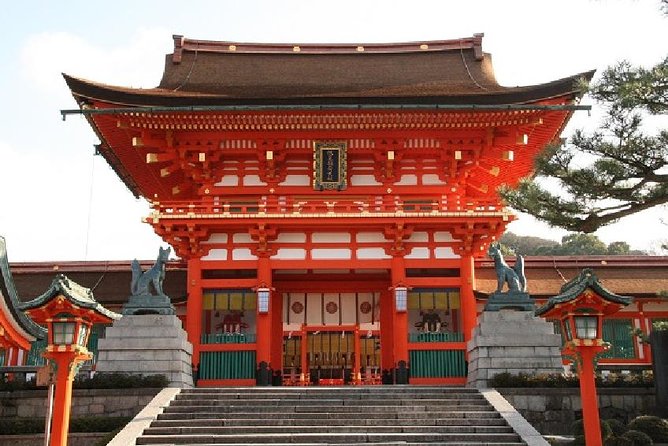
Fushimi Inari and the red torii gates
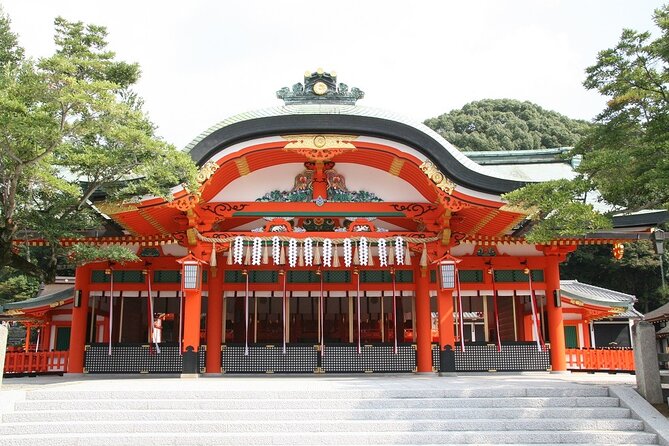
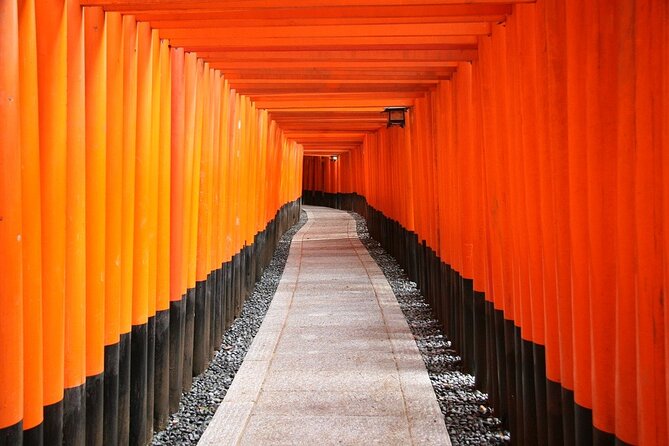
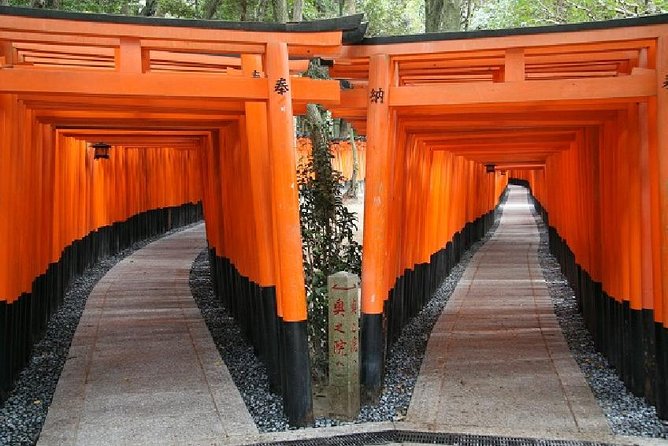
Fushimi Inari Taisha is the head shrine of roughly 40,000 Inari shrines across Japan. Its famous Senbon Torii, or thousand torii, create the red tunnel that appears in nearly every Kyoto photo guide.
You will not simply step off the bus at the main building. The parking area is not right beside the shrine, and the walk to the site takes about 15 minutes each way. That makes comfortable shoes important, even though the tour itself is not a full hike through the mountain trails.
The planned visit lasts about 30 minutes, which is enough to see the main shrine area and experience the torii gates, but not enough for an extended climb. If you hope to walk far up Mount Inari, this tour will feel limited. The stop is best understood as an introduction and a chance to see the most recognizable section.
The bright red columns and green roof make Fushimi Inari a fine opening stop. It is also a useful place to hear about Shinto practice, shrine customs, and the role of Inari. The tour does not enter the Shin-en garden, so do not expect access to every part of the grounds.
Crowds can be thick here, especially around the first torii gates. The farther you walk, the more the flow may thin, but your group’s schedule limits how far you can go. I would treat the stop as a focused look rather than a complete exploration.
A few more Kyoto half-days to weigh up
- PERFECT KYOTO 1-Day Bus Tour
★ 5.0 · 13,518 reviews - Kyoto: Fushimi Inari, Kinkakuji, Bamboo Grove 1 Day Bus Tour
★ 4.8 · 4,316 reviews - Kyoto: Tea Ceremony in a Traditional Tea House in Kiyomizu
★ 4.9 · 3,519 reviews
Sanjusangendo and 1,001 Kannon figures
Sanjusangendo Temple provides the tour’s most unusual visit. The name refers to the building’s 33 bays, and the hall stretches about 120 meters, making it Japan’s longest wooden structure.
Inside are 1,001 life-size statues of Kannon, the Buddhist bodhisattva associated with compassion. The central figure is surrounded by rows of nearly identical statues, producing an effect very different from the colorful outdoor scenes at Fushimi Inari.
The planned stop lasts about 30 minutes. That sounds short, but Sanjusangendo is an indoor visit with a concentrated focus. You can see the hall and statues, listen to an explanation, and take in the scale without needing to cover a vast site.
This is where a good guide matters most. Several guides have been praised for explaining Japanese history and customs in a way that adds meaning beyond what you would get from a quick walk and a few photographs. Momo, Yoshi, Donna-san, Jessie, and Amy are among the guides specifically praised for clear information, humor, or attentive group care.
Photography rules inside religious buildings can apply, and the supplied information does not promise interior photography. Follow the guide’s instructions and focus on the rows of figures themselves. Sanjusangendo is less about collecting pictures and more about standing quietly before an extraordinary piece of religious art.
For many people, this will be the most memorable stop. It is also the place where the half-day format works best. You do not need hours to understand why the hall matters, though anyone with a strong interest in Buddhist sculpture may wish for more time.
Kiyomizu-dera, uphill streets, and Kyoto views
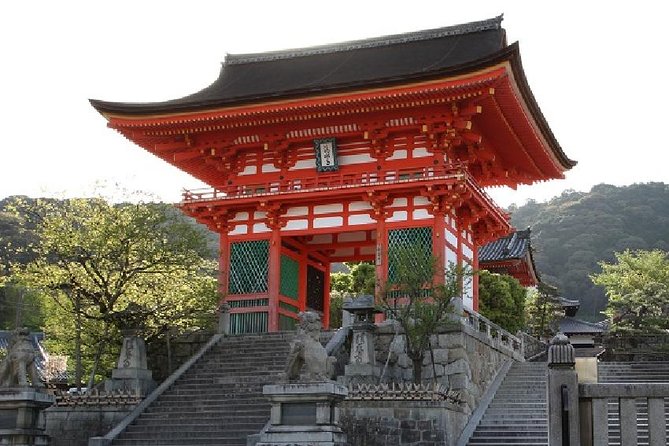
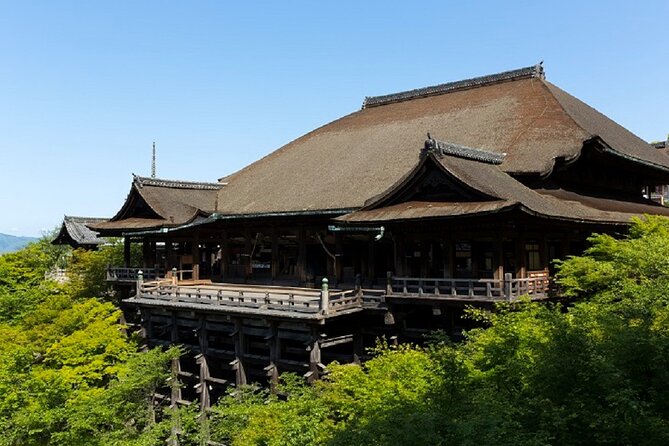
Kiyomizu-dera is the grand finish, and it receives the longest scheduled visit at about 1 hour 10 minutes. The temple is a UNESCO World Heritage site, set high on the eastern foothills of Higashiyama.
Getting there involves an uphill walk through streets lined with pottery shops and other stores. This approach is part of the experience, not just an obstacle. You can browse traditional goods, stop for a quick ice cream, and see how a major temple visit blends with Kyoto’s commercial life.
The walk can be strenuous on a hot day. The tour is suitable for most people, but anyone with limited stamina should take the climb seriously. You may find the shops and crowds slow your progress, and the group cannot pause indefinitely.
Kiyomizu-dera’s terrace provides the visual payoff. From the temple and nearby walkways, you can look across Kyoto and the surrounding area. The view is especially important because it shows the city as a living place, not simply a collection of old buildings.
Timing matters here. One participant arrived around 4:30 p.m. and found that dusk arrived before the group left. That meant the Kyoto view was seen at night and autumn foliage was no longer visible. If daylight views and seasonal color are your priority, ask about the expected arrival time when you book, but remember that traffic and site congestion can shift the schedule.
The temple can also be extremely crowded and noisy. That is not a failure of the tour, but it does affect the mood. You will have a better chance of enjoying the visit if you accept that Kiyomizu-dera is one of Kyoto’s busiest attractions, not a quiet hilltop retreat.
Why the guide can make or break the afternoon
This tour’s strongest repeated praise goes to the guides. Names vary by departure, but Yoshi is described as friendly, funny, and informative. Donna-san is praised for excellent English and a welcoming manner. Jessie is noted for clear information, while Amy is praised for organizing and looking after a large group.
The best guides do more than point toward a temple gate. They explain why the sites matter, help you understand Buddhist and Shinto traditions, keep the group moving, and offer practical suggestions for places to see after the tour. A good sense of humor helps when the streets are crowded and everyone is trying to stay together.
Guide quality can vary from one departure to another, as it does with any scheduled group outing. One person found the explanations at some stops too limited and had difficulty hearing in a very large group. That is an important warning for anyone who wants a quiet, detailed lecture at every site.
The published maximum is 40 participants, though individual accounts describe groups of 43 or even 50. If you are joining during a busy season, be prepared for a group that may feel larger than the stated limit. Seats may not be assigned, so arrive on time and follow the meeting instructions closely.
Same base, a completely different sort of day:
- Kyoto Geisha Walking Tour: Gion District & Hidden Gems
★ 4.7 · 3,273 reviews - Kyoto: Tea Ceremony Ju-An at Jotokuji Temple
★ 4.9 · 3,207 reviews - Kyoto: Gion Magical Night Walking Tour with Geisha Trivia
★ 4.9 · 2,393 reviews - Kyoto: 45-Minute Tea Ceremony Lesson Experience
★ 4.3 · 2,378 reviews
The value of $82.58
At $82.58 per person, this is not the cheapest way to see Kyoto’s temples. You are paying for an English-speaking national government licensed guide, transportation, and entrance fees, along with the convenience of a fixed route.
That package can be good value if you have only one afternoon in Kyoto, are staying in Osaka, or do not want to work out the train and bus connections yourself. Kyoto’s major sights are spread across the city, and a comfortable vehicle can save energy, especially during hot or humid weather.
The value is less clear if you prefer to linger. Public transport and independent visits give you control over timing. You could spend longer at Fushimi Inari, walk farther through the torii gates, browse Kiyomizu’s shops, or study Sanjusangendo without watching the clock.
I would compare the price with your schedule rather than with a single admission ticket. The tour makes sense when it replaces hours of planning and connects three sites in one afternoon. It makes less sense when your main goal is slow photography, extended shopping, or a detailed study of temple art.
Who will enjoy this half-day format
I would recommend this tour most strongly to first-time visitors, people staying briefly in Kyoto, and anyone using Osaka as a base. It is also useful on a first day because the guide can help you get your bearings and suggest places to explore afterward.
Families can join, but note the child policy. Children up to age five may go free, but they do not receive a bus seat unless booked under the child rate. Written parental permission is required for participants under 18, and anyone under 15 or not yet enrolled in middle school must be accompanied by a parent or guardian.
Most people can participate, and service animals are allowed. Still, expect a 15-minute walk to Fushimi Inari, uphill streets at Kiyomizu-dera, and plenty of standing and walking at each site.
This is not the best match for you if you dislike crowds, need a slow pace, or want to explore the full Fushimi Inari mountain route. It may also disappoint if your only priority is a bright daytime view from Kiyomizu-dera and your departure falls late in the afternoon.
Practical details that matter
Meet at the Avanti Tour Desk near Kyoto Station. The desk can be hard to find because it is in the basement of a large building, so allow extra time rather than arriving at the last minute. Being late is especially risky with a group tour and a fixed vehicle departure.
Food and drinks are not included. The schedule may allow a quick snack or ice cream near Kiyomizu-dera, but do not count on a full meal during the tour. Eat beforehand and bring water, especially in warm weather.
The order of the three stops can change, and arrival times can shift because of road conditions and congestion. Avoid booking a train, dinner reservation, or other timed activity immediately after the tour.
Free cancellation is available if you cancel at least 24 hours before the local start time. Changes or cancellations made inside that window are not accepted for a refund.
Should you book the Kyoto afternoon tour?
Book it if you want a well-organized first look at Kyoto and value transport, entry tickets, and a guide more than free time. The three stops offer a smart mix: Shinto gates, Buddhist sculpture, and a city panorama.
Skip it if you already know Kyoto well or want to explore each site at your own speed. The most useful compromise is to take this tour early in your visit, then return independently to the one place that deserves more time. For a short stay, though, $82.58 buys a practical afternoon and removes much of the day’s transportation hassle.
FAQ
How long does the Kyoto Afternoon Tour last?
The tour lasts approximately 4 hours and 40 minutes, or about five hours.
Where does the tour begin?
You meet the guide at the Avanti Tour Desk near Kyoto Station in the afternoon.
Which sites does the tour visit?
The route includes Fushimi Inari Taisha Shrine, Sanjusangendo Temple, and Kiyomizu-dera Temple.
Are transportation and entrance fees included?
Yes. Transportation costs, admission fees, and the fee for a national government licensed English guide interpreter are included.
How much walking is required?
You walk about 15 minutes each way from the parking area to Fushimi Inari. The approach to Kiyomizu-dera is uphill, and the tour includes walking at all three sites.
Is food included?
No. Food and drinks are not included in the tour price.
Can children join the tour?
Children up to five years old may join free, but they do not receive a bus seat unless booked under the child rate. Written parental permission is required for participants under 18, and anyone under 15 or not yet enrolled in middle school must be accompanied by a parent or guardian.
Just added around Kyoto
- Kyoto: Zen Meditation at a Private Temple with a Monk★ 5.0 · 25 reviews
- Kyoto: Gion Geisha District & Sake-in-Hand Walking Tour★ 5.0 · 37 reviews
- Private Pewter Sake Cup Experience with a Kyoto Artisan★ 5.0 · 31 reviews
- Your Private Vacation Photography Session In Kyoto★ 5.0 · 110 reviews
- Private Guided Traditional Buddhist Cooking in Japan★ 5.0 · 16 reviews
- Kyoto Wagashi(Japanese sweets) Cooking Class near Fushimiinari★ 5.0 · 60 reviews
- Traditional Japanese Music show & Experience Tour in Kyoto★ 5.0 · 57 reviews
- Kyoto:Family-Friendly Kimono & Yukata Experience at WARGO★ 5.0 · 147 reviews
Kyoto Tours, compared.


Fushimi Inari, Kinkakuji, Bamboo Grove 1 Day Bus Tour
Read our review →
Tea Ceremony in a Traditional Tea House in Kiyomizu
Read our review →
Kyoto Geisha Walking Tour: Gion District & Hidden Gems
Read our review →

Gion Magical Night Walking Tour with Geisha Trivia
Read our review →
