
Reviewed · KYOTO TOURS
Kyoto Early Bird English Tour: Gion & Higashiyama(Private opt)
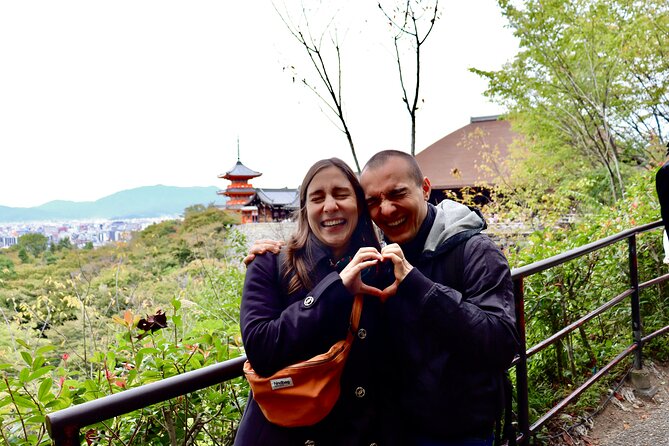
Gion is at its best before Kyoto fully wakes up. On this early morning walking tour, you move from wooden machiya houses and geisha-district streets to temple lanes and hilltop views, with a guide handling the route. The 7 a.m. departure is especially useful if you want photos without the worst crowds.
I like two things here. First, the route packs in Kyoto’s classic sights without making you study a map. Second, guide Ikki Kataoka brings both clear English explanations and professional photography, a valuable combination if you want good memories of your morning. The main consideration is the walking: hills, stone lanes, and about three hours on your feet demand a moderate level of fitness.
Key points to know before booking
- Early access to Gion: A morning start helps you see Hanamikoji Street and the old lanes before the day becomes crowded.
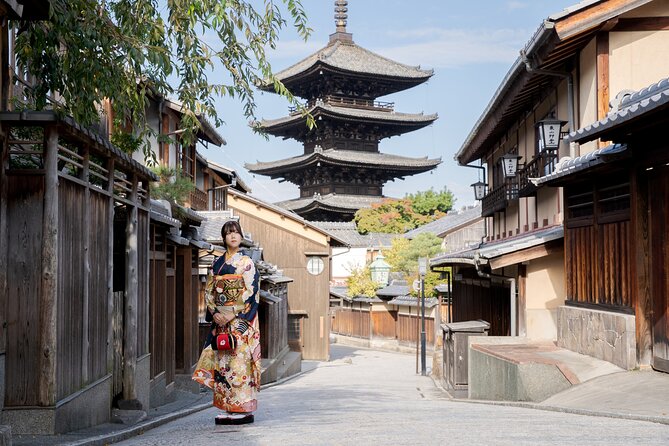
- A strong classic-Kyoto route: The tour links Gion, Yasaka Shrine, Yasaka Pagoda, Sannenzaka, Ninenzaka, and Kiyomizu-dera.
- Guide and photographer in one: Ikki Kataoka is praised for patient explanations, strong English, and professional photos taken during the tour.
- Private or small-group flexibility: The experience offers different group formats, though you should confirm the exact option selected at booking.
- Kiyomizu-dera costs extra: The temple admission fee is ¥500 per person, not included in the tour price.
- Expect real walking: The route includes slopes, steps, and uneven stone streets, not just quick stops beside a vehicle.
Why the early start matters in Gion
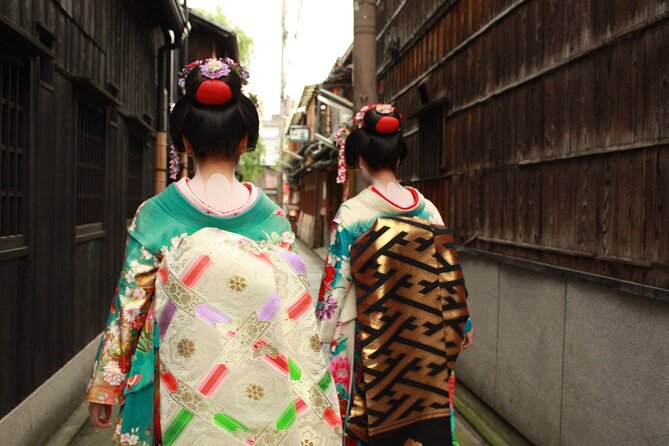
Gion is Kyoto’s best-known geisha district, but it is not a theme park or a stage set. Its appeal comes from the quiet wooden facades, narrow lanes, teahouses, and the feeling that the modern city has been kept just outside the frame.
That calm is easiest to find early. The tour’s early-bird format, including a reported 7 a.m. departure option, gives you a better chance to see Hanamikoji Street before the crowds fill the road. You still need to be considerate. This is a working neighborhood, and private residences and teahouses are not photo props.
Your guide helps explain what you are seeing instead of leaving you to guess at the difference between a shrine, temple, teahouse, and traditional machiya house. That context matters in Gion, where the visual details are easy to admire but harder to understand on your own.
Hanamikoji Street receives about 15 minutes on the planned route. That is enough for an introduction and photographs, but not enough for an extended wander through every side lane. Think of this as a guided overview of Gion rather than a full-day study of the district.
More geisha-district evenings:
- Kyoto Geisha Walking Tour: Gion District & Hidden Gems
★ 4.7 · 3,273 reviews - Kyoto: Gion Magical Night Walking Tour with Geisha Trivia
★ 4.9 · 2,393 reviews - Kyoto: Gion Geisha District Walking Tour – Stories of Geisha
★ 4.7 · 2,187 reviews
From Yasui-Konpiragu to Yasaka Pagoda
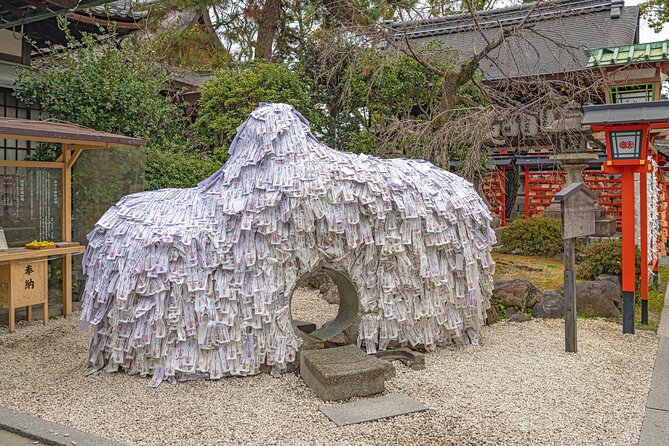
The next stop is Yasui-Konpiragu, a shrine known for prayers to sever bad relationships and form better ones. The central idea is simple and memorable, which makes this a more personal stop than a standard architecture visit.
You may see people passing through or around the shrine’s famous relationship-cutting object as part of their prayers. The tour allows about 15 minutes here. That gives your guide time to explain the custom and lets you look around without turning the visit into a rushed photograph.
The route then moves to Yasakanoto, better known as Yasaka Pagoda at Hokanji Temple. The pagoda is one of Kyoto’s instantly recognizable sights, rising above the traditional streets of Higashiyama. Its scale makes the surrounding lanes feel especially old-fashioned.
The stop is scheduled for another 15 minutes. You should not expect a long temple visit at each early stop. The value is in seeing how the pagoda fits into the neighborhood, then continuing on foot through the streets rather than viewing it from a bus window.
Sannenzaka and Ninenzaka on foot
Sannenzaka and Ninenzaka are among Kyoto’s most attractive walking streets. Stone paving, wooden buildings, small restaurants, and souvenir shops create a clear sense of place. They also lead uphill toward Kiyomizu-dera, so the beauty comes with a physical cost.
The planned visit lasts about 15 minutes, but the route itself connects naturally with the larger Higashiyama walk. You will have time to notice shopfronts and traditional building details, though the tour is not designed as a shopping outing.
These lanes can be crowded later in the morning. An early start is useful here too, especially if you care about photographs or prefer not to squeeze through busy pedestrian traffic. Still, even early in the day, you should expect stone surfaces and some uphill walking.
Wear comfortable shoes with a firm grip. The tour information calls for moderate physical fitness, and that is worth taking seriously. This is not a flat stroll along a riverside promenade.
One hour at Kiyomizu-dera
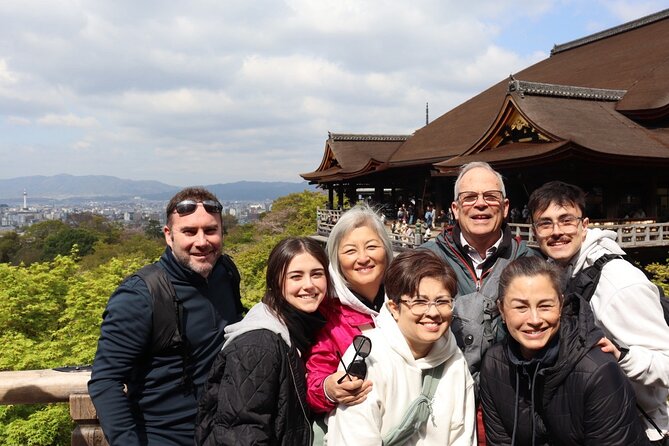
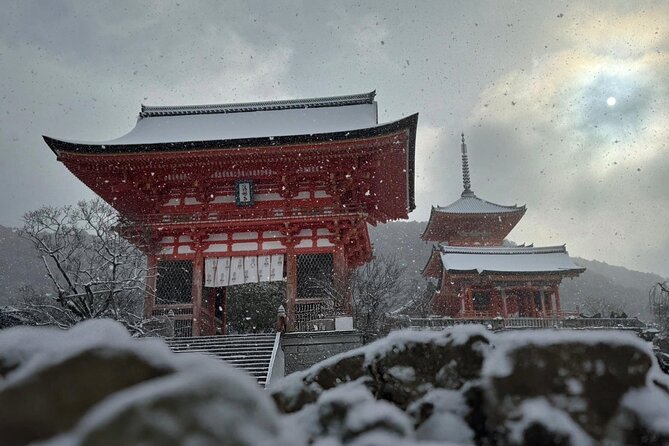
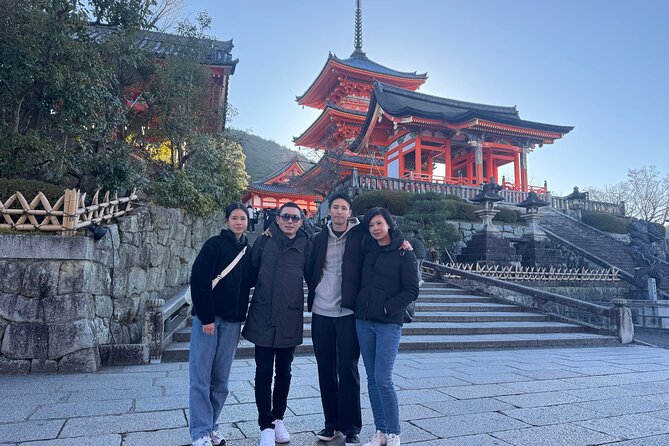
Kiyomizu-dera is the main event on the route. The temple sits high above Kyoto and is famous for its broad views over the city. The planned visit lasts about one hour, far longer than the brief stops at the smaller shrines and street sections.
You pay ¥500 per person for admission. That fee is separate from the tour price, so include it when working out your budget.
The time allocation makes sense. Kiyomizu-dera is too important to treat as a quick photo stop, and its grounds require some walking. Your guide can point out the major features and explain the site’s role in Kyoto, while you have enough time to take in the views and look around at your own pace within the group’s schedule.
The trade-off is that a one-hour visit still cannot cover every corner of the temple complex. If Kiyomizu-dera is your main reason for coming to Kyoto, you may want a separate visit with more time. If you want the temple placed within a broader Gion and Higashiyama walk, this tour gives it the right amount of attention.
Because Kiyomizu-dera is on a mountain slope, the route around it adds to the physical effort. Combine that with Sannenzaka and Ninenzaka, and you have a morning of steady walking rather than a series of easy roadside stops.
A few more Kyoto half-days to weigh up
- PERFECT KYOTO 1-Day Bus Tour
★ 5.0 · 13,518 reviews - Kyoto: Fushimi Inari, Kinkakuji, Bamboo Grove 1 Day Bus Tour
★ 4.8 · 4,316 reviews - Kyoto: Tea Ceremony in a Traditional Tea House in Kiyomizu
★ 4.9 · 3,519 reviews - Kyoto: Tea Ceremony Ju-An at Jotokuji Temple
★ 4.9 · 3,207 reviews
The colorful Yasaka Koshin-Do
Yasaka Koshin-Do offers a change of mood. The temple is noted for its colorful decorations, which contrast with the more restrained appearance of many Japanese religious sites.
Its construction date is unknown, adding a small touch of mystery to the stop. The planned 15 minutes is enough to enjoy the color and hear the basic story without taking too much time from the larger route.
This is the kind of small stop that can make a guided walk worthwhile. You might pass it on your own without understanding why it matters, or miss it while following the main road toward Kiyomizu-dera. A guide who knows the area can place these lesser-known sights between the major attractions.
Do not expect a long ceremony or an extended private visit here. It is a brief cultural pause and a good photography stop.
Ending at Yasaka Shrine
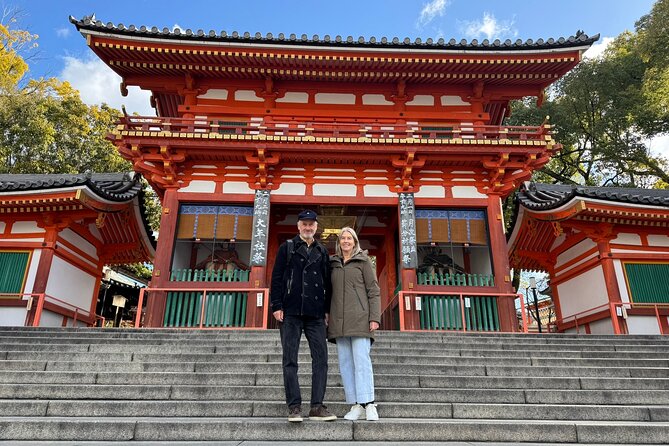
The tour finishes at Yasaka Shrine, with about 30 minutes allotted for the visit. The shrine is the headquarters of roughly 2,300 related shrines throughout Japan and is associated with prosperity and protection.
That final half hour gives the experience a natural ending. You have moved through the historic streets of Gion and Higashiyama, climbed toward Kiyomizu-dera, and then reached one of Kyoto’s major Shinto sites.
Yasaka Shrine also helps you compare two different religious settings within one morning. Kiyomizu-dera is a Buddhist temple complex, while Yasaka Shrine is a Shinto shrine. A good English-speaking guide can help you notice the differences in layout, customs, and visual style without turning the walk into a lecture.
The activity ends back at the original meeting point near the Statue of Izumo-no-Okuni in Kawabatacho, Higashiyama Ward. That is useful if you want to continue sightseeing in central Kyoto afterward, although you should allow time to find your next destination rather than assume the tour includes transport.
What the guide adds to the morning
The route is easy to locate on a map. The harder part is knowing what you are looking at and choosing a sensible order for the stops. That is where the guide earns the fee.
Ikki Kataoka is specifically associated with this experience. He is praised for clear English, detailed explanations, patience, and an ability to make older participants feel comfortable. Those qualities matter on a walking tour, where the pace and amount of information can either make the morning pleasant or tiring.
The guide also takes professional photos during the tour. This is more useful than it may sound. You can focus on the pagoda, temple views, and street scenes instead of asking strangers to take group photos. It also gives you a record of the experience with your whole party included.
Do keep your expectations sensible. Professional photos are included, but the supplied information does not specify how many images you receive, when they are delivered, or what editing is provided. If those details matter to you, ask before booking.
The private option can be especially helpful for families, couples, and older participants who prefer a patient pace. A small group may offer a lower per-person cost or a more social feel, depending on the selected booking. Since the information describes both small-group and private formats, while also labeling the activity as private, check the exact format and group size before payment.
Is $64.01 a fair price?
At $64.01 per person, this is not the cheapest way to walk around Gion. You can visit the streets and several shrines independently for little or no admission cost. Kiyomizu-dera is the main paid sight, at ¥500 per person.
The value comes from the structure. You receive about three hours with an English-speaking local guide, a planned route through several major areas, explanations at each stop, and professional photos. For a first morning in Kyoto, that can save you time and reduce the chance of missing smaller sites such as Yasui-Konpiragu or Yasaka Koshin-Do.
The private format changes the value calculation. If you are traveling with several people, a private booking may make more sense than paying separate guide fees for each person. If you are alone or a couple on a tight budget, compare the small-group price with the private rate before deciding.
I would call the price reasonable for someone who values guidance, photographs, and a well-organized introduction to eastern Kyoto. I would call it less attractive for an independent walker who already knows the area and is happy to research the temples alone.
Food and drinks are not included. Plan to eat before or after the walk, and remember that the early start may limit your breakfast choices before meeting the guide.
Practical details that affect your day
You receive confirmation when booking, and a mobile ticket is available. The meeting point is at the Statue of Izumo-no-Okuni in Kawabatacho, Higashiyama Ward, Kyoto. The area is near public transportation, but you should still leave extra time to find the exact statue.
Late arrival is a serious issue. If you miss the meeting time, you cannot join the tour and will not receive a refund. For an early departure, check your route the night before and aim to arrive early.
The walk lasts about three hours. Expect plenty of time on foot, stone-paved streets, slopes, and the uphill approach around Kiyomizu-dera. Comfortable footwear is more important here than stylish footwear.
Free cancellation is available up to 24 hours before the start time. Changes or cancellations inside that window are not accepted for a refund. The cutoff follows local Kyoto time.
The tour is recommended for people with moderate physical fitness. The supplied information does not give accessibility details for wheelchairs or mobility devices, so contact the provider before booking if you have specific access needs.
Who will get the most from this tour?
This tour suits a first-time Kyoto visitor who wants the essential Gion and Higashiyama sights in one organized morning. It is also a good fit if you want an English-speaking guide but do not want a large coach tour.
I would particularly consider it for:
- Couples who want professional photos together
- Families who prefer a private pace
- Older participants who value patient guiding
- Photographers who want quieter early streets
- Anyone who wants Kiyomizu-dera combined with smaller nearby shrines
It is less suitable if you dislike uphill walking, want long unstructured time at each temple, or plan to spend the whole day shopping in Higashiyama. The scheduled stops are purposeful and fairly short until Kiyomizu-dera, so the morning keeps moving.
Should you book the Gion and Higashiyama morning walk?
Book it if you want a well-planned first look at eastern Kyoto, especially with an early start and an English-speaking guide. The combination of Gion’s old streets, Yasaka Pagoda, colorful Yasaka Koshin-Do, Kiyomizu-dera, and Yasaka Shrine gives you a strong sense of the area in three hours.
The best reasons to choose it are Ikki Kataoka’s patient guiding style, the professional photography, and the chance to see the route before the heaviest crowds. The main cautions are the walking, the extra ¥500 temple admission, and the need to arrive exactly on time.
If you are comfortable on hills and want help making sense of Kyoto’s most famous eastern neighborhoods, this is a solid use of a morning. If you prefer to linger at one temple or explore without a schedule, visit independently instead.
FAQ
How long does the Kyoto Gion and Higashiyama tour last?
The tour lasts approximately three hours.
What sights are included on the walking route?
The route includes Gion, Hanamikoji Street, Yasui-Konpiragu, Yasaka Pagoda at Hokanji Temple, Sannenzaka and Ninenzaka, Kiyomizu-dera Temple, Yasaka Koshin-Do, and Yasaka Shrine.
Is Kiyomizu-dera admission included?
No. Admission to Kiyomizu-dera costs ¥500 per person and is paid separately.
Is the tour private or shared?
The experience offers a choice between private and small-group formats. The activity details also describe it as private, so confirm the exact format you select when booking.
Are photos included?
Yes. Professional photos are taken during the tour. The supplied details do not specify the number of photos or delivery method.
What happens if I arrive late?
If you are late for the meeting time, you cannot join the tour and will not receive a refund. Free cancellation is available up to 24 hours before the start time.
Just added around Kyoto
- Kyoto: Zen Meditation at a Private Temple with a Monk★ 5.0 · 25 reviews
- Kyoto: Gion Geisha District & Sake-in-Hand Walking Tour★ 5.0 · 37 reviews
- Private Pewter Sake Cup Experience with a Kyoto Artisan★ 5.0 · 31 reviews
- Your Private Vacation Photography Session In Kyoto★ 5.0 · 110 reviews
- Private Guided Traditional Buddhist Cooking in Japan★ 5.0 · 16 reviews
- Kyoto Wagashi(Japanese sweets) Cooking Class near Fushimiinari★ 5.0 · 60 reviews
- Traditional Japanese Music show & Experience Tour in Kyoto★ 5.0 · 57 reviews
- Kyoto:Family-Friendly Kimono & Yukata Experience at WARGO★ 5.0 · 147 reviews
Kyoto Tours, compared.


Fushimi Inari, Kinkakuji, Bamboo Grove 1 Day Bus Tour
Read our review →
Tea Ceremony in a Traditional Tea House in Kiyomizu
Read our review →
Kyoto Geisha Walking Tour: Gion District & Hidden Gems
Read our review →

Gion Magical Night Walking Tour with Geisha Trivia
Read our review →

Gion Geisha District Walking Tour – Stories of Geisha
Read our review →Browse the lists this tour appears in