
Reviewed · KOBE TOURS
Kyoto Full Day Tour from Kobe with Licensed Guide and Vehicle
Kyoto’s greatest challenge is not finding beautiful places. It is deciding which ones you can actually see in one day. This private trip from Kobe lets you choose three or four priority sights, then travel between them by car with a licensed guide instead of piecing together trains, buses, and crowded streets.
I like the freedom to shape the day around your interests, and I like the practical help from guides such as Kazuo, Yuka, Hiro, and Andy. Guides have arranged routes around history, food, family needs, and tight cruise-port schedules. The drawback is price: $1,165.63 for up to two people is a serious splurge, and nine hours is not enough for every place on the long menu.
- Fushimi Inari and Kinkaku-ji can anchor a classic first visit, with time left for Gion or Arashiyama.
- Your guide helps turn a long sightseeing list into a workable route, rather than trying to visit every stop.
- A private vehicle matters from Kobe, especially when Kyoto traffic and transfers could eat into your day.
- Cruise passengers get useful schedule support, with guides reported to have planned return times carefully.
- Entrance fees, lunch, and personal expenses cost extra, so budget beyond the tour price.
- English ability may vary by assigned guide, making pre-trip communication about language and expectations important.
A Private Route Through Kyoto, Not a Checklist
This is a private day trip for your group only, with pickup offered and a private vehicle for about nine hours. The key word is customizable. The huge list of possible stops is not a promise that you will see them all. You select three or four places from the choices, then a guide contacts you to shape the day.
That arrangement suits you if Kyoto is a one-day opportunity from Kobe. You can tell the guide that you care most about Zen gardens, imperial history, traditional neighborhoods, food, bamboo, or famous photographs. A good plan may combine one major temple, one historic district, and one food stop instead of scattering your time across half the city.
The private format also keeps the pace in your hands. You can ask for explanations, pause for photos, and adjust the route as the day develops. It does not mean every request will fit. Kyoto is spread out, and traffic can be slow, so the more ambitious your list becomes, the shorter your visits will feel.
The advertised price covers the licensed local English-speaking guide and vehicle. It does not cover entrance fees, lunch, or personal purchases. For two people, the cost works out to roughly $583 each, before those extras. That is far more than a self-guided rail day, but you are paying for door-to-door transport from Kobe, planning help, and a private guide rather than simply admission to Kyoto sights.
Fushimi Inari’s Torii Gates and Southern Kyoto
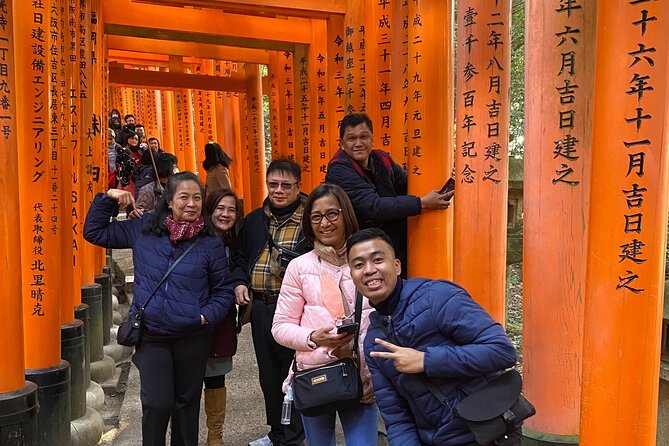
Fushimi Inari-taisha is one of the strongest choices for a short Kyoto visit. Its hillside path is lined with thousands of orange torii gates, creating one of Japan’s most recognizable scenes. The shrine is free to enter, and the grounds let you see both the formal shrine buildings and the uphill route into the forest.
Do not treat the listed 15 minutes as a full exploration of Fushimi Inari. That is enough for a quick look near the entrance, but not enough to walk far up the mountain. Guides Kazuo and Kiriko have helped groups use extra time to reach more of the torii gates, but that requires planning and a willingness to walk uphill.
This is a good place to tell your guide how active you want the day to be. If you have children, limited mobility, or several other priorities, you may prefer a shorter visit. If Fushimi Inari is your main goal, make it one of your three or four selections rather than adding it as a rushed extra.
Nearby Tofuku-ji offers a quieter Zen setting and is especially known for autumn colors. Toji, the old East Temple, gives you another historic temple option in southern Kyoto. Both are better choices when you want temple architecture and grounds rather than a long shrine walk.
More licensed-guide days in Kobe:
- Kobe 4hr Private Tour with Government-Licensed Guide
★ 5.0 · 59 reviews - Exploring Nada Sake Breweries Kobe Private Tour with Government-Licensed Guide
★ 5.0 · 17 reviews - Tokyo 6hr Private Tour with Government-Licensed Guide
★ 5.0 · 3,902 reviews
Kiyomizu-dera Above Gion
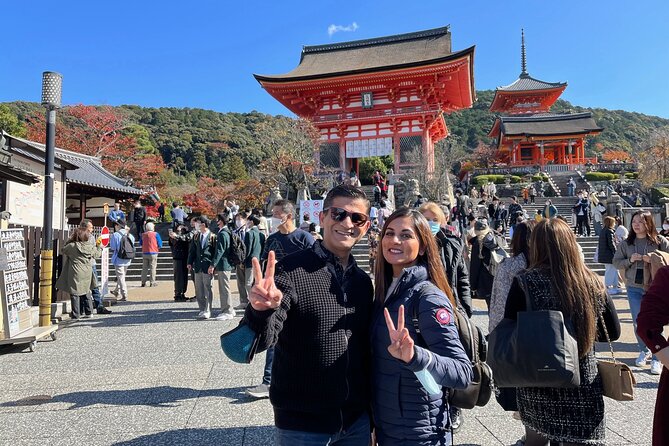
Kiyomizu-dera is among Kyoto’s most famous temples, perched above the traditional Higashiyama area. Its setting gives you a strong sense of old Kyoto, with temple buildings, slopes, lanes, and views across the city.
The temple is listed with a one-hour guided exploration in the description, but the general stop entries also show short 15-minute blocks. Take that as a warning: the actual depth of your visit depends on the route you agree on. Ask your guide how much time will be reserved for the temple before you finalize the itinerary.
Admission is not included. You should also expect some walking in the Higashiyama area, where streets can be steep or crowded. The reward is a more textured Kyoto experience than a quick photo stop, particularly when you pair Kiyomizu-dera with Gion.
Higashiyama is one of the best places on the route for old wooden streets and traditional architecture. Your vehicle may bring you close to the area, but you will still need to walk through parts of it. This is exactly where a guide helps: you get context for the neighborhood instead of simply passing through it.
Gion, Pontocho, and Kennin-ji After Dark Traditions
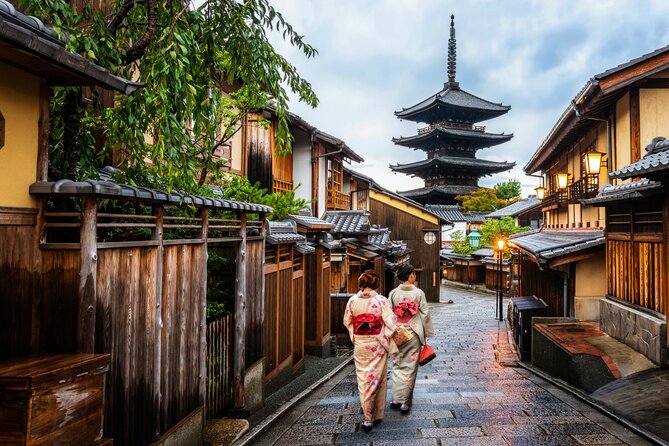
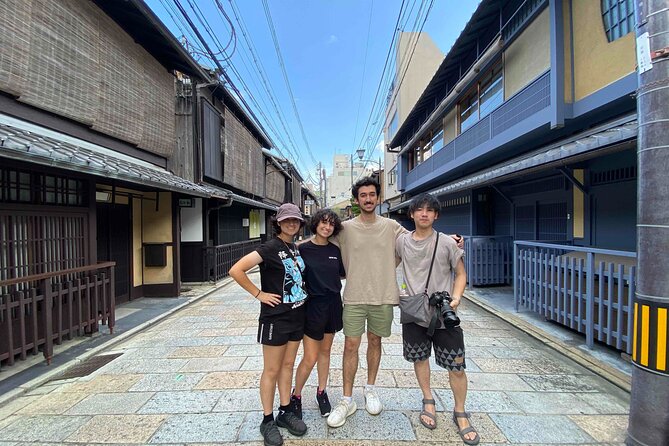
Gion is Kyoto’s famous geisha district, though it is best approached as a historic neighborhood rather than a stage set. Narrow lanes, old facades, and traditional restaurants give the area its character. A guide can help you understand where you are and avoid the uncertainty of wandering through unfamiliar side streets.
Pontocho offers a different atmosphere. This narrow dining lane runs between Shijo-dori and Sanjo-dori near the Kamogawa River. It is a useful choice if food and evening Kyoto appeal to you, though a brief daytime pass will not show the district at its best.
Kennin-ji is close to Hanamikoji and Shijo streets. Its pleasant grounds and dry gardens give you a temple visit near Gion without another long cross-city drive. Admission is extra, and the listed one-minute duration is clearly not enough for a meaningful visit, so confirm the intended timing with your guide.
You can also ask about a tea ceremony or a green tea dessert stop, since the tour description specifically presents Kyoto’s tea traditions and food as possible interests. The guide can help shape the day, but the price does not include meals or personal spending.
Nijo Castle and the Imperial Palace
Nijo Castle connects Kyoto to the Tokugawa shoguns. Built in 1603 as Tokugawa Ieyasu’s Kyoto residence, it brings the politics of the Edo period into view through its palace buildings and grounds. Admission is not included.
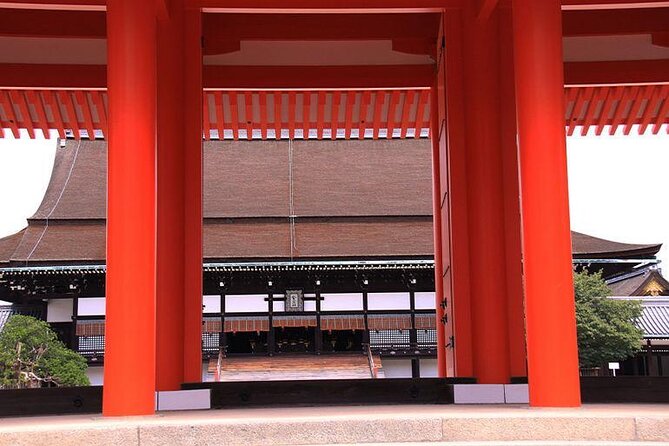
The Kyoto Imperial Palace tells a different story. It was the imperial residence until 1868, when the emperor and capital moved to Tokyo. The palace sits in broad Kyoto Imperial Park, so it offers a sense of space after tighter temple lanes.
These two sites make a sensible pair for you if political and imperial history matter more than gardens or bamboo. They are not interchangeable: Nijo Castle reflects shogunal power, while the Imperial Palace represents the imperial court. With only three or four stops, choosing both may leave less time for Gion or Fushimi Inari.
A few more Kobe half-days to weigh up
- Shore excursion: Full Day Private Kyoto Tour From Osaka/Kobe Port
★ 4.5 · 36 reviews - From Tokyo: Mount Fuji Full-Day Sightseeing Trip
★ 4.5 · 4,970 reviews - Mount Fuji Full-Day Private Tour from Tokyo (Customizable)
★ 4.9 · 1,470 reviews - Hiroshima / Miyajima Full-day Private Tour with Government Licensed Guide
★ 5.0 · 1,298 reviews
Nishiki Market, Kyoto’s Food Stop
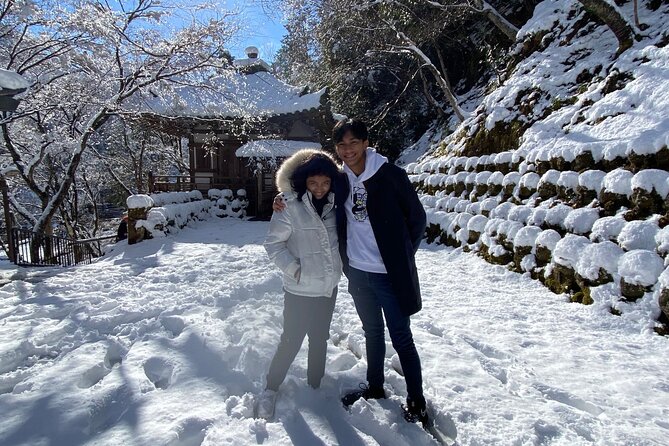
Nishiki Market runs for five blocks through a narrow shopping street lined with more than 100 shops and restaurants. It is known as Kyoto’s Kitchen, and it is the natural choice if you want food, local shopping, and a break from temple grounds.
Admission is free, but you will want money for snacks and purchases. Lunch is not included, so you can ask the guide to build a meal into the schedule. One guide brought a group to a good tempura restaurant, while another helped arrange a Kobe beef lunch after the Kyoto sightseeing portion.
The market can be a practical stop, but it is not a quiet one. The narrow street and large number of shops mean you may spend more time moving slowly than browsing at your own pace. If food is a main reason for booking, say so before the day begins.
Kinkaku-ji, Ryoan-ji, and Northern Kyoto
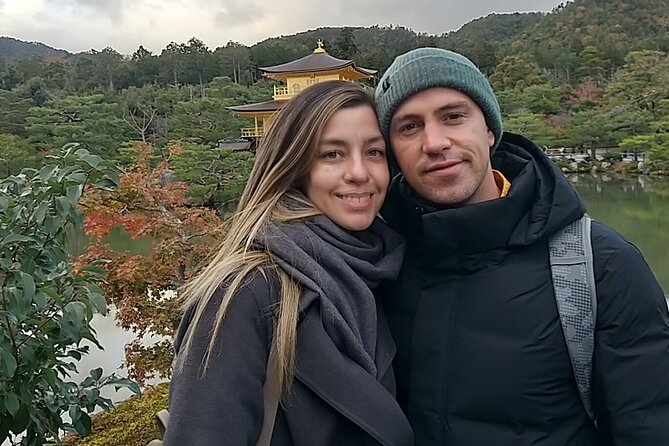
Kinkaku-ji, the Golden Pavilion, is one of Kyoto’s essential postcard sights. The upper two floors are covered in gold leaf, and the building reflects across its garden pond. It is formally called Rokuon-ji and began as the retirement villa of shogun Ashikaga Yoshimitsu.
The temple is visually powerful but usually quick to experience. You follow the established route, view the pavilion and garden, and continue. Admission is extra, and you should expect a popular stop rather than a quiet one.
Ryoan-ji offers a slower kind of beauty. Its rock garden is Japan’s most famous, with carefully arranged stones set in a field of pale gravel. The garden rewards a few quiet minutes of looking, but a 15-minute stop leaves little room for the wider grounds.
Ninna-ji is another World Heritage temple in the north of Kyoto. Founded in 888, it is the head temple of the Omuro School of Shingon Buddhism. It makes sense for you if religious history and temple design matter more than checking off the Golden Pavilion.
Arashiyama’s Bamboo and Mountain Temples
Arashiyama is a major choice, but it can easily consume much of the day. The western district includes the famous bamboo paths, Togetsukyo Bridge, Tenryu-ji, and a group of smaller hillside temples.
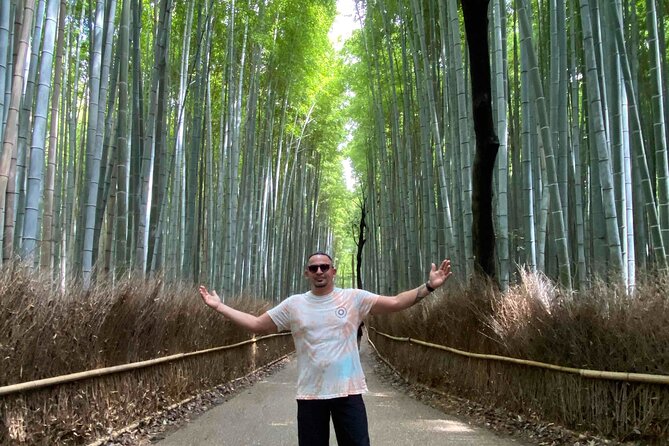
The Bamboo Forest Street is free and photogenic. The paths are short enough for a taste, but the experience depends heavily on how long you have and how crowded the route feels. If bamboo is your priority, make it one of your selected stops rather than assuming it can be squeezed in after several central Kyoto temples.
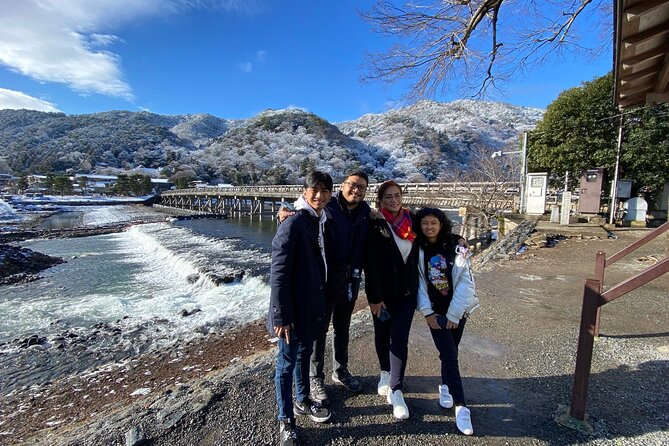
Togetsukyo Bridge is Arashiyama’s best-known landmark. Its name means Moon Crossing Bridge, and the present bridge was reconstructed in the 1930s. It gives you an open view of the river and surrounding hills, a useful contrast to the enclosed bamboo paths.
Tenryu-ji is the district’s major Zen temple and a World Heritage site. Okochi Sanso Garden, the former villa of actor Okochi Denjiro, offers gardens and buildings behind the bamboo groves, with admission extra. Jojakko-ji, Nisonin, and Gio-ji bring quieter paths, moss, maples, and small temple buildings.
Adashino Nenbutsu-ji is known for stone statues placed for the souls of the dead. Otagi Nenbutsu-ji has about 1,200 carved stone figures, each with a different expression. These places are more distinctive than the standard Arashiyama circuit, but they require time and walking.
Daikaku-ji, once Emperor Saga’s detached palace, gives the Sagano area an imperial connection. If you want a broad Arashiyama day, ask the guide to choose one or two sites instead of trying to cover the whole district.
Ginkaku-ji, Nanzen-ji, and the Eastern Temples
Ginkaku-ji is often called the Silver Pavilion, though it is not covered in silver. Shogun Ashikaga Yoshimasa built it as a retirement villa in 1482, and its restrained Zen gardens are the point. Choose it when you prefer subtle design to the Golden Pavilion’s bright surface.
Nanzen-ji is one of Kyoto’s major Zen temples, located at the foot of the Higashiyama mountains. Its large grounds include the striking Suirokaku aqueduct, which adds a brick-and-arched structure to the temple setting.
These eastern sites combine well with Higashiyama and Gion, but not as easily with Arashiyama or the northern temples. Your vehicle helps, yet it cannot remove Kyoto’s distances. A sensible route matters more than the number of places on the wish list.
Northern Mountains: Shugakuin, Kibune, and Kurama
Shugakuin Imperial Villa was built in the 17th century for Emperor Gomizuno and is managed by the Imperial Household Agency. It includes upper, middle, and lower villas, making it a strong choice for gardens and imperial design.
Kibune is a small forested mountain town developed around Kifune Shrine. Kurama is another northern mountain town, known for Kurama-dera and a hot spring. These locations offer a greener, quieter side of Kyoto, but they sit well outside the central sightseeing core.
The short listed times for these stops should not fool you. Reaching the northern mountains and returning to central Kyoto can take a large share of a nine-hour day. Select this area only if rural scenery and mountain temples matter more to you than famous central sights.
How the Guide Can Change the Day
The strongest part of this experience is not the vehicle alone. It is the chance to have a licensed guide explain how to enter a Shinto shrine and a Buddhist temple, place a site in its historical setting, and answer questions as you go.
Kazuo Sumi has guided groups through shrine and temple customs, history, and local culture. Yuka has shaped routes around requests, helped with cruise-port pickup and drop-off, and even assisted with a restaurant reservation in Kobe. Hiro, Andy Murao, Kiriko, and other guides have also been named as part of successful private days.
Those names do not guarantee who will lead your tour. They do show the kind of service you should request: a guide who understands your priorities, explains clearly in English, and watches the clock if you must return to a ship.
One serious caution is communication. One poor experience involved a guide whose English was not strong enough for the group’s needs, especially with children and basic questions. Contact the provider directly about your language expectations and children’s needs before departure.
Timing, Children, and What to Pack Into Nine Hours
Nine hours sounds generous until you count the journey from Kobe, traffic, parking, walking, meals, and entrance lines. The most satisfying plan is likely three major stops, or two major stops plus one neighborhood or market.
The tour has only a limited number of car seats and booster seats. Rear-facing car seats are not available, so you must contact the provider directly if you need child seating. Most people can participate, and service animals are allowed, but temple visits can involve stairs, slopes, and extended walking.
Wear comfortable shoes and keep your lunch plan flexible. Entrance fees are paid separately, and food at Nishiki Market or a restaurant adds to the cost. If you are on a cruise, give the guide your firm return deadline, not simply the ship’s departure time.
Free cancellation is available if you cancel at least 24 hours before the local start time. Changes or cancellations inside that window are not accepted for a refund.
Is the $1,165.63 Price Worth It?
For a couple, this is expensive. A rail-based Kyoto day costs much less, and you can visit many famous sites independently if you are comfortable with maps, station changes, and local buses.
The price makes more sense when your time in Kobe is limited, you are traveling with family, or you want direct transport and a guide who can explain what you are seeing. It also has special value for cruise passengers, since missing the ship is not an acceptable sightseeing souvenir.
You should judge the tour by the planning service, not by the number of stops. If you try to force ten temples into one day, the private vehicle becomes a faster way to rush. If you choose three or four places with care, it can give you a focused introduction to Kyoto with less logistical stress.
Should You Book This Kyoto Day Trip?
Book it if Kyoto is a once-only stop from Kobe, you value a private guide, and you want help fitting major sights into a strict schedule. It is especially suitable for couples, families who need a private vehicle, and cruise passengers who cannot risk a late return.
Skip it if you have several days in Kyoto, enjoy planning your own rail trips, or want long, unhurried visits inside temples and gardens. Before paying, send your guide a short list of priorities, ask who will guide you, confirm English ability, and agree on three or four realistic stops.
FAQ
How long does the Kyoto tour from Kobe last?
The tour lasts approximately nine hours.
How many people can join the private tour?
The stated price is for one private group of up to two people. Only your group participates, and separate tour groups cannot be combined.
Is pickup available?
Yes, pickup is offered. Several guide arrangements have included pickup and drop-off at the Kobe cruise port, but you should confirm your exact pickup point after booking.
What does the tour price include?
The price includes a licensed local English-speaking guide and a private vehicle. It also includes a customizable route using three or four selected sites.
Are temple and castle entrance fees included?
No. Entrance fees are generally not included. Guide entry fees are covered only for sights listed under the tour’s included site choices.
Is lunch included?
No. Lunch and other personal expenses are separate. You can ask the guide to help fit a meal into your route.
Can I visit all the places listed in one day?
No. You select three or four sites from the long list of possible locations. The nine-hour schedule is not designed to include every temple, district, market, and mountain area.
Are child car seats available?
Only a limited number of car seats and booster seats are available. Rear-facing car seats are not available, and you must contact the provider directly if you need child seating.
What is the cancellation policy?
You can cancel at least 24 hours before the experience start time for a full refund. Cancellations or changes made less than 24 hours before the start time are not accepted for a refund.
Just added around Kobe
- Next-Generation Local Guide: Private Kobe Tour★ 5.0 · 39 reviews
- Shore excursion: Full Day Private Kyoto Tour From Osaka/Kobe Port★ 4.5 · 36 reviews
- Cruise Stop-Over: Private Custom Day trip to Kyoto from Kobe Port★ 4.5 · 12 reviews
- Exploring Nada Sake Breweries Kobe Private Tour with Government-Licensed Guide★ 5.0 · 17 reviews
- Kobe : Private Custom Tour (Excursion to Osaka / Kyoto possible)★ 4.5 · 12 reviews
- Private Shore Excursion Kobe Port – Best of Kobe with a local★ 5.0 · 19 reviews
- Sake Brewery and Japanese Life Experience Tour in Kobe★ 5.0 · 39 reviews
- KOBE, SHIOYA, a quaint fishing town walking tour★ 5.0 · 19 reviews
Kobe Tours, compared.
KOBE Sake Tasting Tour at Breweries (tasting fee included)
Read our review →
Kobe Highlights & Hidden Gems: Private & Custom Tour with a Guide
Read our review →
Kobe 4hr Private Tour with Government-Licensed Guide
Read our review →
Nijigen No Mori:Naruto & Boruto Theme Park Entry Ticket
Read our review →
Private Home-Style Cooking Class in Osaka with Local Mom Yoshiko
Read our review →
Sake Brewery and Japanese Life Experience Tour in Kobe
Read our review →Browse the lists this tour appears in