
Reviewed · KYOTO TOURS
Kyoto Japanese Tea Ceremony Experience in Ankoan
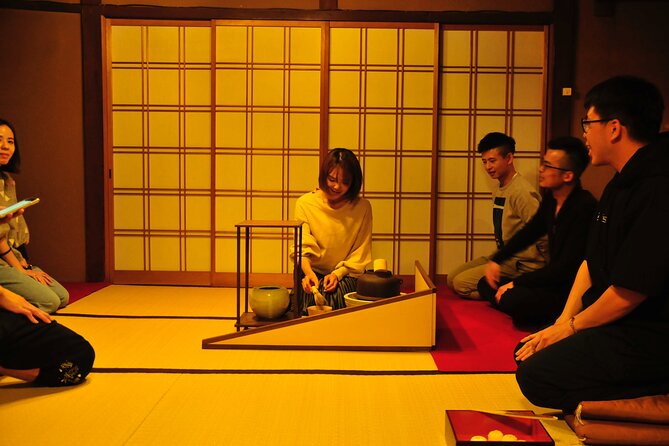
The best part of this Kyoto experience is that you do not just watch a tea ceremony from the sidelines. You prepare your own matcha, learn how to present it, and taste the tea made by someone else, which gives the ritual a friendly, shared quality.
I like the small group limit of eight and Yuka’s warm, clear teaching style. I also like the balance between formal ceremony and relaxed conversation about Japanese customs, daily life, and the meaning behind each step.
One point needs sorting out before you book: the advertised duration varies. The main details describe about one hour, while the fuller description says 90 minutes and some participants spent closer to two hours. Plan enough time around it rather than scheduling a tight connection afterward.
Key points to know before you book
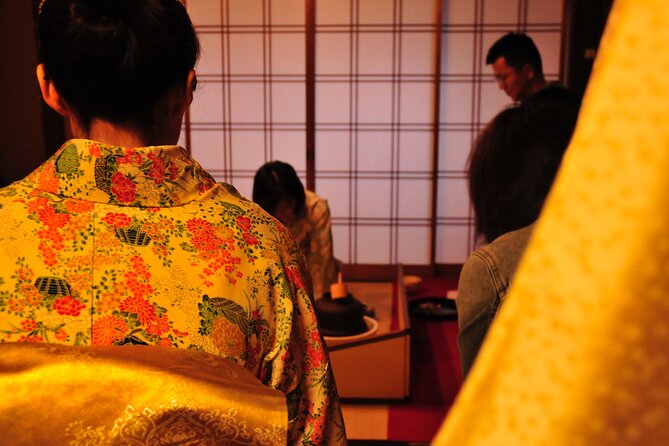
- You make matcha yourself: Yuka guides you through the basic preparation instead of leaving you as a spectator.
- A welcome tea starts the visit: Time is set aside to settle in and chat before the formal demonstration.
- The group is capped at eight people: This makes it easier to ask questions and receive help.
- The experience includes wagashi: The traditional Japanese sweet is served with the matcha.
- It takes place at Ankoan in northern Kyoto: The studio is near public transportation, but you should allow time to reach Murasakino.
- Kneeling may be difficult: The activity is not recommended if you have knee pain.
What happens when you arrive at Ankoan
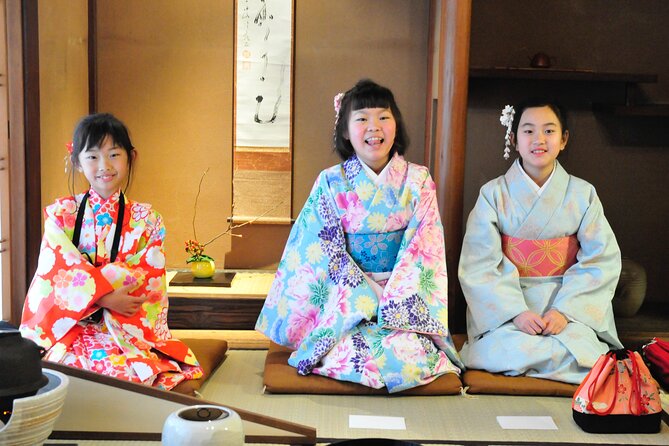
The meeting point is Tea ceremony Japan, at 63 Murasakino Monzencho, Kita Ward, Kyoto, postal code 603-8216. The activity ends at the same place, so there is no need to arrange a separate pickup or find your way to another part of town afterward.
The opening is deliberately gentle. Yuka serves a welcome tea and gives you time to talk, rest, and ask basic questions. This matters because a tea ceremony can feel formal if you arrive with no idea what to do. Starting with conversation makes the room easier to read and gives you a chance to learn the social tone before the ceremony begins.
You can also use this time to ask about tea in Japan and other parts of the world. The discussion is not limited to whisking technique. It may touch on how Japanese people live, how customs developed, and why the ceremony values attention, respect, and calm exchange.
The venue is described as a pleasant studio with a dedicated matcha tearoom. Indoor photography is allowed, so you can take pictures during the visit. Still, use some judgment during the more formal moments. A camera can record the setting, but putting it away for part of the ceremony helps you pay attention to the gestures and atmosphere.
More Tea Ceremonies in Kyoto
- Kyoto: Tea Ceremony in a Traditional Tea House in Kiyomizu
★ 4.9 · 3,519 reviews - Kyoto: Tea Ceremony Ju-An at Jotokuji Temple
★ 4.9 · 3,207 reviews - Kyoto: 45-Minute Tea Ceremony Lesson Experience
★ 4.3 · 2,378 reviews
Watching the matcha ceremony before trying it yourself
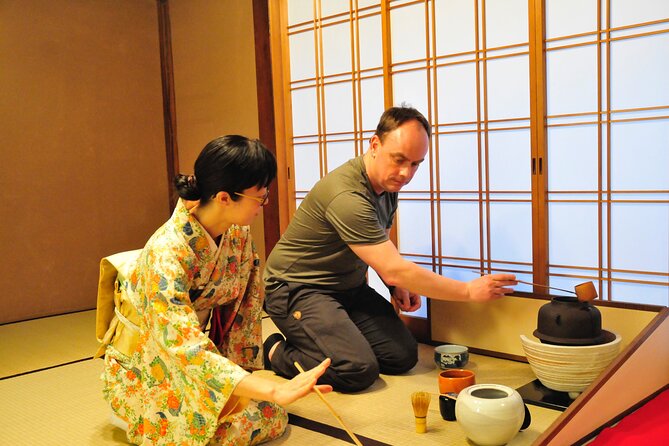
After the welcome tea and introduction, you move into the matcha tearoom. Yuka demonstrates how the tea is prepared and served, giving you a visual guide before asking you to copy the main movements.
This watch-first, try-next format is one of the strongest features of the experience. Tea ceremony etiquette involves small actions that can seem mysterious when you see them only in a book or museum display. Once you watch the full sequence, the purpose of each movement becomes easier to follow.
You learn about specific parts of the ceremony and basic manners. The focus is not on turning you into a tea master in an hour. It is on helping you understand the principles behind the ritual, then giving you enough practice to take part with confidence.
The ceremony also includes matcha tasting and wagashi, a Japanese confection traditionally paired with the bitter tea. The sweet is not just a snack. It helps balance the flavor of matcha and gives you a more complete sense of how the tea is enjoyed.
Expect a cultural lesson as well as a drink. Phrases, symbols, serving customs, and the value placed on the person receiving the tea are all part of the explanation. The experience works best if you are curious about meaning, not simply looking for a quick cup of green tea.
Making your own bowl of matcha
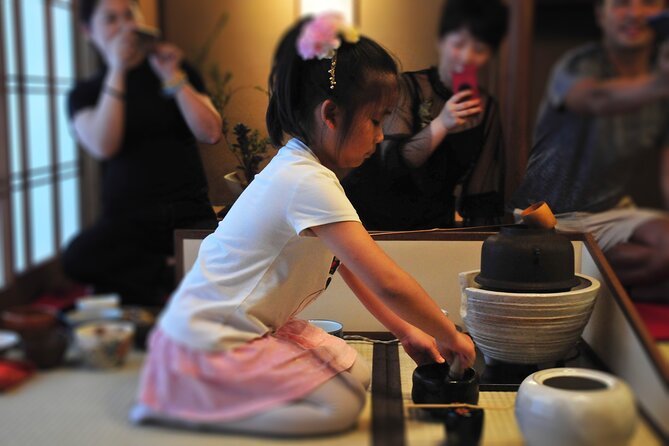
The hands-on part is the heart of the visit. You prepare matcha personally while Yuka stays nearby to explain the process and correct you when needed.
You then taste the tea you made. Another important step is serving tea to another participant, who tastes it as part of the group exchange. This reflects the social side of the ceremony. You are not only learning a recipe. You are practicing hospitality and taking part in a small act of mutual respect.
Do not worry about getting every movement perfect. The point is to understand the sequence and feel how the ritual works. The guidance makes this suitable for beginners, including children. An eight-year-old has taken part successfully, and small children have been able to prepare tea with help.
Families should note that this is more participatory than many formal cultural demonstrations. Children who can listen and follow simple instructions are likely to get more from it than children who only want to run around. The room’s calm setting may also make the experience harder for very young children who cannot sit quietly for long.
The shared tasting gives the class a social finish. You see how your tea compares with the tea prepared by others, and the group has a natural reason to talk. That makes this less stiff than a ceremony where everyone watches in silence.
Why the conversation matters as much as the tea
Yuka’s English is strong, and communication is central to the experience. She explains the customs in a way that supports questions, rather than expecting you to know Japanese etiquette in advance.
I like this approach because tea ceremony is easy to reduce to costume, bowls, and graceful hand movements. The conversation adds the missing context. You can ask how the customs fit into Japanese life and why the ceremony has lasting value.
The best moments may come between the formal steps. You can discuss tea, culture, and daily life with someone who is happy to explain both the visible actions and the ideas behind them. That makes the activity useful for first-time visitors who want more than a photo opportunity.
The teaching style is also flexible. Yuka is described as friendly, patient, and willing to adapt when children take part. She combines a formal demonstration with informal conversation, so the tone does not become heavy or intimidating.
This is not the right choice if you want a silent, highly traditional performance with no discussion. It is designed as a cultural lesson and personal workshop. You will be asked to participate, listen, make tea, and interact with others.
Same base, a completely different sort of day:
- PERFECT KYOTO 1-Day Bus Tour
★ 5.0 · 13,518 reviews - Kyoto: Fushimi Inari, Kinkakuji, Bamboo Grove 1 Day Bus Tour
★ 4.8 · 4,316 reviews - Kyoto Geisha Walking Tour: Gion District & Hidden Gems
★ 4.7 · 3,273 reviews - Kyoto: Gion Magical Night Walking Tour with Geisha Trivia
★ 4.9 · 2,393 reviews
How long should you allow for the visit?
The basic tour information lists the activity at about one hour. The fuller description calls it a 90-minute service, and some participants experienced a session closer to two hours.
That difference may reflect the group size, the number of questions, or the pace of the hands-on preparation. A small class can move quickly, but a lively discussion can add time. I would budget 90 minutes to two hours if your day allows it.
Do not place this directly before a train departure, timed attraction, or restaurant reservation that you cannot move. The activity ends at the meeting point, but reaching Ankoan and returning to central Kyoto also takes planning.
The studio is near public transportation, which helps. The supplied details do not specify the nearest station, bus stop, or exact walking time, so confirm your route before leaving. The Murasakino address is precise, and a mobile ticket makes entry simpler, but you still need to arrive at the correct studio.
Some participants combined the experience with nearby temples. That can work well, since Murasakino is a temple-rich part of Kyoto, but do not overpack the schedule. The tea session is relaxed, and rushing in from a distant sightseeing stop would undercut the calm opening.
Is $32.84 a fair price?
At $32.84 per person, this sits in the affordable range for a small-group cultural activity in Kyoto. The value comes from the combination of instruction, demonstration, matcha preparation, tasting, wagashi, and direct conversation with the host.
A cheaper tea drink would give you the flavor but not the context. A formal performance might show you more polished movements but offer less chance to handle the whisk yourself. Here, you pay for access to the process.
The price is especially reasonable for couples, families, or first-time visitors who want a manageable introduction to Japanese culture. You do not need prior knowledge, special equipment, or a full day away from sightseeing.
The value is less clear if your only goal is to drink matcha. You can find tea elsewhere for less money. This activity earns its price through the teaching and participation, so book it for the lesson, not just the beverage.
The experience is typically booked about 12 days ahead. That suggests planning it into your Kyoto schedule rather than assuming you can always find a last-minute place. Confirmation is sent within 48 hours, subject to availability.
Who will enjoy this Kyoto tea experience?
This is a good fit if you want:
- A first introduction to Japanese tea ceremony
- A small class rather than a large presentation
- Clear English instruction
- A chance to prepare and serve matcha
- Cultural conversation beyond the basic ritual
- An activity that works for couples and families
- An indoor cultural stop with photography permitted
It may not suit you if you have knee pain, since traditional tea settings can require positions that are uncomfortable. The activity is specifically not recommended for people with knee problems.
It is also worth thinking about your preferred level of formality. Some people want a strict ceremony with little interruption. This experience includes a formal demonstration, but it also encourages questions and cross-cultural conversation. That makes it approachable, though less austere.
The maximum group size of eight is another useful middle ground. It is private enough for personal help, but not necessarily a private booking. If you need a session exclusively for your own party, the supplied details do not confirm that option.
Practical details that affect your choice
The experience provider is listed as KYOTO Japanese tea ceremony experience in ANOAN, with Chinese and English support indicated in the provider name. The activity description centers on Yuka as the host, and English instruction is clearly available.
You receive a mobile ticket, which is convenient for a day of sightseeing. Keep the meeting address available on your phone and check the route before setting out. The activity does not include private transportation, so you are responsible for reaching Ankoan.
The experience is indoors, and indoor photos are allowed. The cancellation policy permits a full refund if you cancel at least 24 hours before the start time. Changes or cancellations inside that window are not accepted for a refund.
The policy also says the experience requires good weather. If poor weather causes cancellation, you are offered another date or a full refund. That is worth remembering even though the main activity takes place inside.
The overall rating is 4.9 from 22 ratings, with 95 percent recommending it. More important than the number is the consistent pattern: the host’s warmth, English, cultural explanations, and hands-on format receive the strongest praise.
Should you book the Ankoan tea ceremony?
Book it if you want to understand the tea ceremony by taking part in it. Yuka’s welcoming instruction and strong English make the customs easier to grasp, while the demonstration, wagashi, tasting, and hands-on matcha preparation give the hour or more a clear shape.
I would especially recommend it early or midway through a Kyoto visit. It can give later temple visits more context, and the quiet pace offers a useful break from a packed sightseeing day. Families should book if their children can listen and follow instructions, since children have successfully participated with support.
Think twice if you have knee pain, dislike group activities, or want a highly formal performance with no conversation. Also leave room in your schedule for the possible 90-minute to two-hour duration.
For most first-time visitors, the $32.84 price is fair because you leave with more than a taste of matcha. You leave knowing how the tea is prepared, how it is offered to another person, and why those small actions matter.
FAQ
Where does the tea ceremony take place?
It takes place at Tea ceremony Japan, Ankoan, at 63 Murasakino Monzencho, Kita Ward, Kyoto, 603-8216.
How long does the experience last?
The basic duration is listed as approximately one hour. The fuller description gives 90 minutes, and some sessions have lasted around two hours.
How many people can join?
The activity has a maximum of eight participants.
Is the experience available in English?
Yes. English instruction is provided, and the host, Yuka, is described as having very good English skills. The provider name also indicates Chinese and English support.
Do I get to make matcha myself?
Yes. After watching the demonstration, you prepare your own matcha with guidance from the teacher.
Is wagashi included?
Yes. Matcha and delicious wagashi are part of the tea-room portion of the experience.
Is transportation included?
No. Private transportation is not included. The studio is near public transportation, and the activity ends at the original meeting point.
Can I cancel for a full refund?
Yes, if you cancel at least 24 hours before the experience start time. Cancellations or changes made less than 24 hours in advance are not refunded. If poor weather causes the activity to be canceled, you are offered another date or a full refund.
Just added around Kyoto
- Kyoto: Zen Meditation at a Private Temple with a Monk★ 5.0 · 25 reviews
- Kyoto: Gion Geisha District & Sake-in-Hand Walking Tour★ 5.0 · 37 reviews
- Private Pewter Sake Cup Experience with a Kyoto Artisan★ 5.0 · 31 reviews
- Your Private Vacation Photography Session In Kyoto★ 5.0 · 110 reviews
- Private Guided Traditional Buddhist Cooking in Japan★ 5.0 · 16 reviews
- Kyoto Wagashi(Japanese sweets) Cooking Class near Fushimiinari★ 5.0 · 60 reviews
- Traditional Japanese Music show & Experience Tour in Kyoto★ 5.0 · 57 reviews
- Kyoto:Family-Friendly Kimono & Yukata Experience at WARGO★ 5.0 · 147 reviews
Kyoto Tours, compared.


Fushimi Inari, Kinkakuji, Bamboo Grove 1 Day Bus Tour
Read our review →
Tea Ceremony in a Traditional Tea House in Kiyomizu
Read our review →
Kyoto Geisha Walking Tour: Gion District & Hidden Gems
Read our review →

Gion Magical Night Walking Tour with Geisha Trivia
Read our review →

Gion Geisha District Walking Tour – Stories of Geisha
Read our review →Browse the lists this tour appears in