
Reviewed · KYOTO TOURS
Kyoto Kiyomizu Tea Ceremony with Scenic Garden Views
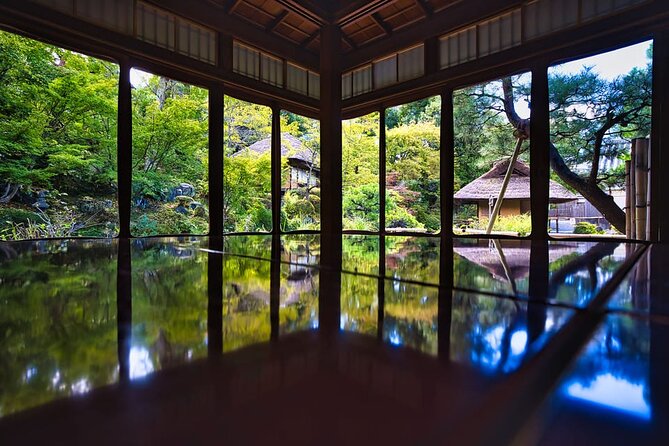
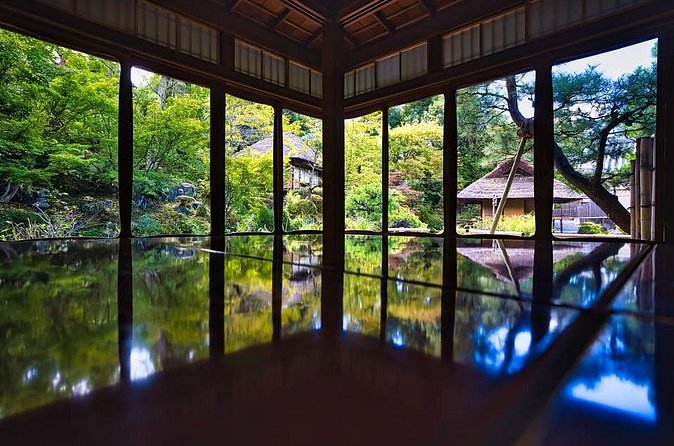
The best part of this Kyoto experience is the setting: you sit in a traditional tea room with broad views of a carefully tended Japanese garden while a tea master performs each measured movement. You do not simply order matcha and drink it. You see how the bowl, whisk, scoop, sweets, and gestures fit together.
I like the small group of up to 12 people, which gives the host room to explain the ceremony and answer questions. I also like the two-part format: one cup is prepared for you, then you learn how to make the second cup yourself. The main drawback is its short length. At about 45 minutes, you receive a clear introduction rather than a full study of tea ceremony.
- Garden-facing tea room: Large windows provide a calm view of seasonal garden beauty during the ceremony.
- Two cups of matcha: Taste the tea master’s preparation, then make a second cup with guidance.
- Traditional wagashi: A delicate Japanese sweet is served to balance the earthy matcha.
- Intimate group size: The session is limited to 12 people, keeping the instruction personal.
- Useful cultural context: An English-speaking host explains the gestures, history, symbolism, and proper etiquette.
- Convenient Kiyomizu location: The experience begins and ends at Tea Ceremony SAKAGUCHIAN, close to Kyoto’s Kiyomizu area.
A quiet pause near Kiyomizu
Kyoto’s Kiyomizu area can be a busy place, especially around the well-known temple and the uphill lanes leading to it. This activity offers a sharp change of pace. You enter Tea Ceremony SAKAGUCHIAN at 3-chōme-334 Kiyomizu, Higashiyama Ward, and move from the noise of the neighborhood into a quiet tea room.
The garden view does much of the work. You are not looking at a plain classroom or a restaurant dining room. The garden provides a changing backdrop, with seasonal details that help explain why Japanese tea ceremony pays such close attention to time, place, and the natural world.
I would plan this as a calm break in a morning or afternoon of sightseeing. The experience ends where it begins, so you can continue exploring the Kiyomizu area afterward without arranging another pickup or drop-off.
What happens in the 45-minute ceremony
The session begins in the tea room, where an assistant introduces the ceremony and gives you the basic cultural background. English explanations are provided, and the host can answer questions about the customs and meaning behind the actions.
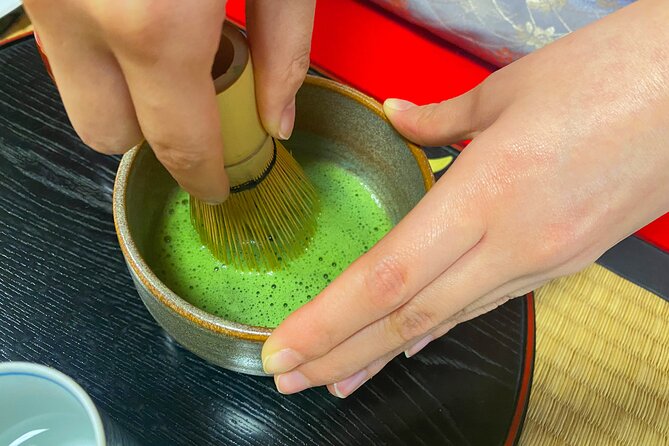
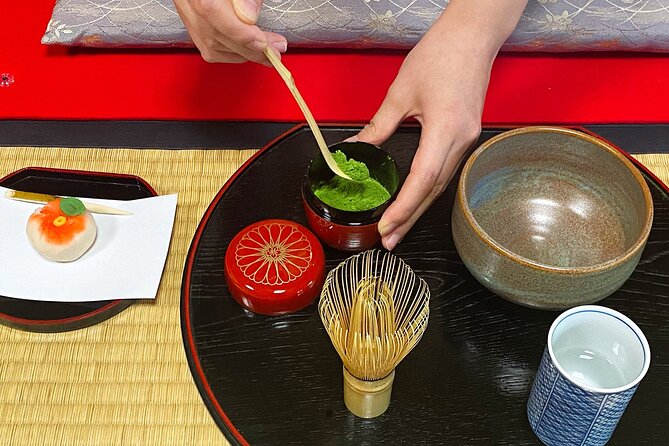
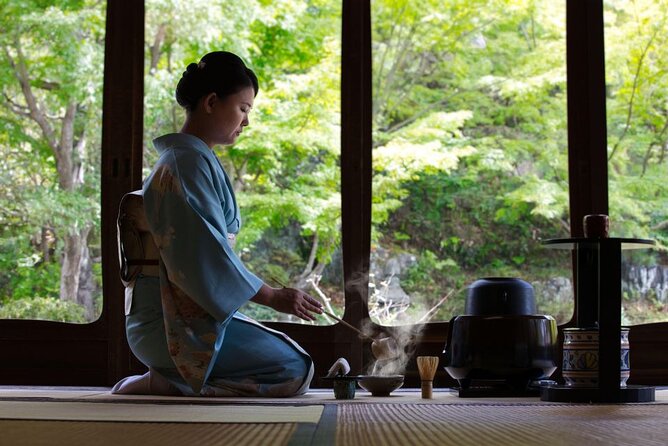
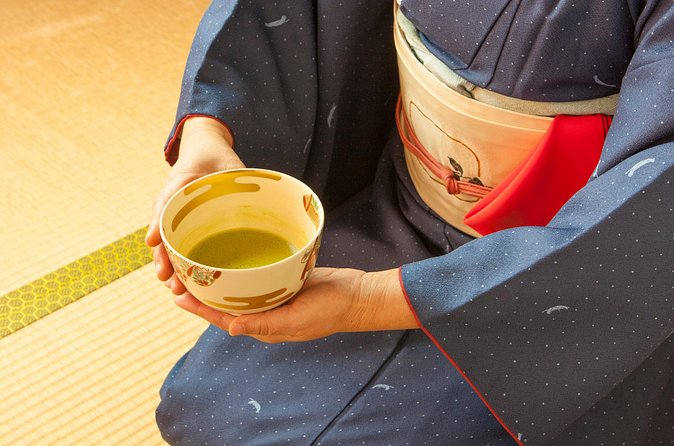
The tea master then prepares matcha in front of you. The process includes purifying the utensils, handling the tea bowl, measuring the powder, adding water, and whisking the tea into a fine froth. These movements are not rushed. Their careful order is part of the lesson.
You receive the first cup already prepared. This lets you focus on the taste and on the way the tea is presented. A wagashi sweet accompanies the matcha, providing a mild, delicate contrast to the tea’s grassy and slightly bitter flavor.
The second cup is more hands-on. The tea master or host shows you how to handle the bowl and whisk the matcha properly. You are not expected to master the technique in one attempt. The value is in trying the process and understanding how much care goes into a drink that can look simple once it reaches the bowl.
The published duration is approximately 45 minutes, though some descriptions refer to the session as about an hour. Either way, plan for a short cultural activity rather than a long formal ceremony. The compact format works well if you have a full Kyoto schedule, but it also limits how far the instruction can go.
More Tea Ceremonies in Kyoto
- Kyoto: Tea Ceremony in a Traditional Tea House in Kiyomizu
★ 4.9 · 3,519 reviews - Kyoto: Tea Ceremony Ju-An at Jotokuji Temple
★ 4.9 · 3,207 reviews - Kyoto: 45-Minute Tea Ceremony Lesson Experience
★ 4.3 · 2,378 reviews
The garden view is part of the lesson
The garden is not just a decorative background for photographs. It changes the feel of the ceremony. Large windows allow you to look outside while remaining in the formal tea room, and the view gives you a sense of why tea spaces are designed to frame nature.
I especially like this combination of architecture, garden, clothing, utensils, and movement. You get more than a taste of matcha. You see how the room and its surroundings support a slower way of paying attention.
The garden also makes the activity suitable for people who are unsure about tea ceremony. You do not need a deep interest in Japanese culture to appreciate a beautiful view and a peaceful hour. At the same time, people who already enjoy tea, gardens, or traditional arts will have plenty to notice in the details.
The experience requires good weather, so poor conditions can affect the garden-view aspect. If the activity is canceled for that reason, you are offered another date or a full refund.
Why the two cups matter
Many short cultural demonstrations end with a sample and a quick explanation. This one gives you two distinct experiences. First, you watch the tea master. Then, you prepare matcha yourself.
That difference is important. When you only watch, the gestures can appear effortless. Once you hold the bowl and whisk, you begin to understand the coordination involved. The second cup turns the ceremony from a performance into a practical lesson.
The first cup also gives you a useful reference point. You can compare your own preparation with the tea master’s froth and texture. The goal is not competition. It is a chance to notice the technique and take part in a tradition that has been passed through generations.
The supplied price is $50.87 per person. For a 45-minute activity, that is not the cheapest way to drink matcha in Kyoto. You are paying for the setting, instruction, tea master, sweets, cultural explanation, small-group format, and the chance to make tea yourself. I consider it reasonable for visitors who want a polished introduction, though anyone seeking an extended or highly formal tea ceremony may find the session brief for the price.
The sweets and matcha pairing
Wagashi are traditional Japanese sweets made to accompany tea. Here, the sweet is not an extra dessert course. It is part of the ceremony and helps balance the flavor of matcha.
The tea served is authentic matcha prepared by a tea master, not a casual café version mixed for convenience. You receive two cups in total. One is prepared for you, and the other is made as part of the lesson.
If you are accustomed to sweetened green tea, matcha may surprise you. It has a stronger, more direct flavor, and the wagashi helps soften that first impression. The experience is useful even if you are not sure you like matcha, because you taste it in its traditional setting and learn how it is intended to be served.
A practical tip: wear or bring socks. This has been specifically suggested for the activity, and it is a sensible choice for a traditional tea-room setting.
Same base, a completely different sort of day:
- PERFECT KYOTO 1-Day Bus Tour
★ 5.0 · 13,518 reviews - Kyoto: Fushimi Inari, Kinkakuji, Bamboo Grove 1 Day Bus Tour
★ 4.8 · 4,316 reviews - Kyoto Geisha Walking Tour: Gion District & Hidden Gems
★ 4.7 · 3,273 reviews - Kyoto: Gion Magical Night Walking Tour with Geisha Trivia
★ 4.9 · 2,393 reviews
Explanations make the ceremony easier to follow
A formal tea ceremony can be hard to understand if you do not know what the movements mean. The assistant’s role matters here. The English explanations cover the process, history, culture, and symbolism, while the tea master demonstrates the actions.
The host also answers questions, which makes the session more useful than a silent display. You can ask about the utensils, the preparation method, the proper way to receive the bowl, or the ideas behind harmony, respect, purity, and tranquility.
The explanations are especially helpful for first-time visitors. You do not have to worry about making a mistake during the drinking ritual, because the correct handling of the tea bowl is shown to you. The instruction is gentle rather than intimidating.
Still, the time limit matters. The ceremony introduces several large subjects in less than an hour. You will learn the basic sequence and try the method, but you should not expect a complete education in Japanese tea schools, regional customs, or advanced etiquette.
Group size, comfort, and accessibility
The maximum group size is 12 people. That is small enough for the host to address questions and for each person to see the tea master’s hands, though the exact feel will depend on how many people attend your session.
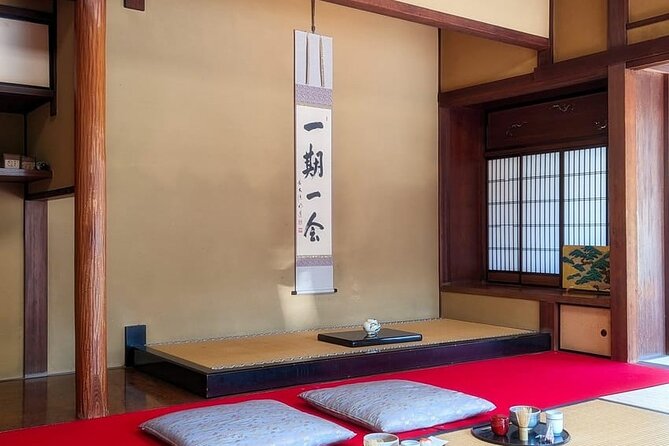
This is a seated activity in a traditional tea-room setting. People with foot or knee problems are specifically advised not to book it. If you have limited mobility in those areas, read that warning seriously before paying.
The room has air conditioning, which is useful during Kyoto’s hot summer months. The activity includes a photo, but video recording is not included. Kimono rental is also not included, so book this as a tea ceremony experience rather than a costume package.
Who will get the most from this activity
I would recommend it most strongly to first-time visitors who want a clear, respectful introduction to Japanese culture without giving up half a day. The short schedule fits neatly between visits to temples, shops, and the Kiyomizu streets.
It also suits couples, families, and small groups. The calm pace can give a family a shared cultural memory, and the hands-on second cup gives children and teenagers something to do beyond sitting quietly. Younger participants still need to be comfortable with a formal seated setting.
Tea fans, garden lovers, and people interested in Japanese design will find more detail to appreciate. The arrangement of the room, the garden views, the utensils, the sweets, and the master’s movements all work together.
I would be less likely to recommend it to someone who wants a long, highly traditional ceremony with extensive instruction. It is also not a good fit if you dislike seated cultural demonstrations or have foot and knee difficulties.
Practical planning near the Kiyomizu area
The meeting point is Tea Ceremony SAKAGUCHIAN, written in Japanese as 茶道体験 阪口庵, at 3-chōme-334 Kiyomizu, Higashiyama Ward, Kyoto, 605-0043, Japan. The activity begins and ends there.
Allow enough time to reach the address, since the Kiyomizu area is full of narrow streets and sightseeing stops that can slow you down. Your confirmation arrives when you book, and the ticket is mobile, so you can keep the booking on your phone.
I would pair the ceremony with nearby Kiyomizu sightseeing, but I would avoid scheduling it directly after a rushed temple visit. Arriving flustered works against the best feature of this activity: its quiet, deliberate pace.
Free cancellation is available up to 24 hours before the start time for a full refund. Changes or cancellations made inside that 24-hour window are not accepted or refunded. The weather policy also matters because the experience depends on suitable conditions for the garden setting.
Is $50.87 good value?
The price makes sense if you value instruction and atmosphere rather than just the beverage. You receive two cups of matcha, wagashi, a photo, an explanation of the ceremony, a demonstration by a tea master, and a chance to prepare tea yourself.
The setting is a major part of the value. A matcha drink at a restaurant would cost less, but it would not include the formal preparation, the garden-facing room, or the cultural explanation. The small group also gives this a more personal feel than a large demonstration.
The caution is duration. One reviewer found the activity a little expensive because the session only briefly covered both the formal ceremony and matcha preparation. I think that is a fair criticism. You should book this for a well-made introduction, not for an exhaustive lesson.
Should you book the Kiyomizu tea ceremony?
Book it if you want a peaceful, well-explained look at Japanese tea culture in a beautiful room. The strongest reasons are the garden views, the graceful tea-master demonstration, the two cups of matcha, and the chance to prepare one yourself.
Skip it if you want a long ceremony, kimono rental, or a low-cost cup of tea. Also skip it if sitting in a traditional tea-room setting may aggravate your feet or knees.
For most first-time visitors to Kyoto, I think this is a thoughtful way to slow down near Kiyomizu. It is brief, polished, and focused. Just keep your expectations in proportion: this is a welcoming introduction to tea ceremony, not a full course in the art.
FAQ
Where does the tea ceremony take place?
It takes place at Tea Ceremony SAKAGUCHIAN, also written as 茶道体験 阪口庵, at 3-chōme-334 Kiyomizu, Higashiyama Ward, Kyoto, 605-0043, Japan.
How long does the experience last?
The listed duration is approximately 45 minutes. Some descriptions refer to it as about an hour, so allow roughly 45 to 60 minutes.
How many people can join?
The activity has a maximum of 12 participants.
What is included in the price?
The experience includes two cups of matcha, traditional wagashi sweets, and a photo.
Is kimono rental included?
No. Kimono rental is not included.
Can I record video?
Video recording is not included in the activity.
Will I prepare matcha myself?
Yes. The tea master first prepares matcha for you, then you receive instruction on how to prepare a second cup yourself.
Is the activity suitable for people with foot or knee problems?
The activity is not recommended for people with foot or knee problems.
Does the experience depend on the weather?
Yes. The experience requires good weather. If it is canceled because of poor weather, you can receive a different date or a full refund.
What is the cancellation policy?
You can cancel at least 24 hours before the start time for a full refund. Cancellations or changes made less than 24 hours before the start time are not accepted or refunded.
Just added around Kyoto
- Kyoto: Zen Meditation at a Private Temple with a Monk★ 5.0 · 25 reviews
- Kyoto: Gion Geisha District & Sake-in-Hand Walking Tour★ 5.0 · 37 reviews
- Private Pewter Sake Cup Experience with a Kyoto Artisan★ 5.0 · 31 reviews
- Your Private Vacation Photography Session In Kyoto★ 5.0 · 110 reviews
- Private Guided Traditional Buddhist Cooking in Japan★ 5.0 · 16 reviews
- Kyoto Wagashi(Japanese sweets) Cooking Class near Fushimiinari★ 5.0 · 60 reviews
- Traditional Japanese Music show & Experience Tour in Kyoto★ 5.0 · 57 reviews
- Kyoto:Family-Friendly Kimono & Yukata Experience at WARGO★ 5.0 · 147 reviews
Kyoto Tours, compared.


Fushimi Inari, Kinkakuji, Bamboo Grove 1 Day Bus Tour
Read our review →
Tea Ceremony in a Traditional Tea House in Kiyomizu
Read our review →
Kyoto Geisha Walking Tour: Gion District & Hidden Gems
Read our review →

Gion Magical Night Walking Tour with Geisha Trivia
Read our review →

Gion Geisha District Walking Tour – Stories of Geisha
Read our review →Browse the lists this tour appears in