
Reviewed · KYOTO TOURS
Kyoto: Miyama Village, Amanohashidate & Ine Bay Day Trip
Ine Bay is the star of this northern Kyoto outing, with traditional funaya boat houses built directly over the water. I like that this tour reaches places that are awkward to connect by public transport, and I like the mix of fishing culture, sea views, temples, and old mountain homes. The trade-off is clear: a lot of your day is spent on the road, and the stops can feel short.
I also like the practical setup. A clean, air-conditioned bus, a guide who keeps departure times clear, and a price of $63 make this a sensible way to see three distant places in one day. Guides such as Liu and Cave have led departures in English, Japanese, and Chinese, but you should budget extra for the Amanohashidate cable car, any boat ride, lunch, and cash-only purchases.
Key points at a glance
- Ine’s 230 boat houses: See homes with boat storage on the lower level and living space above the bay.
- Amanohashidate’s 3.6-kilometer sandbar: Walk near the pines, visit Chion-ji, and pay extra for the View Land cable car.
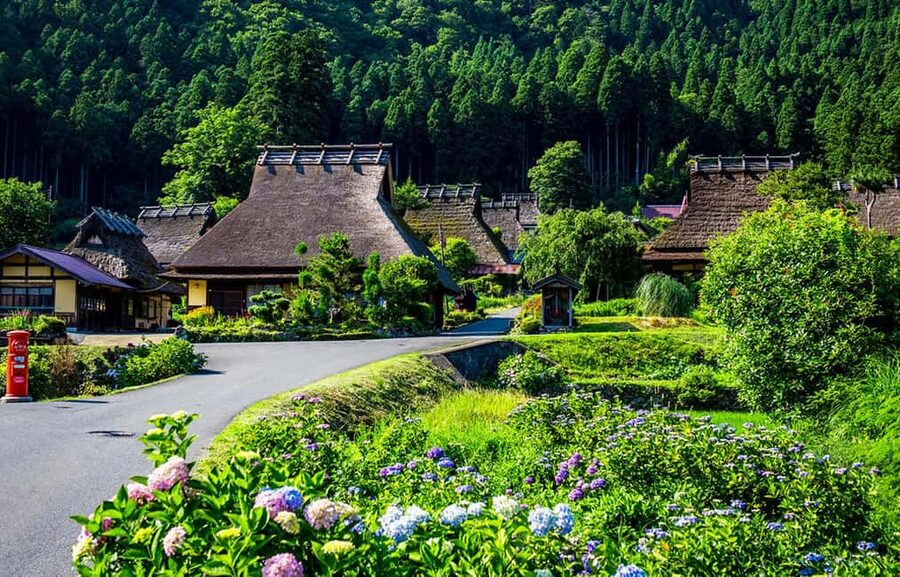
- Miyama’s 40-plus thatched homes: Get a brief look at one of Japan’s best-preserved rural villages.
- A long but useful bus day: The route links places that are difficult to combine on your own in a single day.
- Multilingual guiding: English, Japanese, and Traditional Chinese are offered, with guides including Liu and Cave on recent departures.
- Good value with add-ons: The $63 fare covers transport, driver, guide, and parking, but not food or optional rides.
Why this northern Kyoto route works
Kyoto is usually associated with shrines, bamboo groves, and crowded central streets. This trip takes you in a different direction, toward the Sea of Japan coast and the northern mountains. You get fishing villages, a broad coastal view, and old rural architecture in one packed day.
The route makes sense mainly because of the distances. Ine, Amanohashidate, and Miyama are not close to one another, and reaching all three by train and bus would take careful planning. Here, you leave from central Osaka, sit back, and let someone else handle the transfers and parking.
That convenience comes with a cost in time. The ride to the first stop takes about two and a half hours, followed by more bus travel between the sights. You should see this as a scenic sampler, not a slow village stay. If you want long walks, extended meals, or detailed museum visits, this schedule will feel tight.
A few more Kyoto half-days to weigh up
- PERFECT KYOTO 1-Day Bus Tour
★ 5.0 · 13,518 reviews - Kyoto: Fushimi Inari, Kinkakuji, Bamboo Grove 1 Day Bus Tour
★ 4.8 · 4,316 reviews - 10 Must-see Spots in Kyoto One Day Private Tour (up to 7 people)
★ 5.0 · 1,108 reviews
Starting early from Nipponbashi
Meet at Nipponbashi Station Exit 2 at 7:05 AM for a 7:20 departure. Arrive early. The bus leaves on time and does not wait for late arrivals, so allow enough time to find the meeting point around 1-chōme-3-6 Nipponbashi in Osaka’s Namba and Shinsaibashi area.
The evening before, you receive information about the vehicle, driver, and guide by email. Check your spam or junk folder. The vehicle size depends on the number of people booked, so you cannot choose a particular bus in advance.
The bus is air-conditioned and reported as clean and comfortable, which matters on a day with several long rides. Bring a neck pillow or other small comfort item if you like, but the key preparation is simpler: wear walking shoes, carry cash, and dress for the weather.
Ine Bay and its boat houses
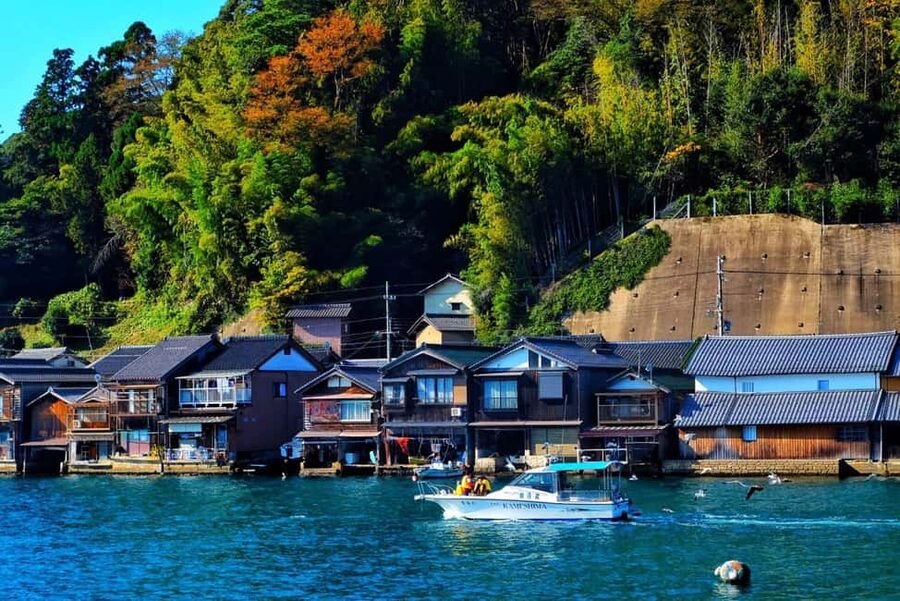
After the long first ride, Ine gives you the most unusual setting of the day. About 230 traditional funaya line the bay. Their lower floors hold fishing boats, while the upper floors serve as homes. From the water, the buildings appear to float along the shore, though they are firmly built into the village edge.
The appeal here is not a long list of formal attractions. It is the way the village still reflects daily life shaped by fishing and tides. Quiet lanes, water-facing homes, and small cafés give you a chance to slow down after the bus ride.
You have about 40 minutes for the guided stop and photographs. That is enough for a first look, some pictures, and perhaps a quick drink at a seaside café, but not enough for a leisurely exploration of every lane. Keep your watch in view and listen carefully for the return time.
Some departures include or offer a boat ride around Ine Bay, with birds following the vessel. The supplied details identify boat rides as an extra expense, so confirm the cost before boarding. One useful caution: eagles are present in the area, and feeding animals is not allowed. Keep food secured and do not hold snacks out for birds.
Ine is best for you if you value atmosphere over checking off monuments. The bay is photogenic, but the short stop means you should decide quickly what matters most: village lanes, a café, the water, or a boat ride.
Amanohashidate, the bridge to heaven
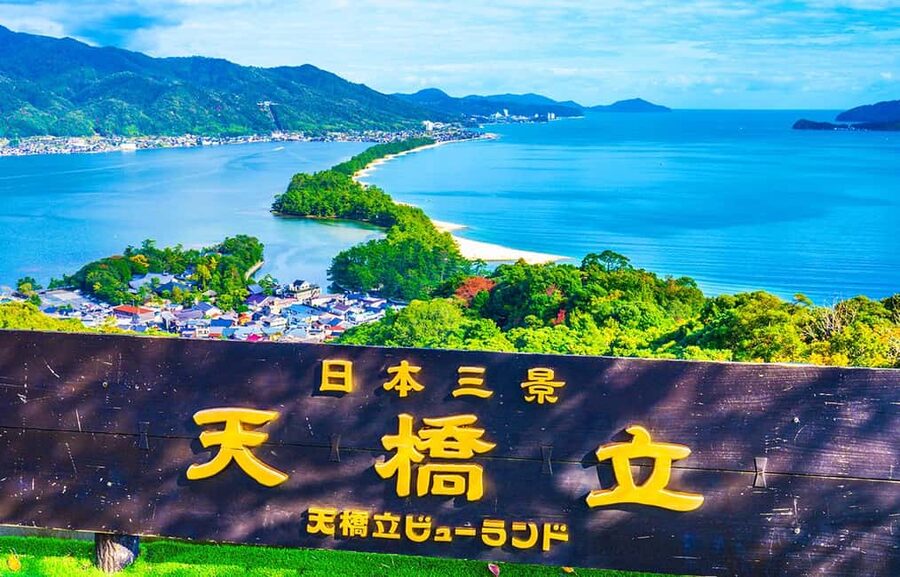
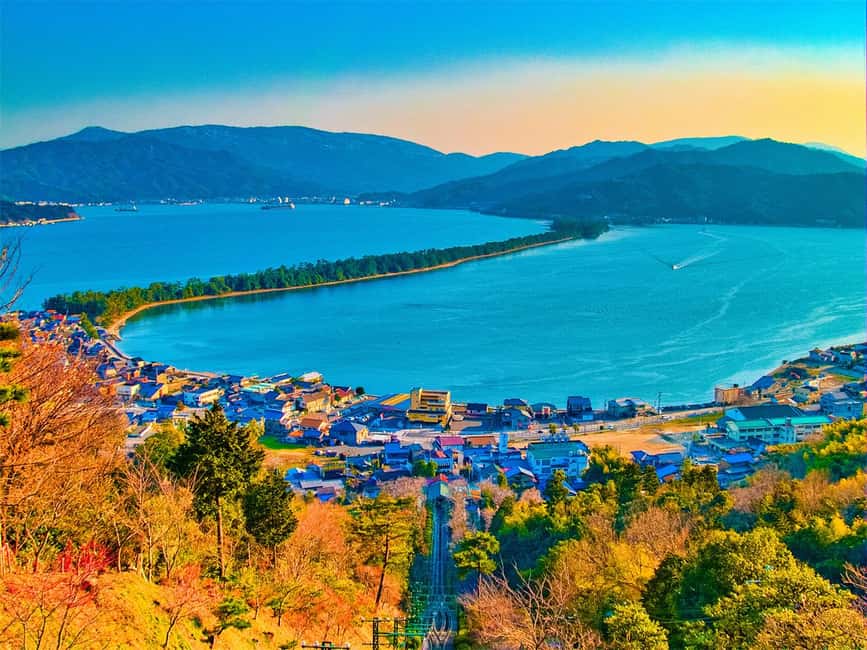
A 40-minute drive brings you to Amanohashidate, a natural sandbar stretching about 3.6 kilometers across the bay. More than 8,000 pine trees grow along it, giving the narrow strip a green, wooded appearance from above.
This is the biggest scenic stop of the day, with about two hours available. You can spend that time near the beach, visit Chion-ji Temple and Monju-do Hall, browse the local area, or pay for the cable car to View Land.
The cable car is self-paid, and it is the main extra many people choose. From View Land, Amanohashidate forms the famous Flying Dragon View. The elevated panorama helps you understand the shape of the sandbar far better than ground level does. Several people consider this their favorite part of the day, but you should add the fare to your budget.
At the viewpoint, try the traditional matanozoki pose, bending forward and looking at the sandbar upside down between your legs. The sandbar is said to resemble a dragon rising toward the sky from this angle. It is a playful custom, not a demanding activity, and it makes for a memorable photograph.
Back near the base, Chion-ji is associated with prayers for academic success. Monju-do Hall adds a religious stop to the visit, while Amanohashidate Shrine and Isoshimizu Spring offer more places to pause. The spring is listed among Japan’s top 100 natural waters, and you can use it to cleanse your hands before making a wish.
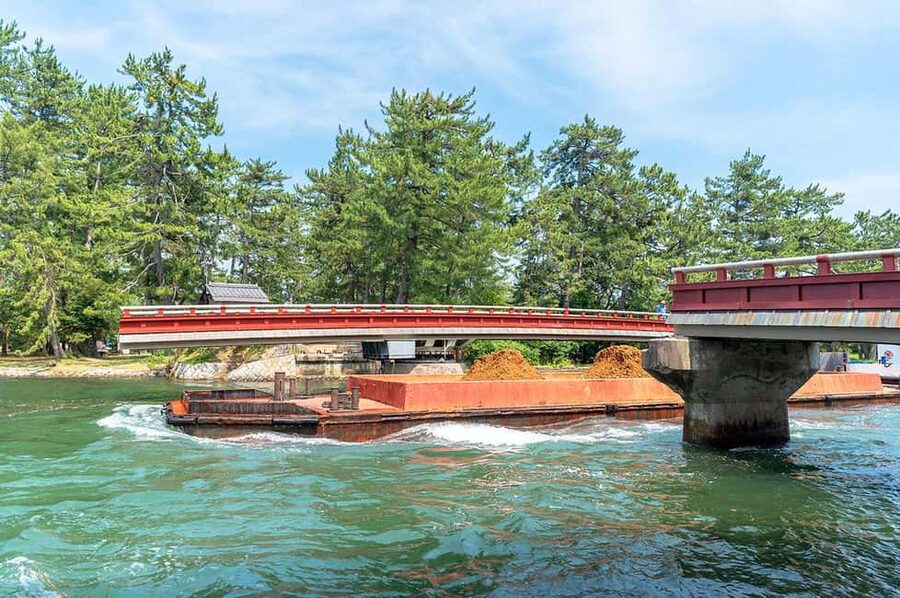
You may also catch the rotating bridge turning to let boats pass. It is a small mechanical spectacle, and timing is luck. The beach area gives you a little free time for a walk and photographs, but do not assume you can walk the full sandbar and still fit in every other stop.
Same base, a completely different sort of day:
- Kyoto: Tea Ceremony in a Traditional Tea House in Kiyomizu
★ 4.9 · 3,519 reviews - Kyoto Geisha Walking Tour: Gion District & Hidden Gems
★ 4.7 · 3,273 reviews - Kyoto: Tea Ceremony Ju-An at Jotokuji Temple
★ 4.9 · 3,207 reviews - Kyoto: Gion Magical Night Walking Tour with Geisha Trivia
★ 4.9 · 2,393 reviews
What to budget at Amanohashidate
The advertised $63 fare covers the bus, driver, guide, and parking. It does not cover lunch or personal expenses. The cable car is specifically self-paid, and the boat ride in Ine may also cost extra.
That distinction matters because the optional rides are not minor details for many people. A cable car ride can be the best way to see Amanohashidate, and a bay cruise can change the feel of the Ine stop. One booking party reported spending about AUD 50 on the boat and chairlift together, though the exact amount can change.
Bring Japanese yen or another accepted form of cash. Scenic sites, restaurants, and small businesses may not accept cards. Since the schedule is tight, buying lunch may mean choosing something quick near Amanohashidate rather than sitting down for a long meal.
Miyama Kayabuki-no-Sato in the mountains
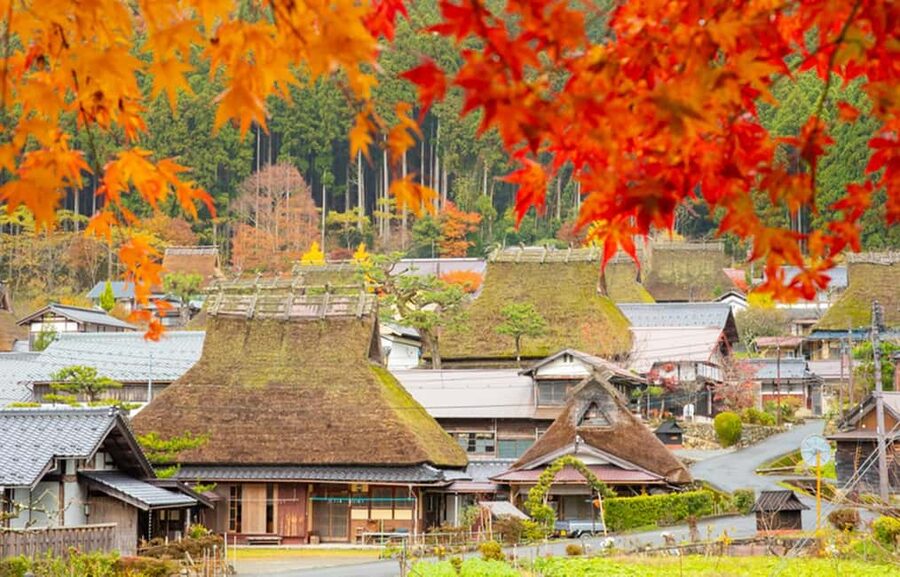
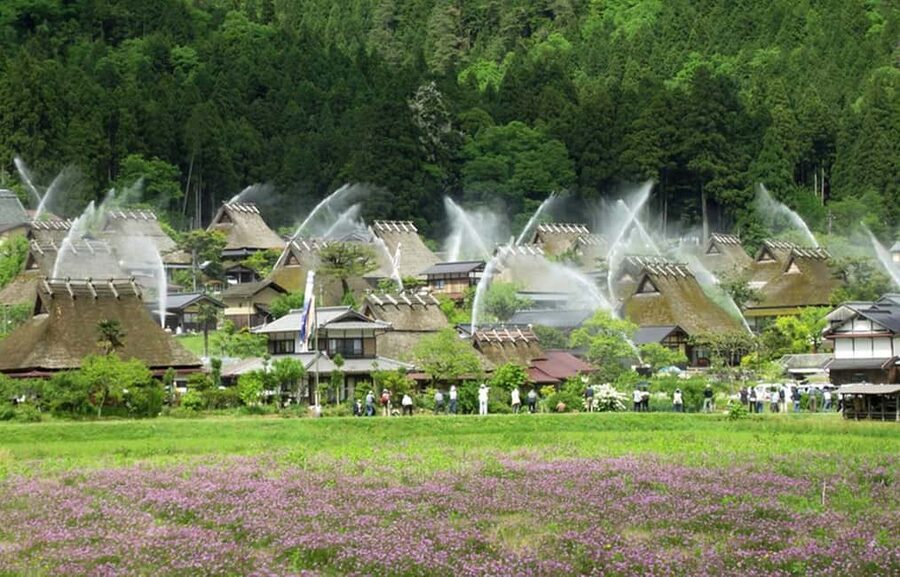
The final major stop is Miyama Kayabuki-no-Sato, reached after roughly an hour and a half on the road from Amanohashidate. This mountain village has more than 40 traditional thatched-roof houses, many with the look of Edo-period rural Japan.
Miyama’s roofs are not just decorative. The crossed beams called chigi and the snow-cutting rods called yukiwari show how local construction answered heavy winter conditions. The architecture gives you a direct look at practical country life rather than a polished historic district built only for sightseeing.
You have about 40 minutes here, so keep your expectations realistic. You can photograph the village, enter a preserved thatched house, look at objects from rural life, and stop at Café Gallery Saika for local ice cream. Some visitors also try a fermented soba drink.
The village deserves more time than this schedule allows. A short stop lets you appreciate its shape and atmosphere, but it limits the chance to explore slowly or visit every interior. If Miyama is your main reason for booking, look for a longer dedicated visit instead.
Still, Miyama works well as the quiet finish to the day. After the coast and the wide view at Amanohashidate, the old roofs and mountain setting bring the pace down before the return to Osaka.
How the time really feels
The advertised duration is 10 hours. In practice, expect a full day that combines several long bus segments with compact visits. The listed travel legs include about two and a half hours to Ine, 40 minutes to Amanohashidate, roughly one and a half hours to Miyama, and about two hours back to Osaka, though traffic can alter the timing.
That sounds tiring, but the comfortable bus softens the strain. You can rest between stops instead of changing trains, reading maps, or searching for rural bus connections. The route also removes the stress of parking and keeps the group moving.
The main limitation is personal freedom. You cannot linger when the bay light is perfect or stay at Miyama after finding a quiet corner. Guides keep the group on schedule, and that is necessary for such a wide route.
Traffic, bad weather, Japanese holidays, and peak seasons can delay the return. A stop may be shortened, moved, or canceled if conditions require it. Do not schedule a flight, train, dinner reservation, or another fixed activity immediately after the bus returns.
The guide makes a real difference
This is a multilingual shared group tour, so explanations may be given in English, Japanese, and Traditional Chinese. The guide needs to handle several languages while keeping everyone aware of meeting times and bus departures.
Liu has led departures in English and Chinese and is praised for switching between languages, explaining the main facts clearly, and keeping the schedule on track. Cave has also guided in Mandarin and English. You should not assume one particular person will lead your date, but the guide’s role is important here because the day has several moving parts.
A good guide adds value by pointing out what to notice at the boat houses, explaining the customs at Amanohashidate, and giving clear instructions before free time. The most useful practical help is often simple: where to go, when to return, and how long you really have.
Who should book this day trip
I would choose this tour if you are based in Osaka and want to reach rural and coastal northern Kyoto without building a complicated transport plan. It suits solo visitors, couples, families, and small groups who prefer a guided day with transport included.
It is also a good fit for photographers. Ine offers unusual waterfront buildings, Amanohashidate provides the broadest view, and Miyama supplies traditional rooflines and village scenes. Bring sunglasses and a camera, but keep your equipment easy to pack during frequent bus departures.
Families can manage the day, though young children may find the long rides hard. One family with a 22-month-old found the schedule workable, but warm weather made the outing more demanding. For comfort, carry water and weather-appropriate clothing.
This is not a good choice for people with mobility impairments. You will move between bus, paths, temple areas, viewpoints, and village lanes, and the optional cable car or boat ride may add further movement. The tour data specifically lists it as unsuitable for people with mobility impairments.
Practical advice before you go
Arrive at least 15 minutes early, even though the formal meeting time is 7:05 AM. Keep the evening email with the vehicle and guide details available on your phone, and check junk mail if it does not appear.
Bring:
- Comfortable shoes for village lanes and sightseeing areas
- Cash for food, cafés, entrance costs, and optional rides
- Sunglasses and a camera
- Clothing suited to the forecast
- A small bag that is easy to carry on and off the bus
Do not feed animals, particularly around Ine, and watch for eagles. At each stop, note the bus departure time before you start taking photographs. This one habit prevents the most avoidable problem on a tightly timed group day.
Free cancellation is available up to 24 hours before departure, and you can reserve now and pay later. Those terms help if your Osaka plans are still shifting, but the more important booking decision is your tolerance for time on the road.
Should you book it?
Book this day trip if your priority is breadth and convenience. For $63, you get round-trip transport from Osaka, a driver, a multilingual guide, parking, and access to three places that are difficult to link independently. The value is especially strong if you would otherwise spend a day solving rural bus and train connections.
Skip it if you want a slow visit to one village or a long stay beside the sea. Ine receives only about 40 minutes, Miyama about 40 minutes, and Amanohashidate about two hours, so the day favors variety over depth.
For most first-time visitors with an open day in Osaka, I think the route earns its place. Just treat the cable car and possible boat ride as paid extras, bring cash, and leave your evening free in case the northern Kyoto roads take longer than planned.
FAQ
Where does the tour leave from?
It departs from Nipponbashi Station Exit 2 at 1-chōme-3-6 Nipponbashi, Chuo Ward, Osaka, in the Namba and Shinsaibashi area.
What time should I arrive?
Meet at 7:05 AM, with departure scheduled for 7:20 AM. Arrive at least 15 minutes early because the bus leaves on time and will not wait for latecomers.
How long is the experience?
The day trip lasts about 10 hours, including transportation from Osaka and the visits to Ine, Amanohashidate, and Miyama Kayabuki-no-Sato.
Which languages are available?
Live guiding is offered in English, Japanese, and Traditional Chinese. The tour is shared with people from different countries, so explanations may be given in several languages.
Is lunch included?
No. Lunch is not included, and personal expenses are also separate. Bring cash because some restaurants and scenic areas may only accept cash.
Is the Amanohashidate cable car included?
No. The cable car to View Land is self-paid. Any boat ride at Ine Bay is also an extra expense.
Can people with mobility impairments join?
The experience is listed as unsuitable for people with mobility impairments. You should consider the walking, sightseeing areas, village paths, and optional rides before booking.
Just added around Kyoto
- Kyoto: Zen Meditation at a Private Temple with a Monk★ 5.0 · 25 reviews
- Kyoto: Gion Geisha District & Sake-in-Hand Walking Tour★ 5.0 · 37 reviews
- Private Pewter Sake Cup Experience with a Kyoto Artisan★ 5.0 · 31 reviews
- Your Private Vacation Photography Session In Kyoto★ 5.0 · 110 reviews
- Private Guided Traditional Buddhist Cooking in Japan★ 5.0 · 16 reviews
- Kyoto Wagashi(Japanese sweets) Cooking Class near Fushimiinari★ 5.0 · 60 reviews
- Traditional Japanese Music show & Experience Tour in Kyoto★ 5.0 · 57 reviews
- Kyoto:Family-Friendly Kimono & Yukata Experience at WARGO★ 5.0 · 147 reviews
Kyoto Tours, compared.


Fushimi Inari, Kinkakuji, Bamboo Grove 1 Day Bus Tour
Read our review →
Tea Ceremony in a Traditional Tea House in Kiyomizu
Read our review →
Kyoto Geisha Walking Tour: Gion District & Hidden Gems
Read our review →

Gion Magical Night Walking Tour with Geisha Trivia
Read our review →

Gion Geisha District Walking Tour – Stories of Geisha
Read our review →Browse the lists this tour appears in