
Reviewed · KYOTO TOURS
Kyoto: Newly Opened Tea Ceremony – Sanjo Chasuian
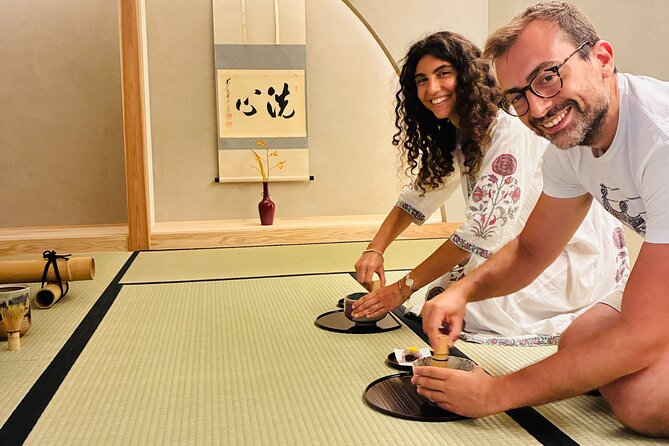
Sanjo Chasuian gives you more than a cup of matcha. In one calm hour, you learn why the tea ceremony treats each movement, bowl, sweet, and entrance as part of the occasion. The unusual nijiriguchi, a low crawl-in doorway, helps mark the shift from ordinary Kyoto sightseeing to a quieter ritual.
I especially like the two-bowl format: first watch the host prepare matcha, then pick up the whisk and try it yourself. I also like the seasonal wagashi from a Kyoto confectioner with more than a century of history. The main consideration is timing: arrive late, even by one minute, and you cannot enter or receive a refund.
Key points at a glance
- Five minutes from Karasuma Oike Station: Sanjo Chasuian is easy to reach by subway and close to central Kyoto sights.
- Two bowls of matcha: One is prepared by the host, and the second is whisked by you or a companion.
- A real tea-room entrance: The nijiriguchi is a small crawl-in doorway with an important symbolic role.
- Seasonal Kyoto wagashi: A traditional sweet from a confectioner with more than 100 years of experience accompanies the tea.
- English instruction for up to 10 people: Hosts including Yuko and Reina explain the customs, movements, and meaning in clear stages.
- A quiet break from sightseeing: The one-hour session suits anyone who wants culture without committing to a half-day class.
A gentle introduction to Kyoto tea culture
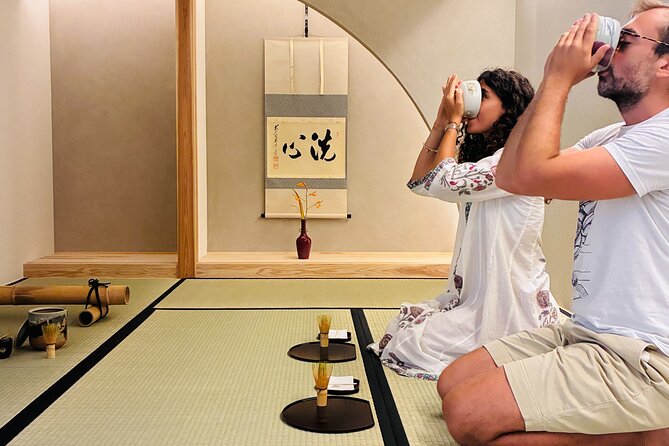
Many Kyoto tea ceremonies ask you to sit quietly and watch. Sanjo Chasuian adds a useful hands-on step, so you are not only observing a polished performance. You learn the basic background, receive a bowl made by the host, and then prepare one yourself.
That order matters. Once you have tried whisking matcha, you notice how much care goes into what can look like a simple drink. The host’s movements become easier to understand, and the ceremony feels less like a show and more like a carefully arranged form of hospitality.
The session is conducted in English, with the explanation given before the formal ceremony begins. This is a smart choice for international visitors. You can ask questions at the start, then watch the quieter sequence without someone talking over every movement.
Hosts named in guest feedback include Yuko, Reina, and Renna. The names may vary according to the schedule, but the format remains the same: history and explanation first, demonstration next, then your turn with the whisk.
More Tea Ceremonies in Kyoto
- Kyoto: Tea Ceremony in a Traditional Tea House in Kiyomizu
★ 4.9 · 3,519 reviews - Kyoto: Tea Ceremony Ju-An at Jotokuji Temple
★ 4.9 · 3,207 reviews - Kyoto: 45-Minute Tea Ceremony Lesson Experience
★ 4.3 · 2,378 reviews
Finding Sanjo Chasuian near Karasuma Oike
The facility is about a five-minute walk from Subway Karasuma Oike Station, a useful location in central Kyoto. You are not being sent far out into the eastern hills or required to build a whole day around the activity. That makes it easy to fit before dinner, after visiting nearby sights, or early in your Kyoto stay.
At the address, look for a large plate showing the Sanjo Chasuian logo and name. Open the door, and staff will be waiting inside. This is worth noting because the entrance may not look like a major attraction from the street.
Plan to arrive a little early. Entry begins five minutes before the appointed start time, and the door is locked once the session begins. There is no grace period for late arrival, so this is not an activity to squeeze between two tight appointments.
The location is also useful if you are visiting Nijo Castle, which one person found conveniently nearby. Still, allow time for the walk, finding the building, and settling in. The ceremony depends on a quiet room, so punctuality is treated as part of the experience rather than a minor booking detail.
Why the nijiriguchi changes the mood
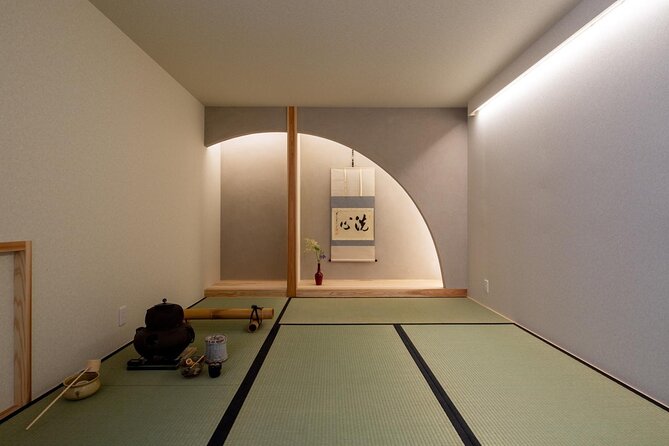
The tea room includes a nijiriguchi, or crawl-in entrance. It is one of the most distinctive features here, and it is not simply a quirky doorway for photographs.
The low entrance traditionally requires visitors to bend or crawl as they enter. That physical act leaves the ordinary outside world behind and brings everyone into the tea room on a more equal footing. You set aside the pace of subway rides, shopping streets, and temple visits for a short time.
You may find the doorway easier to appreciate after the host explains its purpose. Without that context, it can seem like a novelty. With the explanation, it becomes part of the ceremony’s central idea: attention to the present moment and respect for the shared space.
Chairs are available if sitting on the floor is difficult. However, the activity is not suitable for wheelchair users, and children under six are not accepted. Children under five, or anyone requiring an interpreter, must book the Private Plan rather than the Shared Plan.
The first bowl: watch the host prepare matcha
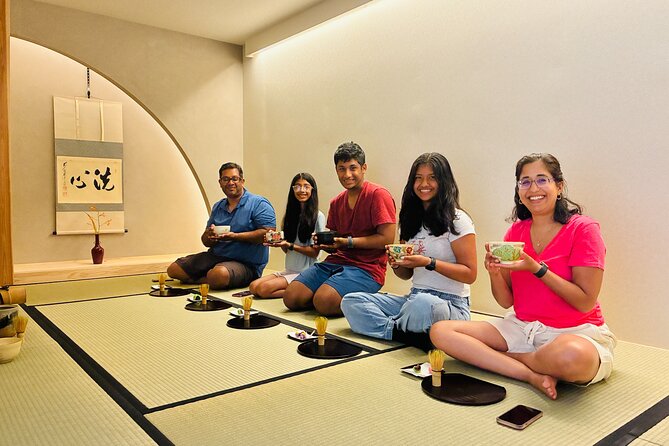
The session begins with an introduction to the history and meaning of Japanese tea ceremony. This is not a long academic lecture. It gives you the basic map you need to understand the actions that follow.
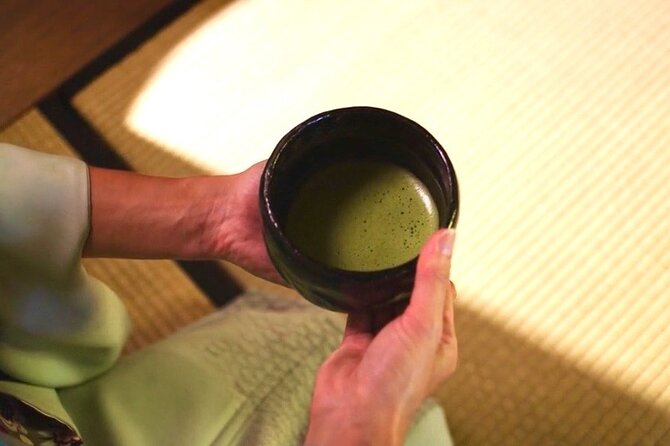
You then watch the host prepare a bowl of matcha. Pay attention to the pace. The tea is not made by rushing through a list of steps. The handling of the bowl, whisk, and other utensils is deliberate, and each action contributes to the calm atmosphere.
You receive the first bowl with a seasonal Japanese confection. The sweet is wagashi from a Kyoto shop with more than 100 years of history. Its seasonal design and flavor are meant to balance the bitterness of matcha, so eat the sweet before drinking the tea as the host directs.
This pairing is a small but important detail. It shows how the ceremony considers the full experience rather than treating matcha as an isolated drink. The sweet gives you a taste of Kyoto confectionery, while the tea provides the sharper, grassy flavor that many first-time drinkers expect from powdered green tea.
The host may take photographs or videos while you prepare tea later. That is helpful if you want a record without interrupting the ritual yourself.
Same base, a completely different sort of day:
- PERFECT KYOTO 1-Day Bus Tour
★ 5.0 · 13,518 reviews - Kyoto: Fushimi Inari, Kinkakuji, Bamboo Grove 1 Day Bus Tour
★ 4.8 · 4,316 reviews - Kyoto Geisha Walking Tour: Gion District & Hidden Gems
★ 4.7 · 3,273 reviews - Kyoto: Gion Magical Night Walking Tour with Geisha Trivia
★ 4.9 · 2,393 reviews
The second bowl: your turn with the whisk
The best part for many people is making the second bowl. You choose a tea bowl, add the matcha and hot water with the host’s guidance, and whisk it yourself. You can prepare it alone or work with a companion, depending on how you book and share the activity.
Do not worry about producing a perfect bowl. The point is to understand the process and feel the focus it demands. The host demonstrates the movement clearly, then gives you time to copy it. Several people found the instructions careful and easy to follow, while one person had some difficulty with an English pronunciation. If you miss a step, ask for it again before the quiet portion begins.
Your bowl may taste different from the host’s. That is part of the lesson. The speed and movement of the whisk affect the texture, and your hand may need a moment to find the right rhythm. You gain a better sense of the skill involved after making tea yourself.
This hands-on section also makes the activity a good fit for couples, friends, and solo visitors. A companion can prepare the bowl while you watch, or you can each take a turn. The session remains short enough that the activity never becomes a demanding workshop.
Seasonal sweets and the taste of matcha
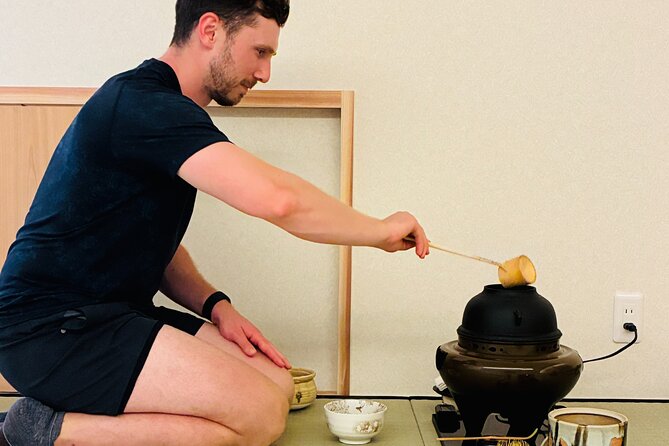
The included wagashi is not an afterthought. Traditional seasonal sweets are shaped and colored to reflect the time of year, although the exact sweet is not specified in advance. That means the detail changes with the season rather than following a fixed menu.
The matcha is from Kyoto, and two bowls are included in the $31 price. One comes prepared by the host, and the other is made by you or your companion. For a first introduction, this is a fair value because you receive instruction, a cultural explanation, a sweet from an established Kyoto confectioner, and a practical activity in a dedicated tea room.
The price makes the most sense if you want context as well as refreshment. If all you want is to drink matcha, a café will cost less and take less time. Here, you are paying for the setting, host-led explanation, ceremonial preparation, and chance to make the tea yourself.
Sanjo Chasuian also sells matcha, tea bowls, and selected tea items. Buying something is optional and is not presented as part of the ceremony. If you discover that you like the tea bowl used during the session, ask what is available, since not every item may be for sale.
Shared Plan, group size, and the feel of the room
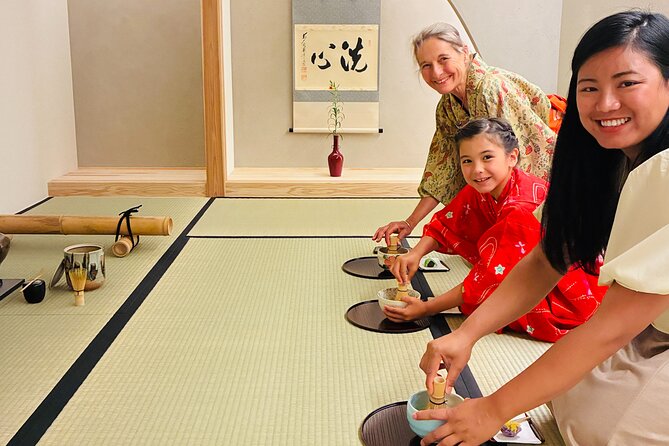
The Shared Plan is a group session with up to 10 participants. That is small enough for direct instruction, but it is not a private ceremony. You will be sharing the room and the host’s attention with other people.
A group can add a pleasant sense of occasion, particularly when everyone is learning the same movements. It can also mean that individual questions need to wait for a natural pause. If you want more personal space, or you are traveling with children under five or someone who needs an interpreter, the Private Plan is required.
The room is meant to remain quiet once the ceremony starts. That is why late entry is not permitted and why the staff ask everyone to arrive before the start. The calm atmosphere is a real part of the value, but it also means this is not an ideal choice for anyone who wants a casual drop-in activity.
Chairs are available for people who prefer them. You should still bring or wear socks, as required for the experience. Pack them even in warm weather if you are wearing sandals.
Who will enjoy this one-hour activity
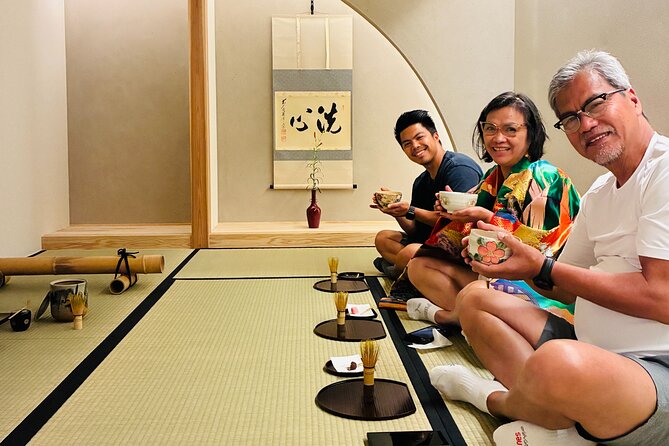
I would choose Sanjo Chasuian for a first tea ceremony in Kyoto, especially if you want enough explanation to understand what you are seeing. The English guidance helps you follow the ceremony without guessing why a bowl is turned, why a movement is repeated, or how the room is being used.
It also suits a busy Japan itinerary. After several days of temples, trains, markets, and crowded streets, one quiet hour can reset your pace. You do not need to reserve a whole morning, and the central station location keeps the rest of your day flexible.
Couples and friends get a particularly useful structure: one person can watch while the other prepares tea, then you can change roles. Solo visitors are also well served, since the host can guide you through the same steps without needing a companion.
I would be more cautious if you have mobility needs that make a low entrance difficult. Although chairs are provided, wheelchair access is not available. Families should also check the age rules carefully, because children under six are not suitable for this activity and younger children require the private option.
Practical details before you book
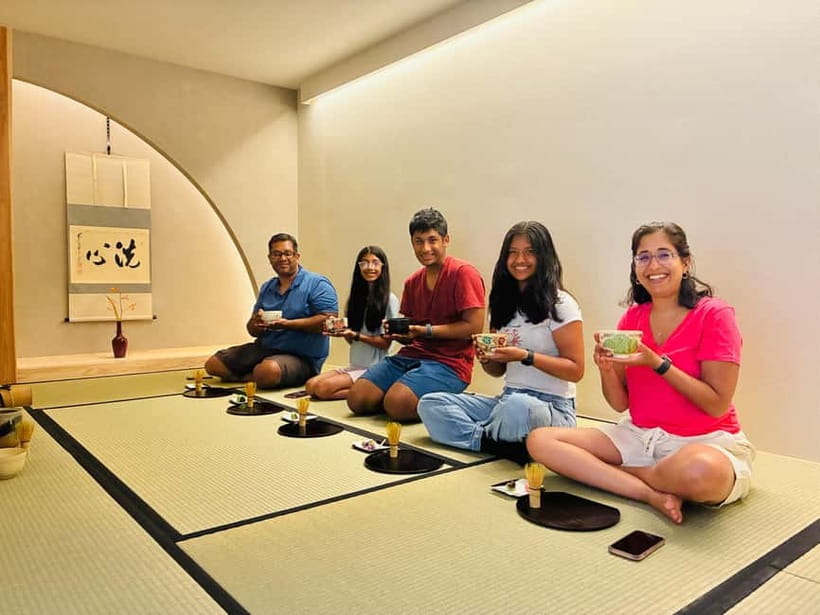
The experience lasts one hour, and starting times vary, so check the available schedule for your date. The language is English, and the group is limited to 10 people.
Bring socks. Arrive at least five minutes before the start, find the large Sanjo Chasuian sign, and open the door. Once the session starts, the door is locked. Arriving one minute late means missing the activity with no refund.
Standard kimono rental and dressing are not included. An optional uchikake, a coat-style kimono, may be available for ¥1,500 including tax. You ask about it on the day, and no advance reservation is accepted. Quantities are limited, so treat it as a possible extra rather than a guaranteed part of your booking.
The experience includes two bowls of Kyoto matcha and one seasonal Japanese confection. Hotel transfers and transportation to the venue are not included, but the short walk from Karasuma Oike Station keeps the extra cost and effort low.
Free cancellation is available up to 24 hours before the start for a full refund. A reserve-now, pay-later option is also offered. A grand opening discount was advertised through September 15, so check the current price rather than assuming that promotion still applies.
Should you book Sanjo Chasuian?
Book it if you want a clear, gentle introduction to tea ceremony with real participation rather than a demonstration alone. The two bowls, seasonal wagashi, English instruction, and nijiriguchi give the one-hour session more substance than a quick matcha tasting.
I would also recommend it early in a Kyoto visit. The explanations give you useful context for other tea-related sights, and the slow pace may help you adjust to the city’s many formal customs.
Skip it if you only want a quick drink, need wheelchair access, cannot arrive early, or prefer a fully private setting but do not want to pay for the Private Plan. For everyone else, $31 is a reasonable price for a compact cultural activity that combines ceremony, food, instruction, and a chance to make your own matcha.
FAQ
Where is Sanjo Chasuian located?
Sanjo Chasuian is in Kyoto, on Honshu, about a five-minute walk from Subway Karasuma Oike Station.
How long does the tea ceremony last?
The activity lasts one hour.
How much does the experience cost?
The listed price is $31 per person. A grand opening discount was offered through September 15, so check the current booking price.
How many bowls of matcha are included?
Two bowls are included. The host prepares one, and you or a companion prepares the second.
Is the instruction provided in English?
Yes. The cultural explanations and guidance are provided in English.
Is the session private?
The Shared Plan is a group session with other participants and allows up to 10 people. A Private Plan is available for situations that require it.
What food is included?
A traditional seasonal Japanese confectionery is included with the matcha. It comes from a Kyoto confectioner with more than 100 years of history.
What should I bring?
You should bring or wear socks.
Can children and wheelchair users join?
Children under six are not suitable for the activity, and wheelchair users cannot participate. Children under five, or anyone requiring an interpreter, must book the Private Plan.
Just added around Kyoto
- Kyoto: Zen Meditation at a Private Temple with a Monk★ 5.0 · 25 reviews
- Kyoto: Gion Geisha District & Sake-in-Hand Walking Tour★ 5.0 · 37 reviews
- Private Pewter Sake Cup Experience with a Kyoto Artisan★ 5.0 · 31 reviews
- Your Private Vacation Photography Session In Kyoto★ 5.0 · 110 reviews
- Private Guided Traditional Buddhist Cooking in Japan★ 5.0 · 16 reviews
- Kyoto Wagashi(Japanese sweets) Cooking Class near Fushimiinari★ 5.0 · 60 reviews
- Traditional Japanese Music show & Experience Tour in Kyoto★ 5.0 · 57 reviews
- Kyoto:Family-Friendly Kimono & Yukata Experience at WARGO★ 5.0 · 147 reviews
Kyoto Tours, compared.
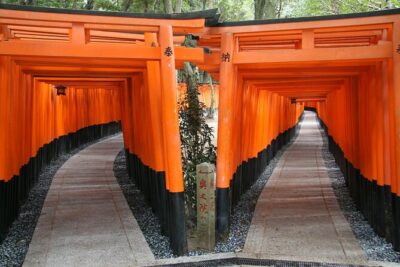
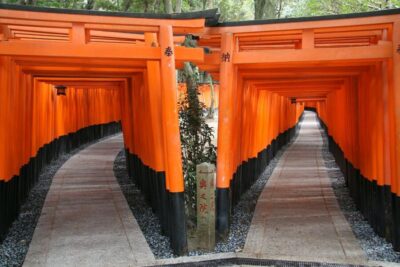
Fushimi Inari, Kinkakuji, Bamboo Grove 1 Day Bus Tour
Read our review →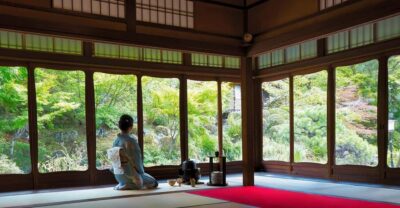
Tea Ceremony in a Traditional Tea House in Kiyomizu
Read our review →
Kyoto Geisha Walking Tour: Gion District & Hidden Gems
Read our review →
Gion Magical Night Walking Tour with Geisha Trivia
Read our review →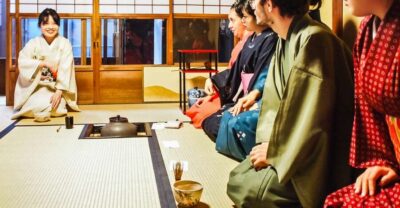
Gion Geisha District Walking Tour – Stories of Geisha
Read our review →Browse the lists this tour appears in