Reviewed · KYOTO TOURS
Kyoto: Nijo-jo Castle and Ninomaru Palace Guided Tour
Nijo Castle is not just a pretty Kyoto stop. It is the former Kyoto base of Tokugawa Ieyasu, the shogun who began the Edo Period, and its Ninomaru Palace still shows how power looked, sounded, and functioned in feudal Japan. The guided visit turns painted screens and bare wooden rooms into a story about politics, ceremony, and daily life.
I like the short, focused route and the chance to enter areas normally closed to the public. Guides such as Ai, Miki, Kaoru, and Don have been praised for clear English, humor, and useful explanations. The main drawback is simple: one hour passes quickly, admission is extra, and the palace can feel hot in summer because there is no air conditioning.
Key points to know before you go
- Hear the palace explained room by room: Guides point out where the shogun received officials, handled government work, and lived during visits to Kyoto.
- See details you could easily miss: Murals, carvings, symbolic animals, political imagery, and palace customs make far more sense with context.
- Enter through the East Main Gate: The meeting point is beside General Reception, after you enter the East Main Gate.
- Visit four major stops: The route covers Higashi Ote-mon Gate, Karamon Gate, Ninomaru Palace, and Ninomaru Garden.
- Expect a small-group feel at times: Several bookings describe groups of only four people, though group size can vary.
- Plan for extra admission: The $16 tour fee does not include Nijo Castle admission, which must be paid separately in cash on site.
Why Nijo Castle works better with a guide
Nijo Castle is easy enough to enter on your own, but it is not easy to understand on your own. You can admire the gold details, painted panels, gardens, and broad wooden corridors without help. Yet much of the meaning sits below the surface.
This was built in 1603 as Tokugawa Ieyasu’s Kyoto residence. It later became an imperial palace after the Tokugawa Shogunate ended in 1867, then passed to Kyoto City and opened as a historic site. That change in ownership gives the place several layers of meaning, and a guide helps you keep them straight.
The castle is also a political setting rather than a simple military fortress. The walls and moats matter, but the central experience is the shogun’s presence inside Ninomaru Palace. You are looking at a place where hierarchy was built into the arrangement of rooms, the artwork, the rituals, and even the way people approached the ruler.
I find that especially useful in Kyoto, where historical buildings can blur together after several temple and shrine visits. A guide gives you a reason to look closely. You learn why a room was used, who could enter it, what the murals suggested, and how the shogun’s power was displayed without a battlefield in sight.
A few more Kyoto half-days to weigh up
- PERFECT KYOTO 1-Day Bus Tour
★ 5.0 · 13,518 reviews - Kyoto: Fushimi Inari, Kinkakuji, Bamboo Grove 1 Day Bus Tour
★ 4.8 · 4,316 reviews - Kyoto: Tea Ceremony in a Traditional Tea House in Kiyomizu
★ 4.9 · 3,519 reviews
Starting at the East Main Gate
The tour begins at the Nijo Castle Tour Ticket Booth, but you should enter through the East Main Gate first. After entering, go to the reception area beside General Reception, located on the left side, and tell the staff you have arrived.
This matters because the tour has a fixed starting time. If you are not present when it begins, you cannot join later. I would arrive well before the start, especially since you must first handle castle admission and then find the reception area.
The route begins around Higashi Ote-mon Gate, the principal eastern entrance. This is a good opening point because a castle entrance is never just a doorway. It controlled movement, created a sense of ceremony, and helped separate the outside world from the shogun’s compound.
You will want your booking confirmation available, since it contains the meeting details. The published coordinates are 35.012586265298516, 135.75085333862305, but the practical instruction is clearer than the number: enter at the East Main Gate and gather beside General Reception.
Karamon Gate and the approach to power
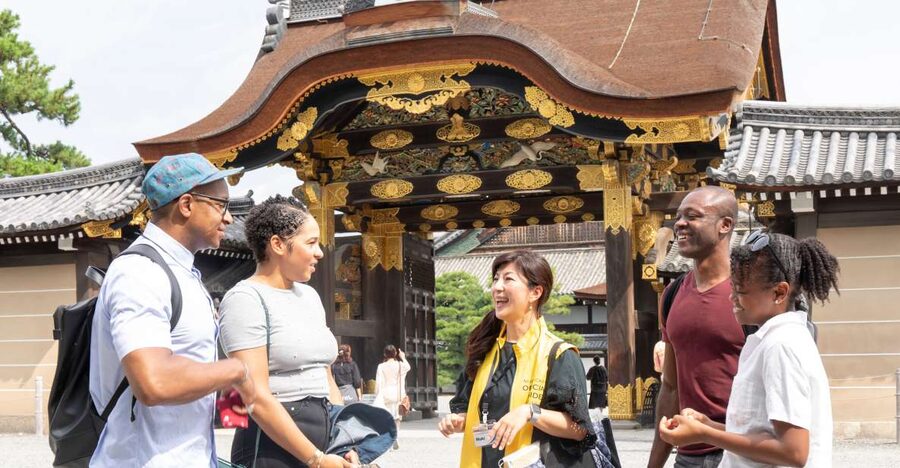
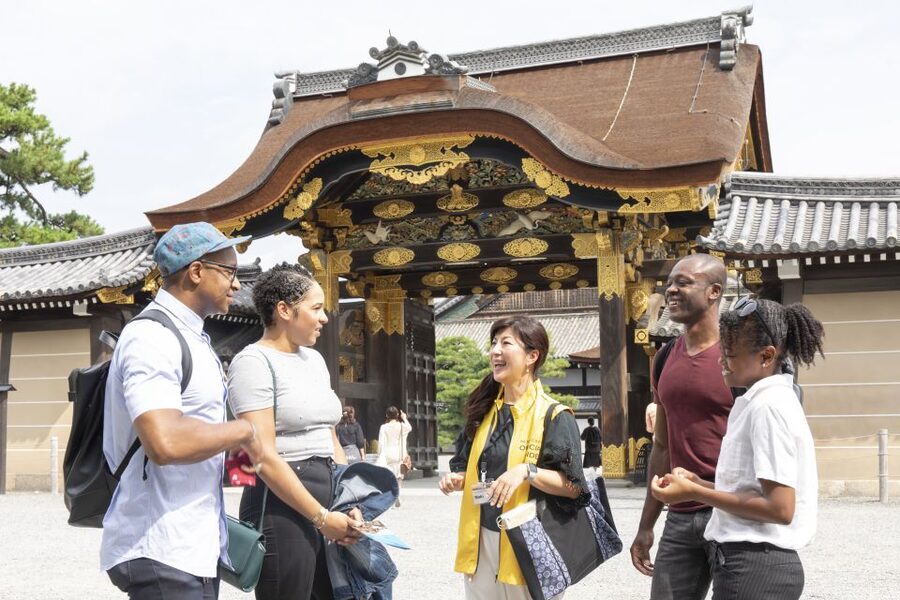
From the entrance, the tour proceeds toward Karamon Gate, the ornate gateway to the Ninomaru section. This is one of the first places where the castle’s decorative side comes forward.
Karamon Gate is not a plain military entrance. Its elaborate design signals that you are approaching the shogun’s residence and office. Your guide can explain how architecture and decoration helped communicate rank before you even reached the palace itself.
This is the kind of stop where a guide earns the $16 fee. Without explanation, you may simply see a beautifully worked gate. With context, you begin to read it as part of a carefully managed political route.
The tour’s English guides have been singled out for making these details easy to follow. Ai has been praised for speaking clearly and looking after the group in hot weather. Miki is often described as energetic and able to explain symbolism and palace history in a direct way. Kaoru has been noted for humor, expressive English, and keeping a group engaged.
Guide quality can vary from one departure to another, but the repeated pattern is clear: the tour depends heavily on the guide’s ability to bring the architecture to life. The best guides do not simply recite dates. They connect the gate to the larger question of how a shogun displayed control.
Ninomaru Palace, the main event
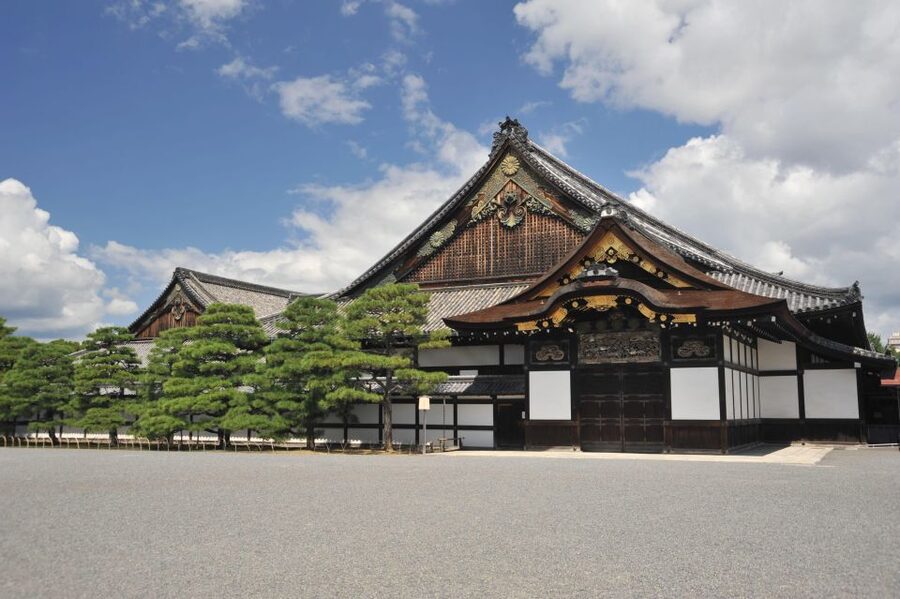
Ninomaru Palace is the heart of this visit. It once served as Tokugawa Ieyasu’s residence and office when he came to Kyoto, and it remains intact. The palace gives you a rare look at the rooms used for reception, administration, ceremony, and private life.
You will walk through traditional wooden interiors with painted panels and carefully arranged spaces. Photography is not allowed inside, and there is no air conditioning. That keeps the palace quiet and preserves the building, but it also means you should prepare for a warm visit in July and August.
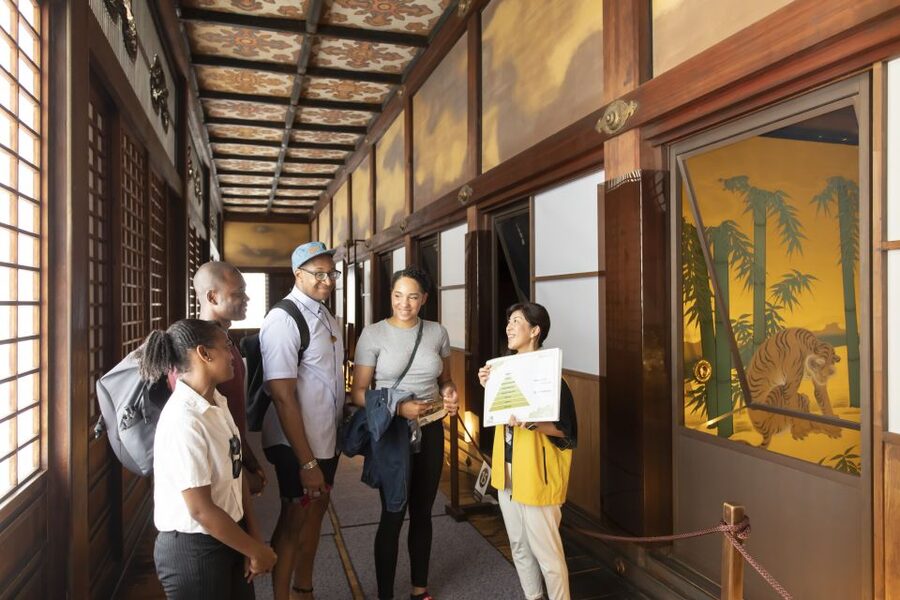
The guide explains what each room was for and how the shogun’s daily schedule worked. You might hear about official audiences, the movement of servants, dinner preparation, and the risks surrounding food at a political court. One particularly memorable line of explanation concerns the possibility of poisoning and the precautions built into palace life.
That sort of detail helps you picture the place as a working residence, not just a museum display. The palace was designed for government, ceremony, and controlled access. Every room had a purpose, and every person had a place within the system.
The artwork deserves close attention. Guides have explained the meanings behind murals, including the use of animals and plants to suggest status, strength, or authority. Look carefully at the painted tigers and decorative carvings. You may also hear connections between some visual motifs and later popular culture, including references to Dragon Ball characters and the inspiration behind Pokémon.
Those comparisons are not the main reason to visit, but they make the artwork easier to remember. A good explanation gives you something specific to look for instead of leaving you with a general impression of gold and color.
Same base, a completely different sort of day:
- Kyoto Geisha Walking Tour: Gion District & Hidden Gems
★ 4.7 · 3,273 reviews - Kyoto: Tea Ceremony Ju-An at Jotokuji Temple
★ 4.9 · 3,207 reviews - Kyoto: Gion Magical Night Walking Tour with Geisha Trivia
★ 4.9 · 2,393 reviews - Kyoto: 45-Minute Tea Ceremony Lesson Experience
★ 4.3 · 2,378 reviews
Special access beyond the usual route
One of the strongest features of this tour is access to parts of the castle normally unavailable to the general public. The exact rooms may vary, but several tour accounts describe entry into two additional areas connected with the shogun’s private quarters.
This is more than a small bonus. Ninomaru Palace already rewards close attention, but restricted rooms give you a sense of how a guided experience can reveal parts of a historic site that a self-guided visit may skip.
Do not assume that every departure will provide an identical backstage route. The activity promises access to an area normally unavailable to the public, and the supplied information also describes restricted facilities. Still, the precise section can depend on the day and the castle’s operating conditions.
The guide also helps you move through the palace when it is crowded. Michiko, for example, has been praised for calmly guiding a group through busy rooms and explaining the architecture in short, manageable pieces. That is useful because palace corridors can become congested, and it is easy to lose the thread of the explanation while trying to keep pace.
Paid participants receive earphones. This should help you hear the guide inside a crowded palace, but earphones are provided only to paid participants. A child aged 0 to 12 may join free with each paid adult, but that child will not receive an earphone unless an adult ticket is purchased for the child.
Ninomaru Garden and the outdoor finish
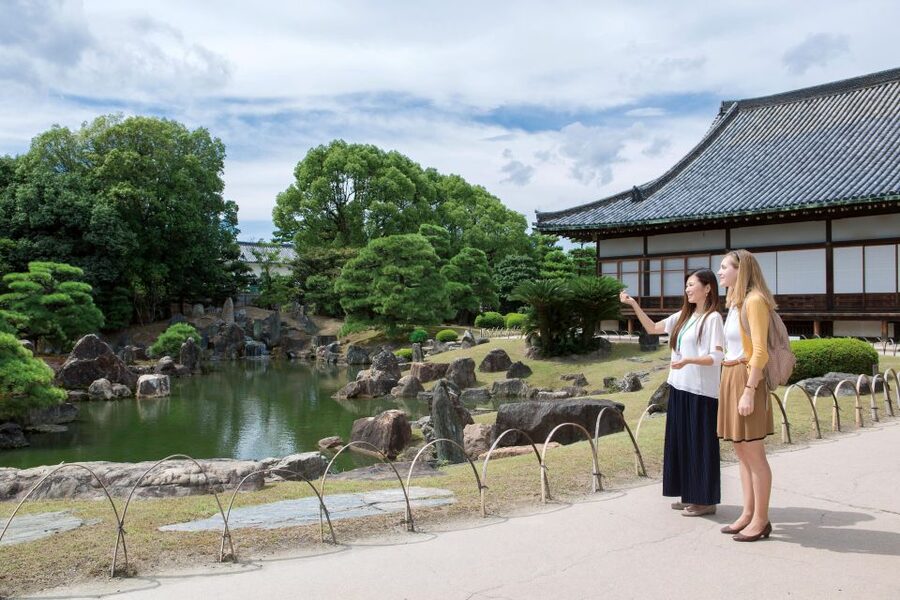
After the palace, the route includes Ninomaru Garden. This shift from enclosed rooms to open grounds gives you time to look at the relationship between the buildings, paths, and garden spaces.
The garden is not treated as a separate full tour. You have about an hour for the whole guided visit, so the guide must keep the pace moving. The benefit is that you get the main architectural and cultural highlights without spending half a day on one site.
After the guided portion, you can continue wandering through the gardens on your own if your admission allows and your schedule permits. This is a smart arrangement. The guide handles the parts that need explanation, while you get freedom afterward to revisit the outdoor areas at your own speed.
Bring water, especially in warm weather. One guide has been praised for taking care of the group during extreme heat, but the castle itself does not provide a cool indoor experience throughout the palace. You should also expect some walking outdoors, and light rain does not necessarily stop the tour.
The one-hour format: efficient or too short?
At 60 minutes, this is a compact introduction rather than a full-day exploration. I like the format for a first visit because it protects your Kyoto schedule. You can combine it with another nearby sight without giving up an entire morning or afternoon.
The short length also keeps the information manageable. Guides have been praised for giving the right amount of detail, answering questions, and maintaining a comfortable pace. For many people, one focused hour is enough to understand the castle’s political purpose and appreciate the palace’s main features.
The tradeoff is that you will not study every garden path, building, or historical period in depth. If you want a slow photographic visit or a detailed architectural survey, you should allow additional time before or after the tour. The guided hour is best viewed as the interpretive core of your visit.
The private or small-group feel reported on some departures can make the hour especially effective. Groups of four have been described, while other departures may be larger. You should not count on a private tour, but you can expect a live English-speaking guide rather than an audio recording.
Price, admission, and overall value
The guided experience costs $16 per person. That price does not include Nijo Castle admission, so you must budget for a separate entrance fee and pay it in cash on site. One booking account places the additional admission at 1,300 yen, but check the current amount when planning your visit.
At first glance, paying separately for the tour and the castle can feel inconvenient. I still think the guide is good value if you care about the story behind what you see. The palace interiors contain details that are easy to overlook, and the political meaning of the rooms is not always obvious from the architecture alone.
The value is strongest for first-time visitors, people interested in samurai-era government, and anyone who wants more than a quick walk through a famous site. It is less useful if you already have strong background knowledge of Tokugawa Japan or prefer to read at your own pace.
The free child policy also changes the calculation for families. Each paid participant may bring one child aged 0 to 12 for free. The child must stay with an adult, and each additional child requires an adult ticket.
English clarity and guide quality
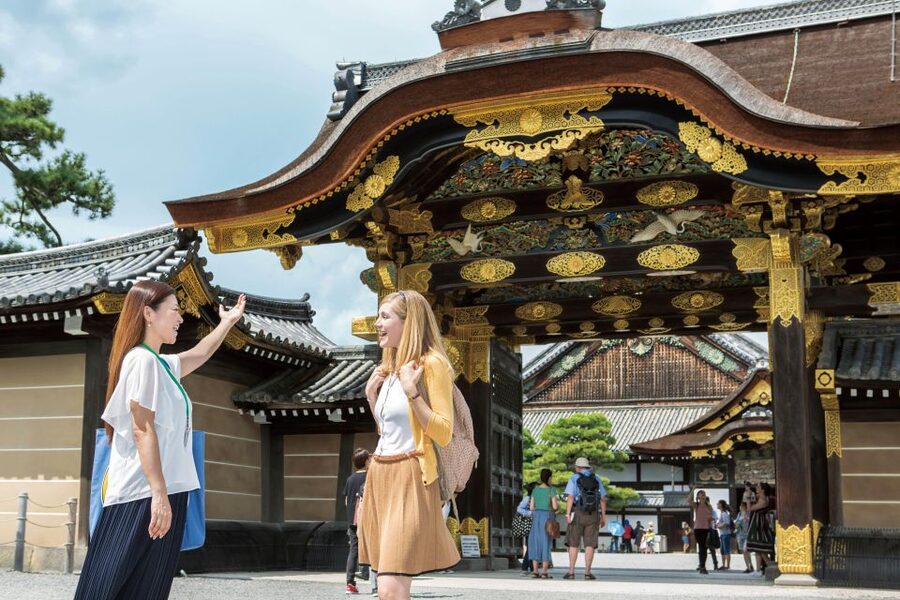
The tour is conducted only in English. You should choose it only if that suits your group.
The guides named in the booking experiences include Ai, Ayu, Miki, Kaoru, Kiku, Don, Ayu, and Mr. Suzuki. Their styles differ, but the most praised traits are consistent: clear speech, good historical framing, friendly manner, patience with questions, and the ability to keep people together in crowded rooms.
Several guides have been praised for adding court intrigue, power struggles, samurai customs, and the changing roles of the shogun and emperor. Those subjects give you a better sense of why Nijo Castle mattered beyond its walls.
The guide’s voice matters inside the palace. There is no air conditioning, photography is forbidden, and groups move through spaces where sound can carry poorly. Earphones for paid participants are a practical help, particularly if the palace is busy.
Who should book this castle tour?
I would choose this tour if you fit one or more of these descriptions:
- You are visiting Nijo Castle for the first time.
- You want the shogunate and imperial transition explained in plain English.
- You enjoy art but need help understanding symbolism.
- You want a structured visit that lasts only one hour.
- You are interested in rooms and access points beyond the standard public route.
- You are traveling with children and can use the one-child-free policy.
You may skip it if you want to explore entirely alone, need a tour in another language, or plan to spend hours studying every garden corner. The extra admission fee also means you should compare the total cost with your Kyoto sightseeing budget.
Practical advice for a smoother visit
Arrive early. You must enter through the East Main Gate, pay the separate castle admission in cash, and report to the reception area beside General Reception before the tour starts.
Wear comfortable shoes and carry water. The visit includes outdoor sections, and summer conditions can be very hot. The palace itself has no air conditioning, so do not assume the indoor portion will provide relief.
Avoid planning the tour on the castle’s closure dates. Nijo-jo Castle is closed every Tuesday in July, August, December, and January, as well as from December 26 through January 3, because Ninomaru Palace is closed during those periods.
Keep your expectations realistic about photography. Photos are not allowed inside the palace, so pay attention to the guide’s descriptions and take your outdoor pictures after the palace portion.
Free cancellation is available up to 24 hours before the start time for a full refund. That is useful if your Kyoto plans are still shifting, but it does not remove the need to arrive on time once you keep the booking.
Should you book the Nijo Castle guided tour?
Yes, I would book it for a first visit, especially if you want to understand Ninomaru Palace rather than simply walk through it. The one-hour route covers the key gates, palace, and garden, while the guide adds the political and cultural clues that make the building memorable.
The tour is not perfect. Admission is separate, the English-only format will not suit everyone, and summer heat inside the palace can be uncomfortable. Still, the combination of clear explanations, occasional restricted access, and a compact schedule gives you a strong return for $16.
Book it if you value context and want help noticing the details. Skip it only if you prefer complete independence or already know the story of Tokugawa Japan well.
FAQ
How long does the Nijo Castle guided tour last?
The guided tour lasts 60 minutes.
What language is the tour conducted in?
The tour is conducted only in English.
What places are included in the guided route?
The route includes Higashi Ote-mon Gate, Karamon Gate, Ninomaru-goten Palace, and Ninomaru Garden.
Is Nijo Castle admission included in the tour price?
No. Castle admission is separate and must be paid in cash on site.
Where is the meeting point?
Enter through the East Main Gate and gather at the reception area beside General Reception, on the left after entering. The meeting point is identified as the Nijo Castle Tour Ticket Booth in the booking details.
Can children join the tour for free?
Each paid participant may bring one child aged 0 to 12 for free. The child must be accompanied by an adult.
Do children receive earphones?
Earphones are provided only to paid participants. If a child needs an earphone, an adult ticket should be purchased for that child.
What happens if I arrive after the tour starts?
You will not be able to join the tour if you are not present when it begins. Arrive well before the scheduled start time.
When is Nijo Castle closed for this tour?
The castle is closed every Tuesday in July, August, December, and January, and from December 26 through January 3 because of the closure of Ninomaru Palace.
Just added around Kyoto
- Kyoto: Zen Meditation at a Private Temple with a Monk★ 5.0 · 25 reviews
- Kyoto: Gion Geisha District & Sake-in-Hand Walking Tour★ 5.0 · 37 reviews
- Private Pewter Sake Cup Experience with a Kyoto Artisan★ 5.0 · 31 reviews
- Your Private Vacation Photography Session In Kyoto★ 5.0 · 110 reviews
- Private Guided Traditional Buddhist Cooking in Japan★ 5.0 · 16 reviews
- Kyoto Wagashi(Japanese sweets) Cooking Class near Fushimiinari★ 5.0 · 60 reviews
- Traditional Japanese Music show & Experience Tour in Kyoto★ 5.0 · 57 reviews
- Kyoto:Family-Friendly Kimono & Yukata Experience at WARGO★ 5.0 · 147 reviews
Kyoto Tours, compared.
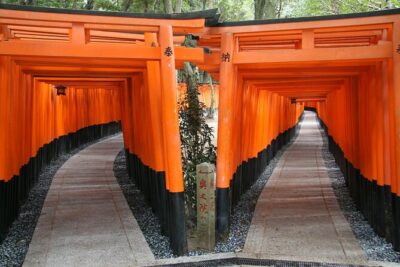
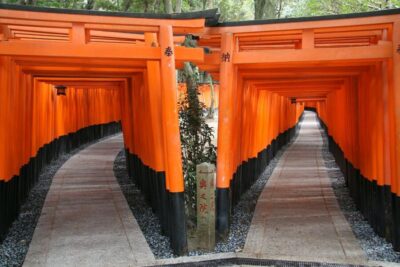
Fushimi Inari, Kinkakuji, Bamboo Grove 1 Day Bus Tour
Read our review →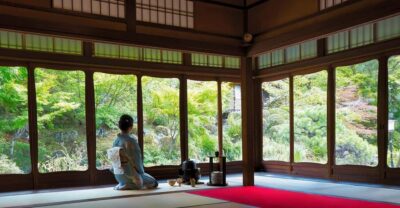
Tea Ceremony in a Traditional Tea House in Kiyomizu
Read our review →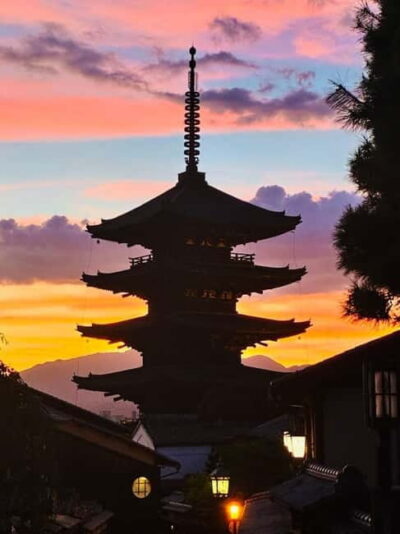
Kyoto Geisha Walking Tour: Gion District & Hidden Gems
Read our review →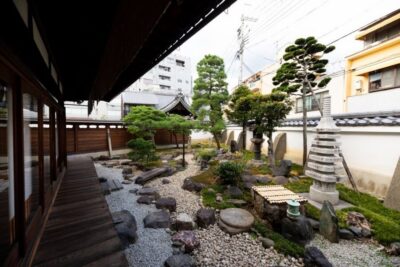
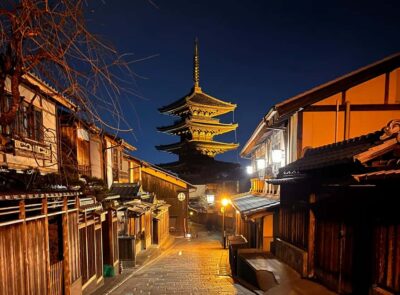
Gion Magical Night Walking Tour with Geisha Trivia
Read our review →