Reviewed · KYOTO TOURS
Kyoto/Osaka: Kyoto&Nara Customized Private Highlights Tour
Kyoto and Nara pack a lot into one day, and this private tour tackles the big sights without asking you to learn several train lines first. You can move from the Arashiyama Bamboo Grove to Fushimi Inari, the Golden Pavilion, and Nara’s Great Buddha in one air-conditioned vehicle.
I like the hotel pickup and the freedom to adjust the pace. I also like the flexible end point, useful if you want to finish in Osaka, Kyoto, Kobe, Maizuru, or Kansai International Airport instead of returning to your starting hotel. The main drawback is clear: this is a long, busy day, and each stop may feel brief, especially on crowded weekends.
Key points at a glance
- One private vehicle for up to six: The $441 group price can offer good value for a family or small group, particularly when public transport feels tiring.
- Seven major sightseeing stops: You can cover Arashiyama, Fushimi Inari, Sanjusangen-do, Kinkaku-ji, Todai-ji, Nara Park, and Gion, with Nishiki Market added for food and local atmosphere.
- A flexible driver-guide: The itinerary can be adjusted around your interests, pace, and desired pickup or drop-off point.
- Bagas receives special praise: His English, humor, kindness, and practical help have made a strong impression on several groups, though an English-speaking driver depends on availability.
- Useful for families: The first baby seat is free if requested ahead of time, and the private setting lets you pause or move on without holding up a larger group.
- Plan for entrance fees and meals: The vehicle, fuel, tolls, parking, WiFi, and hotel transfers are included, but temple admission, food, drinks, and a second baby seat cost extra.
Why combine Kyoto and Nara in one day?
Kyoto and Nara are close enough to pair by road, but they offer different moods. Kyoto gives you formal gardens, famous gates, old wooden streets, and some of Japan’s most photographed temples. Nara adds open parkland, free-roaming deer, and Todai-ji, a temple complex built around one enormous bronze Buddha.
I like this pairing because it gives you a quick sense of two important places instead of spending the whole day in one city. You get a broad first look, then you can decide where to return later with more time.
The trade-off is time. Arashiyama alone can reward a slow morning, while Nara Park and Todai-ji deserve room to wander. This tour is best understood as an efficient introduction, not a slow study of every district. If you want long temple visits, a full bamboo-forest walk, and a relaxed meal, you will need to remove some stops.
The private format helps. Your driver can respond to your interests, skip a stop that does not appeal, or spend more time somewhere that does. Tell the company in advance if you want to add a Kyoto or Osaka attraction, and discuss a different pickup and drop-off arrangement before departure.
A few more Kyoto half-days to weigh up
- PERFECT KYOTO 1-Day Bus Tour
★ 5.0 · 13,518 reviews - Kyoto: Fushimi Inari, Kinkakuji, Bamboo Grove 1 Day Bus Tour
★ 4.8 · 4,316 reviews - Kyoto: Tea Ceremony in a Traditional Tea House in Kiyomizu
★ 4.9 · 3,519 reviews
Arashiyama Bamboo Grove starts the day
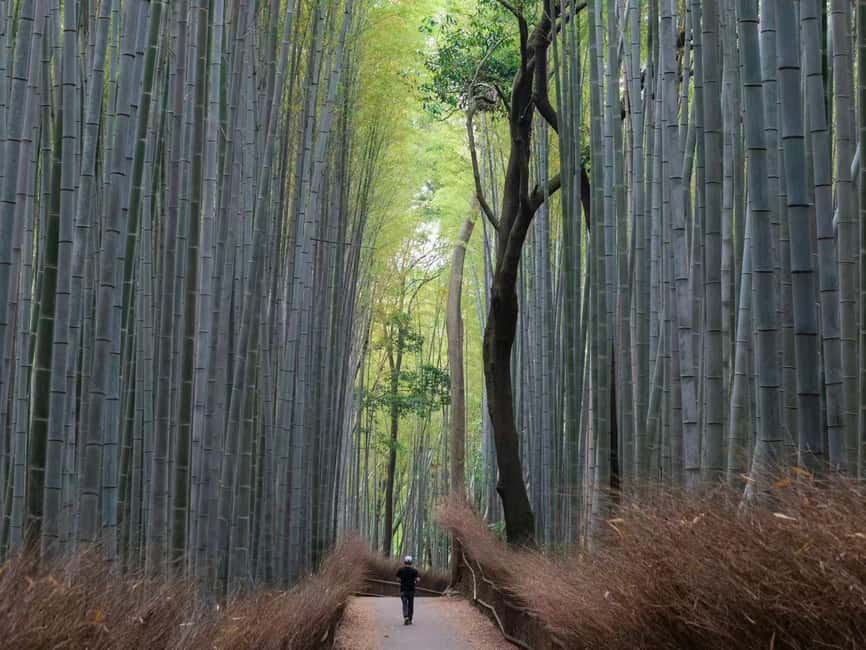
The Bamboo Grove is one of Kyoto’s signature scenes. Tall bamboo rises on both sides of the path, giving the area a cool, enclosed feel even when the surrounding city is busy. The planned sightseeing time is about one hour, enough to walk through the main section and take photographs without letting the first stop consume the day.
Go in expecting beauty and people. The famous path is not a solitary forest trail, and the narrow route can feel crowded. Still, it is worth seeing because the bamboo creates a setting unlike the stone lanes and temple grounds elsewhere in Kyoto.
A private vehicle is helpful here because you do not need to work out a connection from your hotel before the day begins. Wear shoes that can handle a fair amount of walking, and keep your expectations sensible: one hour gives you a taste, not a full exploration of every corner of Arashiyama.
Fushimi Inari and its endless red gates
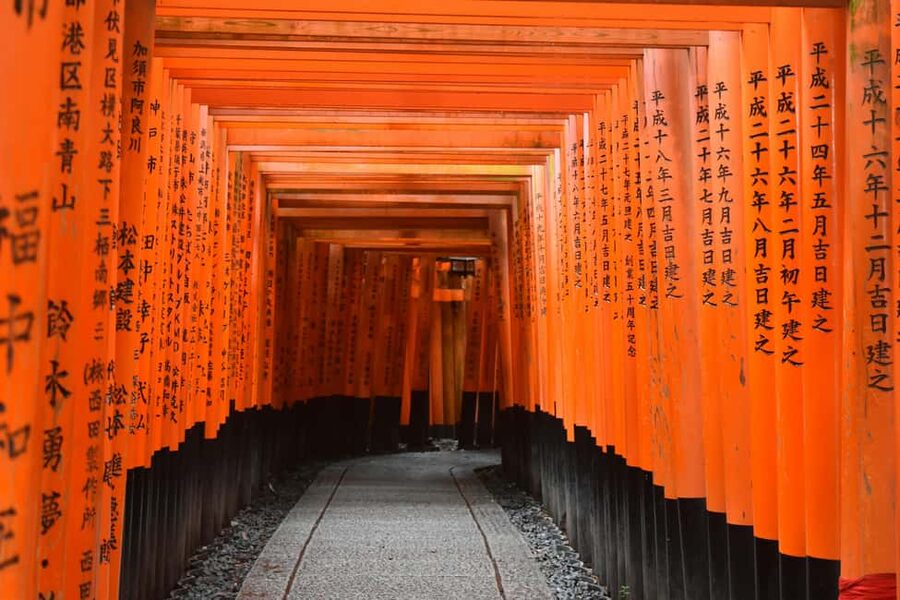
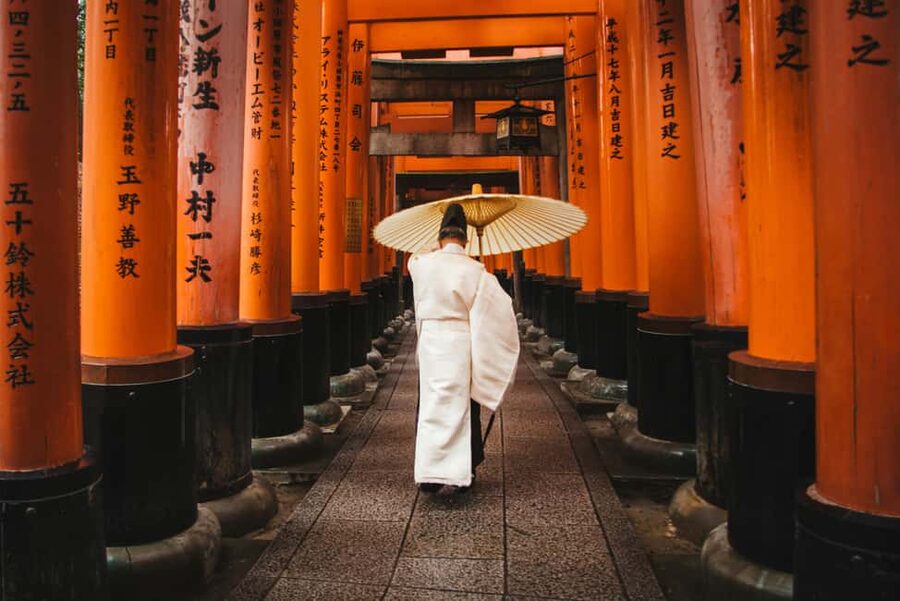
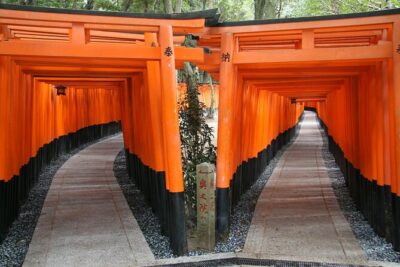
Fushimi Inari Taisha is known for its rows of vermilion torii gates, which climb the wooded mountainside behind the shrine. The gates create a changing rhythm of light, shadow, and red-painted wood. Even a short walk gives you the central visual experience.
You can choose how far to go, which is one reason the private format works well. Walking through the lower gates takes less effort. Continuing uphill gives you a quieter setting but requires more time and stamina. The tour does not promise a full mountain hike, so talk with your driver about how much time you want here.
This is another stop where crowds matter. An early start may help, but the exact timing depends on your departure point and the day’s traffic. If Fushimi Inari is your top priority, say so clearly and ask the driver to protect enough time for it.
Sanjusangen-do adds a quieter temple stop
Sanjusangen-do provides a useful change of scale and mood. The temple is included as a sightseeing stop between the larger headline attractions, giving you a chance to see another side of Kyoto’s religious architecture.
The visit also breaks up the day. After the open gate paths at Fushimi Inari, an indoor temple setting can feel more contained and reflective. Admission is not included, so set aside extra money for entrance tickets throughout the day.
Because the tour includes many stops, your exact time here depends on the rest of the schedule. If this temple matters to you, mention it when discussing your preferred route. The driver can help with ticket purchases, which is useful when you are trying to keep a tight schedule.
Same base, a completely different sort of day:
- Kyoto Geisha Walking Tour: Gion District & Hidden Gems
★ 4.7 · 3,273 reviews - Kyoto: Tea Ceremony Ju-An at Jotokuji Temple
★ 4.9 · 3,207 reviews - Kyoto: Gion Magical Night Walking Tour with Geisha Trivia
★ 4.9 · 2,393 reviews - Kyoto: 45-Minute Tea Ceremony Lesson Experience
★ 4.3 · 2,378 reviews
Kinkaku-ji gives you Kyoto’s golden postcard
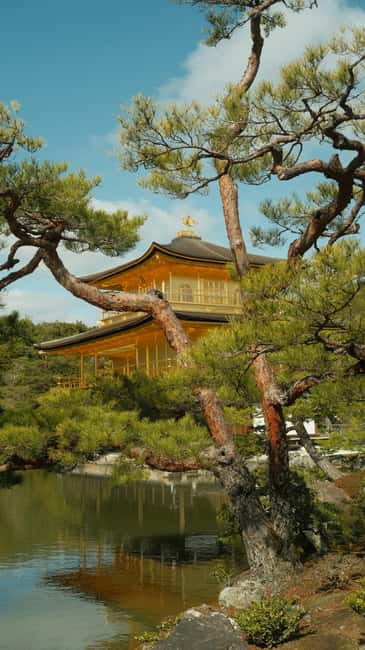
Kinkaku-ji, the Golden Pavilion, is the stop most likely to match the picture in your head. Its gold exterior sits beside a calm pond, where the building can reflect in the water when conditions are right. The setting is carefully composed, with the pavilion viewed from a garden path rather than entered like an ordinary building.
The planned visit lasts about one hour. That is enough to see the main view, walk through the grounds, and take photographs. It is not enough for a slow garden visit with long pauses, particularly when the path is crowded.
I would keep this stop on the list for a first visit, but I would not confuse it with a quiet retreat. The pavilion is famous for good reason, yet its popularity means you share the view with many other people. Your driver can help with admission, but the entrance charge remains your responsibility.
Nara Park brings you close to the deer
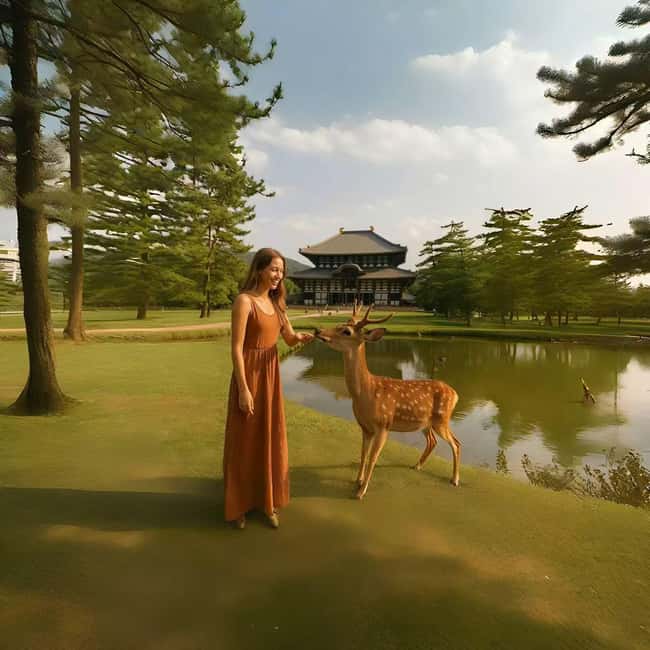
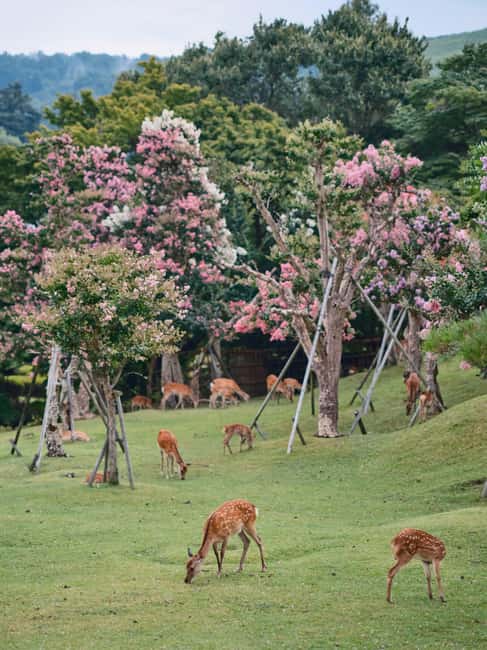
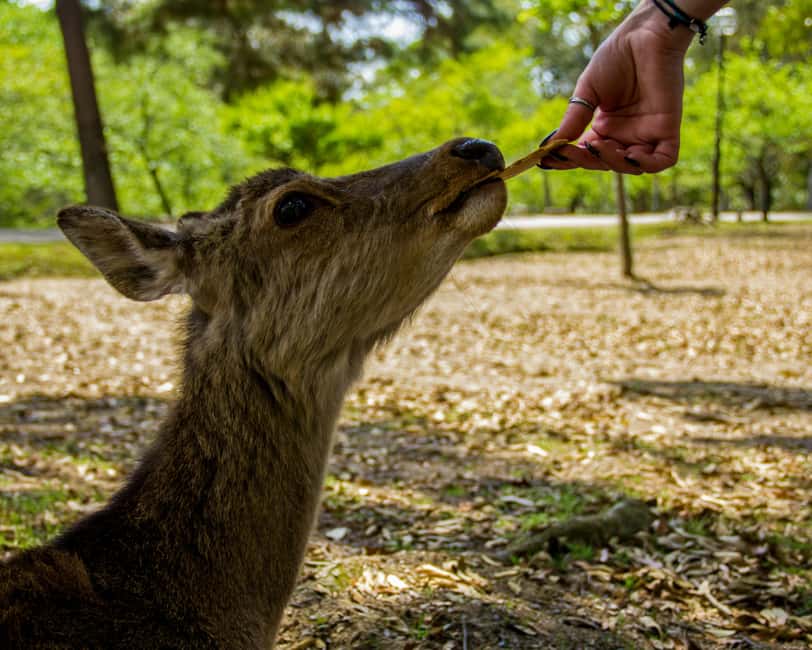
Nara Park changes the pace again. Deer roam freely through the park, and you can see them close to paths and temple grounds. Their presence makes Nara feel different from Kyoto, where the major sights are more tightly arranged around buildings, gardens, and shrine routes.
The deer are friendly, but remember that they are still animals. Move calmly and follow local guidance when feeding or approaching them. A short visit can be memorable, especially for children, though the park itself is large enough to reward more time than this packed day may allow.
Nara Park is paired with Todai-ji, which makes practical sense. The two sights are close enough to visit together, saving you from crossing the city repeatedly. Bring comfortable shoes, since you will be walking outdoors between the vehicle, the park, and the temple.
Todai-ji and the Great Buddha
Todai-ji is the day’s most imposing stop. The temple is home to the Great Buddha, an enormous bronze figure housed inside a vast wooden hall. The scale is the point: even before you focus on details, the building and statue make you look up.
This visit gives the Nara portion more depth than a deer encounter alone. You see a major place of worship and one of Japan’s best-known religious monuments, then step back outside into the open park.
Admission is not included. Ask your driver for help with tickets if needed, but allow time for the line and the walk through the grounds. The temple can be busy, and the amount of time available here will depend on traffic earlier in Kyoto.
Nishiki Market brings food into the schedule
Nishiki Market is the food-focused stop. The market gives you a chance to browse local ingredients and small food sellers rather than spending the whole day at temples. It can be a good place for a snack or a quick look at Kyoto’s everyday food culture.
Do not expect a long sit-down meal unless you arrange one with the driver. A market visit is better for grazing, sampling, and browsing. Food and drinks are not included, so pay as you go.
This stop may be especially useful for families or anyone needing a break. It also offers some flexibility: you can eat, shop, or simply walk through before continuing to Gion. If you have dietary needs, raise them early. One family dealing with celiac disease received help finding suitable restaurant options, and the company arranged the route around their needs.
Gion closes the day with old Kyoto atmosphere
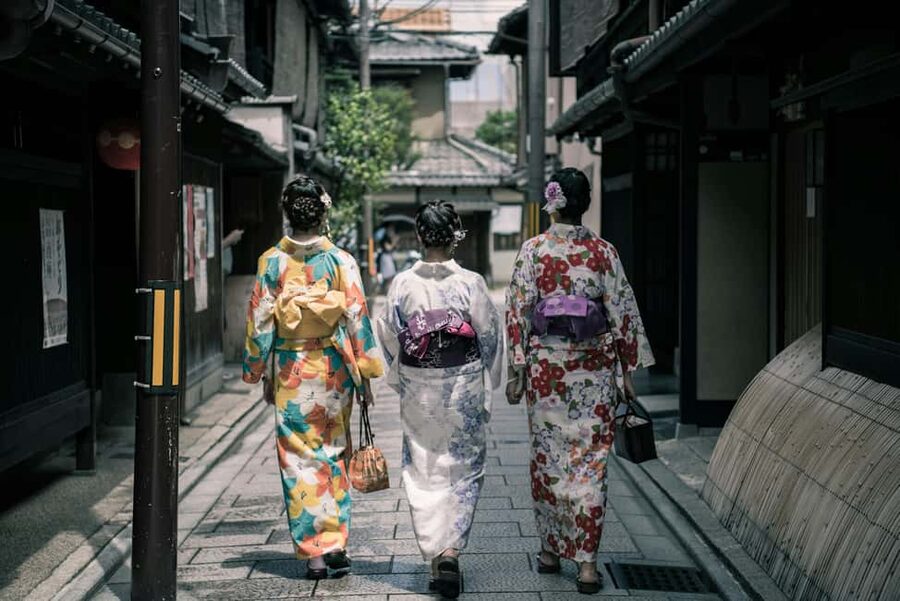
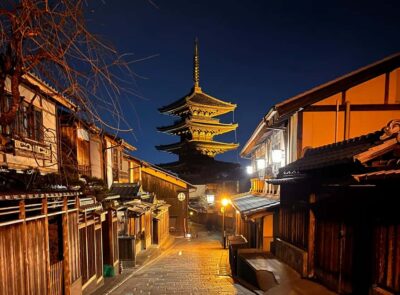
Gion is the final walking stop, with about an hour set aside for its traditional wooden streets and teahouses. The district gives you a different kind of Kyoto experience, less about a single monument and more about street scenes, architecture, and the feeling of an old entertainment quarter.
You might catch a glimpse of a geisha, though there is no guarantee. Treat anyone you see with respect, keep your distance, and avoid blocking narrow lanes for photographs.
An evening walk in Gion can be a pleasant finish after a vehicle-heavy day. It also gives you a chance to ask the driver to end the tour nearby rather than returning to the original hotel. Confirm that plan ahead of time, especially if your departure city differs from your pickup city.
What the private vehicle adds
The tour uses an air-conditioned vehicle with WiFi, charging cables, a power socket, and private transportation. Fuel, tolls, and parking are included. These details may sound ordinary, but they matter after a hot day of walking between temple grounds and crowded streets.
The biggest benefit is not luxury. It is time and energy. You do not need to find a station, wait for a train, or manage several transfers with children and bags. One family found the private vehicle particularly valuable during hot weather because they could leave each stop when they were ready.
The vehicle is also useful for groups with mixed interests. Someone can spend longer at a temple while another person prefers a shorter visit, although the overall schedule still has limits. The tour is private, but it is not a chauffeur service with unlimited time. The standard service lasts up to 10 hours, with extra time charged at 5,000 yen per hour for six or nine-seat vehicles. Service after 9 p.m. also carries a night fee of 2,000 yen per hour.
The first baby seat is free if you request it before departure. A second seat costs 2,000 yen per child. The tour is wheelchair accessible, but it is still wise to describe your needs in advance so the company can confirm the arrangements.
The driver-guide can make or break the day
Your driver is more than a person behind the wheel. The driver can assist with tickets, discuss changes to the route, and help you manage a long day across two destinations. English, Chinese, Japanese, Hindi, and Indonesian service is offered, with English-speaking drivers prioritized when available.
Bagas receives especially warm praise for his English, humor, patience, and attention to families. He also helped one group arrange food choices around celiac disease. You cannot assume Bagas will be assigned to your booking, but requesting an English-speaking driver early is sensible.
The strongest feature of the service is the human flexibility. Several groups were able to visit the places they wanted at a pace that suited them. One useful caution also came through clearly: on weekends, a driver may need to work harder to avoid crowds, and you should ask about route timing rather than leaving all planning to the last minute.
Is $441 good value for up to six people?
At $441 per group of up to six, the price works out to about $74 per person for six people, before entrance fees and food. For four people, it is about $110 each, and for two people, about $221 each.
That makes the tour strongest for families and small groups that value comfort and time. Divide the fare among six, and a private vehicle covering Kyoto, Nara, parking, tolls, and hotel transfers becomes easier to justify. The value drops for a couple unless avoiding public transport is a major priority.
You still need to budget for temple admissions, meals, drinks, and a second child seat if required. Overtime can also add up, so keep the 10-hour limit in mind. Ask for a realistic schedule before departure, particularly if you want every listed stop.
Free cancellation is available up to 24 hours in advance, and you can reserve now and pay later. Large groups need more planning: groups of 13 to 23 must book at least 10 days ahead, while groups over 23 need at least 20 days. Last-minute urgent bookings are not accepted unless availability is confirmed first.
Who should book this Kyoto and Nara tour?
I would recommend it to a family, a group of friends, or anyone who wants the major sights without handling Kyoto and Nara’s transport alone. It is also a strong choice in hot weather, when an air-conditioned vehicle and hotel pickup can save real energy.
It suits first-time visitors who want an efficient orientation. The day shows you bamboo, shrine gates, classic temple architecture, a food market, deer, the Great Buddha, and Gion in one sweep.
I would be more cautious if you prefer slow travel. You may feel rushed at Arashiyama, Fushimi Inari, Todai-ji, or Nishiki Market if you want to linger. The best approach is to choose your two or three priorities before departure and tell the driver. That way, the flexibility becomes practical rather than merely advertised.
FAQ
How long does the tour last?
The experience lasts 8 to 10 hours, with up to 10 hours of service included. Extra time costs 5,000 yen per hour for six or nine-seat vehicles.
Where can pickup and drop-off take place?
Pickup and drop-off options include Kyoto, Osaka, Kobe, Maizuru, and Kansai International Airport. Hotel pickup is provided in Kyoto, Osaka, Nara, and Kobe. Tell the company in advance if your pickup and drop-off locations differ.
Is the tour private?
Yes. It is a private group tour, priced at $441 for up to six people.
Are entrance fees and meals included?
No. Temple entrance fees, food, and beverages are not included. The driver can assist you with purchasing tickets.
Which languages are available?
Driver-guide service is available in Chinese, English, Japanese, Hindi, and Indonesian. English-speaking drivers are prioritized when available.
Is the tour suitable for wheelchair users and families with babies?
The tour is wheelchair accessible. The first baby seat is free when requested before departure, while a second baby seat costs 2,000 yen per child.
Should you book it?
Book this tour if you want to see Kyoto and Nara’s essential sights in one protected, private day, especially with children, older family members, or a group of four to six. The flexible route, hotel transfers, and helpful driver-guide service are the real value.
Skip it if your ideal Kyoto day means lingering at one temple, hiking far up Fushimi Inari, or taking a long meal in Gion. For everyone else, this is a practical first look at two major Japanese destinations, with enough freedom to make the day feel personal rather than fixed.
Just added around Kyoto
- Kyoto: Zen Meditation at a Private Temple with a Monk★ 5.0 · 25 reviews
- Kyoto: Gion Geisha District & Sake-in-Hand Walking Tour★ 5.0 · 37 reviews
- Private Pewter Sake Cup Experience with a Kyoto Artisan★ 5.0 · 31 reviews
- Your Private Vacation Photography Session In Kyoto★ 5.0 · 110 reviews
- Private Guided Traditional Buddhist Cooking in Japan★ 5.0 · 16 reviews
- Kyoto Wagashi(Japanese sweets) Cooking Class near Fushimiinari★ 5.0 · 60 reviews
- Traditional Japanese Music show & Experience Tour in Kyoto★ 5.0 · 57 reviews
- Kyoto:Family-Friendly Kimono & Yukata Experience at WARGO★ 5.0 · 147 reviews
Kyoto Tours, compared.
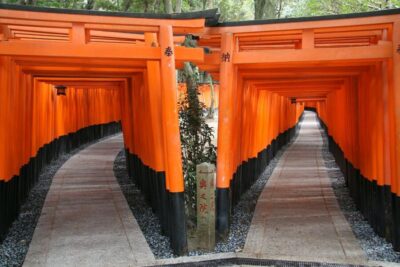
Fushimi Inari, Kinkakuji, Bamboo Grove 1 Day Bus Tour
Read our review →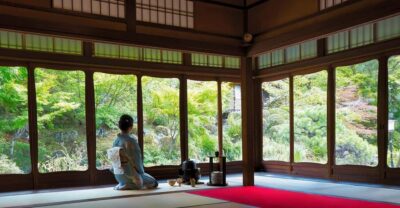
Tea Ceremony in a Traditional Tea House in Kiyomizu
Read our review →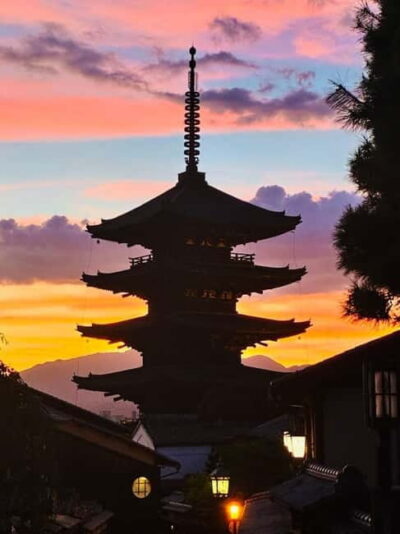
Kyoto Geisha Walking Tour: Gion District & Hidden Gems
Read our review →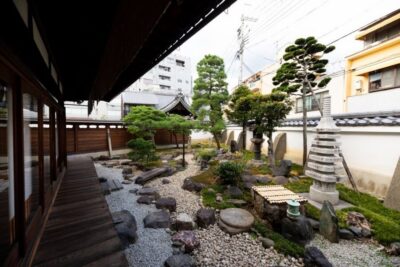
Gion Magical Night Walking Tour with Geisha Trivia
Read our review →