
Reviewed · KYOTO TOURS
Kyoto Private Car Tour – Full Day with Local Guide & Nara Option
Kyoto’s big sights are spread across the city, and this private car tour tackles that problem head-on. In about eight hours, you can connect Kinkakuji, Arashiyama, Gion, and Fushimi Inari without puzzling over bus routes or losing time between distant neighborhoods. The optional Nara route adds deer, Todaiji Temple, and Kasuga Taisha.
I like the hotel pickup and drop-off, especially after a long day on Kyoto’s hills and shrine steps. I also like the personal pace. Guides such as Riku, Tatsuya, Tatsu, and Shunsuke have adjusted routes for children, rain, mobility limits, lunch requests, and shopping stops.
The catch is simple: Kyoto is crowded, and four major areas plus Nara is a lot for one day. You may see the headline sights without having time for every temple, garden, or museum along the way. Entrance fees and lunch are extra, and the route should be confirmed carefully before you go.
Key points to know before booking
- Four famous Kyoto stops in one day: Kinkakuji, Arashiyama, Gion, and Fushimi Inari form the main route.
- Nara can replace part of the Kyoto plan: The Nara option has included Todaiji Temple, deer areas, and Kasuga Taisha in some custom itineraries.
- Private transport saves energy: An air-conditioned car handles the long gaps between western, northern, eastern, and southern Kyoto.
- The guide can shape the day: Riku and Tatsuya are frequently named, with flexibility for food, shopping, weather, children, and mobility needs.
- Budget extra for admissions and food: Lunch is not included, and the listed admission details are not fully consistent, so confirm what your chosen route covers.
- Allow for crowds: The Bamboo Forest and Fushimi Inari can be very busy, and an eight-hour day cannot provide unlimited time at each site.
Why a private car makes Kyoto easier
Kyoto looks compact on a map, but its famous sights sit in different corners of the city. Kinkakuji is in the north, Arashiyama lies in the west, Gion is central, and Fushimi Inari is south of the main sightseeing core. Public transport works well in Kyoto, but connecting these four places in one day can mean several transfers and plenty of standing.
A private car gives you a comfortable base between stops. The tour includes transportation in an air-conditioned vehicle, parking, gasoline, and expressway charges. That matters because small costs and delays can otherwise add up during a full day.
You are not joining a large bus group or waiting for other passengers. The activity is private for your group, with hotel pickup and drop-off included. Several guides have also collected people from cruise terminals, though you should give the operator precise meeting instructions if you are arriving by ship.
The car is most useful for families, older couples, and anyone who wants to preserve energy for the temples. It also helps when the weather turns wet. One guide changed the plan quickly during rain, while another stopped to help a guest find medicine on the way from Osaka.
Still, the car does not eliminate walking. Kinkakuji, Arashiyama, Gion, and Fushimi Inari all require time on foot, and Fushimi Inari includes stairs if you go beyond the lower torii gates. Think of the vehicle as a way to reduce transit fatigue, not as a door-to-door sightseeing service.
A few more Kyoto half-days to weigh up
- Private car tour in Kyoto (up to 4)
★ 5.0 · 123 reviews - Private car tour in Kyoto (up to 9)
★ 5.0 · 74 reviews - Kyoto Day Trip using Private Car with English Driver (up to 5)
★ 5.0 · 74 reviews
Kinkakuji: Kyoto’s Golden Pavilion
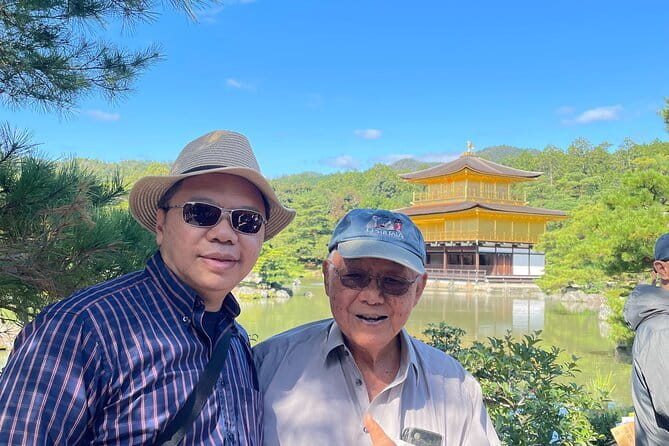
Kinkakuji, also called the Golden Pavilion, is often the visual centerpiece of the day. The top two floors are covered in gold leaf and reflect in the pond below. The effect is polished and almost theatrical, especially when the water is still.
Your listed stop allows about one hour. That is enough to follow the main viewing route, see the pavilion from across the pond, and hear the basic story of the Zen temple. Admission is not included in the stated tour price, so plan to pay separately.
Kinkakuji is one of Kyoto’s most popular sights. Even with a private guide, you cannot expect solitude around the pond. The value here comes from arriving efficiently and getting context as you walk, rather than spending part of your morning figuring out transport.
One practical point: this is a photo-heavy stop, but the pavilion itself is viewed from a set route. You are not entering every floor or wandering freely through the building. If you prefer quiet gardens and long periods of reflection, one hour at Kinkakuji may feel short. If this is your first Kyoto visit, it is still a sensible inclusion because the building is instantly recognizable and unlike anything else on this route.
Arashiyama and the Bamboo Forest
Arashiyama receives about two hours, making it the longest Kyoto stop on the standard plan. The western district combines river scenery, temple grounds, the famous Bamboo Forest, and old streets with shops and restaurants.
The bamboo path is the main draw. Tall stalks close in around the walkway, creating a cool, filtered setting that feels very different from the gold and vermilion of the other stops. A light mist can make the grove especially atmospheric, though weather also affects how comfortable the walk will be.
Crowds are the main issue. The Bamboo Forest can become packed, and a busy path changes the experience. One person found the crowds so limiting that a rickshaw ride was arranged at extra cost. Other outings used a rickshaw through the bamboo and quieter parts of Arashiyama, which can be worthwhile if you have knee trouble, low energy, or simply want a more relaxed view.
Your guide can help you decide how to use the two hours. You might focus on the grove, include a nearby temple, walk toward the bridge, or use a rickshaw. Do not assume every Arashiyama temple is part of the day. Tell the guide before departure which parts matter most to you.
The advertised details say admission is included for Arashiyama, while the general conditions also say attraction admissions are not included. Because the tour can be customized, ask exactly what your selected Arashiyama activities cover. A rickshaw, if you choose one, is an additional expense according to the supplied experiences.
Gion: old lanes and geisha culture
Gion gives the day a change of pace. After the open spaces of Arashiyama, you move into Kyoto’s historic entertainment district, known for traditional architecture and geisha and maiko culture.
The planned visit is about one hour, and admission is free. This is more of a guided walk and orientation than a formal attraction. Your guide can explain the district’s customs, point out notable streets, and help you see Gion as a living neighborhood rather than a stage set.
Keep expectations realistic. Gion is not a guaranteed geisha sighting, and you should not treat private streets or working establishments as photo backdrops. The appeal is in the lanes, wooden façades, and sense of place.
Gion may also be the easiest stop to adjust. If you are tired, it can be shortened. If you want more time for photography or a traditional meal, the private format gives you room to ask. Several guides have recommended local ramen, sushi, or traditional restaurants, though lunch remains your own expense.
Same base, a completely different sort of day:
- PERFECT KYOTO 1-Day Bus Tour
★ 5.0 · 13,518 reviews - Kyoto: Fushimi Inari, Kinkakuji, Bamboo Grove 1 Day Bus Tour
★ 4.8 · 4,316 reviews - Kyoto: Tea Ceremony in a Traditional Tea House in Kiyomizu
★ 4.9 · 3,519 reviews - Kyoto Geisha Walking Tour: Gion District & Hidden Gems
★ 4.7 · 3,273 reviews
Fushimi Inari: torii gates and uphill walking
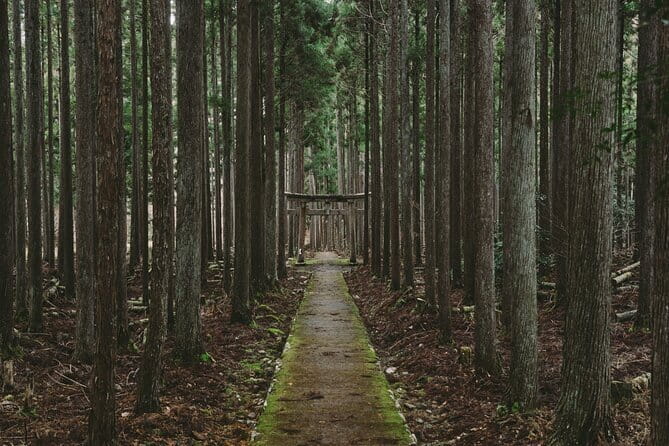
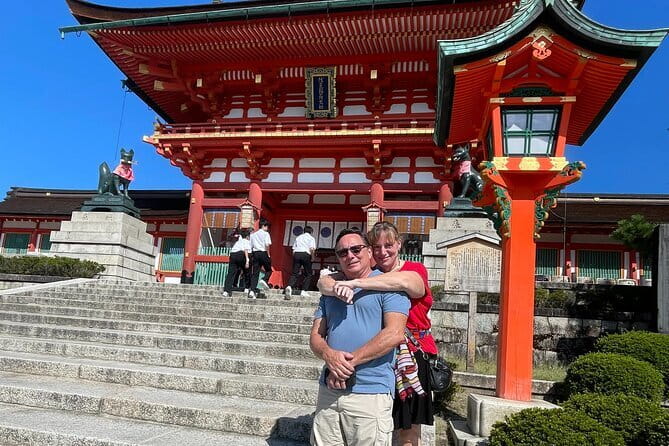
Fushimi Inari Taisha is one of Kyoto’s most memorable sights. The shrine’s path runs beneath thousands of orange torii gates, creating a long corridor up Mount Inari.
The planned visit allows about two hours. That gives you time to explore the lower shrine area and walk a section of the torii path. You do not need to reach the mountain summit to enjoy the famous gates, but the farther you go, the more stairs and uphill walking you face.
This is a good place to discuss your pace with the guide. Some people want to push farther up the mountain. Others are happier taking photographs near the lower gates and saving their legs for the rest of the day. A private guide can help you make that call without holding up a group.
Fushimi Inari can be extremely busy, especially near the entrance. The upper sections may feel quieter, but reaching them takes time. Visiting later in the day can also create a memorable change in mood, with lanterns and torii taking on a different look as daylight fades. One outing reached the shrine with moonlight overhead, though exact timing depends on your departure and season.
Admission is listed as included for Fushimi Inari in the itinerary, while the general conditions say attraction admissions are not included. Confirm this before booking rather than relying on the headline details.
Adding Nara to the day
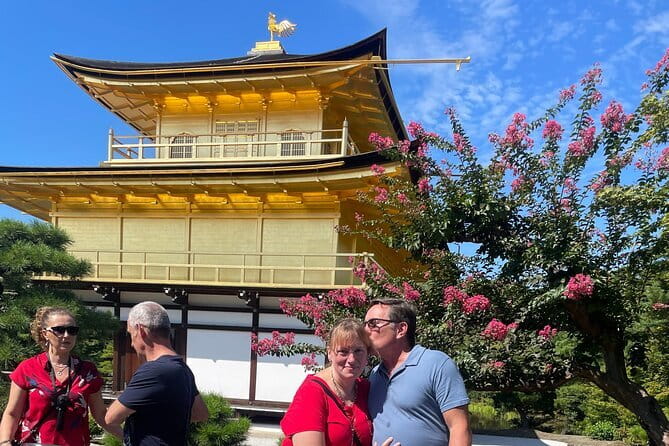
The Nara option changes the character of the experience. Instead of concentrating only on Kyoto, you can include deer parks, Todaiji Temple, and Kasuga Taisha. The route is especially appealing if this is your only chance to visit Nara.
Todaiji is known for its enormous Buddhist temple hall and great Buddha. The scale gives the Nara portion a different impact from Kyoto’s more intimate shrines and gardens. At the deer areas, you can see the famous tame deer around the temple grounds. They are charming, but they are also persistent when they think you have food.
Kasuga Taisha adds lanterns, shrine buildings, and wooded paths. It can also involve walking, so mention knee, wheelchair, or stamina concerns before the day begins. The private setup has worked well for people who needed a slower pace, frequent pauses, or the option to return to the car.
There is a trade-off. Nara takes driving time, so adding it means reducing time in Kyoto or making the day feel more packed. One successful Kyoto and Nara outing fit in a great deal without feeling rushed, but that depends on traffic, your chosen stops, and how long you spend at each place.
I would choose the Nara option if deer and Todaiji are high on your list and you have only one sightseeing day. I would skip it if your priority is a slower Kyoto visit with time inside several temples.
Guides, food, and the personal touch
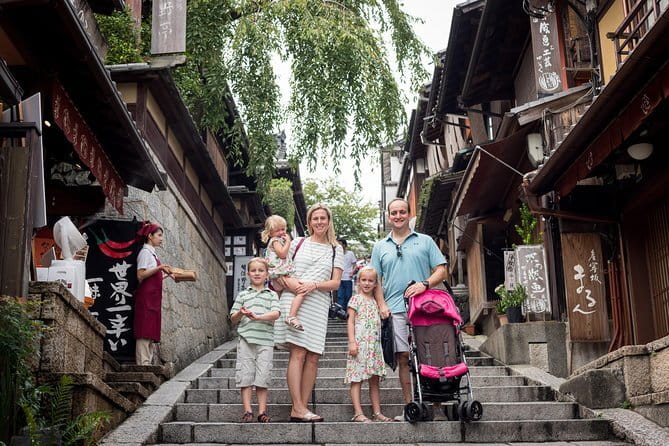
The guide is the main variable in any private tour, and this experience has several repeatedly praised names. Riku is described as prompt, warm, flexible, and attentive to special needs. Tatsuya is frequently credited with clear English, good local food suggestions, and an easygoing pace. Tatsu and Shunsuke have also handled customized routes and mobility concerns.
The guide’s role is more than driving. You can ask for explanations at each site, help with photographs, local restaurant suggestions, or changes when the weather shifts. One guide assisted with a lost phone, and another took a guest to a pharmacy. Those small acts can matter more than a polished speech when you are tired or dealing with a problem.
Food is not included, but lunch can become part of the day’s local flavor. Guides have taken groups to ramen shops, sushi restaurants, and traditional places that were not part of a standard sightseeing route. One group especially liked a sushi and tempura meal at Chojiro. You can request a food preference, but the final choice depends on location, time, and availability.
English ability appears to vary by guide, yet the named guides are repeatedly described as able to explain Japanese history and culture clearly. You may receive a different guide from the names highlighted here, so it is sensible to confirm the guide and pickup details shortly before the tour.
Mobility, children, and the physical demands
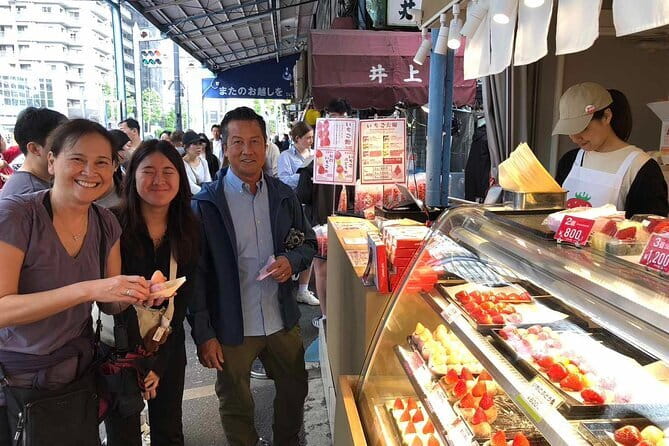
This tour is a strong option for mixed-age groups. Families with children aged four and seven found the guide willing to adjust activities, while adults with knee issues or partial wheelchair use received extra assistance.
The car reduces the amount of walking between districts, and the guide can change the pace. That does not make the route fully step-free. Fushimi Inari has stairs, Arashiyama can require extended walking, and temple grounds may have uneven surfaces. State your needs clearly at booking and again when the guide contacts you.
For children, the private format is useful because you can stop for food, shorten a visit, or change the order without affecting other people. For older family members, the car offers a place to rest between sites. If your group has limited stamina, I would not try to force every standard stop plus Nara into eight hours.
Is $170 per person a good value?
At $170 per person, the price is not cheap, but it covers an eight-hour private experience with an English-speaking guide, air-conditioned transportation, hotel pickup and drop-off, parking, gasoline, and expressway charges.
The value improves as your group grows because you are paying for a private vehicle and guide rather than buying separate transport for each person. It is also easier to justify if you have one day in Kyoto, are arriving from a cruise port, or want to include Nara without managing several train and bus connections.
You still need to budget for lunch and attraction admissions. Kiyomizudera, if added, is listed at about $10, and any rickshaw ride costs extra. Since the admission information for the standard stops is not fully consistent, ask for a written breakdown of your selected route.
I would compare the price with what taxis, trains, buses, and private restaurant planning would cost your group. The biggest saving is not always money. It is the time and energy gained by moving directly between distant sights.
Timing, confirmation, and cancellation
The experience lasts about eight hours. Because Kyoto traffic can slow the route, an ambitious plan may need trimming. Ask the guide to rank your top priorities rather than treating every stop as equally important.
The operator provides mobile tickets and confirms the booking at the time of reservation. I would still confirm the date, start time, hotel address, vehicle details, and any Nara request one or two days ahead. One booking suffered from a scheduling error, although a replacement guide was arranged later that day.
Pickup is offered from hotels, and cruise-terminal pickups have also been arranged. Cruise passengers should provide clear terminal information and ask where the driver will wait. A sign or exact meeting point can save confusion at a busy port.
Free cancellation is available up to 24 hours before the start time for a full refund. Cancellations or changes made inside that window are not accepted for a refund, and cut-off times use local Kyoto time.
Who should book this Kyoto tour?
I would book this for a first visit, a family group, a cruise stop, or anyone who wants the major sights without learning Kyoto’s transport system in a single morning. It also suits groups with mixed walking speeds because the guide can adjust the pace and the car gives you recovery time.
I would be more cautious if you want long, quiet visits inside temples or a slow food-and-neighborhood day. The standard route covers a lot, but it is still a highlights tour. Crowds, traffic, admission costs, and walking can limit how deeply you experience each place.
The best way to make this work is to choose your priorities before pickup. Tell Riku, Tatsuya, or your assigned guide if Kinkakuji, the Bamboo Forest, Fushimi Inari, Gion, Nara, local food, shopping, or mobility support matters most. With that conversation, the private format becomes useful rather than simply expensive.
FAQ
How long does the Kyoto private car tour last?
The tour lasts approximately eight hours.
Which Kyoto sights are included in the standard route?
The planned route includes Kinkakuji Temple, Arashiyama, Gion, and Fushimi Inari Taisha Shrine.
Is the tour private?
Yes. Only your own group participates, with no other passengers joining the activity.
Is hotel pickup and drop-off included?
Yes. Hotel pickup and drop-off are included. Pickup from a cruise terminal has also been arranged, but you should provide exact meeting details.
Can I add Nara?
Yes. A Nara option is available. Past routes have included Todaiji Temple, deer areas, and Kasuga Taisha, though adding Nara can reduce time available in Kyoto.
Are lunch and entrance fees included?
Lunch is not included. The information lists admission charges separately, including about $10 for Kiyomizudera if it is added. Because admission details vary by stop and route, confirm the exact inclusions before booking.
What is the cancellation policy?
You can cancel up to 24 hours before the experience start time for a full refund. Cancellations or changes made less than 24 hours before the start time are not accepted for a refund.
Just added around Kyoto
- Kyoto: Zen Meditation at a Private Temple with a Monk★ 5.0 · 25 reviews
- Kyoto: Gion Geisha District & Sake-in-Hand Walking Tour★ 5.0 · 37 reviews
- Private Pewter Sake Cup Experience with a Kyoto Artisan★ 5.0 · 31 reviews
- Your Private Vacation Photography Session In Kyoto★ 5.0 · 110 reviews
- Private Guided Traditional Buddhist Cooking in Japan★ 5.0 · 16 reviews
- Kyoto Wagashi(Japanese sweets) Cooking Class near Fushimiinari★ 5.0 · 60 reviews
- Traditional Japanese Music show & Experience Tour in Kyoto★ 5.0 · 57 reviews
- Kyoto:Family-Friendly Kimono & Yukata Experience at WARGO★ 5.0 · 147 reviews
Kyoto Tours, compared.


Fushimi Inari, Kinkakuji, Bamboo Grove 1 Day Bus Tour
Read our review →
Tea Ceremony in a Traditional Tea House in Kiyomizu
Read our review →
Kyoto Geisha Walking Tour: Gion District & Hidden Gems
Read our review →

Gion Magical Night Walking Tour with Geisha Trivia
Read our review →

Gion Geisha District Walking Tour – Stories of Geisha
Read our review →Browse the lists this tour appears in