
Reviewed · KYOTO TOURS
Kyoto Private Customized Day Tour with Guide
Kyoto’s famous sights are scattered across the city, and getting between them by local bus can eat up a surprising amount of your day. This private vehicle tour lets your group move from Arashiyama to Kinkaku-ji, Nijo Castle, Gion, and the city’s grand shrines without puzzling over routes.
I like the custom pacing and the door-to-door pickup. Guides such as Hamza, Malik, Ali, Nomi, and Nami have adjusted plans for children, food stops, breakfast, snacks, cash withdrawals, and vegetarian meals. The main catch is price: $475 per group is good value for six people, but much harder to justify for one or two.
Key points at a glance
- Start at 8 am with hotel pickup, avoiding Kyoto’s crowded buses and confusing connections.
- Visit up to seven major Kyoto sights, including Arashiyama Bamboo Forest, Kinkaku-ji, Nijo Castle, Gion, and Fushimi Inari.
- Travel privately for up to six people, with no strangers joining your vehicle.
- Adjust the day to your needs, including family breaks, meal stops, and extra time at favorite sights.
- Budget for temple admission, since Kinkaku-ji, Nijo Castle, and Kiyomizu-dera tickets are not included.
- Plan on 8 to 10 hours, with the listed stops taking nearly eight hours before driving time and meals.
Why a private car helps in spread-out Kyoto

Kyoto’s sights do not form one tidy walking route. Arashiyama lies in the western part of the city, Kinkaku-ji is farther north, and Fushimi Inari is south of the central districts. Add Gion, Kiyomizu-dera, Nijo Castle, and Nishiki Market, and a day of public transport can become a puzzle of buses, subways, and walks.
This tour solves that problem in the simplest way: your guide picks you up, drives you between districts, and returns you to your hotel. You still walk at the temples, shrine, market, and old streets, but you do not spend the gaps between them studying a transit map.
The tour is private for your group only, with space for up to six people. That matters most for families and small groups who want to stop for food, cash, or photographs without holding up strangers.
You should not think of the private vehicle as a way to avoid all crowds. Arashiyama, Kinkaku-ji, Kiyomizu-dera, and Fushimi Inari are among Kyoto’s best-known places. The vehicle saves time and effort between sites, but the popular sights themselves can still be busy.
A few more Kyoto half-days to weigh up
- PERFECT KYOTO 1-Day Bus Tour
★ 5.0 · 13,518 reviews - Kyoto: Fushimi Inari, Kinkakuji, Bamboo Grove 1 Day Bus Tour
★ 4.8 · 4,316 reviews - Kyoto: Tea Ceremony in a Traditional Tea House in Kiyomizu
★ 4.9 · 3,519 reviews
Arashiyama Bamboo Forest: a scenic start with a time limit
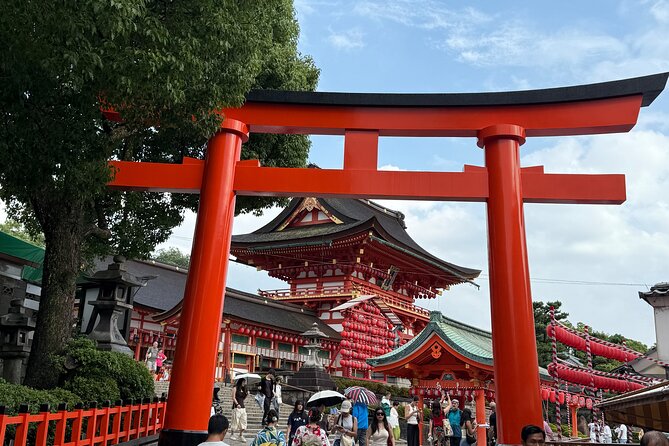
The day’s first listed stop is Arashiyama, a district on Kyoto’s western edge that has attracted visitors since the Heian Period. The bamboo forest is the headline attraction, but the wider district is the reason this stop is given two hours.
That longer slot gives you time to walk among the tall bamboo and take in Arashiyama’s wooded setting without treating it as a quick photograph. You can also use the time to get your bearings in one of Kyoto’s most tourist-oriented areas.
The tradeoff is timing. Two hours is enough for a focused visit, but not enough to explore every part of Arashiyama at a slow pace. If your group cares more about temples or markets than bamboo, ask your guide to shift the schedule before the morning gets away from you.
Kinkaku-ji: Kyoto’s Golden Pavilion
Kinkaku-ji, formally called Rokuonji, is a Zen temple famous for its top two floors covered in gold leaf. The building’s bright surface is the visual centerpiece, and the grounds give you a carefully framed view of the pavilion.
The planned visit is about 40 minutes. That is a sensible amount of time for the main sight, especially on a day that tries to cover much of Kyoto. You can see the pavilion, walk through the grounds, and take photographs, but this is not a long temple visit with time for every corner.
Admission is not included, so keep money ready for the entry ticket. The tour price covers the private transportation and guide, not every attraction. That distinction matters when you compare the total cost with a self-guided day.
Nijo Castle and the power of the shoguns
Nijo Castle offers a different side of Kyoto. Built in 1603 as the Kyoto residence of Tokugawa Ieyasu, the first shogun of the Edo Period, it connects the city to Japan’s military and political past.
The planned hour here gives you more room than at Kinkaku-ji. A guide can help turn the castle from a series of rooms and courtyards into a place with a clear story about the shogun’s presence in Kyoto.
Admission is extra. Since Nijo Castle is another major paid stop, ask your guide early in the day how much time the group wants to give it. If you are traveling with children or have a strong interest in architecture, you may want the full hour. If you are racing to fit every listed stop, the schedule can feel tight.
Same base, a completely different sort of day:
- Kyoto Geisha Walking Tour: Gion District & Hidden Gems
★ 4.7 · 3,273 reviews - Kyoto: Tea Ceremony Ju-An at Jotokuji Temple
★ 4.9 · 3,207 reviews - Kyoto: Gion Magical Night Walking Tour with Geisha Trivia
★ 4.9 · 2,393 reviews - Kyoto: 45-Minute Tea Ceremony Lesson Experience
★ 4.3 · 2,378 reviews
Nishiki Market, Kyoto’s food corridor
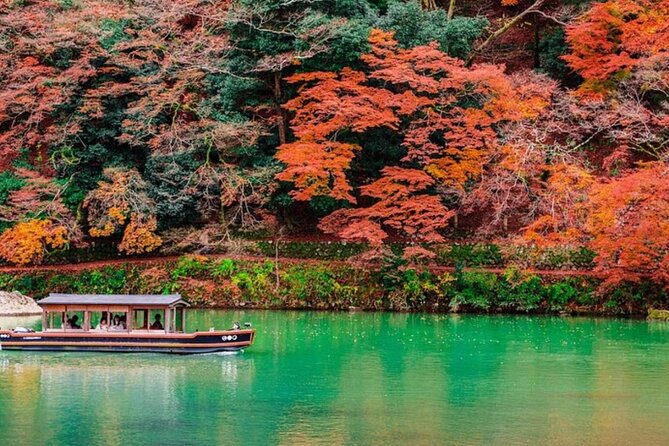
Nishiki Market runs along a narrow, five-block shopping street lined with more than 100 shops and restaurants. It is known as Kyoto’s Kitchen, and the hour planned here works best as a chance to look, taste, and browse rather than as a formal sightseeing stop.
This is one of the places where flexibility has real value. You might want a snack, a quick lunch, or time to look at local food products and small shops. Guides have also helped groups make food stops during the day, including finding a vegetarian-friendly restaurant and a local ramen restaurant.
Keep in mind that a market visit is not as predictable as a temple visit. Your group may want to stop often, while another group may prefer a quick walk through. Tell your guide what you want before entering so the hour does not disappear without a meal or purchase.
Gion: old lanes and careful sightseeing
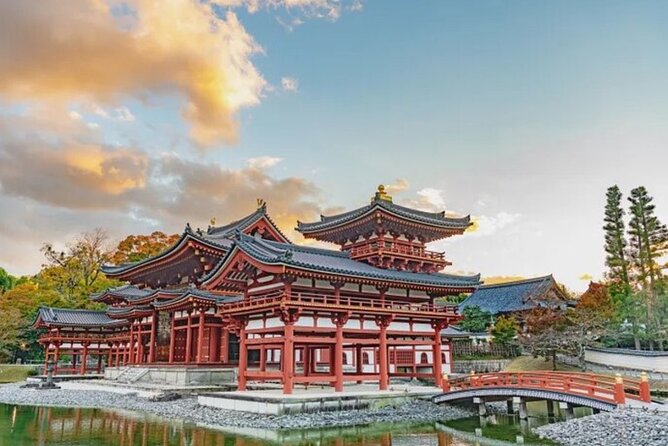
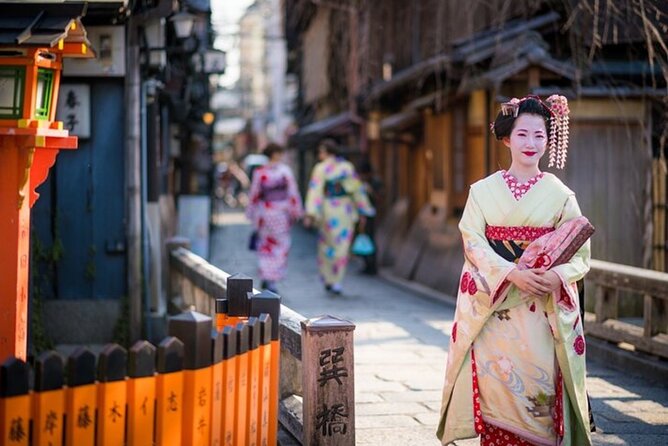
Gion is Kyoto’s well-known geisha district, with narrow lanes that can feel confusing to a first-time visitor. A guide is useful here not because the streets are impossible, but because the atmosphere rewards a slower and more respectful look.
The planned hour gives you time to walk through the district and notice its traditional streetscape. Your guide can help you understand what you are seeing and keep the visit focused rather than turning it into an aimless stroll.
The important practical point is courtesy. Gion is a living district, not just a backdrop for photographs. Follow your guide’s advice, avoid blocking narrow lanes, and do not treat residents or performers as props. The tour’s guided format helps you approach the area with more care.
Kiyomizu-dera and its hillside setting
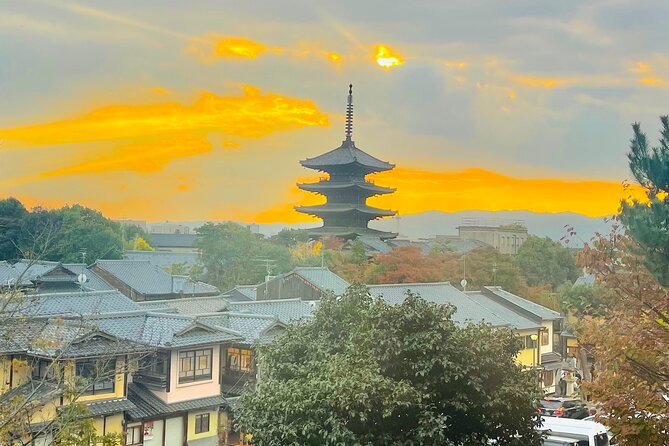
Kiyomizu-dera is among Kyoto’s most popular temples, and the planned visit lasts about an hour. The temple grounds provide a strong contrast with the market streets and city roads earlier in the day.
A guide can explain elements of Japanese life and religious practice as you move through the site. Hamza, in particular, has been praised for explaining local culture and for making the day engaging for families with children, including a group with two 11-year-olds.
Admission is not included. You should also expect walking at this stop, since a vehicle can bring you to the area but cannot replace time on foot through the temple grounds and surrounding streets. If anyone in your group tires easily, tell the guide so the pace can be adjusted.
Fushimi Inari: choose how far you want to walk
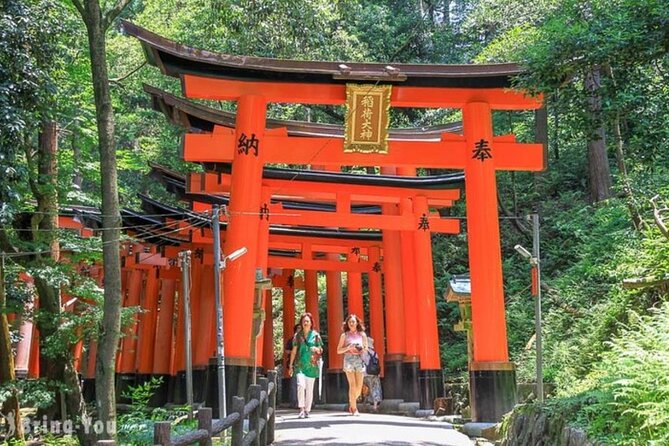
Fushimi Inari-taisha is the final listed stop, with about an hour planned for the visit. Its approach through rows of torii gates is one of Kyoto’s most recognizable scenes, and even a short visit can give you a sense of the shrine’s scale.
One hour is not enough to walk the entire mountain route. That is not a flaw if you know it in advance. You can use the time for the lower section and decide with your guide how far your group wants to go before turning back.
The shrine has no admission charge listed. Because the visit involves walking and some uphill sections may be part of your chosen route, wear shoes you can use comfortably for an hour. The guide can help you make a sensible choice based on the group’s energy and the rest of the day.
How the flexible schedule works in practice
The listed stops add up to nearly eight hours before driving time. That explains the advertised 8 to 10-hour duration, but it also shows why you cannot treat every stop as a guaranteed full-length visit with long meal breaks.
The strongest use of this tour is to choose your priorities. You may want all seven stops, but the day will feel more relaxed if you accept that some visits will be brief. Another approach is to skip one or two places and spend longer at the sights that matter most to you.
The guides have shown flexibility in useful, ordinary ways. Malik adjusted the pace and plan to suit a group. Nomi stopped for breakfast, snacks, and extra cash. Hamza helped a family find a vegetarian-friendly restaurant and worked well with young children.
That kind of help is more valuable than a fixed script. Before pickup, decide which three places you most want to see. Then use the remaining time for extras if traffic, meals, and walking allow.
The guides and the personal feel of the day
The named guides connected with this experience include Hamza, Malik, Shah, Ali, Nomi, Nami, and Hanzah. You may not be able to select a specific guide, so treat the individual names as examples of the provider’s guide team rather than a promise of assignment.
The strongest pattern is personal care. Hamza is described as kind, patient, communicative, and attentive to families. Malik is noted for a friendly manner, flexible planning, patient service, and safe navigation through traffic. Ali has been praised for arriving on time, speaking English and Japanese, driving safely, and explaining local sights.
Nami is noted for clear English explanations and storytelling that kept children interested. Another guide, Hanzah, has been praised for useful advice, a comfortable car, and a convenient guiding style.
These details tell you what to ask for. If you have children, dietary needs, limited time, or a strong interest in cultural explanations, mention those points when booking or in your pre-tour communication.
Is $475 good value for your group?
At $475 per group of up to six, the math changes with group size. Six people pay about $79 each before any attraction admission. Four people pay about $119 each, while two people pay about $238 each.
For a full group, the price can make sense. You are paying for a private vehicle, a dedicated guide, hotel pickup, and the ability to shape the day. You also avoid paying for several separate taxis or losing time on confusing connections.
For one or two people, public transport will almost certainly cost less, though it will not offer the same door-to-door ease or private attention. You are paying for time, comfort, and planning help rather than just transport.
Add admission charges at Kinkaku-ji, Nijo Castle, and Kiyomizu-dera. Food is also not stated as included. Ask about the day’s exact plan so you understand what the $475 covers before you compare it with other options.
Who should book this Kyoto tour?
I would recommend this experience most strongly to a family, a group of friends, or anyone with only one full day in Kyoto. It is also a good fit if you dislike navigating unfamiliar bus systems or want a guide to handle the movement between distant districts.
Families get a clear benefit from private travel. You can pause for breakfast, snacks, cash, or a child’s needs without asking a group to wait. The guide can also adjust the pace, as shown by the family-focused experiences with Hamza and Nami.
It is less attractive for solo visitors and couples on a tight budget. You may prefer to use Kyoto’s public transport and spend more time at fewer places. The tour also may not suit you if you want long, unhurried visits at every stop, since the full list requires careful time management.
Most people can participate, according to the tour information, but the day includes walking at temples, a market, Gion, and Fushimi Inari. Tell the provider about any mobility concerns before booking so expectations are clear.
Booking details worth knowing
The tour starts at 8 am, and pickup is offered. Confirmation arrives when you book, and the experience uses a mobile ticket.
Free cancellation is available if you cancel at least 24 hours before the local start time. Cancellations or changes made inside that window are not accepted for a refund.
The experience has a 5 out of 5 rating from 13 reviews, with 100 percent recommending it. That is a small sample, so I would treat it as encouraging rather than proof that every day will be perfect. The practical strengths are clear: private transport, responsive guides, and a schedule that can bend around your group.
Should you book it?
Book this tour if you want to cover a lot of Kyoto in one day and value a private car more than the lowest possible price. It is especially useful for up to six people, families with children, and anyone who wants help with meals, pacing, and local navigation.
Skip it if you are traveling alone or as a couple on a strict budget, or if you prefer to explore Kyoto slowly by train, subway, and bus. For the best result, choose your top three sights in advance, ask about admission costs, and tell the guide about food needs and family requirements.
Used that way, the tour gives you a practical first look at Kyoto’s major sights without making you solve the city’s transport puzzle yourself.
FAQ
Where does the Kyoto private tour take place?
The tour takes place in Kyoto, Japan, with pickup offered from your hotel.
What time does the tour start?
The stated start time is 8 am.
How long does the tour last?
The tour lasts approximately 8 to 10 hours.
How many people can join the private tour?
Up to six people can participate in one group.
Which places can the tour visit?
The listed stops are Arashiyama Bamboo Forest, Kinkaku-ji Temple, Nijo Castle, Nishiki Market, Gion, Kiyomizu-dera Temple, and Fushimi Inari-taisha Shrine.
Are all seven stops guaranteed?
The tour is customized, and the listed places are potential stops. Your guide can help shape the selection and pacing for your group.
Are entrance tickets included?
Admission is not included for Kinkaku-ji, Nijo Castle, or Kiyomizu-dera. Arashiyama Bamboo Forest, Nishiki Market, Gion, and Fushimi Inari-taisha Shrine are listed with free admission.
Is transportation provided?
Yes. The tour uses a private vehicle and offers hotel pickup, helping you avoid Kyoto’s public transport network.
Is this a shared tour?
No. It is a private activity, so only your group participates.
Can I cancel for a full refund?
Yes, if you cancel at least 24 hours before the experience start time. Cancellations and changes made less than 24 hours before the local start time are not accepted for a refund.
Just added around Kyoto
- Kyoto: Zen Meditation at a Private Temple with a Monk★ 5.0 · 25 reviews
- Kyoto: Gion Geisha District & Sake-in-Hand Walking Tour★ 5.0 · 37 reviews
- Private Pewter Sake Cup Experience with a Kyoto Artisan★ 5.0 · 31 reviews
- Your Private Vacation Photography Session In Kyoto★ 5.0 · 110 reviews
- Private Guided Traditional Buddhist Cooking in Japan★ 5.0 · 16 reviews
- Kyoto Wagashi(Japanese sweets) Cooking Class near Fushimiinari★ 5.0 · 60 reviews
- Traditional Japanese Music show & Experience Tour in Kyoto★ 5.0 · 57 reviews
- Kyoto:Family-Friendly Kimono & Yukata Experience at WARGO★ 5.0 · 147 reviews
Kyoto Tours, compared.


Fushimi Inari, Kinkakuji, Bamboo Grove 1 Day Bus Tour
Read our review →
Tea Ceremony in a Traditional Tea House in Kiyomizu
Read our review →
Kyoto Geisha Walking Tour: Gion District & Hidden Gems
Read our review →

Gion Magical Night Walking Tour with Geisha Trivia
Read our review →
