Reviewed · KYOTO TOURS
Kyoto: Private Highlights Tour with Guide and Luxury Vehicle
Kyoto’s greatest challenge is not finding beautiful places. It’s fitting them together. This 10-hour private tour handles the long hops between Arashiyama, northern Kyoto, Fushimi, and the old eastern lanes in one day, with a guide and vehicle at your disposal.
I like the flexible schedule, which lets you favor bamboo, temples, food, or photo stops instead of following a rigid group route. I also like the pickup from Kyoto, Osaka, or Nara, a real help if Kyoto is only a day trip. The catch is simple: this is a very full day, and several stops require substantial walking after the vehicle drops you near the sightseeing area.
Key points
- A full Kyoto circuit in one day: Arashiyama, Kinkaku-ji, Fushimi Inari, Kiyomizu-dera, Gion, Nishiki Market, and other major stops can fit into one private route.
- Pickup beyond Kyoto: Hotel, Airbnb, or accommodation pickup is available in Kyoto, Osaka, and Nara.
- A guide who can adjust the plan: Guides including Sam, Yash, Hashan, Malik, Isuru, and others have been praised for changing the order, timing, and stops around each group.
- Comfort between crowded sights: The air-conditioned private vehicle includes onboard Wi-Fi and gives families a place to rest between temples.
- Good value for a group: The listed price is $383 for up to six people, before food and admission fees.
- Bring cash and good shoes: Some temple tickets may not accept cards, and the walking around Arashiyama, Gion, and Kiyomizu-dera adds up quickly.
Why a private vehicle helps in Kyoto
Kyoto’s sights are spread across the city. Arashiyama is in the west, Kinkaku-ji is farther north, Fushimi Inari is in the south, and Kiyomizu-dera and Gion sit on the eastern side. Public transport can reach all of them, but not in a neat loop.
A private vehicle turns those awkward connections into short rides. You are picked up at your accommodation, hotel, or Airbnb, then returned to Kyoto, Osaka, or Nara at the end. That makes this especially useful if you are staying outside Kyoto or trying to see the city on a day trip from Osaka.
The vehicle is air-conditioned and described as a luxury vehicle, with Wi-Fi onboard. The practical benefit matters more than the label. You can sit down between stops, warm up on a snowy day, dry out if rain arrives, or give tired children a quiet break.
The group limit is six people. For a couple, the price is not cheap compared with trains and buses. For five or six people, though, $383 works out to about $64 per person before entry fees and meals. Add the time saved, door-to-door pickup, and freedom to alter the route, and the price becomes easier to justify.
A few more Kyoto half-days to weigh up
- PERFECT KYOTO 1-Day Bus Tour
★ 5.0 · 13,518 reviews - Kyoto: Fushimi Inari, Kinkakuji, Bamboo Grove 1 Day Bus Tour
★ 4.8 · 4,316 reviews - Kyoto: Tea Ceremony in a Traditional Tea House in Kiyomizu
★ 4.9 · 3,519 reviews
Arashiyama starts the day with bamboo and hillside views
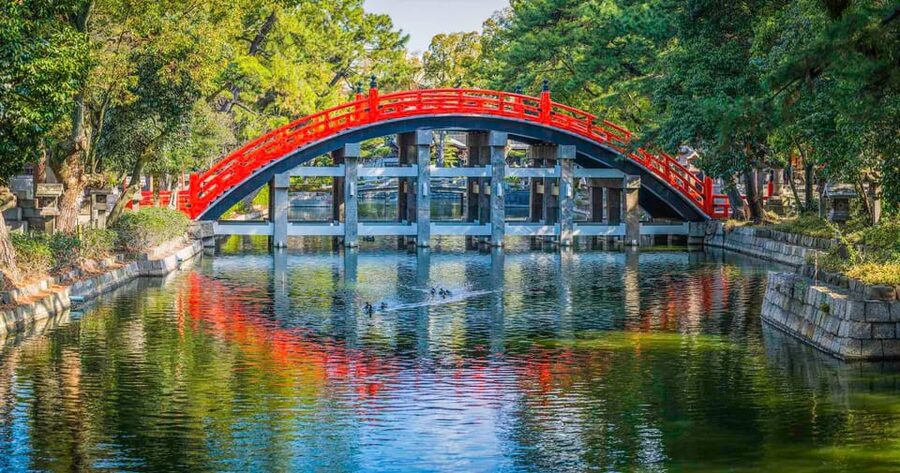
Arashiyama is usually the most scenic opening to the day. The area brings together river views, wooded hills, old temples, and several popular photo spots.
The Sagano Bamboo Forest is the headline stop. You walk beneath tall bamboo stalks along a short path, with the green stems rising high above you. The scheduled photo stop is about 40 minutes, enough to see the main section without spending the entire morning there.
Go in knowing that the bamboo path is not a quiet wilderness walk. It is one of Kyoto’s best-known sights, so the experience depends heavily on timing and crowd levels. A flexible guide can help place it early or adjust the order when conditions change.
The wider Arashiyama visit is listed at about an hour and can include the historic Tenryu-ji Temple, its garden, Togetsu-kyo Bridge, and Monkey Park Iwatayama. Tenryu-ji is a good counterpoint to the bamboo. Its garden uses pond, rock, trees, and mountain views in a classic Japanese design.
Togetsu-kyo Bridge gives you a broad view across the river and toward the hills. Monkey Park is different again, but it requires a climb up the hillside. If your legs are limited, tell the guide before committing to it. The same applies to any plan that tries to include every Arashiyama stop.
The Kimono Forest, near the train station, adds a quick burst of color. Its pillars are wrapped in patterned kimono fabric, making it a handy photo stop rather than a major historical visit.
Kinkaku-ji delivers Kyoto’s famous reflection
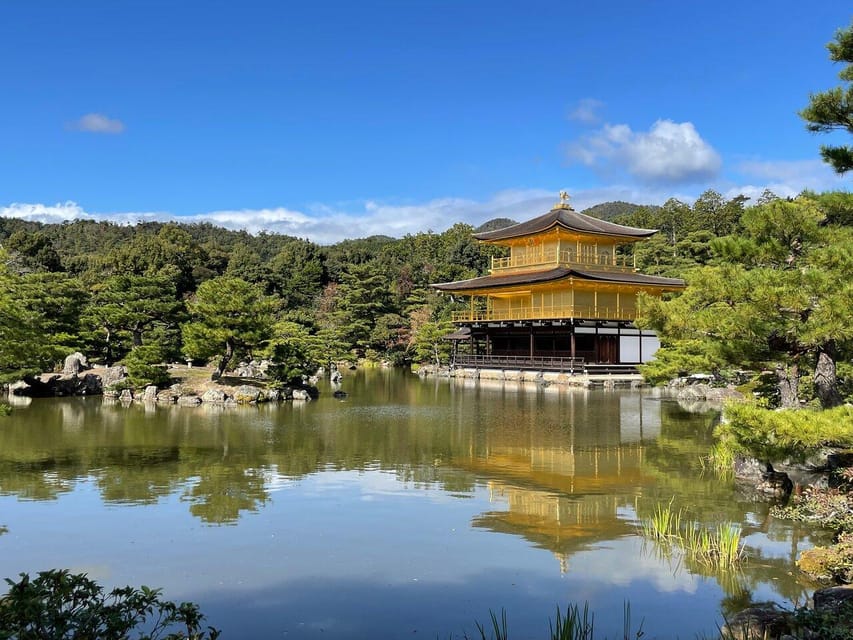
Kinkaku-ji, the Golden Pavilion, is one of Kyoto’s essential sights. The gold-covered upper floors reflect in a pond surrounded by carefully arranged gardens, creating the picture most people carry in their minds before arriving.
Your visit is mainly a walk through the temple grounds and garden. The pavilion itself is viewed from outside, so allow your time for the setting, the pond, and the changing angles along the path.
This stop is beautiful but not leisurely in the same way as a quiet garden. The route is directed, and the grounds can feel crowded. A private guide cannot remove the crowds, but can explain what you are seeing and help keep the day moving.
Admission is not included. Bring cash, since the tour information warns that some temple ticket counters may not accept cards. It is a small point, but missing cash can slow down an otherwise smooth day.
The route may include Ginkaku-ji and Sanjusangen-do
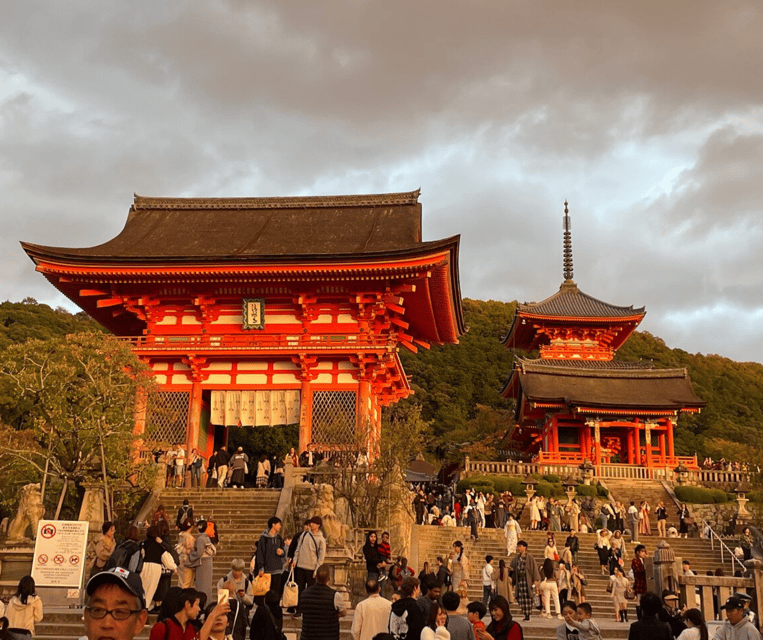
The planned route also lists Ginkaku-ji Temple and Sanjusangen-do, each with about an hour for guided sightseeing. Because the tour is adjustable, the exact balance depends on your interests, traffic, and how long you spend at earlier stops.
Ginkaku-ji, often called the Silver Pavilion, offers a different mood from Kinkaku-ji. Its appeal is tied to its garden, moss, paths, and restrained design rather than a shining exterior. If you prefer gardens and quieter visual details to famous photo icons, make this preference clear when planning the day.
Sanjusangen-do is known for its long wooden hall and rows of Buddhist statues. It provides an indoor temple visit that breaks up the open-air walking at shrines and gardens.
The supplied route names both temples, but the general description also lists Monkey Park and Kimono Forest. You should confirm your preferred stops with the guide at the start. Ten hours sounds long, but Kyoto’s distances, traffic, admission lines, and walking paths make it impossible to linger everywhere.
Same base, a completely different sort of day:
- Kyoto Geisha Walking Tour: Gion District & Hidden Gems
★ 4.7 · 3,273 reviews - Kyoto: Tea Ceremony Ju-An at Jotokuji Temple
★ 4.9 · 3,207 reviews - Kyoto: Gion Magical Night Walking Tour with Geisha Trivia
★ 4.9 · 2,393 reviews - Kyoto: 45-Minute Tea Ceremony Lesson Experience
★ 4.3 · 2,378 reviews
Kiyomizu-dera and the old eastern streets
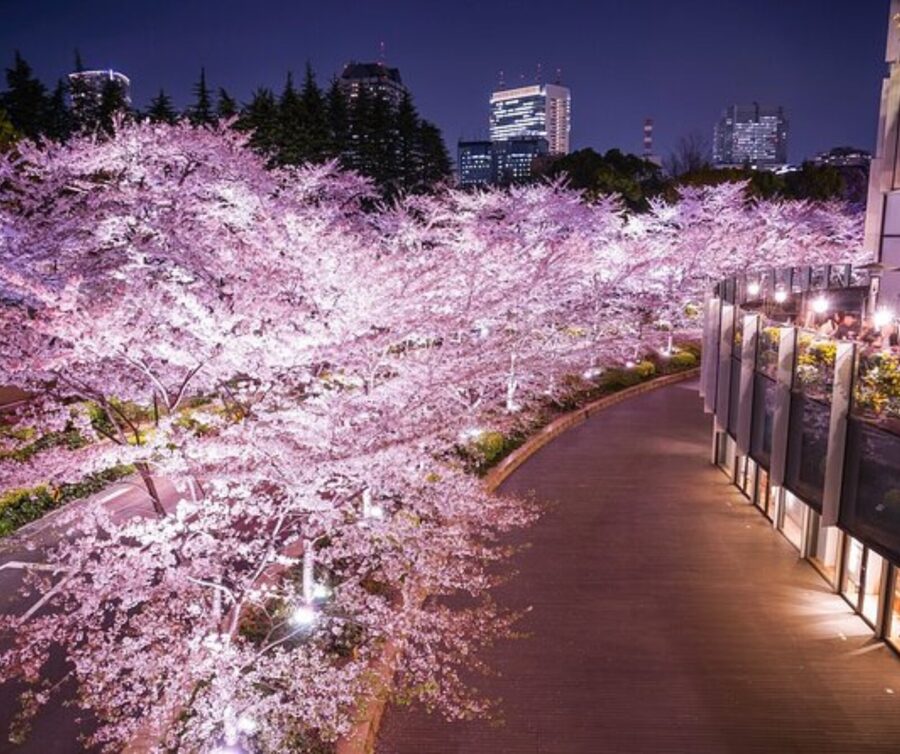
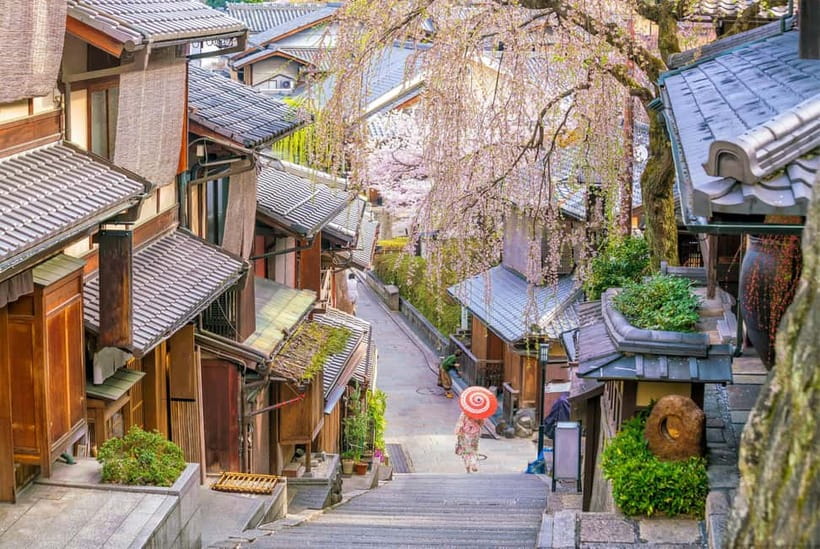
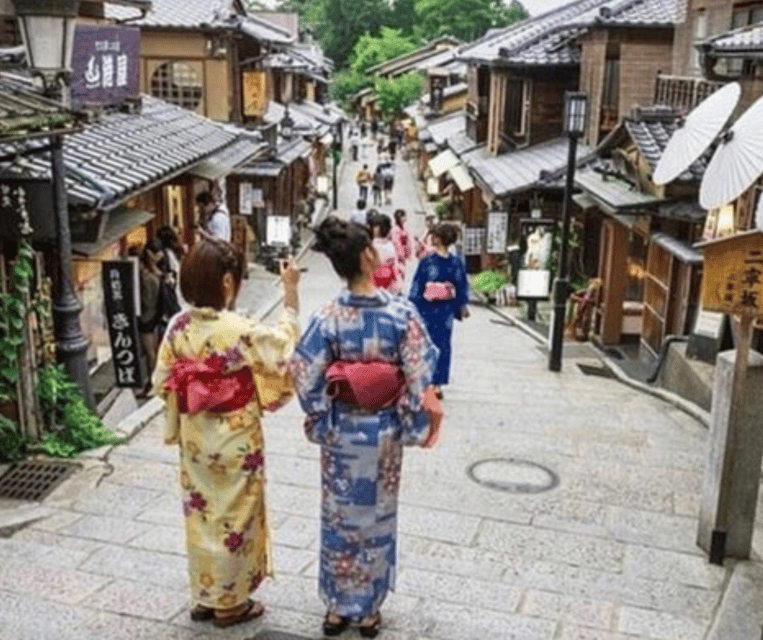
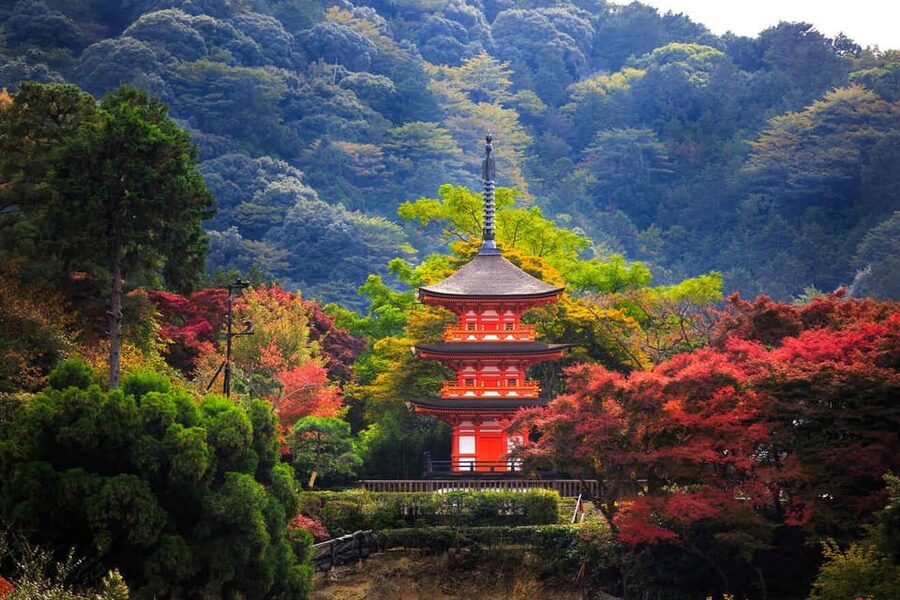
Kiyomizu-dera is one of the day’s most rewarding stops. The temple’s wooden stage looks over Kyoto, and the approach leads through the traditional lanes of Ninenzaka and Sannenzaka.
These streets are lined with shops, tea houses, and local food counters. They are attractive, but they are also one of the tour’s more demanding walking sections. The stone lanes and slopes can tire you out, especially after Arashiyama and several temple grounds.
The vehicle cannot take you directly through every lane or to the temple’s wooden stage. That is an important point for anyone choosing this tour because of mobility concerns. The activity is wheelchair accessible, but the exact route and walking distance still need to be discussed with the operator before the day begins.
I would plan a proper pause around this part of the tour. A coffee, snack, or slower walk may be more valuable than forcing in another minor stop. The itinerary allows lunch at a restaurant of your choice or at Nishiki Market, but you can also ask for a short rest when needed.
Gion brings old Kyoto into focus
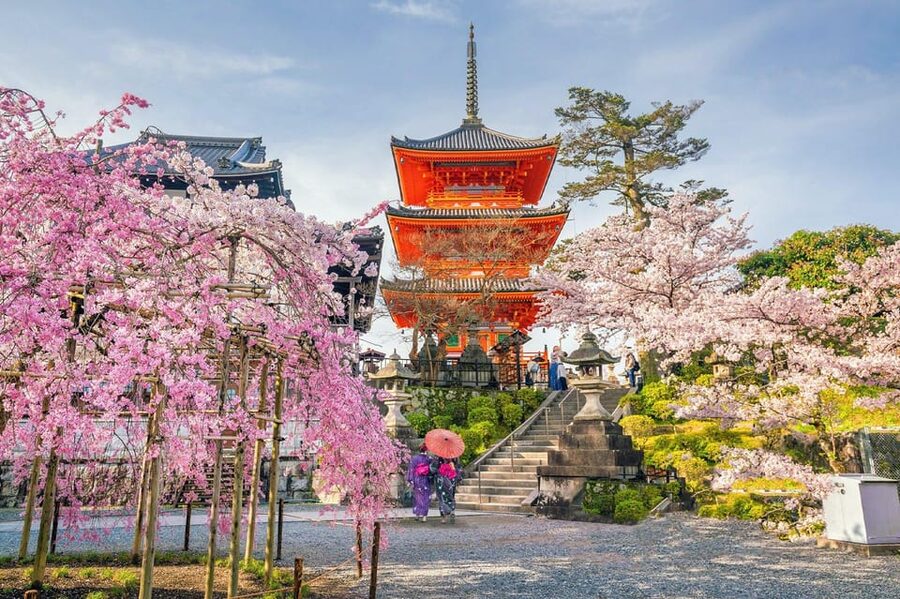
Gion is the district most closely associated with traditional teahouses and geisha culture. Its narrow streets and wooden buildings offer a glimpse of old Kyoto, though the area is not a museum. It is a working neighborhood, so respectful behavior matters.
A guide can provide useful context here, especially if this is your first visit to Japan. Keep your camera ready, but do not block lanes or photograph people without permission. The best part of Gion is often the atmosphere of the streets rather than a single ticketed sight.
Gion is another place where the car gets you close, but your feet do the rest. If you have spent the day walking through Arashiyama, Kinkaku-ji, and Kiyomizu-dera, this may be the point when the full schedule catches up with you.
Fushimi Inari ends with thousands of torii gates
Fushimi Inari Taisha is one of Kyoto’s most recognizable shrines. Its bright red torii gates form corridors up the sacred mountain, creating a powerful visual experience even if you do not walk the entire route.
The listed visit lasts about an hour. That is enough to enter the shrine, pass through the lower torii tunnels, and get a sense of the site. It is not enough for a full mountain hike, so set realistic expectations.
The shrine is open-air and includes steps and slopes. Comfortable shoes are essential. The guide can help you decide how far to walk based on your energy and available time.
Ending here can work well because the shrine feels different from Kyoto’s temples and shopping lanes. It gives the day a strong final image, though the exact order may change to avoid traffic or crowded periods.
Lunch at Nishiki Market needs a plan
Nishiki Market is a useful lunch option because it gives you many choices in one compact area. You can look for local specialties, snacks, and international food rather than being locked into one restaurant.
The tradeoff is that a market visit can easily eat up more than an hour. If you want a sit-down lunch, tell the guide. If you prefer to sample several foods, allow time for browsing and queues.
Food and drinks are not included in the $383 price. This is also a good place to carry cash, though payment methods vary by vendor. Dietary needs should be raised early. One guide, Jon, helped arrange a vegan restaurant, and another guide called a restaurant ahead for a group facing a language barrier. Those examples point to the most useful role of the guide: not just driving, but helping remove small problems that can cost time.
How flexible is the schedule?
The tour is marketed as customizable, and that flexibility is one of its strongest features. You can prioritize temples, gardens, markets, photo locations, family needs, or particular districts.
Several guides have been praised for rearranging stops around traffic, weather, crowds, and changing requests. Yash, Sam, Hashan, Malik, Isuru, and others are named in the feedback, with repeated praise for punctual pickups, clear communication, careful driving, and patience with children.
Still, flexibility does not mean unlimited time. One group noted that the day finished around 5 p.m., and another advised planning each stop carefully so the final hours do not become rushed. You should choose your top three priorities before pickup, then treat the remaining stops as optional.
A later start may be possible, which helped one family during the New Year period. Ask about your preferred starting time when booking, since the available start depends on the date.
The guide style and what to expect
The guide is also the driver, rather than a separate specialist for every temple. Expect explanations about history, culture, and architecture, plus directions through the grounds and help with photos.
The quality of the day depends partly on your assigned guide. The feedback names many different guides, including Sam, Yash, Bagas, Shan, Dhanu, Ali, Suny, Ravi, Narayan, Isuru, Malik, Hashan, and others. English is offered, along with Japanese, Hindi, and Urdu.
The most consistent strengths are courtesy, punctuality, safe driving, and a willingness to adjust the plan. Some guides also take photos at good viewpoints. The service is not described as including bottled water or extra vehicle amenities, so bring your own water, snacks, and umbrella if rain is possible.
What the $383 price really buys
At $383 per group of up to six, the tour is best judged as a private transport and planning service rather than a cheap sightseeing ticket.
You pay extra for the vehicle, pickup in three cities, route flexibility, and a guide who can respond to real conditions. Entry tickets, food, and drinks are separate. That means the final cost will be higher than the advertised base price.
For a large family or group, the math is favorable. For one or two people, train travel and self-guided visits will cost less, though they require more planning and transfers. The private option also gives you a place to rest, which can matter on a packed temple day.
The 4.6 rating from 316 reviews and the 89 percent perfect transport score point to a strong record, but you should still book this with the right expectation: you are choosing efficiency and convenience over a slow, single-neighborhood experience.
Who should book this Kyoto tour?
I would choose this tour if you have only one day in Kyoto, are based in Osaka or Nara, or are traveling with children who need breaks between sights.
It also suits families and groups with different interests. One person can prioritize temples, another can ask for markets or photography, and the guide can help balance the day.
I would hesitate if you want long, quiet visits at every temple. The route covers a lot of ground, and the walking is real. If you have mobility limitations, discuss the precise stop-by-stop route before booking rather than assuming private transport removes all walking.
Book it if your goal is to see Kyoto’s major sights efficiently. Skip it if you prefer exploring one district slowly and using public transport as part of the experience.
FAQ
How long is the private Kyoto tour?
The tour lasts 10 hours. Starting times depend on availability, and some groups have used a later start.
How many people can join the private group?
The price covers a private group of up to six people.
Where can pickup and drop-off take place?
Pickup and drop-off are available in Kyoto, Osaka, and Nara, including accommodation, hotels, and Airbnbs.
Is transportation included?
Yes. Private transportation in an air-conditioned vehicle is included, along with onboard Wi-Fi.
Is an English-speaking guide provided?
Yes. Live guiding is available in English, Japanese, Hindi, and Urdu.
Are temple admission tickets included?
No. Entry tickets are not included. Bring some cash because certain temple ticket counters may not accept cards.
Are meals and drinks included?
No. Food and drinks are separate. Lunch can be taken at a restaurant or at Nishiki Market.
Is the tour wheelchair accessible?
Yes, the activity is listed as wheelchair accessible. Since several sites involve walking, slopes, or steps, confirm the exact route for your needs before the tour.
What should I bring?
Wear comfortable shoes. Bring an umbrella if rain is expected, and carry cash for temple tickets and possible food purchases.
Just added around Kyoto
- Kyoto: Zen Meditation at a Private Temple with a Monk★ 5.0 · 25 reviews
- Kyoto: Gion Geisha District & Sake-in-Hand Walking Tour★ 5.0 · 37 reviews
- Private Pewter Sake Cup Experience with a Kyoto Artisan★ 5.0 · 31 reviews
- Your Private Vacation Photography Session In Kyoto★ 5.0 · 110 reviews
- Private Guided Traditional Buddhist Cooking in Japan★ 5.0 · 16 reviews
- Kyoto Wagashi(Japanese sweets) Cooking Class near Fushimiinari★ 5.0 · 60 reviews
- Traditional Japanese Music show & Experience Tour in Kyoto★ 5.0 · 57 reviews
- Kyoto:Family-Friendly Kimono & Yukata Experience at WARGO★ 5.0 · 147 reviews
Kyoto Tours, compared.
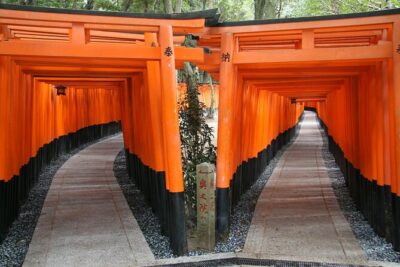
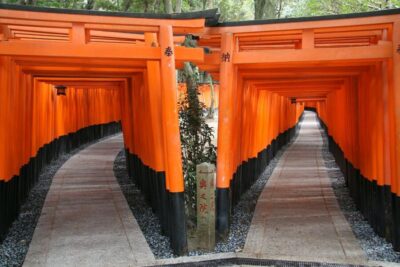
Fushimi Inari, Kinkakuji, Bamboo Grove 1 Day Bus Tour
Read our review →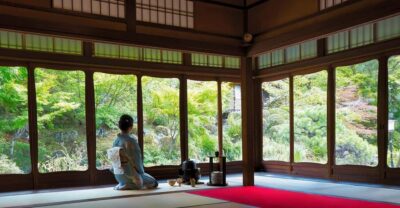
Tea Ceremony in a Traditional Tea House in Kiyomizu
Read our review →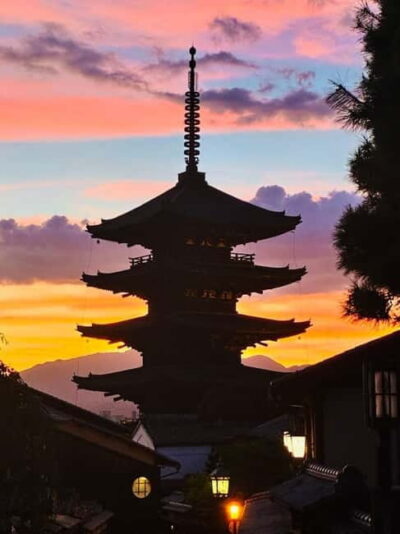
Kyoto Geisha Walking Tour: Gion District & Hidden Gems
Read our review →
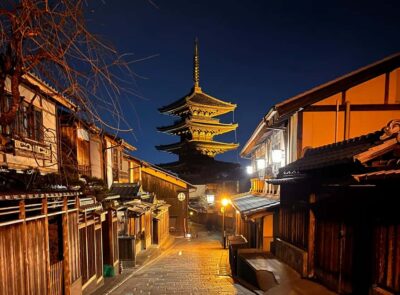
Gion Magical Night Walking Tour with Geisha Trivia
Read our review →