
Reviewed · KYOTO TOURS
Kyoto Private & Personalized Full-Day Tour with a Local Guide
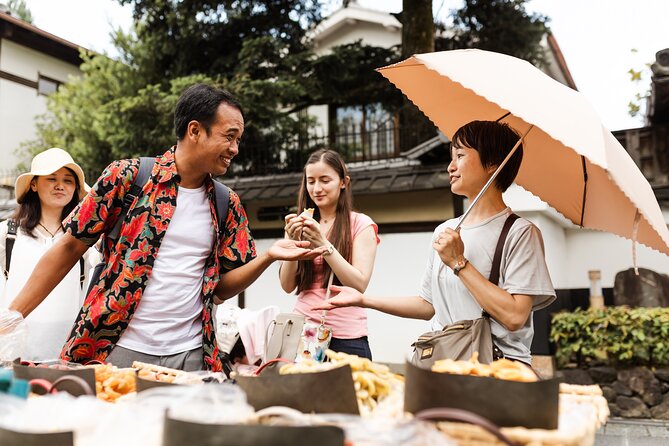
Kyoto is too large and too layered to see well by simply ticking off temples. This private, custom-built day lets you set the pace and choose the parts of the city that matter to you, from famous sights to everyday neighborhoods. Your guide can shape the route around history, food, gardens, photography, or local life.
I like the one-to-one attention, which makes it easier to adjust the day when your feet tire or a place catches your interest. I also like the practical local help: guides such as Alex, Eko, Vanessa, Oussama, and Taibi have been praised for navigation, timing, photography help, and adapting to different interests.
The catch is cost and clarity. At $253.22 per person, this is a serious splurge, and admission tickets, meals, and transportation are extra. Confirm exactly how your guide’s transportation costs will be handled before you go.
Key points at a glance
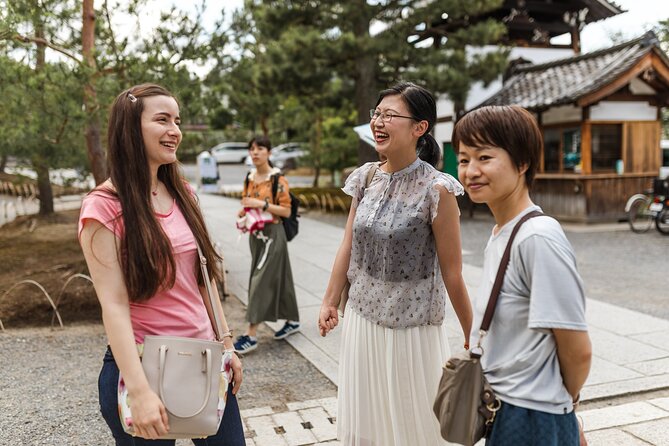
- Eight private hours: Your group has the guide to itself, with no strangers shaping the schedule.
- A route built around you: A pre-tour questionnaire helps your guide plan for temples, food, history, gardens, or less-known areas.
- Walking is the main event: You reach streets and corners that a vehicle cannot, though public transport or taxis may be needed between distant sights.
- Classic Kyoto is possible: Kinkaku-ji, Kiyomizu-dera, Higashiyama, Kyoto Station, and Kitano Tenmangu can all fit into a tailored plan, depending on pace.
- Strong guide feedback: Alex, Eko, Vanessa, Oussama, Taibi, and others have earned praise for friendliness, flexibility, navigation, and local insight.
- Extra costs need planning: Food, drinks, entrance fees, and transportation are not included.
What this private Kyoto tour really offers
This is not a fixed sightseeing circuit with a guide leading a large group from one stop to the next. It is an eight-hour private walking experience with a flexible starting time and a route shaped after booking.
That distinction matters in Kyoto. The city’s major sights are spread out, and each has a different feel. Kinkaku-ji is far from Kiyomizu-dera. Higashiyama’s narrow slopes are best explored on foot, while longer transfers may call for a train, bus, or taxi. A private guide can help you spend more time on what interests you and less time on places you would otherwise visit only because they appear on a standard checklist.
You will meet at the Starbucks Coffee by Sanjo-ohashi Bridge in central Kyoto. The tour ends back at the meeting point. Hotel pickup may be discussed, but the experience information makes clear that the private vehicle is not included, so you should settle any pickup and transportation details with your host before the day.
The price is $253.22 per person. That can be good value for a couple, family, or small group that wants a full day of personal attention and efficient planning. It is harder to justify if you are happy using guidebooks, buses, and temple signs on your own. Group discounts may be available, so check the final price for your party rather than assuming the per-person figure is fixed.
A few more Kyoto half-days to weigh up
- 5 Top Highlights of Kyoto Full Day Bike Tour (E-bike option)
★ 5.0 · 511 reviews - Full Day Biking Tour Exploring the Best of Kyoto
★ 5.0 · 498 reviews - Full Day Guided Tour to Kyoto and Nara from Osaka by Van
★ 5.0 · 420 reviews
Start with your own Kyoto priorities
After booking, you receive a short questionnaire. Use it properly. Do not simply write temples and leave it at that. Tell your guide if you care most about architecture, Buddhist practice, gardens, food, photography, shopping, local neighborhoods, or a gentle walking pace.
You can also list must-see places and sights you have already visited. A first-time visitor with only a short stay might ask for a broad introduction to Kyoto. Someone returning to the city might prefer smaller streets, markets, or a closer look at daily life.
The guide contacts you directly to discuss the plan and offer suggestions. This advance conversation is one of the most useful parts of the experience because it helps prevent an overloaded day. Kyoto rewards a sensible route, and a local can tell you when a wish list is simply too long for eight hours.
The strongest praise has centered on guides who read the group well. Alex has been described as friendly and helpful for a first visit. Eko has been praised for patient planning and handling public transportation. Vanessa was valued for giving meaning to gardens and temples, while Oussama adjusted the pace and helped with photographs. Taibi brought more than two decades of life in Japan to the day.
Those examples do not guarantee which guide you will receive. They do show what to ask for: a guide who explains culture, keeps the route realistic, and listens instead of reciting a memorized script.
Kyoto Station and the city from above
Kyoto Station may be included as an opening or connecting stop, especially if you want an introduction to modern Kyoto. Its bold architecture, rooftop gardens, and city views offer a sharp contrast to the wooden lanes and temple compounds elsewhere.
This is a sensible first stop for travelers who want to understand the city’s layout. It is also practical if your interests include architecture, urban design, or photography. The drawback is that station time uses part of your day, and you may prefer to spend those hours at temples or in old neighborhoods.
Your guide can help decide if it belongs in the plan. If you have already seen Kyoto Station or are focused on historic sites, skip it. If you want a clear visual starting point, it gives you a useful change of pace.
Kitano Tenmangu and Kyoto’s scholarly shrine
Kitano Tenmangu is dedicated to Sugawara no Michizane, a scholar and court official honored as a patron of learning. The shrine is especially known for plum blossoms in late winter and its lively monthly market.
This stop suits you if you enjoy shrine traditions, seasonal flowers, or local shopping. It is less essential for someone whose main goal is to see Kyoto’s most famous temple buildings in a single day.
Ask your guide about the shrine’s connection to study and its seasonal calendar. The monthly market can add a more everyday feel to the visit, but the exact atmosphere depends on the date of your tour. Plum blossoms are also seasonal, so do not book this stop expecting flowers outside late winter.
Same base, a completely different sort of day:
- PERFECT KYOTO 1-Day Bus Tour
★ 5.0 · 13,518 reviews - Kyoto: Fushimi Inari, Kinkakuji, Bamboo Grove 1 Day Bus Tour
★ 4.8 · 4,316 reviews - Kyoto: Tea Ceremony in a Traditional Tea House in Kiyomizu
★ 4.9 · 3,519 reviews - Kyoto Geisha Walking Tour: Gion District & Hidden Gems
★ 4.7 · 3,273 reviews
Kinkaku-ji, Kyoto’s gold-leaf icon
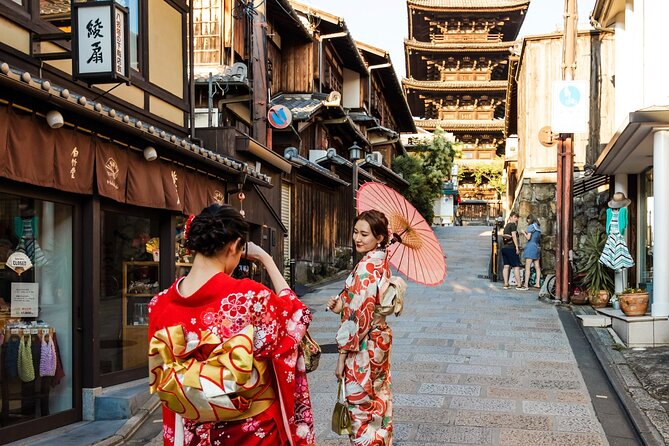
Kinkaku-ji, the Golden Pavilion, is one of Kyoto’s essential sights. Once a shogun’s villa, it became a Zen temple in the 1400s and is now a UNESCO World Heritage Site.
The pavilion’s gold-leaf exterior reflects in the pond, making this a quick but powerful stop. You follow a set viewing route rather than wandering freely through the grounds, so your guide’s explanations can add context to what you see.
The main weakness is that Kinkaku-ji is not close to the central meeting point or Higashiyama. Reaching it may require public transportation or a taxi, and those costs are extra. It can also consume a good part of the day once transfers and walking are counted.
Still, it is a strong choice for a first visit. If you have only one day in Kyoto, a private guide can help place Kinkaku-ji alongside other stops without leaving you to work out every connection yourself. Just be realistic: Kinkaku-ji, southern Kyoto, and several long neighborhood walks may be too much at a relaxed pace.
Higashiyama’s sloping lanes
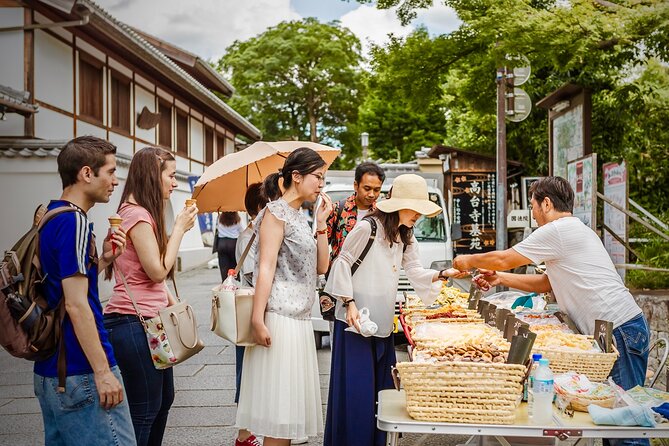
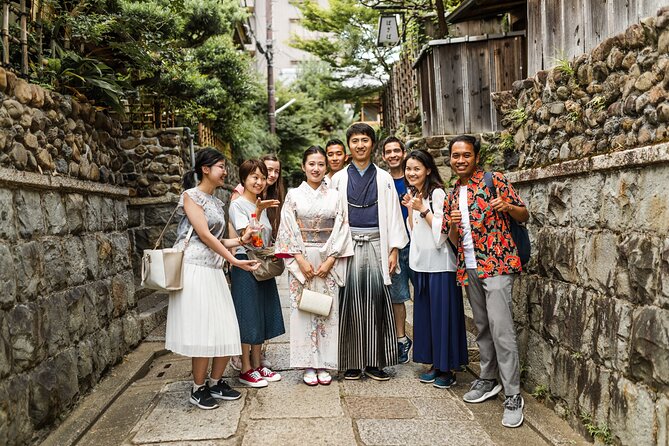
Higashiyama is where the city’s old visual character comes together. Sloping streets lined with wooden townhouses, small shops, cafes, and restaurants lead toward major temples and shrines.
This is one of the best parts of the day for walking. You can pause for a snack, look into traditional shops, and notice how the streets change as they climb. A guide also helps you make sense of the architecture and points out details that are easy to miss when you are focused on navigation.
The area can be tiring. The streets slope, the route may involve a great deal of standing, and popular lanes can feel crowded at busy times. Wear comfortable shoes and tell your guide early if you need regular breaks.
Higashiyama works especially well for you if you want more than temple photographs. It connects buildings, food, craft shops, and ordinary city movement. It is also a good place to ask your guide for restaurant or cafe suggestions, though meals are not part of the tour price.
Kiyomizu-dera and its wide city views
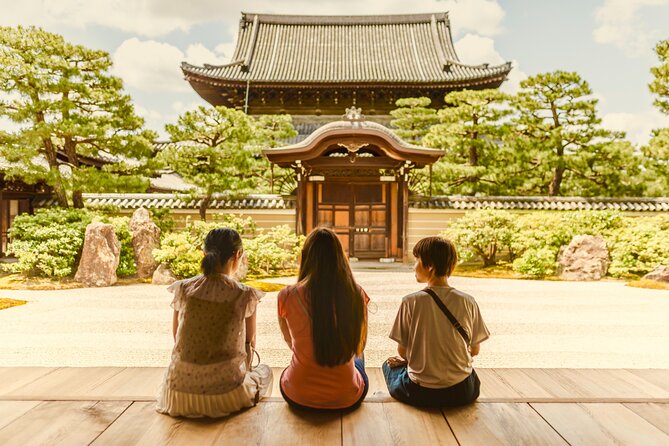
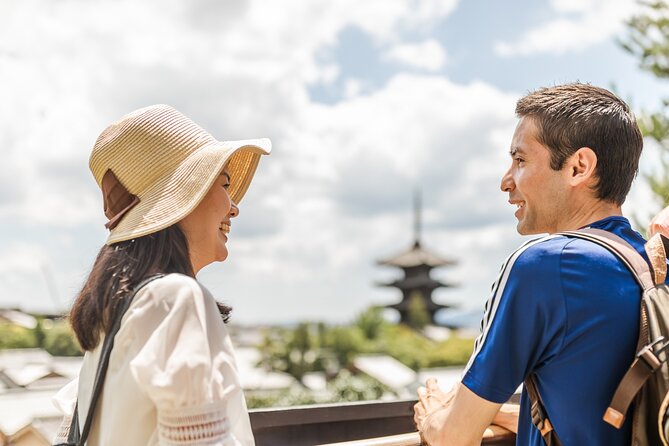
Kiyomizu-dera is often the natural finish to a Higashiyama walk. Its large wooden stage projects over the hillside and gives you broad views across Kyoto. The temple is particularly striking in autumn, when foliage colors the surrounding slopes.
The Otowa Waterfall is another key feature. The streams are associated with different wishes, and your guide can explain the custom and the temple’s religious setting.
This is a memorable final stop because it brings together views, architecture, ritual, and the old streets below. It can also be busy and physically demanding. You may be walking uphill for much of the approach, and the temple grounds take time if you want more than a quick look.
A private guide is useful here because you can choose how long to stay. You might spend more time on the stage and less time at secondary areas, or pause for photographs and explanations. Entrance tickets are not included, so budget separately for admission.
Walking, buses, trains, and taxis
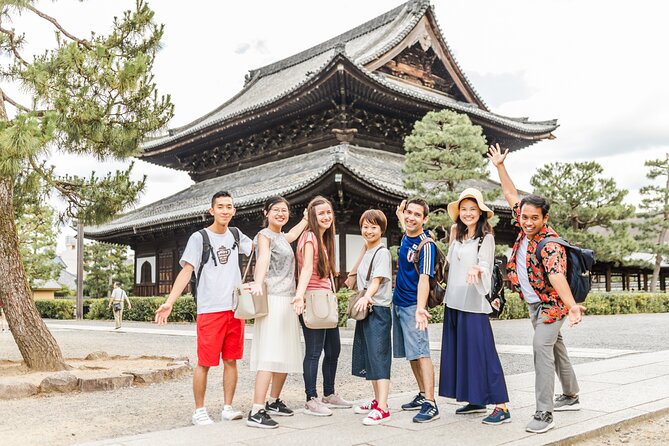
The tour is primarily on foot. That is a strength, not a limitation, if you want to see Kyoto at street level. Walking lets you pass through lanes that buses and cars cannot reach, and it gives your guide room to point out shops, homes, gardens, and small details along the way.
The tradeoff is distance. Kyoto’s famous sights do not sit in one compact cluster. Public transportation or local taxis may be used between sites, with the cost discussed directly with your host after booking.
One guide, Eko, was specifically praised for using public transportation efficiently. Another experience used taxis to cover more ground, but the cost was described as significant. That is the central choice for your day: use buses and trains to control expenses, or pay for taxis to save time and energy.
You should also plan for your guide’s transportation. The tour does not include transportation, and one dissatisfied customer reported unexpected guide transport and meal costs. Even if arrangements differ by host, ask these questions before departure:
- Who pays for the guide’s fares?
- Will you use trains, buses, or taxis?
- Are day passes useful?
- Are guide meals or other daily expenses expected to be covered?
Clear answers protect your budget and prevent an uncomfortable conversation halfway through the day.
What the guide adds to a first visit
A private guide is most valuable when you need judgment, not just facts. You can ask why a shrine matters, how a temple fits into Japanese religious life, or where to eat after the tour. You can also change direction when your interests shift.
The strongest guide experiences have combined historical explanation with ordinary-life advice. Guides have helped with photos, adjusted walking speed, navigated transit, and suggested places that were not on the original wish list.
English ability and communication style can vary by guide. One low-rated experience described difficulty understanding the guide and a day with less historical explanation than expected. That is a useful warning, especially if cultural and historical detail is your main reason for booking.
Use the pre-tour contact to explain what you want from the guide. Ask for temple context if that matters to you. If you mainly want efficient sightseeing and help getting around, say so. The more specific you are, the better the match is likely to be.
Who gets the best value
I would recommend this experience most strongly to a first-time visitor with limited time, a couple wanting privacy, or a family that needs a flexible pace. It is also a good fit if you dislike planning complicated transit routes or want to combine major sights with local recommendations.
It suits a short Kyoto stay particularly well. One guest with only about 48 hours in the city used the day to cover more ground, while another described it as a useful first-day introduction. That makes sense: a guide can help you learn the city’s shape, then you can revisit favorite areas independently.
I would be more cautious if you are traveling on a tight budget. The $253.22 price does not cover food, drinks, admission, or transport. It is also not the best choice if you want a slow, single-neighborhood day unless you specifically tell your guide to keep the route compact.
The experience has a 4.7 rating from 31 reviews, with 94 percent recommending it. That is a strong record, but the lower-rated experience highlights the need to confirm extra charges and expectations in writing.
Booking decision
Book this private Kyoto tour if you want a flexible day built around your interests, and you value a real person handling the route, transit, and cultural background. It can turn a scattered list of temples into a coherent day, especially with a guide such as Alex, Eko, Vanessa, Oussama, or Taibi, though guide assignment is not guaranteed.
Skip it if you prefer independent travel, already know Kyoto well, or need a fully fixed price that includes transport and admissions. Before booking, prepare a short priority list, request a realistic route, and confirm every extra cost. Do that, and this can be a smart way to get your bearings and make one demanding Kyoto day count.
FAQ
How long is the Kyoto private tour?
The experience lasts approximately eight hours.
Is the tour private?
Yes. Only your group participates in the activity.
Where does the tour begin?
It begins at Starbucks Coffee near Kyoto Sanjo-ohashi Bridge, at 113 Nakajimacho, Nakagyo Ward, Kyoto.
Where does the tour end?
The activity ends back at the meeting point.
Can I choose the start time?
Yes. Flexible start times are available when booking.
Is transportation included?
No. This is primarily a walking experience. Public transportation or local taxis may be used between sites, with transportation costs discussed with your host.
Are attraction tickets included?
No. Tickets to attractions, along with food and drinks, are not included.
Can the itinerary be customized?
Yes. After booking, you receive a questionnaire to share your interests, preferences, and must-see places. Your host then helps plan the route.
What is the cancellation policy?
You can cancel for a full refund up to 24 hours before the experience begins. Changes or cancellations made less than 24 hours before the start time are not accepted for a refund.
Just added around Kyoto
- Kyoto: Zen Meditation at a Private Temple with a Monk★ 5.0 · 25 reviews
- Kyoto: Gion Geisha District & Sake-in-Hand Walking Tour★ 5.0 · 37 reviews
- Private Pewter Sake Cup Experience with a Kyoto Artisan★ 5.0 · 31 reviews
- Your Private Vacation Photography Session In Kyoto★ 5.0 · 110 reviews
- Private Guided Traditional Buddhist Cooking in Japan★ 5.0 · 16 reviews
- Kyoto Wagashi(Japanese sweets) Cooking Class near Fushimiinari★ 5.0 · 60 reviews
- Traditional Japanese Music show & Experience Tour in Kyoto★ 5.0 · 57 reviews
- Kyoto:Family-Friendly Kimono & Yukata Experience at WARGO★ 5.0 · 147 reviews
Kyoto Tours, compared.


Fushimi Inari, Kinkakuji, Bamboo Grove 1 Day Bus Tour
Read our review →
Tea Ceremony in a Traditional Tea House in Kiyomizu
Read our review →
Kyoto Geisha Walking Tour: Gion District & Hidden Gems
Read our review →

Gion Magical Night Walking Tour with Geisha Trivia
Read our review →
