
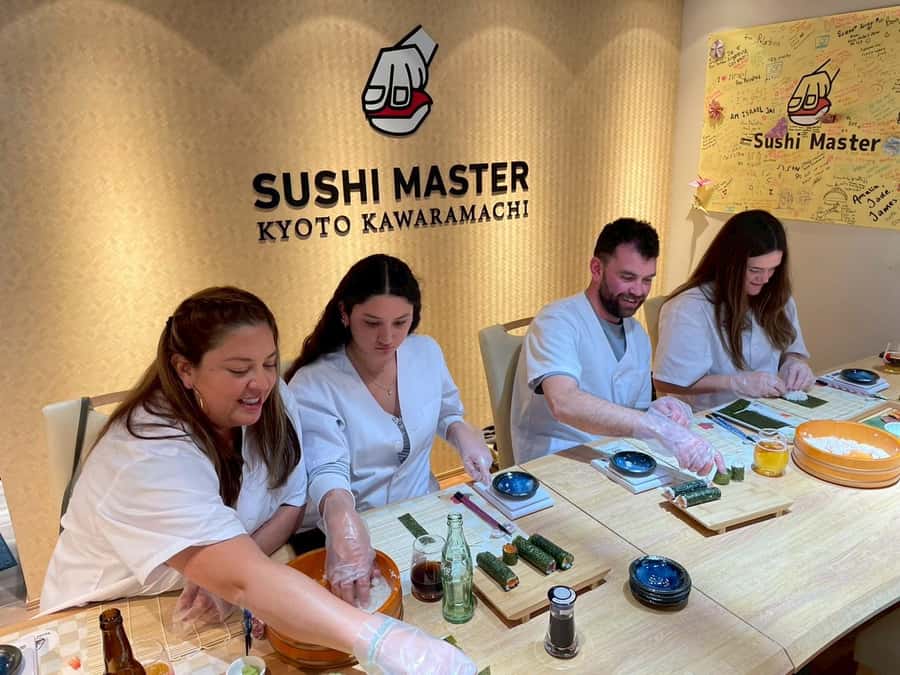
Reviewed · KYOTO TOURS
Kyoto: Sushi Making Experience in Kawaramachi
Making sushi by hand is the real draw here. In a 90-minute class near Kawaramachi, you learn a little about Japanese food culture, shape your own sushi, then sit down to eat what you made. I like the choice between a traditional nigiri course and a round temari sushi course, and I like that the class includes both the meal and a souvenir. The main catch is the narrow dietary policy: shellfish allergies can be accommodated, but vegetarian, vegan, and halal meals are not offered.
I also like the easy location, just five minutes from Hankyu Kyoto-Kawaramachi Station, and the fact that English-speaking staff guide the lesson. At $40 per person, the experience offers more than a restaurant lunch because you get instruction, hands-on practice, food, and a keepsake. Still, drinks cost extra, and the meeting point can vary by the option you book.
Key points
- Two sushi courses: Choose 9 nigiri and 3 gunkan pieces, or 10 temari sushi and 2 gunkan pieces.
- A compact 90-minute plan: The class fits neatly into a day of sightseeing around central Kyoto.
- English-speaking staff: You receive guidance in English throughout the activity.
- Eat what you make: Sushi ingredients and the finished sushi meal are included.
- Central Kawaramachi location: The class is about a five-minute walk from Kyoto Kawaramachi Station.
- Dietary limits matter: Shellfish allergies can be handled, but vegetarian, vegan, and halal options are not available.
A hands-on sushi class five minutes from Kawaramachi Station
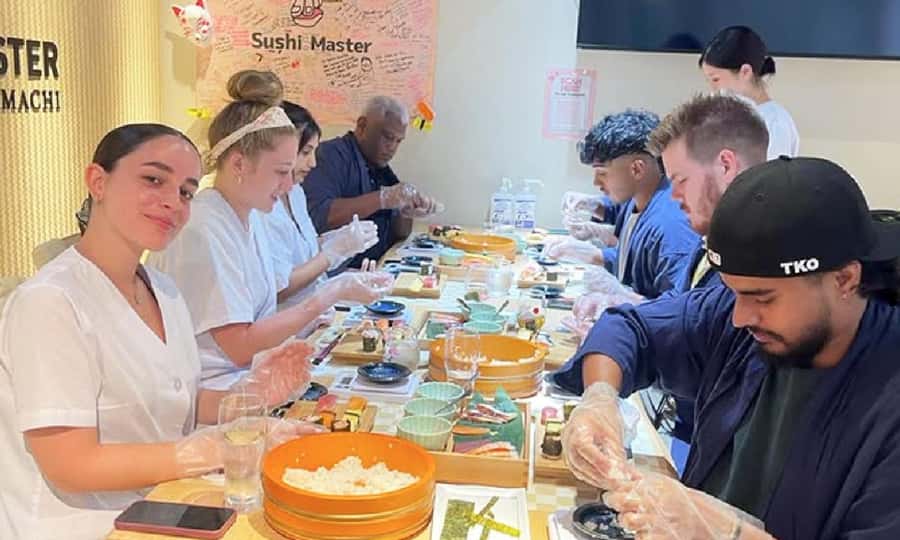
This experience gives you a simple way to add food culture to a Kyoto day. You do not only watch someone prepare sushi. You hear about the history of sushi and Japanese cuisine, then work with the ingredients yourself under staff guidance.
The location helps. Kyoto Kawaramachi Station sits in one of the city’s most useful areas for shopping, eating, and connecting with other sights. Since the class is only about a five-minute walk from the station, you can reach it without giving up much sightseeing time.
That short walk also makes the class easy to place between other plans. You might schedule it before shopping in Kawaramachi, after a morning in another part of central Kyoto, or as a midday food activity. The experience ends back at the meeting point, so you will not need to arrange a separate return transfer.
There is no hotel pickup or drop-off. You come directly to the class, and the exact meeting point may depend on the option you select. Check that detail carefully when booking, especially if you choose between the nigiri and temari courses.
More sushi classes in Kyoto:
- Sushi Making in Kyoto! Same-day bookings welcome!
★ 5.0 · 713 reviews - The Original Small-Group Sushi Making Class in Kyoto
★ 5.0 · 436 reviews - Kyoto: Small-Group Authentic Sushi Making Workshop
★ 5.0 · 137 reviews
What happens during the 90-minute session
The class follows a clear three-part rhythm. First comes a talk about Japanese cuisine and the history of sushi. This gives the activity some context instead of treating sushi as a set of shapes you simply copy.
The introduction is likely to be the quietest part of the session, but it matters. Sushi has changed over time, and understanding a little about the food helps you pay attention to what you are making. You will not leave with a full course in Japanese culinary history, but you will have a better sense of the tradition behind the meal.
Next comes the practical lesson. Staff show you how to make the sushi using traditional techniques, then guide you as you create your own pieces. The class is designed for all skill levels, so you do not need prior kitchen experience.
That makes this a good choice for people who want an activity rather than another meal at a restaurant. You can work at your own level, follow the instructions, and enjoy the mild comedy that often comes when a neat sushi shape looks less neat in your own hands. The focus is on taking part, not producing restaurant-perfect work.
The final part is the meal. You eat the sushi you made during the class, turning the lesson into lunch or a light meal. Sushi ingredients and the sushi meal are included in the $40 price, while drinks are extra. Soft drinks and alcohol can be ordered during the class.
Choosing between nigiri and temari sushi
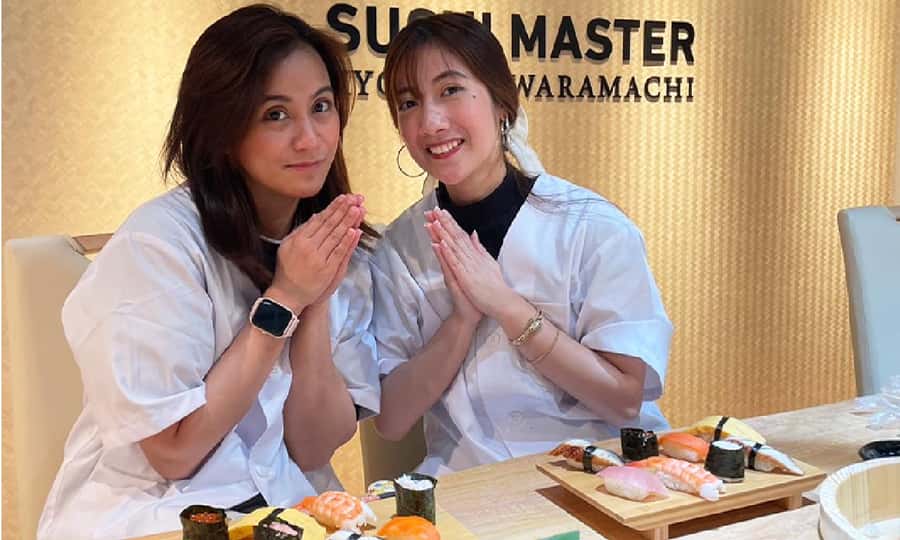
The standard Sushi Making Experience Course includes 9 pieces of nigiri sushi and 3 pieces of gunkan-maki. Nigiri is the familiar style with a topping placed over hand-shaped sushi rice, while gunkan-maki has a seaweed wrapper that holds its filling.
This course should suit you if you want the classic sushi-making challenge. It gives you two styles to practice, and the 12-piece total makes it feel like a proper meal rather than a small sample.
The Temari Sushi Making Course includes 10 pieces of temari sushi and 2 pieces of gunkan-maki. Temari sushi is shaped into small, rounded pieces. The style has a more playful appearance and may appeal to families, first-time cooks, or anyone who likes food that looks distinctive on the plate.
The two courses give the activity some useful flexibility. If your main goal is to practice a familiar sushi form, choose the nigiri course. If you prefer a rounder, more decorative style, the temari option offers a different kind of hands-on work.
The supplied details do not identify the exact fillings or toppings in each course. If a particular ingredient matters to you, ask before booking rather than assuming the two options use the same ingredients.
English guidance keeps the class approachable
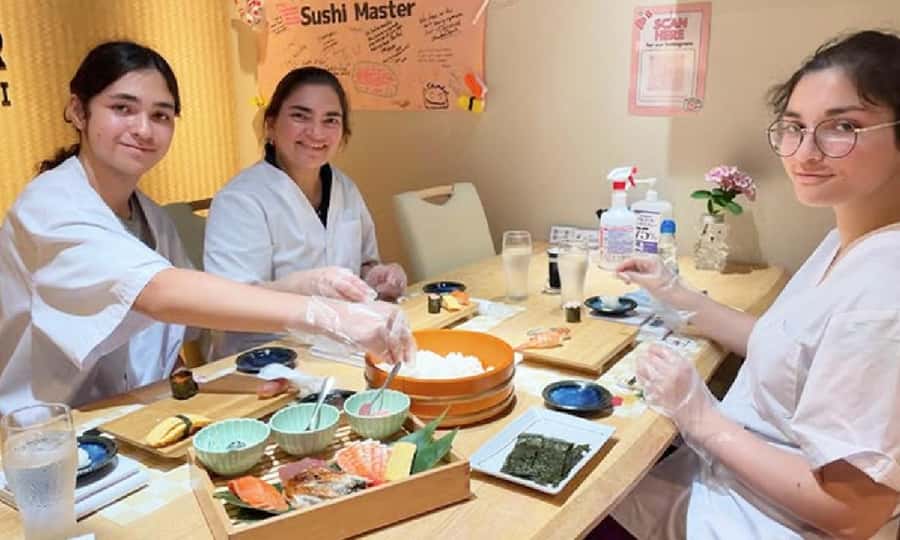
The staff speak English fluently, and the activity is conducted in English. That is important in a practical food class, where small instructions can make the difference between following along and guessing.
You should still expect a guided group activity, not private instruction tailored only to you. The information provided does not state the group size or the names of individual staff, so you cannot count on one-on-one coaching or a particular instructor.
What you can expect is help from friendly Japanese staff as you learn the techniques. For a first sushi lesson, that support is more valuable than a long lecture. You want clear directions at the moment you need them, especially when shaping rice or assembling gunkan-maki.
The class is also suitable for all skill levels. Beginners can join without preparation, while people who already make sushi at home can use the session to try techniques connected with Japanese cuisine. The experience is more about guided participation and shared memories than serious professional training.
A few more Kyoto half-days to weigh up
- PERFECT KYOTO 1-Day Bus Tour
★ 5.0 · 13,518 reviews - Kyoto: Fushimi Inari, Kinkakuji, Bamboo Grove 1 Day Bus Tour
★ 4.8 · 4,316 reviews - Kyoto: Tea Ceremony in a Traditional Tea House in Kiyomizu
★ 4.9 · 3,519 reviews - Kyoto Geisha Walking Tour: Gion District & Hidden Gems
★ 4.7 · 3,273 reviews
Why the location works well in a Kyoto itinerary
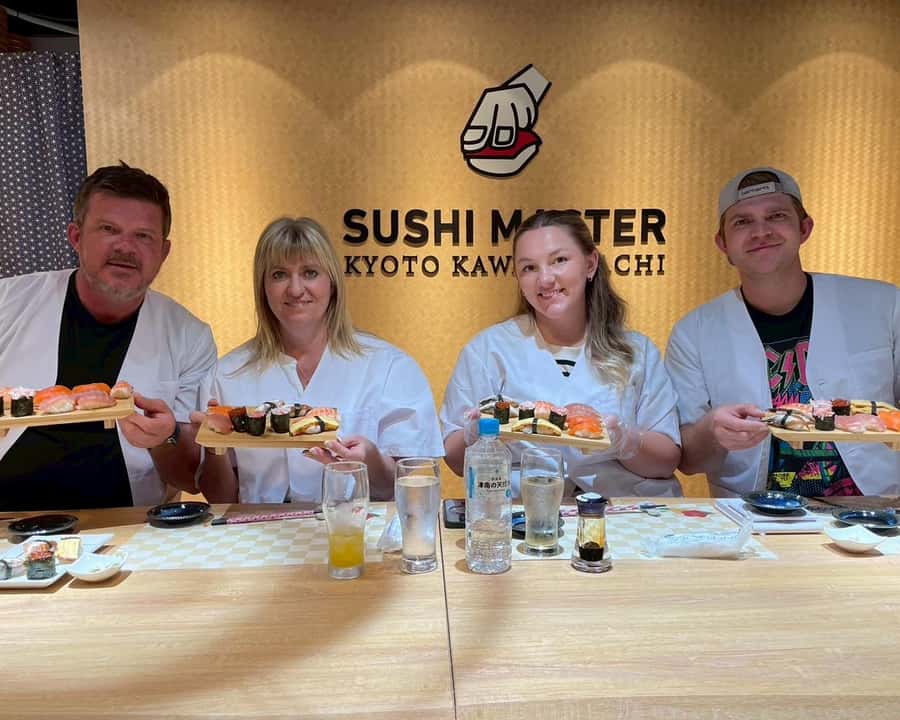
Kawaramachi is a practical base for a central Kyoto day. The class is close to shops, and the surrounding area gives you plenty of options before or after the session. That makes the activity easy to pair with shopping and other plans in the city center.
The five-minute walk from Hankyu Kyoto-Kawaramachi Station is one of the clearest practical strengths. You do not need a long ride into a distant neighborhood, and you can build the activity into a day without losing hours to transport.
The location also makes the class useful in poor weather, at least from a planning point of view. You still need to walk from the station, but the approach is short. Since there is no pickup service, the station access matters.
Allow enough time to find the correct meeting point. The starting point may vary according to the option booked, so do not assume that every course begins at an identical door. The experience ends where it starts, which keeps the rest of your day easy to plan once the class is over.
Is $40 a fair price?
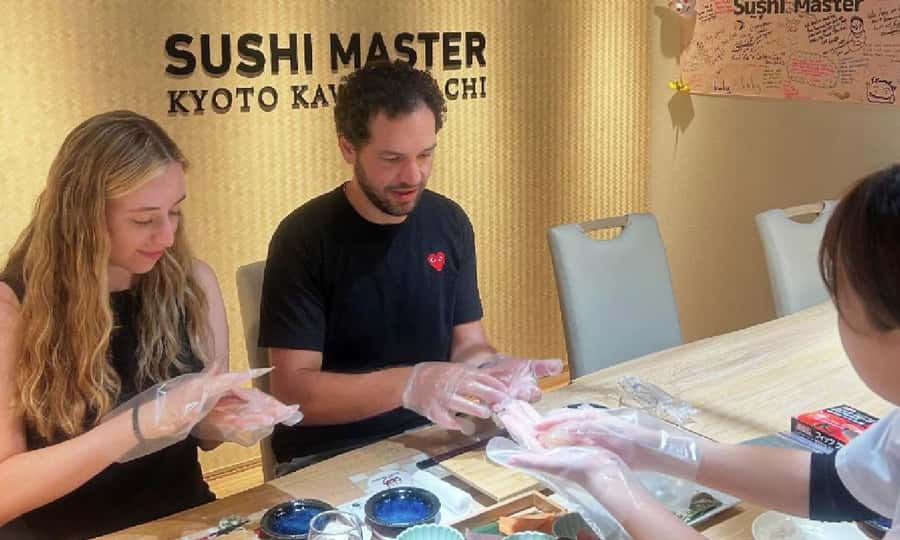
At $40 per person, the value depends on what you want from a meal. If you only want the least expensive sushi lunch in Kyoto, you can reasonably question the price. This is not simply a plate of prepared food.
Your fee covers the 90-minute activity, sushi ingredients, the meal you make, English instruction, and a special gift to take home. You are paying for the class structure and the chance to handle the food yourself, not only for the ingredients.
I think the price works best for couples, families, and friends who want a shared activity. The memory comes from making the sushi together, comparing the results, and then eating the finished pieces. For a solo visitor, the value depends on how much you enjoy short cooking classes and meeting others through food.
Drinks are not included. You can order soft drinks or alcohol at the class, but add that cost if you want something beyond the included sushi meal. The special gift is included, though its exact nature is not specified.
The high overall rating of 4.8 from 13 reviews supports the idea that the class delivers a well-liked experience, but the sample is small. I would treat that score as encouraging rather than as a guarantee that every participant will find the class ideal.
Dietary rules you should check before booking
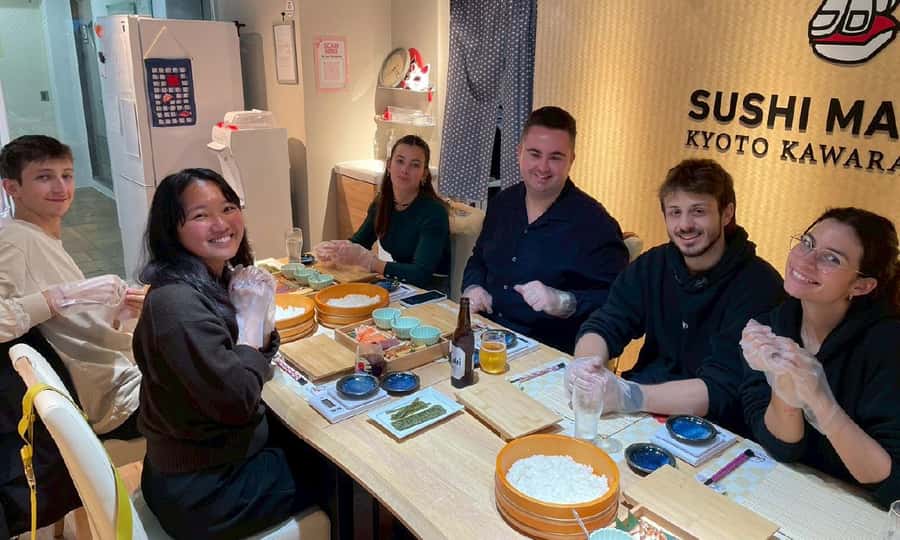
This is the most important limitation. The class can accommodate shellfish allergies, with octopus and squid available as substitutes. You should state the allergy clearly when arranging your booking so the staff can prepare appropriately.
The class does not offer special dishes for vegetarian, vegan, or halal diets. If you follow one of these diets, this is not the right activity for you. Do not book it hoping to remove ingredients at the last moment, since the food policy specifically rules out those special meals.
The details do not explain every ingredient used in either course. If you have another allergy or a serious food concern, contact the provider before paying. Shellfish accommodation is the only specific substitution confirmed here.
This restriction may also matter to mixed groups. If one person in your party cannot eat the available sushi, the class may not work well for the whole group. A shared meal is part of the experience, so everyone should be comfortable with the food plan before you reserve.
The souvenir adds a small finishing touch
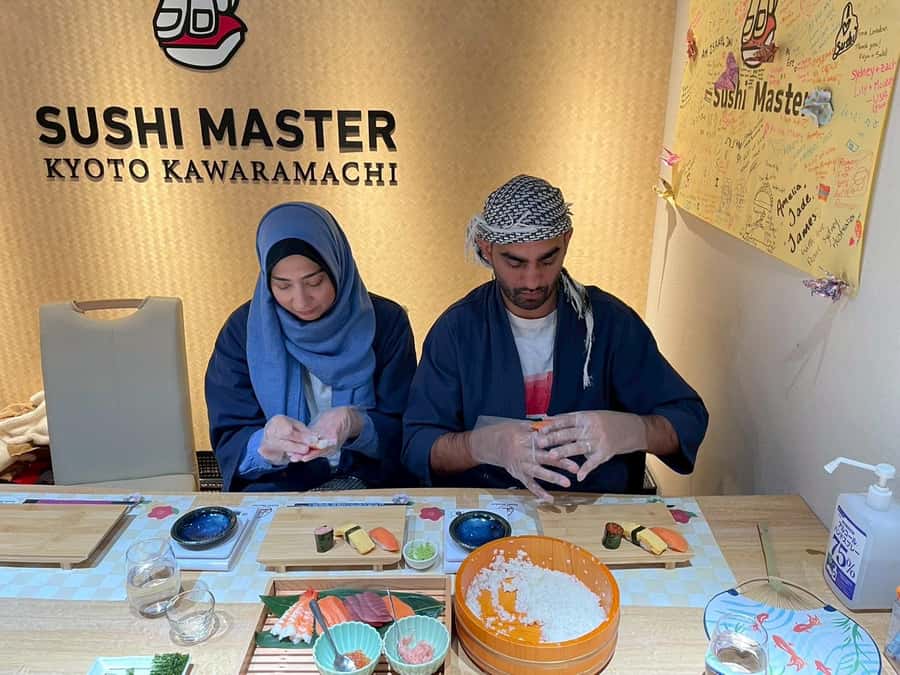
A special gift is included with the experience. The exact item is not described, so you should not book this expecting a particular type of souvenir.
Still, the gift fits the format well. Food is quickly eaten, while a small keepsake gives you something physical to carry home. It can help mark the activity as more than an ordinary lunch, especially if you are building a trip around hands-on experiences.
The souvenir is not the main reason to choose the class. The real value is the lesson and the meal you make yourself. Think of the gift as a pleasant extra rather than a major part of the $40 cost.
Who will enjoy this sushi experience most?
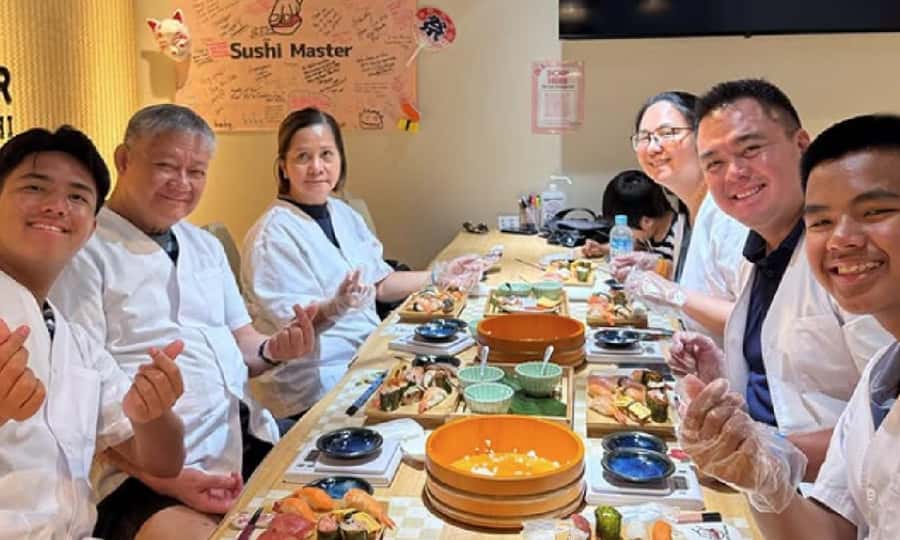
I would recommend this class to first-time sushi makers, families, couples, and friends who want a relaxed food activity in central Kyoto. The short duration makes it accessible, and the English guidance removes much of the worry about understanding the instructions.
It also suits people who like a little structure in their sightseeing. You know you have a 90-minute session, a set number of sushi pieces to make, and a meal at the end. That makes it easier to plan than a long, open-ended cooking workshop.
The class may be especially appealing if you want an activity connected to Japanese culture but do not want to commit to a full-day cooking course. You learn about sushi history, use traditional techniques, and eat the result without giving up most of your day.
I would be more cautious if you are seeking advanced culinary instruction, a private chef-led lesson, or a broad menu. The available details describe a friendly group experience for all skill levels, not a professional sushi apprenticeship.
Booking details that affect your plans
You can reserve now and pay later, which helps if your Kyoto schedule may change. Cancellation is allowed up to 24 hours in advance for a full refund.
The meeting point varies by the option booked, so read the final booking information closely. Hotel pickup and drop-off are not available, and you need to arrive at the class on your own.
The class is offered in English. The activity ends back at the meeting point, making it simple to continue shopping or sightseeing in Kawaramachi afterward.
Should you book this class?
Book it if you want to do more than order sushi. For $40, you receive a short cultural introduction, guided preparation, a meal of your own making, English support, and a souvenir in a central Kyoto location.
Skip it if you need vegetarian, vegan, or halal food, or if you want a highly advanced cooking lesson. For everyone else, the combination of easy access, modest time commitment, and hands-on work makes this a sensible Kyoto add-on. Choose nigiri for classic sushi practice, or temari for a more playful shape, then arrive ready to eat your own results.
FAQ
How long does the sushi-making experience last?
The session lasts 90 minutes. It includes an introduction to Japanese cuisine and sushi, hands-on preparation, and time to eat the sushi you make.
Where does the experience take place?
It takes place in Kawaramachi, Kyoto. The class is about a five-minute walk from Kyoto Kawaramachi Station on the Hankyu Kyoto Line.
Is the activity offered in English?
Yes. English is the listed language, and the staff speak English fluently.
Which sushi courses can I choose from?
You can choose a Sushi Making Experience Course with 9 nigiri sushi and 3 gunkan-maki, or a Temari Sushi Making Course with 10 temari sushi and 2 gunkan-maki.
Is the sushi meal included in the price?
Yes. Sushi ingredients and the sushi meal are included.
Are drinks included?
No. Soft drinks and alcohol can be ordered at the class, but drinks are not included in the activity price.
Can the class accommodate shellfish allergies?
Yes. Shellfish allergies can be accommodated, with octopus and squid available as substitutes.
Are vegetarian, vegan, or halal meals available?
No. The class does not offer special dishes for vegetarian, vegan, or halal diets.
Is hotel pickup or drop-off available?
No. You must travel directly to the class meeting point. Hotel pickup and drop-off are not provided.
Can I cancel and receive a full refund?
Yes. You can cancel up to 24 hours in advance for a full refund.
Just added around Kyoto
- Kyoto: Zen Meditation at a Private Temple with a Monk★ 5.0 · 25 reviews
- Kyoto: Gion Geisha District & Sake-in-Hand Walking Tour★ 5.0 · 37 reviews
- Private Pewter Sake Cup Experience with a Kyoto Artisan★ 5.0 · 31 reviews
- Your Private Vacation Photography Session In Kyoto★ 5.0 · 110 reviews
- Private Guided Traditional Buddhist Cooking in Japan★ 5.0 · 16 reviews
- Kyoto Wagashi(Japanese sweets) Cooking Class near Fushimiinari★ 5.0 · 60 reviews
- Traditional Japanese Music show & Experience Tour in Kyoto★ 5.0 · 57 reviews
- Kyoto:Family-Friendly Kimono & Yukata Experience at WARGO★ 5.0 · 147 reviews
Kyoto Tours, compared.


Fushimi Inari, Kinkakuji, Bamboo Grove 1 Day Bus Tour
Read our review →
Tea Ceremony in a Traditional Tea House in Kiyomizu
Read our review →
Kyoto Geisha Walking Tour: Gion District & Hidden Gems
Read our review →

Gion Magical Night Walking Tour with Geisha Trivia
Read our review →

Gion Geisha District Walking Tour – Stories of Geisha
Read our review →Browse the lists this tour appears in