
Reviewed · KYOTO TOURS
Kyoto Sushi Making Experience with a Professional Sushi Chef
The best part of this Kyoto experience is that you do not simply watch a chef work. You make sushi under a professional Taisho chef’s guidance, then eat it fresh, alongside tempura and sake. The lesson also reaches beyond food, with Japanese sweets, matcha, and a quiet garden at the end.
I like the small maximum of eight people, which should keep the lesson personal. I also like the mix of hands-on cooking and cultural detail: you learn about nigiri, roll sushi, sake pairing, and matcha in one afternoon. The main consideration is the price, $163.30 per person, which is a serious spend for a three-and-a-half-hour activity.
Key points
- Nine nigiri pieces and roll sushi: Make your own sushi after watching the chef’s knife work and shaping technique.
- A professional Taisho chef: The chef handles the slicing while you focus on forming and rolling the sushi.
- Fresh tempura and sake tasting: Eat a tempura set and compare sake with guidance on pairing it with sushi.
- A local sweets stop: Choose traditional Japanese sweets before the matcha portion of the experience.
- Matcha in a Kyoto-style garden: Whisk your own tea and enjoy it with the sweets you selected earlier.
- Small, family-friendly format: The group is limited to eight people, and children age four and older are welcome.
Why this Kyoto sushi class feels different
Many cooking classes give you a recipe, a work surface, and a short lesson. This one gives you a broader look at Japanese food culture. Sushi is the anchor, but the afternoon also includes tempura, sake, Japanese sweets, and matcha.
That range matters. You are not only learning how to shape rice and fish. You are seeing how different foods fit together in a Japanese meal. The sake tasting adds another useful layer, since you learn how different styles pair with sushi rather than simply receiving a drink with lunch.
The experience lasts about three hours and 30 minutes, beginning at 3:30 pm. That late afternoon timing works well if you want to spend the morning visiting temples or exploring central Kyoto. It also means you should arrive ready for a substantial meal, since the program includes sushi and tempura.
The group limit of eight is one of the strongest practical features. A smaller group gives you a better chance to see the chef’s hand movements and receive help as you shape the sushi. It also keeps the class from feeling like a large demonstration with a few people doing all the work.
More sushi classes in Kyoto:
- Sushi Making in Kyoto! Same-day bookings welcome!
★ 5.0 · 713 reviews - The Original Small-Group Sushi Making Class in Kyoto
★ 5.0 · 436 reviews - Kyoto: Small-Group Authentic Sushi Making Workshop
★ 5.0 · 137 reviews
Starting with traditional sweets in Kyoto
The experience begins with a visit to a local shop for traditional Japanese sweets. An English-speaking guide helps you choose the sweets and explains what you are seeing.
This is a smart opening. Japanese sweets can look delicate and unfamiliar, and choosing them with some context makes the final matcha course more meaningful. You will set aside the sweets you pick, then enjoy them later with the tea you whisk yourself.
The supplied details do not identify the shop by name or list the exact sweets available. You should think of this as a guided introduction rather than a major shopping stop. The value is in linking the sweets to the matcha ritual at the end.
That connection gives the afternoon a nice rhythm. You first select something without tasting it, then return to it after learning how to prepare matcha. It turns a small food purchase into part of the experience.
Meeting the Taisho chef at the sushi restaurant
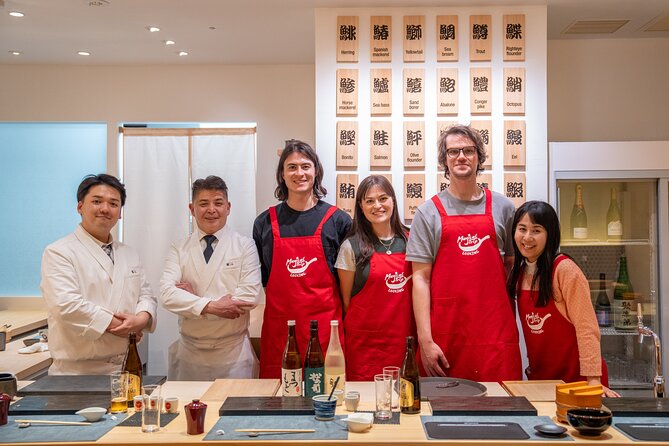
After the sweets stop, you enter an authentic sushi restaurant and meet the Taisho chef. In Japan, Taisho is a respectful term for the head chef or master behind a sushi counter. Here, the chef demonstrates the careful work that makes sushi look simple.
Expect a close look at knife skills and the formation of nigiri. The chef handles the slicing, so you are not asked to manage sharp knives or prepare raw fish yourself. That is useful for families and for anyone who wants the fun of sushi making without the risk or pressure of professional kitchen work.
The demonstration is not just decoration before the class. It shows you the shape, pressure, and hand position you will try to copy. Sushi can look easy until you attempt to form a neat piece that holds together. Having the chef show the process first makes the hands-on part less intimidating.
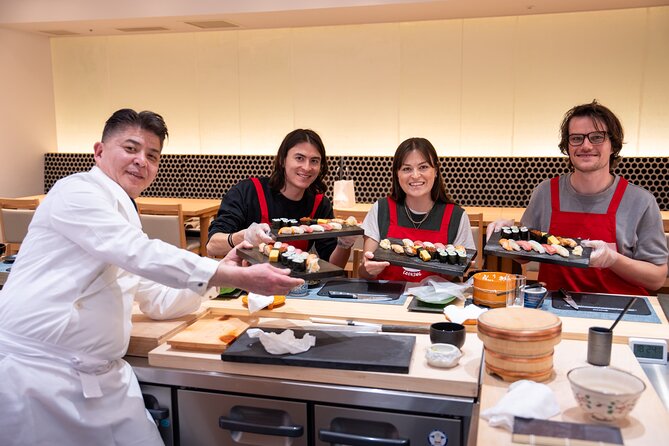
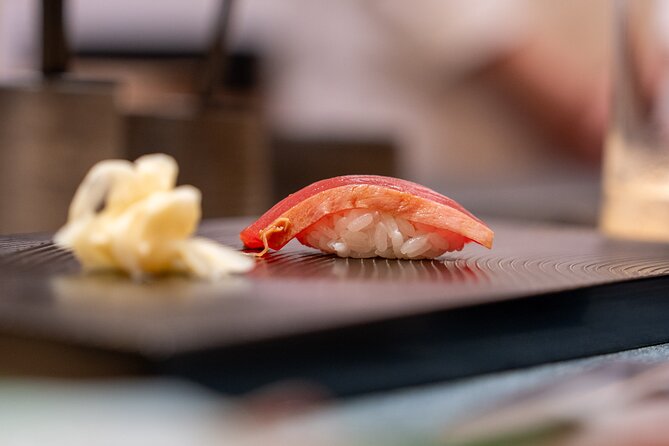
The program includes nine nigiri sushi pieces and roll sushi. The exact fish and fillings are not specified, but the experience includes fresh fish according to the available information. You should expect the chef to control the more technical preparation while you work on assembly and presentation.
Making nine nigiri and rolling your own sushi
The hands-on section is the heart of the class. You will shape sushi under the Taisho chef’s direction, then make roll sushi yourself.
Nigiri is the style that most clearly tests your touch. You need enough pressure to hold the rice together, but not so much that it becomes dense. The chef’s careful guidance lets you focus on the feel of the rice and the form of each piece rather than trying to guess from a recipe.
Nine pieces give you enough practice to improve during the lesson. Your first piece may not look like the last one, and that is part of the fun. You can try the technique several times instead of making one piece and moving on.
The roll sushi offers a different challenge. You will learn how to arrange the ingredients and roll them into a firm shape. It is also the easier skill to repeat at home, since you can practice with familiar fillings and a bamboo mat.
This is a good fit for curious beginners. You do not need Japanese language skills, and the English-speaking guide keeps the instructions clear. Children age four and older are welcome, though adults will still need to stay engaged and help younger children follow the steps.
A few more Kyoto half-days to weigh up
- PERFECT KYOTO 1-Day Bus Tour
★ 5.0 · 13,518 reviews - Kyoto: Fushimi Inari, Kinkakuji, Bamboo Grove 1 Day Bus Tour
★ 4.8 · 4,316 reviews - Kyoto: Tea Ceremony in a Traditional Tea House in Kiyomizu
★ 4.9 · 3,519 reviews - Kyoto Geisha Walking Tour: Gion District & Hidden Gems
★ 4.7 · 3,273 reviews
Fresh tempura and a full meal at the counter
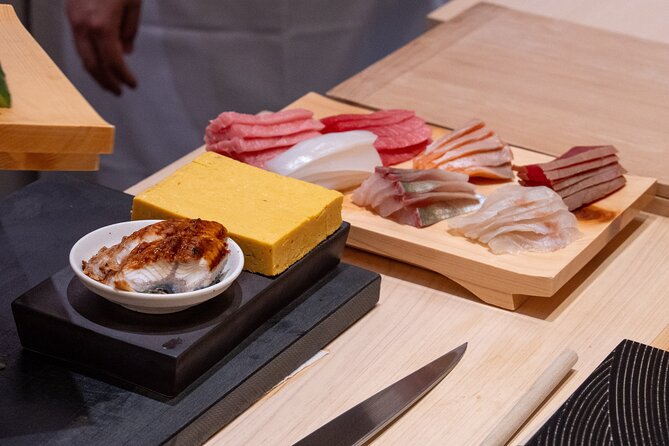
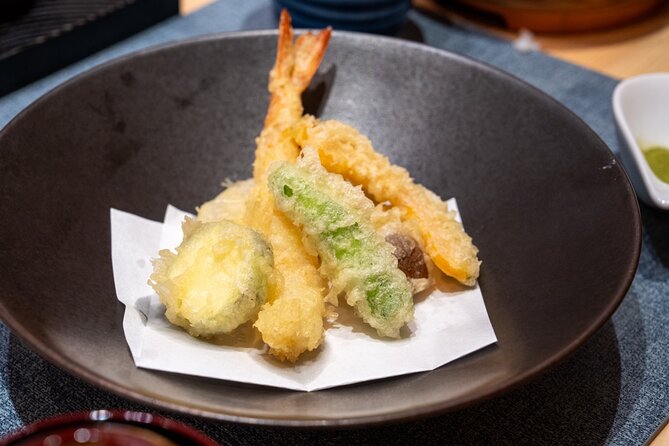
Once you have made your sushi, the chef prepares a tempura set. This is an important part of the value because the experience is not just a class followed by a small sample. You receive a meal that includes your sushi and freshly made tempura.
The tempura is prepared by the chef rather than by you. That gives you a useful contrast: you practice sushi, then watch a professional handle another Japanese cooking style. Tempura depends on timing and texture, and eating it fresh helps you notice the difference between crisp batter and food that has been sitting around.
One family who took the experience singled out the tempura as the best they had eaten in Japan and praised the freshness of the fish. Those are strong points to look for, though tastes vary and no meal can please everyone. The main practical takeaway is that seafood quality and the cooked meal are central parts of the experience, not afterthoughts.
Because the menu includes sushi, roll sushi, and tempura, you should not plan a full dinner immediately afterward. The class ends at the original meeting point, so you can continue into Kyoto afterward without arranging a second pickup.
Learning how sake pairs with sushi
The sake portion includes tastings of different types of sake, along with advice on pairing them with sushi. This makes the drink more than an included extra.
Sake varies in aroma, weight, and finish. Pairing it with sushi gives you a simple way to notice those differences. You may find that one style works better with delicate fish while another feels more suited to stronger flavors. The program does not specify the number or names of the sake samples, so expect an introduction rather than a formal tasting course.
The timing is also sensible. You taste sake with food, which is closer to how many people actually enjoy it in Japan. You do not need prior knowledge, and the guide helps explain the pairings in English.
If you do not drink alcohol, the supplied information does not state what nonalcoholic alternative is available. Ask before booking if that matters to you. The tour includes two drinks as well as sake tastings, but the exact drink choices are not listed.
Finishing with matcha in a Kyoto-style garden
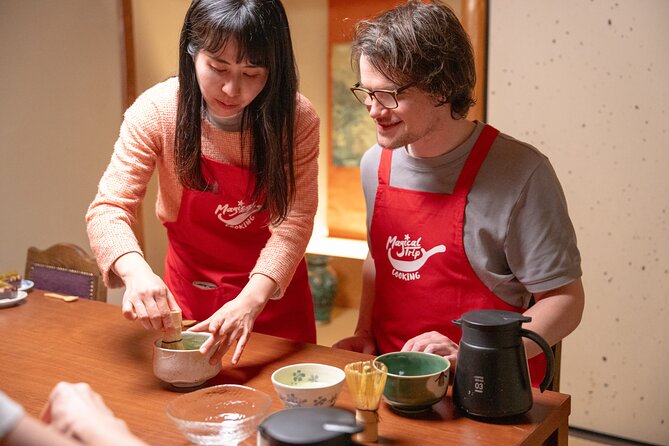
The last section moves away from the sushi restaurant and into a peaceful Kyoto-style garden. There, your guide teaches you how to whisk matcha and enjoy it with the traditional sweets you selected earlier.
This ending changes the pace. After the concentration of shaping sushi and the meal at the restaurant, matcha offers a quieter finish. You are given a simple cultural activity that you can repeat at home, although the setting adds much of its charm.
Whisking matcha is more physical than simply stirring tea. You work the whisk until the tea becomes foamy, then drink it with the sweets. The guide’s instruction helps you understand the basic method rather than treating the tea as a photo opportunity.
The garden is a meaningful choice for the final stop because it gives the experience a Kyoto setting beyond the restaurant. The details do not identify the garden or promise a particular view, so you should not book this expecting a major sightseeing attraction. Think of it as a calm place to finish the food lesson.
What the $163.30 price includes
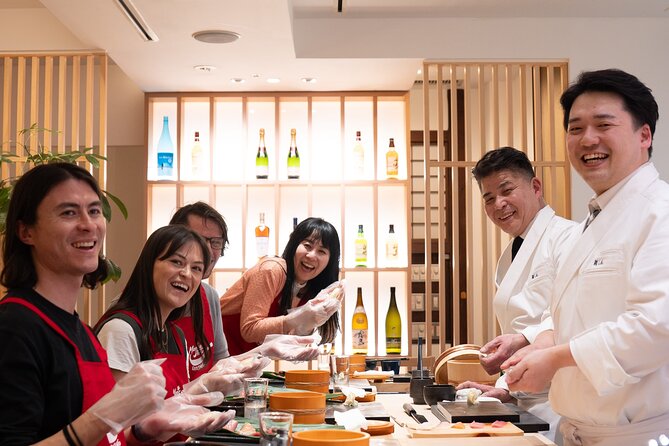
At $163.30 per person, this is not a budget meal or a quick cooking class. The price makes more sense when you count what is included: a guided sweets visit, professional sushi instruction, nine nigiri pieces, roll sushi, a tempura set, two drinks, sake tastings, and a matcha session with Japanese sweets.
You are also paying for access to a professional chef and a small group rather than a large, basic workshop. The chef handles the slicing and technical preparation, while you get direct practice with the parts that are safe and useful for a beginner.
I would compare the cost with the price of a high-end meal plus a separate cultural activity. If you already plan to take a sushi class and attend a tea experience, this combines both in one afternoon. If you only want an inexpensive introduction to sushi, the price may feel high.
The strongest value comes for people who care about instruction and context. You are not simply eating sushi at a restaurant. You are learning how it is formed, tasting sake with it, and finishing with matcha. The broad program also makes the experience more appealing for a family or couple with different interests.
Timing, meeting point, and group size
The meeting point is listed as Diesel604 Banocho, Nakagyo Ward, Kyoto, postal code 604-8172. The experience begins at 3:30 pm and ends back at the meeting point.
Because the activity includes several parts, arrive with enough time to find the meeting point. The information says it is near public transportation, but it does not provide a detailed walking route from a specific station. Check the exact meeting instructions after booking.
The maximum group size is eight people. That limit should help keep the chef demonstration visible and make it easier to ask questions through the English-speaking guide.
Confirmation is provided when you book, and the activity uses a mobile ticket. You can cancel for a full refund up to 24 hours before the local start time. Changes made within 24 hours are not accepted, so keep your afternoon plans firm once you enter that window.
Who should book this experience
I would recommend this class to first-time visitors who want a food activity with more range than a single meal. It also suits solo participants because the group is small and the guide helps keep the session moving.
Families can consider it too, especially with children age four and older. The chef handles the knife work, and the children can focus on shaping, rolling, tasting, and whisking matcha. Younger children may need close adult help during the hands-on parts.
Food lovers will appreciate the focus on fresh fish, handmade sushi, tempura, and sake pairing. The class is also useful for anyone who wants to take a practical skill home. Roll sushi is an especially approachable technique to repeat after your trip.
I would be more cautious if you dislike seafood, want a strictly vegetarian menu, or do not drink alcohol. The supplied details do not describe vegetarian substitutions, allergy accommodations, or nonalcoholic options. Ask the provider before reserving if you have dietary needs.
Should you book the Kyoto sushi experience?
Book it if you want a compact, guided afternoon that combines sushi technique with Japanese food culture. The strongest reasons are the small group, the professional Taisho chef, the fresh fish and tempura, and the gentle finish with matcha and sweets.
The main reason to skip it is cost. At $163.30, you need to value the teaching and the range of included food, not just the amount you eat. For someone seeking a cheap lunch, it is too expensive. For someone who wants a hands-on Kyoto memory with clear English support, it offers a well-filled three-and-a-half-hour program.
The perfect audience is a curious beginner, a family with older children, or a couple who wants more than another restaurant reservation. If that sounds like you, this is a strong choice for an afternoon in Kyoto.
FAQ
Where does the Kyoto sushi experience begin?
It begins at Diesel604 Banocho, Nakagyo Ward, Kyoto, postal code 604-8172.
What time does the experience start?
The scheduled start time is 3:30 pm.
How long does the experience last?
The experience lasts approximately three hours and 30 minutes.
What sushi will I make?
You will make nine nigiri sushi pieces and roll sushi under the guidance of a professional Taisho chef.
Is the experience conducted in English?
Yes. An English-speaking guide supports the experience, and no Japanese language skills are needed.
Are children allowed to join?
Yes. Families are welcome, and children age four and older can participate.
How many people can join the group?
The activity has a maximum of eight participants.
What is included besides sushi?
The program includes a tempura set, two drinks, sake tastings with pairing advice, a visit to choose traditional Japanese sweets, and a matcha whisking experience in a Kyoto-style garden.
Just added around Kyoto
- Kyoto: Zen Meditation at a Private Temple with a Monk★ 5.0 · 25 reviews
- Kyoto: Gion Geisha District & Sake-in-Hand Walking Tour★ 5.0 · 37 reviews
- Private Pewter Sake Cup Experience with a Kyoto Artisan★ 5.0 · 31 reviews
- Your Private Vacation Photography Session In Kyoto★ 5.0 · 110 reviews
- Kyoto Wagashi(Japanese sweets) Cooking Class near Fushimiinari★ 5.0 · 60 reviews
- Private Guided Traditional Buddhist Cooking in Japan★ 5.0 · 16 reviews
- Traditional Japanese Music show & Experience Tour in Kyoto★ 5.0 · 57 reviews
- Kyoto:Family-Friendly Kimono & Yukata Experience at WARGO★ 5.0 · 147 reviews
Kyoto Tours, compared.


Fushimi Inari, Kinkakuji, Bamboo Grove 1 Day Bus Tour
Read our review →
Tea Ceremony in a Traditional Tea House in Kiyomizu
Read our review →
Kyoto Geisha Walking Tour: Gion District & Hidden Gems
Read our review →

Gion Magical Night Walking Tour with Geisha Trivia
Read our review →

Gion Geisha District Walking Tour – Stories of Geisha
Read our review →Browse the lists this tour appears in