
Reviewed · KYOTO TOURS
Kyoto: Tea Ceremony Experience
Kyoto’s tea ceremony is less about drinking tea than learning how a room, a bowl, a sweet, and a series of careful gestures create a moment of attention. In this 45-minute session, you watch the ritual in a traditional machiya, taste Kyoto matcha with a seasonal sweet, then make your own frothy bowl with help from the host. I like the clear cultural explanation and the chance to do more than sit and watch. I also like the location, tucked just off Ninenzaka near Kiyomizu-dera and Gion.
The main consideration is comfort. Much of the session takes place seated on the floor, and one participant found the position hard on the knees after about 40 minutes. Chairs and tables are available, but the upstairs tearooms are not ideal for everyone with limited mobility. Video recording is not allowed, though non-flash photography is permitted.
Key points at a glance
- You make your own matcha: After watching the host, you whisk a bowl yourself with direct guidance.
- The setting is traditional: The experience takes place in a Kyoto machiya in Higashiyama, with attention given to room layout and decoration.
- Seasonal sweets balance the tea: A Japanese sweet is served with the matcha, offering a useful introduction to the flavor pairing.
- English instruction is included: Hosts explain the utensils, sequence, customs, and background in English.
- The location fits a full sightseeing day: Ninenzaka, Kiyomizu-dera, Kodai-ji, Yasaka-jinja, Maruyama Park, Chion-in, and Gion are all nearby.
- Private sessions solve practical problems: Private booking is required if you plan to bring an interpreter or travel with a child under three.
Entering the Higashiyama machiya
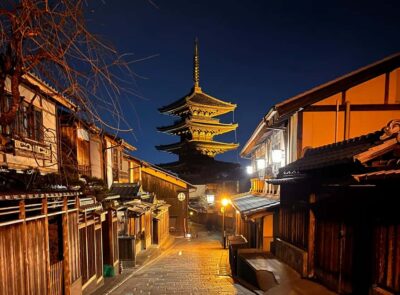
The meeting point is down a narrow alley branching from Ninenzaka, one of Kyoto’s most popular old streets. The easiest landmark is the Park Hyatt hotel. Across from it is a Studio Ghibli shop, and the alley is just to the left of that store.
This last turn matters. The teahouse is not on the main street, so read the directions before you arrive rather than relying on a quick glance at a map. Clear arrival instructions are sent by email, and there is a sign at the alley. Staff may also come to the entrance to point you upstairs.
The experience is associated with Camellia Tea Ceremony, while the meeting information refers to Flower Teahouse. If you see either name in your directions, do not panic. Use the Park Hyatt and Studio Ghibli shop as your main landmarks.
The area is excellent for pairing this activity with sightseeing. Kiyomizu-dera and its approach streets are close by, as are Kodai-ji, Yasaka-jinja, Maruyama Park, Chion-in, and the lanes of Gion. You can spend the morning around the temples, pause for tea, and continue toward Gion afterward. Buses run along Higashi Oji, about 10 minutes from the teahouse, and you can reach central Kyoto on foot in about 25 minutes through Gion if your legs are willing.
More Tea Ceremonies in Kyoto
- Kyoto: Tea Ceremony in a Traditional Tea House in Kiyomizu
★ 4.9 · 3,519 reviews - Kyoto: Tea Ceremony Ju-An at Jotokuji Temple
★ 4.9 · 3,207 reviews - Kyoto: 45-Minute Tea Ceremony Lesson Experience
★ 4.3 · 2,378 reviews
The opening lesson: tools, rooms, and quiet rules
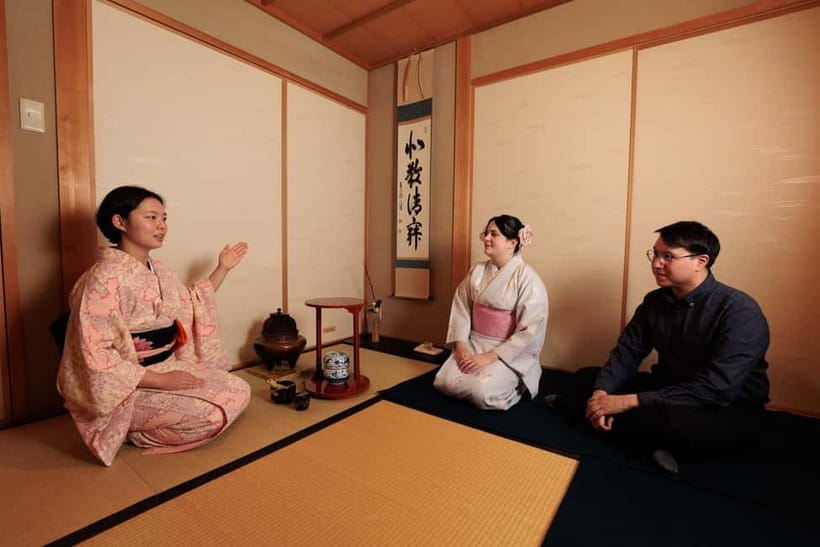
The host begins with a short introduction to matcha and the tea ceremony. This is not a full course in becoming a tea master, and it is not meant to be. In 45 minutes, you receive a practical explanation of the main ideas, then see the ritual performed and try part of it yourself.
The opening talk covers the basic utensils used to prepare matcha, the order of the ceremony, and the role of the room. That last point is easy to miss in a casual tea tasting. The decoration, the position of the utensils, and the arrangement of the room are all part of the message. The ceremony gives attention to the season and to the person sharing the tea.
I find this introduction useful because it gives you something to watch for. Without context, the host’s movements can seem precise but mysterious. With a little background, the placement of a bowl or the handling of a whisk begins to make sense.
You can ask questions about Japanese culture and the three main schools of tea ceremony. The session is conducted in English, and hosts are expected to explain the ceremony in a friendly, approachable way. Ikuko is one of the instructors praised for explaining each step carefully and helping first-time matcha drinkers get a good foam.
Watching the ceremony in real time
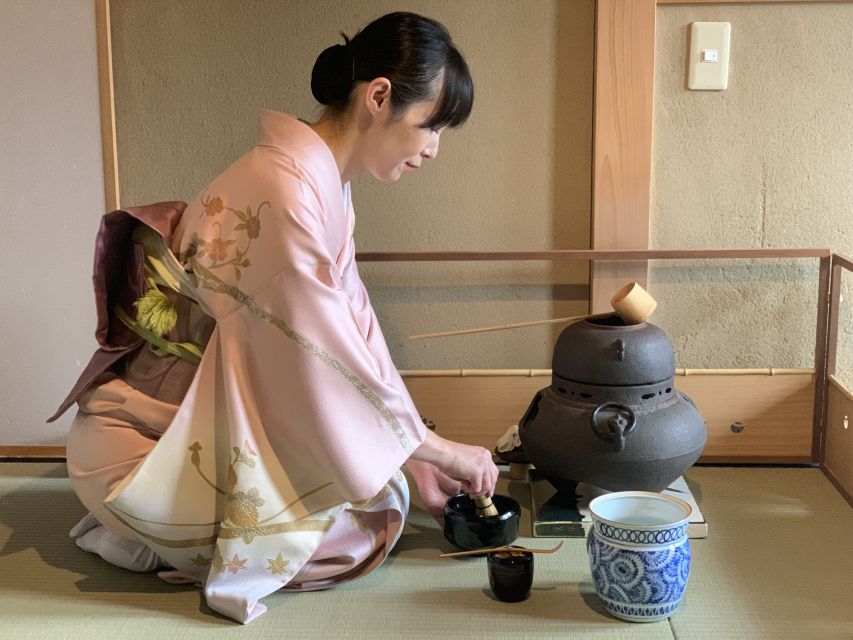
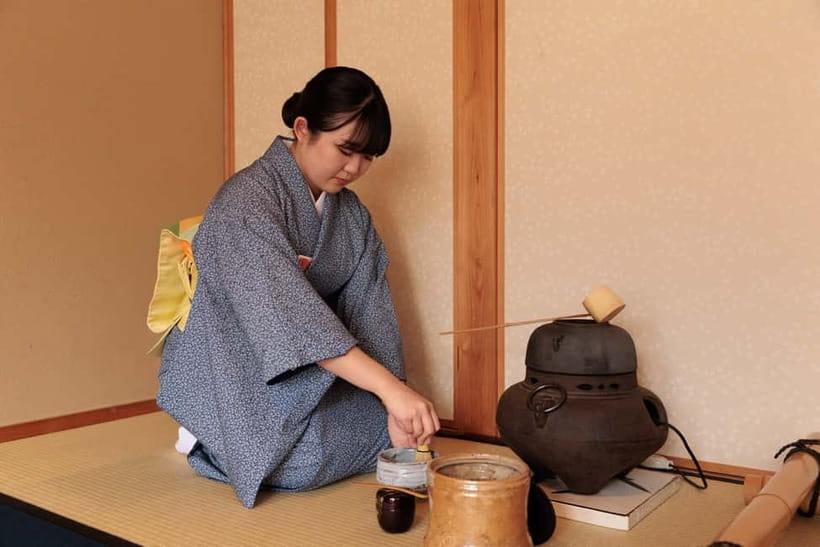
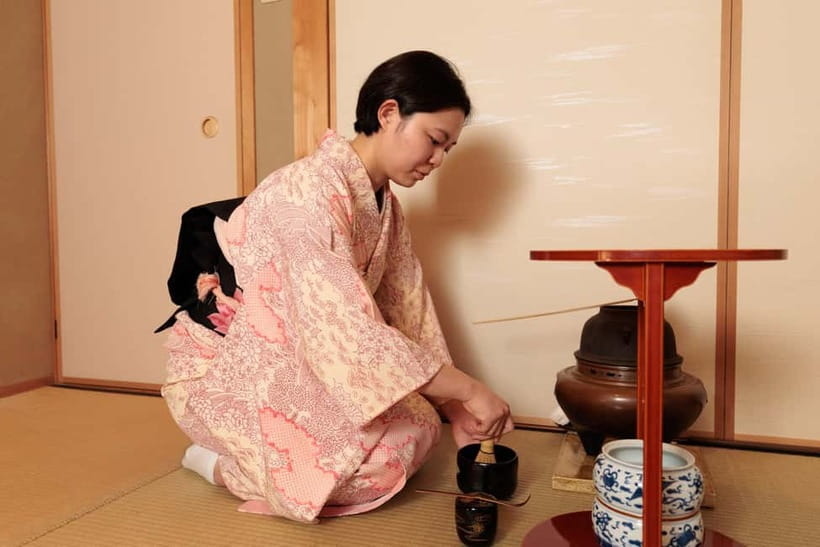
After the introduction, the host performs the tea ceremony. The demonstration lasts about 10 minutes, according to one detailed account, leaving enough time for the explanation, sweet, tea, and hands-on portion.
This is the calm center of the experience. The ceremony is not rushed into a quick demonstration for a camera. The measured gestures, the sound of the whisk, and the simple room create a short break from Kyoto’s busy temple streets. I like that the host explains what is happening instead of asking you to admire an unfamiliar ritual without guidance.
You will not learn every movement needed to perform a complete formal ceremony on your own. One participant made this point clearly: the session teaches the background, lets you watch a full demonstration, and gives you a chance to prepare matcha, but it does not turn you into a tea master in under an hour. That is a fair limit, and it keeps the activity accessible.
The demonstration also gives you a better sense of the ceremony’s purpose. It is about hospitality, care, and being present with the person in the room. The tea is important, but the gestures around it matter just as much.
Matcha and the seasonal sweet
The tasting begins with a seasonal Japanese sweet and a bowl of matcha. The sweet is not just a snack before the practical activity. Its sweetness helps soften matcha’s sharp, grassy bitterness, making the pairing part of the ceremony.
If this is your first taste of matcha, expect something different from ordinary green tea. Matcha is powdered tea whisked into water, so you drink the tea itself rather than steeping leaves and removing them. The flavor can be pleasantly bitter, and the texture is fuller than most teas served in a teabag.
The experience uses matcha grown in Kyoto, along with locally produced sweets. That makes the tasting feel tied to place rather than like a generic tea lesson that could happen anywhere. You are learning about a drink in the city closely linked with its production and traditions.
The host remains available for questions while you taste. You can ask about the ceremony, the utensils, the different schools, or other aspects of Japanese culture. The tone is informative without being stiff, and the English instruction makes this a reasonable choice for first-time visitors who want cultural context without a long lecture.
Same base, a completely different sort of day:
- PERFECT KYOTO 1-Day Bus Tour
★ 5.0 · 13,518 reviews - Kyoto: Fushimi Inari, Kinkakuji, Bamboo Grove 1 Day Bus Tour
★ 4.8 · 4,316 reviews - Kyoto Geisha Walking Tour: Gion District & Hidden Gems
★ 4.7 · 3,273 reviews - Kyoto: Gion Magical Night Walking Tour with Geisha Trivia
★ 4.9 · 2,393 reviews
Whisking your own bowl
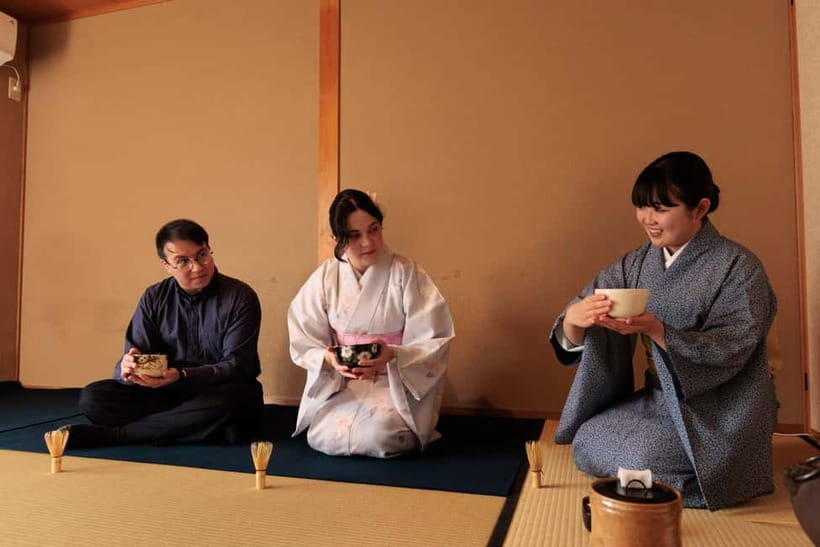
The practical section is the part I would not skip. You use the traditional utensils and try to make your own bowl of frothy matcha, with the host guiding your hand and correcting the process when needed.
The basic task looks simple, but the foam takes some practice. Your host shows you how to work the whisk and helps you produce a better result than you might manage alone. This is not a competitive cooking class. It is a small, hands-on way to understand the care behind the drink.
You also get to taste the tea you prepared. That makes the experience more memorable than watching someone else do all the work. You have seen the formal version, heard what the tools mean, and then taken part in a modest piece of the process.
The hands-on portion also works well for families and mixed-interest groups. A history-minded adult can focus on the ritual and room design, while a child or first-time tea drinker can look forward to whisking. Keep in mind that children under three require a private ceremony at the Garden Teahouse, so this is not a casual drop-in option for every family.
What $32 buys you
At $32 per person, this is a reasonably priced cultural activity in central Kyoto. The price includes the matcha, seasonal sweet, tea-making utensils, and a personal English-speaking host. You are paying for instruction and access to a traditional setting, not just a cup of tea.
That distinction matters. A café matcha may cost far less, but it will not explain why the room is arranged a certain way, demonstrate the ceremony, or guide you through whisking your own bowl. A longer formal ceremony would naturally offer more detail, but it would also demand more time and attention.
The 45-minute length is one of the strongest practical points. You can fit it between temple visits without giving up half a day. It is long enough to feel like a real cultural activity and short enough for an itinerary that already includes Higashiyama’s steep lanes and crowded sights.
Private and small-group options are available. A private booking costs more in many tour settings, but the information provided here does not give a separate private price, so check the available session when booking. Private time is especially useful if you need an interpreter, are bringing a baby under three, or want more freedom to ask questions.
Sitting on the floor and other comfort notes
Traditional tearoom seating can be part of the experience, but it is also the main physical drawback. One participant found sitting on the floor uncomfortable around the knees and backside after roughly 40 minutes. You are not required to kneel formally, and the hosts encourage you to make yourself comfortable.
Chairs and tables are available for people who find floor seating difficult. The regular tearooms are upstairs, however, which creates a second issue for anyone with mobility limitations. The Garden Teahouse is wheelchair accessible, so ask about that setting when arranging a suitable booking.
Restrooms are available. A guide accompanying you may wait in a waiting room with Wi-Fi and refreshments, rather than joining the ceremony. If you want an interpreter inside the room, book a private session so the explanations do not interrupt a small shared group.
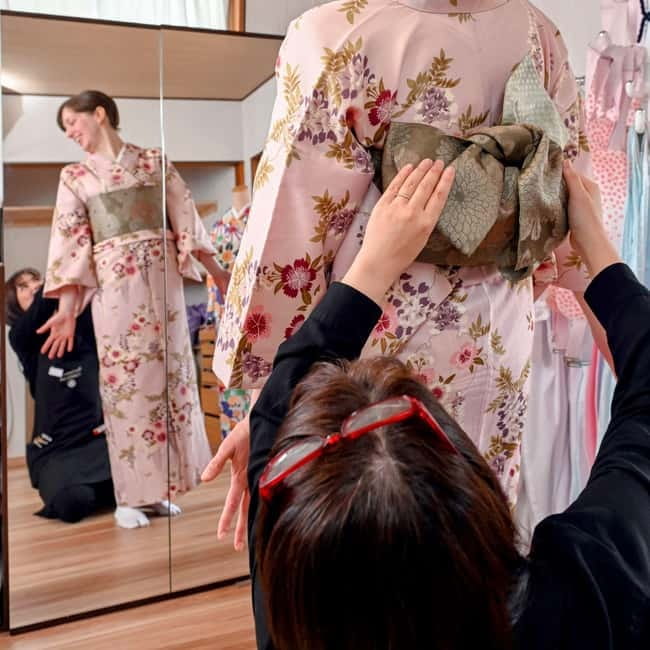
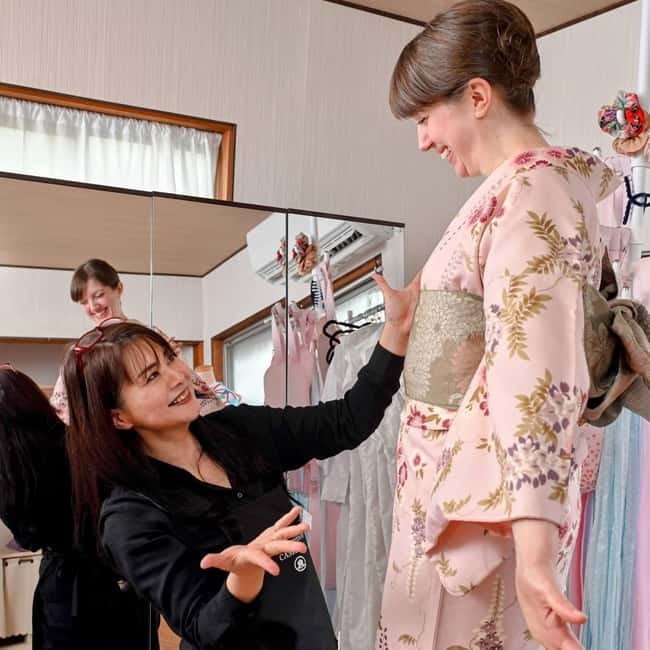
Still photography without flash is allowed. Video recording is not. That rule protects the quiet rhythm of the ceremony, but it also means you should not plan to film the demonstration for later. If you wear a kimono, arrange the rental before the tea session. A rental shop is nearby, but it may not be obvious until you arrive.
Matching the tea ceremony with your Kyoto day
The setting makes this especially easy to pair with a day in southern Higashiyama. Start around Kiyomizu-dera, walk down through the temple approaches and Ninenzaka, then turn toward the teahouse near the Park Hyatt. After tea, continue to Kodai-ji or Yasaka-jinja, stroll through Maruyama Park, and finish in Gion.
I would avoid treating the ceremony as an isolated stop across town. Its location is part of the value. You are already in one of Kyoto’s most atmospheric districts, so the tea lesson gives the day a slower middle chapter between temple grounds and shopping streets.
The timing also helps in hot or crowded weather. Higashiyama can feel hectic, especially around the famous lanes. Forty-five quiet minutes indoors will not erase the crowds outside, but it gives you a useful reset.
The central Kyoto bus connections are about 10 minutes away along Higashi Oji. If you walk to the city center through Gion, allow about 25 minutes. Those times make the session workable for visitors staying elsewhere, though you should leave enough room to find the alley and arrive without rushing.
Who will enjoy this experience most
I would recommend it to first-time visitors who want a clear introduction to Japanese tea ceremony without committing to a long formal program. It also suits tea lovers, culture-focused couples, families with older children, and anyone looking for a peaceful change of pace from temples and shopping.
It is a particularly good fit if you want to understand the meaning behind the objects in a traditional tearoom. The host discusses utensils, decoration, room layout, and the ceremony’s sequence, so you leave with more than a new drink to order.
You may want another activity if your main goal is an advanced lesson in tea ceremony technique. The demonstration is the formal part, while your own preparation is a guided introduction. You also need to think carefully about floor seating, stairs, photography rules, and small children.
The experience has a 4.8 rating from 511 bookings, and the strongest pattern is easy to understand: people value the calm setting, patient English explanations, and chance to make matcha themselves. Those are the parts to book for. The activity is not a full-day cultural course, and it does not include a kimono, meal, hotel pickup, or drop-off.
Is the Kyoto tea ceremony worth booking?
Yes, if you want a compact and well-explained cultural experience in a superb sightseeing area. For $32, you receive a demonstration, seasonal sweet, Kyoto matcha, utensils, and guided practice in a traditional machiya. That is solid value, especially when you can place it beside Kiyomizu-dera, Gion, and the other Higashiyama sights.
Book it if you appreciate small details, quiet rituals, and learning by doing. Think twice if you dislike floor seating, need step-free access in the main tearooms, or expect to master the entire ceremony in 45 minutes. For most visitors, this is a graceful pause in Kyoto, with just enough history and hands-on practice to make the tea taste better afterward.
FAQ
How long does the tea ceremony experience last?
The experience lasts 45 minutes. It includes an introduction, a tea ceremony demonstration, a seasonal sweet, matcha tasting, and guided preparation of your own bowl.
What is included in the price?
The $32 price includes matcha, traditional seasonal sweets, tea-making utensils, and a personal English-speaking instructor or host.
Where does the experience take place?
It takes place in a traditional machiya in Kyoto’s Higashiyama district. The meeting point is down an alley just to the left of the Studio Ghibli store opposite the Park Hyatt hotel on Ninenzaka.
Is the activity conducted in English?
Yes. English instruction is provided.
Can I take photographs during the ceremony?
Non-flash still photography is permitted. Video recording is not allowed.
Are chairs available for people who cannot sit on the floor?
Yes. Chairs and tables are available for people who find floor seating difficult. The regular tearooms are upstairs, while the Garden Teahouse is wheelchair accessible.
Can I bring an interpreter or a baby under three?
You should book a private tea ceremony if you plan to bring an interpreter or a child under three. For infants and toddlers under three, the Garden Teahouse is requested.
Just added around Kyoto
- Kyoto: Zen Meditation at a Private Temple with a Monk★ 5.0 · 25 reviews
- Kyoto: Gion Geisha District & Sake-in-Hand Walking Tour★ 5.0 · 37 reviews
- Private Pewter Sake Cup Experience with a Kyoto Artisan★ 5.0 · 31 reviews
- Your Private Vacation Photography Session In Kyoto★ 5.0 · 110 reviews
- Private Guided Traditional Buddhist Cooking in Japan★ 5.0 · 16 reviews
- Kyoto Wagashi(Japanese sweets) Cooking Class near Fushimiinari★ 5.0 · 60 reviews
- Traditional Japanese Music show & Experience Tour in Kyoto★ 5.0 · 57 reviews
- Kyoto:Family-Friendly Kimono & Yukata Experience at WARGO★ 5.0 · 147 reviews
Kyoto Tours, compared.
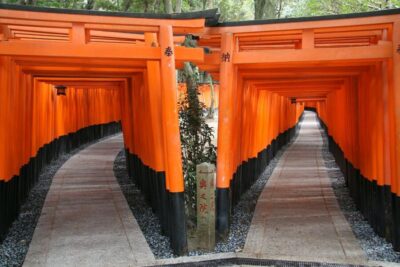
Fushimi Inari, Kinkakuji, Bamboo Grove 1 Day Bus Tour
Read our review →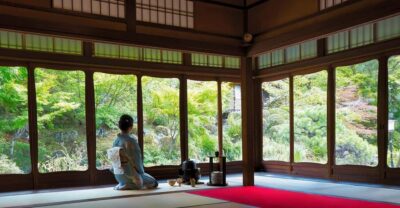
Tea Ceremony in a Traditional Tea House in Kiyomizu
Read our review →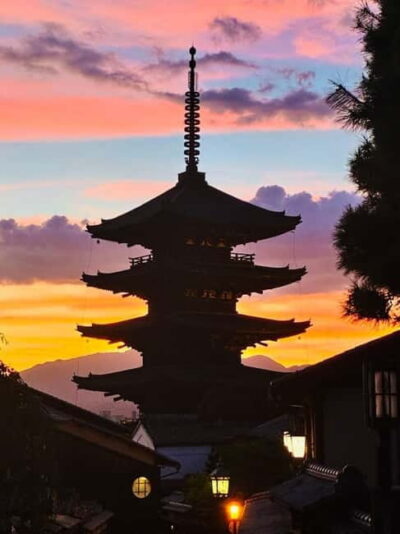
Kyoto Geisha Walking Tour: Gion District & Hidden Gems
Read our review →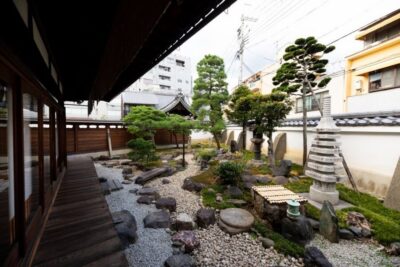
Gion Magical Night Walking Tour with Geisha Trivia
Read our review →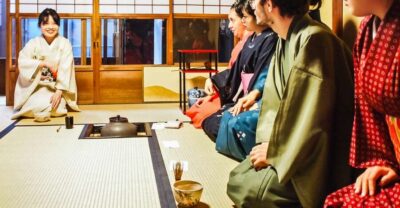
Gion Geisha District Walking Tour – Stories of Geisha
Read our review →Browse the lists this tour appears in