
Reviewed · KYOTO TOURS
Kyoto: Tea Ceremony in 100-year-old Kyo-Machiya Townhouse
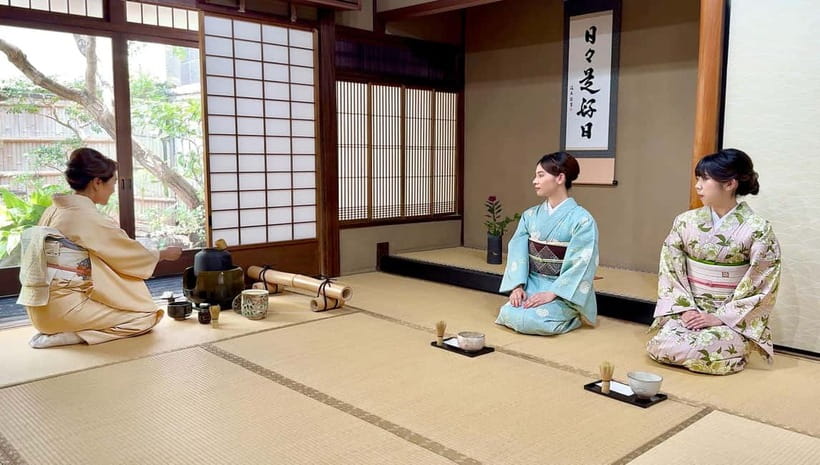
A tea ceremony in Kyoto can be either a quick photo stop or a quiet lesson in Japanese manners. This one takes place inside a 100-year-old Kyo-Machiya townhouse, where a tea master explains each bow, greeting, sweet, and turn of the whisk before you prepare matcha yourself.
I especially like two things here: you take part instead of only watching, and the setting feels far more meaningful than a modern activity room. The nearby Kyoto Imperial Palace area adds a sense of place, with old court culture and poetry traditions tied to the neighborhood.
The main consideration is timing. The tea ceremony alone lasts about 50 minutes, but the kimono option begins two hours before the ceremony and requires you to return the clothing by 5:30 PM. Walking in several kimono layers can also be warm and restrictive, especially in summer.
Key points to know before booking
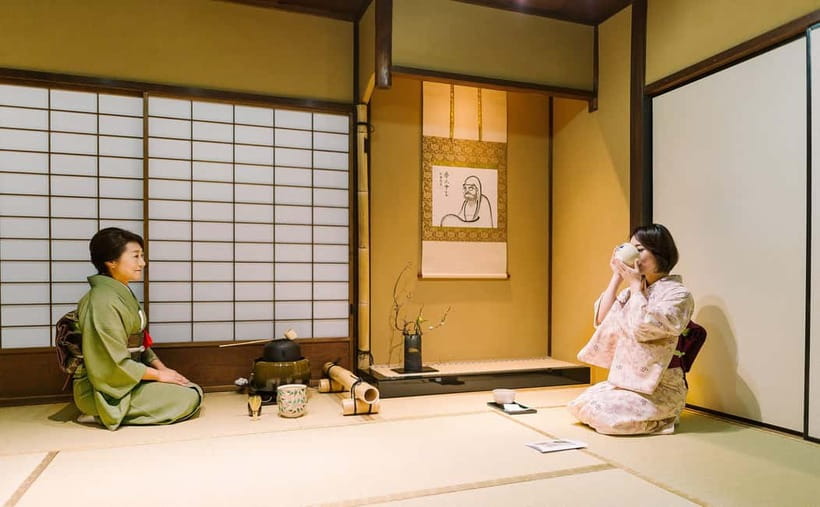
- Prepare your own matcha: After watching the tea master, you whisk your own tea under close guidance.
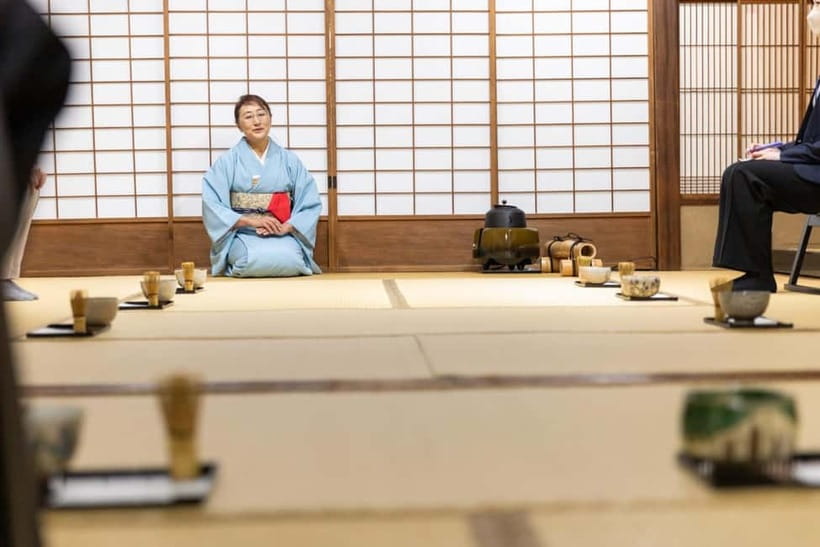
- Enter a real machiya setting: Tatami, paper screens, wooden details, and a quiet tea room frame the lesson.
- Choose your level of dressing up: Casual kimono rental is available, with optional hairstyling, makeup, accessories, and a formal Houmongi upgrade.
- Plan for two separate locations: Kimono pickup is at the Yumeyakata Gojo Shop, while the ceremony is at Yumeyakata Oike Bettei.
- Sit on the floor or use a small chair: You do not need to kneel for the full session.
- Add a townhouse tour: The optional 30-minute Machiya Moment includes a 20-minute architecture tour and 10 minutes for photos.
What happens inside the old Kyoto townhouse
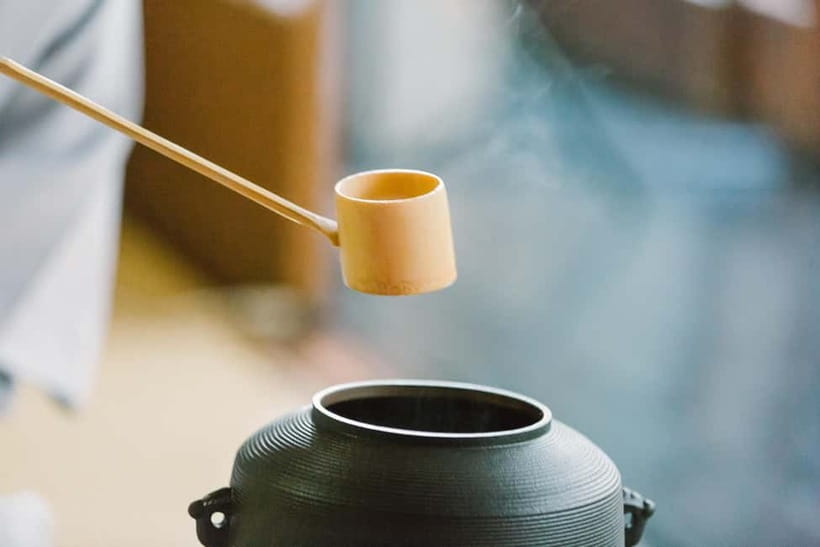
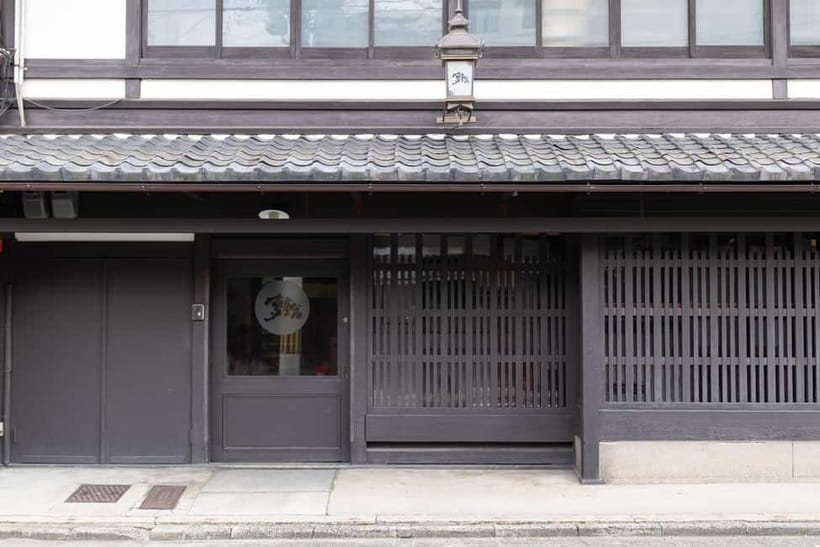
The tea house sits near Kyoto Gosho, or the Kyoto Imperial Palace, in one of the city’s most historically important areas. The setting matters. You are not simply learning how to make a green drink. You are entering a house style linked to Kyoto’s older urban life, where narrow townhouses combined living space, work areas, storage, and carefully arranged rooms.
Inside, expect tatami flooring, paper screens, woodwork, and a calm room arranged for the ceremony. The exact room can change with the size of the group, and the session can hold up to 20 people. That means the atmosphere may feel intimate in a small group, but less private when the room is full.
The ceremony begins with an explanation of tea culture. You learn that tea first came to Japan from China roughly 1,200 years ago, then developed into the formal Way of Tea practiced today. This background gives the gestures some meaning. A bow is not just a bow, and turning the bowl is not a random rule invented to slow things down.
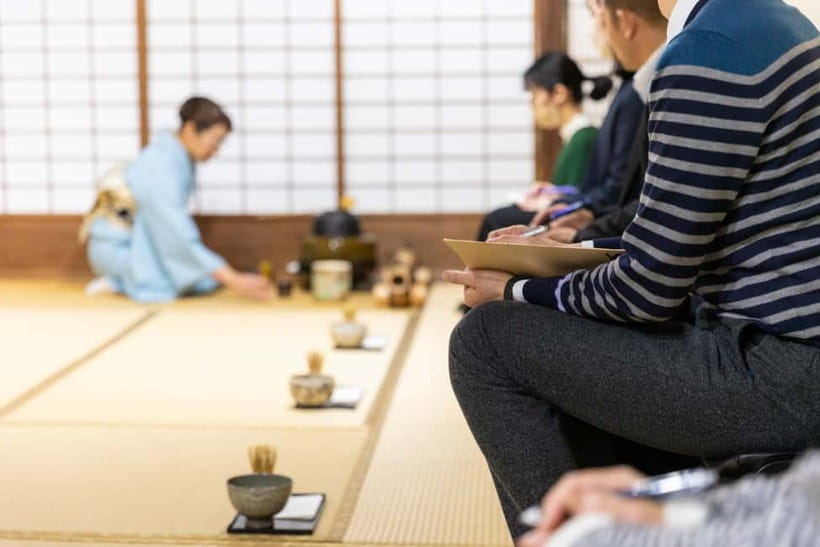
The tea master demonstrates the proper sequence. You learn how to greet the host, how to bow, how to receive the traditional sweet, and how to hold and appreciate the tea bowl. The interpreter provides English support, while the master may conduct parts of the ceremony in Japanese. Several sessions have included a tea master such as Maki or a guide such as Lim, with the exact staff depending on the date and booking.
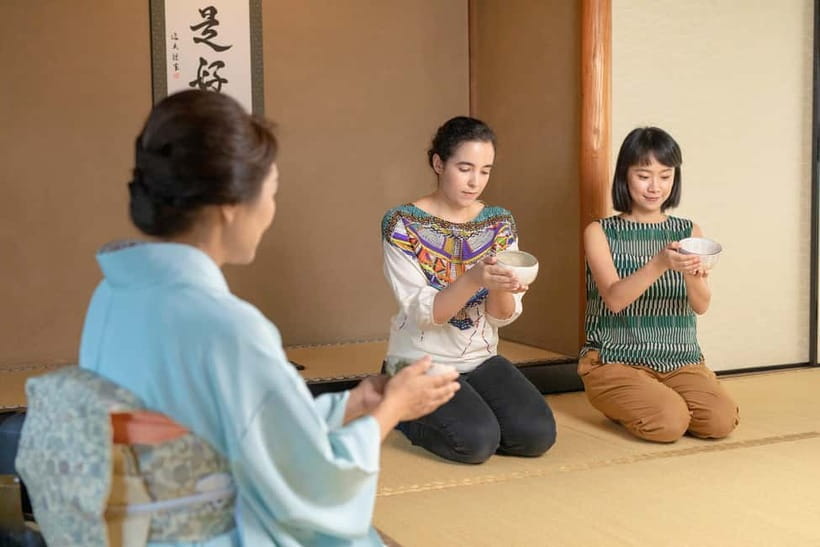
The first bowl is prepared by the master for a guest. You watch the careful movements, from handling the utensils to whisking the matcha into a smooth drink. Then the practical part begins: you prepare your own tea under supervision.
That hands-on step is important. I find that the ceremony becomes easier to understand once you have tried to coordinate the bowl, scoop, water, and whisk yourself. Your first matcha may not look perfect, but the point is not to pass a tea-making test. The point is to notice the care behind a very simple-looking act.
You receive matcha and a traditional Japanese sweet. The sweet balances the tea’s bitter edge, so do not skip it or treat it as decoration. You can ask questions at the end, and there is usually time for photographs around the tea house, provided you follow the no-flash rule.
More Tea Ceremonies in Kyoto
- Kyoto: Tea Ceremony in a Traditional Tea House in Kiyomizu
★ 4.9 · 3,519 reviews - Kyoto: Tea Ceremony Ju-An at Jotokuji Temple
★ 4.9 · 3,207 reviews - Kyoto: 45-Minute Tea Ceremony Lesson Experience
★ 4.3 · 2,378 reviews
Why the tea ceremony feels more than a demonstration
A short cultural activity can easily become a performance made for cameras. This one works better because you are taught the reasons behind the actions and then asked to repeat them yourself.
The tea master’s movements are formal, but the teaching is designed for beginners. You do not need prior knowledge of Japanese etiquette. The English interpreter helps explain the details, and the hosts are used to guiding people through their first ceremony.
The tone is quiet and respectful. That is part of the appeal, but it also creates a firm limit. This is not a loud group activity, and it is not suitable for children under 10. Disruptive behavior can end the session, so you need to be comfortable listening and following a calm pace.
The ceremony uses a small chair for people who prefer not to sit on the floor. That is a useful touch, since kneeling on tatami can be difficult even during a 50-minute session. You should still bring socks. Sandals and flip-flops are not allowed, and bare feet would be out of place in the tea room.
The history lesson also gives the neighborhood more weight. The tea house is beside the former residence of Nijō Yoshimoto, a high court noble from the 14th century and an important figure in linked-verse poetry. The Kyoto Imperial Palace district served for centuries as a center for court gatherings, poetry, tea, and art.
You will not receive a full academic lecture on aristocratic Kyoto. The information is presented as an introduction. Still, it helps you see the tea ceremony as part of a wider culture of refined hospitality rather than a standalone ritual.
Picking up a kimono at Yumeyakata Gojo Shop
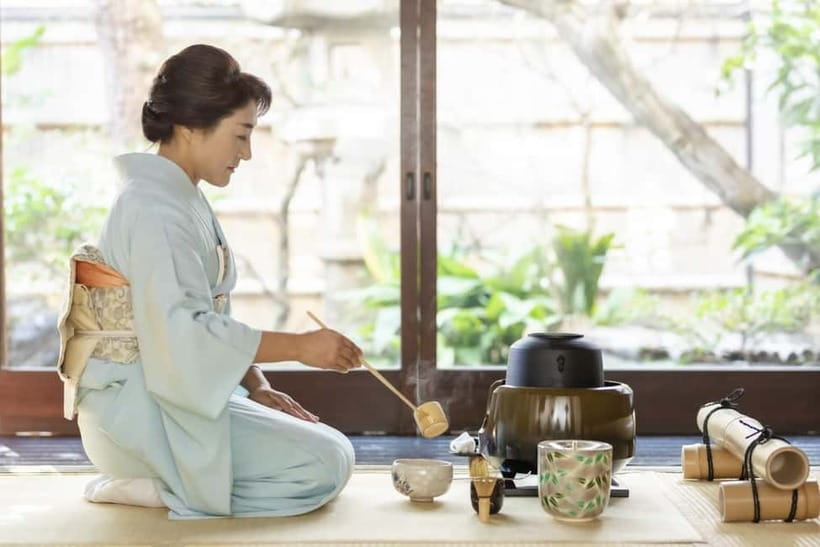
The kimono plan starts at the Yumeyakata Gojo Shop at the time printed on your voucher. You choose from different colors, patterns, and sizes, then staff help dress you.
The standard option includes a casual kimono. If you select the extra package, women can add hairstyling, makeup, a hair accessory, and an upgrade to a formal Houmongi. This is a major difference in feel. The basic plan gives you the pleasure of wearing traditional clothing, while the premium option creates a more complete dress-up session.
Allow plenty of patience during this part. A kimono is not just a robe thrown over ordinary clothes. One customer noted how many layers were involved, and that detail explains why walking in one can feel uncomfortable on a hot day. The clothing looks graceful, but it limits your stride and can make a full afternoon on foot tiring.
The staff at the rental shop are described as efficient and helpful, which matters when the schedule is tight. After dressing, you make your own way from Gojo to the tea house. Transportation between the two sites is not included, so check the route before you book and leave enough time.
For the kimono plan, the tea ceremony starts two hours after your chosen pickup time. If you select 11:00 AM, the ceremony begins at 1:00 PM. This two-hour gap is not wasted time, since it allows for dressing and travel, but you should understand that the activity occupies much of your day.
Wearing the kimono around Kyoto
After the ceremony, you may stroll around Kyoto in the rented kimono before returning it to the Yumeyakata Gojo Shop by 5:30 PM the same day. This gives the clothing practical value rather than limiting it to a few minutes inside the tea room.
I would keep the walk manageable. Kyoto’s streets can be uneven, and kimono footwear and layered clothing are not ideal for a long sightseeing march. A short route near the tea house or a carefully chosen set of nearby stops makes more sense than trying to cross the city.
The outfit is especially useful for photographs. The traditional house, garden details, umbrellas, and, in some sessions, a katana prop provide a more convincing setting than a quick rental-shop snapshot. Professional photos and videos are not included, so you take your own pictures or ask the guide when appropriate.
Flash photography is not allowed. You should also avoid assuming that every moment can be interrupted for a picture. The best photos usually come before or after the formal ceremony, when you can enjoy the quiet without disturbing the room.
Same base, a completely different sort of day:
- PERFECT KYOTO 1-Day Bus Tour
★ 5.0 · 13,518 reviews - Kyoto: Fushimi Inari, Kinkakuji, Bamboo Grove 1 Day Bus Tour
★ 4.8 · 4,316 reviews - Kyoto Geisha Walking Tour: Gion District & Hidden Gems
★ 4.7 · 3,273 reviews - Kyoto: Gion Magical Night Walking Tour with Geisha Trivia
★ 4.9 · 2,393 reviews
The optional 30-minute Machiya Moment
The Machiya Moment takes place right after the tea ceremony at the same site. It lasts 30 minutes, divided into a 20-minute townhouse tour and 10 minutes for selfies and personal photos.
This add-on suits anyone who wants more than the basic tea lesson. The tour explains the architecture, cultural role, and practical features of machiya homes. You may learn about details that are easy to miss when you are focused on the tea bowl, such as how the house layout reflects older Kyoto life.
The photo time is short, so plan your priorities. If you want portraits in several poses or outfits, ten minutes disappears quickly. The add-on is best viewed as a brief extension of the tea ceremony, not a full professional photo session.
The location near the Imperial Palace gives the tour a useful historical frame. For centuries, the area connected the imperial court and aristocracy with literary and artistic life. A tea gathering here feels tied to Kyoto’s older social world, even though the session itself remains accessible to first-time visitors.
How much value do you get for $31?
At about $31 per person, the tea ceremony alone is fairly priced for a guided cultural lesson in a traditional house. You receive the tea, sweet, instruction from a tea master, interpretation, and a chance to make your own matcha. The 50-minute length also suits a busy Kyoto schedule.
The value depends on what you want. If you only want to taste matcha, this is more instruction than you need. Kyoto has simpler ways to buy a cup of tea. If you want to understand the etiquette and meaning behind the ritual, the price covers much more than a drink.
The kimono option changes the calculation. You add clothing rental, dressing assistance, and the chance to wear the outfit around Kyoto, with extra charges for hairstyling, makeup, accessories, and formal Houmongi wear. The plan takes longer and requires transport between two locations, but it can replace a separate kimono rental activity.
The best value comes if you want both activities in one outing. You get dressed, attend the ceremony, take photos, and return the clothing later that day. If you dislike changing clothes or have only a narrow window, book the tea ceremony without the kimono.
Free cancellation up to 24 hours before the start and the option to reserve now and pay later make the booking less rigid. You should still check the exact start time and meeting point for your chosen plan, since they vary.
Group size, comfort, and practical limits
The experience can accommodate up to 20 people. A full group may mean less personal attention and a room arranged for several participants, while a smaller session may feel quieter and allow more time for questions.
You can sit on the floor or use a small chair. This makes the activity workable for many people who cannot kneel comfortably, but the experience is not suitable for wheelchair users, pregnant women, babies under one year, or people over 200 centimeters or 95 kilograms. It also is not suitable for people with visual impairments, according to the stated restrictions.
Arrive on time. Late arrivals may still be admitted, but the session will not be extended. Food and drinks other than the served tea and sweet are not allowed, smoking indoors is prohibited, and pets cannot come along.
The instructors speak Japanese and English. Translation is part of the experience, and the quality may vary slightly by session. One English-language participant found the explanations easy to follow despite some limits in spoken English, while others specifically praised the interpreter’s clarity. The ceremony itself is demonstrated visually, so you can usually follow the movements even when a phrase needs repeating.
Who will enjoy this Kyoto activity most?
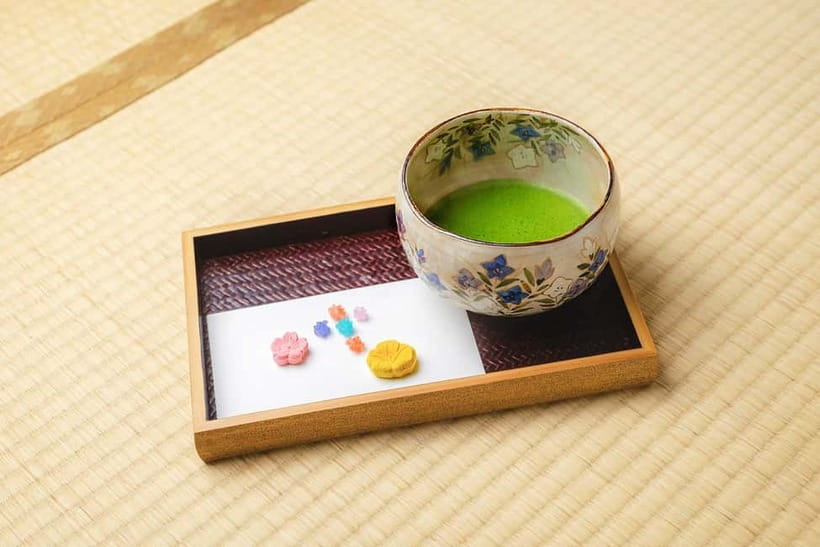
I would choose this for a first visit to Kyoto when you want one cultural activity with clear instruction and a strong setting. It suits couples, friends, solo visitors, and families with children aged 10 or older who can respect the quiet atmosphere.
It is also a good match for anyone curious about Japanese manners. You do not simply watch a master perform. You learn how to receive the bowl, eat the sweet, drink the tea, and make matcha yourself. Those small actions help you notice similar customs later in temples, restaurants, and traditional homes.
The kimono plan works well for people who want photographs and do not mind giving the activity several hours. The tea-only plan is better for travelers building a busy sightseeing day around the Imperial Palace area.
I would think twice if your main goal is a private, highly formal ceremony. The session is a group activity, and the room size depends on attendance. I would also skip the kimono option on a very hot day if you expect to walk far afterward.
Should you book the Kyoto tea ceremony?
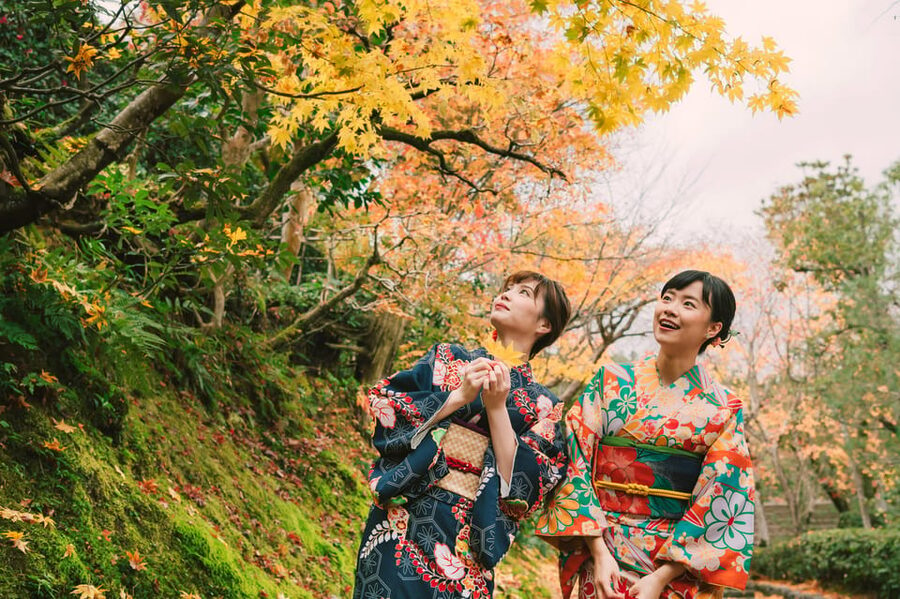
Book it if you want a calm, hands-on introduction to Japanese tea culture in a house with genuine Kyoto character. The strongest parts are the master’s demonstration, your chance to whisk matcha, the traditional sweet, and the setting near Kyoto Imperial Palace.
Choose the tea-only plan for a focused 50-minute lesson. Choose the kimono plan if dressing up, taking your own photos, and walking through Kyoto in traditional clothing are central to your day. Add the Machiya Moment if you want the architecture explained instead of simply used as a backdrop.
Bring socks, arrive early, and allow time for transport if you rent a kimono. With those details handled, this is a thoughtful and reasonably priced way to spend part of a Kyoto day.
FAQ
How long does the tea ceremony last?
The tea ceremony alone lasts about 50 minutes. Plans that include kimono rental and optional activities can last between 50 minutes and three hours, depending on the selection.
Where does the tea ceremony take place?
It takes place at Yumeyakata Oike Bettei, a traditional machiya townhouse near the Kyoto Imperial Palace.
Where do I go for the kimono rental?
For the kimono plan, go first to the Yumeyakata Gojo Shop at the starting time printed on your voucher. You then make your own way to the townhouse.
How much time is there between kimono pickup and the ceremony?
The ceremony begins two hours after the selected kimono pickup time. A booking beginning at 11:00 AM has a tea ceremony start time of 1:00 PM.
Can I make my own matcha?
Yes. The tea master first prepares tea for a guest, then guides you as you prepare your own bowl under supervision.
Do I have to sit on the floor?
No. You may sit on the floor or use a small chair. Tell the staff if you prefer the chair.
What should I bring to the tea ceremony?
Bring socks. Sandals and flip-flops are not allowed.
Can I wear the kimono around Kyoto afterward?
Yes, if you select the kimono plan. You must return the kimono to the Yumeyakata Gojo Shop by 5:30 PM on the same day.
Just added around Kyoto
- Kyoto: Zen Meditation at a Private Temple with a Monk★ 5.0 · 25 reviews
- Kyoto: Gion Geisha District & Sake-in-Hand Walking Tour★ 5.0 · 37 reviews
- Private Pewter Sake Cup Experience with a Kyoto Artisan★ 5.0 · 31 reviews
- Your Private Vacation Photography Session In Kyoto★ 5.0 · 110 reviews
- Private Guided Traditional Buddhist Cooking in Japan★ 5.0 · 16 reviews
- Kyoto Wagashi(Japanese sweets) Cooking Class near Fushimiinari★ 5.0 · 60 reviews
- Traditional Japanese Music show & Experience Tour in Kyoto★ 5.0 · 57 reviews
- Kyoto:Family-Friendly Kimono & Yukata Experience at WARGO★ 5.0 · 147 reviews
Kyoto Tours, compared.
Fushimi Inari, Kinkakuji, Bamboo Grove 1 Day Bus Tour
Read our review →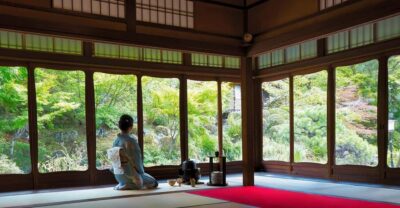
Tea Ceremony in a Traditional Tea House in Kiyomizu
Read our review →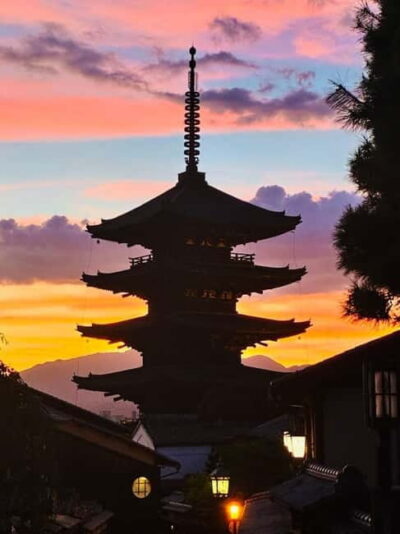
Kyoto Geisha Walking Tour: Gion District & Hidden Gems
Read our review →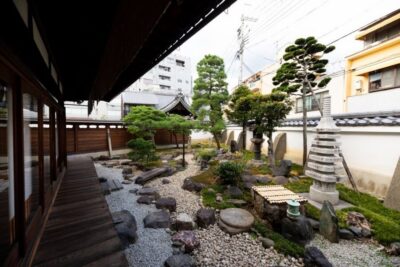
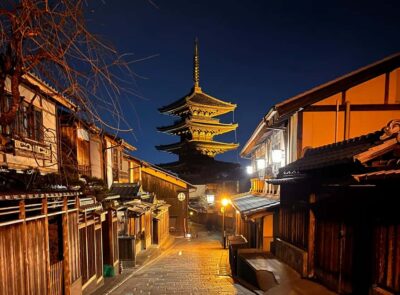
Gion Magical Night Walking Tour with Geisha Trivia
Read our review →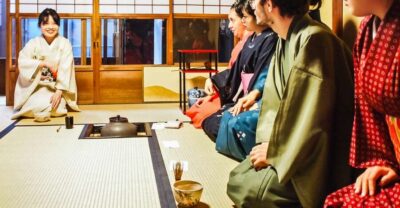
Gion Geisha District Walking Tour – Stories of Geisha
Read our review →Browse the lists this tour appears in