
Reviewed · KYOTO TOURS
Matcha Grinding Experience and Walking Tour in Uji Kyoto
Uji’s best lesson is hands-on: you grind tea leaves yourself, then drink the fresh matcha you have made. That simple act gives you a better feel for Japanese tea than another quick cup at a café. You also visit Byodo-in Temple, the famous building shown on Japan’s 10-yen coin.
I like the small group size, capped at six, and the way the tour joins tea culture with Uji’s major sights. I also like the personal touch reported by guests who toured with Vincent, who adjusted the pace and explained temples, shrines, local history, and the tea-making process clearly. The main drawback is the price, $130.46 per person, which is a serious spend for a four-hour outing, especially since you must make your own way to Kyoto Station.
Key points at a glance
- Grind your own matcha: Use a traditional stone mill, then drink the powder you have made.
- See the 10-yen coin temple: Admission to Byodo-in Temple is included.
- Keep the group small: The maximum is six people, which allows room for questions and some flexibility.
- Taste Uji tea with a treat: Your fresh matcha comes with Japanese snacks or matcha ice cream.
- Visit three cultural stops: The route includes Byodo-in Temple, Uji Shrine, and Fukujuen Ujicha Kobo.
- Plan for simple logistics: Meet at Shinshindo near Kyoto Station at 9:30 a.m., and return to the same meeting point.
Why the matcha workshop is the heart of the tour
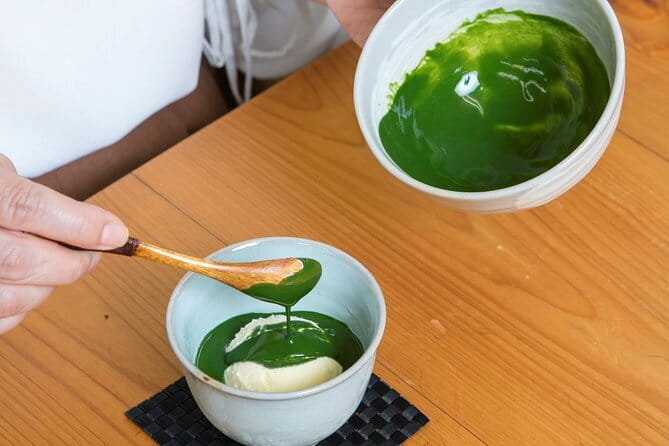
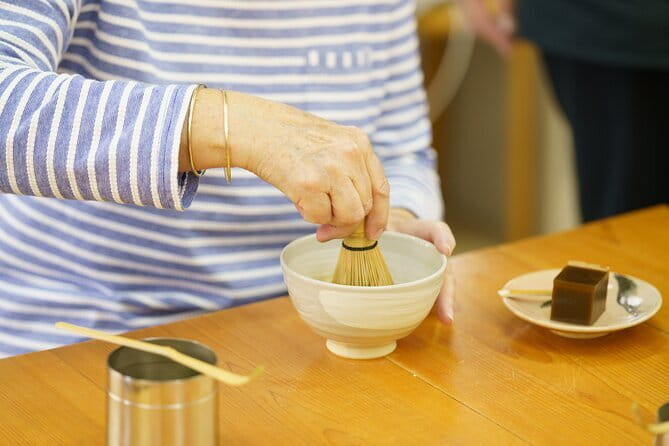
Uji is closely tied to Japan’s tea culture, and this tour gives you more than a tasting. At the workshop, you grind tea leaves into powder using a traditional stone mill. You then drink the matcha you have prepared, with a choice of Japanese sweets or matcha ice cream.
That process matters because matcha is not simply brewed and removed from the cup. The tea leaf is ground into fine powder and consumed as part of the drink. Making it yourself gives you a practical sense of the work behind the tea, while the guide explains why Uji is known for high-quality green tea.
I like this part because it gives the morning a clear purpose. The temple visits provide the setting and context, but the workshop is the activity you are likely to remember most. You are not only looking at an object behind glass or listening to a short explanation. You are handling the tea, preparing it, and tasting the result.
The experience does require you to wear a mask during the matcha-making workshop. Make that part of your plan before you leave Kyoto. You also need WhatsApp available before the tour, since the guide uses it for communication.
More walking tours in Kyoto:
- Kyoto Geisha Walking Tour: Gion District & Hidden Gems
★ 4.7 · 3,273 reviews - Kyoto: Gion Magical Night Walking Tour with Geisha Trivia
★ 4.9 · 2,393 reviews - Kyoto: Gion Geisha District Walking Tour – Stories of Geisha
★ 4.7 · 2,187 reviews
Byodo-in and the famous 10-yen coin view
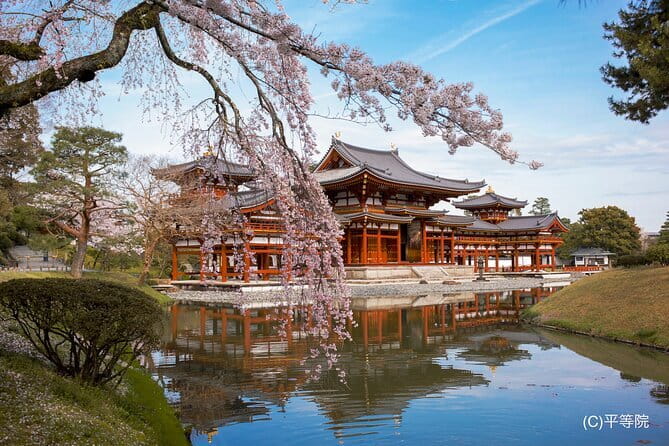
The tour’s first listed stop is Byodo-in Temple, one of Uji’s best-known sights. Its Phoenix Hall appears on the back of Japan’s 10-yen coin, so many visitors recognize the building before they arrive. Seeing the actual temple gives that familiar coin image a real setting and scale.
Admission is included, which improves the value of the tour. You do not have to handle a separate entrance payment during the morning, and the guide can help connect the building to Uji’s larger story.
The temple is also a useful counterpoint to the tea workshop. At Byodo-in, you look at a major work of Japanese architecture and learn through the guide’s explanation. At the workshop, you learn through touch and taste. I like that change of pace. Four hours can feel long if every stop is only sightseeing, but this route mixes walking, history, and a practical activity.
You should keep your expectations in check. The tour promises a visit to Byodo-in, not a full architectural study or an extended temple circuit. The time available must also cover Uji Shrine, Fukujuen Ujicha Kobo, and the matcha class. If you want to inspect every corner at a slow pace, a self-guided temple visit may suit you better.
Still, for a first look at Uji, Byodo-in is a strong choice. The site is famous, easy to connect with, and included in the price. A guide adds value by helping you notice why this particular building matters rather than treating it as just another stop on a busy sightseeing day.
Uji Shrine and the town’s cultural side
Uji Shrine gives the walk another layer. Byodo-in is the famous architectural stop, while Uji Shrine brings you to a different kind of religious site. The itinerary includes both, so you get a broader sense of Uji than you would from visiting the temple alone.
The supplied details do not set out a long list of shrine features or a detailed time schedule. That is useful to remember when planning your expectations. You are booking a guided introduction to Uji, not a specialist religious tour.
I would value this stop most if I wanted a guide to explain how the town’s cultural places fit together. The reviews describe Vincent showing several temples and shrines and talking guests through the local past. That suggests the walk is not limited to pointing at a building and moving on.
The small group limit also matters here. With no more than six people, it should be easier to hear the guide and ask a question without holding up a large crowd. A small group does not guarantee a private tour, but one review described the outing becoming private and allowing the group to go with the flow. That kind of flexibility is a welcome bonus, though you should not book expecting a private guide every time.
Fukujuen Ujicha Kobo and Uji’s tea identity
Fukujuen Ujicha Kobo is the third listed stop. It gives the route a direct link to Uji’s tea trade and provides the natural setting for learning why this area is associated with fine green tea.
The tour description places the matcha-making workshop at the center of the tea experience. Fukujuen Ujicha Kobo is therefore more than a name on the route. It helps tie the drink in your cup to the place you are exploring.
I like the order of ideas here: first, you see important cultural sites, then you learn about the local tea tradition, and finally you take part in making matcha. The guide can explain the history of Uji tea while you walk, then the workshop turns that explanation into something you can taste.
You should not expect hotel pickup. The tour begins at Shinshindo near the central exit area of JR Kyoto Station, inside the station’s bus ticket center area, at 9:30 a.m. The activity ends back at that same meeting point. Since the tour lasts about four hours, you should have the rest of the afternoon free for Kyoto plans, provided you allow time to return from Uji as part of the scheduled route.
A few more Kyoto half-days to weigh up
- PERFECT KYOTO 1-Day Bus Tour
★ 5.0 · 13,518 reviews - Kyoto: Fushimi Inari, Kinkakuji, Bamboo Grove 1 Day Bus Tour
★ 4.8 · 4,316 reviews - Kyoto: Tea Ceremony in a Traditional Tea House in Kiyomizu
★ 4.9 · 3,519 reviews - Kyoto: Tea Ceremony Ju-An at Jotokuji Temple
★ 4.9 · 3,207 reviews
What the four-hour schedule means for you
A four-hour tour is long enough to give Uji proper attention without taking your whole day. The start time of 9:30 a.m. is practical for a morning outing, but you should arrive ready to begin at the stated meeting point. The tour does not include hotel pickup, so your morning transport is your responsibility.
The exact time spent at each stop is not provided. That means the pace may depend on the group, guide, and conditions on the day. A group of six or fewer should allow for questions and some adjustment, but the tour still has several stops to cover.
I see the fixed start and end point as both a strength and a limitation. The strength is clarity: you know where to begin and where the activity finishes. The limitation is that you do not get dropped at your hotel or at a final attraction elsewhere in Kyoto.
Mobile ticketing keeps the booking simple, but the tour also asks you to have WhatsApp available for contact with the guide. I would check that your phone can use WhatsApp before booking, especially if you depend on hotel Wi-Fi or a travel data plan. This is a small detail, but it can prevent a morning of confusion.
The value of $130.46 per person

At $130.46 per person, this is not a budget way to see Uji. You are paying for more than transport or entry to one temple, though. The cost includes admission to Byodo-in, an English-guided walking tour, the matcha-making class, and Japanese snacks or matcha ice cream.
The best value comes if you want all those pieces combined. A self-guided visit may cost less, but you would need to arrange the route, learn the background yourself, and book or find a separate matcha activity. This tour puts the cultural visit and tea lesson into one four-hour plan.
The value is less convincing if you mainly want a quick taste of matcha or a short look at Byodo-in. In that case, the full price may feel high for an experience you could break into smaller, cheaper parts.
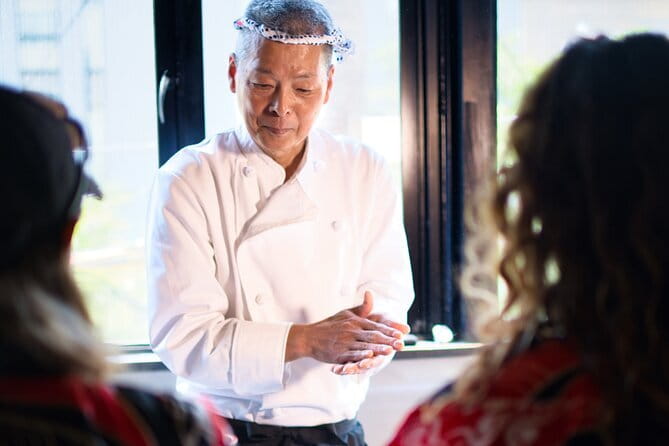
The maximum group size of six helps justify the price. A small English-guided group can make the experience more personal, particularly when the guide is explaining tea preparation or answering questions at a shrine. Feedback about Vincent is especially positive: he is described as friendly, clear, and good at explaining what the group saw. The tour provider is Tomodachi Tours, and Vincent appears in the supplied feedback as one of the guides.
I would think of the price as payment for structure and interpretation. You are not just buying powdered tea. You are paying to have someone connect Uji’s sights, tea culture, and local background in one morning. That is worthwhile for first-time visitors who want context and an easy plan.
Who will enjoy this Uji outing most

I would recommend the experience most strongly to matcha fans, first-time visitors to Uji, and people who prefer a guide to explain what they are seeing. The hands-on element also makes it a good choice if you want a cultural activity rather than a morning spent only taking photographs.
It suits couples, friends, and families who can manage a four-hour walking program. The small group size should help people who prefer a quieter experience. The included sweet or ice cream also gives the tea lesson a friendly finish.
You may want to skip it if you dislike tea, have no interest in temples and shrines, or want a completely independent day. The tour has a set meeting point, a set start time, and several planned stops. It offers some flexibility when the group is small, but it is still a guided activity.
I would also think carefully if you need hotel pickup. That service is not included. You need to reach Kyoto Station on your own and return there after the tour.
Practical details before you book
Confirmation is sent within 48 hours, subject to availability. The experience also requires a minimum number of participants, so it may be canceled if that number is not reached. If that happens, you are offered another date or experience, or a full refund.
The cancellation policy is generous if your plans change early. You can cancel at least 24 hours before the local start time for a full refund. Cancellations or changes made inside that 24-hour period are not accepted for a refund.
Wear a mask for the workshop, and make sure WhatsApp is available before the morning begins. I would also save the meeting point details on your phone: Shinshindo, JR Kyoto Station, near the central exit and bus ticket center area.
The tour is near public transportation, but hotel pickup is not part of the plan. Since the meeting point and return point are the same, you can arrange the rest of your day from central Kyoto after the activity ends.
Should you book the Matcha Grinding Experience?
Book this tour if you want Uji explained through both its landmarks and its tea. The stone-mill workshop is the strongest reason to choose it, while Byodo-in gives the morning a famous cultural anchor. A group capped at six and a guide such as Vincent can make the outing feel personal, especially when the group is small enough to adjust the pace.
The price is the key question. At $130.46, it makes sense for you if you value an English guide, included temple admission, a structured route, and a hands-on tea class. It makes less sense if you only want a brief temple visit or a cheap matcha drink.
For a first visit to Uji, I think the package is well judged. You see the 10-yen coin temple, visit Uji Shrine, learn about the town’s tea identity, and make a cup with your own hands. Just plan your transport to Kyoto Station, bring the required mask, keep WhatsApp ready, and allow the full four hours.
FAQ
How long does the Matcha Grinding Experience and Walking Tour last?
The tour lasts approximately four hours.
What time does the tour begin?
The tour begins at 9:30 a.m.
Where does the tour start?
It starts at Shinshindo near the central exit of JR Kyoto Station, in the station’s bus ticket center area.
Where does the tour end?
The activity ends back at the meeting point.
Is hotel pickup included?
No. Hotel pickup is not included, so you must reach the meeting point on your own.
What places are visited?
The listed stops are Byodo-in Temple, Uji Shrine, and Fukujuen Ujicha Kobo.
Is admission to Byodo-in Temple included?
Yes. The admission fee for Byodo-in Temple is included.
What happens during the matcha class?
You grind tea leaves into matcha powder with a traditional stone mill and drink the matcha you have made.
What food is included with the tea?
You receive Japanese snacks or matcha ice cream.
How many people can join the tour?
The maximum group size is six people.
Do I need WhatsApp before the tour?
Yes. WhatsApp should be available because the guide uses it for communication.
Do I need to wear a mask?
Yes. A mask is required during the matcha-making workshop.
Can I cancel for a full refund?
Yes, if you cancel at least 24 hours before the experience’s local start time. Cancellations or changes made less than 24 hours before the start are not refunded.
What happens if the tour does not meet its minimum number of participants?
You are offered a different date or experience, or a full refund.
Just added around Kyoto
- Kyoto: Zen Meditation at a Private Temple with a Monk★ 5.0 · 25 reviews
- Kyoto: Gion Geisha District & Sake-in-Hand Walking Tour★ 5.0 · 37 reviews
- Private Pewter Sake Cup Experience with a Kyoto Artisan★ 5.0 · 31 reviews
- Your Private Vacation Photography Session In Kyoto★ 5.0 · 110 reviews
- Private Guided Traditional Buddhist Cooking in Japan★ 5.0 · 16 reviews
- Kyoto Wagashi(Japanese sweets) Cooking Class near Fushimiinari★ 5.0 · 60 reviews
- Traditional Japanese Music show & Experience Tour in Kyoto★ 5.0 · 57 reviews
- Kyoto:Family-Friendly Kimono & Yukata Experience at WARGO★ 5.0 · 147 reviews
Kyoto Tours, compared.


Fushimi Inari, Kinkakuji, Bamboo Grove 1 Day Bus Tour
Read our review →
Tea Ceremony in a Traditional Tea House in Kiyomizu
Read our review →
Kyoto Geisha Walking Tour: Gion District & Hidden Gems
Read our review →

Gion Magical Night Walking Tour with Geisha Trivia
Read our review →

Gion Geisha District Walking Tour – Stories of Geisha
Read our review →Browse the lists this tour appears in