
Reviewed · KYOTO TOURS
Natural Indigo Dyeing with Local Masters (Private Atelier)
The most unusual part of this Kyoto workshop is the setting: you work inside a 300-year-old indigo studio, not a polished replica built for sightseeing. Local artisans still use fermented indigo, known as sukumo, and show you the vats, tools, and careful methods behind Japan’s famous blue cloth.
I like two things right away. First, you get real hands-on time with the fabric, rather than simply watching a demonstration. Second, the small group of no more than six makes it easier to ask questions, watch the folding closely, and get help from bilingual hosts such as Sakura. The main consideration is that this is a working traditional space, with wooden floors and no wheelchair access.
Key points at a glance
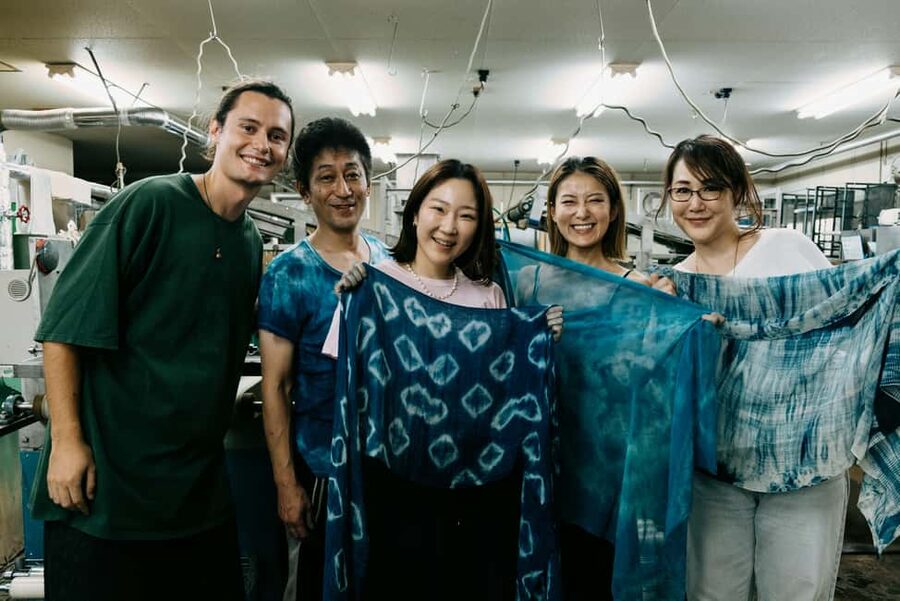
- A genuine working studio: Enter a family-run dye house with a history stretching back about 300 years.
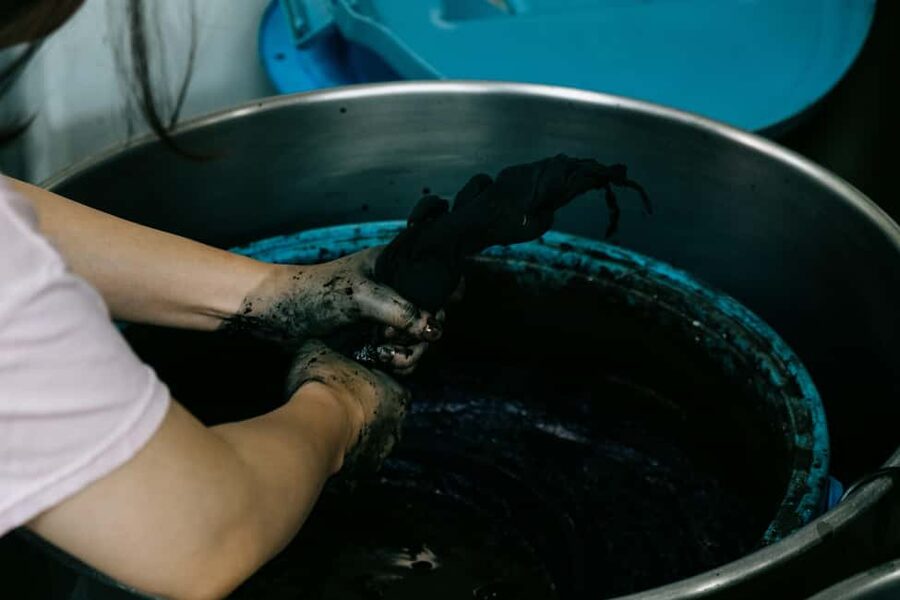
- Natural fermented indigo: Use sukumo vats without chemical dye, and watch green fabric turn blue through oxidation.
- One useful handmade item: The basic price includes one cotton furoshiki, about 45 to 50 centimeters wide.
- Small-group instruction: The group is capped at six, with Japanese and English support.
- A calm Kyoto finish: Sip indigo leaf tea, learn furoshiki wrapping, and take home a small souvenir.
- Optional upgrades: Cotton or silk scarves and a wool stole are available for an additional fee on the day.
Entering a 300-year-old indigo studio
The studio is in western Kyoto, in a quiet area away from the city’s busiest sightseeing routes. The exact address is given after booking, so you should allow about 30 minutes from Kyoto Station by train and on foot.
That extra travel time is part of the appeal. This is not a workshop placed beside a major temple or inside a department store. You are being taken to a real dye house, where the tools, vats, woodwork, and finished textiles belong to an ongoing craft business.
The family connection matters. The workshop is a multi-generational operation, and this program is its first offering made specifically for international visitors. You are not being shown a simplified set built to resemble an old studio. You are being welcomed into a place where natural dyeing remains serious daily work.
The setting also calls for sensible expectations. Traditional wooden floorboards can be uneven, and the space is not wheelchair accessible. Wear shoes you can walk in and casual clothes that can get dirty. An apron, gloves, and shoe covers are provided, but dye workshops are not the place for your best white shirt.
A few more Kyoto half-days to weigh up
- PERFECT KYOTO 1-Day Bus Tour
★ 5.0 · 13,518 reviews - Kyoto: Fushimi Inari, Kinkakuji, Bamboo Grove 1 Day Bus Tour
★ 4.8 · 4,316 reviews - Kyoto: Tea Ceremony in a Traditional Tea House in Kiyomizu
★ 4.9 · 3,519 reviews
The first 15 minutes: tools, vats, and the story of Japanese blue
The opening portion lasts about 15 minutes. A local host explains the place of indigo in Japanese life and introduces the basic tools and stages of the craft.
You will hear about sukumo, the fermented indigo material used in the vats. Natural indigo is not simply poured from a bottle. It depends on patient preparation and careful control of the vat, which helps explain why producing a steady, strong blue takes skill.
One of the most memorable sights is the scale of the vats. They are large working vats used for substantial textiles, including kimono fabric. Seeing them before you handle your own small cloth gives the workshop a useful sense of proportion. Your furoshiki is a modest project, but the method belongs to a much larger craft tradition.
The English support is an important part of the visit. The artisan may speak Japanese while the bilingual host interprets the process and cultural points. Sakura has helped translate the master’s explanations, including the more technical parts of shibori and dye preparation. That kind of support makes a difference when a craft depends on sequence, timing, and hand movements rather than a few simple instructions.
Folding and binding your cotton furoshiki
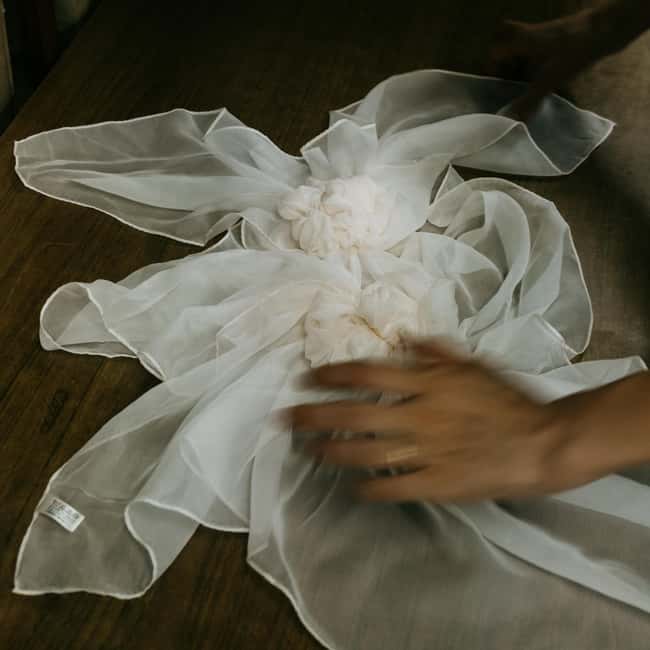
The main work takes about an hour. You choose a pattern, then fold and bind the cotton before it goes into the vat. This is the shibori part of the process, where folds, ties, and compression keep sections of the cloth from taking the dye.
The beauty is that you do not know the complete result until the fabric is opened. A tied section may create a white mark, a pale blue shape, or a sharper contrast than expected. The finished pattern comes from the relationship between your folds and the movement of the dye through the cotton.
Artisans guide you through each step. That matters because a small change in how tightly you bind a section can affect the final design. You are not left to guess your way through the work, but you still make the creative choices yourself.
The basic workshop includes one cotton furoshiki, approximately 45 to 50 centimeters across. It is a practical size for wrapping a lunch box, carrying small items, or giving as a Japanese-style gift wrap. It also packs easily, which is useful if you are still moving around Japan.
The supplied information also describes a large handkerchief with cherry-blossom embroidery or a traditional tenugui as included choices. Since the exact item selection may depend on the session, confirm the available base item when you arrive. Extra fabric beyond the included piece is not part of the standard fee.
Watching green cloth become Kyoto blue
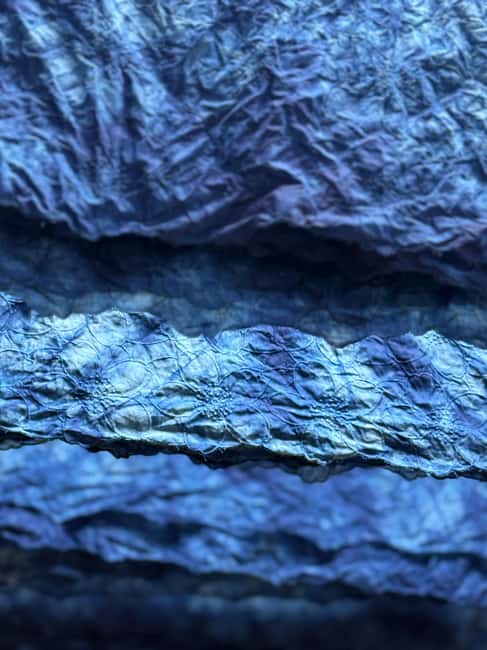
The color change is the workshop’s small piece of theater, but it is also a lesson in chemistry. Freshly removed cloth can look greenish. Exposure to air causes oxidation, and the color shifts toward blue as the fabric is lifted, opened, and allowed to react.
You may repeat the dipping and airing process under the artisan’s direction. The goal is not simply to make the cloth darker. It is to understand how the vat, the cloth, the folds, and the exposure to air work together.
Natural dyeing rarely produces the perfectly uniform result of a factory-made textile. That is part of its character, but it also means your finished piece may have slight variations. If you want a flawless printed pattern, this is not the right activity. If you like the idea of carrying home evidence of your own hands, the irregularities are a benefit.
The studio’s use of real fermented indigo is central to the value here. Many craft activities use prepared dyes because they are easier to control. This workshop lets you see and use a traditional vat, while the artisans handle the parts that require years of practice.
Same base, a completely different sort of day:
- Kyoto Geisha Walking Tour: Gion District & Hidden Gems
★ 4.7 · 3,273 reviews - Kyoto: Tea Ceremony Ju-An at Jotokuji Temple
★ 4.9 · 3,207 reviews - Kyoto: Gion Magical Night Walking Tour with Geisha Trivia
★ 4.9 · 2,393 reviews - Kyoto: 45-Minute Tea Ceremony Lesson Experience
★ 4.3 · 2,378 reviews
The tea break and traditional wrapping lesson
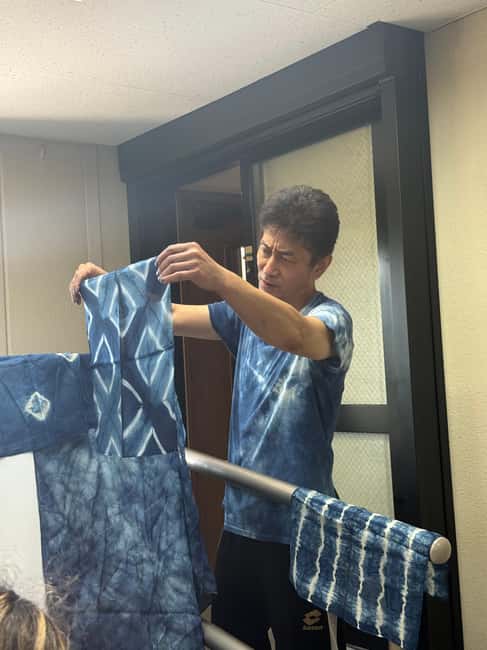
After the dyeing, the pace slows. You sit with a cup of indigo leaf tea and have time to ask questions, look at your finished cloth, and take photographs.
The tea is not a meal, and you should not arrive expecting a snack or lunch. It is a simple closing ritual that gives the color time to settle and lets the group talk with the host and artisans.
You also receive a demonstration of furoshiki wrapping. This adds practical value to the cloth. You learn that the square is not just a souvenir but a reusable way to carry, wrap, and present objects. The lesson connects the item you made with ordinary Japanese use.
The studio’s gallery and displays add another useful layer. You can look at finished dyed textiles and kimono work, which helps you compare your first attempt with the results of experienced hands. There may also be a chance to buy additional dyed pieces from the studio. This is optional, and you should bring extra money only if you think you may want an artisan-made souvenir.
Should you upgrade to a scarf?
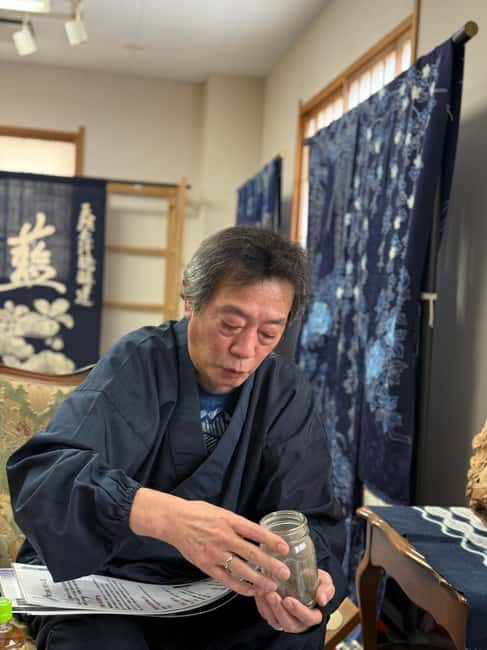
The included furoshiki is enough for a satisfying session, and I would choose it if you want to keep the cost down or prefer a compact keepsake. It gives you the full folding, binding, dipping, and opening process without requiring an additional purchase.
On-site upgrades include a lightweight cotton scarf, a silk scarf, and a wool stole made from Mongolian wool. The extra prices are not provided in advance, so ask before making your choice.
A scarf can be a sensible upgrade if you plan to wear or use the finished item. Cotton is light and practical, silk offers a more luxurious feel, and the wool stole is the largest and warmest option. The tradeoff is cost and drying or packing space. You should decide based on use, not just size.
One useful point is that the upgrade choice appears to happen on the day. You can see the available materials and colors before deciding. That is better than paying for a premium item sight unseen, though it also means you should set a spending limit before you arrive.
What the $95 price really covers
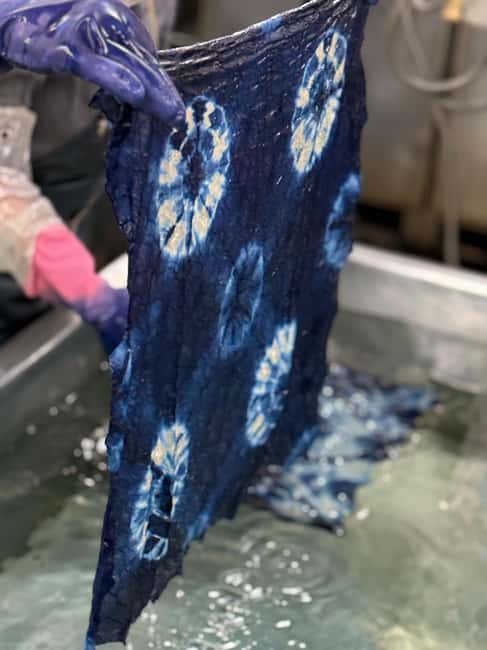
At $95 per person, this is not the cheapest craft class in Kyoto. The price makes more sense when you consider what is included: a private historical studio, a small group of six or fewer, artisan instruction, English interpretation, natural fermented indigo, an apron, gloves and shoe covers, tea, one cotton furoshiki, a wrapping demonstration, and a small souvenir.
You are also paying for access to a working family business that normally is not set up as a standard public attraction. The value is strongest for someone interested in Japanese craft, textiles, natural materials, or cultural traditions that are still practiced rather than merely displayed.
The value is weaker if you only want a quick souvenir or a large amount of fabric. The standard session includes one small-to-medium cotton piece, not a garment or large textile. Shipping is not included, though it may be available on request for an extra cost.
The two-hour format is well judged for most people. It leaves enough time for context and careful work without turning the class into a full-day commitment. The advertised duration can be 1.5 to 2 hours, so check the exact start time and length when booking.
Who will enjoy this workshop most?
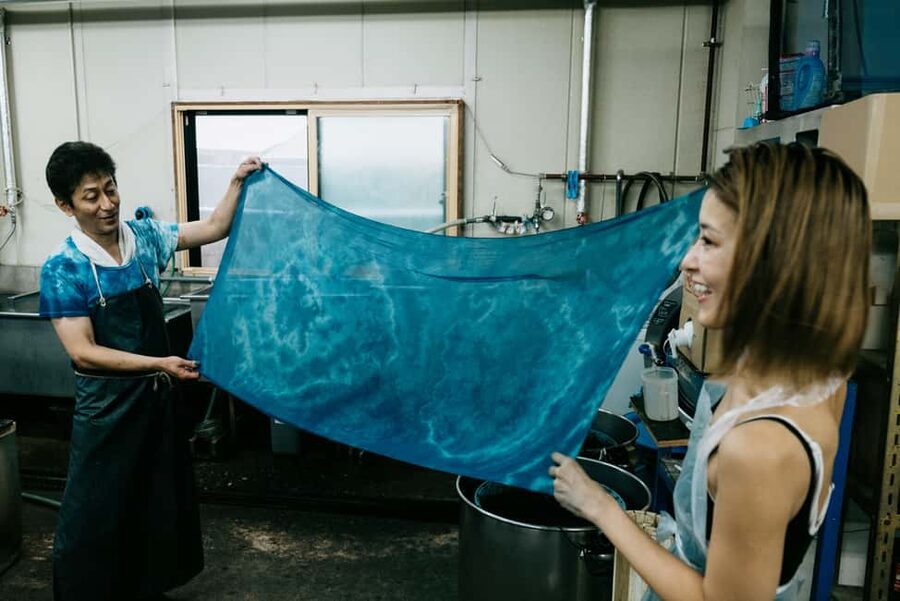
This is a strong choice for adults who like textiles, Japanese design, natural dyeing, or small family-run businesses. It also works well for families. The minimum age is eight, and one participant described it as suitable for both children and adults. Younger children will need help with the folding and binding, especially around the vats.
It is also a good rainy-day or slower-afternoon activity. You do not need a full day of sightseeing to make it worthwhile, and the work gives you a break from temples, trains, and crowded shopping streets.
I would recommend it to repeat visitors who have already seen Kyoto’s major sights and want a more local craft connection. First-time visitors can enjoy it too, but remember that the studio is some distance from Kyoto Station and the address is provided only after confirmation.
This is less suitable for anyone needing wheelchair access, anyone who dislikes getting hands-on with materials, or anyone who wants a polished result with no surprises. The studio is traditional, the work is manual, and the design depends partly on your own choices.
Practical details that can shape your visit
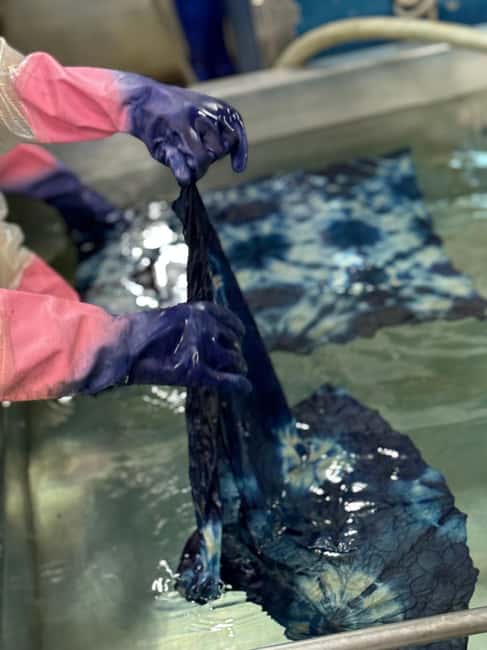
The session is offered in English and Japanese, with bilingual cultural support. The group limit of six is one of its best practical features because dyeing requires close instruction and the studio itself is not designed for a large crowd.
Bring comfortable shoes and clothes that can get dirty. No clothing change room is provided. Protective gear is supplied, but you should still avoid delicate clothing and bulky sleeves.
Transportation is not included. From Kyoto Station, plan for roughly 30 minutes by train and on foot, then allow a little extra time because the studio’s precise location arrives after booking.
Cancellation is free up to 24 hours before the activity for a full refund. You can also reserve and pay later, which is helpful when your Kyoto schedule may change. These policies do not alter the craft itself, but they make it easier to fit the workshop into a packed Japan itinerary.
The overall rating is five out of five from 19 reviews, with repeated praise for the patient staff, clear explanations, translation, and the chance to see large working vats. The strongest pattern is simple: people value the combination of real craft instruction and a finished item they made themselves.
Final decision: book it for the craft, not just the souvenir
I would book this workshop if you want to understand how natural indigo works and meet the people keeping the process alive. The strongest parts are the authentic studio, the fermented sukumo vats, the small group, and the patient bilingual help from people such as Sakura.
Choose the included furoshiki if you want the best control over your budget. Consider a scarf only if you will genuinely use it, and ask about the upgrade price before starting.
Skip it if you want a central Kyoto activity, wheelchair access, a large garment, or a quick commercial souvenir. For everyone else, $95 buys more than a dyed cloth. It buys time inside a working craft tradition, plus a useful reminder of Kyoto that carries the marks of your own hands.
FAQ
Where does the indigo dyeing workshop take place?
It takes place in a historic indigo studio in western Kyoto. The exact address is provided after booking.
How long does the activity last?
The workshop lasts about 1.5 to 2 hours, with the scheduled duration listed as two hours.
How much does the workshop cost?
The price is $95 per person.
What item is included?
One cotton furoshiki cloth, approximately 45 to 50 centimeters, is included in the basic workshop fee.
Can I dye a scarf instead?
Yes. Cotton and silk scarves, along with a wool stole, may be available as upgrades for an additional fee paid on site.
Is the dye natural indigo?
Yes. The studio uses natural fermented indigo called sukumo and does not use chemical dye for the workshop.
Is English support available?
Yes. The activity is offered in English and Japanese, with bilingual cultural support.
How many people can join?
The group is limited to six participants.
Is the workshop suitable for children?
The minimum age is eight. The activity is described as suitable for children and adults, though younger children may need help with the folding and dyeing steps.
Is the studio wheelchair accessible?
No. The traditional studio is not wheelchair accessible and has wooden floorboards.
What should I wear?
Wear comfortable shoes and casual clothing that can get dirty. An apron, gloves, and shoe covers are provided, but there is no changing room.
Is transportation included?
No. You arrange your own transportation to and from the studio. The journey from Kyoto Station takes about 30 minutes by train and on foot.
Is food included?
No meal or snack is included. Indigo leaf tea is served during the closing portion.
Can I cancel the booking?
You can cancel up to 24 hours in advance for a full refund.
Can I pay later?
Yes. The activity allows you to reserve a place and pay later.
Just added around Kyoto
- Kyoto: Zen Meditation at a Private Temple with a Monk★ 5.0 · 25 reviews
- Kyoto: Gion Geisha District & Sake-in-Hand Walking Tour★ 5.0 · 37 reviews
- Private Pewter Sake Cup Experience with a Kyoto Artisan★ 5.0 · 31 reviews
- Your Private Vacation Photography Session In Kyoto★ 5.0 · 110 reviews
- Private Guided Traditional Buddhist Cooking in Japan★ 5.0 · 16 reviews
- Kyoto Wagashi(Japanese sweets) Cooking Class near Fushimiinari★ 5.0 · 60 reviews
- Private Cooking Class Udon in Kyoto Japan★ 5.0 · 23 reviews
- Traditional Japanese Music show & Experience Tour in Kyoto★ 5.0 · 57 reviews
Kyoto Tours, compared.


Fushimi Inari, Kinkakuji, Bamboo Grove 1 Day Bus Tour
Read our review →
Tea Ceremony in a Traditional Tea House in Kiyomizu
Read our review →
Kyoto Geisha Walking Tour: Gion District & Hidden Gems
Read our review →

Gion Magical Night Walking Tour with Geisha Trivia
Read our review →
