
Reviewed · KYOTO TOURS
One-Day Walking Tour of Amazing 8th Century Capital Nara
Nara gives you Japan at a slower, older pace: deer wander through temple grounds, wooden merchant houses line quiet streets, and Todai-ji shelters one of the world’s great bronze Buddhas. I like that this private walking tour joins the main sights into one sensible day, with a guide handling the route and explaining the stories behind what you see. I also like the human touch shown by guides such as Satomi, Tomoko, Fumiko, Noriko, and Fuji, who have helped with museum visits, food suggestions, and mobility concerns.
The main point to consider is cost. At $137.17 per person, you still pay about ¥2,000 for public transportation and ¥1,500 for entrance fees, making the final spend higher than the headline price. The tour is also built around walking and requires good weather, so it suits you best if you want a full day outdoors rather than a quick, low-cost visit.
Key points at a glance
- Naramachi’s old merchant houses: Spend about 90 minutes in a former temple town turned commercial district, with traditional latticed homes that are a century old or more.
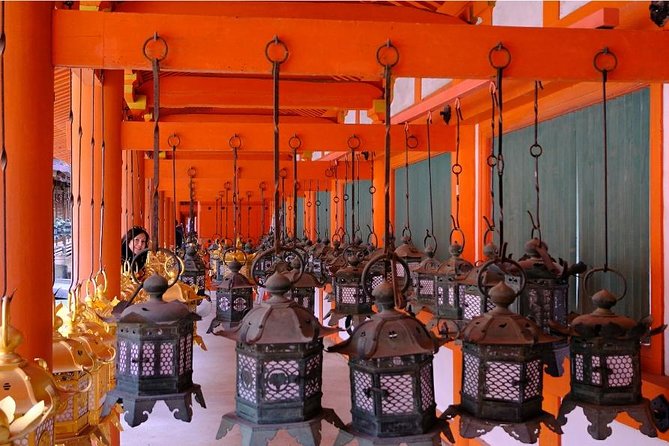
- Kasuga Grand Shrine: See an important 8th-century Shinto shrine founded by the powerful Fujiwara family. Admission is extra.
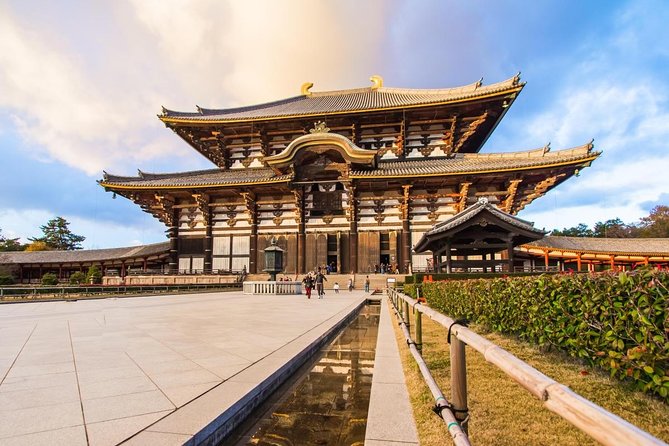
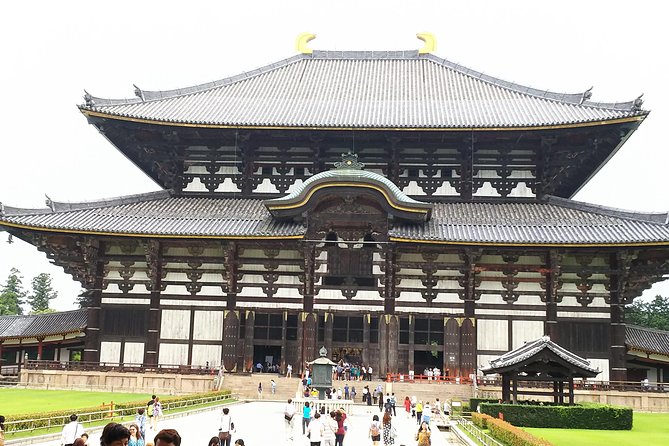
- Todai-ji and its giant Buddha: Visit the UNESCO-listed temple complex founded more than 1,300 years ago. Admission is extra.
- Free-roaming Nara deer: Nara Park gives you the chance to see deer moving through the historic sites and learn why they matter here.
- A truly private outing: Only your group takes part, so you can ask questions freely and keep the day at a comfortable pace.
- Flexible guiding: Guides have adjusted plans for a knee problem, a National Museum detour, personal interests, lunch, and dinner suggestions.
Why Nara makes such a good day from Kyoto
Nara was Japan’s ancient capital, and that early role still shapes the experience. The city’s major sights are not isolated curiosities. Together, they show how imperial power, Buddhism, Shinto belief, aristocratic families, trade, and everyday town life developed around one another.
I like this tour because it begins with ordinary streets before moving into grand religious monuments. You first see how people lived and worked in Naramachi. Then you encounter Kasuga Grand Shrine, with its aristocratic origins and forest setting, before reaching Todai-ji, where imperial ambition produced a temple of enormous scale.
The route lasts about eight hours, beginning at 8:30 am and ending somewhere different from the starting point. That matters. You are not simply walking in circles around Nara Park. You are following a day-long route through several parts of the city, with a professional guide taking care of navigation.
This is a private activity, not a large group tour. Only your own party participates. The information says private, but you should not assume that every detail can be redesigned from scratch. One person arrived expecting a fully personalized itinerary and found the description less clear than expected. The guides can be flexible, but the advertised backbone remains Naramachi, Kasuga Grand Shrine, and Todai-ji.
More walking tours in Kyoto:
- Kyoto Geisha Walking Tour: Gion District & Hidden Gems
★ 4.7 · 3,273 reviews - Kyoto: Gion Magical Night Walking Tour with Geisha Trivia
★ 4.9 · 2,393 reviews - Kyoto: Gion Geisha District Walking Tour – Stories of Geisha
★ 4.7 · 2,187 reviews
Naramachi: start with Nara’s merchant streets
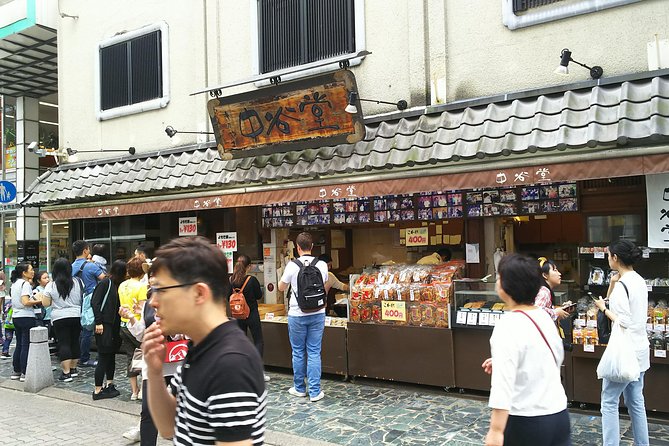
The tour opens in Naramachi, a district first founded as a temple town in the 8th century and later transformed into a merchant neighborhood. Its traditional houses, many more than 100 years old, give you a useful counterpoint to Nara’s famous temples.
Look for the latticed fronts and narrow traditional forms of the homes. These details are not just decorative. They reflect the character of a commercial district where merchants lived and worked close to the street. With a guide, you can better understand how the area changed from a religious settlement into a town shaped by trade.
The 90-minute visit is long enough to give the district proper attention without making it the whole morning. Admission is listed as free, which keeps this opening section focused on walking, observation, and explanation rather than ticket queues.
I would especially value this stop if you have already seen Kyoto’s grand temples and want a more intimate view of historic Japan. Naramachi is about scale and texture. The houses are much more modest than Todai-ji, but that is exactly the point. You begin with the city’s human side.
The limitation is that the supplied details do not identify particular houses, workshops, or interiors included in the walk. Expect an area visit rather than a guaranteed hands-on craft session or house tour. The guide’s explanation will be important in turning a pleasant stroll into a meaningful one.
Kasuga Grand Shrine and the Fujiwara connection
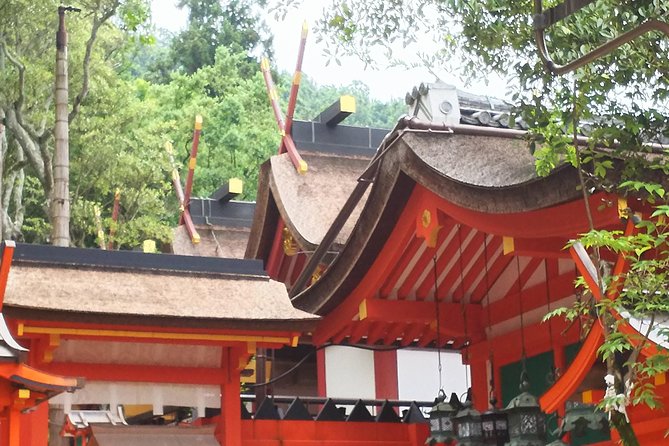
Next comes Kasuga Grand Shrine, founded in the 8th century by the Fujiwara clan. The Fujiwara family was the most powerful aristocratic family in Japanese history, and the shrine still reflects that connection. Even the head priest is described as a descendant of the Fujiwara family.
That detail gives the visit more weight than a quick stop for photographs. Kasuga is tied to the political and religious networks that helped shape early Japan. Your guide can connect the shrine to the people who held influence at the ancient capital, helping you see Nara as a center of power rather than just a collection of old buildings.
The scheduled visit lasts about one hour. Admission is not included, and the listed entrance cost for Kasuga Taisha Shrine together with Todai-ji is ¥1,500 per person. Set that money aside before the morning begins so the extra charge does not catch you by surprise.
The shrine visit also changes the mood of the day. Naramachi is a town district. Kasuga introduces a sacred setting and a different expression of Japanese belief. Nara’s deer are part of this wider setting, and you may see them moving freely around the park and historic sites.
You should remember that the deer are wild animals, not a petting-zoo attraction. The tour promises a chance to see them and learn about their significance, but it does not promise a particular number of deer or a special feeding session. One of the strongest personal highlights described by the tour’s customers was feeding them, but you should treat that as a possible part of the day rather than a guaranteed inclusion.
Todai-ji: the grand finish beneath Mount Wakakusa
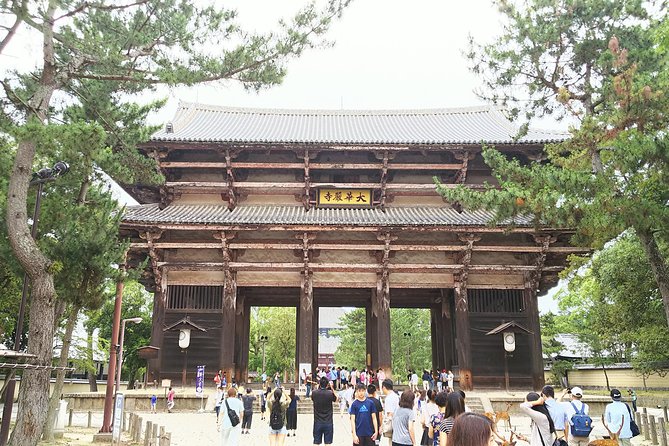
Todai-ji is the day’s major architectural payoff. Founded by Emperor Shomu more than 1,300 years ago, the temple is designated a UNESCO World Cultural Heritage site. Its large precincts contain historic buildings beneath Mount Wakakusa, giving the final stop a broad and impressive setting.
The main draw is the enormous bronze Buddha inside the great wooden temple hall. The size of both the statue and the building is difficult to grasp from a photograph. This is the kind of place where a guide’s explanation helps you connect the physical scale to the religious and political purpose behind it.
The visit is scheduled for about one hour. That is enough to see the main highlights and hear the essential story, but it is not an open-ended temple study. If you want to spend a long time examining every building or lingering at the museum collections, you may find the fixed schedule a little tight.
Todai-ji’s admission is extra, included in the combined ¥1,500 entrance cost for the temple and Kasuga shrine. The temple is one of the clearest reasons to choose this tour over a simple unsupervised walk through Nara. You do not just see a huge wooden structure and a huge Buddha. You get the historical frame that explains why they are there.
One particularly useful point is the contrast between Todai-ji and Naramachi. In the morning, you see houses shaped around commerce and daily life. At Todai-ji, you see monumental architecture linked to the emperor and Buddhism. The route makes those differences easy to understand.
A few more Kyoto half-days to weigh up
- PERFECT KYOTO 1-Day Bus Tour
★ 5.0 · 13,518 reviews - Kyoto: Fushimi Inari, Kinkakuji, Bamboo Grove 1 Day Bus Tour
★ 4.8 · 4,316 reviews - Kyoto: Tea Ceremony in a Traditional Tea House in Kiyomizu
★ 4.9 · 3,519 reviews - Kyoto: Tea Ceremony Ju-An at Jotokuji Temple
★ 4.9 · 3,207 reviews
Deer, old capital stories, and the value of a guide
Nara’s deer are not a side decoration. They are one of the city’s defining experiences, and the tour includes time in Nara Park where you can see them roaming freely. A guide can explain why they are significant to Nara rather than leaving you with only the novelty of an animal wandering near a temple gate.
This is also where the private format earns its keep. You can ask a question the moment it occurs to you, pause to look at something, or ask for a slower pace without worrying about a busload of strangers. Tomoko was particularly attentive to a husband with a bad knee, which is useful evidence that the guides can take physical limitations seriously.
Still, do not confuse private with effortless. This remains an eight-hour walking day, and public transportation is part of the arrangement. The transport fare is not included and is listed at ¥2,000 per person. Ask at booking or before departure how the day’s transfers will work, since the provided details do not specify every vehicle, station, or segment.
The guides also seem capable of adding practical help beyond the formal sights. Satomi assisted with an unplanned visit to the Nara National Museum and later helped find a good dinner spot. Fuji adapted the day to personal interests and included a good lunch stop. These examples suggest useful local judgment, though neither the museum detour nor meals are promised in the tour plan.
What the $137.17 price really buys you
The advertised price is $137.17 per person. On top of that, budget ¥2,000 for public transportation and ¥1,500 for entrance fees, for a known extra total of ¥3,500 per person. Food is not listed as included, so plan for that separately.
The value depends mainly on your group size and your confidence in exploring Nara alone. For one or two people, a private guide can be expensive, but you gain a full day of personal explanation, route planning, and flexibility. Group discounts may improve the arithmetic for a larger party, although the exact discount is not provided.
I would not book this simply to avoid buying train directions or finding Todai-ji. Nara is visitable without a guide. I would book it if you want the ancient capital explained in a connected way, prefer private rather than group touring, or want help balancing major sights with your own questions.
The price also covers professional guiding, not entrance tickets or meals. That distinction is important. You are paying for time, context, navigation, and access to a local person who can respond when the day takes an unexpected turn.
Who will get the most from this private day
This tour fits first-time Nara visitors who want the key sites in one organized day. It is also a good match if you are staying in Kyoto and do not want to spend your limited vacation time planning the route between Naramachi, Kasuga, Nara Park, and Todai-ji.
Families may appreciate the private setup, especially if children need pauses or the group wants to stop when the deer appear. The same applies to mixed-age groups. A guide can adjust the pace more easily than a large scheduled party, though the day still involves substantial walking.
History and architecture fans will get the most from the sequence of stops. You move from merchant houses to an aristocratic shrine and then to an imperial Buddhist monument. That progression gives you a compact lesson in how Nara developed.
Food-focused visitors should note that meals are not included. A guide may help with lunch or dinner suggestions, as Fuji and Satomi did for previous parties, but restaurant arrangements are not part of the stated package.
You should think twice if you want a completely spontaneous day. The tour is private and flexible, but it is not described as a fully custom itinerary. It also may not suit you if you dislike outdoor walking, deer encounters, or the possibility of changing weather.
Timing, transport, and small practical matters
The start time is 8:30 am, and the activity lasts about eight hours. That is a full day, not a brief orientation. Wear shoes you can walk in comfortably and leave room in your schedule for the tour to finish at a different location from where it began.
Public transportation costs ¥2,000 per person and is not included. Keep some yen available, or confirm accepted payment methods before setting out. The tour includes a mobile ticket, and booking confirmation is provided at the time of booking.
Most people can participate, and service animals are allowed. The experience is near public transportation, but no detailed accessibility plan is supplied. If someone in your party has a bad knee or another mobility concern, raise it in advance. The example of Tomoko helping a person with a knee problem is encouraging, but it does not remove the need to discuss your own limits.
The tour requires good weather. If poor weather forces cancellation, you are offered another date or a full refund. You can also cancel for a full refund if you do so at least 24 hours before the start time. Cancellations or changes inside that window are not refunded or accepted.
Should you book this Nara tour?
I would book this tour if you want Nara’s main sights tied together by a real explanation rather than a self-guided checklist. The combination of Naramachi, Kasuga Grand Shrine, free-roaming deer, and Todai-ji gives you a well-shaped day, while the private format leaves room for questions and a reasonable pace.
I would skip it if your priority is keeping costs low, choosing every stop yourself, or spending hours at one temple. The extra ¥3,500 per person for transport and admission also changes the final value.
For most first-time visitors based in Kyoto, the strongest reason to go is the guide. Satomi’s museum help, Tomoko’s care with a bad knee, Fumiko’s cultural explanations, and Noriko and Fuji’s warm, adaptable approach show what the right guide can add. Book it for context, ease, and a thoughtful route, not just for transportation.
FAQ
Where does this Nara tour start?
The tour starts at 8:30 am. The exact meeting point is provided in the booking details.
How long does the tour last?
The experience lasts about eight hours.
Is this a private tour?
Yes. Only your own group participates.
Which places are included in the route?
The planned route includes Naramachi, Kasuga Grand Shrine, and Todai-ji Temple. It also includes a chance to see the free-roaming deer of Nara Park.
Are entrance fees included?
No. Entrance fees to Todai-ji Temple and Kasuga Taisha Shrine cost ¥1,500 per person and are paid separately.
Is public transportation included?
No. Public transportation costs ¥2,000 per person and is not included in the tour price.
Is the tour suitable for people with mobility concerns?
Most people can participate, and a guide has helped accommodate a person with a bad knee. Since the day involves walking, discuss specific mobility needs before booking.
Can I cancel for a refund?
You can cancel for a full refund up to 24 hours before the experience start time. Changes or cancellations made less than 24 hours before departure are not accepted or refunded.
What happens if bad weather cancels the tour?
If poor weather causes cancellation, you can choose a different date or receive a full refund.
Just added around Kyoto
- Kyoto: Zen Meditation at a Private Temple with a Monk★ 5.0 · 25 reviews
- Your Private Vacation Photography Session In Kyoto★ 5.0 · 110 reviews
- Kyoto: Gion Geisha District & Sake-in-Hand Walking Tour★ 5.0 · 37 reviews
- Private Pewter Sake Cup Experience with a Kyoto Artisan★ 5.0 · 31 reviews
- Private Guided Traditional Buddhist Cooking in Japan★ 5.0 · 16 reviews
- Kyoto Wagashi(Japanese sweets) Cooking Class near Fushimiinari★ 5.0 · 60 reviews
- Traditional Japanese Music show & Experience Tour in Kyoto★ 5.0 · 57 reviews
- Kyoto:Family-Friendly Kimono & Yukata Experience at WARGO★ 5.0 · 147 reviews
Kyoto Tours, compared.


Fushimi Inari, Kinkakuji, Bamboo Grove 1 Day Bus Tour
Read our review →
Tea Ceremony in a Traditional Tea House in Kiyomizu
Read our review →
Kyoto Geisha Walking Tour: Gion District & Hidden Gems
Read our review →

Gion Magical Night Walking Tour with Geisha Trivia
Read our review →

Gion Geisha District Walking Tour – Stories of Geisha
Read our review →Browse the lists this tour appears in