
Reviewed · OSAKA TOURS
Osaka: 2-Hour Local Street Food Tour – Dotonbori & Namba
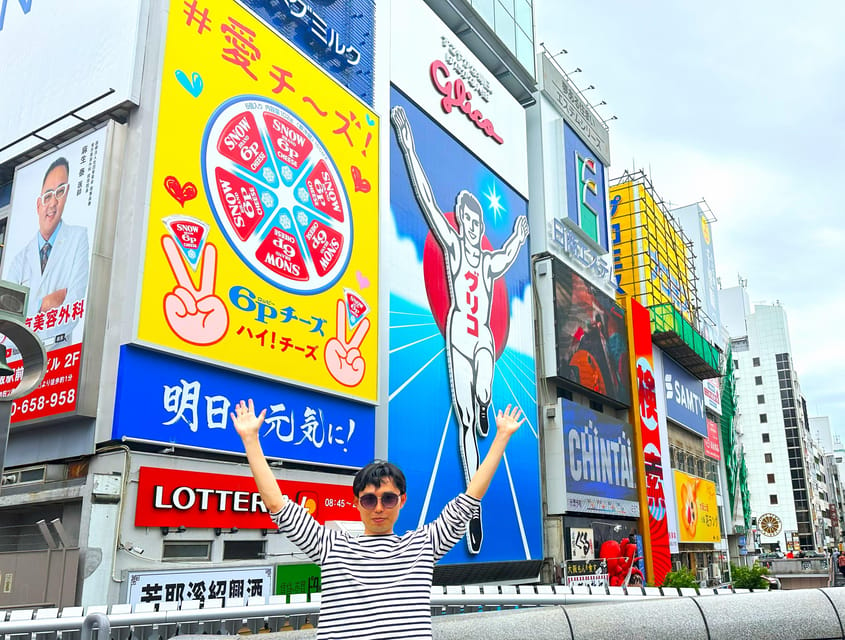
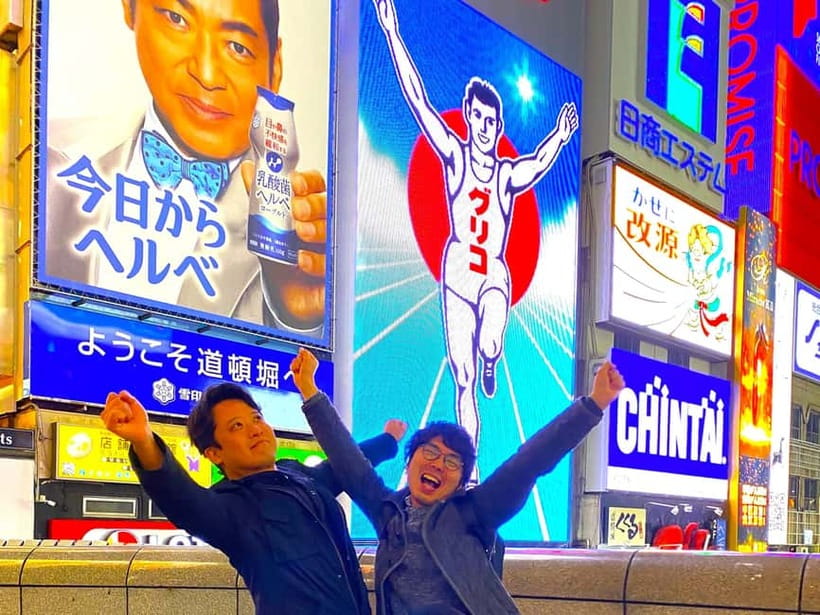
Osaka’s best introduction may be a hot takoyaki eaten beside the canal, followed by a quiet temple tucked behind the neon and crowds. This two-hour Dotonbori and Namba food walk pairs famous Osaka snacks with small streets, useful local advice, and the city’s classic Glico Man photo stop.
I like two things right away: the guide can shape the food choices around your interests, and the route mixes eating with local sights instead of keeping you at one restaurant. Guides such as Kaito, Hina, Hiro, Fuka, and Kanako have been praised for helping with ordering, explaining customs, and finding places you might miss alone.
The main drawback is that food and drinks cost extra, so the $51 price is not the full bill. The official information also says vegan and gluten-free requests cannot be accommodated, even though some individual guides have helped with vegetarian or gluten-free choices. Confirm your needs before booking, and do not assume special meals are guaranteed.
Key points at a glance
- Glico Man photo stop: Start with Osaka’s most recognizable sign and get your bearings in Dotonbori.
- Classic Osaka bites: The route may include takoyaki, takosen, taiyaki, apple candy, pork buns, okonomiyaki, kushikatsu, or doteyaki.
- Hozenji Temple pause: Step from noisy shopping streets into a small, peaceful temple setting.
- Guide-led ordering: English or Japanese-speaking guides can explain dishes, help with phrases, and make unfamiliar food easier to try.
- Flexible, compact route: The tour lasts two hours and involves strolling rather than a long city hike.
- Good for repeat visits: A guide can adjust the evening toward foods and corners of Namba you have not yet explored.
Starting beneath the Glico Man sign
You meet outside the Starbucks Coffee TSUTAYA EBISUBASHI store. Look for a guide holding a yellow DeepExperience sign. This detail matters because the meeting point is in a busy part of Osaka, and the surrounding streets can be confusing if you are watching the signs, traffic, and crowds all at once.
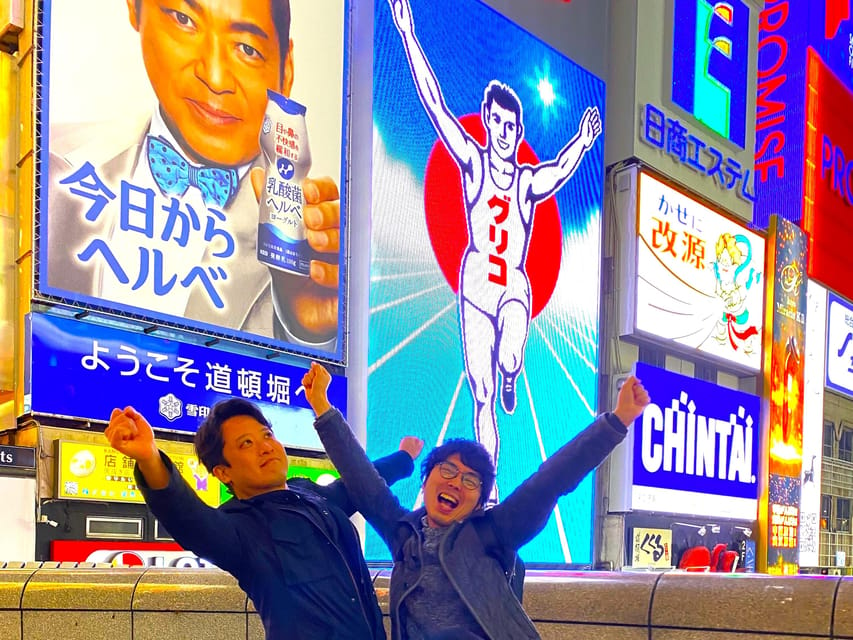
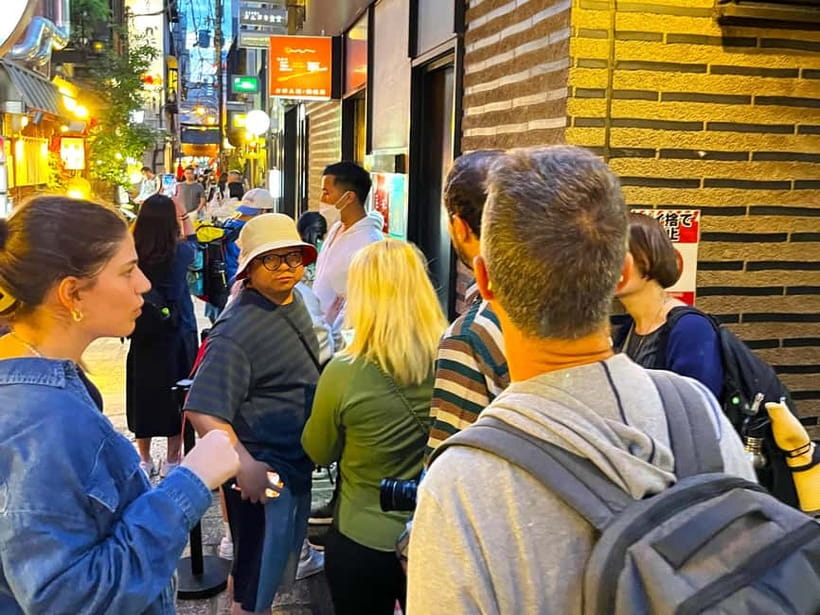
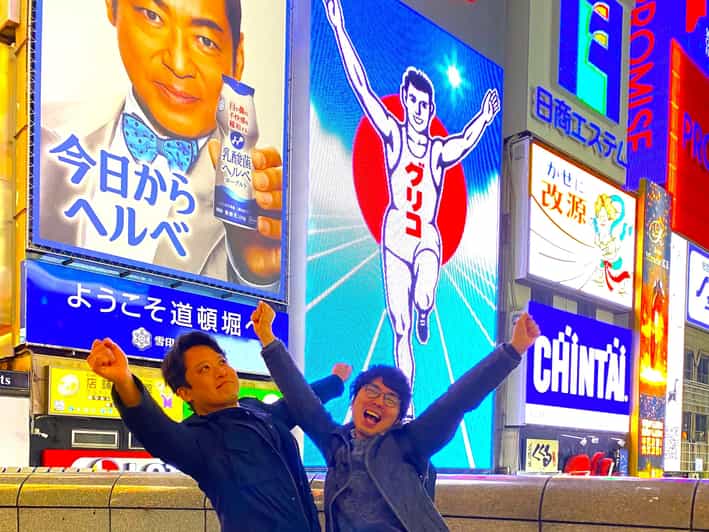
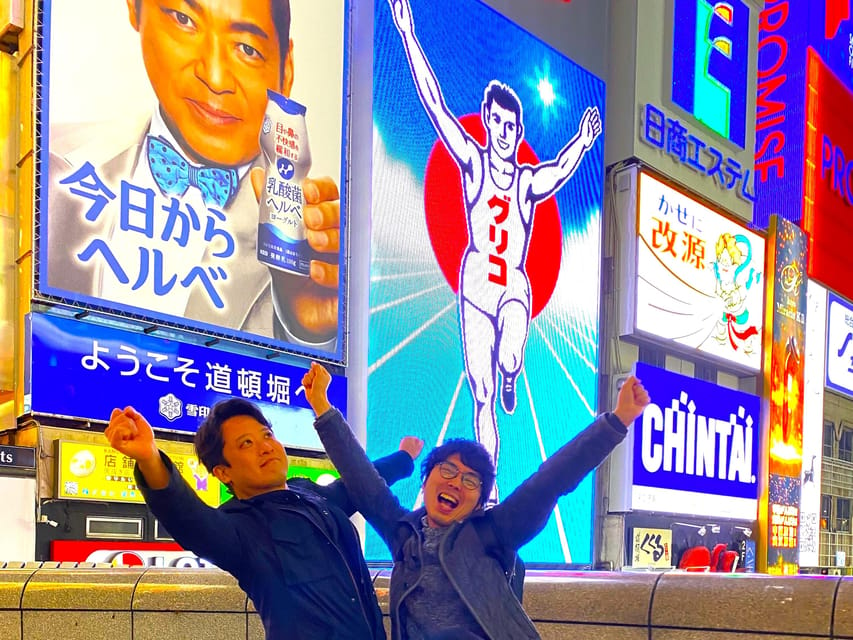
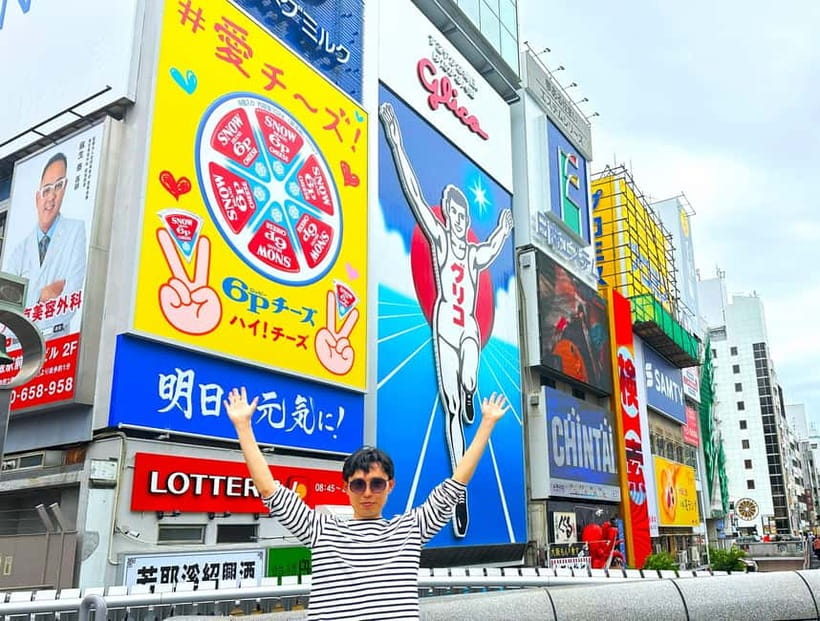
The first stop is the Glico Man sign in Dotonbori. The familiar runner with his arms raised has become Osaka’s unofficial mascot, so this is the right place for the standard photo. You spend about 20 minutes here with the guide, rather than simply snapping a picture and moving on.
That opening gives you a quick sense of the area. Dotonbori is bright, loud, commercial, and full of food signs. It is not a quiet view of Osaka, but it is one of the city’s most memorable night scenes. If you have never been here, the guide helps you understand where the main canal, alleys, shops, and food counters fit together.
If you are late or lose your way, call as soon as possible. Kaito once patiently directed a late group to the meeting point by phone, but you should still allow extra time. The tour is short, and losing the first 15 minutes makes a real difference.
More Food Tours in Osaka
- Osaka: Shinsekai Food Tour with 13-15 Dishes at 5 Eateries
★ 4.8 · 2,204 reviews - Osaka Food Tour: 13 Dishes at 5 Local Eateries
★ 5.0 · 2,149 reviews - Hungry Osaka Street Food Tour:15 Tastings & 3 Drinks with a Local
★ 5.0 · 1,727 reviews
Tasting Dotonbori one snack at a time
The first food section lasts about 30 minutes. The plan centers on Osaka street food, with takoyaki, takosen, and taiyaki named as likely examples.
Takoyaki are the famous round batter cakes filled with octopus and topped with sauce and other seasonings. They are served hot, often much hotter inside than they look, so take a small bite first. Takosen combines takoyaki with a crisp prawn cracker, creating a snack with a different texture and a little more crunch.
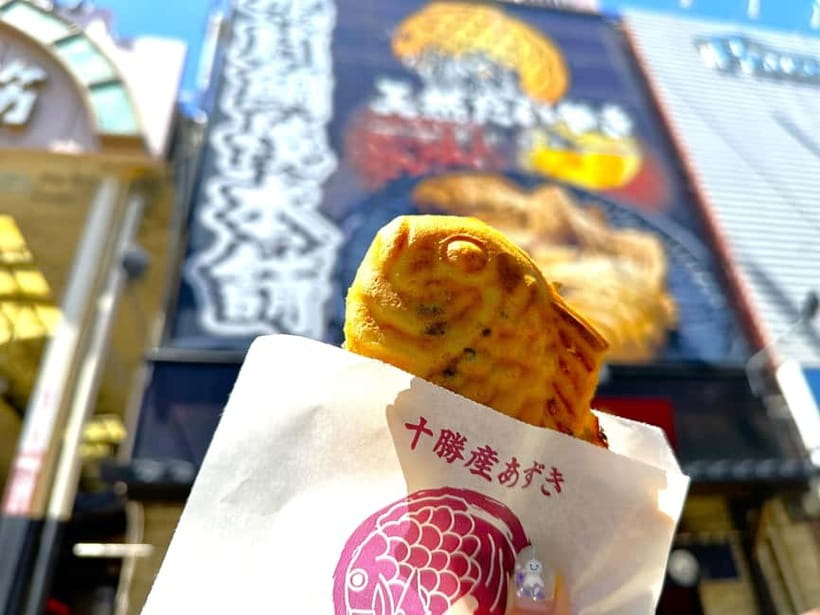
Taiyaki is a fish-shaped cake, commonly filled with sweet red bean paste or custard. One tour participant especially enjoyed the crisp batter and custard filling. That small detail captures what this walk does well: it lets you sample familiar Japanese specialties while also pointing out the less obvious treats.
The guide does more than hand you food. You can ask what an ingredient is, how a dish is normally eaten, and which phrases are useful when ordering. Several guides have taught simple Japanese words and expressions along the way. Kaito even carried a guidebook of common Japanese phrases, which later proved useful to one group during the rest of its Japan trip.
Food choices are not fixed in stone. Guides have adjusted stops based on what people had already eaten and what they wanted to try next. Depending on the group and the evening, you might sample dumplings, tempura, sushi, udon noodles, beef, onigiri, or other local dishes instead of following the exact same menu every time.
That flexibility is valuable, but it also means you should not book this expecting a guaranteed list of every named food. The advertised examples are possibilities, not a promise that you will eat all of them in two hours.
Ukiyo-Koji and the calm of Hozenji Temple
After the first food stop, the route leads through Ukiyo-Koji and toward Hozenji Temple. This short walk is one of the strongest parts of the experience because it changes the mood without taking you far from the main entertainment district.
Hozenji Temple is a small place of worship near the commercial center. Its setting feels removed from the bright signs and packed lanes outside. The contrast is the point: in Osaka, a quiet temple can be only a few steps from restaurants and shopping streets.
You spend about 15 minutes here with the guide. That is enough time for a brief visit and explanation, but not enough for a long religious or architectural tour. Think of it as a useful pause and a glimpse into the city’s older character, not a major temple sightseeing visit.
I like this stop for another reason. Food tours can become a fast sequence of purchases, bites, and photos. Hozenji gives the evening some balance. You get a moment to slow down, learn a little about the place, and see how modern Namba grew around smaller traditional sites.
The route may also include the narrow Ukiyo-Koji passage, which adds visual variety. You will not spend the whole tour on the main street. A guide who knows the area can show you how to move from the obvious sights into smaller lanes without wasting time finding them yourself.
Namba food stops and local-style choices
The next food section takes about 30 minutes in Namba. This is where the tour can become more personal. Guides have asked about food preferences and then chosen stops that fit the group’s appetite and curiosity.
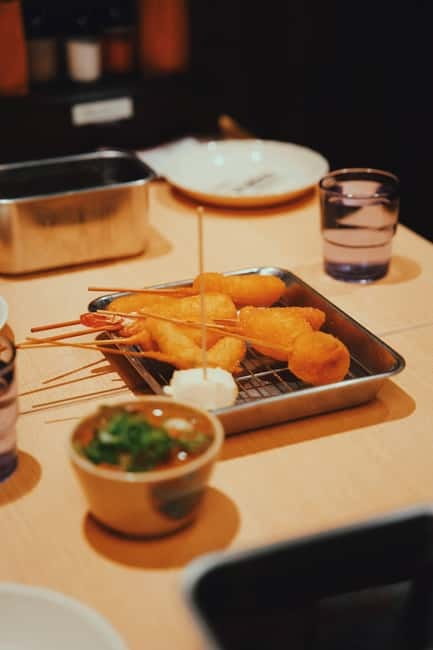
Possible savory dishes include okonomiyaki, kushikatsu, and doteyaki. Okonomiyaki is a cooked savory pancake with a mix of ingredients and toppings. Kushikatsu means skewered and fried food. Doteyaki is a slow-cooked beef tendon dish associated with Osaka. These foods offer more substance than a single snack and help you understand why Osaka is often linked with casual eating.
Other reported stops have included pork buns, crab-filled buns, Japanese barbecue, sushi, ramen, udon, beef, dumplings, tempura, and onigiri. That broad range makes the tour useful for people who do not yet know what they want to order. You can point, ask questions, and let the guide explain the choices.
The guide’s role becomes especially useful in small eateries. You may need help reading a menu, ordering a portion, understanding how a dish is served, or speaking with staff. Several people have valued the way guides handled these small social steps, especially in places where English support may be limited.
Do not expect the $51 fee to cover the food. You pay for the guide, the route, explanations, and help with local dining. The actual snacks and drinks are separate. Since appetites vary, this arrangement is fair in one sense: you choose how much to buy. It also means you should carry extra yen and avoid assuming the advertised price includes a full meal.
Same base, a completely different sort of day:
- Osaka Go Karting Tour with Funny Costume
★ 5.0 · 2,658 reviews - Osaka Castle: Museum and Tower Entry Ticket
★ 4.5 · 2,380 reviews - Osaka: teamLab Botanical Garden Entry Ticket
★ 4.5 · 1,710 reviews - Osaka: Tea Ceremony Experience
★ 4.9 · 1,426 reviews
A final round through Dotonbori
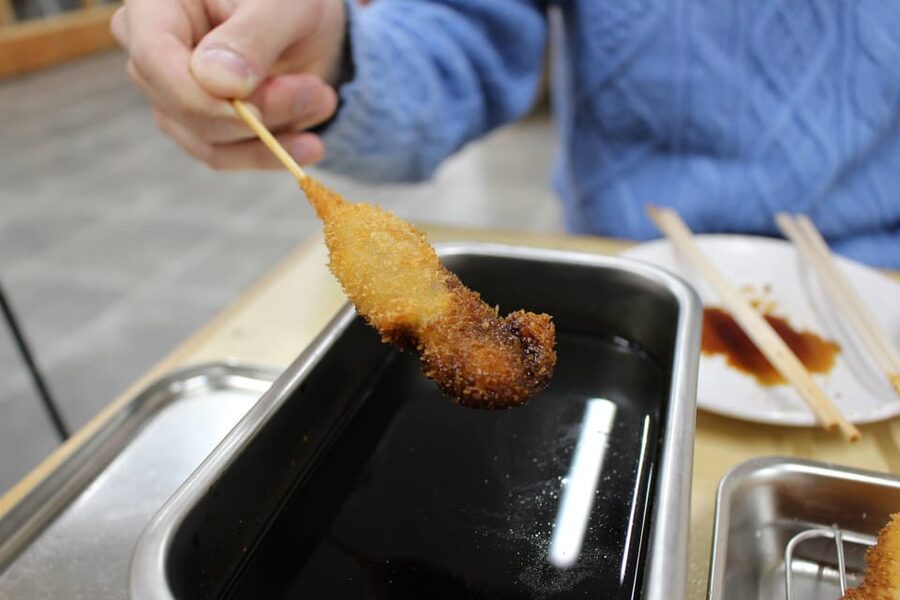
The final Dotonbori section lasts about 30 minutes and focuses on local snacks. Apple candy and pork buns are among the listed possibilities, along with further savory choices such as okonomiyaki, kushikatsu, and doteyaki.
By this point, you may already be full. That is one reason the flexible format works better than a fixed tasting menu. You can tell the guide what you still want to try, skip a duplicate dish, or concentrate on a dessert or small bite.
The activity finishes with another photo or guided stop of about 10 minutes before returning to the Starbucks meeting point. The complete route is compact, so you do not need to set aside half a day. You also finish in an area packed with restaurants, shops, and train connections, making it easy to continue your evening.
One useful result is that you leave with more than a full stomach. Guides have offered suggestions for later meals, anime shops, and other things to do in Osaka. If this is your first night in the city, those recommendations can shape the rest of your stay. If you are returning to Osaka, you can use the guide to focus on places and foods beyond your usual route.
What the guides add to the experience
The strongest praise centers on the guides, not on a single restaurant. That is important because food quality and stops can change, while the guide is what turns a walk through Dotonbori into a useful introduction.
Kaito appears often in the feedback and is described as friendly, patient, easy to talk with, and strong in English. People valued his local food suggestions, cultural explanations, help with Japanese phrases, and ability to take groups to places they would not have found alone. He was also praised for working well with teenagers and for making conversation feel natural.
Hina has been singled out for her clear English, good photo spots, current area advice, and attention to food preferences. Hiro has been praised for adjusting the pace and stops to what people could eat. Fuka was described as funny and easy to understand, while Kanako received praise for tailoring the route and adding cultural context.
These individual details tell you what to look for. A good guide should ask what you have already tried, what you cannot eat, and what kind of evening you want. You should feel free to answer clearly at the start. If you want more history, say so. If you want to focus on food and keep walking short, say that too.
The tour is available in English and Japanese. Private or small-group options are available, which can make it easier to ask questions and adjust the pace. The activity is listed as wheelchair accessible, but you should still confirm the practical route and food stops when booking, since the streets and individual venues may vary.
Dietary limits and food expectations
This is not a safe choice for every diet. The official information says vegan and gluten-free requests cannot be accommodated. That is the rule you should rely on when deciding whether to book.
At the same time, some guides have helped people find vegetarian or gluten-free dishes after researching options. That is encouraging, but it is not a guarantee. If you have an allergy, severe intolerance, or strict dietary requirement, contact the provider before paying and explain exactly what you need.
People with broad preferences have more room to enjoy the tour. You can sample small portions and ask about unfamiliar ingredients. The food may range from sweet snacks to meat, seafood, fried dishes, noodles, and rice-based items, so this works best if you are open to trying different styles of Japanese food.
The pace is also worth noting. One person appreciated that there was not much walking, leaving more time for food and conversation. The route is active, but it is not designed as a long-distance walking tour. You move between nearby stops, eat, pause, and continue.
Is $51 a fair price?
At $51 per person for two hours, the price is reasonable if you value guidance in a busy dining district. You are not simply paying for food. You are paying for a local route, English or Japanese communication, help ordering, cultural explanations, and the chance to make better use of a short evening.
The value is strongest for first-time visitors. Dotonbori is easy to reach but not always easy to understand. Big signs show you where the crowds are, not necessarily where you will find the right dish, the right portion, or a place that suits your interests.
Repeat visitors can also get good value if they tell the guide what they have already seen. Several tours have been adapted around previous Osaka experiences, with guides pointing people toward different streets, foods, or shops.
The value is weaker if you are already comfortable ordering Japanese food, know Namba well, and prefer to choose every stop yourself. You will also need to budget separately for food and drinks. The tour price is not a prepaid tasting package.
Free cancellation up to 24 hours before the start and reserve-now, pay-later terms make planning easier. Starting times vary, so check availability for your date.
Who should book this Dotonbori food walk?
I would recommend it to first-time Osaka visitors who want a friendly introduction without giving up an entire day. It suits couples, families with older children or teenagers, and small groups that enjoy conversation as much as eating.
It is also useful for repeat visitors who want to move beyond the obvious signs. Ask for different foods, smaller streets, or recommendations based on what you have already tried.
You may want to skip it if you need guaranteed vegan or gluten-free food, dislike eating in casual settings, or want a formal restaurant meal. It may also be less suitable for very young children, since one participant specifically found the evening better suited to adults and older children.
Should you book it?
Book this tour if you want help making sense of Osaka’s food culture in a short, social outing. The best reason to choose it is the guide’s local judgment: finding suitable stops, explaining dishes, teaching a few Japanese phrases, and making the city easier to approach.
Before booking, confirm your dietary needs and set aside extra money for food. Then tell the guide what you want to eat, what you have already tried, and how much walking feels comfortable.
For a first evening in Osaka, this is a practical way to get oriented while eating well. For a return visit, it works when you use the guide’s local knowledge to change the route. If you want a fixed menu with all food included, choose a different type of tour.
FAQ
Where does the Osaka food tour meet?
Meet outside the Starbucks Coffee TSUTAYA EBISUBASHI store. The guide will be holding a yellow sign with the DeepExperience logo.
How long does the experience last?
The tour lasts two hours and returns to the Starbucks Coffee TSUTAYA EBISUBASHI meeting point.
Which languages are available?
Live guiding is available in English and Japanese.
Is food included in the $51 price?
No. Food and drinks are not included, so you pay for your purchases during the tour separately.
Which foods might I try?
Possible foods include takoyaki, takosen, taiyaki, apple candy, pork buns, okonomiyaki, kushikatsu, and doteyaki. Other stops can include dishes such as sushi, ramen, udon, beef, dumplings, tempura, or onigiri.
Can the tour accommodate vegan or gluten-free diets?
The official information says vegan and gluten-free requests cannot be accommodated. Some individual guides have helped with vegetarian or gluten-free options, but you should confirm your needs before booking.
Is the tour wheelchair accessible?
Yes, the activity is listed as wheelchair accessible. Private or small-group options are also available.
More 2-Hour Experiences in Osaka
- Kyoto Gion: 2-Hour Geisha Culture & History Walking Tour
★ 5.0 · 1,186 reviews - Ninja 2-hour Hands-on Lesson by Japanese master in Kyoto -Medium
★ 5.0 · 218 reviews - Kyoto: 2-Hour Maiko Makeover and Photo Studio Shoot
★ 4.7 · 122 reviews - Tokyo: Flagship 2-Hour Street Go-Kart Tour by Street Kart
★ 4.9 · 94 reviews
Just added around Osaka
- Discover Real Osaka: A Cultural Walk with Food & Drink★ 5.0 · 13 reviews
- From Osaka/Kyoto: Kyoto & Nara Day Trip with Optional Lunch★ 4.5 · 79 reviews
- Osaka 6hr Private Walking Tour with Government Licensed Guide★ 5.0 · 174 reviews
- Private Airport transfer Kansai Intl. Airport(KIX) to OSAKA CITY★ 4.5 · 12 reviews
- Osaka: Namba Local Food Walking Tour (Taste 15 Dishes)★ 5.0 · 20 reviews
- Osaka Delights: Traditional Japanese Food Tour★ 4.5 · 33 reviews
- Badminton in Osaka & Kyoto with Locals!★ 5.0 · 15 reviews
- From Osaka or Kyoto: Kyoto and Nara 1-Day Bus Tour★ 3.5 · 141 reviews
Osaka Tours, compared.


Shinsekai Food Tour with 13-15 Dishes at 5 Eateries
Read our review →
Osaka Food Tour: 13 Dishes at 5 Local Eateries
Read our review →
Hungry Osaka Street Food Tour:15 Tastings & 3 Drinks with a Local
Read our review →



Hotspots & Hidden Gems Walking Tour Private or Group
Read our review →Browse the lists this tour appears in