
Reviewed · TOKYO TOURS
Tokyo: Flagship 2-Hour Street Go-Kart Tour by Street Kart
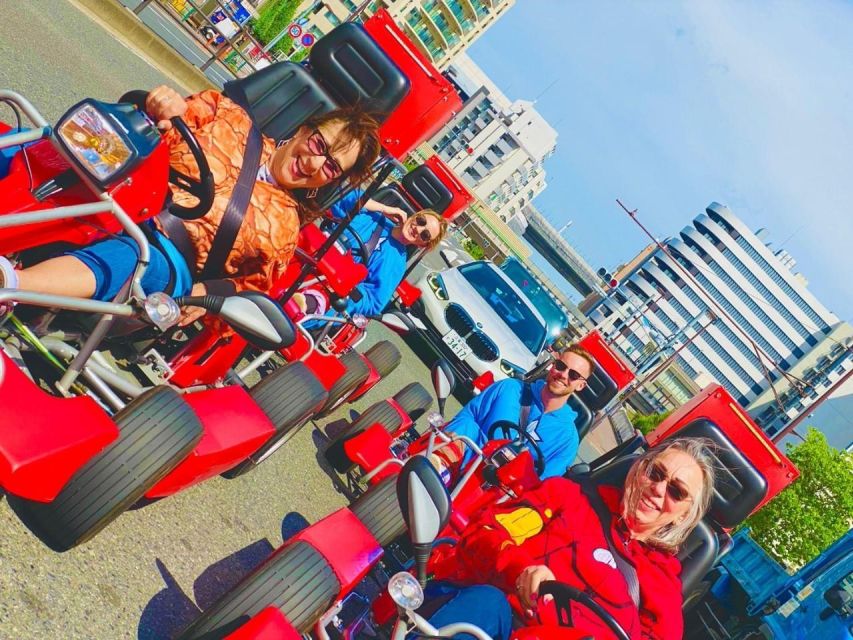
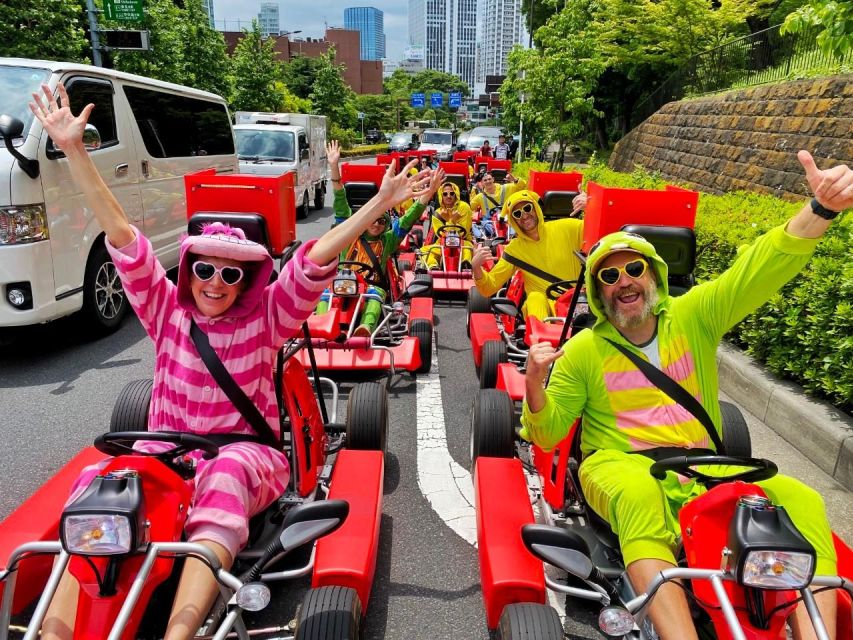
Tokyo looks very different from a go-kart. You sit low, feel every turn, and share the road with normal traffic as your guide leads you across Rainbow Bridge and toward Tokyo Tower. The route gives you more than a quick spin around a parking lot: one rider reported more than an hour of actual driving during the two-hour outing.
I like the long driving time and the guide’s careful group control. Guides such as Bryan, Alexis, Kinna, Riley, and Mel have been praised for clear signals, regular checks, and safe photo stops. I also like the costumes and the included photo files, which let you enjoy the ride without trying to film while driving.
The main thing to consider is that this is real street driving, not a relaxed sightseeing ride. You must concentrate on traffic, bring the right physical documents, and feel comfortable operating a kart for much of two hours. Cloudy goggles, sweaty seats in summer, and limited options for companions who are not driving are also worth knowing.
Key points to know before booking
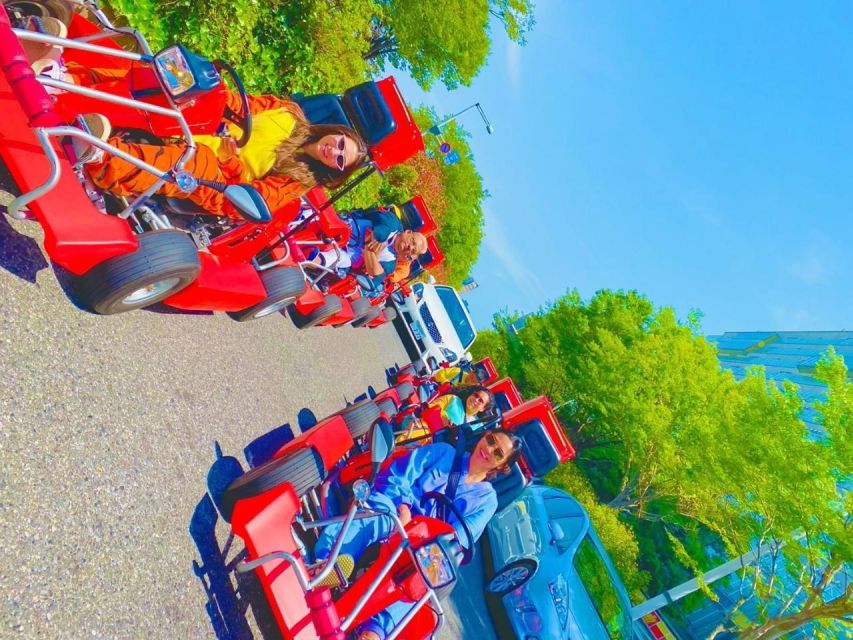
- Rainbow Bridge is the headline ride: You cross the bridge on public roads, with Tokyo Bay and the city opening around you.
- Tokyo Tower adds a classic city view: The route links the bay with one of Tokyo’s best-known landmarks.
- Your guide controls the group: Clear signals, changing positions, and planned photo stops help keep the convoy together.
- Costumes are included: Choose a character-inspired outfit after check-in, though costume hoods may not stay in place while driving.
- Photos come with the tour: Your guide takes pictures during the outing and provides the data afterward.
- Documents are not optional: Most participants need a physical 1949 Geneva Convention IDP, plus a physical passport.
What this Tokyo go-kart tour really feels like
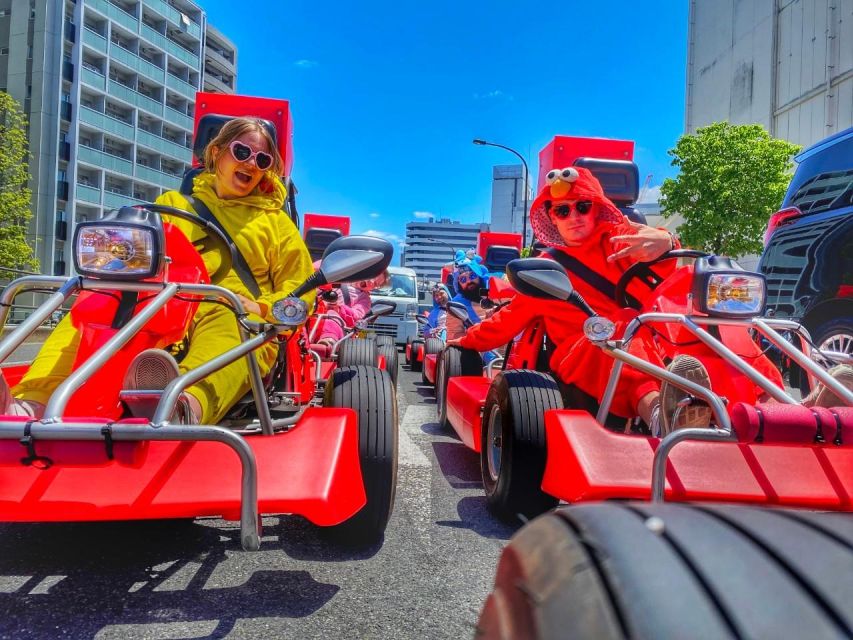
Street Kart’s two-hour outing is a city drive with a playful costume angle, not a closed-course race. You operate a small kart on Tokyo’s public streets, follow an English-speaking lead guide, and travel through the Tokyo Bay area before heading toward Rainbow Bridge and Tokyo Tower.
That distinction matters. You are not simply sitting in a vehicle while somebody else handles the road. You need to watch traffic, follow signals, stay in formation, and manage the kart. The reward is a close-to-the-road view of Tokyo that ordinary sightseeing buses cannot match.
The experience is listed at $64 per person. I consider that a fair price if you want a substantial driving activity rather than a short novelty ride. Fuel, the kart, costume use, goggles, a rain coat in wet weather, the guide, and guide-taken photos are included. The extra charges are for action-camera rental, a Micro-SD card, and a camera mount.
The 4.9 rating from 94 bookings points to a consistently strong experience, especially for safety and guide quality. Still, the activity is best judged as an unusual driving adventure. If you mainly want quiet views of Tokyo, a conventional observation deck or bay cruise will suit you better.
More karting in Tokyo:
- Flagship 2-Hours Official Street Go-Kart Tour – Tokyo Bay Shop
★ 5.0 · 4,974 reviews - Official Street Go-Kart in Shibuya
★ 5.0 · 3,435 reviews - Official Street Go-Kart Tour – Akihabara
★ 5.0 · 1,578 reviews
Starting upstairs at the Tokyo Bay warehouse
The meeting point is Street Kart Tokyo Bay, a warehouse with go-karts parked out front. Look for the outside stairs and go upstairs for check-in.
This is a practical meeting point rather than a polished attraction. If you arrive with a friend or family member who is not driving, plan carefully. One participant found that a non-driving sister could not wait inside during the two-hour outing and had to spend that time outside in the warehouse district. The booking information does not promise a waiting area for companions.
After check-in, staff explain the activity and help you choose a costume. You also receive the equipment included in the price. The supplied goggles protect your eyes, but one person found a pair cloudy and scratched, so I would bring your own clear protective eyewear if you have it and if the operator allows it.
You cannot use a cellphone during the activity. That rule is sensible because your hands and attention belong on the kart. It also means you should not expect to capture casual phone video while driving.
Choosing a costume before the engines start
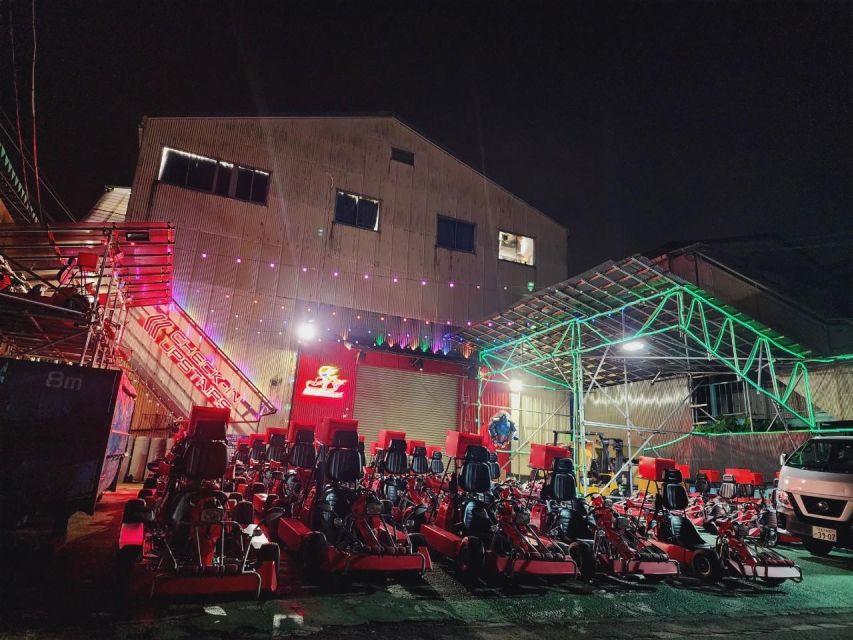
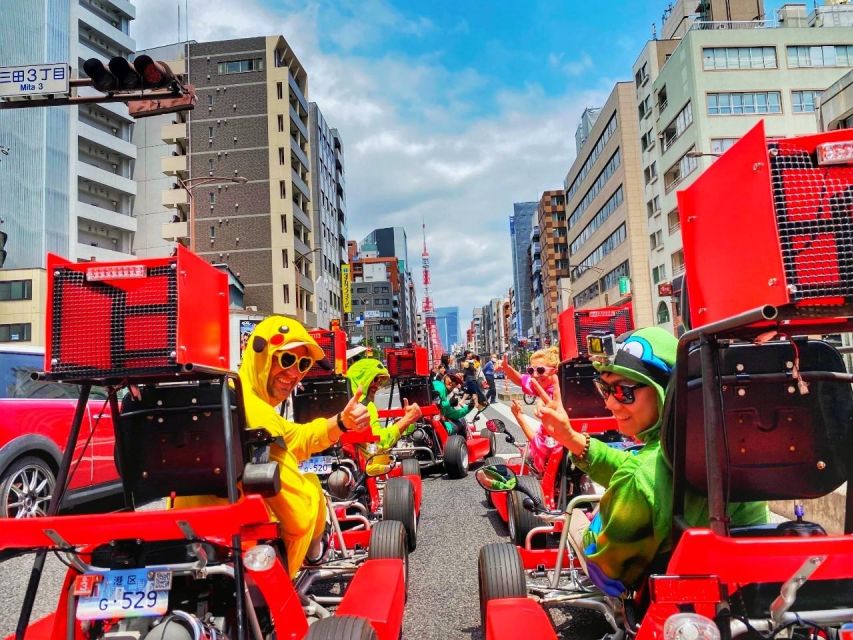
The costume selection is part of the fun, especially if you want the pictures to look more like a playful Tokyo postcard than a normal road trip. You choose an action-hero or character-style outfit before setting off.
Keep the practical side in mind. A participant advised choosing a separate costume hood because the attached hoods may not stay up once you are moving. You also want clothing that works with a seated driving position and changing weather.
The rules are simple but strict. High heels, open-toed shoes, alcohol, and drugs are not allowed. You should also avoid clothing that makes it hard to operate the kart or keep your feet properly placed.
Season makes a real difference. A summer participant found cotton shorts uncomfortable after sitting in a leather kart seat for two hours. In winter, another rider praised the staff for providing spare gloves, glasses, and heat packs. Wear layers and choose shoes for control, not costume effect alone.
Learning the kart and joining the road
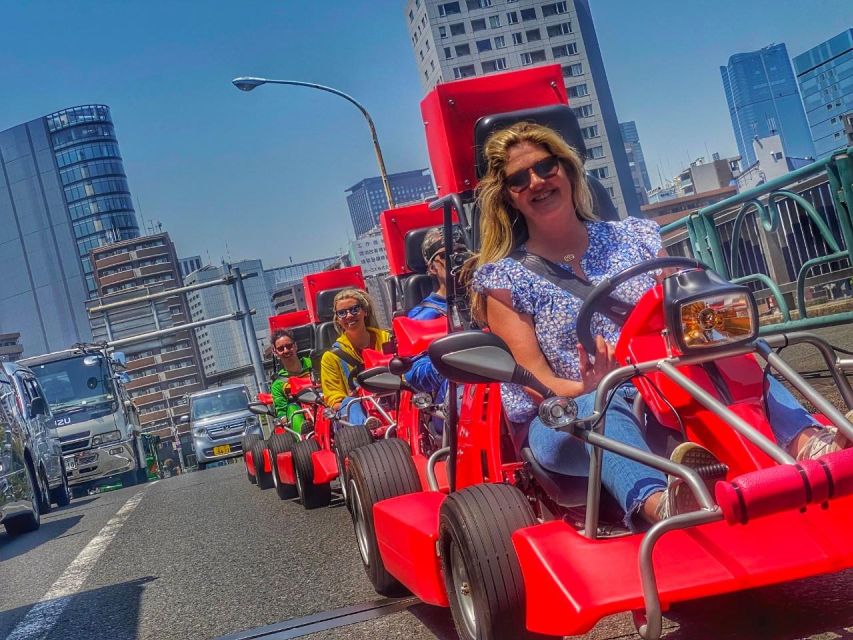
Before departure, the staff explain how the kart works and what to expect on city streets. This orientation is especially important if you have not driven in Japan or have not driven for some time.
You will then follow the trained guide through the streets as part of a group. The guide leads from the front and checks behind to keep the formation together. Several guides, including Bryan, Alexis, Kinna, Riley, and Mel, have been singled out for patience, clear instructions, and close attention to safety.
That safety system is one of the strongest parts of the activity. The guide gives signals, checks the group, and rotates the order so different drivers get a turn near the front. The position change is not just for better pictures. The person at the front may have a clearer view, while those behind deal with more engine fumes and traffic.
One useful criticism concerns communication after dark. A participant suggested reflective driving gloves so hand signals would be easier to see from the back. That is a small point, but it shows why you must pay close attention to the guide rather than treat the ride as an independent cruise.
The two-hour booking does not mean two hours of uninterrupted high-speed driving. You will spend time checking in, receiving instructions, changing positions, and stopping for photos. Even so, the available information indicates that the actual driving portion can run for more than an hour, which is a good amount of time for the price.
A few more Tokyo half-days to weigh up
- Tokyo: Shinjuku Izakaya and Golden Gai Bar Hopping Tour (2h)
★ 4.9 · 67 reviews - Tokyo: 2-Hour Vegan and Vegetarian Ramen Guided Walking Tour
★ 4.8 · 33 reviews - Tokyo: 2-Hour Night Bike Tour of the City’s Hidden Gems
★ 4.9 · 25 reviews - Kyoto Gion: 2-Hour Geisha Culture & History Walking Tour
★ 5.0 · 1,186 reviews
Crossing Rainbow Bridge above Tokyo Bay
Rainbow Bridge is the emotional high point. You leave the ordinary city roads and cross one of Tokyo’s best-known structures with the bay and skyline around you.
The bridge feels exciting because of the kart’s low seating position and the open road ahead. One rider compared the crossing to a racetrack, while another described the experience as exhilarating at night. The comparison is about sensation, not a license to race. You remain part of normal road traffic and must follow the guide’s pace and instructions.
Night departures can be especially striking. Tokyo’s lights, the illuminated bridge, and the city skyline give the ride a festive feel. Tokyo Tower is also lit after dark, adding a strong visual target later in the route.
The bridge is not a sightseeing stop where you can pull over and study the view at leisure. You need to drive and maintain your place. One rider noted that there is little time for sightseeing because concentration on the road comes first. If you want to stop often for photographs or stare across the bay, this format may feel rushed.
The route may cross Rainbow Bridge more than once. A participant on a two-hour outing reported going over it twice, with the second crossing feeling faster. Exact routing can vary, so treat that as a possibility rather than a promise.
Reaching Tokyo Tower after the bay
The route’s second major landmark is Tokyo Tower, the red and white communications tower that remains one of the city’s most recognizable symbols. Connecting the bay crossing with the tower gives the outing a useful sense of place: you see modern waterfront infrastructure, city streets, and a famous central Tokyo landmark in one run.
The tower is not a long sightseeing visit. You pass through the area as part of the drive, so your view depends on traffic, timing, and your position in the group. At night, the tower’s lights add to the pictures and give the guide a strong background for a photo stop.
I like this combination because it keeps the tour from feeling like a single-purpose bridge ride. The bay section brings open-road excitement, while Tokyo Tower provides the classic city image. Together, they make the two hours feel like a moving sampler of Tokyo.
Still, do not book it for landmark photography alone. You may get excellent pictures, but you are not guaranteed a private viewpoint, a long stop, or perfect visibility. Your attention remains on driving.
Photos, costumes, and the camera decision
Your guide takes photos during the tour and gives you the photo data afterward. This is a valuable inclusion because you cannot safely use your cellphone while operating the kart. Guides also stop at suitable points and may give each kart a turn near the front for better images.
The number of pictures can be generous. One night rider received more than 80 photos from guide Alexis. That kind of coverage means you can focus on driving instead of worrying about documenting every moment.
Video is handled separately. Action-camera rental, the Micro-SD card needed to save footage, and a mount for your head or chest are not included. You may be allowed to use a personal GoPro with the proper fitting, but you should follow the operator’s rules and never handle a camera while moving.
This is a real choice. Photos are included and require no work from you. Video can show the road, the bridge, and the kart’s point of view, but it costs extra and adds equipment to manage. One participant wished they had video of the bridge and a sharp turn after deciding not to buy the package. If moving footage matters to you, settle that decision before departure.
Safety, comfort, and the parts that may test you
The best reason to feel confident is the guide system, not the absence of traffic. You are driving on major public roads, and one participant described being nervous during the first half before settling in. Another person who had not driven in Japan felt comfortable under the guide’s lead.
That said, you should have a current driving habit and be comfortable taking instructions quickly. The activity is not suitable for children under 18, wheelchair users, people with mobility impairments, pregnant women, people with back problems, people with hearing impairments, or people with pre-existing medical conditions.
You also need to be honest about the physical side. Sitting in a kart for two hours can be tiring, especially in summer. Heat, traffic fumes, wind, and a low driving position are part of the experience. In cold weather, gloves and heat packs may help, but you still need clothing that lets you control the kart.
The guide’s safety checks received the strongest praise. Bryan was noted for looking back often, keeping the group aligned, giving clear signals, and stopping at safe places for photos. Kinna was praised for helping nervous drivers feel confident. Riley was praised for taking many pictures, and guides such as Mel, Reece, Johnny, Jesus, and Alexis were also described as professional and attentive.
There are small equipment concerns. Goggles may be scratched or cloudy, and the turn-signal cancellation was described as temperamental by one rider. Those are not reasons to dismiss the activity, but they are good reasons to listen carefully during the briefing and tell staff if equipment is not working properly.
The paperwork can make or break your booking
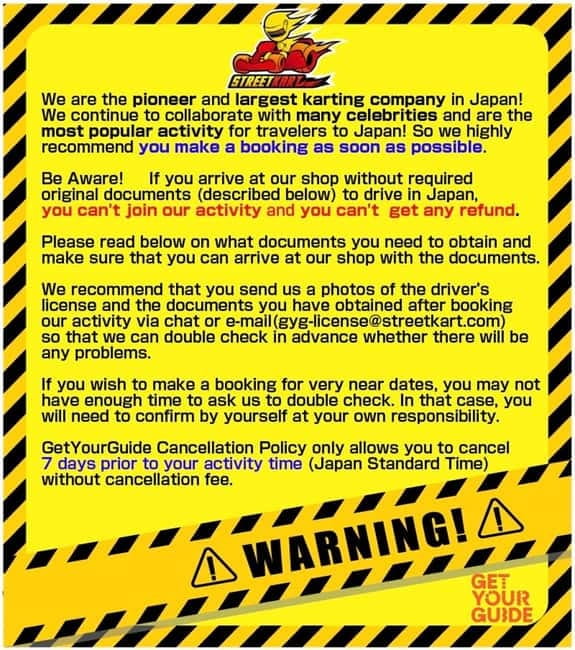
This is the most important practical issue. Every driver needs special documents to drive legally in Japan, and Street Kart emails guidance after booking.
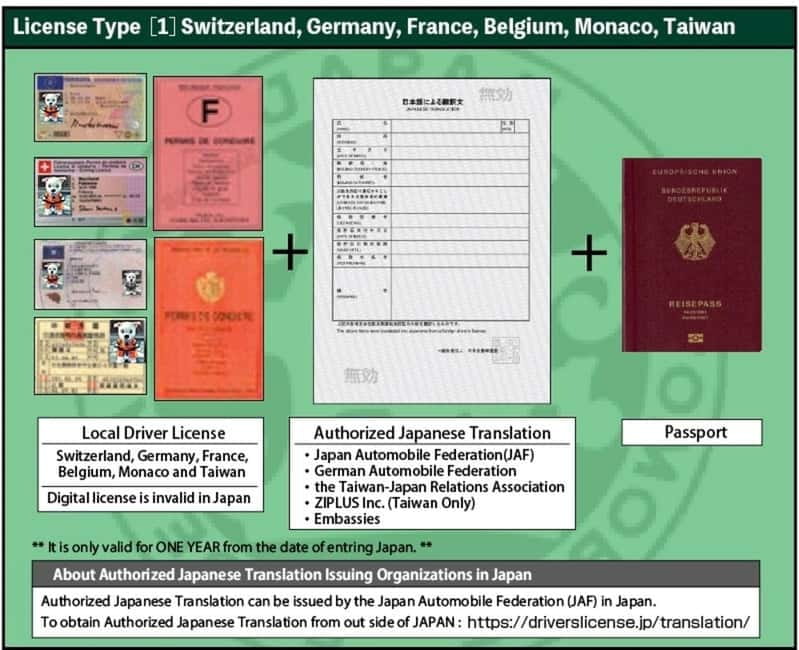
For most countries, you need a physical International Driving Permit issued in booklet form under the 1949 Geneva Convention. It must be issued by the same country that issued your domestic license. An online permit obtained while already in Japan is not accepted.
Drivers with licenses from Switzerland, Germany, France, Taiwan, Belgium, or Monaco need a Japanese translation issued by the Japan Automobile Federation instead of an IDP. Those drivers must carry both the physical domestic license and the official translation.
Licenses from countries not covered by the 1949 Geneva Convention, including China, Indonesia, Mexico, Qatar, and Saudi Arabia, are not permitted for driving in Japan under the stated rules.
Bring the physical documents, not just photographs or digital copies. You also need your physical passport. I would check this before paying for the activity, since the wrong paperwork can prevent you from driving even if the booking itself is confirmed.
Cancellation is flexible only if you act early: you can cancel up to seven days in advance for a full refund. Starting times vary, so check availability before arranging the rest of your day.
Who will enjoy the two-hour route most
I would choose this tour if you want an active Tokyo experience and already enjoy driving. It suits adults who like unusual transport, city lights, costumes, and a little controlled adrenaline. It also works well for friends who want shared photos and a story that will not sound like every other Tokyo sightseeing day.
It is a good pick for a nervous driver only if you are willing to concentrate and follow the guide. The early nerves can ease, but you should not expect the activity to become passive.
I would skip it if you dislike traffic, have trouble sitting for long periods, need a wheelchair, cannot meet the document rules, or mainly want time to admire Tokyo’s sights. It is also a poor match for a non-driving companion who expects to wait comfortably at the center.
The $64 price is strongest when you count the driving time, fuel, guide, costume, and photo data together. The value drops if you cannot legally drive, do not want to pay for video, or would spend the whole outing anxious about traffic.
Should you book Street Kart Tokyo Bay?
Book it if driving is part of the sightseeing for you, not just a way to get from one landmark to another. Rainbow Bridge, Tokyo Tower, the costumes, and the guide-taken photos make this a memorable two-hour activity, while the careful group handling helps keep the excitement under control.
Before booking, secure the correct IDP or Japanese translation, confirm your passport and license are physical, choose practical clothing, and decide if you want an action camera. If those details are in order, this is one of Tokyo’s more unusual ways to see the city. If they are not, choose a different bay experience and save yourself a costly disappointment.
FAQ
How long is the Street Kart Tokyo Bay tour?
The tour lasts two hours. The available information indicates that more than an hour can be spent driving, with the rest covering check-in, instructions, position changes, and photo stops.
What landmarks does the route include?
The route goes across Rainbow Bridge and toward Tokyo Tower. It travels through Tokyo Bay on public streets.
Is the tour led in English?
Yes. The activity includes a live English-speaking guide.
What is included in the $64 price?
The price includes the kart, gasoline, English-speaking guide, costumes, guide-taken photos, goggles, and a rain coat for rainy days.
Do I need an International Driving Permit?
Most participants need a physical International Driving Permit in booklet form that complies with the 1949 Geneva Convention. The permit must be issued by the same country as your domestic license.
What documents should I carry?
Carry your physical International Driving Permit and physical passport. Drivers from Switzerland, Germany, France, Taiwan, Belgium, or Monaco need their physical domestic license and an official Japanese translation from the Japan Automobile Federation instead.
Can I use a cellphone during the tour?
No. Cellphones are not allowed during the activity. Action-camera rental, a Micro-SD card, and a camera mount are optional extras and are not included.
Who cannot take part?
The activity is not suitable for pregnant women, people with back problems, mobility impairments, wheelchair users, children under 18, people with pre-existing medical conditions, or people with hearing impairments. High heels and open-toed shoes are also not allowed.
Just added around Tokyo
- Private Arrival Transfer : Narita International Airport to Central Tokyo City★ 4.5 · 12 reviews
- Narita Airport(NRT): Private Transfer to Tokyo/Yokohama 1-9pax★ 5.0 · 47 reviews
- Private Transfer from Narita Airport to Yokohama Port and City★ 4.5 · 17 reviews
- [Narita Airport Terminals 1, 2] 40-60km Sawara Itako Historic Bike Tour★ 5.0 · 13 reviews
- 3 Day Japan Highlights Tour: Tokyo, Mt.Fuji, Nara, Kyoto, Osaka★ 5.0 · 22 reviews
- The 10 Tastings of Tokyo With Locals: Private Street Food Tour★ 5.0 · 48 reviews
- Small Town in the Big City: Tasting Tokyo’s Kichijoji★ 5.0 · 195 reviews
- Small Town in the Big City: Tasting Tokyo’s Kichijoji★ 5.0 · 16 reviews
Tokyo Tours, compared.

Mt Fuji and Hakone 1-Day Bus Tour Return by Bullet Train
Read our review →

teamLab Planets TOKYO Digital Art Museum Entry Ticket
Read our review →
Mt Fuji & Hakone Cruise, Drum Show Bullet Train 1 Day from Tokyo
Read our review →
Sumo Show Experience with Chicken Hot Pot and a Photo
Read our review →
Shinjuku Food Tour (13 Dishes at 4 Local Eateries)
Read our review →
Tokyo Mt Fuji 5th St & Hakone Cruise Bus Tour w/Bullet Train
Read our review →
Flagship 2-Hours Official Street Go-Kart Tour – Tokyo Bay Shop
Read our review →Browse the lists this tour appears in