
Reviewed · OSAKA TOURS
Osaka: Kuromon Market Food Walking Tour (6 stops, 6 tastes)
Kuromon Market is where Osaka’s food culture gets practical: fish on ice, hot snacks from small stalls, sweets, fruit, and decades-old family shops packed into one market street. The tour’s best feature is that your guide helps you choose what is worth eating instead of leaving you to guess at every counter.
I like the generous amount of food, which many people find enough for lunch, and I like the walk beyond the market to Sennichimae Doguyasuji, Osaka’s famous kitchenware street. The main drawback is pace and access: two hours goes quickly, the market can feel crowded, and some stops are not suitable for wheelchair users or strollers.
Key points at a glance
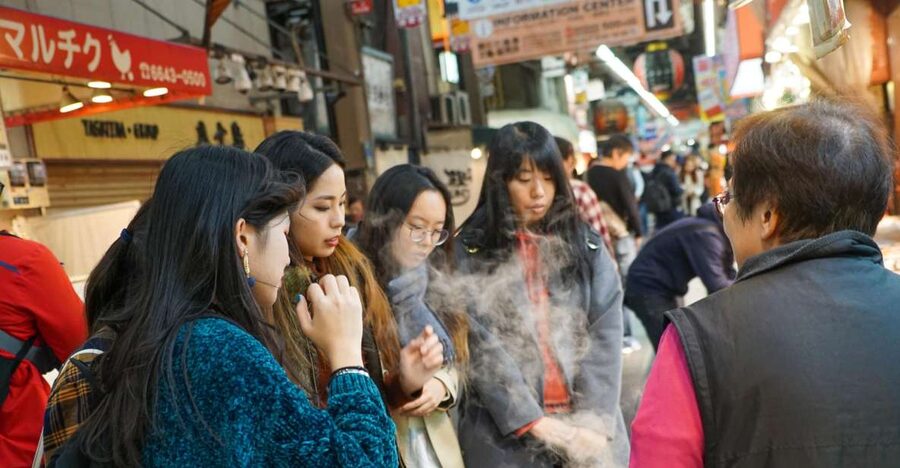
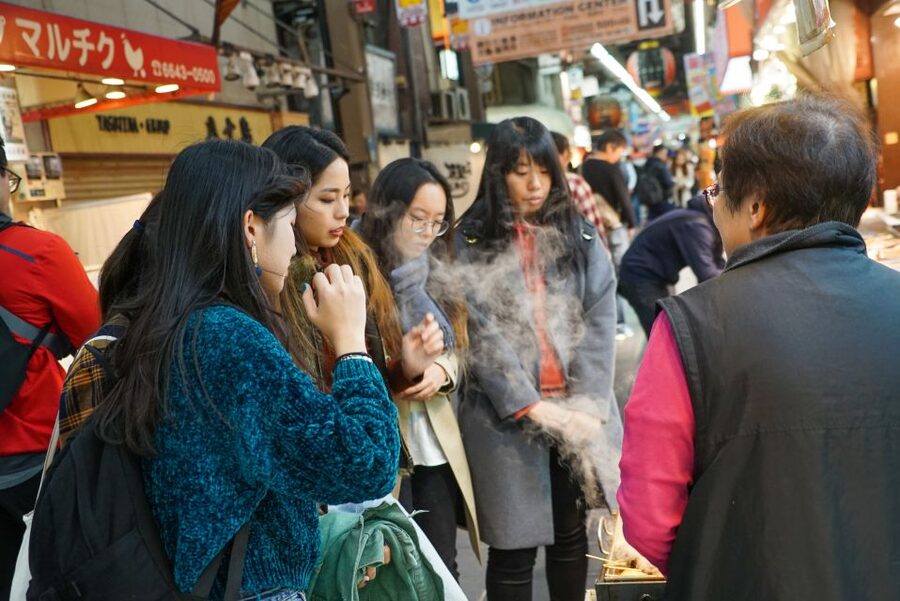
- Five to six tastings: Expect Osaka favorites and market foods such as takoyaki, grilled scallops, yakitori, sashimi, fruit, mochi, or taiyaki, depending on the day and your preferences.
- More than a food crawl: The route includes Kuromon Market, kitchenware shops, a local restaurant, Hozenji Yokocho, and Dotonbori.
- Strong local guidance: Guides such as Nina, Niko, Aiko, Noz, and Yusuke have been praised for clear English, friendly energy, and useful area tips.
- Useful souvenir stop: Sennichimae Doguyasuji is a good place to browse Japanese knives, cookware, tableware, and restaurant supplies.
- Good first-day choice: The tour gives you food ideas, neighborhood orientation, and recommendations you can use later in your Osaka stay.
- Plan for heat and crowds: Wear comfortable shoes, arrive early at the meeting point, and bring cash for extra food and drinks.
Why Kuromon Market makes a smart first stop in Osaka
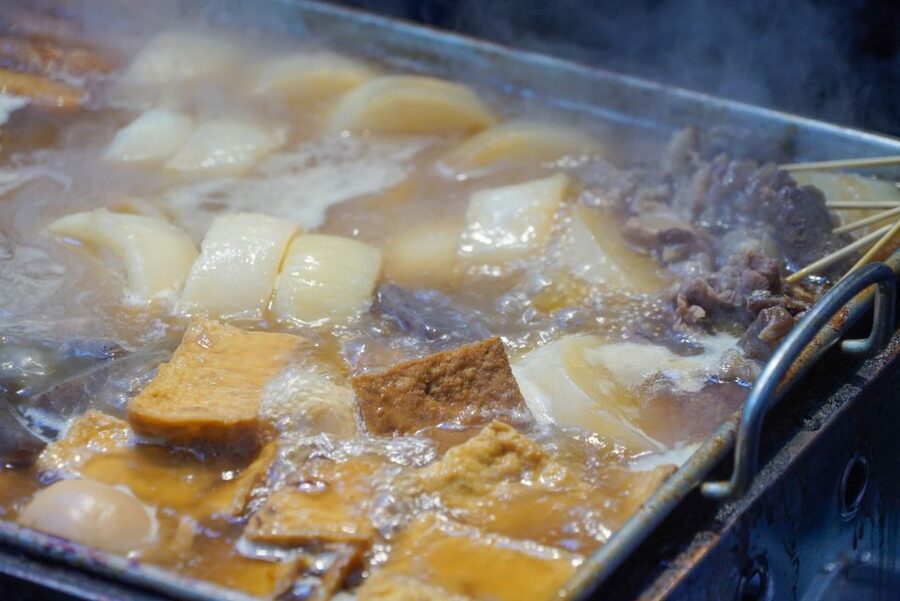
Osaka likes to eat out loud. Its central food districts are built around quick meals, open counters, grilled treats, and small shops where the product is the main decoration. Kuromon Market gives you a compact introduction to that style of eating.
The market is often called the Kitchen of the Nation, a fitting name for a place known for seafood, produce, prepared foods, and cooking supplies. Many businesses have operated for decades, so the market offers more than a string of snack stalls. It shows how food shopping, family business, and everyday Japanese meals fit together.
You begin near Nippon-bashi and spend part of the tour learning about the area before eating your way through it. That matters because Kuromon can be confusing on your own. You may see ten versions of the same food, several signs you cannot read, and queues that tell you something is popular but not necessarily what is best for your taste.
A local guide removes much of that guesswork. You can ask what a food is, how it is prepared, and how people in Osaka usually eat it. If you are unsure about raw fish, octopus, strong flavors, or unfamiliar sweets, you have someone to explain the choice before it reaches your hand.
More food tours in Osaka:
- Osaka: Shinsekai Food Tour with 13-15 Dishes at 5 Eateries
★ 4.8 · 2,204 reviews - Osaka Food Tour: 13 Dishes at 5 Local Eateries
★ 5.0 · 2,149 reviews - Hungry Osaka Street Food Tour:15 Tastings & 3 Drinks with a Local
★ 5.0 · 1,727 reviews
Starting near Nippon-bashi and finding your guide
The meeting point is in front of the SMBC ATM at Nippon-bashi 1chome, near Kintetsu Nippon-bashi Station. From Kintetsu Nippon-bashi, use Exit 10 and look for a MagicalTrip guide holding a board.
This is one detail worth taking seriously. One person found the meeting point a little hard to locate, and the tour starts on time. Late arrivals cannot join, move to another departure, or receive a refund, so give yourself extra minutes if you are unfamiliar with the station.
The opening stop is described as a short guided visit of about 15 minutes. It functions as an orientation, giving you context before the market food begins. Guides have included Nina, Niko, Aiko, Noz, Mari, Ai, and Yusuke, among others, and the experience is offered in English.
Group size can vary. Private and small-group options are available, and several bookings have ended up feeling especially personal because of small numbers. That is useful in Kuromon, where a large group would be harder to keep together and more awkward around food counters.
Kuromon Ichiba Market: the main eating stretch

The tour allows about 30 minutes at Kuromon Ichiba Market, though food preparation and group movement can make the market portion feel like the heart of the outing. You receive five to six food samplings, with examples including takoyaki, grilled scallops, yakitori skewers, tempura, gyoza, sashimi, fresh fruit, and Japanese sweets.
The exact menu is not fixed, and that is a benefit. Several guides have adjusted the choices to suit what people wanted to try or had not yet eaten in Osaka. One group tasted tuna belly sashimi, roast chestnuts, dried fruit, watermelon, ice cream sandwiches, and red bean paste taiyaki. Another tried scallop sushi, strawberry mochi, sakura mochi, wasabi, and gyoza.
You should arrive hungry. The included portions are described as enough to fill you up, often enough for a satisfying lunch. You can still buy extra food and drinks, but bring cash for those purchases because they are not included.
The market is not a quiet sit-down dining room. You may eat standing, move to a less crowded area, or pause while other shoppers pass. One useful feature of the guide system is that the guide may buy the food and take the group somewhere easier to eat, rather than leaving everyone packed around a busy counter.
Takoyaki is an obvious Osaka introduction: a hot octopus dumpling with a soft center, usually served with sauce and toppings. Grilled scallops and yakitori show a different side of the city’s quick food culture, while sashimi and fresh fruit let you sample the market’s raw and seasonal offerings.
Do not assume every listed example will appear on your tour. Availability, shop hours, food preferences, and the guide’s choices affect the final selection. The point is not to collect six fixed dishes. It is to try a range of Osaka foods with someone who can help you choose.
How the guide improves the food experience
The strongest part of this tour is the human explanation between bites. Guides are there to discuss the market’s past, Osaka’s place in Japanese culture, and the customs behind the foods you are tasting.
Good guidance is especially useful when a dish looks familiar but tastes different from what you know at home. You can ask about ingredients, preparation, or the best way to approach something new. The tour also gives you practical restaurant suggestions for later, which makes it more useful than a meal that ends when the last sample is gone.
The guide style varies by person, but the feedback consistently highlights friendly English-speaking leaders. Nina has been praised for local insight, clear communication, photo-taking, and thoughtful help on hot days. Niko has been described as warm, lively, and unhurried. Aiko and Noz have also received strong marks for food explanations and adapting choices to the group.
That does not mean every food request can be met. Vegetarian and vegan diets can be accommodated if you notify the operator at least one day ahead, but choices may be limited. Gluten-free requests cannot be accommodated, and allergy-free meals or substitutions are not guaranteed because food is prepared in outside kitchens.
Same base, a completely different sort of day:
- Osaka Go Karting Tour with Funny Costume
★ 5.0 · 2,658 reviews - Osaka Castle: Museum and Tower Entry Ticket
★ 4.5 · 2,380 reviews - Osaka: teamLab Botanical Garden Entry Ticket
★ 4.5 · 1,710 reviews - Osaka: Tea Ceremony Experience
★ 4.9 · 1,426 reviews
Sennichimae Doguyasuji: Osaka’s kitchenware street
After the market, the route spends about 20 minutes at Sennichimae Doguyasuji Shotengai. This is a change of rhythm from eating. Instead of looking for the next hot snack, you browse shops selling kitchen tools, cookware, knives, tableware, and items used by restaurants.
This stop is a real strength for shoppers. You can find souvenirs that feel more connected to Osaka’s food culture than a standard souvenir-shop trinket. A Japanese knife, ceramic dish, chopstick set, small cooking tool, or serving piece may be useful long after the trip.
Allow yourself some restraint if you are carrying luggage. Kitchen tools can be tempting, and the short visit is meant for browsing rather than a long shopping session. If you already know you want a knife or cookware, the guide can help you understand the area and point out shops that match your interests.
One participant specifically enjoyed the knife and cookware section, and another returned to shop after the tour. That is a good plan. Use the guided visit to learn where the shops are, then come back later with time to compare items and deal with packing.
The local restaurant and the quieter side of the route
The itinerary includes about 10 minutes at a local restaurant. This is a short stop, not a full restaurant meal, and it helps show how the market connects with Osaka’s wider dining scene.
The value here is context. Kuromon supplies ingredients and prepared food, while nearby restaurants turn familiar products into meals. Your guide can also explain what to look for when you return for dinner, including the kinds of places that fit your budget or interests.
The short timing means you should not expect a leisurely table service experience. If you want a long meal, you will need to plan one separately. The tour is designed to give you a broad taste of the neighborhood rather than settle into one restaurant for an hour.
Hozenji Yokocho and the small shrine stop
The route then moves to Hozenji Yokocho for roughly 10 minutes. This narrow area offers a welcome contrast to the market and modern shopping streets. The tour also includes a small shrine visit, which several people especially enjoyed.
That pause matters. Osaka is not only food counters and neon signs. The shrine and old lane give you a brief look at the city’s quieter side, and your guide can connect the setting to local customs and neighborhood history.
Ten minutes is enough for a quick look, basic explanation, and photos, but not for a long temple visit. If you want more time at Hozenji, note where it is and return after the tour. The guide’s route gives you orientation without turning the experience into a formal religious-site tour.
Dotonbori finishes the two-hour walk
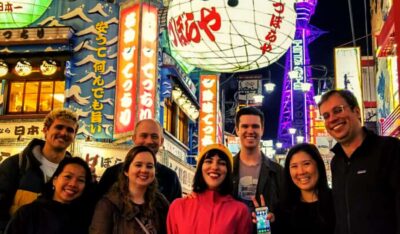
The final 25 minutes are spent in Dotonbori, one of Osaka’s best-known entertainment and food areas. The route ends with a strong contrast: Kuromon feels tied to shopping and ingredients, while Dotonbori puts Osaka’s public appetite on display through restaurants, signs, and late-day energy.
This is a useful place to finish because you can continue exploring on your own. You may want to return to a food stall, follow a restaurant suggestion, or simply walk through the area after you know more about what you are seeing.
The ending also makes this tour helpful for a first visit. You are not just dropped back at a station after a meal. You finish with a clearer sense of how Nippon-bashi, Kuromon, Hozenji, and Dotonbori connect.
Is $49 a fair price for two hours?
At $49 per person, the tour is priced above simply buying six snacks yourself. The value comes from the included food, English-speaking guide, area orientation, cultural explanation, route planning, and tour photos.
If you already know Kuromon well and enjoy choosing every dish alone, you may prefer to spend $49 directly at stalls and restaurants. But first-time visitors face a real information gap. A guide helps you avoid random choices, explains unfamiliar foods, and points out places you might otherwise walk past.
The food quantity improves the value. You are not paying only for a few tiny tastes. The included five to six samples can make a full lunch, though additional purchases remain your responsibility.
The photos are another small benefit. Guides such as Nina, Noz, Aiko, and Mari have taken pictures during the walk, allowing you to focus on eating and exploring instead of handing your phone to strangers. This is not the reason to book the tour, but it is a pleasant extra.
Who will enjoy this food walk most?
I would choose this tour for a first or second day in Osaka, especially if you want a quick introduction before making your own plans. It suits curious eaters who want to try local foods but would rather have help with the menu and ordering.
Families can also do well here. All ages are welcome, and guides have worked successfully with children and teenagers. The food variety gives each person room to find something appealing, though parents should remember that the route is crowded and some areas are not stroller-friendly.
Small groups and private bookings are best if you want a more personal pace or have specific foods in mind. The guide can tailor choices to the group when possible, but dietary limits should be shared at least one day before the tour.
This is not the right choice if you need a wheelchair-accessible route. Some stops do not work for wheelchairs or strollers, and the tour is not recommended for people with mobility issues. It is also a poor fit if you dislike standing, walking, crowded shopping areas, or eating food prepared in external kitchens.
Practical advice for a smoother outing
Wear comfortable shoes. The walk is only two hours, but you spend time moving through busy market lanes and shopping streets, often stopping rather than sitting.
Bring cash for your own extra food and drinks. Five to six tastings are included, and you do not need to pay for the guide’s food, but you may see plenty of tempting additions.
Tell the operator about vegetarian or vegan needs at least one day ahead. Options may be limited, and gluten-free requests cannot be accepted. Do not rely on the tour for guaranteed allergy-free meals or substitutions.
Check the weather before you go. Osaka summers can reach around 40°C, while winter lows can fall to about -5°C. In hot weather, light clothing, water, and sun protection matter. One guide has provided chilled neck rings on a very hot day, but you should still prepare yourself.
Book early in your Osaka stay if you can. The guide’s food suggestions and restaurant tips are more useful when you still have several meals ahead of you. You can also return to Kuromon or Doguyasuji later for foods and souvenirs you want to explore at your own pace.
Should you book the Kuromon Market food tour?
Book it if you want a friendly, efficient introduction to Osaka food and do not want to make every choice alone. The combination of generous samples, market guidance, kitchenware shopping, a shrine, Hozenji Yokocho, and Dotonbori gives you more range than the two-hour duration might suggest.
Skip it if you have strict gluten-free or allergy requirements, need step-free access, or prefer a long meal in one restaurant. For most first-time visitors who like trying new foods, the $49 cost is reasonable, especially when the tastings can replace lunch and the local advice helps shape the rest of your Osaka visit.
FAQ
How long does the Kuromon Market food tour last?
The tour lasts two hours.
How many food tastings are included?
The tour includes five to six food samplings.
What foods might I try?
Possible foods include takoyaki, grilled scallops, grilled yakitori skewers, sashimi, tempura, gyoza, fresh fruit, mochi, taiyaki, roast chestnuts, and other local or market foods. The exact choices can vary.
Is the tour conducted in English?
Yes. The tour includes a live English-speaking guide.
Where is the meeting point?
Meet in front of the SMBC ATM at Nippon-bashi 1chome, near Kintetsu Nippon-bashi Station. Use Exit 10 and look for a guide holding a MagicalTrip board.
Can vegetarians and vegans join?
Vegetarian and vegan requests can be accommodated, but options may be limited. You must provide notice at least one day in advance, since same-day requests cannot be accepted.
Can the tour accommodate gluten-free or allergy-free diets?
Gluten-free requests cannot be accommodated. Allergy-free meals and substitutions cannot be guaranteed because the food is prepared in external kitchens.
Is the tour wheelchair accessible?
No. Some locations are not wheelchair or stroller accessible, and the experience is not recommended for wheelchair users or people with mobility issues.
More Shopping in Osaka
- Tokyo: Tsukiji Fish Market Food and Walking tour
★ 5.0 · 1,724 reviews - Tokyo: Tsukiji Fish Market Guided Walking Tour
★ 4.9 · 1,397 reviews - Nishiki Market Brunch Walking Tour (7 Tastings + Brunch)
★ 5.0 · 1,355 reviews - Tsukiji Fish Market Guided Tour and Sushi Making with Pro Chef
★ 5.0 · 775 reviews
More Markets in Osaka
- Kuromon Market Food Walking Tour in Osaka (6 stops, 6 tastes)
★ 5.0 · 550 reviews - Osaka: Cooking Class & Sake Tasting with Local Market Visit
★ 4.8 · 31 reviews - Osaka: Food Tour Kuromon Market & Dotonbori with Guide
★ 4.5 · 15 reviews - Tokyo Tsukiji Fish Market Food and Culture Walking Tour
★ 5.0 · 3,184 reviews
Just added around Osaka
- Discover Real Osaka: A Cultural Walk with Food & Drink★ 5.0 · 13 reviews
- From Osaka/Kyoto: Kyoto & Nara Day Trip with Optional Lunch★ 4.5 · 79 reviews
- Osaka 6hr Private Walking Tour with Government Licensed Guide★ 5.0 · 174 reviews
- Private Airport transfer Kansai Intl. Airport(KIX) to OSAKA CITY★ 4.5 · 12 reviews
- Osaka: Namba Local Food Walking Tour (Taste 15 Dishes)★ 5.0 · 20 reviews
- Osaka Delights: Traditional Japanese Food Tour★ 4.5 · 33 reviews
- Badminton in Osaka & Kyoto with Locals!★ 5.0 · 15 reviews
- From Osaka or Kyoto: Kyoto and Nara 1-Day Bus Tour★ 3.5 · 141 reviews
Osaka Tours, compared.

Shinsekai Food Tour with 13-15 Dishes at 5 Eateries
Read our review →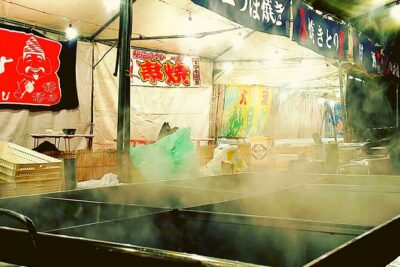
Osaka Food Tour: 13 Dishes at 5 Local Eateries
Read our review →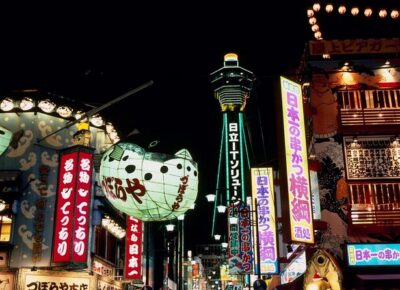
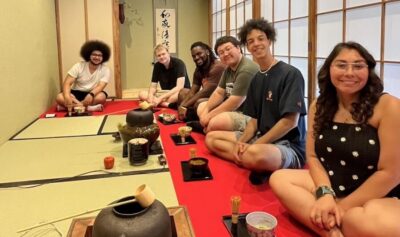
Hungry Osaka Street Food Tour:15 Tastings & 3 Drinks with a Local
Read our review →
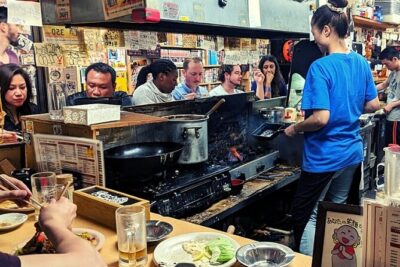
Hotspots & Hidden Gems Walking Tour Private or Group
Read our review →Browse the lists this tour appears in