
Reviewed · KYOTO TOURS
Private Japanese Calligraphy in Kyoto – Learn Shodō with a Master
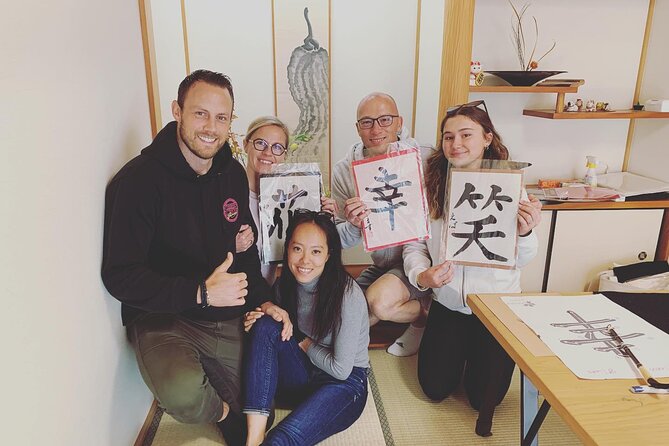
The special part of this Kyoto activity is its setting: you enter a private home near Nijo Castle, sit in a tatami room, and learn Shodō from Aya Ito, an instructor with more than 55 years of practice. This is not a large workshop where you copy a sample and leave. Your group has the room and teacher to itself.
I like the one-on-one attention and the chance to create something personal rather than simply watch a demonstration. I also like the cultural setting, where brush control, posture, ink, and the meaning behind each character all matter. Aya and her husband, Manabu, are known for making the room feel warm and relaxed.
The main limitation is time. One hour passes quickly, especially if you want to write both a kanji character and your name in Japanese. You should also plan your route carefully, bring clean socks for the tatami room, and arrive early. More than 15 minutes late can mean losing the class and its payment.
Key Points to Know Before Booking
- Private class near Nijo Castle: Only your own group takes part, with no other participants sharing the lesson.
- Aya Ito teaches the session: She has practiced Japanese calligraphy for over 55 years and offers instruction in English and Japanese.
- You make a personal souvenir: Choose a favorite kanji and create artwork that you can take home.
- The lesson includes cultural context: You learn about brush movements, the background of Shodō, and the importance of the artist’s state of mind.
- Tatami etiquette matters: Clean socks are required, and children under 12 cannot be accommodated.
- Plan for a strict start time: The class lasts about one hour, and arrivals more than 15 minutes late may not be accepted.
A Quiet Kyoto Home Near Nijo Castle
The meeting point is SAKURA Experience Japanese Culture Nijo Home, at 660 Izumichō in Nakagyo Ward. It is about 200 meters west of the front of Nijo Castle, a useful landmark in a part of Kyoto where several streets can look much alike.
You are not meeting at a hotel lobby or a commercial art school. You enter a local home with a studio room prepared for the lesson. That makes the experience feel more personal, though it also means you need to pay attention to directions.
The map pin is reported to be accurate, but the street-view image can show a different spot. If you use a map app, follow the pin itself rather than relying only on the photographs. The hosts have also used WhatsApp to send directions and a picture of the entrance, so check your booking messages before setting out.
Public transportation is nearby, but private transportation is not included. Give yourself extra time to walk from your train or bus stop. Kyoto’s grid can look simple on a map and still cause a wrong turn when you are standing on a similar-looking residential street.
A few more Kyoto half-days to weigh up
- PERFECT KYOTO 1-Day Bus Tour
★ 5.0 · 13,518 reviews - Kyoto: Fushimi Inari, Kinkakuji, Bamboo Grove 1 Day Bus Tour
★ 4.8 · 4,316 reviews - Kyoto: Tea Ceremony in a Traditional Tea House in Kiyomizu
★ 4.9 · 3,519 reviews
Entering the Tatami Room
Before you sit down, remember one small but important point: you need clean socks. Bare feet are not permitted on the tatami, and entering without socks is considered impolite.
This is a useful cultural detail, not a nuisance. Japanese arts often depend on the setting as much as the technique, and sitting in a tatami room changes the pace of the lesson. You are asked to slow down, pay attention, and treat the tools and space with care.
Aya and Manabu may offer tea and traditional Japanese sweets, and the home setting allows for a little conversation around the lesson. Several visitors also had photographs taken during the class and later received them, although photography should be understood as part of the host’s approach rather than a guaranteed formal photo package.
What Happens During the One-Hour Lesson
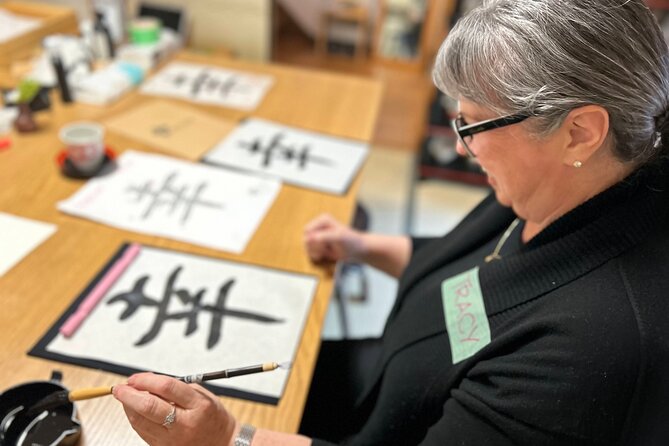
The class begins with an introduction to Shodō, the Japanese art of writing with a brush. You learn that calligraphy is not simply a matter of drawing attractive symbols. The direction, pressure, speed, and ending of each stroke shape the final character.
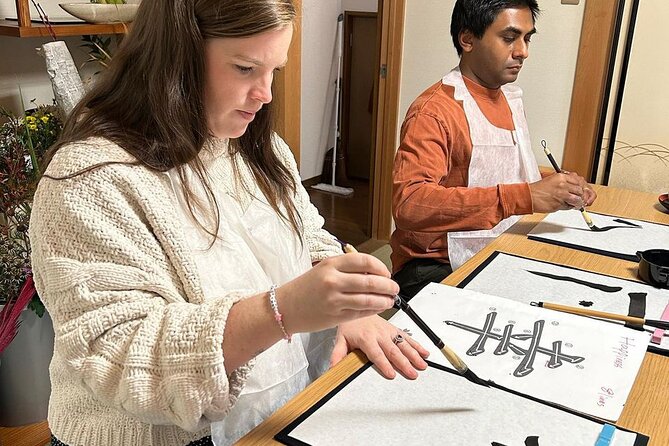
Aya demonstrates the basic movements and then guides you as you try them. Beginners should not worry about having artistic training. The instruction is hands-on, patient, and designed for people who may be holding a calligraphy brush for the first time.
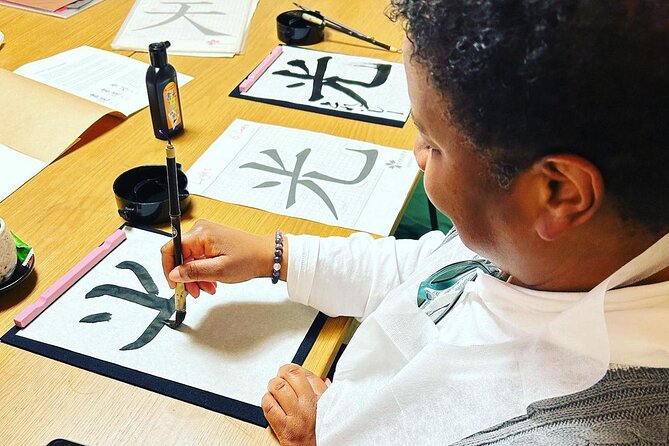
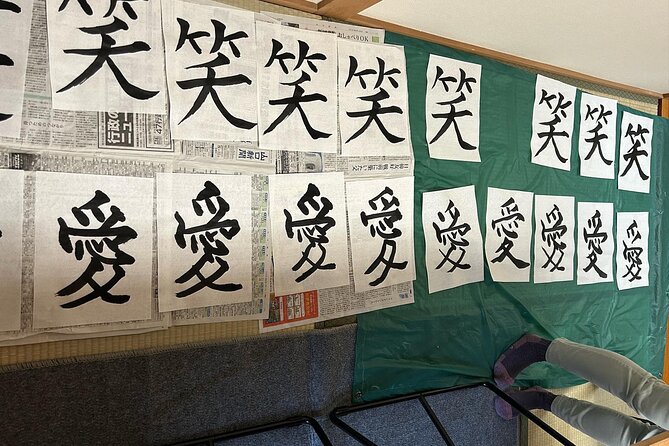
You practice brush movements before producing your final pieces. This practice matters because the brush behaves differently from a pen. Too much pressure makes a stroke heavy. Too little can make it weak. A steady motion gives the character its shape and energy.
The teacher also explains how the writer’s state of mind affects the work. That idea gives the class more substance than a simple craft activity. You are not just copying kanji for decoration. You are learning why calm attention and controlled movement matter in Shodō.
The class is private, so Aya can watch your hand position and correct your technique as you work. That is the strongest reason to choose this option instead of a larger group workshop. You do not have to compete for help or wait while an instructor moves around the room.
Choosing a Kanji Character and Writing Your Name
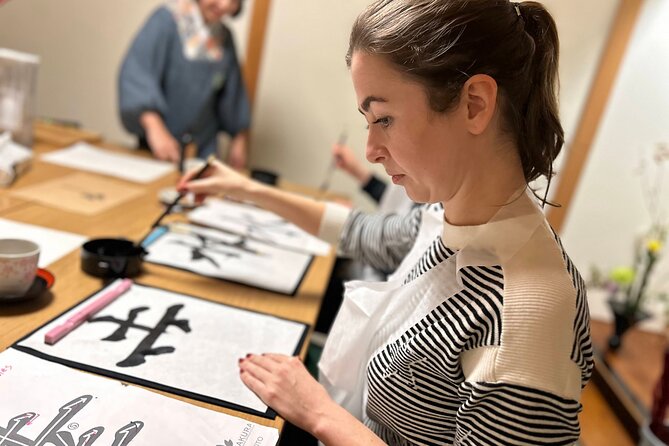
A central part of the session is choosing a kanji character that has personal meaning for you. The teacher provides guidance on selecting and writing it, so you do not need to arrive with a character already chosen.
This is where the activity becomes more than a standard souvenir stop. A character can represent an idea, a quality, or a feeling, and the act of writing it gives the keepsake a personal connection to your time in Kyoto.
You can also write your name in Japanese. Be realistic about the clock, though. A long name can take much of the hour, particularly if you want to practice first and produce a polished final version. One participant found there was not enough time to complete a name and instead chose a single character.
My advice is to decide before class how much you want to accomplish. If your priority is a name, tell Aya at the start. If you prefer a bold kanji artwork, focus your time there. Trying to complete several complicated pieces may leave you feeling rushed.
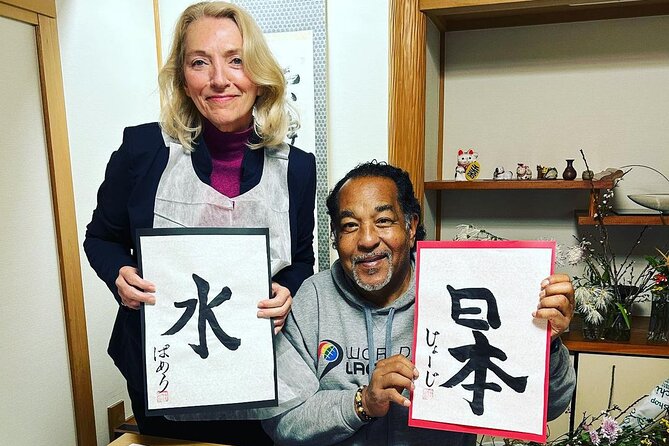
The finished artwork is yours to take home. Some people produced several pieces for family members or grandchildren, while others planned to frame their work. The tools, paper, and ink are included, so you do not need to buy supplies for the lesson.
Same base, a completely different sort of day:
- Kyoto Geisha Walking Tour: Gion District & Hidden Gems
★ 4.7 · 3,273 reviews - Kyoto: Tea Ceremony Ju-An at Jotokuji Temple
★ 4.9 · 3,207 reviews - Kyoto: Gion Magical Night Walking Tour with Geisha Trivia
★ 4.9 · 2,393 reviews - Kyoto: 45-Minute Tea Ceremony Lesson Experience
★ 4.3 · 2,378 reviews
Why the Private Format Matters
Private instruction changes the tone of the activity. You can ask basic questions without feeling self-conscious, and the teacher can adjust the pace to your group. That is helpful for families with older children, couples, and people who have never tried a Japanese art form.
The class is not intended for children under 12. The quiet setting and careful brush work require a certain level of focus. Older children can take part, but motivation matters. A child who enjoys making things and can listen to instructions is likely to get more from the experience than a child looking for a fast-moving activity.
The private format also works well if one person in your group is more confident than another. Nobody has to perform in front of strangers, and each person can receive individual help. The teacher’s patient manner is often singled out as one of the best parts of the experience.
There is a small tradeoff. A private home class can feel less polished than a purpose-built cultural center, and the amount of explanation may depend on how actively you ask questions. One account of the experience found the session rushed and felt that the historical material was not explained clearly enough. The lesson includes background information, but if you want a long lecture on Japanese art history, this one-hour format will not provide it.
How Much Value Do You Get for $77.51?
At $77.51 per person, this is not the cheapest short activity in Kyoto. The value comes from the private format, the teacher’s long experience, the materials, and the artwork you take home.
A larger workshop may cost less per person, but you could receive less direct correction and less time with the instructor. Here, the price also covers the unusual setting of a real Kyoto home and a lesson built around your group rather than a fixed public demonstration.
The souvenir has practical value because you make it yourself. You are not buying a mass-produced print in a shop. You leave with paper bearing your own brushwork, including the uneven strokes and small flaws that show it was made during your visit.
I would consider the price fair for a couple or small group that wants a personal cultural activity. Group discounts may be available, which could make it more appealing for families with eligible children or several adults. The one-hour length means you should book it for the quality of the experience, not for a full afternoon of instruction.
The activity is also a sensible choice on a rainy day. It takes place indoors, close to Nijo Castle, and combines a cultural lesson with a keepsake. Just remember that the short duration makes it easy to fit before or after sightseeing, but it does not leave much room for late arrival.
English, Japanese, and Communication
The class is offered in English and Japanese. Aya speaks both, and several participants found her English helpful during explanations and brush practice.
You should still read the practical instructions carefully before booking. The experience works best when you understand the meeting point, the age restriction, the sock requirement, and the late-arrival rule. If you have questions about your character choice or your name, ask early in the session rather than waiting until the final minutes.
The teacher’s warm approach extends beyond the brushwork. People have received help finding the home, local suggestions, and assistance arranging a taxi in the rain. Those extras are not the main product, but they can make a difference when you are navigating Kyoto on a busy sightseeing day.
Who Will Enjoy This Shodō Class?
I would recommend it to you if you want a small, personal encounter with Japanese culture and prefer making something to simply taking photographs. It suits couples, adult friends, solo visitors who can join a private booking, and families with children aged 12 or older.
It is especially good for:
- First-time calligraphy students
- Anyone interested in Japanese language or kanji
- Visitors who want a handmade Kyoto souvenir
- People looking for a calm indoor activity
- Small groups that value private instruction
- Parents with focused children aged 12 and above
You may want another option if you expect a formal museum-style presentation, a long lesson, or advanced artistic training. This is an introduction. You practice basic movements, learn some cultural background, and create your own work in a short session.
The class can also disappoint if your main goal is to produce a perfect translation of a complex phrase. Kanji selection and name writing take time, and an hour can disappear quickly. Keep your plan simple and tell Aya what you most want to write.
Booking Tips That Make the Hour Work
Book with enough lead time. This activity is often reserved about 54 days ahead, which suggests that popular dates can fill well before a Kyoto visit.
Before leaving your hotel, confirm the exact meeting point and check the map pin. Aim to arrive early, not at the scheduled start time. A 15-minute late-arrival limit is strict, and refunds are not offered when the class cannot begin because of a late arrival.
Wear clean socks or pack a pair in your day bag. Choose comfortable clothing that lets you sit and work at a low table without fuss.
If rain or a public transportation delay threatens your arrival, contact the provider as soon as possible. The class ends at the same home where it begins, and you arrange your own transportation to and from the address.
Cancellation is free when made at least 24 hours before the local start time. Cancellations or changes made inside that window are not refunded or accepted, so this is not a booking to leave until the last minute if your schedule is uncertain.
The Final Keepsake
The most satisfying part of the experience comes at the end, when your practice sheets and final calligraphy become something you can actually carry home. Your work may not look like Aya’s, and that is the point. The character records your hand, your concentration, and a quiet hour in Kyoto.
Some participants created several paintings for family members. Others planned to frame one piece for their wall. You can also ask about calligraphy tools if the class leaves you wanting to continue at home. One family bought equipment from a recommended shop after the lesson.
That lasting connection is stronger than a souvenir purchased in a crowded shopping street. You leave with a reminder of what you learned, not just where you went.
Should You Book This Kyoto Calligraphy Experience?
Book it if you want private guidance, a calm home setting, and a handmade keepsake near Nijo Castle. Aya’s long practice, patient teaching, and ability to work in English make the class approachable for complete beginners.
Go in with a clear plan. In one hour, choose one main goal, arrive early, wear socks, and do not expect a lengthy art course. At $77.51 per person, the experience is best value for people who care about personal attention and cultural context, not simply the lowest price.
For a thoughtful rainy-day activity or a quieter break between Kyoto sights, this is a strong choice. For children under 12 or anyone seeking advanced calligraphy training, it is not the right fit.
FAQ
Where does the calligraphy class take place?
The class takes place at SAKURA Experience Japanese Culture Nijo Home, at 660 Izumichō, Nakagyo Ward, Kyoto. It is about 200 meters west of the front of Nijo Castle.
How long does the activity last?
The class lasts approximately one hour.
Is the class private?
Yes. Only your own group participates, and no other groups join the session.
Who teaches the calligraphy lesson?
Aya Ito teaches the class. She has more than 55 years of experience practicing Japanese calligraphy. The activity is offered in English and Japanese.
Can children take part?
Children under 12 cannot be accommodated. Older children may participate, but they should be motivated and able to maintain a quiet learning environment.
What should I bring?
Bring or wear clean socks because bare feet are not permitted in the tatami room. Calligraphy tools and paper are provided, and your finished artwork is included to take home.
Just added around Kyoto
- Kyoto: Zen Meditation at a Private Temple with a Monk★ 5.0 · 25 reviews
- Kyoto: Gion Geisha District & Sake-in-Hand Walking Tour★ 5.0 · 37 reviews
- Private Pewter Sake Cup Experience with a Kyoto Artisan★ 5.0 · 31 reviews
- Your Private Vacation Photography Session In Kyoto★ 5.0 · 110 reviews
- Private Guided Traditional Buddhist Cooking in Japan★ 5.0 · 16 reviews
- Kyoto Wagashi(Japanese sweets) Cooking Class near Fushimiinari★ 5.0 · 60 reviews
- Traditional Japanese Music show & Experience Tour in Kyoto★ 5.0 · 57 reviews
- Kyoto:Family-Friendly Kimono & Yukata Experience at WARGO★ 5.0 · 147 reviews
Kyoto Tours, compared.


Fushimi Inari, Kinkakuji, Bamboo Grove 1 Day Bus Tour
Read our review →
Tea Ceremony in a Traditional Tea House in Kiyomizu
Read our review →
Kyoto Geisha Walking Tour: Gion District & Hidden Gems
Read our review →

Gion Magical Night Walking Tour with Geisha Trivia
Read our review →
