
Reviewed · KYOTO TOURS
Private Nara Tour from Osaka – Meet at Your Hotel
Nara’s free-roaming deer are the friendly headline act, but the real prize is seeing them alongside temples that reach back to Japan’s earliest capital. This private six-hour trip takes you from Osaka by train, with guide Masa especially praised for his patience, clear explanations, and ability to shape the day around your interests. Feeding the deer and entering Todai-ji’s Great Buddha make a memorable pair.
I like the private format, which gives you room to ask questions, linger for photos, or request an extra snack stop. I also like the smart route through Kofuku-ji, Nara Park, Himuro Shrine, Todai-ji, and Yoshikien Garden, rather than reducing Nara to one temple and a quick deer picture. The main consideration is that trains, lunch, and drinks cost extra, and roughly 140 minutes of the six-hour tour are spent traveling between Osaka and Nara.
Key points at a glance
- Masa may be your guide: He is praised for patient answers, strong English, local knowledge, and even preparing printed information in Spanish for one group.
- The train ride is part of the day: Expect about 70 minutes each way, with transportation fees paid separately.
- Todai-ji is the grand finale: The temple houses a bronze Great Buddha about 15 meters tall.
- Nara Park is more than a photo stop: You can feed the sacred deer and walk through the broad park near the old temples.
- The route includes quieter corners: Himuro Shrine and Yoshikien Garden add smaller-scale beauty after the major sights.
- The price works best for a group: At $514 for up to six people, the base cost is about $85.67 per person before trains and food if six people join.
Why Nara makes a fine escape from Osaka
Osaka is loud, bright, and wonderfully full of food. Nara offers a different rhythm. It was Japan’s first permanent capital, and its temples, shrines, gardens, and deer remain closely tied to the city’s early religious and political life.
I like this tour because it does not treat Nara as a single blockbuster sight. You move from the shopping street into old temple grounds, then through Nara Park and onward to Todai-ji. That sequence lets you see how daily life, sacred places, and open green space fit together.
The private guide also changes the feel of the day. You are not following a flag through a crowd or waiting for a large group to catch up. You can ask why a building is a temple rather than a shrine, request more background on Buddhism, or pause when the deer provide a better photo than expected.
Still, this is a six-hour outing, not a slow two-day stay in Nara. You will cover several places, but each stop has a set amount of time. If you want long museum visits, extended shopping, or a quiet meal with no schedule, you may find the pace brisk.
A few more Kyoto half-days to weigh up
- PERFECT KYOTO 1-Day Bus Tour
★ 5.0 · 13,518 reviews - Kyoto: Fushimi Inari, Kinkakuji, Bamboo Grove 1 Day Bus Tour
★ 4.8 · 4,316 reviews - Kyoto: Tea Ceremony in a Traditional Tea House in Kiyomizu
★ 4.9 · 3,519 reviews
From your Osaka hotel to Higashimuki Street
The day begins with a hotel meet-up in Osaka. You then travel by train for about 70 minutes to Nara. Since train fares are not included, check the exact cost and payment method with the guide before setting out. The time can also change according to your hotel’s location and the day’s transport conditions.
I see the train as a practical part of the experience rather than a flaw. It avoids paying for a private vehicle, and the ride gives you a simple transition from Osaka’s city center to Nara’s older streets. Just remember that this is not a door-to-door private car tour.
Your first stop is Higashimuki Shopping Street, where the guide allows about 20 minutes. This is a useful place to get your bearings and see the commercial side of Nara before entering the temple district. You might find snacks, souvenirs, and local food here, but the short stop is mainly an introduction rather than a full shopping session.
If you are hoping to buy gifts, tell your guide early. The private format may make small adjustments possible, though extra stops are best arranged ahead of time when you can.
Kofuku-ji and the story of old Nara
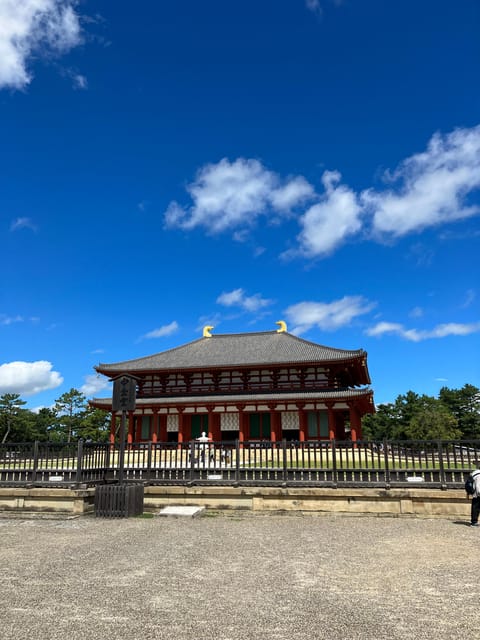
Kofuku-ji receives about 30 minutes of guided attention. Founded in 669, it is one of Nara’s Seven Great Temples and part of the city’s UNESCO World Heritage listing. Its wooden structures and important cultural treasures give you an early look at the religious power Nara held in Japan’s first permanent capital.
This stop works well near the beginning because it introduces the scale and age of Nara without overwhelming you. Your guide can explain the difference between a temple and a shrine, a point that Masa has handled especially well for past groups. That basic distinction helps the rest of the day make more sense.
Thirty minutes is enough for a focused walk and photographs, but not for studying every building or collection at length. If your main interest is architecture, ask Masa which features deserve your attention before you start. A private guide can point out details you might otherwise pass without noticing.
The atmosphere here is calmer than the shopping street. Take a moment to look at the timber construction and the relationship between the buildings and the surrounding grounds. Nara rewards a slower eye, even when the schedule itself is fairly tight.
Meeting Nara’s deer in the park
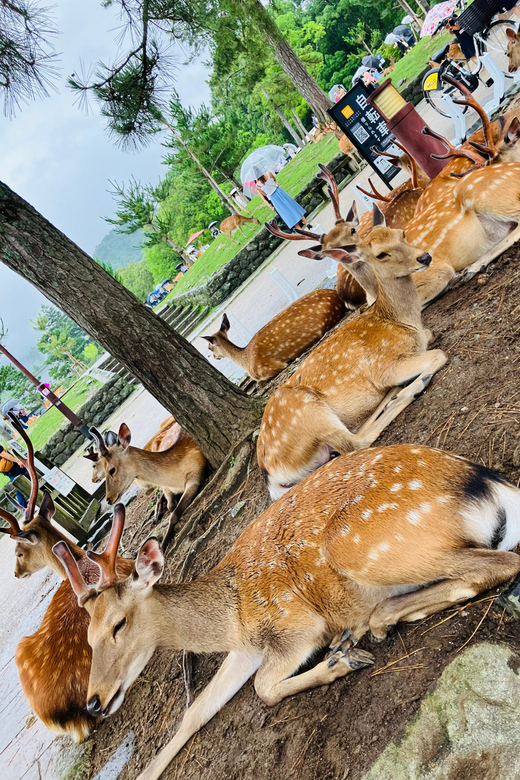
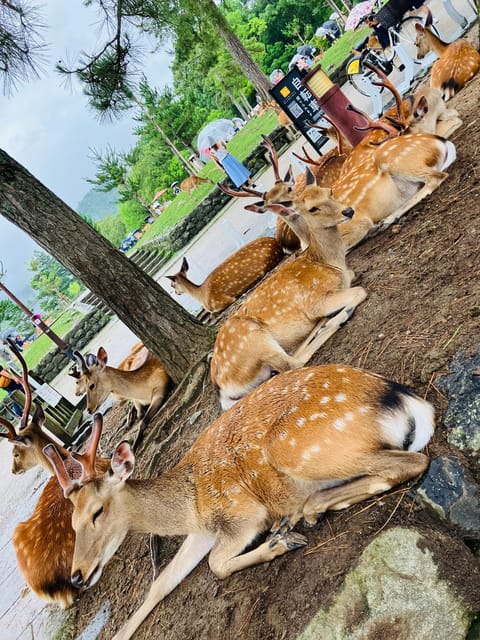
Nara Park gets another 30-minute guided stop, and this is likely to be the most playful part of the day. The deer roam freely and have been treated as sacred animals for centuries, traditionally regarded as messengers of the gods.
You can buy deer crackers and feed them, then take photographs as they approach. Keep your belongings under control and follow the guide’s instructions, since friendly animals can still be eager and persistent around food. The deer are not a staged attraction. They are part of the city’s identity, which makes the encounter feel more special than a standard wildlife photo stop.
I would use this time for both fun and orientation. Nara Park links several major sights, and your guide can explain how the open park fits around the temples. The surrounding scenery also gives you a welcome break from enclosed buildings.
Thirty minutes may feel short if you have children, animal lovers, or a camera enthusiast in your group. On the other hand, the fixed time keeps the tour moving toward Todai-ji. If the deer are your top priority, say so at the start and ask how much flexibility the day allows.
Same base, a completely different sort of day:
- Kyoto Geisha Walking Tour: Gion District & Hidden Gems
★ 4.7 · 3,273 reviews - Kyoto: Tea Ceremony Ju-An at Jotokuji Temple
★ 4.9 · 3,207 reviews - Kyoto: Gion Magical Night Walking Tour with Geisha Trivia
★ 4.9 · 2,393 reviews - Kyoto: 45-Minute Tea Ceremony Lesson Experience
★ 4.3 · 2,378 reviews
Lunch at a local restaurant
Lunch lasts about one hour at a local restaurant, but food and drinks are not included in the tour price. That separate cost gives you control over what you order, although the supplied details do not name the restaurant or provide a set menu.
This is a useful pause. After the train ride and temple walks, you can sit down, drink water, and ask the guide about dishes or local customs. If you have dietary needs, raise them before ordering rather than assuming the restaurant can accommodate every request.
The lunch break also gives the private group a chance to adjust the afternoon. You may want to spend less time shopping and more time at a temple, or the opposite. Do not count on a long unscheduled meal, though. The tour has three more stops before the return train.
Himuro Shrine, a smaller sacred stop
Himuro Shrine receives around 20 minutes. It is a shorter visit than Todai-ji, but that is part of its value. After Kofuku-ji and the wide park, a smaller shrine adds another view of Nara’s spiritual life without asking you to absorb another huge complex.
Your guide can help you notice the differences between Shinto shrine customs and Buddhist temple traditions. That makes this stop more than a quick photograph. It gives context to the buildings you have already seen and prepares you for Todai-ji’s very different scale.
Twenty minutes is enough for a concise explanation and a walk through the grounds. It will not satisfy someone hoping for an extended shrine visit, but the compact timing helps preserve energy for the day’s largest sight.
Todai-ji and the Great Buddha
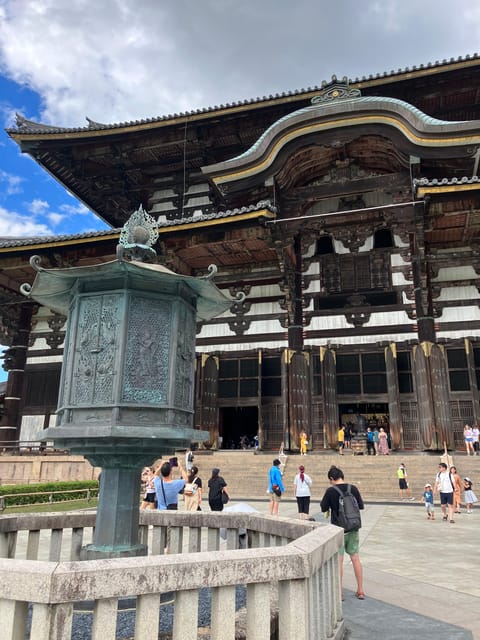
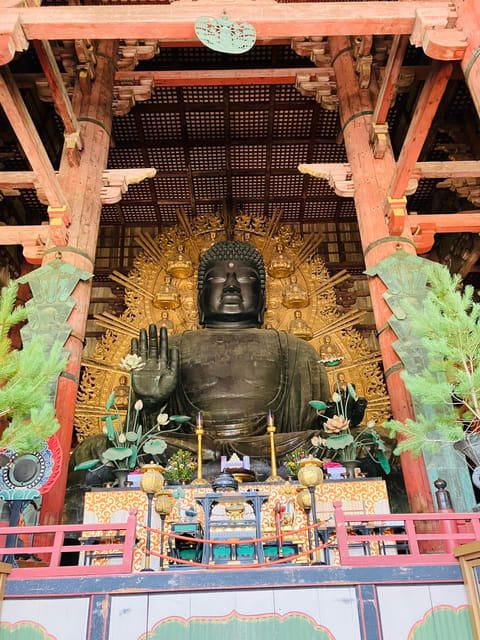
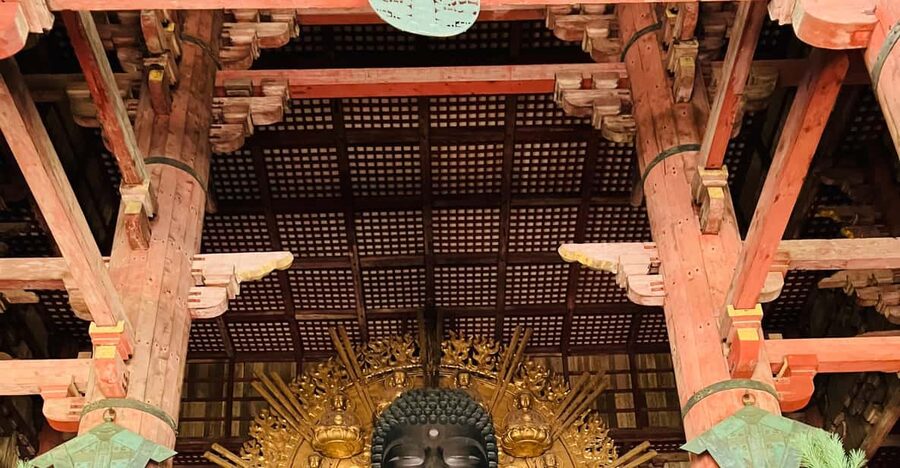
Todai-ji is the centerpiece, with about one hour set aside for the grounds and the temple. The Great Buddha, or Daibutsu, is a bronze statue about 15 meters tall, making it one of the largest bronze Buddha figures in the world.
This is the moment when Nara’s age and religious importance become tangible. The temple was founded in the eighth century and became a major symbol of Buddhism in Japan. Inside, the Buddha’s scale does the first bit of explaining, while the guide fills in the historical and cultural details.
I like having a full hour here. It gives you time to take in the wooden temple architecture, look carefully at the statue, and hear the story without being rushed through the entrance. Masa’s clear explanations and willingness to answer a long list of questions are especially useful at a place with this much to absorb.
Todai-ji can be the busiest stop, and the grand building may draw your attention away from smaller details. Listen for the guide’s suggestions about where to look and what the temple represents. If you have mobility concerns or simply tire easily, wear comfortable shoes and carry water, as the day includes several walking stops.
Yoshikien Garden and the quieter finish
Yoshikien Garden closes the sightseeing route with about 20 minutes. After the imposing temple and the lively deer, the garden offers a gentler final look at Nara. You can walk, take photographs, and let the day settle before returning to the station.
The visit is brief, so think of it as a calm final picture rather than a full garden tour. Garden lovers may wish for more time, but the stop adds variety and prevents the day from ending only on the biggest monument.
This balance is one of the tour’s strongest features. You get shopping, architecture, animals, a meal, shrine traditions, a major Buddhist temple, and garden scenery in one compact outing. The tradeoff is obvious: no single stop receives the attention it would on a dedicated half-day visit.
What the private guide adds
The guide is not just there to lead you from one entrance to another. The best value comes from explanation and flexibility. Masa, the guide most often named by participants, has been praised for being friendly, punctual, patient, and able to answer repeated questions without making the group feel hurried.
One particularly useful detail is his effort to support different language needs. He has provided printed information in Spanish for a Spanish-speaking group, while the advertised guiding languages are English and Japanese. You should not assume Spanish guiding is included, but this example suggests it is worth explaining your needs before the tour.
The private setup also suits mixed-interest groups. One person can ask about temple history, another can focus on deer photos, and someone else can request a snack stop. A past group even arranged an additional destination in advance, so contact the guide before the day if you want to discuss changes.
Flexibility has limits. The tour still has a six-hour duration, two train journeys, and scheduled visits. The guide can respond to your interests, but you should not expect an entirely open-ended day.
Is $514 a fair price for up to six?
The advertised cost is $514 per group of up to six. With six people, that works out to about $85.67 per person before transportation, lunch, drinks, and gratuity. With two people, the base cost is $257 each, so the economics are much better for families or friends sharing the booking.
The entrance fees to the listed sights are included, and the guide meets you at your Osaka hotel and returns with you. Those inclusions matter because you are paying for more than admission tickets. You are also paying for planning, interpretation, train coordination, and a private pace.
The cost is harder to justify for a solo visitor or couple who are comfortable navigating Nara independently. Train travel is not included, and Nara’s major sights can be reached without a private guide if you prepare carefully.
I would see the price as reasonable for a group that values cultural explanation and low-stress organization. It is less attractive if you mainly want transport or a quick checklist of famous places.
Who should book this Nara day trip?
I would recommend it most strongly to families, first-time visitors to Japan, and small groups with different interests. The guide can explain complex religious history in plain English, help with photos, and keep the day moving without the rigid feel of a large group tour.
It also suits anyone who wants to see the main Nara sights from Osaka without spending time planning train routes and temple order. The hotel meeting point is convenient, while the train keeps the overall cost below what a private car excursion might require.
History fans should enjoy the mix of Kofuku-ji, Himuro Shrine, and Todai-ji. Nature lovers and children will likely remember the deer most. Food-focused visitors get a local restaurant stop and time around Higashimuki Shopping Street, though lunch choices and costs are separate.
I would hesitate only if you want a very slow day, extensive shopping, a long garden visit, or several hours inside one temple. The six-hour schedule is well packed, with about 140 minutes devoted to the round-trip train journey.
Wear comfortable shoes and bring water, sunscreen, and a camera. A flexible attitude helps too, since train time may vary with your hotel location and the day’s conditions.
Should you book it?
Book this tour if you want Nara’s major sights explained by a private English-speaking guide and you are traveling with enough people to share the $514 group price. The combination of deer, Kofuku-ji, Todai-ji, a shrine, a garden, and a local lunch gives you a broad first look at the city.
Skip it if you prefer independent rail travel, want to control every minute, or are visiting Nara for a single specialist interest. For most small groups, though, the private format and the guide’s reported patience make this a practical way to meet Nara in one well-organized day.
FAQ
How long does the private Nara tour from Osaka last?
The tour lasts six hours. This includes approximately 70 minutes by train from Osaka to Nara and another 70 minutes for the return journey.
Where does the tour begin and end?
The guide meets you at your hotel in Osaka and returns with you to Osaka after the tour.
Is transportation included in the price?
No. Train transportation fees are not included. Travel time may also vary depending on your hotel location and the day’s conditions.
Are lunch and drinks included?
No. The tour includes a stop for lunch, but meals and beverages must be paid for separately.
Which languages are available?
Live guiding is available in English and Japanese. The guide is described as English-speaking and born and raised in Japan.
What major sights are included?
The route includes Higashimuki Shopping Street, Kofuku-ji, Nara Park, Himuro Shrine, Todai-ji, and Yoshikien Garden.
Can I cancel for a full refund?
Yes. You can cancel up to 24 hours in advance for a full refund.
Just added around Kyoto
- Kyoto: Zen Meditation at a Private Temple with a Monk★ 5.0 · 25 reviews
- Kyoto: Gion Geisha District & Sake-in-Hand Walking Tour★ 5.0 · 37 reviews
- Private Pewter Sake Cup Experience with a Kyoto Artisan★ 5.0 · 31 reviews
- Your Private Vacation Photography Session In Kyoto★ 5.0 · 110 reviews
- Private Guided Traditional Buddhist Cooking in Japan★ 5.0 · 16 reviews
- Kyoto Wagashi(Japanese sweets) Cooking Class near Fushimiinari★ 5.0 · 60 reviews
- Traditional Japanese Music show & Experience Tour in Kyoto★ 5.0 · 57 reviews
- Kyoto:Family-Friendly Kimono & Yukata Experience at WARGO★ 5.0 · 147 reviews
Kyoto Tours, compared.


Fushimi Inari, Kinkakuji, Bamboo Grove 1 Day Bus Tour
Read our review →
Tea Ceremony in a Traditional Tea House in Kiyomizu
Read our review →
Kyoto Geisha Walking Tour: Gion District & Hidden Gems
Read our review →

Gion Magical Night Walking Tour with Geisha Trivia
Read our review →
