
Reviewed · KYOTO TOURS
Private Tour Kyoto-Nara w/Hotel Pick Up & Drop off from Kyoto
The big appeal here is simple: you can pack Nara and Kyoto’s major sights into one private day without learning a maze of trains, buses, and walking routes. You’ll see Nara’s giant Buddha and free-roaming deer, then return to Kyoto for shrines, temples, bamboo, and the Golden Pavilion.
I like the hotel pickup, the private air-conditioned vehicle, and the freedom to adjust the pace. Guides named Ben, Dan, Yoshi, Steven, Reo, and others have been praised for friendly service, useful local suggestions, good English, and help with family members who needed a slower day. The catch is important: this is an English-speaking driver or host service, not automatically a licensed national guide. Some hosts provide only general information.
Key points at a glance
- Six major stops in one day: You visit Todai-ji, Nara Park, Fushimi Inari, Kinkaku-ji, the Kimono Forest, and Arashiyama.
- Hotel pickup at 8:30 am: Private transport saves time on transfers between Kyoto and Nara.
- Flexible private format: Your group travels alone, and the day can be adjusted for children, rain, mobility needs, or personal interests.
- Driver-host rather than guaranteed historian: The included host may explain general facts, while a national licensed guide costs extra.
- Extra costs are clear: Lunch is not included, and Todai-ji and Kinkaku-ji each cost ¥600 per person.
- Strong but uneven value: The average rating is 4.7 out of 5, with 92 percent recommending it, but the price feels high if you receive only transport and basic commentary.
What this Kyoto and Nara day is really designed to do
This is a sightseeing shortcut. Kyoto and Nara are close enough to combine, but their famous sites are spread out. Public transport can work well, yet fitting Nara Park, Todai-ji, Fushimi Inari, Kinkaku-ji, and Arashiyama into one day takes planning and energy.
With this arrangement, your driver meets you at your Kyoto hotel at 8:30 am. You travel in a private vehicle, with fuel, tolls, parking, and air conditioning covered. That matters in a city where a short visit can be eaten up by transfers and waits.
The scheduled experience lasts about six to ten hours. The listed stop times add up to roughly five and a half hours, leaving the rest for driving, parking, walking between sights, and lunch. You should expect a full day rather than a leisurely temple stroll.
The private format is the main product. Your group does not have to wait for strangers, and you can spend less time at a place that does not suit you. Several guides, including Dan, Yui, Reo, and Kj, were praised for changing the pace to fit families, children, a cane user, or changing weather.
That flexibility has limits. The advertised host is an English-speaking driver or experience guide. You should not assume every host will give a detailed explanation of Buddhist art, shrine customs, or Japanese history. If interpretation is central to your day, ask about adding a national licensed guide before booking.
A few more Kyoto half-days to weigh up
- PERFECT KYOTO 1-Day Bus Tour
★ 5.0 · 13,518 reviews - Kyoto: Fushimi Inari, Kinkakuji, Bamboo Grove 1 Day Bus Tour
★ 4.8 · 4,316 reviews - Kyoto: Tea Ceremony in a Traditional Tea House in Kiyomizu
★ 4.9 · 3,519 reviews
Todai-ji and Nara Park: a powerful start in ancient Nara
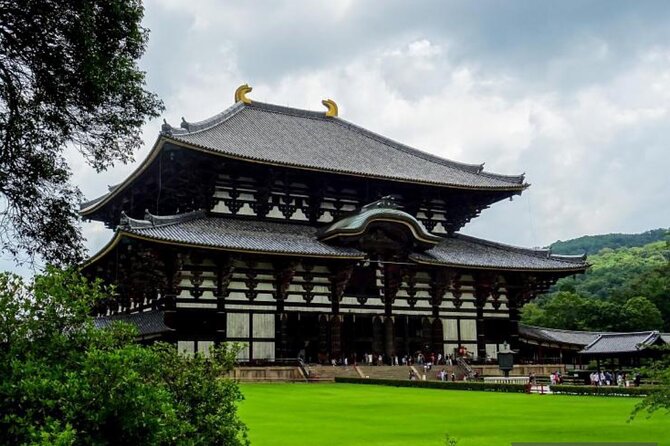
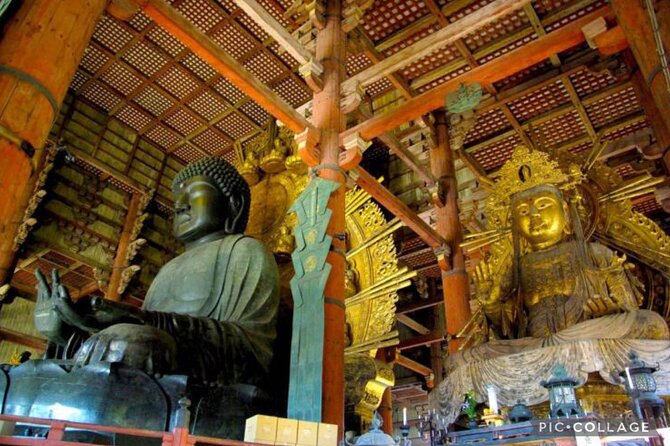
Todai-ji is the day’s most imposing stop. The Eastern Great Temple was once one of Nara’s Seven Great Temples and is part of the UNESCO-listed Historic Monuments of Ancient Nara. You have about 90 minutes here, which gives you time to enter the temple area and see its famous Buddha hall without rushing through the entire visit.
Admission is not included. The listed price is ¥600 per adult and ¥600 per youth. Bring this cost into your planning, especially if you are booking for a family.
The temple is not just another pretty wooden building. Its scale gives the visit weight, even if you are not a temple specialist. A good host can help you understand what you are seeing, but the level of explanation may vary. Some people received detailed guidance about Japanese culture and the sites. Others found the service closer to a taxi ride with little commentary.
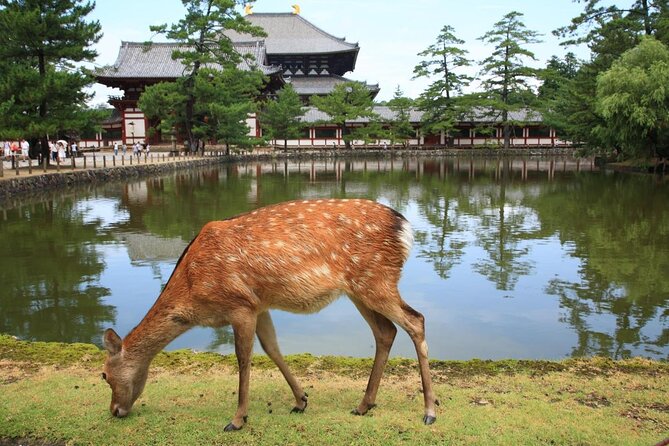
After Todai-ji, you spend about 30 minutes in Nara Park. The park covers 660 hectares and is known for its free-roaming deer and nearby temples. You can buy deer crackers and feed the animals, an easy and memorable moment for children.
Thirty minutes is enough for a quick deer encounter, but not enough for a broad walk through the park. Deer feeding also requires a little care. Keep the crackers visible only while you are feeding, and follow local instructions around the animals. The stop works best as a lively break after Todai-ji rather than as a full Nara Park visit.
Fushimi Inari: thousands of gates and a flexible walking choice
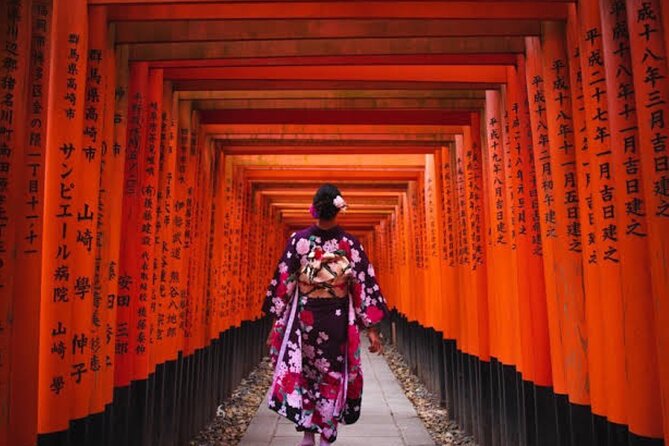
Fushimi Inari Taisha receives about 90 minutes. Its striking feature is the long path of vermilion torii gates, and the shrine is dedicated to Inari Okami. The main shrine building contains five shrines together, and the site is designated an Important Cultural Property.
You do not need to walk the entire mountain route to appreciate the shrine. The lower section gives you the famous gate views, though the path can become crowded. With a private vehicle waiting, you can choose how much walking feels right instead of worrying about a group schedule.
This is one of the stops where a driver-host’s role becomes useful in a practical way. Your host can help with timing, meeting points, and getting back to the vehicle. But if you want detailed explanations of Shinto beliefs or the meaning of the gates, confirm that your booking includes a licensed guide.
Fushimi Inari is also a good place to judge your day’s pace. By this point, you have already visited Nara. If your group includes young children, older family members, or anyone who tires easily, you may want to keep the walk focused near the lower shrine area.
Kinkaku-ji: Kyoto’s Golden Pavilion in one efficient hour
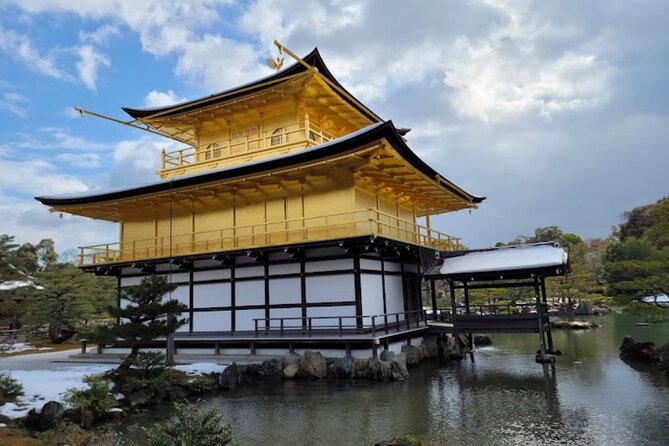
Kinkaku-ji, or the Golden Pavilion, is allotted one hour. The pavilion is famous for its gold-covered exterior and its role as a structure housing sacred Buddhist relics. The temple’s popular name comes directly from this golden building.
Admission is extra, at ¥600 per adult or senior. The price is modest compared with the private transport, but it is still one more cost to remember.
One hour is usually a sensible amount of time for this stop. You can see the pavilion, follow the grounds, and take photographs without turning the visit into a long temple tour. The tradeoff is that this schedule does not give you much room for a slow garden visit or an extended stop if the site is crowded.
The Golden Pavilion is a visual highlight, but it is also the clearest example of the day’s sightseeing style. You are collecting major Kyoto images rather than studying one temple in detail. I would choose this plan if you are in Kyoto for a short stay or want an overview. I would not choose it as your only Kyoto experience if you prefer quiet corners and long visits.
Same base, a completely different sort of day:
- Kyoto Geisha Walking Tour: Gion District & Hidden Gems
★ 4.7 · 3,273 reviews - Kyoto: Tea Ceremony Ju-An at Jotokuji Temple
★ 4.9 · 3,207 reviews - Kyoto: Gion Magical Night Walking Tour with Geisha Trivia
★ 4.9 · 2,393 reviews - Kyoto: 45-Minute Tea Ceremony Lesson Experience
★ 4.3 · 2,378 reviews
Arashiyama’s Kimono Forest and bamboo paths
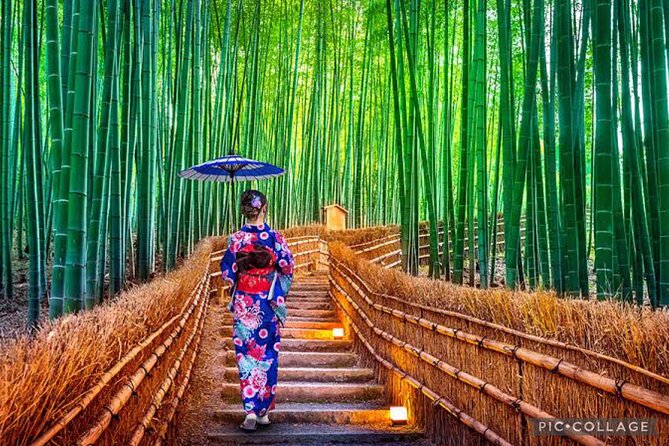
The Arashiyama portion includes two separate stops. First comes the Kimono Forest, a free art installation beside the Arashiyama terminal station of the Keifuku Randen Tram Line.
The installation uses 600 clear acrylic cylinders, each about two meters tall, with kimono-patterned fabric inside. It is a quick, colorful stop that breaks up the temples and shrines. You have about 30 minutes, which is enough to walk among the columns and take photographs.
Then you get one hour in Arashiyama, including the well-known bamboo forest. The tall bamboo creates a cool, shaded path, and the sound of the leaves gives the area a different feel from Kyoto’s temple grounds. The forest is one of the day’s most recognizable places, but the scheduled hour goes quickly.
I would ask your host exactly where the vehicle will meet you afterward. The supplied details do not specify a precise meeting point, and Arashiyama involves walking. Clear instructions matter more here than a long lecture.
The two Arashiyama stops also show why private transport helps. You can visit the station installation and bamboo area without arranging separate routes. Still, do not confuse convenience with solitude. These are major Kyoto sights, and the schedule is built around seeing them efficiently.
Lunch and the value of a private vehicle
Lunch is not included, so you pay for your own meal. The host may suggest a local restaurant, and several highly praised guides took groups to places serving dishes such as soba. That can be one of the nicest parts of a private day because you can ask for a meal that suits your group rather than accepting a fixed stop.
Do not count on a specific restaurant, menu, or lunch duration. Ask your host early in the day when and where you will eat. Since the listed stops already fill much of the schedule, a long lunch may mean less time at one of the sights.
The included vehicle covers parking, fuel, toll fees, and the fuel surcharge. That gives you a clearer price than hiring a car and then adding road costs. It also removes the need to navigate Kyoto’s bus and train network while carrying bags or managing tired children.
The vehicle quality may vary. Many people enjoyed a comfortable, air-conditioned ride, while one unhappy customer described a personal car with broken features. The experience provider uses private vehicles, but the supplied details do not promise a particular make, model, or luxury standard. If vehicle type matters to you, ask before paying.
Price: when $350.16 per person makes sense
The listed price is $350.16 per person. That is a serious cost, especially for a family or a group of four. One party reported paying roughly £820 for four people and felt the service was far too expensive for what they received.
The value improves when you have a larger group, because private transport and a full day of coordination are shared among the people in your booking. It also improves if you are short on time, dislike public transport, or want hotel pickup and drop-off without arranging separate rides.
The price includes:
- Private transportation
- An English-speaking driver or host
- An air-conditioned vehicle
- Parking fees
- Fuel surcharge
- Toll fees
You still pay for lunch and admission to Todai-ji and Kinkaku-ji. At the published rates, those two sites add ¥1,200 per adult, before food and any other personal expenses.
The key question is not simply if the price is high. It is what you expect to receive for it. If you mainly want a private car, a planned route, hotel pickup, and help seeing six distant sights, the service can save a great deal of effort. If you expect a trained historian who explains every temple in detail, the base package may disappoint.
The operator’s own distinction matters: an experience guide gives general information, while a national licensed guide can provide more detailed explanations and costs extra. Set that expectation clearly before the day begins.
The guides can shape the whole experience
The strongest praise centers on the individual hosts. Ben was described as friendly, entertaining, and helpful with Japanese life, language, and culture. Dan was praised for being kind, flexible, and pleasant company. Yui received strong marks for detailed explanations, fluent English, photo help, and finding an out-of-the-way local meal.
Other names that received warm praise include Yoshimura, Steven, Reo, Kj, Christine, Dave, Bong, Jess, and Loc. Their strengths varied. Some focused on humor, some on local food, some on photos, and some on adapting the route.
Kj was especially accommodating for a person traveling with a cane. Dave was praised for bringing umbrellas when rain began. These details show the practical advantage of a private host: a good one watches the day as it unfolds and responds to small problems.
But the service is not consistent enough for me to promise a certain style of guiding. A few people received little information and felt they had paid for a taxi service. In one case, the host reportedly allowed the group to walk privately without accompanying them, which reduced the amount of explanation.
You can protect yourself by sending a message before booking. Ask three direct questions:
- Is the host accompanying us inside or only driving between sites?
- Will the host provide general explanations at each stop?
- Can we add a national licensed guide, and what is the extra cost?
That short exchange can prevent the biggest misunderstanding.
Timing, comfort, and who should book
The 8:30 am start is sensible for a packed day, though one booking had a serious delay and did not begin until 10:15 am. Most of the positive accounts describe punctual pickup, but you should confirm the pickup time and location in advance.
This works well for:
- Families that need control over breaks and walking time
- Groups with older relatives or mobility concerns
- People visiting Kyoto for only a short stay
- Cruise passengers arranging a long sightseeing day
- Anyone who strongly dislikes figuring out buses and trains
- Groups that want hotel pickup and drop-off
It is less suitable if you want a slow, scholarly temple visit, a small group with a shared guide, or the social feel of a bus tour. One person specifically preferred the organization and shared journey of a larger coach experience.
Most people can participate, but this is still a walking-heavy day. Todai-ji, shrines, temple grounds, Nara Park, and Arashiyama all require time on foot. Tell the host about mobility needs before the day starts, not after the route is underway.
Free cancellation is available up to 24 hours before the start time for a full refund. Changes made within 24 hours are not accepted, and poor weather may lead to a different date or a full refund.
Should you book this Kyoto and Nara tour?
Book it if time and convenience matter more than low cost. You will cover an impressive range of sights in a single day, ride privately, avoid route planning, and adjust the pace for your own group. Nara’s deer and Todai-ji, Kyoto’s Golden Pavilion and Fushimi Inari, and Arashiyama’s bamboo all make a strong first overview.
Before paying, be clear about the guide. The included service is an English-speaking driver or host, not a guaranteed national licensed guide. If site explanations are a top priority, request the licensed option and confirm its price.
My practical verdict: this is a useful, ambitious day for a first visit or a short stay, but it is expensive as a simple transfer service. The best version of the experience comes with a host such as Ben, Dan, Yui, Steven, or Reo who explains the places, adjusts the pace, and helps with lunch and photos. If you receive only a driver and basic directions, public transport or a less costly private car may offer better value.
FAQ
What time does the tour start?
The stated start time is 8:30 am, with hotel pickup in Kyoto.
How long does the experience last?
The tour lasts approximately six to ten hours.
Which places are included?
The route includes Todai-ji Temple, Nara Park, Fushimi Inari Taisha Shrine, Kinkaku-ji Temple, Arashiyama Kimono Forest, and Arashiyama, including the bamboo forest.
Are admission tickets included?
No. Admission is not included for Todai-ji or Kinkaku-ji. The listed price is ¥600 per person for Todai-ji and ¥600 per adult or senior for Kinkaku-ji.
Is lunch included?
No. Lunch is not included in the tour price.
Is this a private activity?
Yes. Only your group participates, and private transportation is included.
What happens if the weather is poor?
The experience requires good weather. If it is canceled because of poor weather, you can receive a different date or a full refund. Free cancellation for a full refund is also available when you cancel at least 24 hours before the start time.
Just added around Kyoto
- Kyoto: Zen Meditation at a Private Temple with a Monk★ 5.0 · 25 reviews
- Kyoto: Gion Geisha District & Sake-in-Hand Walking Tour★ 5.0 · 37 reviews
- Private Pewter Sake Cup Experience with a Kyoto Artisan★ 5.0 · 31 reviews
- Your Private Vacation Photography Session In Kyoto★ 5.0 · 110 reviews
- Private Guided Traditional Buddhist Cooking in Japan★ 5.0 · 16 reviews
- Kyoto Wagashi(Japanese sweets) Cooking Class near Fushimiinari★ 5.0 · 60 reviews
- Traditional Japanese Music show & Experience Tour in Kyoto★ 5.0 · 57 reviews
- Kyoto:Family-Friendly Kimono & Yukata Experience at WARGO★ 5.0 · 147 reviews
Kyoto Tours, compared.


Fushimi Inari, Kinkakuji, Bamboo Grove 1 Day Bus Tour
Read our review →
Tea Ceremony in a Traditional Tea House in Kiyomizu
Read our review →
Kyoto Geisha Walking Tour: Gion District & Hidden Gems
Read our review →

Gion Magical Night Walking Tour with Geisha Trivia
Read our review →
