
Reviewed · KYOTO TOURS
TAIKO, Japanese Drum Experience from Kyoto
The best part of this Kyoto experience is that you do not just watch Japanese culture from the sidelines. You pick up the sticks, learn the basic movements, and play a short taiko piece with your group. The session is beginner-friendly, and instructors adjust the lesson to your ability and fitness level.
I like the small-group setting, which gives you useful access to the teacher instead of leaving you lost in a crowd. I also like the mix of activities: a short history lesson, hachimaki calligraphy, a professional demonstration, and hands-on drumming. The main drawback is the strict start time. Kyoto Station is large, and the group cannot wait for late arrivals because of the train schedule.
Key points to know before booking
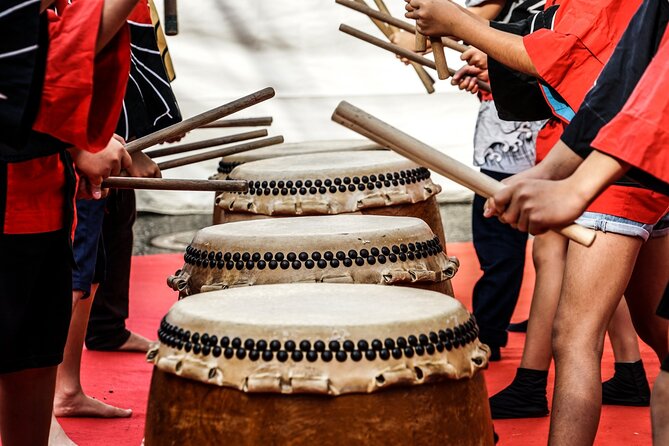
- A real hands-on lesson: You learn basic taiko movements and play a simple piece with the group.
- A professional demonstration: A skilled instructor performs before your lesson, giving you a clear sense of the power and precision involved.
- A creative keepsake: You write a wish in calligraphy on a traditional hachimaki headband.
- Simple transport from Kyoto: The route includes a JR train to Takatsuki and a taxi to the studio, with the return to Kyoto Station included.
- English support: Guides such as Michiko, Kumi, Akemi, and Akiko have helped participants follow the explanations and move through the day comfortably.
- A firm schedule: Arrive at least 15 minutes early. Late arrivals cannot join, and no refund is given for missing the departure.
Why taiko makes a better cultural activity than another sightseeing stop
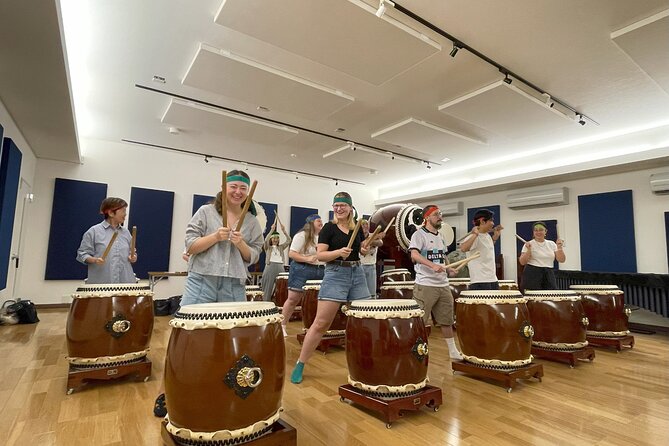
Taiko means Japanese drum, but this is not simply a chance to hit a large drum a few times for a photo. The lesson introduces the basic posture, arm movements, timing, and group rhythm that make taiko a performance art.
You will hear about the role of taiko in Japanese culture before playing. That short background matters because it gives the activity some context. You begin to understand why the instrument can feel ceremonial, communal, and physically powerful rather than treating it as a novelty.
I like the balance between explanation and action. The history portion is brief enough that you are not sitting through a long lecture, but it gives the drumming a purpose. Then the professional demonstration shows what the instrument can do when played with control.
The class does not expect musical training. Several participants with no experience have been able to follow the rhythms, and one of the useful features is the patient, encouraging instruction. You do not need to read music, though anyone with some musical background may find the rhythm patterns familiar.
This is also a good choice if you want an activity that involves your whole body. Taiko uses broad arm movements and steady posture. One participant described it as a possible cardiovascular workout when played with enough energy and for long enough. The session is still designed for general participation, with movements adjusted to your fitness level.
A few more Kyoto half-days to weigh up
- PERFECT KYOTO 1-Day Bus Tour
★ 5.0 · 13,518 reviews - Kyoto: Fushimi Inari, Kinkakuji, Bamboo Grove 1 Day Bus Tour
★ 4.8 · 4,316 reviews - Kyoto: Tea Ceremony in a Traditional Tea House in Kiyomizu
★ 4.9 · 3,519 reviews
Meeting your guide at Kyoto Station
Your day begins at Kyoto Station, where you meet the English-speaking guide near the central exit area. The station is enormous, so this is the part of the experience where a little preparation saves a lot of stress.
You should arrive 15 minutes before the stated start time. Do not rely on calling the operator if you are running late. The group must catch a scheduled train, and the tour cannot wait for late arrivals even if you make contact.
The meeting point is at Kyoto Station in the Higashishiokoji Kamadonocho area. If you get turned around, ask station staff for the Central Exit, making clear that you do not mean the Shinkansen Central Ticket Gate. That distinction matters. Kyoto Station has several large ticket gates and signs, and a few extra minutes can disappear quickly.
Guides including Michiko, Kumi, Akemi, and Akiko have been praised for being punctual, friendly, and helpful in English. During the train ride, your guide may also point out towns and local sights along the route. This transfer is part of the experience, not just a way to get from one place to another.
The short train ride to Takatsuki
From Kyoto Station, you take a JR train to Takatsuki Station. The train ride is listed at about 12 minutes, though the full transfer can feel a little longer depending on the schedule and the movement through the station.
This route is far more sensible than taking a taxi directly from Kyoto. A direct taxi can take more than an hour and may cost a great deal more, especially in traffic. The organized train and taxi combination keeps the journey practical and gives you a brief look at the area outside central Kyoto.
At Takatsuki, you continue to the studio by taxi. The transfer takes about 10 minutes, and the listed package includes transportation to and from the studio. The information provided for the experience puts the taxi cost at about 2,000 yen, with up to four people able to share one cab.
The ride does mean this is not a class located beside Kyoto Station. Allow roughly two and a half to three hours from the start of the activity until you return to Kyoto Station. If you have a timed lunch, museum admission, or train connection afterward, leave plenty of room.
Writing your wish on a hachimaki
Before the drumming begins, you have the chance to write a simple wish in calligraphy on a hachimaki. A hachimaki is a traditional Japanese headband, often associated with effort, focus, and determination.
This small activity gives the session a personal touch. You are not only learning a rhythm, you are creating something connected to the day. The calligraphy does not appear to be an advanced lesson, so you should think of it as a simple creative introduction rather than formal brush training.
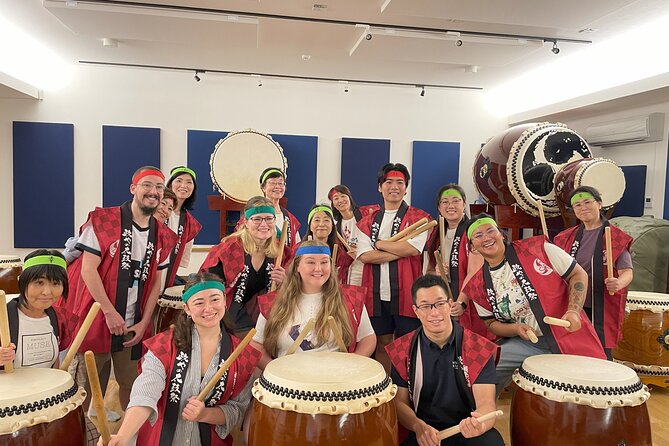
You then wear the headband during the final photo. It is a practical souvenir because it connects the written wish, the drumming lesson, and the traditional costume used at the end.
Same base, a completely different sort of day:
- Kyoto Geisha Walking Tour: Gion District & Hidden Gems
★ 4.7 · 3,273 reviews - Kyoto: Tea Ceremony Ju-An at Jotokuji Temple
★ 4.9 · 3,207 reviews - Kyoto: Gion Magical Night Walking Tour with Geisha Trivia
★ 4.9 · 2,393 reviews - Kyoto: 45-Minute Tea Ceremony Lesson Experience
★ 4.3 · 2,378 reviews
Watching the taiko demonstration
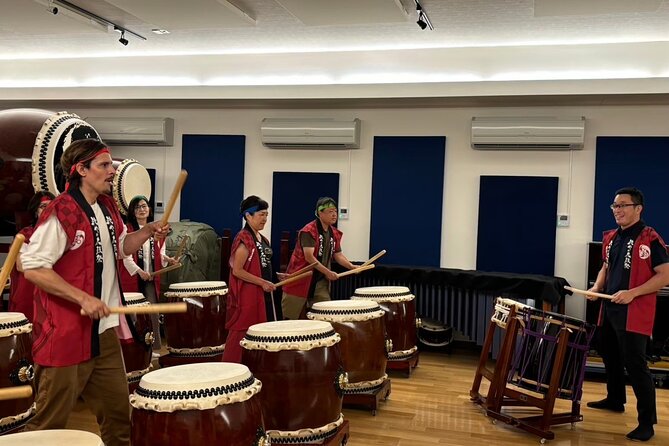
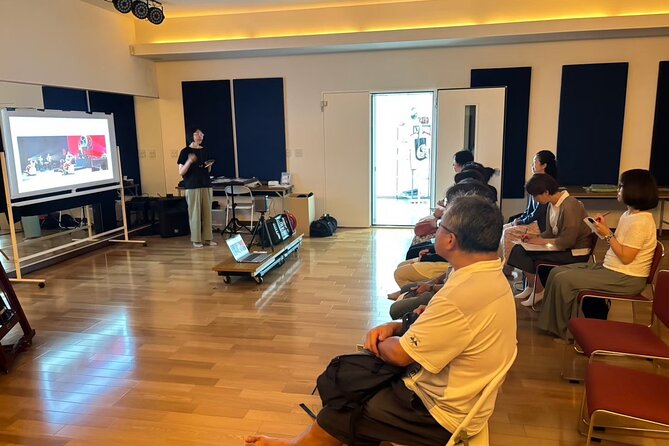
A professional instructor performs before you begin the basic lesson. This is an important part of the sequence. Taiko can look simple when reduced to a stick and a drum, but the demonstration shows the strength, timing, body position, and dramatic control required.
The performance has been described as powerful and impressive. One presentation included a live drummer alongside a recorded drummer, so the exact format may vary. You should expect a professional demonstration, but not assume that every session will feature the same number of live performers.
Watch the instructor’s stance closely. The demonstration gives you a visual guide for the movements you will soon attempt yourself. It also helps set realistic expectations. You will not become a professional taiko performer in one class, but you will get a useful taste of the discipline behind the art.
Learning the basic movements and rhythms
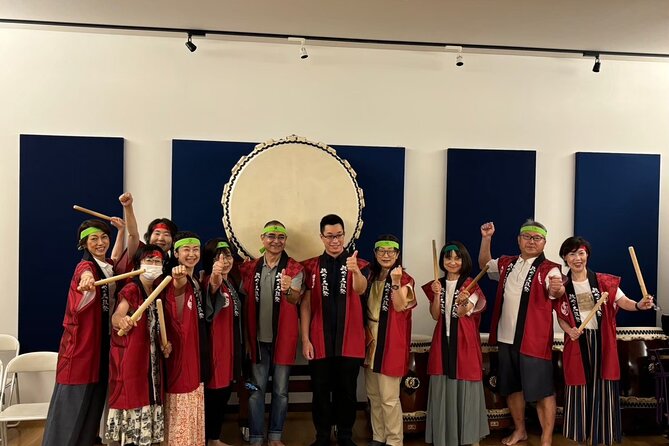
After the demonstration, the instructor leads you through the fundamentals. You learn how to hold and use the drumsticks, how to position your body, and how to follow basic patterns.
The lesson is built for first-timers. The teacher breaks the rhythm into manageable sections, then helps the group bring those sections together. Instructors such as Aoi and Mr. Sakurai have been singled out for clear, patient teaching and for encouraging people who are unsure of themselves.
The small maximum group size of 15 is helpful here. Fifteen is not an intimate private lesson, but it is still far more workable than a large workshop. You have a reasonable chance of seeing the instructor’s movements and getting guidance when your timing slips.
The class also works for mixed ability levels. You can take part without musical training, while people who already play drums or read music may recognize patterns more quickly. Do not worry if you are not perfectly synchronized at first. Group rhythm improves as the instructor repeats the movements.
Children under seven cannot participate. Older children have taken part successfully, including children aged eight and 11. The lesson still involves physical movement, so parents should consider each child’s ability to follow instructions and stay engaged for the full session.
Playing a group piece and taking the final photo
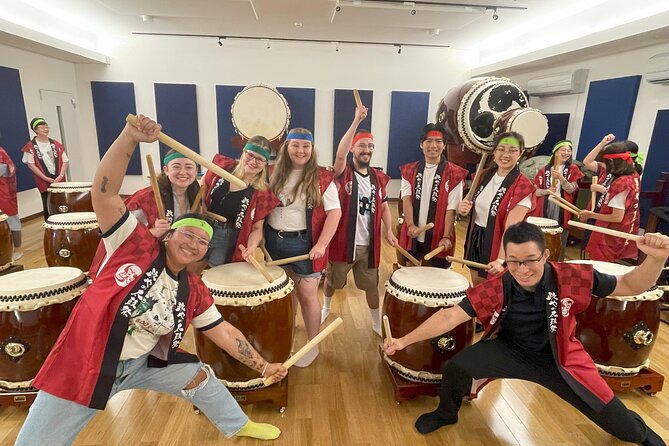
The lesson builds toward a simple piece performed by everyone together. This is the point where the separate movements become music. It is also where the social side of taiko becomes clear, since each player has to keep time with the rest of the group.
I like this finish better than a casual tryout with no goal. You have something to work toward, even if the final piece is simple. The performance gives the lesson a sense of shape and makes the earlier practice feel worthwhile.
The activity ends with a commemorative photograph in traditional clothing, including a happi and hachimaki. The headband you decorated adds a personal detail to the picture. Exact photo arrangements can depend on the studio and timing, but the costume photo is part of the planned experience.
You then return by taxi and train to the Kyoto Station meeting point. The advertised duration is about two hours and 30 minutes, but the practical range is closer to two and a half to three hours because train times can vary.
What the $115.62 price is really buying
At $115.62 per person, this is not the cheapest cultural activity in Kyoto. The value depends on what you want from your time in Japan.
You are paying for more than a short drum demonstration. The experience includes a guide, English-language support, the JR ticket to Takatsuki, taxi transportation to and from the studio, the taiko lesson, a professional performance, the hachimaki, and the costume photo. The small group limit also helps explain the price.
I consider it a fair value for a hands-on session that takes you to a professional studio rather than keeping you in a generic tourist space. The train and taxi transfers add time, but they also make the studio reachable without forcing you to arrange a costly direct taxi.
The price is less attractive if you only want to watch taiko. Nonparticipating observers are charged 9,000 yen per person, payable in cash at the studio. You must notify the operator in advance if someone is observing, since transportation may not be arranged without notice.
For a family or couple who wants to participate, the cost covers a full activity with instruction and transport. For a solo participant, check the date carefully. On some days, single-person bookings are not available, and you may need to reserve and pay for two places.
The practical drawbacks to weigh
The strict meeting time is the biggest issue. Kyoto Station can be confusing, and the tour cannot hold the group for late arrivals. I would visit the station or check the route in advance if you are staying somewhere unfamiliar.
The location outside Kyoto also means you should not plan a tightly timed activity immediately afterward. The session can finish within the stated two and a half hours, but the schedule depends partly on the train. Leaving the class early is not recommended.
The experience requires good weather. If poor weather causes cancellation, you are offered another date or a full refund. You should still avoid placing an important reservation immediately after this activity.
The information says most people can participate, but it does not describe specific accessibility arrangements. If you need particular mobility support, ask the operator before booking rather than assuming the station, taxi, studio, and drumming setup will suit your needs.
Who will enjoy this taiko class most
I would recommend this for you if you want a cultural activity with real participation. It suits first-time visitors who have already seen temples and gardens and now want to do something active.
It is especially good for:
- Couples looking for a shared activity with a memorable photo
- Families with children aged seven and older
- People interested in Japanese music, rhythm, or performance
- Visitors who enjoy learning by doing rather than watching
- Anyone looking for an activity that works in a short half-day window
It may be less suitable if you dislike group classes, physical movement, or strict schedules. It is also not the right pick if you want a full professional drumming course. This is an introductory cultural lesson, not a multi-day music program.
The English support makes a real difference. Guides such as Michiko and Kumi have helped explain the history, translate instructions, and make the train transfer easier. That support is valuable because taiko movements are much easier to copy when the explanation is clear.
Should you book the Kyoto taiko experience?
You should book this experience if you want to leave Japan with more than photographs of temples. The combination of a professional demonstration, beginner lesson, calligraphy, group performance, and costume photo gives you a clear, active introduction to taiko.
I would book it for a morning or afternoon when you can protect the full three-hour window. Arrive early at Kyoto Station, confirm the Central Exit meeting point, and avoid scheduling anything that cannot be moved afterward.
The $115.62 price is reasonable for the instruction, transfers, and studio setting, though it is a bigger spend than a standard sightseeing stop. For most people who value direct cultural contact, the chance to play a real taiko piece with an instructor makes the cost worthwhile.
FAQ
How long does the taiko experience take?
The activity lasts about two hours and 30 minutes, including transfers. You can expect to return to Kyoto Station about two and a half to three hours after the start time, depending partly on the train schedule.
Where does the tour begin?
The meeting point is Kyoto Station in the Higashishiokoji Kamadonocho area of Shimogyo Ward, Kyoto. You should arrive at least 15 minutes before the start time and look for the Central Exit, not the Shinkansen Central Ticket Gate.
How do I get to the taiko studio?
You take a JR train from Kyoto Station to Takatsuki Station, a journey of about 12 minutes. From Takatsuki, you continue by taxi for about 10 minutes. Transportation to and from the studio is included.
Do I need previous musical or drumming experience?
No. The lesson is designed for beginners and all skill levels. The instructor teaches basic movements and techniques, then helps the group play a simple piece together.
Can children participate?
Children under seven years old are not allowed to participate. Older children can take part, and the lesson is adjusted to the participant’s skill and fitness level.
What happens if I need to cancel?
You can cancel at least 24 hours before the local start time for a full refund. Cancellations or changes made less than 24 hours before the start time are not accepted for a refund. If poor weather causes the activity to be canceled, you are offered another date or a full refund.
Just added around Kyoto
- Kyoto: Zen Meditation at a Private Temple with a Monk★ 5.0 · 25 reviews
- Kyoto: Gion Geisha District & Sake-in-Hand Walking Tour★ 5.0 · 37 reviews
- Private Pewter Sake Cup Experience with a Kyoto Artisan★ 5.0 · 31 reviews
- Your Private Vacation Photography Session In Kyoto★ 5.0 · 110 reviews
- Private Guided Traditional Buddhist Cooking in Japan★ 5.0 · 16 reviews
- Kyoto Wagashi(Japanese sweets) Cooking Class near Fushimiinari★ 5.0 · 60 reviews
- Traditional Japanese Music show & Experience Tour in Kyoto★ 5.0 · 57 reviews
- Kyoto:Family-Friendly Kimono & Yukata Experience at WARGO★ 5.0 · 147 reviews
Kyoto Tours, compared.


Fushimi Inari, Kinkakuji, Bamboo Grove 1 Day Bus Tour
Read our review →
Tea Ceremony in a Traditional Tea House in Kiyomizu
Read our review →
Kyoto Geisha Walking Tour: Gion District & Hidden Gems
Read our review →

Gion Magical Night Walking Tour with Geisha Trivia
Read our review →
