
Reviewed · KYOTO TOURS
Tea ceremony by the tea master in Kyoto SHIUN AN
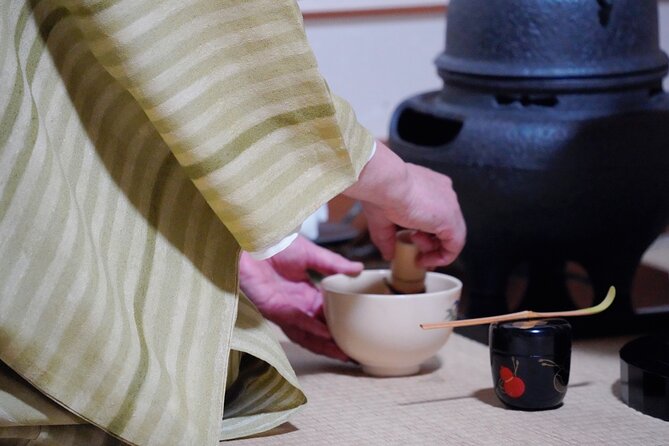
The best part of this 45-minute tea ceremony is that you do more than watch. A tea master explains the room, utensils, gestures, and customs, then guides you as you prepare your own bowl of matcha. I like the small group size, usually no more than six, and the quiet setting near Daitoku-ji, far from Kyoto’s busiest sightseeing streets.
I also like the value: for about $33 per person, you receive two bowls of matcha, two Japanese sweets, use of the tea utensils, and a hands-on lesson. The main caution is location. SHIUN AN is in a residential area north of central Kyoto, and the stairs and floor seating may be awkward if you have limited mobility.
Key points to know before booking
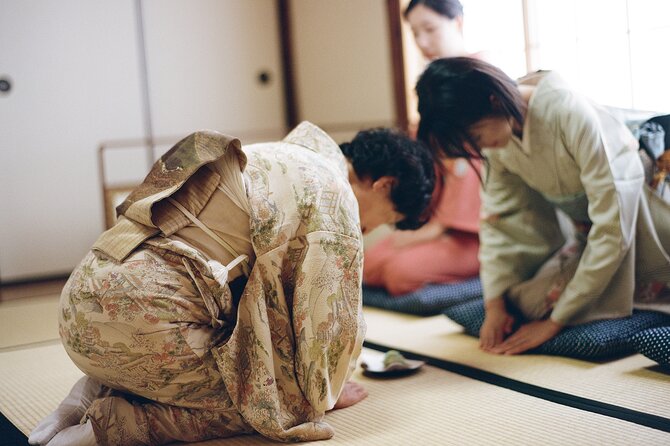
- Two bowls of matcha: You watch the formal preparation, then make your own bowl with a tea whisk.
- Small-group format: Sessions usually hold up to six people, rising to eight during peak seasons.
- A real tea setting: The ceremony takes place near Daitoku-ji, a Zen Buddhist temple closely linked with Japanese tea culture.
- Helpful English support: An interpreter explains the master’s instructions and answers questions.
- Traditional details included: Tea bowls, container, scoop, whisk, white socks, and a folding fan are provided.
- Allow time for the address: The house can be difficult to find, so use a map and arrive early.
A quiet Kyoto introduction to matcha
Kyoto offers tea ceremonies in many forms, from polished hotel presentations to large demonstrations built around a busy sightseeing schedule. SHIUN AN takes a smaller, more personal approach. The ceremony is held in a traditional house in a quiet neighborhood near Daitoku-ji Temple, with a maximum of six people in most sessions.
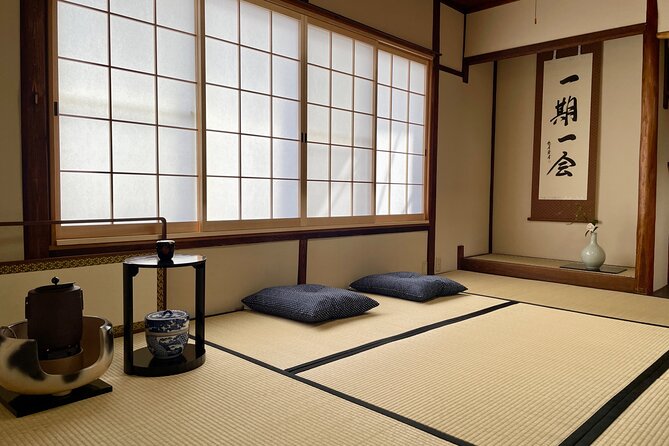
That setting matters. You are not simply being handed a bowl of green tea and shown how to stir it. The room itself is part of the lesson. Before the ceremony begins, you have time to look at the hanging scroll and seasonal flower arrangement. The host explains why these objects are placed where they are and how the room’s layout shapes the mood of the gathering.
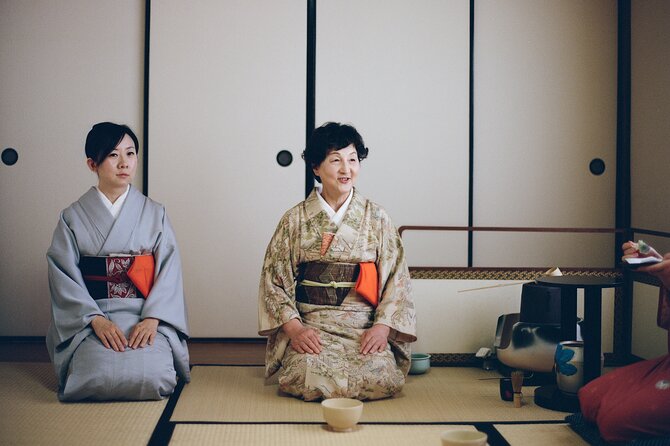
The tea master has a Tea Name, a title connected with full professor qualification in the tea tradition. You also have an interpreter to help explain the ceremony in English. That combination is useful because Japanese tea etiquette can be hard to understand from gestures alone. You learn what the host is doing, why a particular utensil is handled in a certain way, and how the movements connect to the larger tradition.
The tone is formal but welcoming. This is not a performance designed only for photographs. It is a short cultural lesson that asks you to slow down and pay attention.
More Tea Ceremonies in Kyoto
- Kyoto: Tea Ceremony in a Traditional Tea House in Kiyomizu
★ 4.9 · 3,519 reviews - Kyoto: Tea Ceremony Ju-An at Jotokuji Temple
★ 4.9 · 3,207 reviews - Kyoto: 45-Minute Tea Ceremony Lesson Experience
★ 4.3 · 2,378 reviews
What happens when you arrive at SHIUN AN
The meeting point is 955-1 Idacho, in Kyoto’s Kamigyo Ward. It is not in Gion, beside Kyoto Station, or near the main entrance to the Golden Pavilion. You will need to make a separate trip to the northern part of the city.
That extra effort is the main practical drawback. The house is in a quiet residential area, and the exact location can be tricky to find. Use Google Maps or another map app, and leave more time than you think you need. Several people have found it easiest to take public transportation toward the area and then use a taxi or Uber from a nearby station. One reported taxi estimate was around 1,000 yen, though your cost will depend on the starting point and traffic.
The location does have a useful sightseeing advantage. Daitoku-ji is nearby, and Kinkaku-ji, the Golden Pavilion, is only four bus stops away. You can pair the tea ceremony with those sights, but plan the route carefully rather than assuming you can walk out of the ceremony and immediately join a major tourist route.
On arrival, you receive white socks and a folding fan for use during the ceremony. These small items help you take part in the setting properly, and the socks are especially useful when sitting on tatami. The room is traditional, so prepare for a change from ordinary sightseeing comfort.
Reading the room before the tea is served
The first stage is observation. The tea master takes you into the tea room and gives you time to notice the hanging scroll and flower arrangement. These are not random decorations. Seasonal objects and the room’s arrangement help create the atmosphere for the gathering.
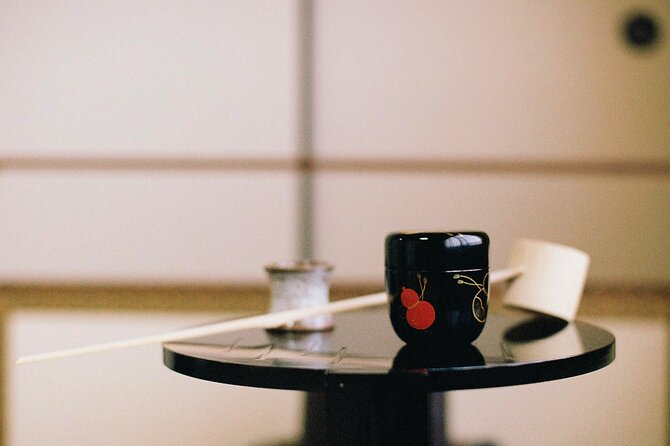
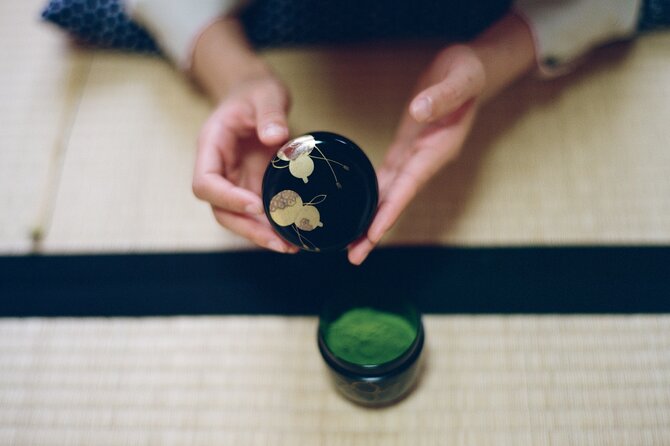
You then receive an introduction to the ceremony’s basic steps. The host explains the utensils, including the tea container, scoop, bowl, and whisk. You learn that each tool has a place and a purpose, and that the order of the movements is part of the tradition.
For many people, this explanation is the most useful part of the experience. If you have seen a tea ceremony before, the careful motions may look simple. They are not. The placement of a bowl, the handling of a scoop, and the way the tea is offered all carry meaning.
The interpreter helps turn a quiet visual demonstration into a lesson you can follow. You can ask questions after the demonstration and during the hands-on portion. That makes this a better choice than a silent presentation if you want to understand the customs rather than simply observe them.
The tea master’s movements are precise, and the pace is calm. You may notice a sharp contrast with Kyoto’s crowded temples and packed buses. For 45 minutes, the focus is on one room, a few objects, and the preparation of tea.
Two sweets and two bowls of matcha
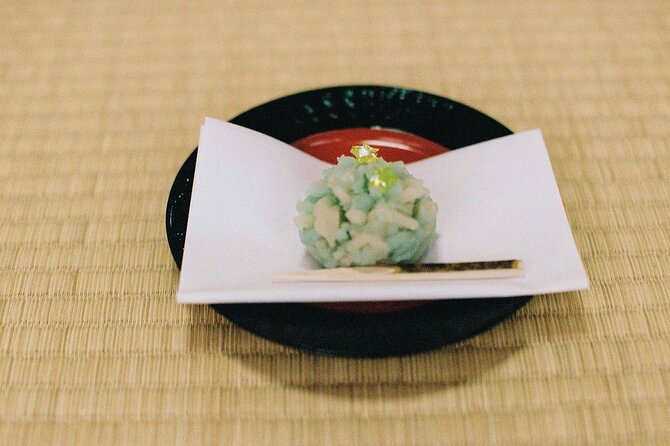
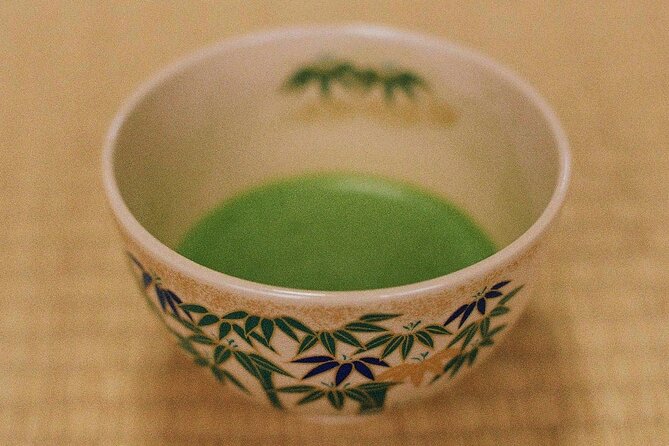
The ceremony includes two kinds of Japanese sweets and two bowls of matcha. A seasonal sweet is served with the prepared tea while you watch the tea-serving process. The sweets provide a gentle balance to matcha’s strong, grassy taste, and they are part of the traditional rhythm rather than a separate snack break.
You then have the chance to make your own bowl. The tea master provides the tea bowl and whisk, and the instructions cover the basic method of preparing matcha. You are not expected to arrive with any experience. The point is to learn the movements and understand the care involved.
Your bowl will likely feel different from the tea master’s. That is part of the fun. The host has spent years practicing, while you are learning the method in a short session. The experience gives you a better appreciation for the skill behind the smooth, even tea served at the beginning.
I especially like the balance between watching and doing. A demonstration alone can leave you with a pleasant memory but little understanding of the process. Making your own tea gives you something practical to remember when you return home.
The two servings also make the price easier to assess. You are not paying for a quick taste of matcha. You receive instruction, traditional sweets, a formal demonstration, and a chance to prepare the drink yourself.
Same base, a completely different sort of day:
- PERFECT KYOTO 1-Day Bus Tour
★ 5.0 · 13,518 reviews - Kyoto: Fushimi Inari, Kinkakuji, Bamboo Grove 1 Day Bus Tour
★ 4.8 · 4,316 reviews - Kyoto Geisha Walking Tour: Gion District & Hidden Gems
★ 4.7 · 3,273 reviews - Kyoto: Gion Magical Night Walking Tour with Geisha Trivia
★ 4.9 · 2,393 reviews
Why the Daitoku-ji setting adds meaning
Daitoku-ji is not just a nearby landmark used to make the address sound appealing. The Zen Buddhist monastery has a close relationship with the tea ceremony and has educated famous priests throughout Japanese history. Tea culture and Zen have influenced one another, particularly in their focus on attention, discipline, simplicity, and self-discovery.
You do not tour Daitoku-ji as part of this activity, so keep your expectations clear. The temple is context for the experience, not an included stop. Still, knowing where you are adds meaning to the ceremony. You are learning a tradition in the same northern Kyoto area where Zen and tea have long been linked.
The connection also helps explain why the ritual can feel more serious than a standard food demonstration. The ceremony is built around presence, respect, and an appreciation for a particular moment. Even in a short session, the act of preparing tea becomes a way to notice small details.
If you plan to visit Kinkaku-ji on the same day, check your timing and transport before booking. The Golden Pavilion is four bus stops away, but sightseeing queues and bus delays can affect your schedule. I would avoid placing this ceremony between two fixed-time reservations unless you leave plenty of room.
Group size, translation, and the feel of the session
The normal maximum is six people, which is a strong feature for this kind of activity. A small group means you can see the utensils more clearly and ask questions without competing with a large audience. During peak seasons, the group may increase to eight, so do not assume every session will feel completely private.
Some sessions may be even smaller. That can make the room feel especially quiet and personal, but availability will depend on the date. The setting is intimate without requiring you to book a private ceremony.
English translation is another important benefit. The tea master leads the ceremony, while an interpreter helps explain the history, steps, and etiquette. The interpretation also makes it easier to ask about details that might otherwise pass too quickly.
The warmth of the host and assistants is a recurring strength of the experience. You can expect a friendly welcome, patient instruction, and help during the hands-on tea preparation. Staff may wear traditional kimono, adding to the atmosphere and giving you a chance to take respectful photographs.
Still, this is not a loud, social workshop. The ceremony is quiet and deliberate. If you want a casual matcha class with lots of conversation, this may feel restrained. If you want a calm introduction to a formal Japanese art, the mood should suit you well.
Sitting on tatami and other comfort concerns
The ceremony takes place in a traditional room, so you may sit on the floor in the preferred position for part of the session. One important practical point is that some people have found the posture difficult. The host has accommodated someone who could no longer sit on the floor and made sure that person could still take part, but you should mention any concern in advance.
There are also stairs at the location. A visitor who would not have booked the activity after learning about the stairs considered this a significant issue. The available information does not give a full accessibility assessment, so contact SHIUN AN before booking if stairs, kneeling, or floor seating may be a problem.
Service animals are allowed, and the activity is near public transportation. Pickup and drop-off are not included. You meet at the house and return to that same meeting point when the ceremony ends.
Food allergies should be reported ahead of time because Japanese sweets are included. The activity does not specify all ingredients or replacement options, so provide clear information when you book.
Is $33 a fair price for 45 minutes?
At about $33 per person, SHIUN AN is priced well for a guided cultural experience in Kyoto. The fee covers the tea master’s demonstration, English interpretation, two bowls of matcha, two types of sweets, the utensils used in the lesson, white socks, and a folding fan.
The value is strongest if you want context and participation. A basic cup of matcha costs far less, but it does not give you access to a tea room, a qualified tea master, a formal serving, or instruction in preparing the drink. You are paying for the setting and the teaching as much as the tea itself.
The short duration is both a benefit and a limitation. Forty-five minutes fits neatly into a busy Kyoto day and gives you a focused introduction without taking over an entire afternoon. At the same time, anyone hoping to study the full depth of tea ceremony will need to view this as an introduction, not a complete course.
The 4.8 rating from 76 reviews and 96 percent recommendation figure suggest a consistently positive experience, but the practical cautions remain important. The remote-feeling location and traditional seating may matter more to you than the price.
Who will enjoy this tea ceremony most?
I would recommend SHIUN AN to you if you want a cultural activity that feels quieter and more personal than a large group demonstration. It works especially well for first-time visitors to Japan, matcha fans, couples, families with older children, and anyone curious about how Japanese customs connect with Zen.
It is also a good choice if you prefer learning by doing. You will not only watch the tea master. You will handle the whisk, prepare your own bowl, taste the sweets, and ask questions through the interpreter.
Families should consider the quiet nature of the room and the need to sit respectfully. A child who enjoys Japanese culture and matcha may find the activity memorable, while a child who needs constant movement may struggle with the formal pace.
I would think twice if you need step-free access, cannot manage stairs, or strongly dislike sitting on the floor. I would also avoid booking it if you want a ceremony close to Gion or a simple stop between central Kyoto attractions.
Booking and cancellation details
The experience uses a mobile ticket, and confirmation is provided when you book. Free cancellation is available if you cancel at least 24 hours before the start time. Changes or cancellations inside that 24-hour window are not accepted for a refund.
The activity requires a minimum number of participants. If the provider cancels because that minimum is not reached, you will be offered another date or experience, or you can receive a full refund.
Should you book SHIUN AN?
Book this tea ceremony if you want a well-priced, hands-on introduction in a traditional setting and do not mind traveling north of central Kyoto. The strongest reasons are the small group, the tea master’s formal qualification, the interpreter, and the chance to make your own matcha after watching the proper ceremony.
Plan your route carefully, arrive early, and be honest about mobility or food concerns. If you do that, SHIUN AN offers more than a quick green tea tasting. It gives you a clear look at the patience, precision, and quiet attention behind one of Japan’s best-known traditions.
FAQ
How long does the tea ceremony last?
The experience lasts approximately 45 minutes.
Where does the tea ceremony take place?
It begins and ends at 955-1 Idacho, Kamigyo Ward, Kyoto, Japan.
How many people can join each session?
The usual maximum is six people. During peak seasons, the group may increase to eight.
Are matcha and Japanese sweets included?
Yes. You receive two bowls of matcha and two kinds of Japanese sweets.
Can I make my own matcha?
Yes. After watching the tea-serving process, you have the opportunity to prepare your own bowl using a tea bowl, tea scoop, and whisk.
Is English translation provided?
Yes. An interpreter helps explain the ceremony, its history, the utensils, and the steps involved.
Is cancellation free?
You can cancel for a full refund up to 24 hours before the experience start time. Cancellations or changes made less than 24 hours before the start time are not accepted.
Just added around Kyoto
- Kyoto: Zen Meditation at a Private Temple with a Monk★ 5.0 · 25 reviews
- Kyoto: Gion Geisha District & Sake-in-Hand Walking Tour★ 5.0 · 37 reviews
- Private Pewter Sake Cup Experience with a Kyoto Artisan★ 5.0 · 31 reviews
- Your Private Vacation Photography Session In Kyoto★ 5.0 · 110 reviews
- Private Guided Traditional Buddhist Cooking in Japan★ 5.0 · 16 reviews
- Kyoto Wagashi(Japanese sweets) Cooking Class near Fushimiinari★ 5.0 · 60 reviews
- Traditional Japanese Music show & Experience Tour in Kyoto★ 5.0 · 57 reviews
- Kyoto:Family-Friendly Kimono & Yukata Experience at WARGO★ 5.0 · 147 reviews
Kyoto Tours, compared.


Fushimi Inari, Kinkakuji, Bamboo Grove 1 Day Bus Tour
Read our review →
Tea Ceremony in a Traditional Tea House in Kiyomizu
Read our review →
Kyoto Geisha Walking Tour: Gion District & Hidden Gems
Read our review →

Gion Magical Night Walking Tour with Geisha Trivia
Read our review →

Gion Geisha District Walking Tour – Stories of Geisha
Read our review →Browse the lists this tour appears in