
Reviewed · KYOTO TOURS
Tea Ceremony Experience in Traditional Kyoto Townhouse
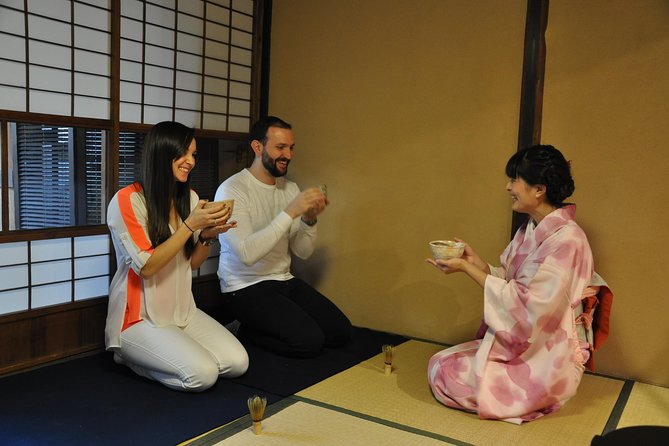
Kyoto’s tea ceremony is not a stage show with a quick cup of green tea at the end. At Ami Kyoto, you enter a traditional machiya, a wooden townhouse in a quiet residential area, and learn why each bow, turn, and hand movement matters. The host demonstrates the ceremony, explains its etiquette and ideas, then lets you prepare matcha yourself.
I like two things right away: the six-person limit, which gives you room to ask questions, and the quality of the refreshments. The matcha comes from a tea farm in Uji City, while the accompanying sweet is made by a well-known Kyoto confectioner. Kimi is named as one of the hosts, and the teaching style is warm, clear, and welcoming.
The main drawback is finding the townhouse. The address is in an older neighborhood where English street signs and house numbers may be hard to spot. Give yourself time, use the supplied map link, and do not expect hotel pickup or a full afternoon of sightseeing. This is a focused one-hour cultural lesson.
Key points at a glance
- An 80-year-old Kyoto machiya: Spend the session inside a genuine wooden townhouse rather than a modern shop or hotel room.
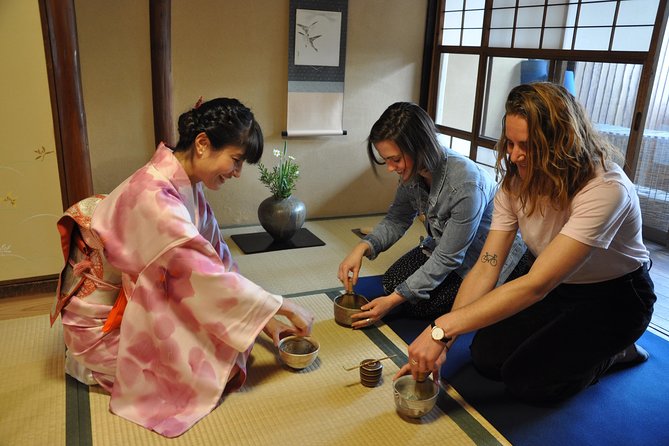
- A demonstration followed by practice: Watch the formal preparation, then make and drink your own bowl of matcha.
- Uji matcha and Kyoto sweets: The tea comes from Uji City, and a traditional confection accompanies it.
- Groups capped at six: The small setting makes it easier to follow the movements and ask questions.
- A one-hour format: The session fits neatly into a busy Kyoto day without taking over your itinerary.
- A central meeting point near transit: You finish where you began, at 605 Nishidacho in Kyoto’s Shimogyo Ward.
Entering a Traditional Kyoto Machiya
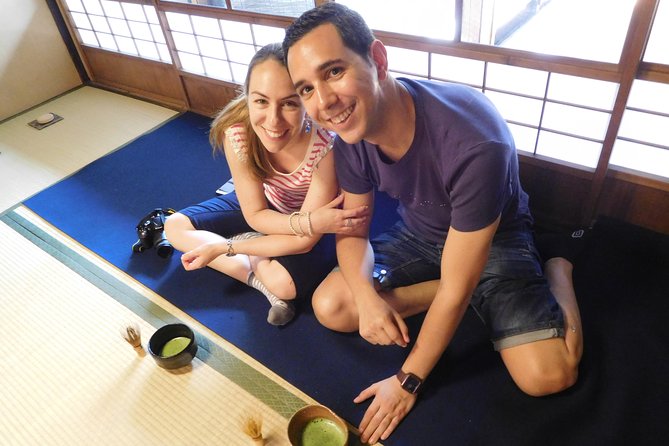
The setting does much of the cultural work before the tea is even prepared. Ami Kyoto occupies a traditional wooden townhouse, described as about 80 years old. These narrow homes once filled Kyoto’s streets, combining living space and work space in a compact urban form.
Inside, the mood is simple and calm. One account describes the home as roughly a century old, but the consistent point is clear: this is an older Japanese house, not a purpose-built attraction. That matters because the ceremony feels connected to ordinary Kyoto architecture and domestic life.
You will meet your hosts at 605 Nishidacho, in Kyoto’s Shimogyo Ward. The building blends with its neighbors, and the area is residential rather than marked by a large tourist entrance. There is a sign outside, but the location can still be tricky to identify, especially if you arrive after dark or rely only on English signage.
I would download the map link before leaving your hotel and arrive early enough to look around without rushing. The difficulty is not a reason to skip the experience, but it is the one practical issue most likely to unsettle an otherwise peaceful hour.
More Tea Ceremonies in Kyoto
- Kyoto: Tea Ceremony in a Traditional Tea House in Kiyomizu
★ 4.9 · 3,519 reviews - Kyoto: Tea Ceremony Ju-An at Jotokuji Temple
★ 4.9 · 3,207 reviews - Kyoto: 45-Minute Tea Ceremony Lesson Experience
★ 4.3 · 2,378 reviews
What Happens During the One-Hour Session
The experience has a clear rhythm. First comes an explanation of the basic ideas behind the tea ceremony and the etiquette expected in the room. You then watch a full demonstration before trying the process yourself.
The ceremony is not only about preparing a drink. Your host explains the purpose behind the movements, including the way the tea room is entered and the meaning attached to the actions. One especially detailed account describes every movement as deliberate, with the hosts explaining both practical and symbolic reasons.
You may be invited to follow the process of entering the tea room, then observe the formal preparation from start to finish. This is useful for first-time visitors because Japanese tea etiquette can seem mysterious if you only see the motions without context.
After the demonstration, you make your own matcha. The hosts guide your hands and explain how to drink it properly. The session is designed to teach rather than test you, so you do not need previous experience with tea ceremony or Japanese customs.
The hour is a sensible length. A longer formal ceremony might appeal to specialists, but for most people visiting Kyoto, 60 minutes gives you enough time to understand the basics and practice without turning the activity into a major commitment.
Why the Uji Matcha and Kyoto Sweet Matter
The tea is high-quality matcha sourced from a farm in Uji City, one of Japan’s best-known tea-producing areas. Uji is near Kyoto, so this is not a generic green tea experience disconnected from the region you are visiting.
Matcha has a strong, grassy flavor and a fine texture that may surprise you if you usually drink steeped green tea. The ceremony gives you a better way to appreciate it because you learn how it is prepared and consumed rather than simply receiving a cup.
The sweet is not an afterthought. Traditional Japanese sweets are served with matcha partly to balance the tea’s bitterness. Here, the confection comes from a famous Kyoto confectioner. One host identified a sweet served during a session as suhama, a traditional confection made with roasted soybean flour and sugar.
The exact sweet may be worth asking about when you arrive. That small question can add another layer to the experience, especially if you enjoy Japanese food traditions. You can also ask about the matcha selection, and the provider offers tea for purchase, giving you the option to continue the practice at home.
The Hosts and the Teaching Style
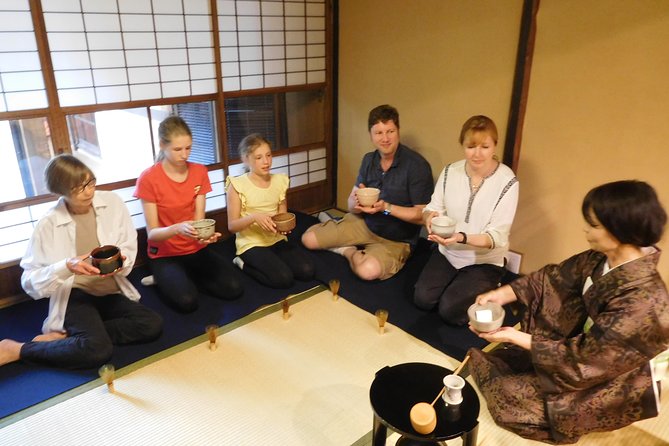
The strongest part of this experience is the human connection. The hosts are described as gracious, friendly, and patient, with explanations that make the ceremony easier to follow. Kimi signs several messages from Ami Kyoto and is named directly by one participant as a friendly and informative host.
Do not expect a silent ritual where you are afraid to breathe or ask a question. The format includes explanation and conversation. Hosts answer questions about the details of the ceremony, explain the etiquette, and help you make your own tea.
That balance is important. A purely formal ceremony might feel impressive but leave you unsure what you witnessed. A casual demonstration might be fun but lack meaning. Ami Kyoto aims for both: respect for the tradition and enough explanation for a newcomer to understand it.
The small group helps. With no more than six people, you should be able to see the demonstration and receive direct instruction. Some sessions have been described as including two hostesses, which gives the room a friendly, conversational feel.
There is one detail to keep in mind. The experience is generally listed for six people or fewer, although one account describes a group of eight. If the group size is especially important to you, confirm it with Ami Kyoto before booking. The stated maximum is six.
Same base, a completely different sort of day:
- PERFECT KYOTO 1-Day Bus Tour
★ 5.0 · 13,518 reviews - Kyoto: Fushimi Inari, Kinkakuji, Bamboo Grove 1 Day Bus Tour
★ 4.8 · 4,316 reviews - Kyoto Geisha Walking Tour: Gion District & Hidden Gems
★ 4.7 · 3,273 reviews - Kyoto: Gion Magical Night Walking Tour with Geisha Trivia
★ 4.9 · 2,393 reviews
A Quiet Lesson in Japanese Etiquette
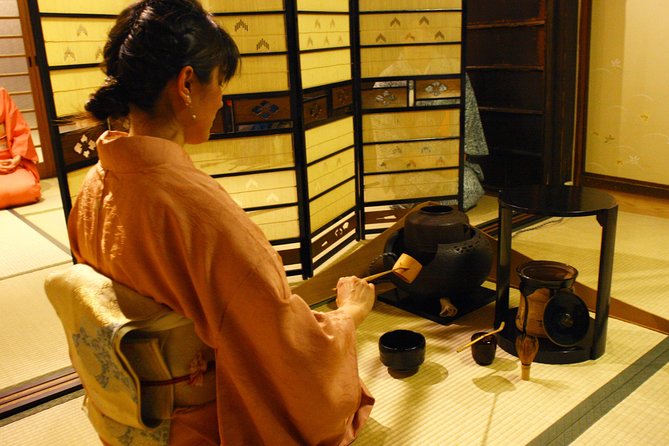
The tea ceremony is often reduced to matcha, sweets, and pretty gestures. This session gives you a more useful understanding of the tradition as a form of hospitality and attention.
You learn that the movements are not random decoration. The way the bowl is handled, the way tea is served, and the way participants enter and behave in the room all help create a respectful exchange between host and guest.
That makes the activity worthwhile even if you are not a matcha fan. The drink is the center of the ceremony, but the real subject is how Japanese culture gives structure to a shared moment. One particularly reflective description focused on the ceremony’s sense of reverence, elegance, and grace.
You should still keep your expectations realistic. This is an introduction, not professional training in a specific tea school. The session covers basic concepts, etiquette, demonstration, and practice within one hour. If you want a long, highly formal ceremony with advanced historical detail, you may find this format too short.
For most first-time visitors, however, the compact structure works well. You get enough background to understand what you see, then enough practice to remember it.
Price, Timing, and Overall Value
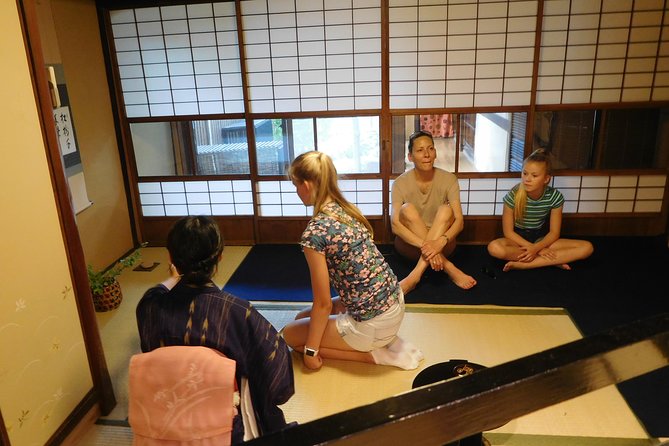
The listed price is $27.74 per person. For Kyoto, that is a reasonable cost for a small-group cultural activity in a traditional home, especially since it includes matcha and Japanese sweets.
The value comes from more than the bowl of tea. You are paying for access to the machiya, a guided explanation, a formal demonstration, hands-on preparation, and time for questions. A cup of matcha alone would be cheap. A private cultural lesson in an older townhouse is a different proposition.
I especially like the one-hour schedule. Kyoto itineraries can become crowded with temples, gardens, markets, and evening meals. This session can fit between larger visits, and multiple start times make it easier to arrange around your day.
The activity is booked, on average, about 25 days ahead. That suggests you should reserve before your Kyoto stay if your dates are fixed, particularly since the group is small. Confirmation arrives within 48 hours, subject to availability.
The ticket is mobile, so you do not need to print anything. Hotel pickup and drop-off are not included, and the activity ends back at the meeting point. The location is near public transportation, but you are responsible for getting there and returning to your own plans.
Free cancellation is available if you cancel at least 24 hours before the start time. Changes or cancellations inside that window are not accepted for a refund.
Who Will Enjoy This Experience Most
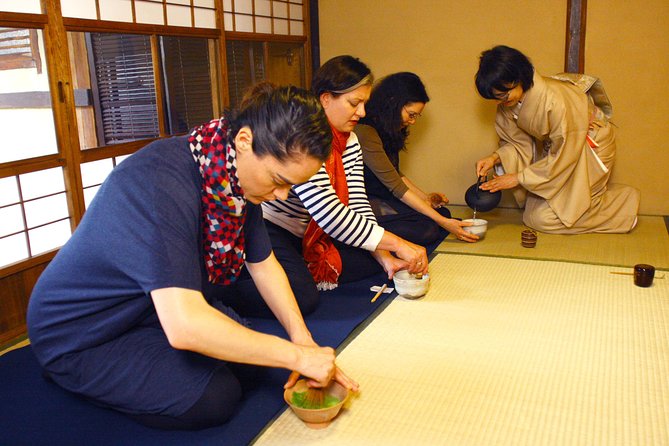
I would recommend this to you if you want a cultural activity that is personal, short, and easy to understand. It works especially well for first-time visitors to Japan who want context for a tradition they may otherwise only see from a distance.
It is also a good choice for families and mixed-age groups. An Australian family of four found the demonstrations and explanations helpful, and the one-hour length kept the activity manageable. The hosts also accommodated a participant using a wheelchair, although you should contact Ami Kyoto in advance to discuss your group’s exact needs.
You do not have to love matcha. The tea is part of the experience, but the etiquette, architecture, and hospitality are just as important. That said, if you already enjoy matcha, you may appreciate the chance to learn how to prepare it and buy selected tea to take home.
Couples and solo visitors can benefit from the small group, too. You get a quieter setting than a large cultural performance, with more opportunity to interact directly with the hosts.
I would be less likely to choose it if your schedule is so tight that finding the townhouse would add stress, or if you are looking for an all-day Kyoto tour with several sights. This is one carefully focused activity, not a broad city introduction.
Practical Advice Before You Go
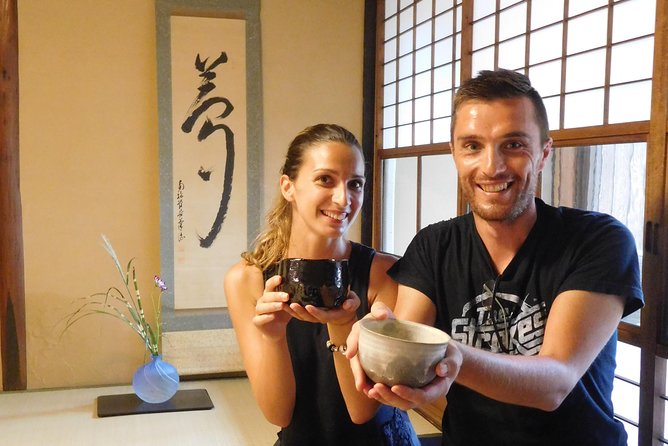
Plan the route before you leave. The townhouse is in a traditional residential area, and English street names or numbers may not be obvious. Use the full address, 605 Nishidacho, Shimogyo Ward, Kyoto 600-8397, Japan, along with the Google Maps link supplied after booking.
Allow a little extra time for arrival. The experience itself is calm, but arriving flustered can spoil the first few minutes. Since there is no hotel transportation, build in the time needed to reach the meeting point by public transit or on foot.
Wear clothes that let you sit and move comfortably. The information provided does not specify a formal dress code, but tea ceremony includes etiquette and careful movement, so practical clothing is the sensible choice.
Use the question period. Ask about the names of the sweets, the source of the tea, the meaning of a gesture, or how to prepare matcha at home. The hosts are there to explain, and the small group gives you a better chance to have that exchange.
Finally, do not rush away after the last sip. The townhouse itself is part of the experience. Take in the scale of the rooms, the quiet, and the contrast between this older home and modern Kyoto outside.
Should You Book the Ami Kyoto Tea Ceremony?
Book it if you want a genuine-feeling introduction to Japanese tea culture at a fair price. The strongest reasons are the traditional machiya setting, the skilled and friendly instruction, the chance to prepare your own matcha, and the small group size.
The session also earns high marks for being informative without becoming stiff. You learn the meaning behind the ceremony, not just the order of the movements. The Uji tea and Kyoto sweet make the lesson more enjoyable, while the one-hour format protects the rest of your sightseeing day.
Skip it only if you dislike matcha, cannot comfortably manage the townhouse setting, or want a longer and more formal tea-school presentation. For most visitors, this is a thoughtful way to spend an hour in Kyoto, with enough ritual to feel special and enough explanation to make the tradition understandable.
FAQ
Where does the tea ceremony take place?
It takes place at Ami Kyoto, at 605 Nishidacho, Shimogyo Ward, Kyoto, 600-8397, Japan.
What kind of building is Ami Kyoto?
Ami Kyoto is located in a traditional Kyoto machiya, or wooden Japanese townhouse. The home is described as about 80 years old.
How long does the experience last?
The tea ceremony lasts approximately one hour.
How many people can join the activity?
The stated maximum is six participants.
What is included in the price?
The experience includes one bowl of matcha green tea and Japanese sweets.
Is hotel pickup included?
No. Hotel pickup and drop-off are not included. The activity begins and ends at the meeting point.
Is the meeting point near public transportation?
Yes. The meeting point is near public transportation.
Do I need previous tea ceremony experience?
No. The hosts explain the basic ideas and etiquette, demonstrate the ceremony, and guide you through making and drinking your own matcha.
Can I choose the start time?
Yes. Multiple start times are available, subject to availability.
What is the cancellation policy?
You can cancel up to 24 hours before the start time for a full refund. Cancellations or changes made less than 24 hours before the start time are not accepted for a refund.
Just added around Kyoto
- Kyoto: Zen Meditation at a Private Temple with a Monk★ 5.0 · 25 reviews
- Kyoto: Gion Geisha District & Sake-in-Hand Walking Tour★ 5.0 · 37 reviews
- Private Pewter Sake Cup Experience with a Kyoto Artisan★ 5.0 · 31 reviews
- Your Private Vacation Photography Session In Kyoto★ 5.0 · 110 reviews
- Private Guided Traditional Buddhist Cooking in Japan★ 5.0 · 16 reviews
- Kyoto Wagashi(Japanese sweets) Cooking Class near Fushimiinari★ 5.0 · 60 reviews
- Kyoto:Family-Friendly Kimono & Yukata Experience at WARGO★ 5.0 · 147 reviews
- Private Cooking Class Udon in Kyoto Japan★ 5.0 · 23 reviews
Kyoto Tours, compared.


Fushimi Inari, Kinkakuji, Bamboo Grove 1 Day Bus Tour
Read our review →
Tea Ceremony in a Traditional Tea House in Kiyomizu
Read our review →
Kyoto Geisha Walking Tour: Gion District & Hidden Gems
Read our review →

Gion Magical Night Walking Tour with Geisha Trivia
Read our review →

Gion Geisha District Walking Tour – Stories of Geisha
Read our review →Browse the lists this tour appears in