
Reviewed · TOKYO TOURS
Tokyo: Daikoku JDM Car Meet & Night Car Culture Tour
Daikoku Parking Area is not a museum or staged car show. It is a working highway rest stop where the lineup changes by the hour, the weather, and the day of the week. This tour takes you there from Shibuya in a small group, adding A PIT Autobacs, Tatsumi PA, and a night drive past Tokyo’s best highway views.
I like the real car-scene setting and the chance to ride with guides such as Michael, Mori, Kareem, or Sasa, who can explain what you are seeing. I also like the route itself, especially the Rainbow Bridge, Tokyo Skytree, Tokyo Tower, Yokohama skyline, and Haneda tunnels. The main catch is simple: no specific car is guaranteed, and Daikoku can be quiet, rainy, or even closed by police.
Key points at a glance
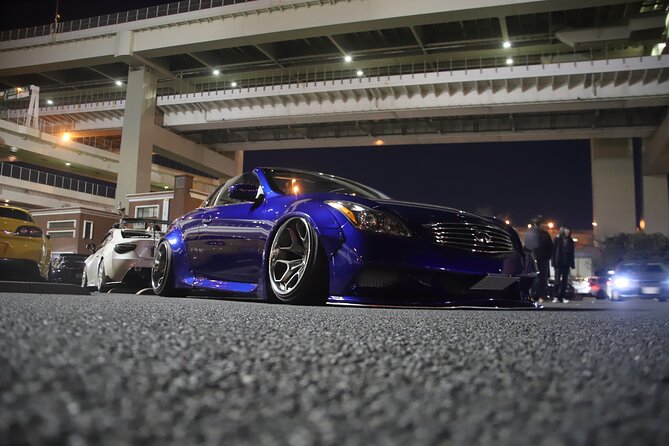
- Daikoku PA is the main event: See a changing mix of Japanese, European, and American cars at one of the Tokyo area’s best-known car meeting spots.
- The route is part of the tour: Cross the Rainbow Bridge, pass Tokyo Tower and Skytree, and follow the Wangan Highway toward Yokohama.
- A PIT Autobacs adds substance: Browse Japan’s flagship car-accessory store and see how car culture extends beyond weekend meets.
- Small groups keep the conversation personal: The maximum is 10 people, with private and family-friendly choices available.
- Vehicle choice affects the feel: Select a JDM Legend car, Performance Van, or Premium Sports Sedan when booking.
- Saturday night usually offers the strongest scene: Still, weather, police activity, and chance control what appears.
Why this is more than a ride to Daikoku
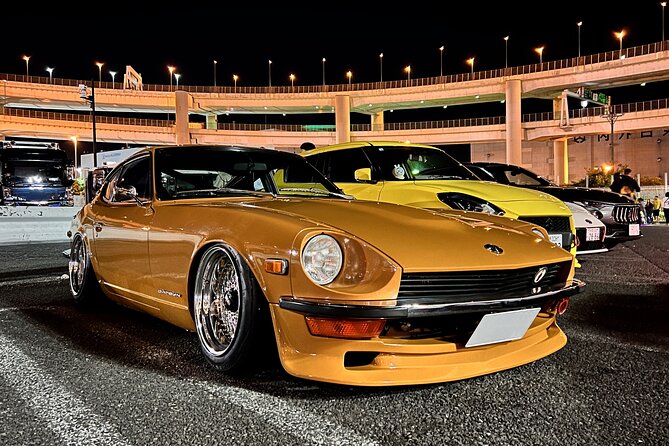
If your picture of Japanese car culture comes only from films and social media, this tour may reset your expectations. The real scene is often relaxed rather than theatrical. People stop, talk, look at one another’s cars, and move on. Some nights produce a packed lot. Other nights offer a smaller but more interesting selection.
That uncertainty is part of the appeal, but it is also the tour’s biggest limitation. You are paying for access to the route, the guide, the vehicle, and the chance to see the meet, not for a guaranteed Nissan Skyline, Mazda RX-7, Toyota Supra, or hundred-car turnout.
The guides are a major part of the experience. Michael is described as both the tour owner and driver, with a background in engineering and cars. Mori receives repeated praise for his JDM knowledge and friendly manner. Kareem and Sasa also lead tours, and the company aims to match language preferences when possible, though this cannot be guaranteed.
You meet at Dōgenzaka in Shibuya, a short distance from Shibuya Crossing. From there, the evening unfolds as a road trip through Tokyo and Yokohama, with car talk filling the spaces between stops.
More evenings out in Tokyo:
- Tokyo Night Foodie Tour in Shinjuku – Seasonal Sushi, Wagyu Beef
★ 5.0 · 1,161 reviews - Tokyo: Daikoku JDM Car Meet & Night Car Culture Tour
★ 4.8 · 626 reviews - Tokyo After 5: Authentic Japanese Food & Drink Night Tour
★ 4.5 · 560 reviews
Choosing your car for the highway
The tour offers three broad vehicle categories: a JDM Legend car, a Performance Van, or a Premium Sports Sedan. The selection matters more here than it would on an ordinary city sightseeing trip because the drive is part of the attraction.
A premium sedan gives you comfort, quiet, and room to watch the city go by. A performance van works well for families and groups, especially four or five people traveling together. Two luxury vans have comfortable seating for five and a maximum capacity of six, so a larger party may be split during the driving portions.
The JDM option gives the outing more car-meet flavor, but check the seating details before booking. For RX-7 bookings, the rear seat is best for people under 170 centimeters and of slim build. The front seat is recommended for people under 185 centimeters. These are useful restrictions, not fine print to ignore.
The tour can take up to 10 people, and private bookings are available. Small foldable strollers may fit in the sedan or van, depending on their size. A booster seat is available for children, making this more workable for families than the loud, late-night image of the tour might suggest.
A PIT Autobacs, Japan’s car culture in retail form
The first substantial stop is A PIT Autobacs in Koto, reached after about 25 minutes on the road. You spend roughly 25 minutes at the store, for about 50 minutes including the ride.
A PIT is Autobacs’ flagship location. It is a useful stop because it shows the everyday side of Japanese car enthusiasm. Instead of seeing only finished show cars at Daikoku, you can browse car parts, accessories, maintenance products, and other motoring goods. It is also a chance to see the kind of place where local enthusiasts shop and gather.
You do not need to buy anything to enjoy it, and admission is included. Still, this stop will mean more to you if you like automotive design, parts, detailing, or Japanese car brands. If your companions are not interested in cars, this is one of the places where the tour may feel slow.
The timing is not especially long, which helps. You get a taste of the store without losing the main purpose of the evening.
Tatsumi Parking Area and the Tokyo expressway view
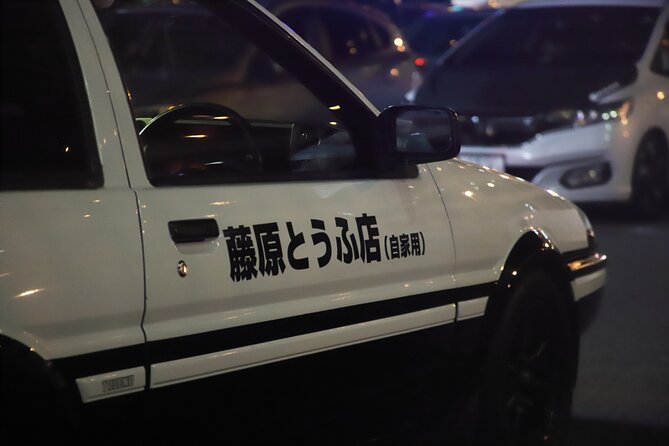
Next comes Tatsumi No. 1 Parking Area, reached by a quick 10-minute hop. The stop lasts about 15 minutes, including the break.
Tatsumi is another place where car enthusiasts pause while making loops around Tokyo’s expressway system. It is smaller and less famous than Daikoku, but that can make it useful. You get a second setting for seeing cars, rather than spending the entire evening at one rest area.
Do not expect the same scale at every stop. Tatsumi may be quiet, and the visit can be brief, especially in poor weather or when the group needs to keep moving. Its value is in comparison: you see how different parking areas fit into Tokyo’s driving culture.
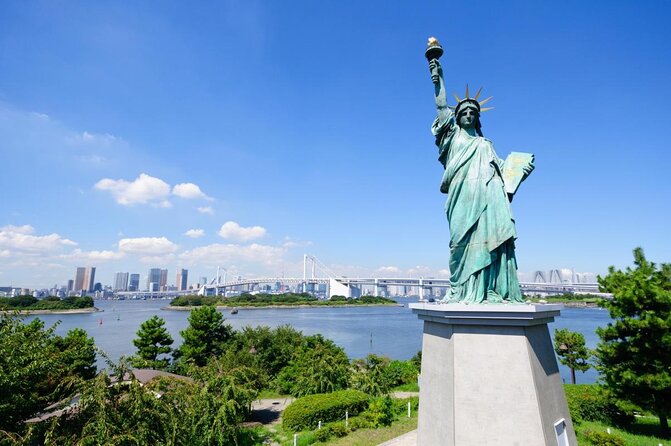
The route also passes the Roppongi Hills Mori Tower, then crosses the Rainbow Bridge toward Odaiba. At night, the bridge gives you views of Odaiba’s buildings and the unusual Fuji TV structure. These sights are seen from the vehicle, so they are not photo stops with time to wander.
That distinction matters. If you want to stand beside the bay with a tripod, this is not that kind of sightseeing. If you like seeing Tokyo from the road, the moving view is the point.
A few more Tokyo half-days to weigh up
- Mt Fuji and Hakone 1-Day Bus Tour Return by Bullet Train
★ 5.0 · 26,383 reviews - 1-Day Tokyo Bus Tour
★ 5.0 · 14,250 reviews - Tokyo: TOKYO SKYTREE® Admission ticket
★ 4.5 · 11,192 reviews - Tokyo: teamLab Planets TOKYO Digital Art Museum Entry Ticket
★ 4.6 · 9,779 reviews
The Wangan Highway and the approach to Yokohama
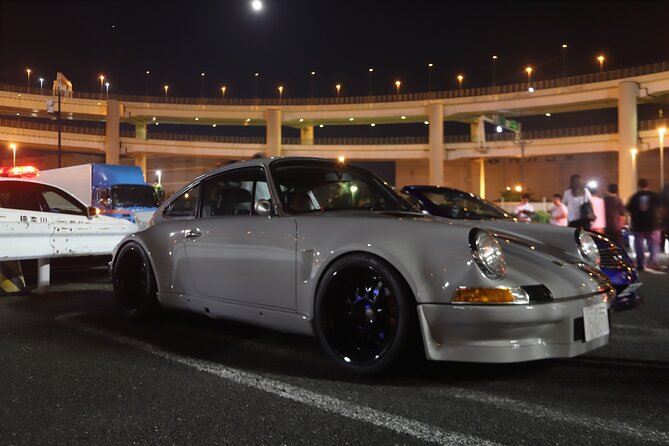
After Tatsumi, the tour follows the expressways toward Daikoku. Along the way, you may see Tokyo Skytree from the Furukawa Line and pass through tunnels beneath Haneda Airport runways. If timing and luck cooperate, an airliner may taxi above the tunnel entrance.
Just before Daikoku, the Yokohama Bay Bridge and Yokohama skyline come into view. Yokohama is a major cruise port, so ships may also be visible. On the return route, you get additional views of Minatomirai, Yokohama Port, Tokyo Tower, and the Tokyo skyline from the Rainbow Bridge.
This is one of the strongest reasons to choose the tour even if you are only partly interested in cars. Tokyo’s trains are excellent, but they do not show you the city in this way. The C1 Loop Highway offers a road-level night view, and Tokyo Tower appears from an angle most visitors do not see during a normal sightseeing day.
The ride to Daikoku is listed at about 40 minutes, with roughly an hour at the parking area. In practice, traffic and group timing can affect the schedule. Allow extra time to reach the Shibuya meeting point, especially after work, since arriving late can put pressure on the whole group.
Daikoku PA, the unpredictable centerpiece
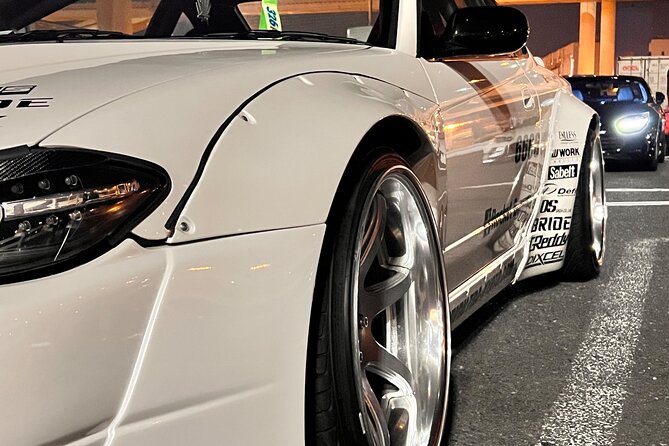
Daikoku Parking Area is the reason most people book. It is a large highway stop in Yokohama and one of the best-known places to see Japanese car culture in person.
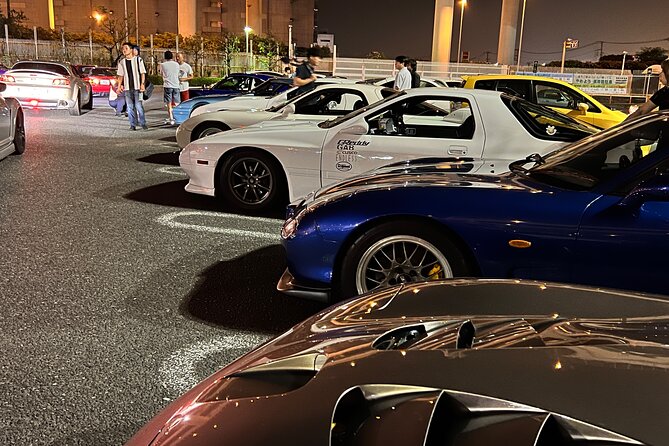
The lineup can include classic and modern Japanese cars, heavily modified machines, luxury vehicles, European cars, American cars, and futuristic-looking builds. You might see a famous JDM model, but the broader appeal is the mix. Japan’s car culture is not limited to domestic brands, and the variety can be more interesting than a row of identical vehicles.
The standard stop lasts about 60 minutes. That gives you enough time to walk around, look closely, and talk with the guide, but not enough to wait all night for a particular car. Guides such as Michael and Mori are especially valuable here because they can explain what makes a car unusual, how local tastes differ, and what details to notice.
Go on a Saturday night if your priority is the largest possible turnout. Several people who went on Saturdays found the scene especially strong. Weeknights can still deliver excellent cars, and one Tuesday outing had a lively mix, but the odds are less predictable.
Rain changes the experience. You may spend less time outside, and the lot can feel subdued. On the other hand, a wet evening may produce a more relaxed stop with fewer people crowding around the cars. The tour requires good weather, so poor conditions can lead to a rescheduled date or full refund.
Daikoku may also be closed by police. That has happened during a particularly busy visit, turning the evening into an improvised version of the local scene. The company can substitute other stops on some days, but every experience includes Daikoku when it is operating. You should understand that the destination is a live public place, not a private event under the tour company’s control.
What the guides add to the experience
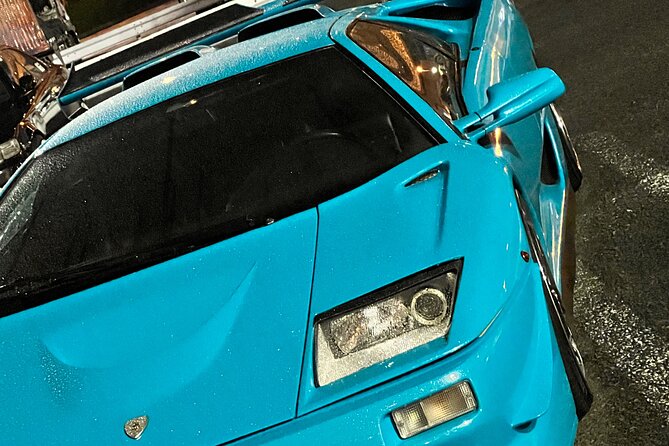
The best part of this outing is not simply transportation. It is the conversation in the car.
Michael is repeatedly praised for making the drive feel easy and engaging, even when the route is long. He has driven in difficult conditions, including the first snowfall of the season, while keeping safety at the center. Other guides, including Mori, Kareem, and Sasa, bring their own enthusiasm and explain the wider Japanese car scene rather than focusing only on JDM models.
That wider view is useful. You can talk about Japanese, German, and American cars, the expressways, local meet habits, and Tokyo life. The guides also help families and mixed-interest groups. One parent described enjoying the conversation between Michael and several sons, while another family found the tour worked well for a teenager and younger children.
Still, this is an enthusiast-led tour. The guide’s passion is an advantage if you want to ask questions and compare cars. It is less helpful if you prefer a quiet sightseeing ride or have little interest in engines, modifications, and car history.
Is the $99.49 price fair?
At $99.49 per person, this is not a cheap way to reach a parking area. The price includes the guide, transportation, highway route, several car-related stops, and all fees and taxes. Food, drinks, and souvenirs cost extra, but none is required.
I see the value in the combination. A taxi to Daikoku would not give you the same context, and public transport does not reach the experience in a practical way. You also receive a guided drive through Tokyo and Yokohama, with city views that are difficult to reproduce independently.
The price is strongest for one or two people who want a focused car evening without renting a vehicle or learning the expressway system. It is also reasonable for a private group that values direct conversation. It is weaker for someone who only wants to photograph a specific model, since the cars cannot be promised.
The 4.9 rating from 232 reviews and 97 percent recommendation rate point to strong satisfaction, but the occasional three or four-star experience is worth considering. The disappointment usually comes from expecting a nonstop movie-style street-racing spectacle. Book it for the real, changeable car scene, not for a guaranteed parade.
Timing, meeting point, and practical details
The tour lasts about three to four hours and returns to the starting point in Shibuya. The meeting address is Japan, 150-0043 Tokyo, Shibuya, Dōgenzaka, 2-chōme 29-8, Dōgenzaka Center Building.
The location is near public transportation, but give yourself a buffer. After-work traffic can delay taxis and cars in central Tokyo, so arriving early is wise. Confirmation is sent when you book, and the activity is offered with a mobile ticket.
Morning and evening departures are available. Evening is the natural choice if you want the city lights, Tokyo Tower, Rainbow Bridge, and the night meet. A morning outing may suit your schedule better, but the atmosphere at Daikoku can differ sharply from a Saturday night.
The published weekday route is representative rather than fixed. On some days, Tatsumi or A PIT Autobacs may be replaced by Umihotaru or Gaienmae. Daikoku remains the constant target, but the supporting stops can change.
Cancellation is free until 24 hours before the start time. Inside that window, refunds and changes are not accepted. If poor weather forces cancellation, you are offered another date or a full refund.
Who should book this Tokyo car tour?
You should book if you love JDM cars, enjoy modified vehicles, or want to understand a part of Tokyo that is easy to miss from the train. It is particularly well suited to parents traveling with car-loving teenagers, adult children, or a small group of friends.
You can also enjoy it as a general visitor if you like night drives and city views. The Rainbow Bridge, Yokohama skyline, Tokyo Tower, Skytree, and Haneda tunnel route give the outing real sightseeing value.
I would hesitate if you need a guaranteed Skyline, RX-7, Supra, or other exact model. I would also think twice if your group has no interest in cars, since A PIT, Tatsumi, and the guide’s conversation all center on motoring.
Should you book the Daikoku experience?
For the right person, this is one of Tokyo’s most distinctive evening outings. You get the famous Daikoku stop, but also the drive through the expressway network, a useful look at A PIT Autobacs, a second parking-area stop, and guides who can turn parked cars into stories.
Book a Saturday evening for your best chance at a large meet, choose the vehicle that fits your group, and keep your expectations realistic. If you accept that the scene changes with weather, police activity, and simple chance, the $99.49 cost buys far more than a ride to a car park. It gives you a lively, informed look at Tokyo and Yokohama from the road.
FAQ
How long does the Daikoku JDM car tour last?
The experience lasts approximately 3 to 4 hours and returns to the Shibuya meeting point.
Where does the tour meet?
You meet at Dōgenzaka Center Building, Japan, 150-0043 Tokyo, Shibuya, Dōgenzaka, 2-chōme 29-8.
What stops are included?
The representative route includes A PIT Autobacs, Tatsumi No. 1 Parking Area, and Daikoku Parking Area. Some weekday itineraries substitute Umihotaru or Gaienmae for Tatsumi or Autobacs.
Can I choose the vehicle?
Yes. Options include a JDM Legend car, Performance Van, or Premium Sports Sedan, depending on the selection you book.
Are particular cars guaranteed at Daikoku?
No. Specific car sightings depend on the day, weather, and other changing conditions.
What happens if the tour is canceled because of bad weather?
You are offered a different date or a full refund. For personal cancellations, you must cancel at least 24 hours before the start time for a full refund.
Just added around Tokyo
- Private Arrival Transfer : Narita International Airport to Central Tokyo City★ 4.5 · 12 reviews
- Narita Airport(NRT): Private Transfer to Tokyo/Yokohama 1-9pax★ 5.0 · 47 reviews
- Private Transfer from Narita Airport to Yokohama Port and City★ 4.5 · 17 reviews
- [Narita Airport Terminals 1, 2] 40-60km Sawara Itako Historic Bike Tour★ 5.0 · 13 reviews
- 3 Day Japan Highlights Tour: Tokyo, Mt.Fuji, Nara, Kyoto, Osaka★ 5.0 · 22 reviews
- The 10 Tastings of Tokyo With Locals: Private Street Food Tour★ 5.0 · 48 reviews
- Small Town in the Big City: Tasting Tokyo’s Kichijoji★ 5.0 · 195 reviews
- Small Town in the Big City: Tasting Tokyo’s Kichijoji★ 5.0 · 16 reviews
Tokyo Tours, compared.
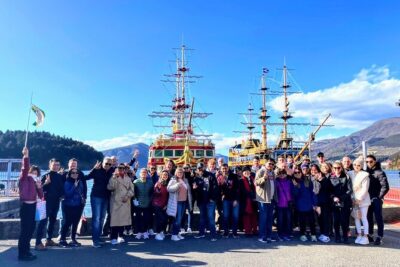
Mt Fuji and Hakone 1-Day Bus Tour Return by Bullet Train
Read our review →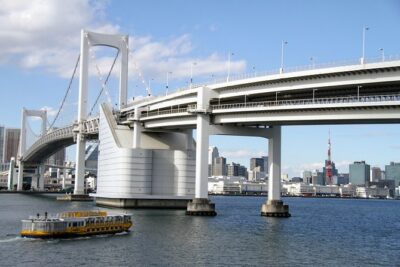
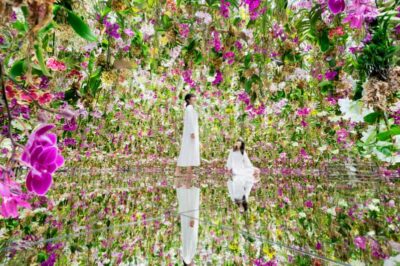
teamLab Planets TOKYO Digital Art Museum Entry Ticket
Read our review →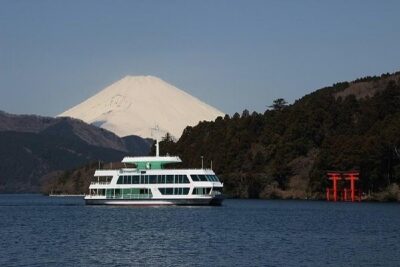
Mt Fuji & Hakone Cruise, Drum Show Bullet Train 1 Day from Tokyo
Read our review →
Sumo Show Experience with Chicken Hot Pot and a Photo
Read our review →
Shinjuku Food Tour (13 Dishes at 4 Local Eateries)
Read our review →
Tokyo Mt Fuji 5th St & Hakone Cruise Bus Tour w/Bullet Train
Read our review →
Flagship 2-Hours Official Street Go-Kart Tour – Tokyo Bay Shop
Read our review →Browse the lists this tour appears in