
Reviewed · TOKYO TOURS
Tokyo Drift: Modfied Supra Night JDM Daikoku Experience
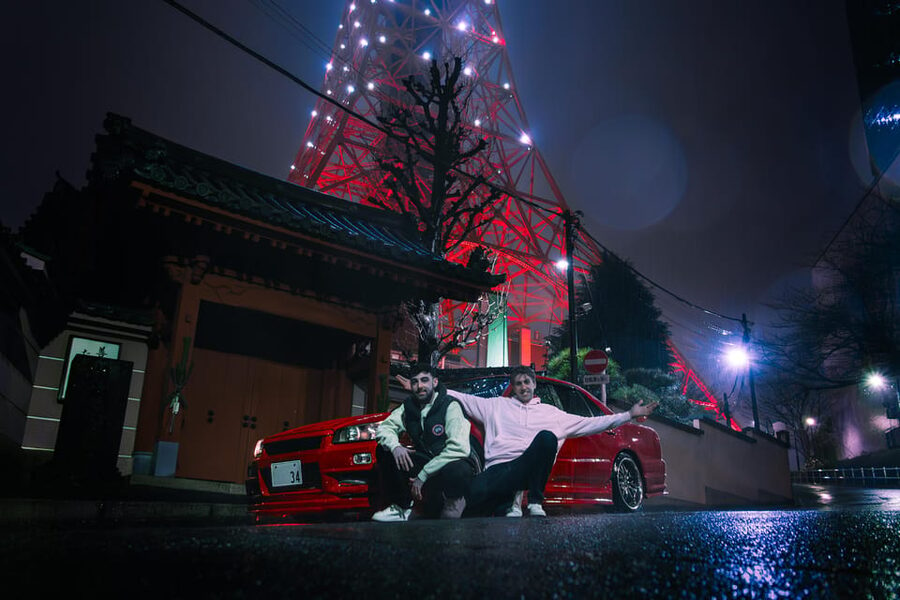
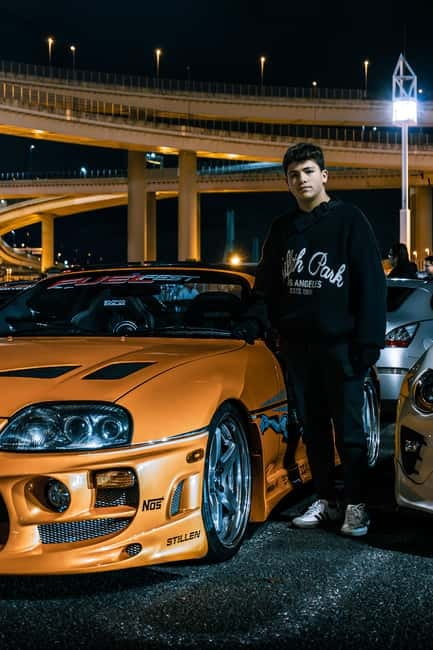
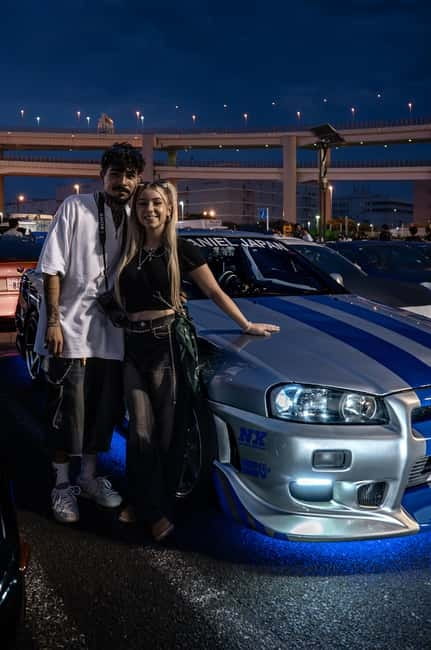
The main draw is simple: you ride through Tokyo and Yokohama at night in a tuned Toyota Supra A80, then visit Daikoku Parking Area, Japan’s best-known meeting point for modified cars. This is not a standard sightseeing bus with a quick photo stop. The car, the roads, and the people you meet are the point.
I like the private-group format and the English-speaking local guides, including Mizuki and Yuto. I also like that the experience explains Japanese car culture instead of only showing you parked vehicles. The main consideration is that Daikoku can close without warning, and the backup stop at Umihotaru costs an extra 5,000 yen per person unless Daikoku is closed.
Key points at a glance
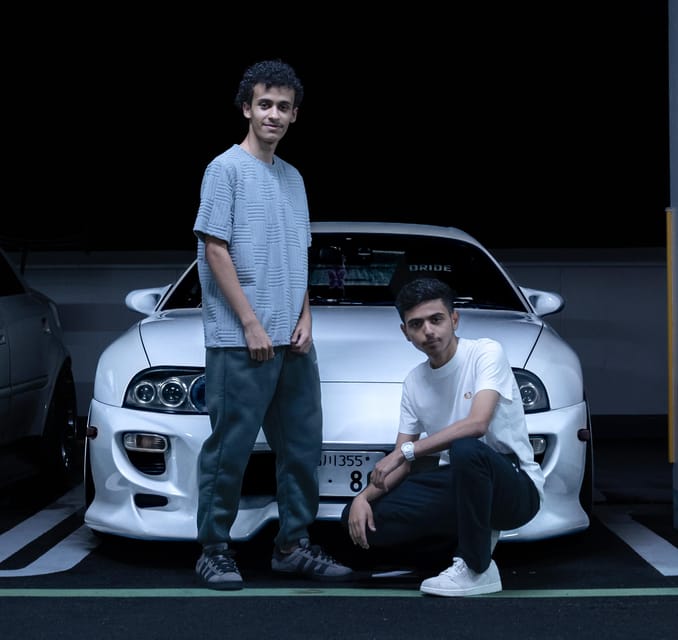
- Ride in a modified Toyota Supra A80: The car is part of the attraction, not just your transport.
- Visit Daikoku PA: Spend about an hour at the center of Tokyo’s JDM meeting scene.
- See Tokyo and Yokohama after dark: The route includes Rainbow Bridge and major city views.
- Learn from a local guide: Mizuki and Yuto have led rides in clear English, with car and city commentary along the way.
- Keep a backup plan in mind: If Daikoku is closed, Umihotaru offers a memorable sea parking area, but normally adds 5,000 yen per person.
- Expect a compact night outing: The experience lasts about 3 to 4 hours and finishes at one of four Tokyo drop-off points.
Why this is more than a ride in a fast car
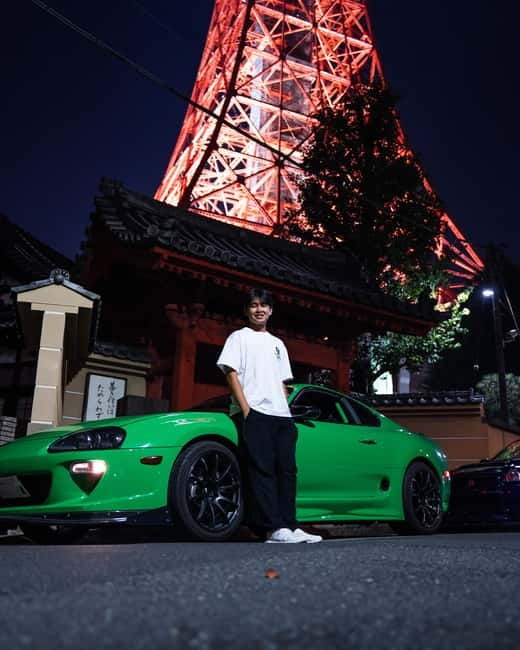
Tokyo’s car culture is easy to miss if you rely only on ordinary sightseeing. The famous manga, anime, films, and racing games give Japan a strong car image, but the real scene is found on the roads, at specialty shops, and in late-night parking areas.
This experience gives you a guided way into that world. You are not simply handed the keys to a rental car or dropped at an unfamiliar parking area. Your guide drives, explains what you are seeing, and handles the route between Tokyo and Yokohama.
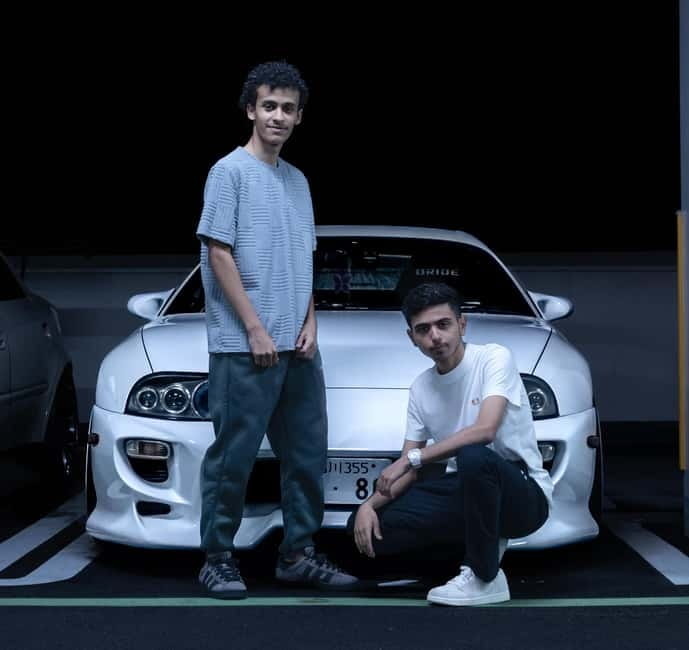
The Toyota Supra A80 is a major part of the appeal. It is the fourth-generation Supra, often called the MK4, and it has become one of the most recognized Japanese performance cars. One ride used a Supra fitted with individual throttle bodies, or ITBs, which can make the engine note especially loud through tunnels. The exact car or setup can vary, so you should think of the Supra as the featured vehicle rather than assume every booking includes the same modification.
The experience can also include other cars. One booking used an Evo X, and several guides have brought friends in additional JDM cars. That means the night is not limited to one vehicle parked in one place. You might see a small convoy or meet other local drivers at Daikoku.
More evenings out in Tokyo:
- Tokyo Night Foodie Tour in Shinjuku – Seasonal Sushi, Wagyu Beef
★ 5.0 · 1,161 reviews - Tokyo: Daikoku JDM Car Meet & Night Car Culture Tour
★ 4.8 · 626 reviews - Tokyo After 5: Authentic Japanese Food & Drink Night Tour
★ 4.5 · 560 reviews
The evening starts at Autobacs Shinonome
Depending on the option you choose, pickup is arranged from your accommodation or a selected starting point. After you get into the car, the guided part begins. The provider describes the ride itself as part of the cultural explanation, with commentary about Japanese roads, geography, and the development of local car culture.
The first listed stop is Autobacs Shinonome, where you spend about 30 minutes. Autobacs is one of Japan’s major car-related retail chains, making this a useful first look at the country’s enthusiast world. You can browse car parts, accessories, and related goods rather than only viewing finished cars at a meeting.
Thirty minutes is enough for a look around, but not enough for a long shopping trip. I would treat this stop as an introduction to the Japanese aftermarket scene. If you are hoping to buy large parts or spend time comparing products, you may find the visit brief.
This is also a good time to ask your guide questions. Mizuki has been praised for clear English and an easygoing manner, while Yuto has also led rides and introduced participants to other drivers. The guide’s role matters here because a shop can seem ordinary if you do not know what to look for.
Daikoku PA is the heart of the night
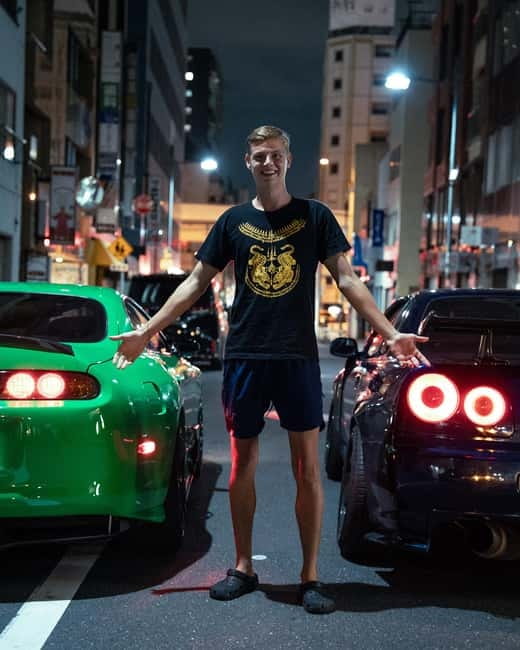
Daikoku Parking Area is the central stop, with about an hour for a guided visit, sightseeing, free time, and shopping. It sits on the Yokohama side of the wider Tokyo area and is known for its connection to Japanese car gatherings.
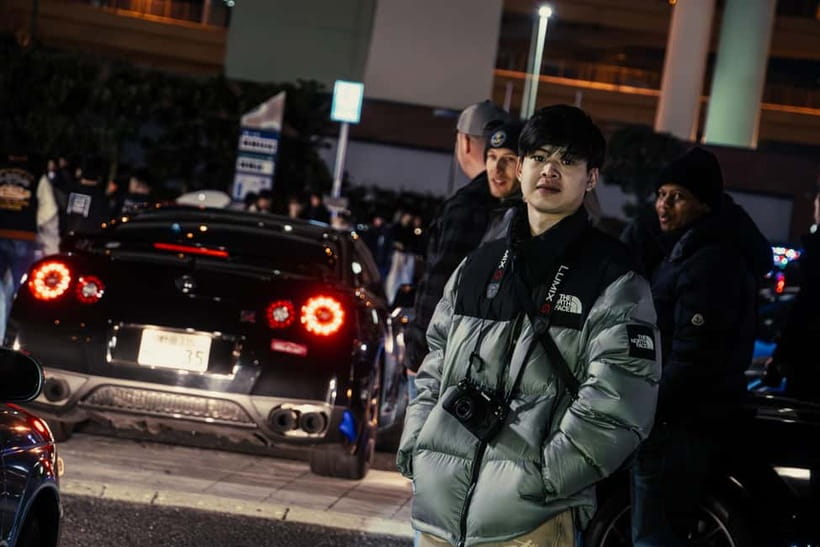
The important point is that Daikoku is a working roadside parking area, not a permanent museum or scheduled car show. What you find depends on the night, the weather, police activity, and whether the area is open to the public. You may see tuned Japanese cars, sports cars, and groups of local owners, but no guide can promise a particular model or size of gathering.
That uncertainty is part of the culture, but it is also the biggest practical weakness. The parking area closes frequently. If it is closed, the driver will not simply leave you to figure out another route. The tour changes to Umihotaru PA, a parking area built out over the sea.
At Daikoku, your guide can help you understand the cars rather than treating the stop as a photo hunt. You might learn why a particular engine setup matters, how tuning styles differ, or how local owners use the roads and parking areas. The experience is strongest for people who want context along with their pictures.
You should also behave as a respectful observer. This is a public meeting place, not a stage built for tour groups. Avoid touching cars, blocking owners, or treating loud exhausts as permission to interfere. Your guide can help you read the mood and meet people in a more natural way.
The social side can be one of the best parts. Mizuki and Yuto have introduced participants to friends who drive other JDM cars, and the evening can feel more personal when you meet several local enthusiasts instead of seeing vehicles from a distance. Still, introductions depend on who is there that night.
Umihotaru gives the backup plan real value
Umihotaru PA is not a weak substitute in terms of scenery. It is Japan’s only parking area located on the sea, and the stop usually lasts about an hour. You get time to look around, enjoy the open views, and experience a very different setting from Daikoku’s industrial roadside environment.
The price rule needs careful attention. If Daikoku is closed, the change to Umihotaru is included. If Daikoku is open but you choose Umihotaru instead, there is an extra charge of 5,000 yen per person because the route is farther and involves additional tolls.
That can affect the value. At the listed price of $196 per person, the base cost is already aimed at a special-interest experience rather than a low-cost city tour. An extra 5,000 yen is reasonable for the added distance, but you should know about it before you set out.
If you love night drives and sea views, Umihotaru may suit you very well. If your main goal is to see the Daikoku car scene, you should ask about current conditions before booking and accept that closure is part of the deal.
A few more Tokyo half-days to weigh up
- Mt Fuji and Hakone 1-Day Bus Tour Return by Bullet Train
★ 5.0 · 26,383 reviews - 1-Day Tokyo Bus Tour
★ 5.0 · 14,250 reviews - Tokyo: TOKYO SKYTREE® Admission ticket
★ 4.5 · 11,192 reviews - Tokyo: teamLab Planets TOKYO Digital Art Museum Entry Ticket
★ 4.6 · 9,779 reviews
Rainbow Bridge closes the loop
The route includes about 30 minutes of sightseeing around Rainbow Bridge in Tokyo. This is a visual finish to a night focused on cars and roads. From the bridge area, you can see Tokyo’s lights and the waterways around the city.
The stop is not presented as a long walking tour or a full city-view excursion. It is a short sightseeing pause, so keep your expectations realistic. You will have time for photos and views, but not a detailed exploration of the bridge area.
I like this part because it gives the evening some balance. Daikoku and Autobacs are aimed at car fans, while Rainbow Bridge adds a familiar Tokyo scene for anyone sharing the ride with a less devoted enthusiast. The route shows how the city feels from the road instead of confining you to a single attraction.
The ride itself is the main event
Many tours use transport as a way to get between sights. Here, the drive is part of what you are paying for. The guide provides commentary from the moment you enter the vehicle, discussing local car culture and geographical details as you move through Tokyo and Yokohama.
Several people who booked the experience singled out the driving, the conversation, and the sound of the modified car. One described an MK4 Supra with ITBs as extremely loud in the tunnels. Another enjoyed returning toward the hotel while seeing other JDM cars on the road. You should understand that this is a spirited car-culture experience, not a quiet luxury transfer.
That does not mean you should expect racing or illegal driving. The supplied information promises a guided ride, not a track session. The driver remains responsible for the vehicle and route, and your enjoyment should come from the car, the setting, and the people you meet.
The provider also explains the booking as payment for the cultural guide, with the Supra ride supplied as a complimentary part of the experience. It describes the arrangement as following current MLIT guidance for professional guides using private vehicles for incidental transport. This legal structure is worth noting because the tour is built around guiding and commentary rather than being sold as a taxi service.
What $196 buys you
At $196 per person, this is expensive compared with a normal Tokyo night tour. The value depends on what you would otherwise need to arrange.
You are paying for pickup from your accommodation, a private-group setting, a local English or Japanese guide, a modified performance car, the route between Tokyo and Yokohama, admission to the planned stops, and the guide’s interpretation of the car scene. You also avoid trying to locate Daikoku yourself, which can be difficult because it is not a simple central Tokyo attraction.
For a casual visitor who only wants a city drive, the price will feel high. You may get more from a standard evening sightseeing tour or a train ride around Tokyo.
For a serious JDM fan, the calculation changes. Finding the right car meet, understanding where to go, arranging suitable transport, and meeting local owners on your own can be awkward. The private format also gives you more room to ask questions than a large coach tour would.
The price does not guarantee a huge gathering, a particular Supra specification, or a specific car model at Daikoku. Pay for access, guiding, and the overall night, not for a promised display of rare vehicles.
Who will enjoy this most
I would recommend this experience to:
- People who follow Japanese performance cars, tuning, or motorsport culture
- Visitors who want a night activity beyond bars, restaurants, and observation decks
- Anyone who enjoys road trips and city lights as much as fixed attractions
- Small groups who want a private guide and flexible conversation
- Fans of the Toyota Supra, Mitsubishi Evo, and other Japanese cars
- Visitors who would struggle to reach Daikoku without local help
It is less suitable for very young children. Children under 11 are not accepted, and babies under one year are excluded. The experience is also not suitable for people over 95.
You should bring your passport, camera, cash, and a fully charged smartphone. Alcohol and drugs are not allowed, and baby strollers are not permitted. After booking, communication takes place by SMS or WhatsApp, with Instagram contact available through complexcity_tokyo.
Timing, pickup, and the practical details
The outing lasts about 3 to 4 hours, but the starting time varies. Check the available departure times before you commit, since this is a night-focused activity and the exact schedule matters for your Tokyo plans.
There are four stated drop-off locations: Tokyo, Shibuya City, Akihabara UDX, and Akihabara Electric Town. Pickup is from your accommodation according to the selected option. Confirm the exact pickup and drop-off details after booking rather than assuming the return point will match your hotel.
The group is private, which is useful if you want to talk freely or share the car scene with your own companions. It also means the atmosphere can depend on the size and makeup of your group. A pair of car fans may get much more from the guide’s technical explanations than a mixed group with only one person interested in tuning.
Free cancellation is available up to 24 hours before the experience for a full refund. You can also reserve now and pay later, which helps if your Tokyo schedule is still changing.
The biggest strengths and limits
The strongest part is the combination of access and explanation. Daikoku is not an easy place to fold into a normal Tokyo itinerary, and a local guide gives the stop meaning. You also get the chance to hear about the scene while riding in a car that belongs to that culture.
The guides are another major strength. Mizuki has been described as friendly, funny, and highly fluent in English. Yuto has also been praised for his driving and for bringing participants into contact with other local drivers. Those personal connections can make the evening feel less like a packaged attraction.
The limits are clear. Daikoku can close, the gathering can vary, and the tour is not a guaranteed car show. The $196 price is substantial, and Umihotaru can cost extra in some circumstances. You also need to be comfortable with a loud, modified car and several hours on the road.
Should you book the Tokyo Drift Supra experience?
Book it if the words JDM, tuned Supra, Daikoku, and night drive already sound like a good evening to you. The combination of a modified A80 Supra, local commentary, Tokyo and Yokohama roads, and access to Japan’s car-meet culture is unusual and difficult to recreate on your own.
Think twice if you want a predictable sightseeing schedule, a quiet ride, or a guaranteed line-up of rare cars. The best approach is to treat Daikoku as a live local scene, not a fixed attraction. Accept the possibility of Umihotaru, allow 3 to 4 hours, and confirm the extra-charge rule before choosing that backup route.
For the right person, this is not just a way to see Tokyo at night. It is a guided look at how Japanese car culture lives on the road.
FAQ
How long does the experience last?
The tour lasts about 3 to 4 hours. Starting times depend on availability.
What car is used for the experience?
The featured vehicle is an iconic Toyota Supra A80, also known as the MK4 Supra. The supplied information also records an experience in an Evo X, so the exact vehicle may depend on the booking.
Can I visit Daikoku Parking Area?
Daikoku PA is a planned stop and includes about one hour for guided touring, free time, shopping, and sightseeing. It closes frequently, so access is not guaranteed on every departure.
What happens if Daikoku PA is closed?
The route changes to Umihotaru PA, a parking area located on the sea in Japan. This backup stop includes about one hour of free time.
Is there an extra charge for Umihotaru PA?
If Daikoku PA is open and you choose Umihotaru instead, the extra charge is 5,000 yen per person. If Daikoku is closed, the information provided states that the Umihotaru change is due to the closure.
Is the guide available in English?
Yes. Live guiding is available in English and Japanese. Guides named in the supplied information include Mizuki and Yuto.
Is this a private tour?
Yes. The experience is offered as a private group activity.
Where can I be dropped off?
The stated drop-off choices are Tokyo, Shibuya City, Akihabara UDX, and Akihabara Electric Town.
What should I bring?
Bring your passport, camera, cash, and a charged smartphone. Alcohol and drugs are not allowed, and baby strollers are not permitted.
Just added around Tokyo
- Private Transfer from Narita Airport to Yokohama Port and City★ 4.5 · 17 reviews
- Private Arrival Transfer : Narita International Airport to Central Tokyo City★ 4.5 · 12 reviews
- Narita Airport(NRT): Private Transfer to Tokyo/Yokohama 1-9pax★ 5.0 · 47 reviews
- [Narita Airport Terminals 1, 2] 40-60km Sawara Itako Historic Bike Tour★ 5.0 · 13 reviews
- 3 Day Japan Highlights Tour: Tokyo, Mt.Fuji, Nara, Kyoto, Osaka★ 5.0 · 22 reviews
- Small Town in the Big City: Tasting Tokyo’s Kichijoji★ 5.0 · 195 reviews
- Small Town in the Big City: Tasting Tokyo’s Kichijoji★ 5.0 · 16 reviews
- The 10 Tastings of Tokyo With Locals: Private Street Food Tour★ 5.0 · 48 reviews
Tokyo Tours, compared.

Mt Fuji and Hakone 1-Day Bus Tour Return by Bullet Train
Read our review →

teamLab Planets TOKYO Digital Art Museum Entry Ticket
Read our review →
Mt Fuji & Hakone Cruise, Drum Show Bullet Train 1 Day from Tokyo
Read our review →
Sumo Show Experience with Chicken Hot Pot and a Photo
Read our review →
Shinjuku Food Tour (13 Dishes at 4 Local Eateries)
Read our review →
Tokyo Mt Fuji 5th St & Hakone Cruise Bus Tour w/Bullet Train
Read our review →
Flagship 2-Hours Official Street Go-Kart Tour – Tokyo Bay Shop
Read our review →Browse the lists this tour appears in