
Reviewed · TOKYO TOURS
Tokyo: Making a Lantern Workshop in Asakusa with a Craftsman
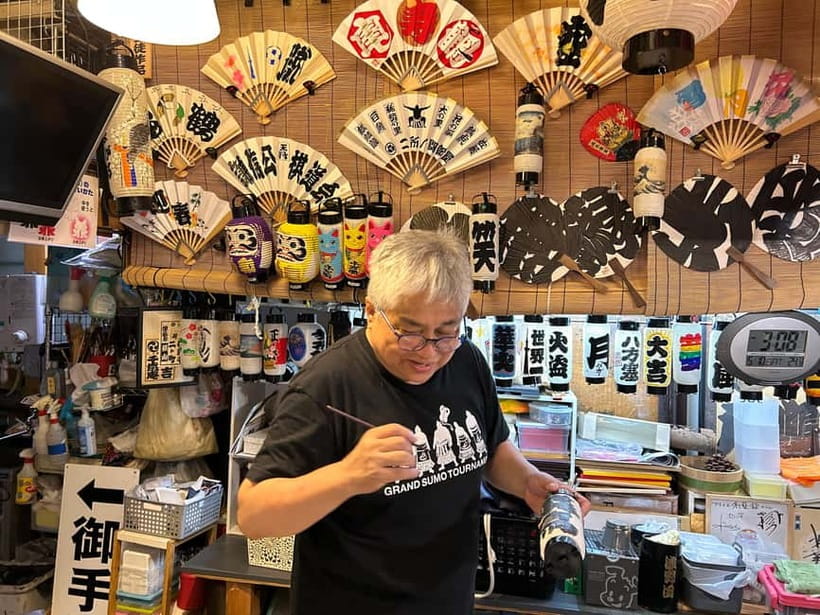
At a more than 100-year-old lantern atelier in Tokyo, you’ll make a Japanese chochin by hand, using bamboo, washi paper, glue, and brushes. The workshop brings you close to a working family craft rather than placing you behind a museum rope. You leave with a lantern you made yourself.
I especially like the patient, personal instruction and the chance to see how much work goes into the calligraphy and decoration. I also like the location near Tokyo Skytree, which pairs well with a day in eastern Tokyo. The main consideration is price: at $96 for two hours, this is not a cheap craft class, so its value depends on how much you care about the hands-on lesson and the finished keepsake.
Key points to know before you book
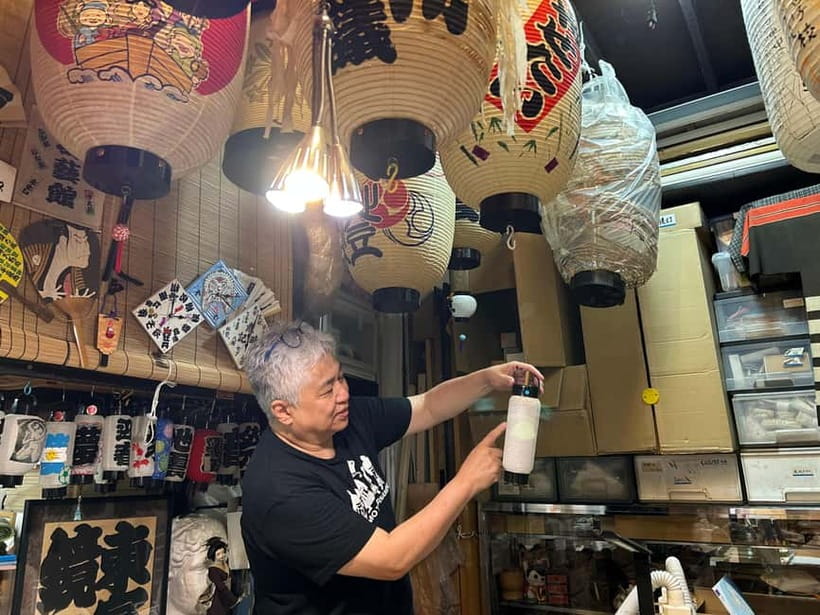
- Make a real Japanese chochin: Use traditional washi paper and bamboo, with glue and brushes supplied.
- Learn inside a century-old atelier: The workshop is a working craft space filled with lanterns in many shapes and colors.
- Take home your own creation: Finished lanterns are packaged for the journey, and you may also buy one made by the master.
- English help is available: Japanese and English are offered, with guides such as Rinka, Noriko, and David Park assisting communication.
- Plan around the venue change: During the January, May, and September 2026 sumo tournaments, the class moves to Ryogoku Kokugikan.
- Good for children and solo visitors: The minimum age is six, and no previous craft skill is needed.
Entering a 100-year-old lantern atelier
This is the kind of Tokyo activity that gives you a better sense of daily craft traditions than a quick photo stop. You enter a traditional workshop where paper lanterns hang around the room, making the setting part of the lesson. The atmosphere is personal and informal, with the master craftsman and assistants close by to explain the work.
The atelier is in Sumida City, near Tokyo Skytree and Oshiage Station. That puts you on the eastern side of the city, away from the busiest central districts. You can combine the class with Skytree, Asakusa, or a walk through the older streets around the Sumida River.
The regular address is 2-10-8 Yokokawa, Sumida City, Tokyo, postal code 130-0003. Check your confirmation carefully, since the workshop does not use this address during the official 2026 Grand Sumo Tournament periods.
More hands-on workshops in Tokyo:
- Sushi Making Tokyo Roll and Authentic Japanese Sushi Class
★ 5.0 · 3,971 reviews - Tokyo: Roll and Authentic Sushi Making Class in Asakusa
★ 4.9 · 1,957 reviews - Tokyo Shinjuku Chopsticks Making Class
★ 5.0 · 1,763 reviews
Understanding the chochin before you make one
The class begins with an introduction to the history and meaning of chochin lanterns. This matters because you are not simply decorating a paper lamp. You are learning about an object that has long been part of Japanese public spaces, homes, festivals, restaurants, and ceremonies.
The lesson also helps you notice the structure of the lantern. The bamboo framework gives it shape, while washi paper creates the surface. Glue, brushes, ink, and decorative work then turn a plain form into something personal.
I like this order. You first learn what you are handling, then you begin the practical work. It gives the activity more purpose than a standard souvenir workshop where you simply apply a design to a ready-made object.
Building your lantern with bamboo and washi
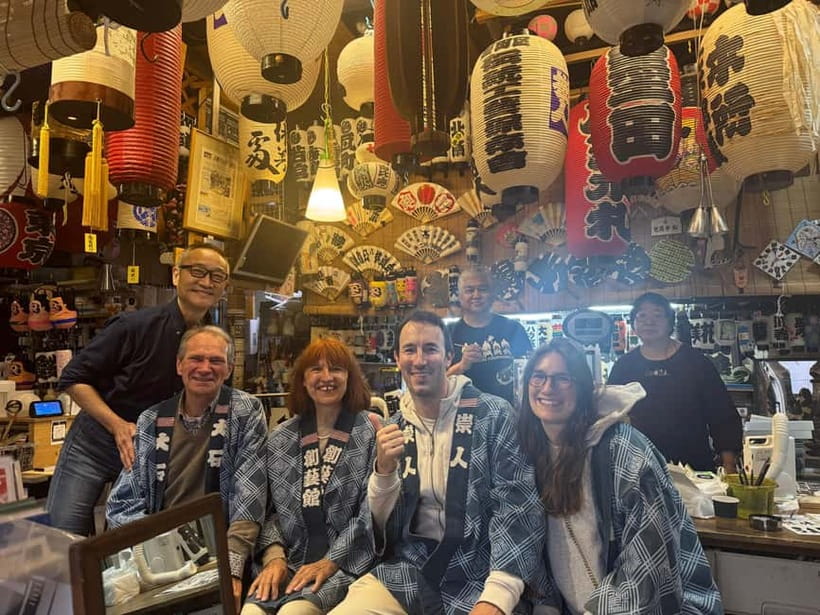
You do not need previous craft experience. The master or an assistant guides you through the process, and an English-speaking guide or interpreter can help explain the instructions and relay questions.
The supplied materials include bamboo, washi paper, glue, and brushes. The work is suitable for families, friends, couples, and solo participants, though younger children may need more help with careful paper handling and decoration.
The pace is one of the strongest parts of the class. Two hours gives you time to work without rushing every step. One part that can take longer than expected is the calligraphy or lettering. If you want neat writing and careful decoration, do not assume this is a quick 30-minute craft.
You may also use ink or paint, so wear clothes that can handle a small stain. This is a simple point, but it can save you from spending the rest of your Tokyo day worrying about a shirt.
Adding personal decoration and calligraphy
The decorating stage is where your lantern becomes your own. The activity allows customization, and the craft includes calligraphy work and hand-painted decoration. You can expect guidance rather than a free-for-all, which is helpful if you are unsure how to place lettering or handle the brush.
The master and assistants focus on the process, not just the result. That gives you a better feel for the patience required to produce professional lanterns. Even a small mistake can make you appreciate the control needed for clean lines on washi paper.
This part works well for creative people, but you do not have to think of yourself as an artist. The class is designed for beginners. You can make a lantern that reflects your own taste, while the guidance keeps the task manageable.
The finished object will not be identical to a professionally made lantern. That is part of the point. You are taking home a personal souvenir, not pretending to be a master after one lesson.
A few more Tokyo half-days to weigh up
- Mt Fuji and Hakone 1-Day Bus Tour Return by Bullet Train
★ 5.0 · 26,383 reviews - 1-Day Tokyo Bus Tour
★ 5.0 · 14,250 reviews - Tokyo: TOKYO SKYTREE® Admission ticket
★ 4.5 · 11,192 reviews - Tokyo: teamLab Planets TOKYO Digital Art Museum Entry Ticket
★ 4.6 · 9,779 reviews
Meeting the craftspeople and English-speaking guides
The master craftsman is central to the experience, but the English support also matters. Guides who have assisted this workshop include Rinka, Noriko, and David Park. Their role can make a real difference when you want to ask about technique, history, or local places to visit.
Rinka has helped participants with the class and shared ideas for things to do in Tokyo. Noriko has assisted with communication between the master and English-speaking participants. David Park has also served as a translator while participants worked with Master Oyakata and co-master Uehala.
Names and staffing can vary by date, so do not assume one particular guide will lead your session. The useful point is that English support is available, and the guides can help the lesson feel less awkward if you are working alone.
The friendly setting also makes this a good choice for solo visitors. You have a clear task to focus on, and the workshop naturally creates conversation without requiring you to join a large sightseeing group.
Taking home a lantern that needs careful packing
Your completed lantern is included in the price. Finished pieces can be packaged to help you carry them home, which is important because a paper lantern is not the easiest souvenir to squeeze into a suitcase.
Think about your luggage before booking. The exact size of your lantern is not specified, so you should leave some room for a delicate item rather than planning to pack as tightly as possible.
You may also purchase a professionally made lantern on-site. This is useful if you want a more polished piece, a gift, or a second example to compare with your own work. The workshop price does not include personal purchases.
A handmade lantern has more meaning than a mass-produced souvenir because you remember the time, tools, and instruction behind it. Still, you should choose this activity for the making process first. If you only want a perfect decorative lantern, buying one from the master may suit you better.
Is $96 a fair price for two hours?
The $96 cost is on the high side for a two-hour activity. You are paying for more than materials, though. The fee includes the instruction, all bamboo and washi supplies, English-language assistance, and the lantern you create.
The value is strongest if you care about direct contact with a working artisan. A typical sightseeing ticket gives you access to a place, while this workshop gives you time with a craft and a finished object to take home. The personal setting also helps explain the price.
The value is weaker if you want a cheap family activity or a quick introduction to Japanese culture. Transportation, food, drinks, and personal purchases are not included. If your budget is tight, you might prefer to see lanterns in shops and spend the money on another cultural activity.
For many people, the souvenir is what makes the cost easier to accept. You are not just buying a decorative item. You are paying for the chance to make it, with help, and to understand why the work takes time.
Fitting the workshop into your Tokyo day
The regular workshop is near Oshiage Station and Tokyo Skytree. It can fit well before or after a visit to the Skytree area, though you should allow time to reach the address and find the atelier. Transportation to and from the venue is not included.
Asakusa is also nearby in the broad sense of eastern Tokyo, but you should not treat the workshop address as being directly beside Senso-ji Temple. Check the route from your hotel and plan around the actual meeting point.
The meeting point changes during three Grand Sumo Tournament periods in 2026:
- January 11 to January 25
- May 10 to May 24
- September 13 to September 27
During those dates, the class takes place at Ryogoku Kokugikan, 1-3-20 Yokoami, Sumida City, Tokyo, postal code 130-0015, on the first floor. The atmosphere and setting may differ from the regular atelier, so check your booking date before setting out.
Outside those tournament periods, the regular Yokokawa workshop applies for the listed 2026 and early 2027 dates. Since the venue changes only during the official tournament windows, this is easy to manage if you check ahead.
Who will enjoy this most?
I would recommend this to anyone who wants a creative activity with a clear local connection. It is especially suitable for:
- Families with children aged six and older
- Couples looking for a quiet shared activity
- Solo visitors who want an easy way to meet people
- Art, design, and Japanese craft enthusiasts
- Shoppers who want a useful handmade souvenir
- Repeat Tokyo visitors seeking something beyond major sights
Children under six cannot join. Younger participants who are six or older may enjoy the colorful workshop, but adults should be ready to help with brushes, glue, paper, and lettering.
This is also a good option after a long day of sightseeing. The work is active but not physically demanding, and the two-hour format gives you a change of pace from walking through crowded districts.
It may not suit you if you dislike making things by hand, want a fast activity, or need a highly structured sightseeing tour with several stops. There is no meal, transportation, or wider city tour attached to the class.
Practical details that matter
Reservations are required in advance. The activity lasts two hours, and starting times depend on availability. You can cancel up to 24 hours ahead for a full refund, and a reserve-now, pay-later option is available.
Bring your passport or another ID card. Pets are not allowed, and alcohol and drugs are prohibited. The workshop is wheelchair accessible, which makes it more flexible than many older craft spaces, though you should still check the exact meeting instructions if you have particular access needs.
Wear something comfortable that you do not mind getting marked by ink or paint. Since you will take home a paper lantern, consider bringing a little extra luggage space or a protective way to carry it.
Photos are welcome inside the studio. The lantern-filled room gives you plenty to photograph, but keep your attention on the work as well. The best part is not simply the finished picture. It is seeing the materials and methods up close.
Should you book the lantern workshop?
Book it if you want a hands-on cultural activity, value time with a real craftsman, and like the idea of taking home something you made. The warm instruction, English support, careful packaging, and access to traditional materials give the class more substance than a basic paint-and-go souvenir session.
Think twice if $96 feels too high for two hours or if you are mainly looking for sightseeing. The price is easier to justify when you value the personal lesson and the finished lantern, not just the amount of time.
For a family, solo visitor, or creative couple planning time around Skytree, Asakusa, or Ryogoku, this is a strong choice. Just check the address for your date, wear stain-friendly clothes, and leave room in your luggage for a handmade piece of Tokyo.
FAQ
How long does the lantern workshop last?
The workshop lasts two hours.
How much does the experience cost?
The listed price is $96 per person.
What is included in the price?
The price includes the guided lantern-making workshop, bamboo, washi paper, glue, brushes, English-speaking guidance or interpretation, and your completed lantern.
Is the workshop suitable for children?
Yes. Children aged six and older can participate. Children under six are not permitted to join.
Do I need previous craft experience?
No. The workshop is designed for beginners, and the master craftsman or an assistant guides you through the process.
What languages are available?
The activity is offered in Japanese and English.
Where is the workshop held?
Outside the 2026 Grand Sumo Tournament periods, it is held at 2-10-8 Yokokawa, Sumida City, Tokyo, postal code 130-0003. During the tournament periods, it moves to the first floor of Ryogoku Kokugikan at 1-3-20 Yokoami, Sumida City, Tokyo, postal code 130-0015.
When does the meeting point change in 2026?
The special venue applies from January 11 to January 25, May 10 to May 24, and September 13 to September 27, 2026.
What should I bring and wear?
Bring your passport or ID card. Wear clothes you do not mind getting stained because the workshop may involve ink or paint.
Just added around Tokyo
- Private Arrival Transfer : Narita International Airport to Central Tokyo City★ 4.5 · 12 reviews
- Narita Airport(NRT): Private Transfer to Tokyo/Yokohama 1-9pax★ 5.0 · 47 reviews
- Private Transfer from Narita Airport to Yokohama Port and City★ 4.5 · 17 reviews
- [Narita Airport Terminals 1, 2] 40-60km Sawara Itako Historic Bike Tour★ 5.0 · 13 reviews
- 3 Day Japan Highlights Tour: Tokyo, Mt.Fuji, Nara, Kyoto, Osaka★ 5.0 · 22 reviews
- The 10 Tastings of Tokyo With Locals: Private Street Food Tour★ 5.0 · 48 reviews
- Small Town in the Big City: Tasting Tokyo’s Kichijoji★ 5.0 · 195 reviews
- Small Town in the Big City: Tasting Tokyo’s Kichijoji★ 5.0 · 16 reviews
Tokyo Tours, compared.

Mt Fuji and Hakone 1-Day Bus Tour Return by Bullet Train
Read our review →

teamLab Planets TOKYO Digital Art Museum Entry Ticket
Read our review →
Mt Fuji & Hakone Cruise, Drum Show Bullet Train 1 Day from Tokyo
Read our review →
Sumo Show Experience with Chicken Hot Pot and a Photo
Read our review →
Shinjuku Food Tour (13 Dishes at 4 Local Eateries)
Read our review →
Tokyo Mt Fuji 5th St & Hakone Cruise Bus Tour w/Bullet Train
Read our review →
Flagship 2-Hours Official Street Go-Kart Tour – Tokyo Bay Shop
Read our review →Browse the lists this tour appears in