
Reviewed · TOKYO TOURS
Tokyo: Meiji Jingu Shrine and Shinto Culture Walking Tour
Meiji Jingu is one of Tokyo’s rare quiet places, a broad forest of 100,000 trees wrapped around a major shrine in the middle of the city. This two-hour walk gives that calm setting a clear cultural meaning, showing you how to bow, wash, pray, read shrine symbols, and understand the link between nature and Shinto belief.
I especially like the small-group format, which gives you room to ask questions, and the practical help with shrine etiquette. The guide also takes photos during the walk, a simple extra that matters when you are traveling with a group. The main consideration is pace: two hours is enough for an introduction, but not enough for a slow, detailed exploration of every corner.
Key points at a glance
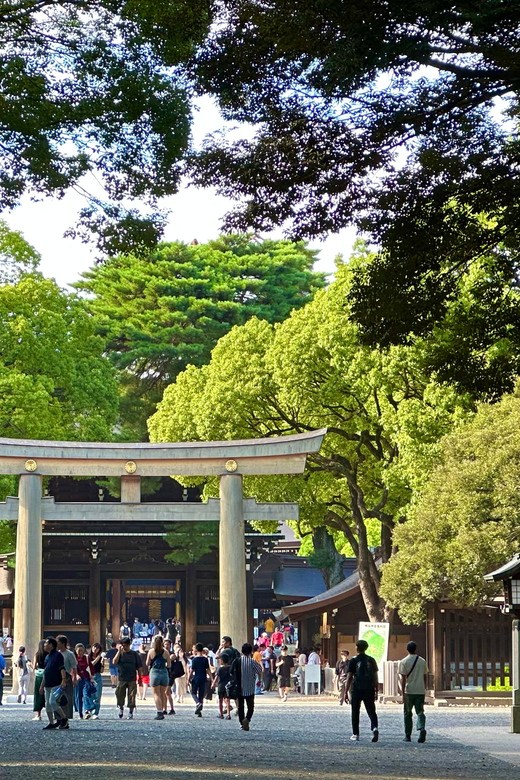
- A forest walk before the shrine: Enter Meiji Jingu through a planted sacred woodland that quickly shuts out much of Harajuku’s noise.
- Shinto customs made clear: Your guide explains purification, prayer, offerings, ema boards, and proper behavior without assuming you know the rules.
- Four useful stops: The route includes Meiji Jingu Gyoen, the Big Torii, sake barrels, wine barrels, and the main shrine.
- Guides who add local advice: Past guides have included Maya, Minori, Nicholas, Hoshi, Naruto, Matt, Yota, Ryota, and Andres.
- Good value at $19: Shrine admission, an English-speaking guide, historical context, and photos are included.
- Easy first-day activity: The meeting point is near Harajuku, and several guides have helped visitors with Tokyo food and sightseeing ideas.
Why Meiji Jingu works so well as a first Tokyo visit
Tokyo can feel like a wall of signs, trains, concrete, and people. Then you pass through the entrance to Meiji Jingu and find yourself walking under tall trees on wide gravel paths. The contrast is the point. This is not a remote rural shrine, but it gives you a useful first look at how spiritual spaces fit into Japanese city life.
The shrine honors Emperor Meiji and Empress Shoken, whose era brought major change to Japan. Your guide uses the grounds to explain the Meiji period, the creation of the shrine, and the role of Shinto in Japanese culture. That context helps you see Meiji Jingu as more than a pretty stop for photographs.
I like this tour because it treats the shrine as a living place of worship, not merely a monument. You learn what people are doing and why. The explanations also cover the difference between Shinto and Buddhism, a subject that can seem confusing at first because the two traditions have influenced Japanese life side by side for centuries.
The setting helps. Even if you know little about religion, you can understand the basic Shinto idea that natural places, objects, and forces may have spiritual importance. The huge trees, wooden gates, sake barrels, and quiet approach all become part of the lesson.
More walking tours in Tokyo:
- Tokyo Tsukiji Fish Market Food and Culture Walking Tour
★ 5.0 · 3,184 reviews - Tokyo: Imperial Palace and Shogun Historical Walking Tour
★ 5.0 · 2,251 reviews - Tokyo: Shinjuku Local Bar and Izakaya Guided Walking Tour
★ 4.9 · 1,794 reviews
Meeting near Harajuku and entering the Imperial Garden
The meeting point is in front of the Starbucks closest to Meiji Shrine, at coordinates 35.6705208, 139.7031067. That is more useful than a vague instruction to meet at Harajuku Station, though you should still check the exact map pin before setting out because there is more than one Starbucks in the area.
From there, the walk begins with Meiji Jingu Gyoen, the shrine’s Imperial Garden. About 30 minutes are set aside for a guided visit and photo stop. This opening section gives your guide time to explain the shrine grounds before the group reaches the busiest and most recognizable structures.
The garden is valuable because it slows the tour down at the start. You are not rushed straight to the main buildings. Instead, you get a sense of the scale of the site and the way the wooded paths separate Meiji Jingu from nearby Harajuku.
The exact experience can vary with the season and weather. On a rainy day, the forest still provides atmosphere, but gravel paths and wet ground may make walking less comfortable. One useful point from the tour format is that the activity is listed as wheelchair accessible, though you should confirm route conditions if you need highly specific mobility assistance.
The Big Torii and the meaning of crossing over
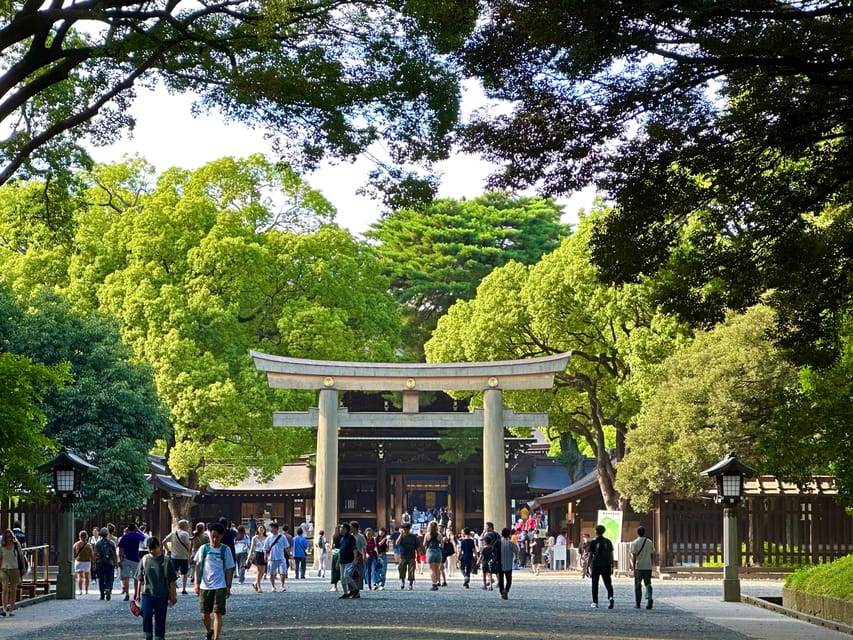
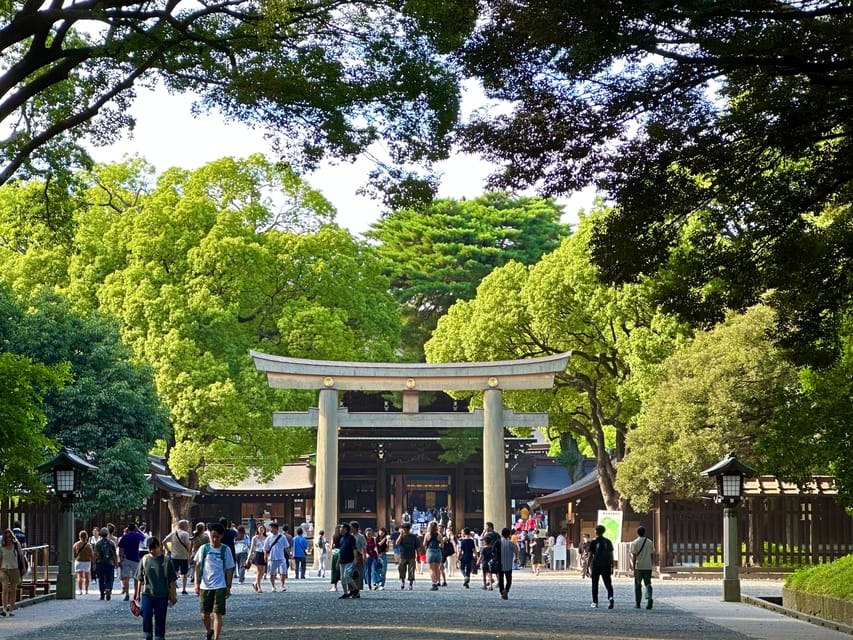
The Big Torii receives about 10 minutes of guided attention. It is an important visual marker, but the guide’s explanation is more useful than simply stopping for a photograph.
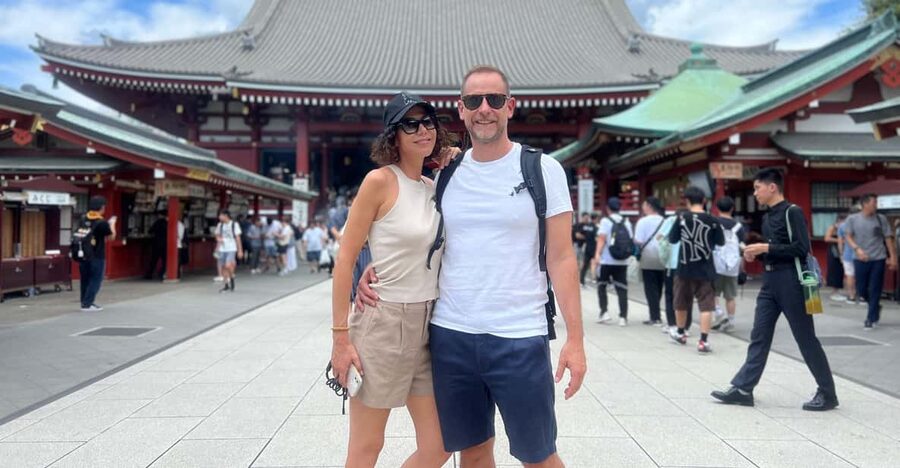
A torii marks the boundary between ordinary space and a Shinto sacred area. Your guide can show you the respectful way to pass through, including the custom of keeping to the side rather than taking the center, which is traditionally associated with the movement of the kami, or sacred presence.
This is the kind of detail that improves the rest of your Tokyo sightseeing. Once you learn the basic pattern at Meiji Jingu, you can recognize similar customs at other shrines. The tour does not just tell you what to look at. It gives you a simple set of habits you can use for the rest of your trip.
The torii is also where the scale of the shrine begins to register. The forest path, the massive gate, and the steady flow of worshippers create a strong sense of arrival. At the same time, the stop is brief, so you should not expect a long architectural lecture here.
Sake barrels and wine barrels tell a wider story
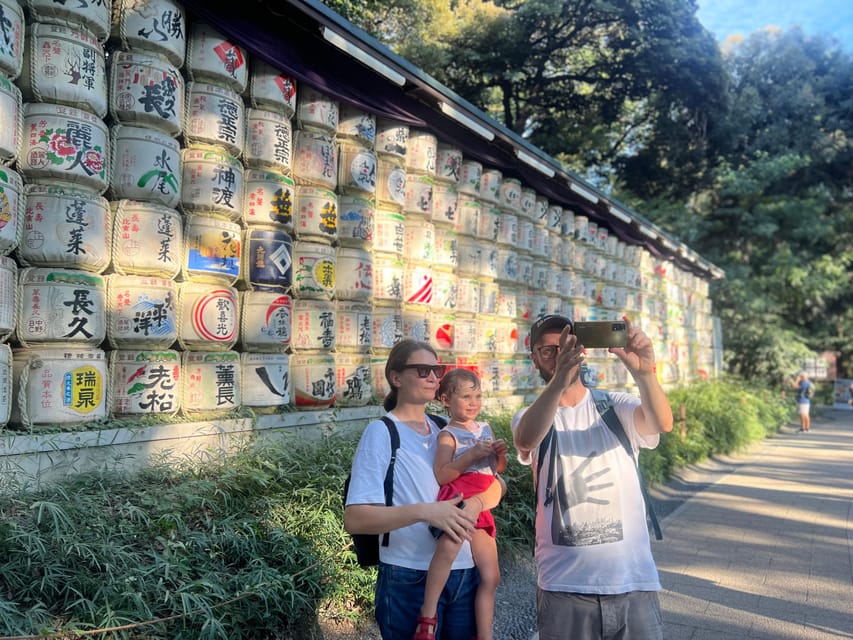
The route pauses for about 10 minutes at the consecrated sake barrels. Rows of decorative barrels donated by breweries make an excellent photo stop, but they also open the door to a bigger point about offerings and community support.
Sake has a long connection with Shinto ceremonies. The barrels are not simply advertisements placed at a tourist attraction. They show how companies and local communities take part in maintaining a shrine and honoring the deities associated with it.
The consecrated wine barrels offer a surprising companion scene. Wine may seem out of place at a traditional Japanese shrine, yet these donations point to Japan’s modern connections with Europe and to the changing culture of the Meiji period.
I find this pair of stops especially effective because they prevent the tour from presenting Japan as frozen in the past. The shrine has old rituals, but it also reflects modern history, international ties, business support, and changing tastes. Your guide can connect those ideas in a few minutes, giving the photographs more meaning.
A few more Tokyo half-days to weigh up
- Mt Fuji and Hakone 1-Day Bus Tour Return by Bullet Train
★ 5.0 · 26,383 reviews - 1-Day Tokyo Bus Tour
★ 5.0 · 14,250 reviews - Tokyo: TOKYO SKYTREE® Admission ticket
★ 4.5 · 11,192 reviews - Tokyo: teamLab Planets TOKYO Digital Art Museum Entry Ticket
★ 4.6 · 9,779 reviews
One hour inside Meiji Shrine
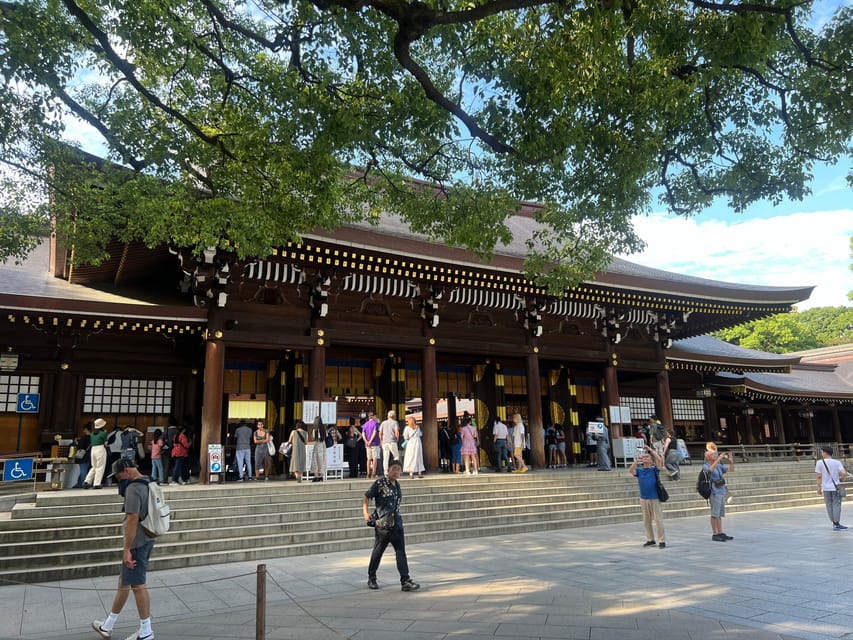
The main Meiji Shrine visit takes about an hour, making it the heart of the experience. Here you have time for sightseeing, explanations, questions, and a closer look at the customs introduced earlier.
Your guide explains the basic purification ritual at the water basin, including how visitors traditionally rinse their hands and mouth before approaching the shrine. You also learn the usual prayer sequence, such as bowing, offering a coin, bowing twice, clapping twice, making your wish or prayer, and bowing once more.
The value of having a guide here is confidence. Shrine etiquette is not difficult, but many first-time visitors worry about getting it wrong. Clear instruction lets you take part respectfully instead of hovering at the edge and copying whoever happens to be nearby.
The tour also introduces ema, the small wooden plaques on which people write wishes and prayers. You might choose to buy one separately if you want to leave a message, but the supplied details only confirm shrine admission, not additional purchases. Some visitors have also enjoyed collecting a stamp in a book, though that is an optional activity rather than a stated part of the tour.
Expect time for questions. Guides have been praised for explaining Shinto, Buddhism, the Meiji period, and everyday Japanese customs in clear English. Maya, Hoshi, Naruto, Minori, Nicholas, Yota, Ryota, and Andres are among the guides who have led recent tours, but the person assigned to your group can vary.
That variation matters. The strongest part of the experience is the guide’s ability to explain and respond, so your experience will depend partly on who leads the walk. The consistently high rating and repeated praise for friendly, engaging instruction suggest a reliable standard, but no tour can promise one particular guide unless the booking specifically does so.
Small groups make the questions worthwhile
The usual group can be as large as 12 people, though several bookings have had only two to four participants, and one visitor had a private experience when the other participant did not arrive. Small numbers make it easier to hear the guide and easier to ask questions about subjects that interest you.
That personal feel is useful at a shrine because the questions are often specific. You may want to ask about Shinto versus Buddhism, why sake and wine are displayed together, how Japanese people use shrines today, or what to do at your next temple. A guide can adjust the conversation when the group is not too large.
The tour is conducted in English. Past groups have included families, first-time visitors to Japan, and people who already knew the basic customs but wanted more detail. The route can work for children too, especially when the guide keeps the explanations conversational and offers to take family photos.
There is a practical limit. A small group does not turn this into a private scholarly tour, and two hours still moves at a planned pace. If you want extensive time for photography, quiet reflection, or shopping for shrine items, you may prefer to return on your own after the guided walk.
What the $19 price actually covers
At $19 per person, this is a modestly priced introduction to Meiji Jingu. The fee includes an English-speaking professional guide, photos taken during the tour, historical explanations about the shrine and surrounding districts, and admission to Meiji Shrine and the Imperial Garden.
The strongest value is the interpretation. You can walk into Meiji Jingu for free in many circumstances, but without context you may see a torii, some barrels, a forest, and a large wooden shrine without understanding how the pieces fit together. The guide turns familiar sights into a short cultural lesson.
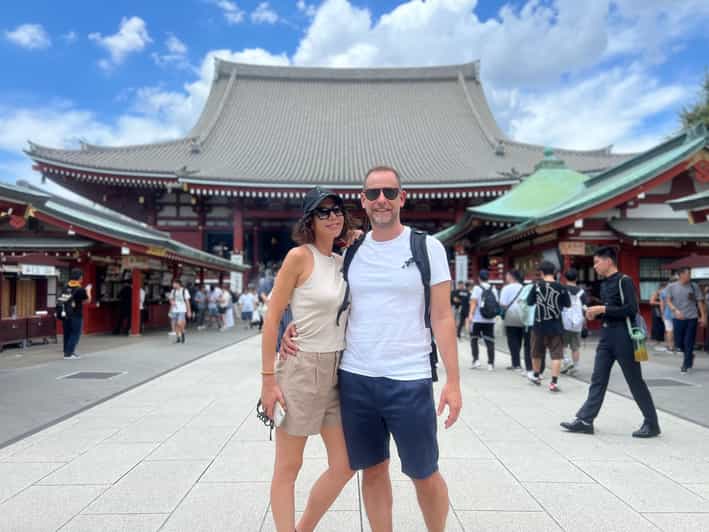
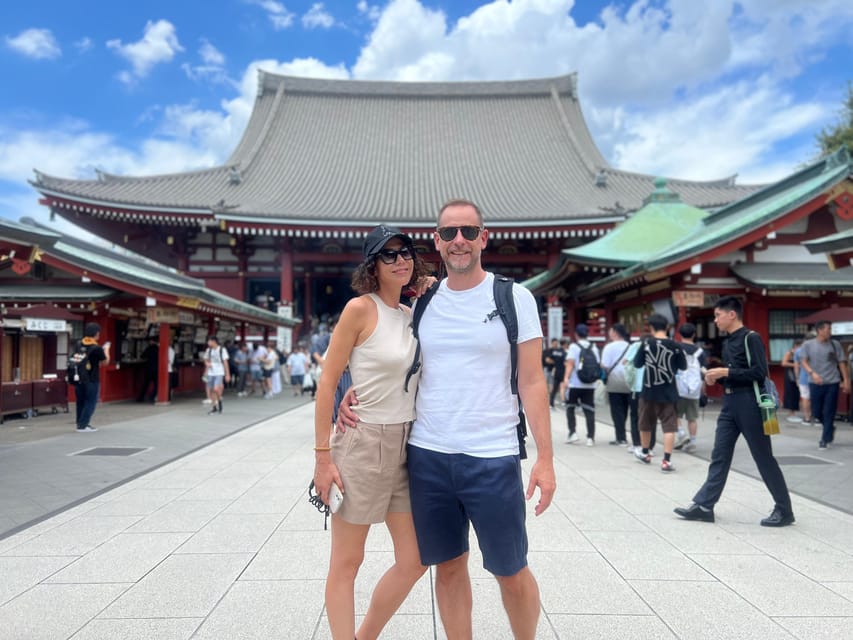
The photo service also has practical value. If you are traveling alone or want a group picture, having the guide take photos saves you from asking strangers. Do not treat it as a professional photo session, but it is a thoughtful inclusion.
The price does not include food, drinks, souvenirs, or any optional activity such as writing an ema. Several guides have offered restaurant and snack recommendations, including ramen, sushi, wagyu, and local sweets, but those purchases are your responsibility. That is not a problem, since the tour ends back near Harajuku, where you can continue exploring at your own cost.
Free cancellation up to 24 hours before the start and a reserve-now, pay-later option make the low price easier to fit into a changing Tokyo schedule. Starting times vary, so you need to check availability for your chosen date.
Timing, walking, and the best place in your itinerary
The advertised duration is two hours, with the group returning to the Starbucks meeting point. That makes it easy to pair with Harajuku, Omotesando, or nearby neighborhoods before or after the walk.
I would book it near the start of your Tokyo stay if you want help getting oriented. Guides have offered advice about restaurants, local sights, metro use, and shrine etiquette. That practical information can save time later, especially if Tokyo is your first stop in Japan.
An early start may give you a calmer setting. One guide specifically recommended visiting shrines early in the morning for more peace and stillness. The tour’s available times change, so check the schedule rather than assuming a morning departure.
Wear comfortable walking shoes. The tour passes through a large forested shrine compound, and some paths may be gravel or uneven. The activity is described as wheelchair accessible, but anyone with precise access needs should confirm the route and conditions before booking.
Rain does not necessarily ruin the experience. A previous group toured during heavy rain and still found the walk worthwhile, but you should bring suitable clothing and expect that photographs and long pauses may be less comfortable in poor weather.
Who should book this Meiji Shrine walk
This tour is a strong match for you if:
- You are visiting Japan for the first time and want a clear introduction to shrine customs.
- You want cultural explanation rather than a quick photo stop.
- You prefer a two-hour activity that leaves the rest of the day open.
- You enjoy asking questions and may benefit from a small group.
- You are traveling with children and want a guide who can make the setting understandable.
- You want local suggestions for food and Tokyo sightseeing after the tour.
It is less suitable if you prefer to explore entirely alone, spend a long time taking photographs, or read every sign at your own pace. You can always return independently, but the guided route is designed to cover several key points within a set time.
Should you book it?
Book this tour if you want Meiji Jingu to mean more than a beautiful forest and shrine gate. The combination of a respected Tokyo site, simple explanations of Shinto practice, included admission, and a $19 price makes it a sensible first cultural activity.
The biggest reason to choose it is the guide-led conversation. Guides such as Maya, Minori, Hoshi, Naruto, Yota, Ryota, and Andres have been praised for friendly English explanations, patience, photography, and useful Tokyo recommendations. The exact guide is not guaranteed, but the format gives you a good chance to ask the questions that a self-guided visit leaves unanswered.
Skip it if you already have strong knowledge of Meiji Jingu and want unlimited time alone. For most visitors, though, two hours is a well-judged introduction, especially when you schedule it early in your Tokyo trip and use the guide’s local advice for the days that follow.
FAQ
How long is the Meiji Shrine walking tour?
The tour lasts two hours and returns to the Starbucks meeting point near Meiji Shrine.
What language is the tour conducted in?
The live tour guide speaks English, and English is the listed tour language.
Where does the tour meet?
You meet in front of the Starbucks closest to Meiji Shrine. The listed coordinates are 35.6705208, 139.7031067.
What places are included on the route?
The route includes Meiji Jingu Gyoen, the Big Torii, the consecrated sake barrels, the consecrated wine barrels, and Meiji Shrine.
Is admission to Meiji Shrine included?
Yes. Admission to Meiji Shrine and the Meiji Shrine Imperial Garden is included.
Are photos included?
Yes. The guide takes photos during the tour.
How large is the tour group?
The group can include up to 12 people. Some departures may be much smaller, including groups of two to four people.
Is the tour wheelchair accessible?
Yes, the activity is listed as wheelchair accessible.
Can I cancel for a refund?
You can cancel up to 24 hours in advance for a full refund. A reserve-now, pay-later option is also available.
Just added around Tokyo
- Private Arrival Transfer : Narita International Airport to Central Tokyo City★ 4.5 · 12 reviews
- Narita Airport(NRT): Private Transfer to Tokyo/Yokohama 1-9pax★ 5.0 · 47 reviews
- Private Transfer from Narita Airport to Yokohama Port and City★ 4.5 · 17 reviews
- [Narita Airport Terminals 1, 2] 40-60km Sawara Itako Historic Bike Tour★ 5.0 · 13 reviews
- 3 Day Japan Highlights Tour: Tokyo, Mt.Fuji, Nara, Kyoto, Osaka★ 5.0 · 22 reviews
- Small Town in the Big City: Tasting Tokyo’s Kichijoji★ 5.0 · 195 reviews
- Small Town in the Big City: Tasting Tokyo’s Kichijoji★ 5.0 · 16 reviews
- The 10 Tastings of Tokyo With Locals: Private Street Food Tour★ 5.0 · 48 reviews
Tokyo Tours, compared.

Mt Fuji and Hakone 1-Day Bus Tour Return by Bullet Train
Read our review →
teamLab Planets TOKYO Digital Art Museum Entry Ticket
Read our review →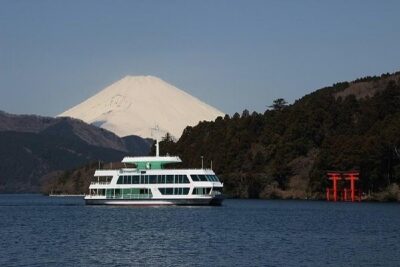
Mt Fuji & Hakone Cruise, Drum Show Bullet Train 1 Day from Tokyo
Read our review →
Sumo Show Experience with Chicken Hot Pot and a Photo
Read our review →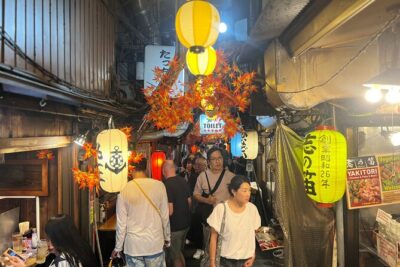
Shinjuku Food Tour (13 Dishes at 4 Local Eateries)
Read our review →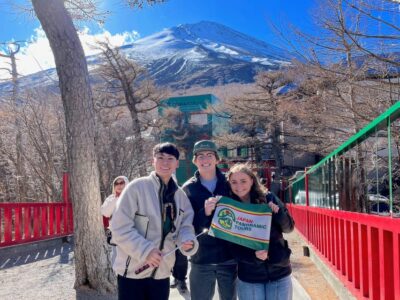
Tokyo Mt Fuji 5th St & Hakone Cruise Bus Tour w/Bullet Train
Read our review →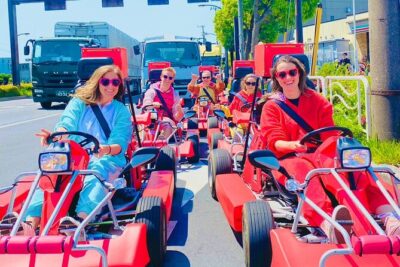
Flagship 2-Hours Official Street Go-Kart Tour – Tokyo Bay Shop
Read our review →Browse the lists this tour appears in