
Reviewed · TOKYO TOURS
Tokyo: Shibuya Crossing & Hidden Streets Walking Tour
Shibuya Crossing is only the opening act. This two-hour walk also takes you through Nonbei Yokocho, a narrow old lane beside the station, and Maruyama-cho, where quiet traces of earlier Tokyo sit beside nightlife. You get the famous photo, but you also get some context for the district around it.
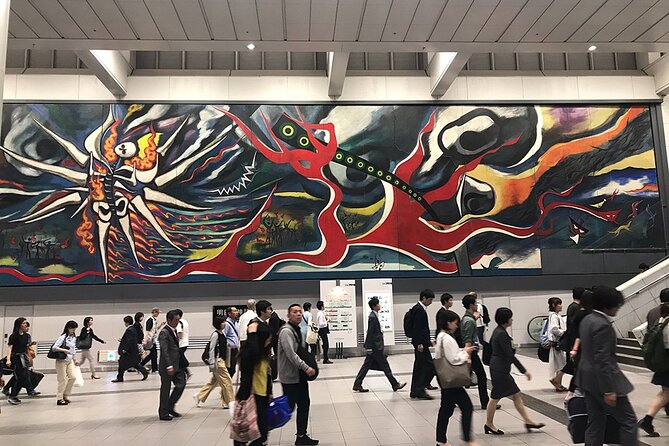
I like two things here: the route mixes serious history, especially Taro Okamoto’s Myth of Tomorrow, with easygoing stops such as Miyashita Park, and the guides make the tour useful beyond the walk by sharing food, shopping, and neighborhood tips. The main consideration is pace. Two hours covers seven stops, so some visits are brief and you will spend much of the time on your feet.
Key points at a glance
- A strong start at Myth of Tomorrow: Taro Okamoto’s mural gives Shibuya a thoughtful opening rather than beginning with neon and shopping.
- Nonbei Yokocho adds old Tokyo: Ten minutes in this narrow lane offers a sharp contrast with the station’s giant screens and crowds.
- Shibuya Crossing is explained, not just photographed: Your guide helps you approach the famous intersection and can assist with photos.
- Miyashita Park breaks up the walking: The 20-minute stop gives the route a modern public-space pause.
- Guides tailor the experience: Loc, Kumi, Rio, Ryo, Grey, Daichi, and Zach have been praised for clear explanations, friendly conversation, flexible pacing, and practical advice.
- A short route with useful follow-up value: At $22, the tour is especially helpful on a first day, when you want a quick sense of where to eat, shop, and return later.
Why this two-hour Shibuya walk works
Shibuya can feel like a wall of sound, signs, department stores, and people moving in every direction. It is easy to see the crossing, take a picture, and leave without understanding the neighborhood.
This tour gives you a simple map of the area. You move from the station to an old drinking alley, then to a major work of public art, the crossing, a redeveloped park, the youth center of Shibuya, and Maruyama-cho’s nightlife streets. The route is short enough to fit into a busy Tokyo day, yet varied enough to show that Shibuya is not just one intersection.
The guide is a major part of the value. Loc is repeatedly praised for cultural background, practical suggestions, and taking photos for solo participants. Kumi, Rio, Ryo, Grey, Daichi, and Zach are also described as friendly, clear, adaptable, and able to answer questions about Japan beyond Shibuya.
I would especially consider this walk during your first visit. It helps you get your bearings before choosing a restaurant or returning to the area at night. It also works well for families and teenagers, since guides have adjusted the explanation and pace to keep younger people involved.
More walking tours in Tokyo:
- Tokyo Tsukiji Fish Market Food and Culture Walking Tour
★ 5.0 · 3,184 reviews - Tokyo: Imperial Palace and Shogun Historical Walking Tour
★ 5.0 · 2,251 reviews - Tokyo: Shinjuku Local Bar and Izakaya Guided Walking Tour
★ 4.9 · 1,794 reviews
Meeting at Mark City without a late start
The meeting point is SABON Shibuya Mark City, inside Mark City on the third floor. This detail matters. Shibuya Station and Mark City are large, busy, and not always intuitive to navigate, especially on your first morning in Tokyo.
Give yourself extra time to find the building and the correct floor. The guide will hold a sign, but arriving at the last minute is risky. The tour specifically asks you not to be late, and that is sensible: a walking group cannot easily pause while someone searches the station complex.
The listed coordinates are 35.6586643, 139.6999525. Put the meeting point into your map before leaving your hotel, and allow time for station signs, escalators, and the walk through the building. This is one of those small Tokyo logistics points that can make the difference between a calm start and a frantic one.
Nonbei Yokocho, old Tokyo beside the station
The first neighborhood stop is Shibuya Nonbei Yokocho, also known as Drunkard’s Alley. Its narrow lanes and small-scale atmosphere make a quick contrast with the broad roads and giant advertising screens nearby.
You spend about 10 minutes here with the guide. That is enough for an introduction and a few photographs, but not enough for a long meal or extended wandering. Think of this stop as a short lesson in how older, more intimate Shibuya survives beside the modern station district.
The value is in the contrast. You see how quickly the character of the neighborhood changes from one street to the next. The guide can explain what you are looking at and point out details you could easily pass without noticing.
If you want to eat in Nonbei Yokocho later, treat the tour as an orientation rather than a reservation. The supplied details do not promise a meal, food tastings, or time to enter a particular bar. You are paying for the guide’s explanations and the route, not for included food.
Myth of Tomorrow gives Shibuya a serious opening
The route then reaches Myth of Tomorrow, a large mural by Taro Okamoto. It reflects on the effects of nuclear destruction while carrying a message of hope.
This is one of the most worthwhile stops because it interrupts the usual Shibuya story. The district is often presented through fashion, music, youth culture, and screens. Okamoto’s mural reminds you that Tokyo’s public spaces can also carry weighty historical and human questions.
The scheduled visit lasts about 10 minutes, including a photo stop and guided explanation. That is brief, but a good guide can give you the basic context without turning the morning into a lecture. Loc and other guides have been praised for connecting local sights with wider Japanese culture, which is useful here.
I like this stop near the beginning. It gives the rest of the walk more depth. After seeing Myth of Tomorrow, the noise and spectacle of Shibuya feel less like the whole story and more like one part of a much larger city.
A few more Tokyo half-days to weigh up
- Mt Fuji and Hakone 1-Day Bus Tour Return by Bullet Train
★ 5.0 · 26,383 reviews - 1-Day Tokyo Bus Tour
★ 5.0 · 14,250 reviews - Tokyo: TOKYO SKYTREE® Admission ticket
★ 4.5 · 11,192 reviews - Tokyo: teamLab Planets TOKYO Digital Art Museum Entry Ticket
★ 4.6 · 9,779 reviews
Shibuya Crossing, famous but still worth seeing
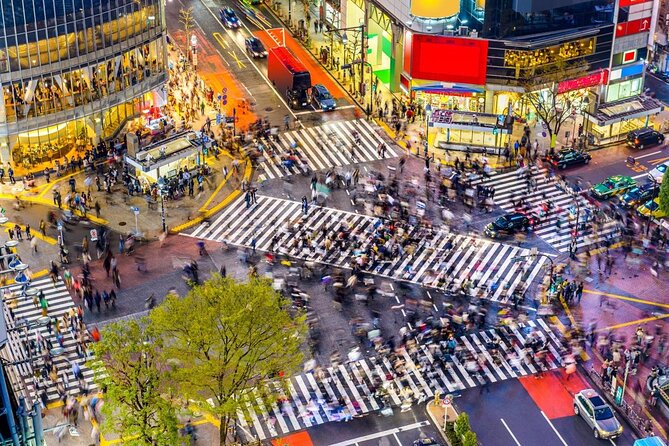
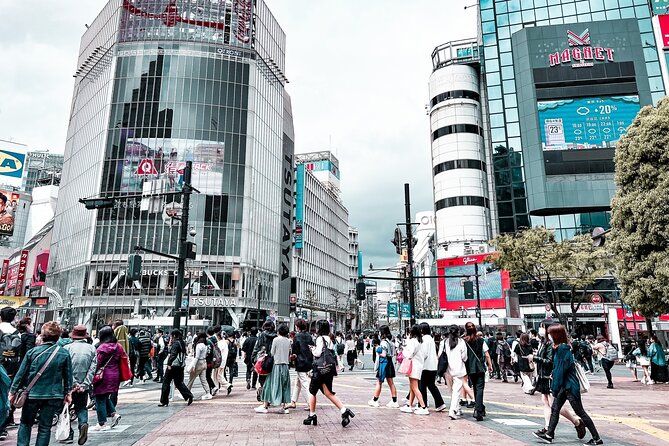
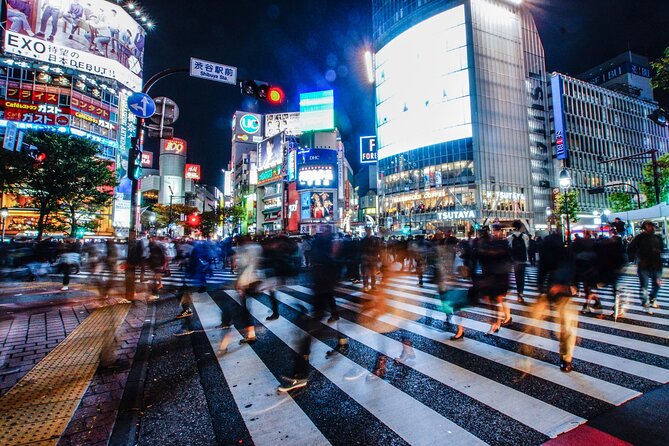
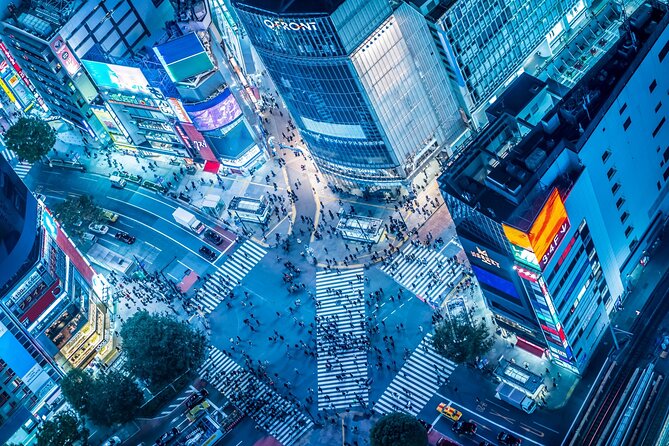
Now comes the district’s signature scene: Shibuya Crossing. The tour calls it the world’s busiest intersection, and its appeal is easy to understand. When the signals change, streams of people cross from several directions beneath huge signs and glowing displays.
The scheduled stop is about 10 minutes. That makes this a guided photo stop, not a long viewing session from a tower or café. Your guide explains how to approach the crossing and can help with photographs. That last point is especially useful if you are traveling alone. Loc has been singled out for taking good photos for solo participants, while other guides have helped groups feel comfortable crossing.
Do not expect to spend the full tour at the intersection. Its purpose here is to place the famous image in context, then move you into streets that many people miss.
The crossing is also a practical navigation marker. After the tour, you will understand how the station, Center Gai, Miyashita Park, and nearby nightlife areas relate to one another. That is more useful than a single photograph, particularly if you plan to return after dark.
Miyashita Park, a modern pause above the streets
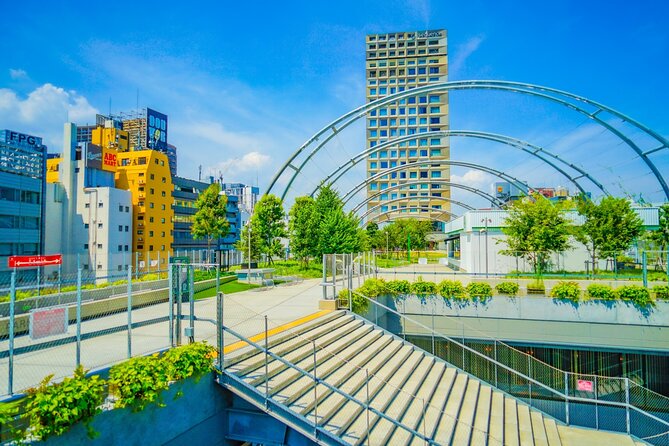
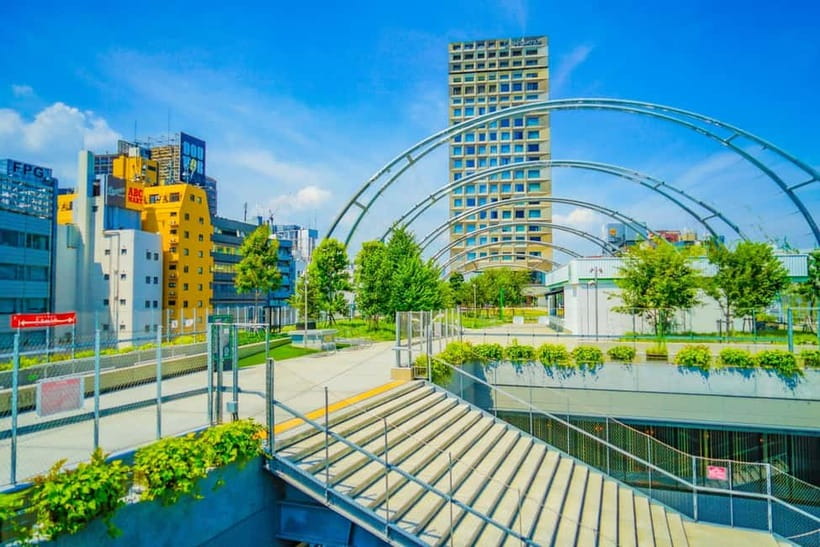
Miyashita Park receives the longest scheduled stop, about 20 minutes. This multi-level urban park offers a change of pace after the station and crossing.
The park represents a newer side of Shibuya, with public space built into a dense commercial district. You are not simply walking from one shop street to another. The route shows how Tokyo has created room to pause, meet, and look around within a crowded central neighborhood.
Twenty minutes gives your group time to listen, ask questions, and take in the setting without feeling rushed. It is also a welcome break in a walking tour, though you should still expect to remain on your feet unless the guide finds a suitable place to sit. One participant specifically noted that sitting while listening would have been pleasant, but difficult on a walking route.
This stop helps balance the older lane at Nonbei Yokocho and the historical subject of Okamoto’s mural. You see a city that keeps rebuilding itself, with older fragments and new public spaces existing close together.
Center Gai puts you in the middle of young Shibuya
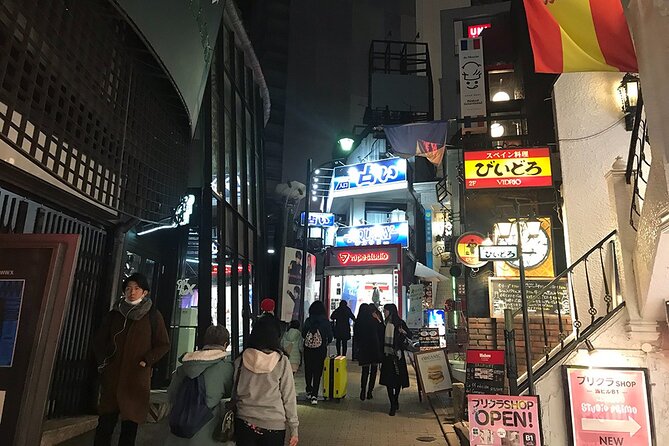
Center Gai brings the tour back into the district’s youthful social center. This is where the walk feels most like the Shibuya many people imagine: packed streets, shops, entertainment, and a constant flow of people.
The guided portion lasts around 10 minutes. That is enough to explain the area and give you a sense of how it fits into Shibuya’s identity. It is not a shopping tour, and no purchases are included.
The short stop is useful because it prevents the route from becoming too academic. You move from public art and urban planning into the everyday commercial life that makes Shibuya feel so immediate. If you want to shop afterward, listen closely to the guide’s suggestions. Several guides, including Grey and Loc, have offered practical recommendations for food and shopping, with Grey also giving vegan suggestions.
Maruyama-cho shows a quieter side of nightlife
The final neighborhood stop is Maruyama-cho, a historic area now linked with modern nightlife. Its streets offer another shift in mood, from Center Gai’s youthful crowds to a more intimate district of restaurants, bars, and evening activity.
You spend about 10 minutes here. Again, this is an introduction rather than a full nightlife outing. The tour does not include drinks, dinner, or entry to a venue, so plan a separate evening if you want to explore the area in detail.
I find this a smart ending before Hachiko. Maruyama-cho shows how a neighborhood can keep traces of its earlier form while serving a newer purpose. It also gives you an immediate idea of where to continue your night after the guide says goodbye.
Guides have often supplied food and drink recommendations, which makes this stop more useful than simply pointing out a street. Ask specific questions about what you want. The available comments show guides responding well to questions about vegan food, shopping, and places suitable for different age groups.
Hachiko closes the route with a familiar symbol
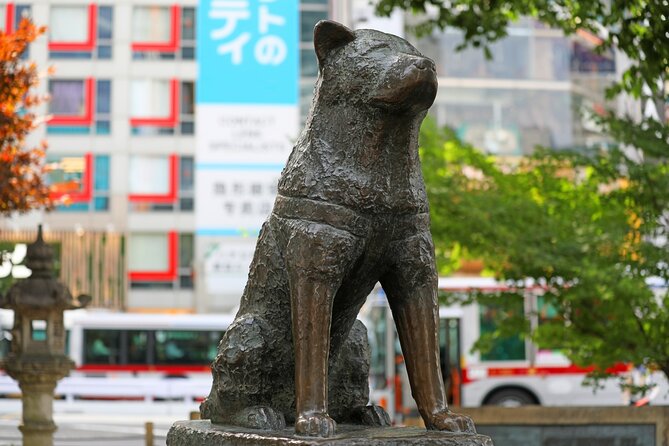
The tour ends at the Hachiko Memorial Statue, near the heart of Shibuya. Hachiko is known as a symbol of loyalty, and the statue is one of the district’s most recognizable meeting points.
Ending here works well for practical reasons. You finish near a major landmark after passing through several different versions of Shibuya. You can take a final photograph, meet someone, continue shopping, or use the statue and crossing as reference points for your next walk.
The tour does not return you to Mark City, so keep that in mind when planning your day. The end point is Hachiko, not the starting point, but it is still in central Shibuya and close to the area you have just explored.
What $22 buys you
At $22 per person, this is a low-cost way to add structure to a district that can otherwise feel confusing. You are paying for a local guide fee and a focused two-hour route. There are no listed meals, attraction tickets, shopping discounts, or transport included.
That price is good value if you want interpretation and orientation rather than a full-day sightseeing package. A guide can save you time by connecting the stops and answering questions as you go. The practical tips about restaurants, drinks, vegan food, and shopping may also help you make better choices later.
The value drops if you already know Shibuya well or prefer to wander alone. Most stops are short, and the tour cannot give you a long look at every lane. It is best viewed as an introduction with useful local advice, not an exhaustive examination of the district.
Free cancellation is available up to 24 hours in advance for a full refund, and you can reserve now and pay later. Starting times vary, so check availability for your chosen date.
Who should book this walking tour?
I would choose it for a first visit to Tokyo, especially if Shibuya is on your must-see list but you want more than the crossing. It is also a good match for solo visitors who would like help with photos and a friendly person to answer questions.
Families can benefit too. Daichi has adjusted the walking speed to suit different needs, and Rio has kept teenagers interested by adapting the content. The experience is offered in English, and the repeated praise for clear communication makes it a practical choice for people who want cultural background without a formal, academic tone.
You should also consider it if you have only one day in Tokyo. One participant used the walk during a packed day of tours and still found it flexible and worthwhile. The two-hour length leaves room for lunch, shopping, or another part of the city.
Skip it if you are looking for a food tour, a nightlife crawl, or a long photography session. The route offers food and shopping advice, but the listed inclusion is only the local guide fee.
Practical tips before you go
Wear comfortable shoes. The route includes several central streets and seven stops, with much of the explanation delivered outdoors.
Arrive early at Mark City’s third floor. This is the most important practical tip. Do not assume that finding Shibuya Station means you have found SABON or the correct part of Mark City.
Bring questions. The guides are most useful when you ask about what you want to do next, from vegan meals to shopping areas and evening plans. The tour can then function as a personal introduction rather than a one-way speech.
If you want photographs, tell the guide. Solo participants have received help with pictures at the crossing, and families have had the pace adjusted to suit their group.
Should you book it?
Book this tour if you want a brisk, friendly introduction to Shibuya that combines the famous crossing with older lanes, public art, a modern park, youth culture, and nightlife streets. At $22, it offers strong value for a first day and can save you from treating the district as one giant photo stop.
I would not book it expecting a meal, a sit-down experience, or detailed time at every location. You will walk, listen, and keep moving. For most first-time visitors, that is the point: in two hours, you get a workable map of Shibuya and several reasons to return on your own.
FAQ
How long does the Shibuya walking tour last?
The tour lasts two hours.
What language is the tour offered in?
The live guided tour is offered in English.
Where does the tour begin?
It begins at SABON Shibuya Mark City, inside Mark City on the third floor.
Where does the tour finish?
The tour ends at the Hachiko Memorial Statue.
Is the Shibuya Crossing included?
Yes. Shibuya Crossing is a guided visit and photo stop of about 10 minutes.
Are food and drinks included?
No. The listed inclusion is the local guide fee. Guides may provide food, drink, vegan dining, and shopping suggestions, but meals and drinks are not listed as included.
How much does the tour cost?
The price is $22 per person.
Can I cancel for a full refund?
Yes. You can cancel up to 24 hours in advance for a full refund. You can also reserve now and pay later.
Just added around Tokyo
- Private Arrival Transfer : Narita International Airport to Central Tokyo City★ 4.5 · 12 reviews
- Narita Airport(NRT): Private Transfer to Tokyo/Yokohama 1-9pax★ 5.0 · 47 reviews
- Private Transfer from Narita Airport to Yokohama Port and City★ 4.5 · 17 reviews
- [Narita Airport Terminals 1, 2] 40-60km Sawara Itako Historic Bike Tour★ 5.0 · 13 reviews
- 3 Day Japan Highlights Tour: Tokyo, Mt.Fuji, Nara, Kyoto, Osaka★ 5.0 · 22 reviews
- The 10 Tastings of Tokyo With Locals: Private Street Food Tour★ 5.0 · 48 reviews
- Small Town in the Big City: Tasting Tokyo’s Kichijoji★ 5.0 · 195 reviews
- Small Town in the Big City: Tasting Tokyo’s Kichijoji★ 5.0 · 16 reviews
Tokyo Tours, compared.

Mt Fuji and Hakone 1-Day Bus Tour Return by Bullet Train
Read our review →

teamLab Planets TOKYO Digital Art Museum Entry Ticket
Read our review →
Mt Fuji & Hakone Cruise, Drum Show Bullet Train 1 Day from Tokyo
Read our review →
Sumo Show Experience with Chicken Hot Pot and a Photo
Read our review →
Shinjuku Food Tour (13 Dishes at 4 Local Eateries)
Read our review →
Tokyo Mt Fuji 5th St & Hakone Cruise Bus Tour w/Bullet Train
Read our review →
Flagship 2-Hours Official Street Go-Kart Tour – Tokyo Bay Shop
Read our review →Browse the lists this tour appears in