
Reviewed · TOKYO TOURS
Tokyo: Shibuya Highlights Walking Tour & Secret View Spot
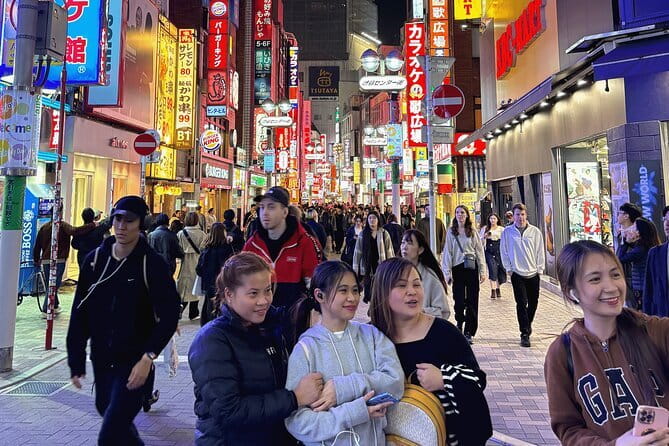
Shibuya Crossing is the headline, but the best part of this 90-minute walking tour is how quickly it moves you beyond the famous intersection. You start at Hachiko, cross the giant scramble, then follow a local guide through food alleys, shopping streets, a rooftop-style city view, and Miyashita Park.
I like two things right away: the tour gives you a practical feel for how Shibuya fits together, and guides such as Mao, Sakura, Ayaka, Noa, and Sota add useful advice on ramen, monjayaki, shopping, train travel, and Japanese customs. The main drawback is time. Ninety minutes covers a lot, but stops are brief and this is not a slow, in-depth history walk.
- Hachiko sets the scene: Begin beside one of Tokyo’s best-known meeting points and learn how Shibuya grew around it.
- Shibuya Crossing from street level and above: Cross the scramble and get tips on viewpoints that can save you from waiting in a long line.
- Nonbei Yokocho adds local character: See a compact alley of small eateries and drinking spots beside the giant station district.
- Miyashita Park offers a breather: Spend about 20 minutes in this urban retreat popular with younger Tokyo residents.
- Local advice is part of the value: Guides often help with restaurants, menus, shopping, photos, customs, and train navigation.
- The meeting point takes care: Look for the Local Guide Stars sign at SHIBU HACHI BOX, near the Hachiko Gate and Metro Exit A8.
Shibuya Crossing Is Only the Beginning
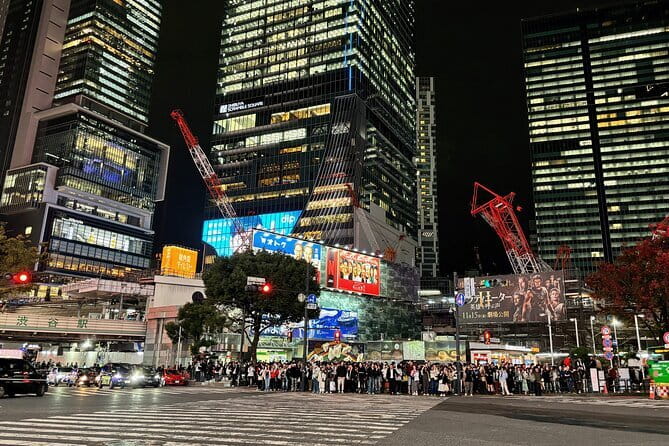
Shibuya is often reduced to one famous image: hundreds of people crossing beneath huge signs and video screens. That scene is worth seeing, but it tells you only a small part of the district’s story.
This tour uses the crossing as an easy starting point, then shows you the streets around it. You get a taste of Shibuya’s fashion culture, nightlife, food lanes, public spaces, station architecture, and constant redevelopment.
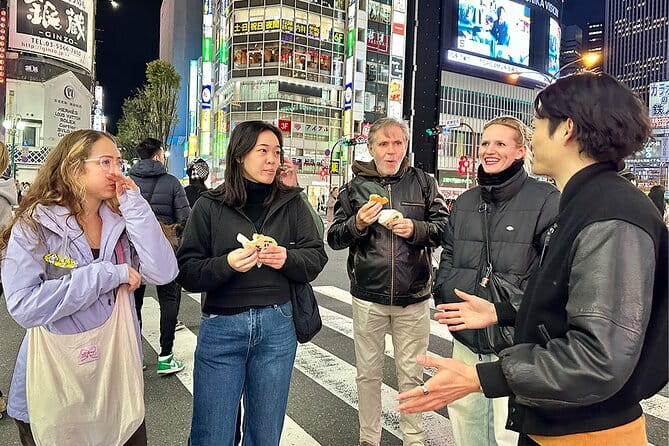
I would book this early in a Tokyo visit. You get your bearings quickly, then have a guide who can point you toward places to eat, shop, and return to later. Several guides also help with photos, which matters when you are visiting as a couple or family and want everyone in the picture.
The tour costs $23 per person. That is a sensible price for a local introduction, especially if you are new to Tokyo and would otherwise spend part of your first afternoon simply finding the right exits and streets. It is less useful if you already know Shibuya well or want a formal architectural tour.
Meeting Hachiko Near the Station
The starting point is SHIBU HACHI BOX at 2-1-1 Dogenzaka, Shibuya-ku, near the JR Shibuya Station Hachiko Gate and Tokyo Metro Exit A8. A guide waits with a Local Guide Stars sign.
This is a practical location, but Shibuya Station can be confusing. Give yourself extra time to find the correct exit. One person specifically wished the guide were easier to spot, so do not rely on seeing a familiar face in a crowd. Look for the sign and stay close to the stated meeting point.
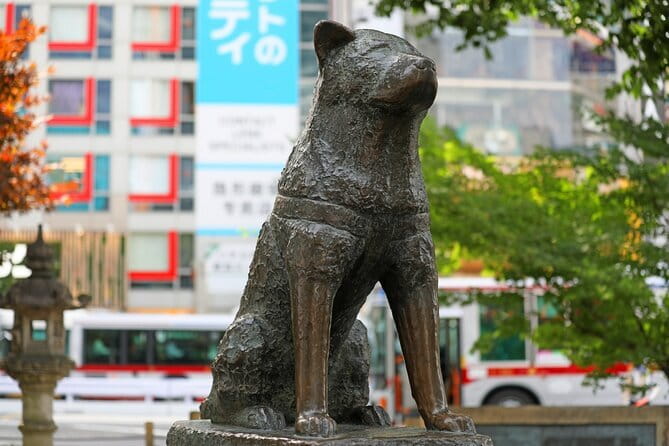
The first stop is the Hachiko statue. Your guide uses this famous meeting place to explain some of Shibuya’s past and why Hachiko remains such a strong symbol in modern Tokyo. It is also a useful orientation point: the crossing, department stores, Center-Gai, and several station entrances all spread out from here.
Do not expect a long lecture. This is a brisk introduction, with the guide setting up the rest of the walk.
More walking tours in Tokyo:
- Tokyo Tsukiji Fish Market Food and Culture Walking Tour
★ 5.0 · 3,184 reviews - Tokyo: Imperial Palace and Shogun Historical Walking Tour
★ 5.0 · 2,251 reviews - Tokyo: Shinjuku Local Bar and Izakaya Guided Walking Tour
★ 4.9 · 1,794 reviews
Crossing the Famous Scramble
You then spend about 10 minutes at Shibuya Crossing. The guide takes you through the experience rather than merely pointing at it from a pavement.
The crossing is most impressive when you see the full flow of people from a slightly raised position. The tour includes Shibuya Scramble Square for about 10 minutes, and the guide can show you ways to see the crossing from above without waiting in a long line. The exact viewpoint may depend on access and the guide’s route, so treat this as local orientation rather than a guaranteed observatory ticket.
That distinction matters. This experience does not include an admission ticket to a paid observation deck, and transportation is not included. You get the guide’s route and advice, not a dedicated skyline attraction.
Still, the view can be very useful. You see the crossing as part of a much larger city, with rail lines, towers, signs, and streets packed tightly around the station. Guides such as Ayaka and Noa have been especially helpful with photo spots, while Yuki has been praised for taking pictures and helping people frame the scene.
Nonbei Yokocho and the Smaller Side of Shibuya
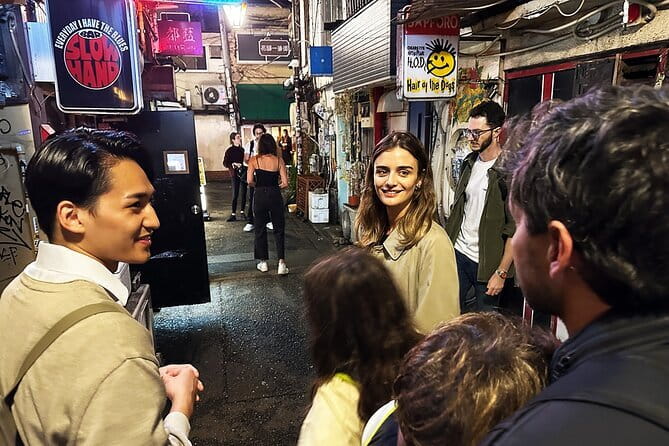
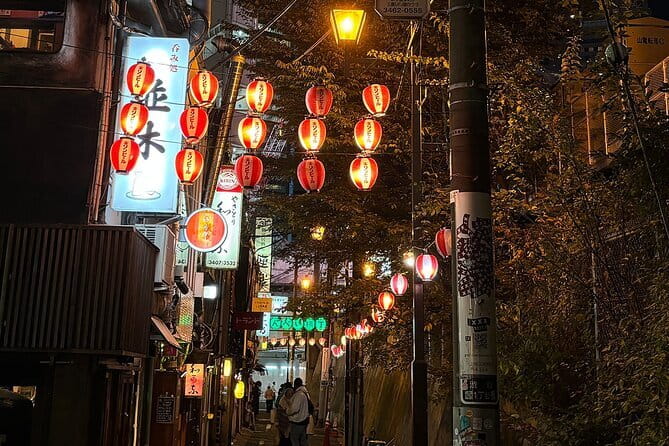
After the big screens and wide roads, the route turns toward Nonbei Yokocho, also written as のんべい横丁. You spend about 10 minutes here.
This alley is a sharp contrast to the modern station district. Small eateries and drinking spots occupy a much tighter setting, giving you a look at a more intimate side of Shibuya. It is not a full meal stop, and food and drinks are not included, but the guide can explain the kind of places you are seeing.
I like this stop because it helps prevent Shibuya from feeling like one giant shopping mall. You get a quick look at the narrow lanes where local eating and drinking take place, then can ask your guide for recommendations if you want to return later.
Keep in mind that the tour moves through the area rather than sitting down for dinner. If you want to eat here, plan to do so after the walk and ask your guide which options suit your budget and taste.
Miyashita Park Gives You Twenty Minutes to Pause
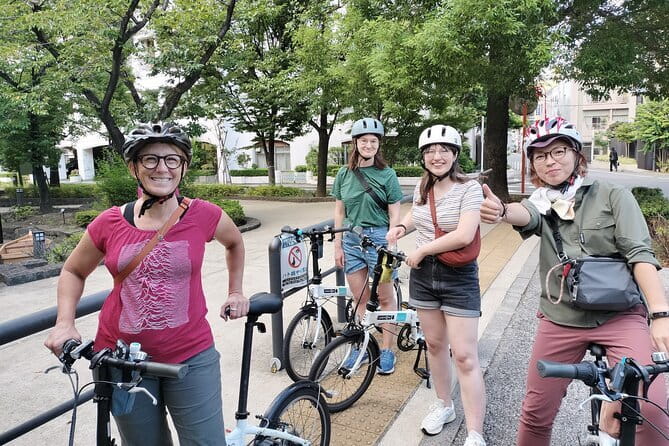
The walk continues to Miyashita Park, with about 20 minutes here. This public space is an urban oasis in the middle of Shibuya and is popular with younger people.
The value of this stop is its change of pace. Shibuya can feel loud, crowded, and visually demanding. Miyashita Park gives you a more open place to pause, look around, and talk with your guide without the same pressure as the main crossing.
Guides also use stops like this to explain how Tokyo combines commercial development with public gathering spaces. You can ask about local habits, fashion, food, and how people use the district. Sota, who grew up near Shibuya, has been noted for adding personal context about the area and Japanese culture.
The park is not a traditional garden or a quiet historic site. If you are looking for old Tokyo buildings, this will not be the tour’s strongest stop. Its appeal is modern city life and a chance to see how young Tokyo residents spend time.
A few more Tokyo half-days to weigh up
- Mt Fuji and Hakone 1-Day Bus Tour Return by Bullet Train
★ 5.0 · 26,383 reviews - 1-Day Tokyo Bus Tour
★ 5.0 · 14,250 reviews - Tokyo: TOKYO SKYTREE® Admission ticket
★ 4.5 · 11,192 reviews - Tokyo: teamLab Planets TOKYO Digital Art Museum Entry Ticket
★ 4.6 · 9,779 reviews
Center-Gai Shows Shibuya at Full Volume
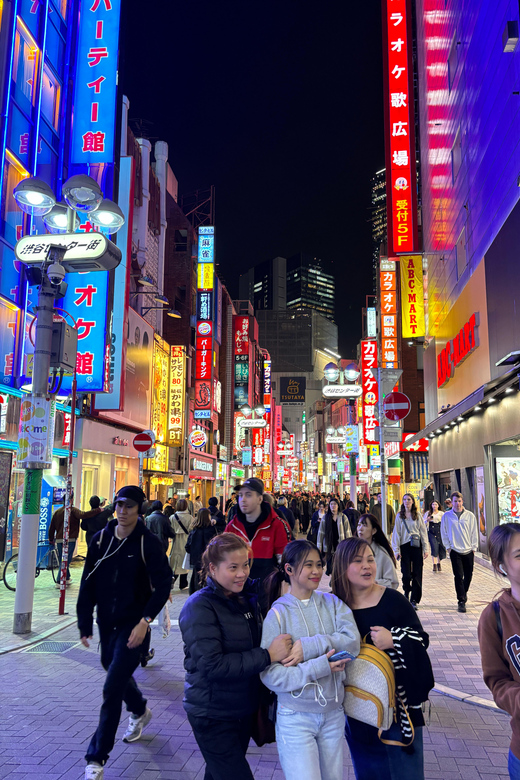
The route then spends roughly 20 minutes around Shibuya Center-Gai. This is where the district’s trend-driven identity comes into focus.
Expect signs, shops, restaurants, bars, and a steady stream of people. Guides explain the local culture rather than simply leading you down the street. You might hear about fashion, food choices, nightlife, shopping habits, and the customs that help you move through Tokyo politely.
This is also the part of the route most likely to feel hectic. The guide needs to keep the group together while stopping for short explanations. Wear comfortable shoes, stay alert at crossings, and do not assume the walk will feel relaxed in the same way as a neighborhood stroll.
The benefit is that you do not have to work out the district’s basic layout alone. Your guide can point out shops and eateries you might pass without noticing, then give practical suggestions for returning later. Mao, Noa, and Sakura have been praised for answering questions and offering restaurant ideas, while several guides have helped people understand where to eat and what to order.
Mark City Brings the Route Back Toward the Station
The final major stop is Shibuya Mark City, where the tour spends about 20 minutes before returning to SHIBU HACHI BOX.
Mark City helps complete the orientation loop. By this point, you have seen the station from several sides, walked through the main commercial core, visited an older-style food alley, and spent time in a newer public space. That makes it easier to understand Shibuya as a district of contrasting pieces rather than a single attraction.
The return to the starting point is convenient if you plan to continue by train. It also gives you a chance to ask last questions. Guides have helped with train navigation, restaurant choices, and plans for the rest of a Tokyo visit, so use those final minutes well.
The stops are listed as 10 or 20 minutes each, but the route remains a continuous walk. The schedule is a guide, not a promise that every stop will receive an exact block of uninterrupted time.
What the Guides Add to the Walk

The guide is the reason to choose this tour over a self-guided route. Shibuya is easy to photograph but harder to read. A local can explain why a place matters, show you a less obvious angle, and answer the small questions that rarely appear in a guidebook.
The strongest pattern in the guide feedback is personal help. Mao has helped with ramen, shopping, train routes, customs, and local eating. Ayaka has taken photos and adjusted the pace to suit the group. Noa has paired local food suggestions with background on history and culture. Sota’s local connection and fluent English have added useful context. Yuki has been praised for staying after the formal route to help people reach their next destination.
Guide quality can vary because different people lead the walk. That is normal for a local guide service, but the consistent strengths are friendliness, clear English from the English-speaking guides, and a willingness to answer questions. English and Japanese are available.
I would arrive with a short list of things you want to know. Ask about a meal, a shopping area, Japanese etiquette, a train route, or a photo spot. You will get more from the tour than if you simply follow along silently.
Is Ninety Minutes Enough for Shibuya?
Ninety minutes is enough for an introduction, not a full study of the district.
The pace is fairly active because the route covers Shibuya Crossing, Scramble Square, Nonbei Yokocho, Miyashita Park, Center-Gai, and Mark City. You have time to understand each area, but not time for long visits, extensive shopping, or a sit-down meal.
That short length is a strength for some people. Families, first-time visitors, and anyone arriving tired after a long flight can get a useful overview without committing half a day. One guide received praise for keeping the pace just right, while another was appreciated for fitting in many locations without making the tour feel rushed.
It is less suitable if you want detailed history at every stop or time to browse shops. Think of it as a smart first look that helps you decide where to spend your own time afterward.
Weather, Footwear, and Access
The tour runs rain or shine. Bring an umbrella or raincoat if rain is expected. Wet pavement, crowded sidewalks, and repeated street crossings can make the walk more tiring, so practical shoes matter.
Tokyo summers can be hot, and the route is outdoors for much of its length. One guide handled the heat by moving in and out of air-conditioned places, but you should still dress for a walking tour and carry water.
The activity is listed as wheelchair accessible. Because the route passes through a major station district, public park, shopping areas, and busy streets, it is wise to confirm current route details if you have specific mobility needs. The provided information supports wheelchair access, but it does not promise that every stop will be equally easy during peak crowds.
There is no hotel pickup, hotel drop-off, or included transportation. You meet near Shibuya Station and walk from there. Food and drinks are also extra, which is useful to know before you arrive hungry.
Who Gets the Most Value for $23
At $23, this is good value if you are new to Shibuya and want a local introduction without spending several hours on a formal tour. The guide’s practical advice can easily save you time later, especially with station exits, restaurants, and photo locations.
I would particularly recommend it for:
- First-time Tokyo visitors who want to understand Shibuya quickly.
- Families who want a structured route through a crowded district.
- Solo visitors who would like help with photos and local recommendations.
- People arriving early in their Tokyo stay who want ideas for later meals and outings.
- Anyone interested in modern Japanese culture, fashion, food, and city life.
I would hesitate if your priority is old temples, quiet streets, or a long meal. Shibuya is the focus, and the tour gives you contemporary Tokyo rather than a broad survey of Japan.
The flexible booking terms help if your plans are still shifting. You can cancel up to 24 hours before the activity for a full refund, and you can reserve now and pay later.
Should You Book the Shibuya Highlights Walking Tour?
Book it if you want a fast, friendly orientation to Shibuya with a real person to answer questions. The best parts are the contrast between the giant crossing, the compact Nonbei Yokocho alley, Miyashita Park, and the neon-heavy streets around Center-Gai.
Do it near the start of your Tokyo stay, preferably with a few food and shopping questions ready. You will get the most value from the local tips, above-crossing view advice, photos, and help finding your way around.
Skip it if you already know Shibuya well or want an extended sightseeing experience with entry to a paid observation deck. For $23 and 90 minutes, though, it is a practical way to get oriented before exploring the district on your own.
FAQ
How long is the Shibuya Highlights Walking Tour?
The tour lasts 90 minutes.
What is the price of the tour?
The price is $23 per person.
Where does the tour meet?
It meets in front of SHIBU HACHI BOX at 2-1-1 Dogenzaka, Shibuya-ku, Tokyo, near the JR Shibuya Station Hachiko Gate and Tokyo Metro Exit A8.
How do I find the guide?
Look for a guide holding a Local Guide Stars sign.
Which languages are available?
The tour is offered in English and Japanese.
Is food included?
No. Food and drinks are not included in the tour price.
Is transportation included?
No. Transportation, hotel pickup, and hotel drop-off are not included.
Does the tour include Shibuya Crossing?
Yes. The route includes a visit to Shibuya Crossing for about 10 minutes.
Will I see Shibuya from above?
The tour includes Shibuya Scramble Square and guidance on viewpoints above the crossing. The information provided does not include a separate paid observation deck ticket.
Does the tour run in bad weather?
Yes. It runs rain or shine, so bring an umbrella or raincoat if rain is expected.
Is the tour wheelchair accessible?
Yes, the activity is listed as wheelchair accessible.
Can I cancel for a refund?
Yes. You can cancel up to 24 hours in advance for a full refund.
Just added around Tokyo
- Private Arrival Transfer : Narita International Airport to Central Tokyo City★ 4.5 · 12 reviews
- Narita Airport(NRT): Private Transfer to Tokyo/Yokohama 1-9pax★ 5.0 · 47 reviews
- Private Transfer from Narita Airport to Yokohama Port and City★ 4.5 · 17 reviews
- [Narita Airport Terminals 1, 2] 40-60km Sawara Itako Historic Bike Tour★ 5.0 · 13 reviews
- 3 Day Japan Highlights Tour: Tokyo, Mt.Fuji, Nara, Kyoto, Osaka★ 5.0 · 22 reviews
- Small Town in the Big City: Tasting Tokyo’s Kichijoji★ 5.0 · 195 reviews
- Small Town in the Big City: Tasting Tokyo’s Kichijoji★ 5.0 · 16 reviews
- The 10 Tastings of Tokyo With Locals: Private Street Food Tour★ 5.0 · 48 reviews
Tokyo Tours, compared.

Mt Fuji and Hakone 1-Day Bus Tour Return by Bullet Train
Read our review →

teamLab Planets TOKYO Digital Art Museum Entry Ticket
Read our review →
Mt Fuji & Hakone Cruise, Drum Show Bullet Train 1 Day from Tokyo
Read our review →
Sumo Show Experience with Chicken Hot Pot and a Photo
Read our review →
Shinjuku Food Tour (13 Dishes at 4 Local Eateries)
Read our review →
Tokyo Mt Fuji 5th St & Hakone Cruise Bus Tour w/Bullet Train
Read our review →
Flagship 2-Hours Official Street Go-Kart Tour – Tokyo Bay Shop
Read our review →Browse the lists this tour appears in