
Reviewed · TOKYO TOURS
Tokyo West-Side Cycling & Food Tour
Tokyo’s west side is where the city lets its hair down. On this small-group ride, you pedal through Koenji, Nakano, and Asagaya, using narrow back streets and riverside paths instead of chasing famous sights. Andy, a long-time local with an easy manner and strong knowledge of daily life in Japan, guides the outing.
I like two things here: the local food stops make unfamiliar dishes easier to try, and the ride gives you a useful look at housing, schools, religion, work, and neighborhood life. The main catch is simple: you need to be comfortable riding 12 to 15 kilometers through tight, sometimes crowded streets.
Key points at a glance
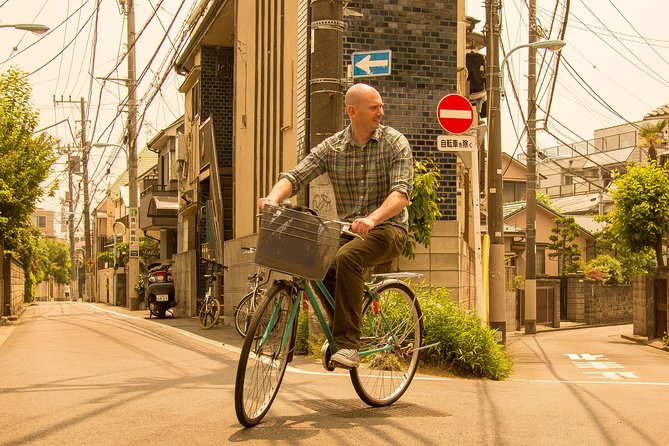
- Ride a real Japanese mamachari: These salvaged city bicycles can feel creaky, but they are carefully maintained and fitted with front baskets.
- See three west Tokyo neighborhoods: Koenji, Nakano, and Asagaya offer a quieter, more residential side of the city.
- Follow the Zenpukuji River: Riverside paths provide a calmer stretch between the twisting urban lanes.
- Eat as you go: The price includes popular local snacks, drinks, and a Japanese-style lunch at a typical neighborhood eatery.
- Learn practical Tokyo culture: Andy explains bicycle parking, local customs, housing, schooling, religion, and how people live and work.
- Expect a real ride: The route is generally flat, but you still need urban cycling skills and should be taller than 140 centimeters.
A quieter introduction to Tokyo by bicycle
Many first visits to Tokyo focus on Shibuya crossings, Shinjuku towers, temples, and department stores. Those places have their place, but they do not show you how most people spend an ordinary morning. This tour shifts the focus to residential west Tokyo, where bicycles, small shops, local eateries, river paths, and compact homes shape the day.
You meet at Koenji Station in Suginami City. From there, the tour moves quickly into the neighborhood. The point is not to collect major monuments. It is to notice the small details that are easy to miss from a train window or a sightseeing bus.
You might pause to look at a bicycle parking system, watch the flow of local residents, or hear why certain streets feel so different from one another. These short explanations give the ride purpose. You are not simply pedaling from one food stop to the next.
The group is limited to eight people. That matters on streets where a large pack of cyclists would be awkward and unsafe. A small group also gives you room to ask Andy questions about Japanese life, food, and the parts of Tokyo you pass through.
More Food Tours in Tokyo
- Tokyo: Shinjuku Food Tour (13 Dishes at 4 Local Eateries)
★ 5.0 · 6,603 reviews - Tokyo: Shinjuku Food Tour (15 Dishes and 4 Eateries)
★ 4.9 · 2,033 reviews - Best of Shinjuku: Izakaya Food Tour (4 Stops, 14+ Tastings)
★ 5.0 · 1,863 reviews
Getting started on a salvaged mamachari
The bikes are salvaged Japanese mamachari bicycles. A mamachari is a practical city bike, built for everyday errands rather than speed. These models have front baskets that can hold a standard backpack, which is useful since you do not want a large bag on your back for several hours.
The bikes are described as sometimes creaky or squeaky, but maintained in excellent condition. That combination tells you what kind of experience this is. You are not signing up for a sleek road-bike workout. You are riding a sturdy neighborhood bicycle that fits the setting.
The route is mostly flat, and the pace includes food and walking breaks. Still, do not confuse flat with effortless. You must steer through narrow lanes, uneven surfaces, and potentially crowded streets. If you can ride confidently in an urban setting, the physical demands should be manageable. If you have not ridden a bicycle in years, this may not be the best place to restart.
Helmets are available on request. Ask for one when booking or before setting off. The stated minimum height is 140 centimeters, or about 4 feet 7 inches, so families should check this before reserving.
Koenji, Nakano, and Asagaya beyond the tourist route
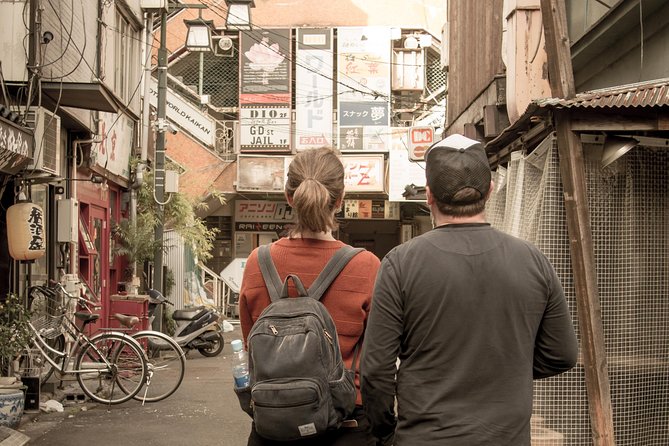
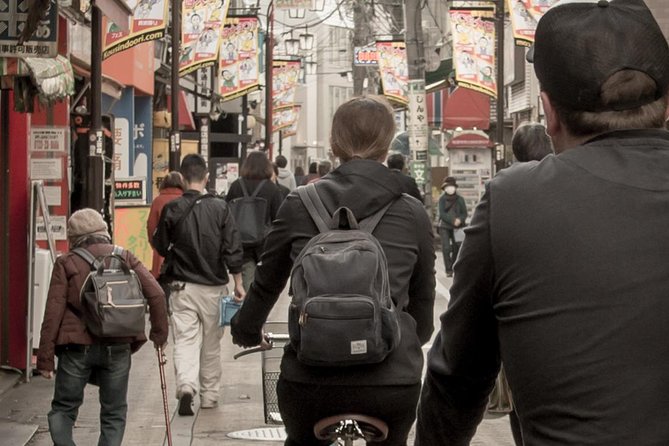
The strongest part of the outing is the change in scale. Tokyo can feel huge when you move between railway hubs, but these neighborhoods reveal a more human-sized city. Streets twist rather than run in grand lines. Homes, small businesses, local facilities, and quiet corners appear one after another.
Koenji is the starting point and gives the ride a youthful, informal feel. From there, you move toward areas of Nakano and Asagaya that many first-time visitors never reach. The neighborhoods are not presented as a set of famous attractions. Their value comes from seeing how people use them.
Andy’s commentary adds useful context. He has been based in Japan for many years, and his explanations cover more than dates and landmarks. He talks about everyday customs, local life, work, schooling, housing, and religion. That makes the ride especially helpful during your first days in Tokyo, when you are still trying to understand how the city fits together.
The tour also gives you a chance to ask questions in real time. You can ask about a food item before trying it, clarify a local habit, or get ideas for the rest of your stay. Andy has also provided personalized follow-up suggestions to some customers, which can make the experience useful beyond the three-and-a-half-hour route.
The Zenpukuji River provides the calmest stretch
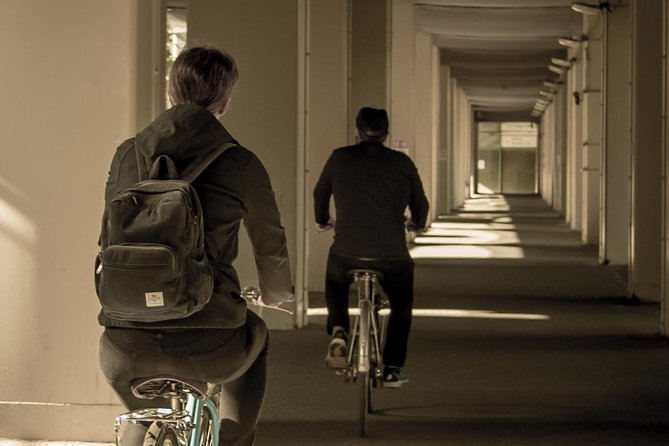
The ride eventually reaches the Zenpukuji River. Riverside paths offer a welcome change after the close turns of the back streets. You can coast for a while, take in the waterway, and enjoy a less pressured part of the route.
This section is a good reminder that Tokyo is not only train stations and dense commercial streets. Small waterways and paths cut through the city and give local residents places to walk and cycle. The river stop also breaks up the ride physically, giving you a chance to slow down before the next neighborhood section.
Do not expect a dramatic natural attraction. The appeal is modest and local. If you want famous views or grand architecture, this route may feel too ordinary. If you want to see how a large city creates breathing room in its residential districts, the river path is worthwhile.
Same base, a completely different sort of day:
- Mt Fuji and Hakone 1-Day Bus Tour Return by Bullet Train
★ 5.0 · 26,383 reviews - 1-Day Tokyo Bus Tour
★ 5.0 · 14,250 reviews - Tokyo: TOKYO SKYTREE® Admission ticket
★ 4.5 · 11,192 reviews - Tokyo: teamLab Planets TOKYO Digital Art Museum Entry Ticket
★ 4.6 · 9,779 reviews
Snacks first, then a local-style lunch
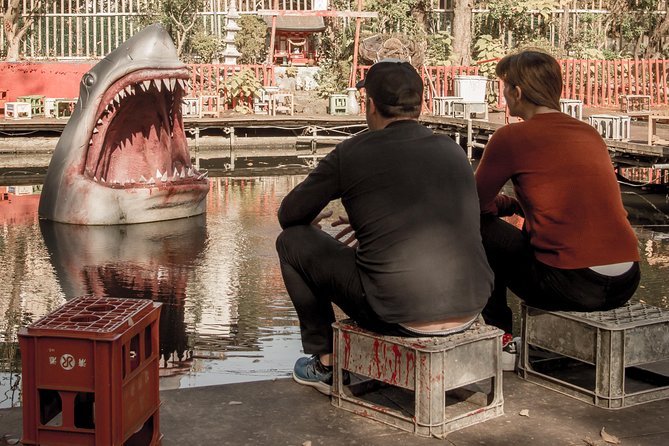
Food is not an extra added on at the end. It is part of the route. The tour includes a tailored selection of popular local snacks, drinks, and a Japanese-style lunch at a typical neighborhood eatery.
That setup is useful for you because ordering food in Japan can be intimidating, especially when menus are unfamiliar or ingredients are unclear. Andy introduces foods along the way and helps put them in context. The food stops are casual rather than polished dining experiences. You may find yourself sharing counter space with hungry office workers, often called salarymen in Japan.
The lunch stop is meant to feel local, not ceremonial. You will not be taken to a fine-dining restaurant, and the tour does not promise a showcase meal. Instead, you get a look at the kind of place people use during an ordinary day.
The included food also improves the value of the $99.49 price. You are paying for a guide, bicycle, food, drinks, and about three and a half hours of access to neighborhoods that are harder to understand on your own. If you would rather choose your own restaurants and spend the time at major sights, the price may seem high. If you want a guided introduction with meals built in, it is a fair package.
Japanese food often includes meat, seafood, and dashi, a stock commonly made with fish-based ingredients. The operator warns that typical local eateries may not be able to handle personal tastes, allergies, or special diets. Ask before booking if your diet is strict. This is not a tour built around vegetarian, vegan, halal, or allergy-specific dining.
The bicycle parking lesson is part of the culture
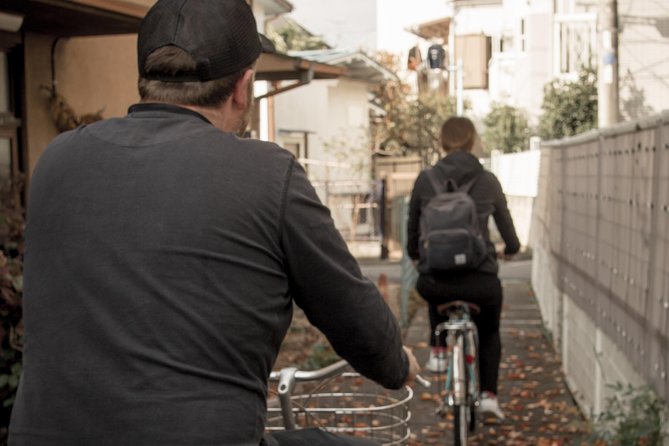
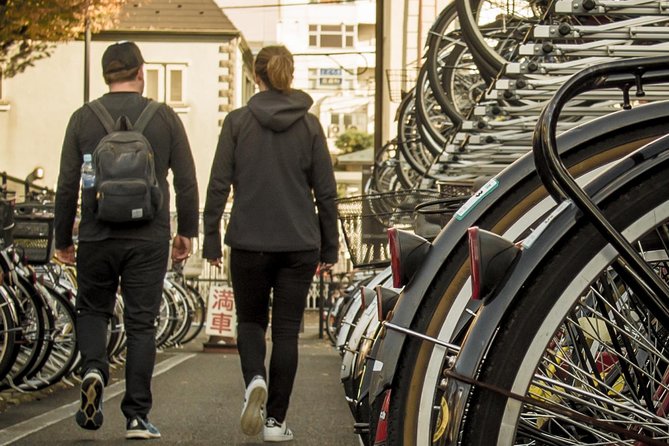
One of the more unusual details is the attention given to Tokyo’s bicycle parking systems. This may sound like a small technical matter, but it tells you a lot about how the city manages limited space and shared public areas.
You get to experience the system rather than just hear about it. That hands-on element fits the tour’s broader purpose. Instead of looking at Japan as a collection of temples and neon signs, you see the rules and routines that make ordinary urban life work.
This is also where the tour becomes more than a pleasant bike ride. Andy uses simple activities to explain larger ideas about public behavior, organization, and neighborhood etiquette. Passing a bicycle parking area may teach you something that a standard sightseeing stop would not.
What Andy brings to the outing
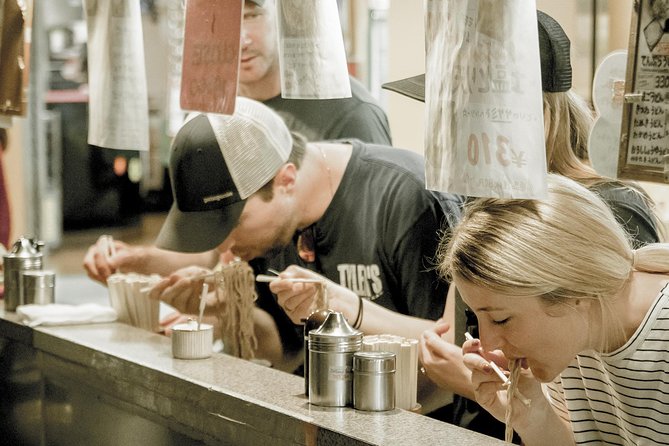
Andy is the named guide associated with the experience. His style, based on the information provided, is friendly, conversational, and generous with local suggestions. He is described as an Australian from Melbourne who has lived in Japan for many years.
That background can be useful. You get an English-speaking guide who understands the questions a visitor is likely to have, while also having long experience with Japanese daily life. The tone is social rather than formal. Expect conversation, questions, and stories instead of a rehearsed lecture.
Several specific strengths are worth noting. Andy gives clear meeting directions, explains what to expect before tricky sections, and helps people feel confident on the bikes. He also pays attention to the group’s pace and schedules rest points along the route.
This makes the outing a good fit for people who like a guide with personality. If you prefer to move silently and take photographs without stopping, a social small-group tour may feel slow. If you enjoy learning through conversation, Andy’s approach is one of the main reasons to consider booking.
Timing, weather, and the practical details
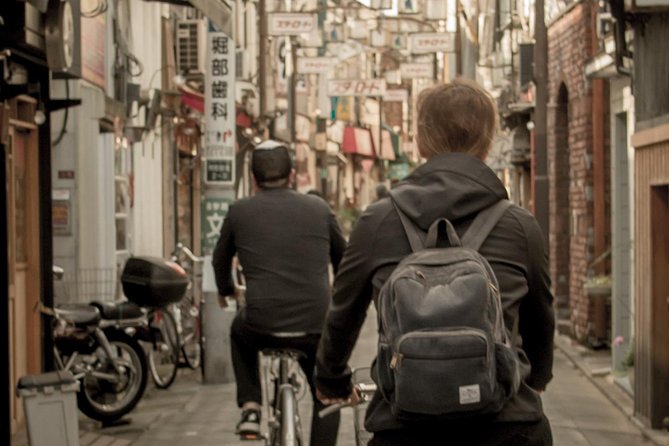
The advertised duration is about three hours and 30 minutes, but the actual outing can run from roughly three and a half to four hours. Group size, weather, eating speed, and cycling pace all affect the finish time. I would avoid scheduling a train reservation or another fixed activity immediately afterward.
The tour runs in all seasons and generally proceeds in light rain. Basic ponchos are provided if needed. At the same time, the weather policy allows the experience to be canceled in poor conditions, with a different date or full refund offered. That means you should keep some flexibility in your Tokyo plans.
Cancellation is free up to 24 hours before the start time. Cancellations or changes made inside that window are not refunded or accepted. The same general options apply if the minimum number of participants is not reached.
The tour begins and ends at Koenji Station, at 4-chome-48-2 Koenjiminami, Suginami City. Since the meeting point is near public transportation, you can reach it by train, but allow time to find the exact spot. You receive confirmation when booking, and the activity ends back where it starts.
Cycling liability insurance is included for the cycling portion. You are still expected to carry comprehensive travel insurance for other unexpected problems. That is a sensible precaution for any active outing.
Who should book the Tokyo West-Side Cycling and Food Tour
I would recommend this tour most strongly if you want to balance Tokyo’s headline sights with a look at ordinary local life. It is a good choice for first-time visitors who want a relaxed orientation, and it also suits repeat visitors who have already seen the major districts.
Families can enjoy it if everyone meets the height requirement and can ride safely in city conditions. An 11-year-old has taken part successfully, but the key question is ability, not age. You should be comfortable making turns, braking, and staying alert around other road users.
This is also a good match for food-curious people who like small samples and casual noodle or neighborhood stops. You do not need to be a food expert. You do need to accept that the menu is based on typical local eateries and may not fit every dietary need.
You should think twice if you want a hard workout, a luxury meal, or a major-sightseeing checklist. The route covers a meaningful distance, but the pace is social. The food is local and casual, not fine dining. The sights are neighborhood details rather than Tokyo Tower or Shibuya Crossing.
Is $99.49 good value?
At $99.49 per person, this is not the cheapest way to spend a morning in Tokyo. You could rent a bicycle for less, eat on your own, and explore without a guide.
The comparison changes when you count what is included. You get a maintained bicycle, a small group capped at eight, an English-speaking guide, snacks, drinks, lunch, walking stops, and a route through three districts. You also gain access to local knowledge that would take time and several wrong turns to build on your own.
I see the price as reasonable for an all-inclusive introduction, especially if this is early in your trip and you can use Andy’s local suggestions afterward. The value is weaker for independent cyclists who already know west Tokyo or prefer to choose every meal and route themselves.
My booking verdict
Book this if you want to see Tokyo as a lived-in city, not just a list of famous stops. The combination of quiet streets, the Zenpukuji River, local snacks, casual lunch, and Andy’s cultural explanations gives the tour a clear purpose.
Skip it if you are not a confident city cyclist, have strict dietary requirements, or need a tightly fixed end time. For everyone else, this is a thoughtful way to spend half a day in Koenji, Nakano, and Asagaya, with enough food and conversation to make the neighborhoods stick in your memory.
FAQ
Where does the Tokyo West-Side Cycling and Food Tour start?
It starts at Koenji Station, at 4-chome-48-2 Koenjiminami, Suginami City, Tokyo 166-0003, Japan.
Where does the tour finish?
The tour ends back at the meeting point near Koenji Station.
How long does the experience last?
The advertised duration is about three hours and 30 minutes. The outing may take roughly three and a half to four hours.
How far do you cycle?
You should expect to ride approximately 12 to 15 kilometers, or 7.5 to 9.5 miles.
How many people can join?
The maximum group size is eight participants.
Are food and drinks included?
Yes. The experience includes local snacks, drinks, and a Japanese-style lunch.
Can people with dietary restrictions join?
Japanese cuisine commonly contains meat, seafood, and dashi. Typical local eateries may have difficulty handling allergies or personal dietary requirements, so strict dietary needs may not be well suited to this tour.
Are helmets available?
Yes. Helmets can be provided for all participants on request.
What height is required to ride the bicycles?
Participants should be over 140 centimeters tall, or about 4 feet 7 inches, to ride the bicycles comfortably.
What happens if the weather is poor?
The tour generally proceeds in light rain, and basic ponchos are provided. If conditions are poor enough to cancel the experience, you are offered another date or a full refund.
More Bike Tours in Tokyo
- Tokyo Guided Small-Group Biking Tour
★ 5.0 · 1,250 reviews - Tokyo Great Cycling Tour
★ 5.0 · 811 reviews - Tokyo Top Highlights 3h Guided E-bike Tour
★ 5.0 · 714 reviews - 3h Tokyo E-Bike Tour: Hidden Gems, and Local Life with guide
★ 5.0 · 670 reviews
Just added around Tokyo
- Private Arrival Transfer : Narita International Airport to Central Tokyo City★ 4.5 · 12 reviews
- Narita Airport(NRT): Private Transfer to Tokyo/Yokohama 1-9pax★ 5.0 · 47 reviews
- Private Transfer from Narita Airport to Yokohama Port and City★ 4.5 · 17 reviews
- [Narita Airport Terminals 1, 2] 40-60km Sawara Itako Historic Bike Tour★ 5.0 · 13 reviews
- 3 Day Japan Highlights Tour: Tokyo, Mt.Fuji, Nara, Kyoto, Osaka★ 5.0 · 22 reviews
- Small Town in the Big City: Tasting Tokyo’s Kichijoji★ 5.0 · 195 reviews
- Small Town in the Big City: Tasting Tokyo’s Kichijoji★ 5.0 · 16 reviews
- The 10 Tastings of Tokyo With Locals: Private Street Food Tour★ 5.0 · 48 reviews
Tokyo Tours, compared.
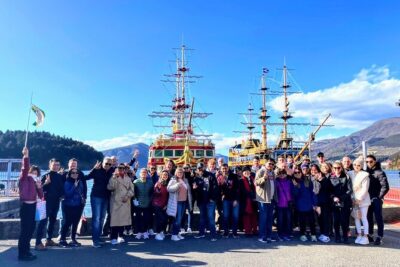
Mt Fuji and Hakone 1-Day Bus Tour Return by Bullet Train
Read our review →
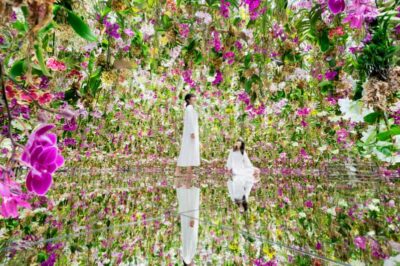
teamLab Planets TOKYO Digital Art Museum Entry Ticket
Read our review →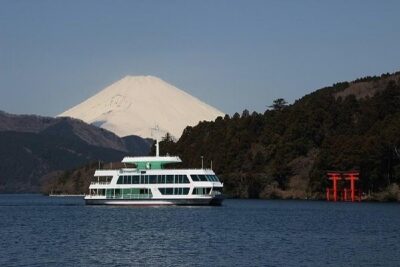
Mt Fuji & Hakone Cruise, Drum Show Bullet Train 1 Day from Tokyo
Read our review →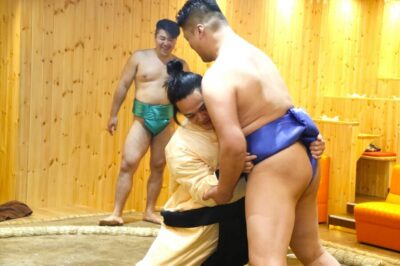
Sumo Show Experience with Chicken Hot Pot and a Photo
Read our review →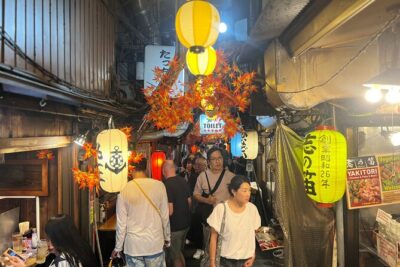
Shinjuku Food Tour (13 Dishes at 4 Local Eateries)
Read our review →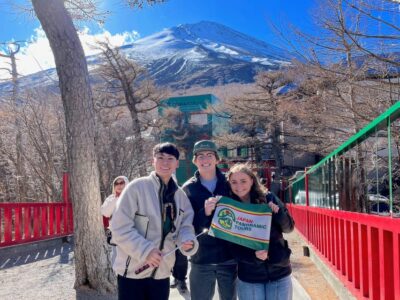
Tokyo Mt Fuji 5th St & Hakone Cruise Bus Tour w/Bullet Train
Read our review →
Flagship 2-Hours Official Street Go-Kart Tour – Tokyo Bay Shop
Read our review →Browse the lists this tour appears in