
Reviewed · KYOTO TOURS
Tour in Kyoto with a Goverment Certified Tour Guide
Kyoto packs centuries of shrines, temples, markets, and old lanes into one large city. This tour tries to cover nearly all of the big names in a single day, from the red gates of Fushimi Inari to the bamboo paths of Arashiyama. Andrea and Roberto are two guides who have earned especially warm praise for explaining sites clearly and adjusting the day to individual needs.
I like the chance to customize the route around your interests and the useful help with practical tasks, such as buying bullet-train tickets. I also like the broad mix: sacred places, food stalls, old neighborhoods, and major landmarks instead of nine temples that begin to blur together.
The concern is serious: several bookings reportedly suffered from late starts, unclear meeting instructions, guide no-shows, cancellations, or large groups replacing a private outing. The advertised schedule is also far too ambitious for one relaxed day.
Key points to know before booking
- Nine major sights are packed into 6 to 8 hours, so expect choices and shortened visits rather than a complete tour of every stop.
- Fushimi Inari, Gion, Nishiki Market, and Arashiyama give you a useful mix of religion, food, old Kyoto, and scenery.
- Andrea and Roberto receive the strongest praise, especially for patient explanations, local advice, and adapting the day to personal needs.
- Nijo Castle and Ginkakuji cost extra, while transportation, food, drinks, and the guide’s travel fees are also outside the $110 price.
- The private-tour promise needs careful checking, since some parties were combined into much larger groups.
- Clear pickup instructions are essential, especially if you expect hotel pickup or are staying outside Kyoto city.
A grand Kyoto route with a very tight clock
At $110 per person, the price can be fair if you receive a capable guide who saves you from sorting out Kyoto’s complicated transit and temple districts alone. You are paying mainly for planning, explanations, and flexibility, not for a vehicle or a bundle of admission tickets.
The route lists nine stops with roughly 7.5 hours of sightseeing time before allowing for travel between them. That already pushes beyond the stated 6 to 8 hour duration. Kyoto traffic, crowded station platforms, queues, steep temple approaches, and time spent eating at Nishiki Market can quickly shrink the number of places you actually see.
I would treat the itinerary as a menu, not a promise that every stop will receive a full hour. A good day might focus on four to six sites. If you insist on all nine, you may spend much of the day moving, taking quick photos, and leaving just as a place begins to make sense.
The advertised experience is private, but the wording also says solo guests or couples may be asked to join another solo guest or couple. Several accounts describe much larger combinations, including groups of more than 30 people. That is a major difference from a private outing, so confirm the group arrangement in writing before you pay.
A few more Kyoto half-days to weigh up
- PERFECT KYOTO 1-Day Bus Tour
★ 5.0 · 13,518 reviews - Kyoto: Fushimi Inari, Kinkakuji, Bamboo Grove 1 Day Bus Tour
★ 4.8 · 4,316 reviews - Kyoto: Tea Ceremony in a Traditional Tea House in Kiyomizu
★ 4.9 · 3,519 reviews
Fushimi Inari begins with Kyoto’s famous red gates
Fushimi Inari-taisha is one of Kyoto’s most recognizable sights. Its long run of orange-red torii gates climbs the wooded slopes dedicated to Inari, the Shinto deity associated with rice. Even a short walk gives you the visual experience that brings many people here.
The listed visit is one hour, which is enough to enter, learn about the shrine, and walk through part of the gates. It is not enough to explore the full mountain route at an easy pace. If this is your priority, ask to spend more time here and remove another stop.
A guide adds value by explaining the role of Inari shrines and the meaning behind the gates, rather than leaving you with a string of attractive photographs. Go early if your schedule allows. The route can become crowded, and narrow sections are less enjoyable when everyone is stopping for pictures.
Kiyomizu-dera brings hillside views and heavy crowds
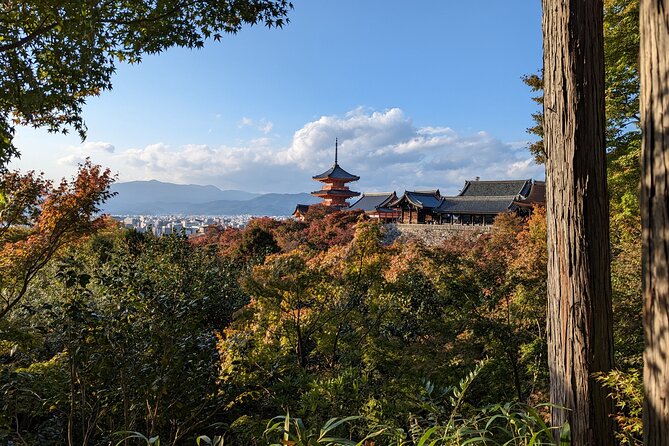
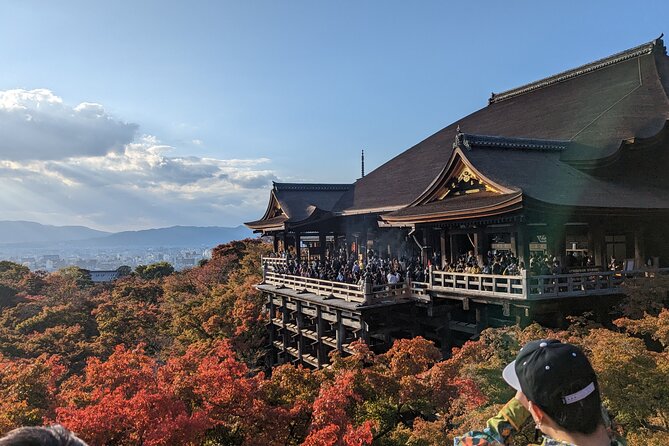
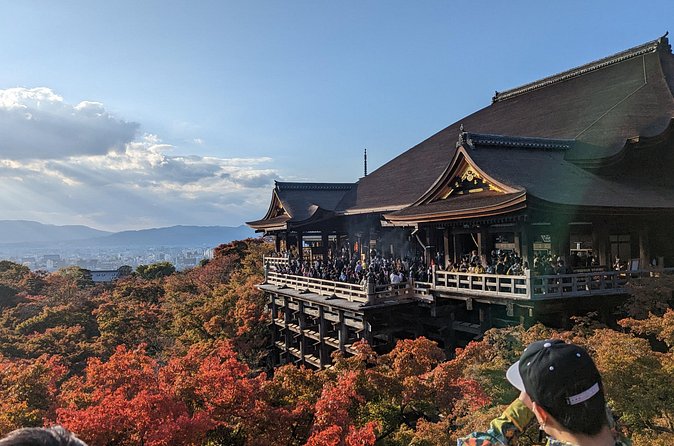
Kiyomizu-dera is a major Buddhist temple in Kyoto’s Higashiyama district, known for its hillside setting and traditional wooden architecture. The approach through the old streets is part of the experience, with shops and food stalls leading toward the temple grounds.
One hour allows for the main view and a quick explanation of the temple’s religious setting. It does not leave much room for lingering in the surrounding lanes. The route can also be tiring because Higashiyama involves slopes, steps, and dense foot traffic.
The guide is most useful here when helping you understand what you are seeing instead of treating the temple as a photo stop. If the day is hot or rainy, the pace matters. One account described the heat as a major challenge, while another said rainy weather forced changes to the route.
Nijo Castle adds samurai-era power to the day
Nijo Castle offers a different kind of Kyoto. Built in the 17th century, it served as a residence and symbol of power for the shogun. Its grand gates, palace rooms, painted decorations, and famous nightingale floors give you a look at political life rather than temple worship.
Admission is not included, so budget for that separately. The supplied details do not state the exact ticket price, so check the current amount before departure.
A one-hour visit can work if you concentrate on the main palace areas. It becomes rushed if you expect a careful look at the grounds and interiors. I would keep Nijo Castle if you want political and samurai context, but drop it if your main goal is gardens, food, or traditional neighborhoods.
Same base, a completely different sort of day:
- Kyoto Geisha Walking Tour: Gion District & Hidden Gems
★ 4.7 · 3,273 reviews - Kyoto: Tea Ceremony Ju-An at Jotokuji Temple
★ 4.9 · 3,207 reviews - Kyoto: Gion Magical Night Walking Tour with Geisha Trivia
★ 4.9 · 2,393 reviews - Kyoto: 45-Minute Tea Ceremony Lesson Experience
★ 4.3 · 2,378 reviews
Gion gives you old Kyoto without the fantasy
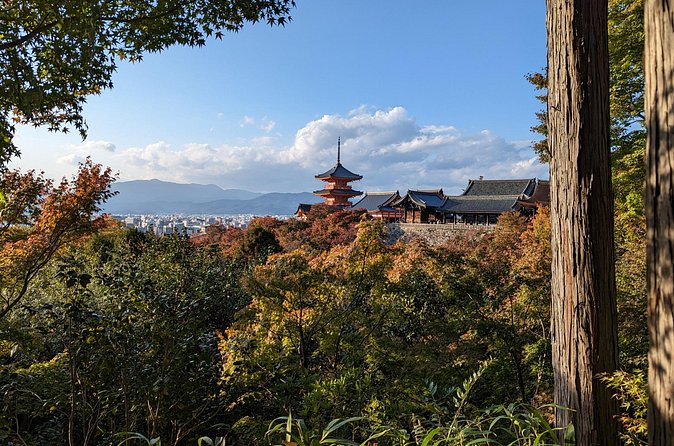
Gion is Kyoto’s best-known traditional entertainment district, with preserved architecture and streets connected to geisha culture. It is a place to walk slowly, notice the wooden facades, and listen to a guide separate real customs from the popular legends surrounding geisha and old Kyoto.
The one-hour stop is sensible as part of a wider day. You can see the district and hear its story, but you will not fully explore every lane. Be respectful with photography and avoid treating working performers as attractions. The experience is better when you focus on the neighborhood itself.
This section pairs naturally with Kiyomizu-dera because both are in or near eastern Kyoto. If the operator tries to send you across the city repeatedly, the day will lose time. Ask how the route will be ordered, not only which places are included.
Nishiki Market is the best place to make the day edible
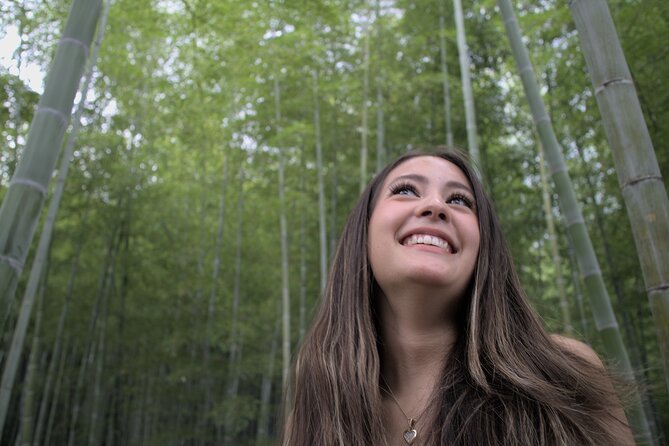
Nishiki Market stretches across several blocks and is filled with local foods, produce, snacks, and traditional goods. It gives the itinerary a welcome change of pace after temples and shrines. You can sample small items, browse kitchen goods, and see how food fits into Kyoto’s daily culture.
Food and drinks are not included. That is reasonable for a market visit because you choose what you want, but carry extra money and do not expect lunch to be part of the $110 fee.
A one-hour stop is enough for a walk and a few tastes. It is not enough for an unhurried meal, especially when the market is crowded. If you are interested in food, ask to make Nishiki a true lunch stop rather than a quick pass-through.
Kinkakuji is beautiful, but allow time for the crowd
Kinkakuji, the Golden Pavilion, is among Kyoto’s most instantly recognizable temples. The gold-covered building reflects across its pond, making it an easy highlight for first-time visitors. The surrounding garden adds a little breathing room after the main viewing area.
The planned hour gives you time for the principal view and a walk along the marked route. It can feel brief during busy periods, when moving through the viewing areas takes longer than expected. A guide can provide context and help you avoid spending the entire stop in one photo line.
The supplied tour details list no admission charge for Kinkakuji, but admission information can change, so verify the current arrangements before setting your budget. The key point is that the tour does not promise that all costs are covered simply because the main price is paid.
Ginkakuji is calmer in spirit, and costs extra
Ginkakuji is called the Silver Pavilion, though it is not covered in silver. Its appeal comes from its restrained Zen design, gardens, and quiet mood rather than a flashy exterior. It gives the route a useful contrast with Kinkakuji.
Admission is listed as $8 per person and is not included. That extra cost is modest, but it is one more item to remember alongside transportation and the guide’s travel fees.
I would not try to visit both Ginkakuji and Kinkakuji hurriedly just to claim both names. If you prefer gardens and a quieter setting, choose Ginkakuji. If you want the iconic image, choose Kinkakuji. Seeing both can work only if the rest of the day is trimmed.
Arashiyama and Tenryu-ji need more than an hour
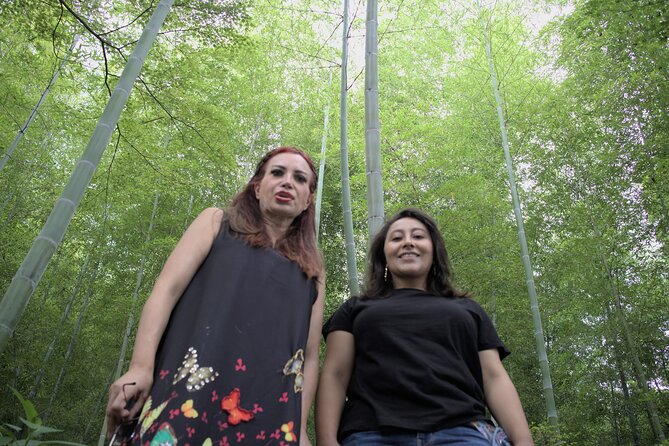
Arashiyama is on the western side of Kyoto, so reaching it from the eastern temples takes time. The bamboo forest is the headline attraction, with tall stalks creating a narrow green corridor. The listed visit is only 30 minutes, enough for a short walk but not enough to explore the broader district.
One particularly happy account singled out the Arashiyama mountain area and the monkey park, but the monkey park is not listed as a scheduled stop. Do not assume it is included. Ask the guide before booking if that is important to you.
Tenryu-ji, also in Arashiyama, is a major Zen temple and a UNESCO World Heritage Site. Its grounds and garden deserve more than a hurried half-hour, especially after the trip across town. Admission is not included.
Arashiyama is the clearest example of why this route needs editing. If you want the bamboo forest and Tenryu-ji to feel like more than quick stops, plan a separate half-day in this district.
What the guides add when the day goes well
The strongest part of the experience is the guide when the operation functions properly. Andrea is repeatedly described as patient, friendly, enthusiastic, and able to explain details at a comfortable pace. One account said she adjusted the day for disabilities, which is encouraging for people who need a more flexible schedule.
Roberto has also been praised for spending more than six hours showing important and less obvious parts of Kyoto. His explanations of religion, mythology, and history were especially valued. Another account credits a guide with helping buy bullet-train tickets, a small service that can remove real stress during a Japan trip.
The listing identifies the guide as government certified, but it does not guarantee that Andrea, Roberto, or any particular person will lead your date. Some parties encountered new guides who still did a good job, while others found explanations merely adequate.
That difference matters. This is not a fixed bus tour with one standard script. The quality may depend heavily on who is assigned, how many groups are combined, and how clearly the day is organized.
The biggest risk is not the sightseeing
The serious complaints concern operations rather than Kyoto itself. Multiple bookings describe guides who did not arrive, unanswered calls, missing messages, or refunds that had to be pursued. Other accounts describe cancellations with less than 24 hours notice.
Meeting instructions have also caused trouble. One person was told only that Kyoto Station would be the meeting point, without a clear place or recognizable guide identification. At least one account says guides were difficult to identify because they had no obvious badge.
Pickup needs special care. Pickup is offered, but the tour does not cover pickup from Osaka’s Tempozan area. The operator’s response in that case said the meeting point was in Kyoto and that the party needed to travel there independently. The safest approach is to obtain the exact meeting location, pickup boundaries, guide name, phone contact, and backup messaging method before the day begins.
Transportation is by public transport according to several accounts, and transportation fees are excluded. The guide’s own transportation costs are listed separately at roughly $5 to $8. This is not a chauffeur-driven tour, and you should not book it expecting a private car.
The cancellation terms allow a full refund when you cancel at least 24 hours before the start time. Within 24 hours, changes and cancellations are not accepted for a refund. If the minimum number of participants is not reached and the operator cancels, you should be offered another date or experience, or a full refund.
Is $110 good value for your Kyoto day?
The value depends on what you want the guide to do. For a solo visitor or couple who wants cultural explanations, help with route planning, and the ability to adjust the day, $110 can be worthwhile. It may also suit someone who feels uneasy handling Kyoto’s train and bus system alone.
The price is less attractive if you expect a vehicle, included admissions, food, or a guaranteed full itinerary. Add the guide’s transportation fee, your own fares, food, drinks, and at least the $8 Ginkakuji admission. Nijo Castle also costs extra.
The tour is most useful when you agree on a smaller plan. For example, Fushimi Inari, Kiyomizu-dera, Gion, and Nishiki Market make a coherent eastern Kyoto day. Kinkakuji, Ginkakuji, Arashiyama, and Tenryu-ji belong to a wider city route and deserve more travel time.
At peak periods, the operator may reduce the number of sights because crowds slow everything down. That is understandable, but it should be explained before the tour begins, not after you have paid for nine locations.
Who should book, and who should skip it?
I would consider this tour if you want a flexible guide, are comfortable using public transportation, and will confirm every practical detail in advance. It is a good match for first-time visitors who want context at major sights, families who need a patient pace, and people who value personal help more than a rigid checklist.
I would skip it if you have only one precious day in Kyoto and cannot tolerate a late start or a last-minute change. I would also avoid it if a private group and hotel pickup are essential. The difference between the advertised arrangement and some actual outings is too large to ignore.
If you book, send a written message asking for the exact meeting point, pickup confirmation, group size, guide name, start time, included stops, and transportation plan. Keep the confirmation and all messages. Then choose three to five priority sights and treat anything beyond them as a bonus.
The attractions themselves are excellent. The guide can make them easier to understand and help you fit more into a day. But the organization needs careful checking, and the tour earns its price only when the operator delivers the guide, timing, and group setup you were promised.
FAQ
How long does the Kyoto tour last?
The stated duration is approximately 6 to 8 hours.
Which Kyoto attractions can be included?
The route can include Fushimi Inari-taisha Shrine, Kiyomizu-dera Temple, Nijo Castle, Gion, Nishiki Market, Kinkakuji Temple, Ginkakuji Temple, Arashiyama Forest, and Tenryu-ji Temple.
Is this a private tour?
It is described as a private activity, but solo guests or couples may be asked to join another solo guest or couple. Confirm the expected group size before booking.
Are admission fees included?
Not all admission fees are included. Ginkakuji is listed at $8 per person, and Nijo Castle and Tenryu-ji also have admission fees not included in the tour price. The supplied details list no admission charge for Fushimi Inari, Kiyomizu-dera, Gion, Nishiki Market, Kinkakuji, and Arashiyama.
Is transportation included?
Transportation fees are not included. The guide’s transportation costs are listed at approximately $5 to $8, and you must also pay your own transportation costs.
Can I cancel for a full refund?
Yes, if you cancel at least 24 hours before the experience start time. Cancellations or changes made within 24 hours are not refunded.
Just added around Kyoto
- Kyoto: Zen Meditation at a Private Temple with a Monk★ 5.0 · 25 reviews
- Kyoto: Gion Geisha District & Sake-in-Hand Walking Tour★ 5.0 · 37 reviews
- Private Pewter Sake Cup Experience with a Kyoto Artisan★ 5.0 · 31 reviews
- Your Private Vacation Photography Session In Kyoto★ 5.0 · 110 reviews
- Private Guided Traditional Buddhist Cooking in Japan★ 5.0 · 16 reviews
- Kyoto Wagashi(Japanese sweets) Cooking Class near Fushimiinari★ 5.0 · 60 reviews
- Traditional Japanese Music show & Experience Tour in Kyoto★ 5.0 · 57 reviews
- Kyoto:Family-Friendly Kimono & Yukata Experience at WARGO★ 5.0 · 147 reviews
Kyoto Tours, compared.


Fushimi Inari, Kinkakuji, Bamboo Grove 1 Day Bus Tour
Read our review →
Tea Ceremony in a Traditional Tea House in Kiyomizu
Read our review →
Kyoto Geisha Walking Tour: Gion District & Hidden Gems
Read our review →

Gion Magical Night Walking Tour with Geisha Trivia
Read our review →
