
Reviewed · TOKYO TOURS
Mt. Fuji Heritage Tour: Traditional Villages, Lakes & Shrine
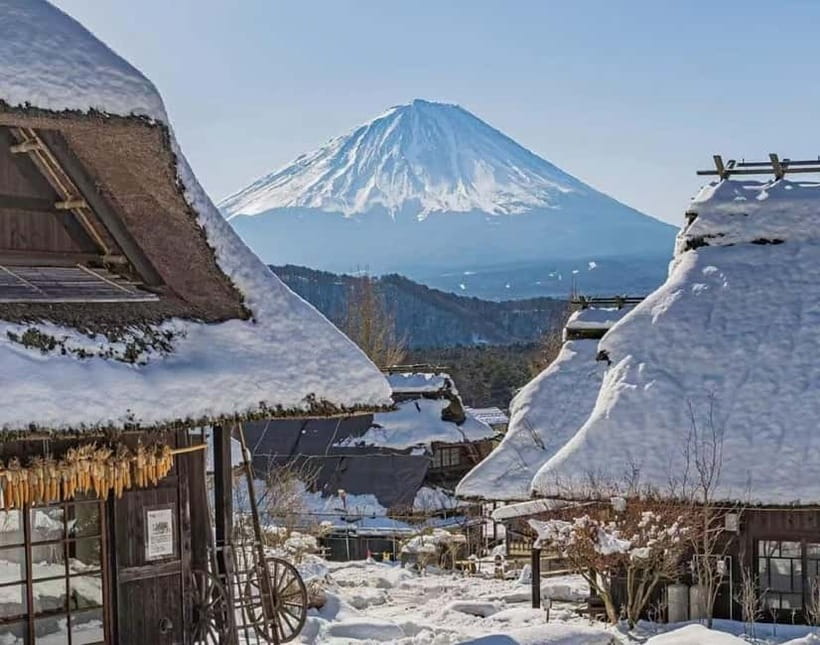
Mt. Fuji supplies the big picture, but the thatched houses of Saiko Iyashi no Sato Nenba give this day its character. Add Lake Kawaguchi, a hillside shrine, the famous Chureito Pagoda, and spring-fed ponds, and you get a broad taste of the Fuji area without arranging several buses and trains yourself.
I like the variety here: you get culture as well as scenery, and the $50 price covers transport, a guide, admissions to the traditional village, parking, and pickup and return. I also like the steady pace, with time to stop, take photos, and rest on the coach. The catch is the 10-hour day, and Fuji may hide behind clouds just when you reach the best viewpoint.
Key points to know before booking
- The classic Fuji photo is weather-dependent: Chureito Pagoda and the thatched village look their best with a clear summit behind them.
- Autumn changes the route: From October 26 to November 20, the tour visits the Maple Corridor instead of Oishi Park.
- This is a sightseeing sampler: You see five major places, but most stops last between 15 and 70 minutes.
- Lunch costs extra: Bring food, buy something at a stop, or use the restaurant suggested by the guide.
- Guides help keep the day moving: Sia, Kazi, Wanting, Alex, Feng, Rachel, Sawaki, and others have led recent departures.
- Bring cash and good shoes: Some shops and food sellers may not take cards, and Arakurayama includes a stair climb.
Why this Mt. Fuji day trip works
If you have only one free day from Tokyo, this tour makes a practical case for itself. The Fuji area is spread out, and public transport connections between the village, lakeside parks, shrine, pagoda, and Oshino Hakkai take planning. Here, a coach handles the long road journey while your guide gives meeting times and directions at each stop.
The route also avoids making the day only about one photograph. You see a traditional village, a lake, a park, a Shinto shrine, a pagoda, and mountain springs. That mix gives you a better sense of the area than a single observation deck would.
The tradeoff is shared-tour discipline. You must return to the coach on time, and the guide may shorten or adjust stops because of traffic. This matters most on weekends and Japanese holidays, when the return to Tokyo can run late. I would not schedule a flight, dinner reservation, or timed attraction immediately afterward.
The usual starting point is near Tokyo MODE Gakuen at 1-chome-5-1 Marunouchi, though your exact meeting point depends on the option booked. Arrive at least 15 minutes early. The night before, you should receive the guide’s phone number and vehicle license plate details, useful if the pickup area is busy.
More Mt Fuji Tours in Tokyo
- Mt Fuji and Hakone 1-Day Bus Tour Return by Bullet Train
★ 5.0 · 26,383 reviews - Mt Fuji & Hakone Cruise, Drum Show Bullet Train 1 Day from Tokyo
★ 4.0 · 7,413 reviews - Tokyo Mt Fuji 5th St & Hakone Cruise Bus Tour w/Bullet Train
★ 4.4 · 5,024 reviews
Saiko Iyashi no Sato Nenba and its Fuji backdrop
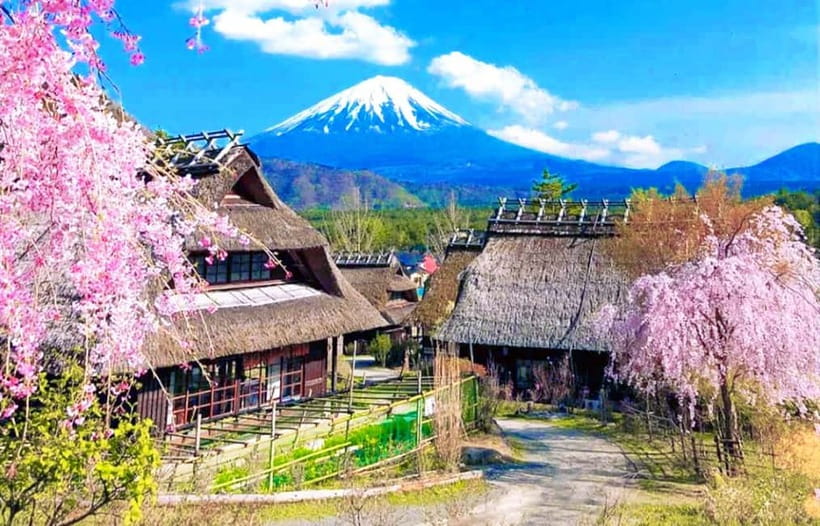
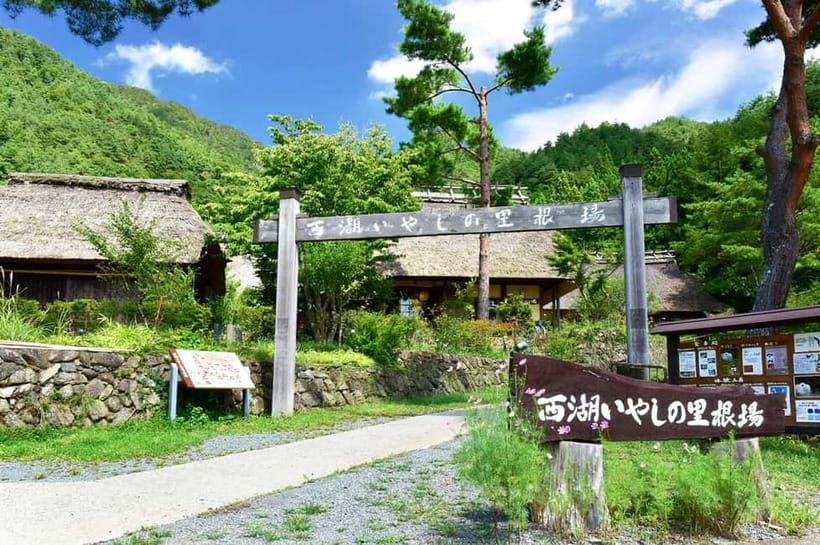
The first major stop is Saiko Iyashi no Sato Nenba, a reconstructed traditional village near Lake Saiko. Its thatched-roof houses create a picture-book setting, especially when Mt. Fuji appears behind them.
You get about an hour here for a guided visit and photographs. The village entrance has Japanese snacks, and independent shops sell local goods and artwork. You can also rent a ninja costume for an added fee if you want playful photos rather than solemn ones.
I like this stop because it gives you more than a mountain view. The houses, rooflines, village paths, and craft displays provide a glimpse of older rural Japan. It is also a forgiving place for photography: even if Fuji is covered, the buildings still give you something worth seeing.
Do not rush straight to the most obvious photo point. Look at the details of the roofs and the way the village is arranged. If you plan to buy food or souvenirs, cash is sensible because card acceptance varies.
An hour is enough for a focused visit, but not for a slow look at every shop. If you want a costume rental, snacks, photographs, and a careful village walk, you will need to choose your priorities.
Oishi Park and Lake Kawaguchi through the seasons

After the village, the coach continues toward Lake Kawaguchi. Oishi Park gets about 40 minutes, a useful short stop beside one of the Fuji Five Lakes.
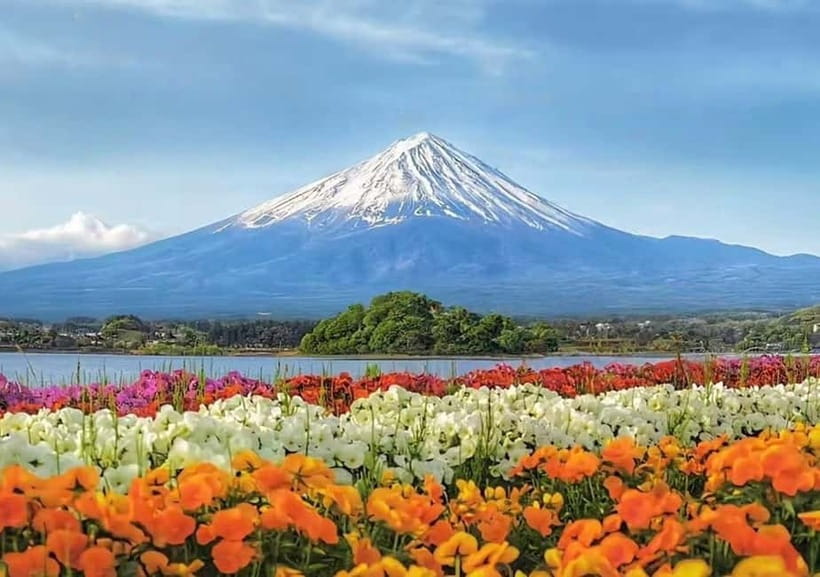
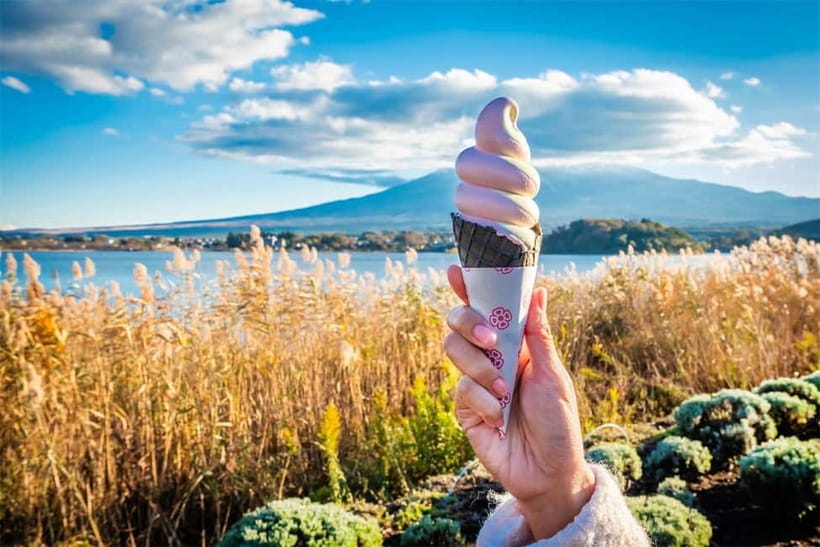
The appeal changes with the calendar. Summer brings lavender fields and their fragrance. In autumn, red broom grass adds strong color near the water. On a clear day, Fuji rises beyond the lake and flowers, giving you the neat, layered photograph that makes this stop popular.
The schedule lists Lake Kawaguchi for sightseeing before Oishi Park, but this is not a long lakeside walk. Think of it as a scenic photo stop, not a full lake tour. You can take in the view, use the facilities, and buy something small before returning to the coach.
This is one place where timing and weather matter. A cloudy day can soften the view of Fuji, though the park itself still has seasonal interest. On clear days, guides such as Sia and Kazi have helped groups reach the photo points on schedule and explained what to look for before arrival.
Maple Corridor and the autumn route change
The Maple Corridor near Lake Kawaguchi receives another 40-minute stop in the standard schedule. Its trees frame the lake and Fuji, making it a strong choice for autumn color.
There is one important seasonal rule. During peak autumn foliage, listed as October 26 through November 20, the route visits the Maple Corridor instead of Oishi Park. You should not expect both locations during that window. The change makes sense: the corridor is the better use of time when the leaves are at their best.
The exact appearance of the trees depends on weather and the progress of the season. Still, this is the stop I would value most for a late October or early November visit, especially if your main goal is color rather than flowers.
Forty minutes gives you enough time for photos and a short walk, but not a leisurely exploration. Wear shoes that can handle uneven paths and expect other people around the popular viewpoints.
More history-led days in Tokyo:
- Tokyo: Imperial Palace and Shogun Historical Walking Tour
★ 5.0 · 2,251 reviews - Tokyo: Imperial Palace Japanese History Walking Tour
★ 4.9 · 987 reviews - Tokyo: Shinjuku Historical Walking Tour & Secret Backstreets
★ 5.0 · 530 reviews - Yanaka Walking Tour: Historic and Traditional District of Tokyo
★ 5.0 · 530 reviews
Arakurayama Sengen Park and the climb to Chureito
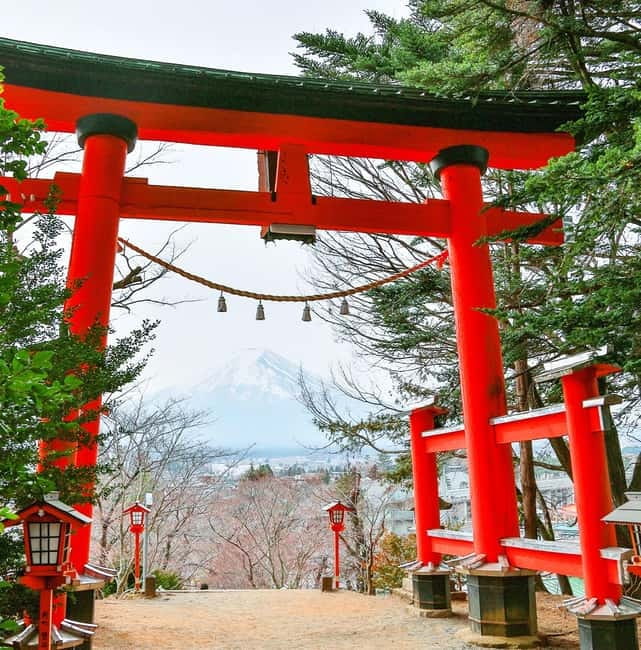
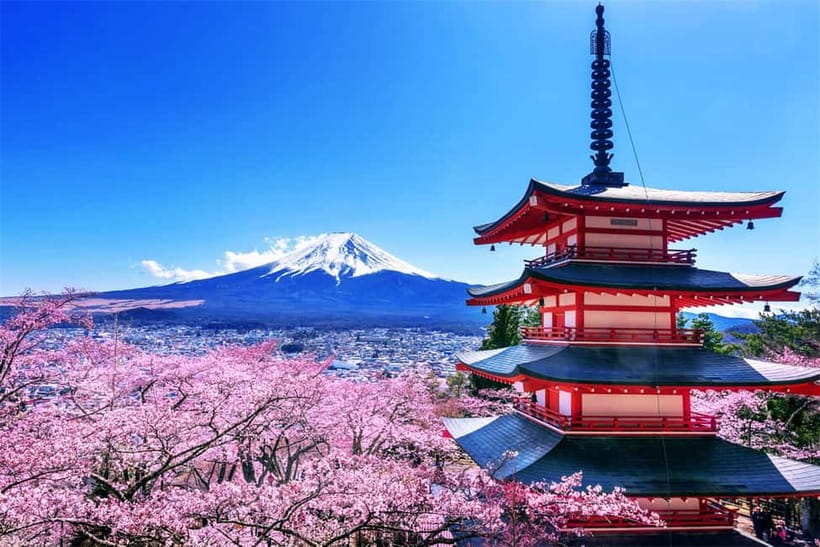
The most famous photograph of the day comes at Arakurayama Sengen Park. From the hillside, Chureito Pagoda appears with Mt. Fuji behind it, a composition seen on travel posters across Japan.
The stop includes about 40 minutes at the park, followed by shorter visits to Arakura Fuji Sengen Shrine and Chureito Pagoda. You should expect stairs. The climb is part of the experience, but it can feel demanding if you are not comfortable with an uphill walk.
Take your time on the way up when the schedule allows. The shrine provides a quieter cultural pause before the higher viewpoint, and the pagoda gives the scene its distinctive Japanese shape. At the top, you can look back across the surrounding town and toward Fuji if the air is clear.
This stop has the biggest gap between expectation and reality. The photograph is spectacular under good conditions, but clouds can erase the mountain while leaving the pagoda in plain view. You still get the shrine and the hillside setting, but the famous five-part composition is never guaranteed.
If you want a goshuin, or shrine calligraphy stamp, ask about it early. One visitor found the wait around 20 minutes and would have needed to hand over the book before climbing the stairs. That small bit of planning can save you from choosing between the stamp and the viewpoint.
Oshino Hakkai and the final taste of rural Fuji
The last attraction is Oshino Hakkai, where eight clear spring ponds reflect Mt. Fuji and the surrounding buildings. Melted snow from Fuji feeds the springs, and the water is known for its clarity.
You get about 70 minutes here, the longest sightseeing stop of the day. That extra time helps because Oshino Hakkai is not just one viewpoint. You can walk among the ponds, examine the reflections, browse food stalls, and try local snacks such as freshly made rice crackers or wasabi ice cream.
The atmosphere is calmer than at the pagoda, though popular areas can still feel busy. The ponds are attractive in all seasons, and this stop remains worthwhile when clouds cover Fuji. Clear water, small bridges, traditional buildings, and local food give you plenty to enjoy without relying on one mountain photograph.
Keep your cash handy. Shops at the attractions operate independently, and some may not accept credit cards. The same applies to snacks and small purchases throughout the day.
Life on the coach and the guide’s role
The road journey takes about 2.5 hours each way between Tokyo and the Fuji area. That sounds long, but it is the price of covering a wide route in one day. The coach gives you a place to sit between stops, and several departures have been praised for comfortable rides and smooth driving.
Your guide is the person who makes or breaks a shared tour. Recent departures have been led by Sia, Kazi, Wanting, Alex, Rachel, Sawaki, Feng, and others. The strongest guiding style described in the experience is practical: clear instructions, early timing reminders, help finding bathrooms and meeting points, and enough background on shrines and Japanese customs to make the stops more meaningful.
Sia has been especially effective at keeping groups together, taking lunch orders early, teaching basic Japanese words, and pointing out good places for photos. Kazi has been praised for organization, timing, and friendly explanations. Wanting has helped families and passengers carrying large suitcases, while one driver even walked two people to the bus station when they separated from the group at the final stop.
That kind of care is valuable on a packed day. Still, the amount of commentary can vary. Some departures provide frequent explanations about Fuji and the towns, while others leave more quiet time on the bus. If you want a lecture-style tour with constant historical detail, this may feel light. If you prefer scenery, simple instructions, and room to rest, that is likely a plus.
English, Japanese, and Traditional Chinese guiding are available. Because this is a multilingual shared group, explanations may be repeated in several languages, which can make the schedule feel less conversational.
Lunch, timing, and the real value of $50
Lunch is not included, despite the full-day schedule. You can bring food, buy it at an attraction, or eat at a restaurant suggested by the guide. A 40-minute restaurant break is built into the day, but the choice may not suit every taste. I would bring a compact meal or snacks if you have dietary needs or want more control over your budget.
At $50 per person, the value is strong for a 10-hour trip. The fee includes a driver, guide, coach transport, parking, pickup and return at designated points, and admission to Saiko Iyashi no Sato Nenba. You still pay for lunch, costumes, snacks, souvenirs, and other personal expenses.
The price is particularly appealing if you are comparing it with the cost and effort of piecing together transport to five separate sights. You are paying for convenience and coverage, not private touring or long visits at each attraction.
The main cost is time. A round trip of roughly five hours leaves about five hours for sightseeing and lunch. Traffic can make the return later than planned, and stop lengths may change. That is normal for a Fuji day trip from Tokyo, but you should accept it before booking.
Weather, footwear, and who should book
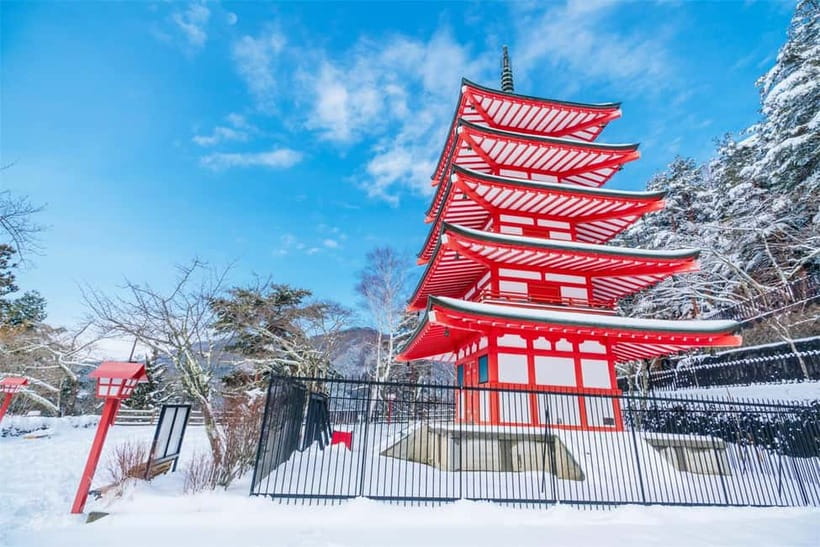
Clear Fuji views depend on weather, not on the quality of the tour. Check the forecast before you go, but keep expectations flexible. Several stops remain worthwhile with cloud cover, especially Saiko Iyashi no Sato Nenba and Oshino Hakkai, yet the pagoda photograph loses its main subject when Fuji disappears.
Wear comfortable shoes. The village involves walking, and Arakurayama Sengen Park includes stairs. Bring water, cash, and layers suitable for the day’s conditions.
This tour suits you best if you are visiting Tokyo for the first time, want a broad Fuji-area introduction, or prefer someone else to handle transport. Families can manage it, and one family traveled with a three-year-old and a five-month-old, though a 10-hour coach day is still a lot for small children.
It is less suitable for wheelchair users, and it may disappoint you if you want a slow, private visit to one lake or shrine. Photographers should also think carefully about the fixed schedule. You get several strong compositions, but not unlimited time to wait for perfect light.
Free cancellation is available up to 24 hours before departure, and you can reserve now and pay later. Late arrivals and no-shows are not refunded, so punctuality matters.
Should you book this Mt. Fuji tour?
Book it if you want maximum sightseeing for a modest price and can live with a long day, shared transport, and weather uncertainty. The route covers the classic Fuji images while adding a traditional village, seasonal parks, shrine architecture, and local food.
I would choose the tour in clear weather, during the autumn Maple Corridor window, or for a first visit when you want orientation rather than solitude. Bring lunch, arrive early, wear sensible shoes, and leave your evening open in case traffic slows the return.
Skip it if your priority is a private pace, extensive time at each site, or wheelchair access. For everyone else, this is a well-rounded and practical way to see the Mt. Fuji region without wrestling with its scattered transport network.
FAQ
How long does the Mt. Fuji Heritage Tour last?
The tour lasts 10 hours, including the coach journey from Tokyo to the Mt. Fuji area and the return trip.
Where does the tour start and finish?
The listed starting and drop-off point is Tokyo MODE Gakuen at 1-chome-5-1 Marunouchi. The exact meeting point may vary depending on the option booked.
Is lunch included?
No. You can bring food, purchase lunch at one of the attractions, or eat at a restaurant suggested by the guide. A 40-minute lunch break is included in the schedule.
Does the tour visit Oishi Park and the Maple Corridor?
The standard route includes both locations at Lake Kawaguchi. From October 26 through November 20, the tour visits the Maple Corridor instead of Oishi Park for peak autumn foliage.
Are Mt. Fuji views guaranteed?
No. Weather can prevent a clear view of Mt. Fuji. Check the forecast, but remember that clouds may appear or clear during the day.
What languages are available?
Live guiding is available in English, Japanese, and Traditional Chinese. Explanations may be given in several languages during the shared group tour.
Is the tour suitable for wheelchair users?
No. The tour is not suitable for wheelchair users, and the visit to Arakurayama Sengen Park includes stairs.
Just added around Tokyo
- Private Arrival Transfer : Narita International Airport to Central Tokyo City★ 4.5 · 12 reviews
- Narita Airport(NRT): Private Transfer to Tokyo/Yokohama 1-9pax★ 5.0 · 47 reviews
- Private Transfer from Narita Airport to Yokohama Port and City★ 4.5 · 17 reviews
- [Narita Airport Terminals 1, 2] 40-60km Sawara Itako Historic Bike Tour★ 5.0 · 13 reviews
- 3 Day Japan Highlights Tour: Tokyo, Mt.Fuji, Nara, Kyoto, Osaka★ 5.0 · 22 reviews
- The 10 Tastings of Tokyo With Locals: Private Street Food Tour★ 5.0 · 48 reviews
- Small Town in the Big City: Tasting Tokyo’s Kichijoji★ 5.0 · 195 reviews
- Small Town in the Big City: Tasting Tokyo’s Kichijoji★ 5.0 · 16 reviews
Tokyo Tours, compared.
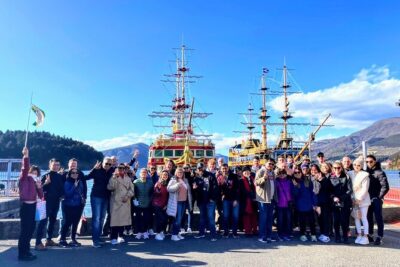
Mt Fuji and Hakone 1-Day Bus Tour Return by Bullet Train
Read our review →
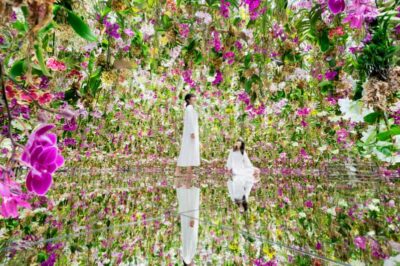
teamLab Planets TOKYO Digital Art Museum Entry Ticket
Read our review →
Mt Fuji & Hakone Cruise, Drum Show Bullet Train 1 Day from Tokyo
Read our review →
Sumo Show Experience with Chicken Hot Pot and a Photo
Read our review →
Shinjuku Food Tour (13 Dishes at 4 Local Eateries)
Read our review →
Tokyo Mt Fuji 5th St & Hakone Cruise Bus Tour w/Bullet Train
Read our review →
Flagship 2-Hours Official Street Go-Kart Tour – Tokyo Bay Shop
Read our review →Browse the lists this tour appears in